 Talmud Bavli
The learning on the whole site is dedicated : L'ilui Nishmat Reuven ben Rivka SEBBAG
The learning on the whole site is dedicated : L'ilui Nishmat יוסף בן מושה
The learning on the whole site is dedicated : L'ilui Nishmat Jacques Isaac Ben Amram Loubaton
Sanhedrin 65a : Youtube
Daf TubeYoutube
2 video classes :
Sanhedrin Page 65a
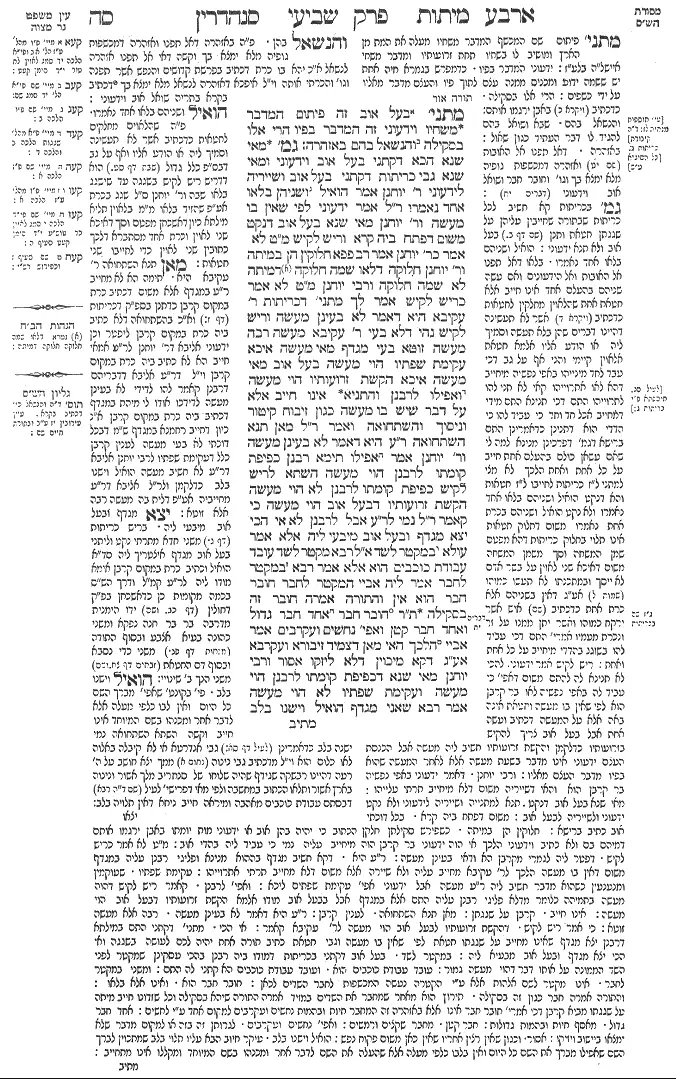
Sanhedrin 65a - Guemara
מתני׳ בעל אוב זה פיתום המדבר משחיו וידעוני זה המדבר בפיו הרי אלו בסקילה והנשאל בהם באזהרה:
גמ׳ מאי שנא הכא דקתני בעל אוב וידעוני ומאי שנא גבי כריתות דקתני בעל אוב ושייריה לידעוני ר' יוחנן אמר הואיל ושניהן בלאו אחד נאמרו ר"ל אמר ידעוני לפי שאין בו מעשה ור' יוחנן מאי שנא בעל אוב דנקט משום דפתח ביה קרא וריש לקיש מ"ט לא אמר כר' יוחנן אמר רב פפא חלוקין הן במיתה ור' יוחנן חלוקה דלאו שמה חלוקה דמיתה לא שמה חלוקה ורבי יוחנן מ"ט לא אמר כריש לקיש אמר לך מתני' דכריתות ר' עקיבא היא דאמר לא בעינן מעשה וריש לקיש נהי דלא בעי ר' עקיבא מעשה רבה מעשה זוטא בעי מגדף מאי מעשה איכא עקימת שפתיו הוי מעשה בעל אוב מאי מעשה איכא הקשת זרועותיו הוי מעשה ואפילו לרבנן והתניא אינו חייב אלא על דבר שיש בו מעשה כגון זיבוח קיטור וניסוך והשתחואה ואמר ר"ל מאן תנא השתחואה ר"ע היא דאמר לא בעינן מעשה ור' יוחנן אמר אפילו תימא רבנן כפיפת קומתו לרבנן הוי מעשה השתא לריש לקיש כפיפת קומתו לרבנן לא הוי מעשה הקשת זרועותיו דבעל אוב הוי מעשה כי קאמר ר"ל נמי לר"ע אבל לרבנן לא אי הכי יצא מגדף ובעל אוב מיבעי ליה אלא אמר עולא במקטר לשד א"ל רבא מקטר לשד עובד עבודת כוכבים הוא אלא אמר רבא במקטר לחבר אמר ליה אביי המקטר לחבר חובר חבר הוא אין והתורה אמרה חובר זה בסקילה ת"ר (דברים יח, יא) חובר חבר אחד חבר גדול ואחד חבר קטן ואפי' נחשים ועקרבים אמר אביי הלכך האי מאן דצמיד זיבורא ועקרבא אע"ג דקא מיכוין דלא ליזקו אסור ורבי יוחנן מאי שנא דכפיפת קומתו לרבנן הוי מעשה ועקימת שפתיו לא הוי מעשה אמר רבא שאני מגדף הואיל וישנו בלב
Comments from Rashi on Masechet Sanhedrin Page 65a
מתני' פיתום . שם המכשף המדבר משחיו מעלה את המת מן הארץ ומושיב לו בשחיו תחת זרועותיו ומדבר משחי איישל"ה בלע"ז: ידעוני המדבר בפיו . כדמפרש בגמרא חיה אחת יש ששמה ידוע ומכניס ממנה עצם לתוך פיו והעצם מדבר מאליו על ידי כשפים: הרי אלו בסקילה . כדכתיב (ויקרא כ) באבן ירגמו אותם: והנשאל בהם . שבא ושואל בהם להגיד לו דבר העתיד כגון שאול: באזהרה . דאל תפנו אל האובות (שם יט) ואזהרה דמכשפות גופיה מלא ימצא בך וגו' וחובר חבר ושואל אוב וידעוני (דברים יח): גמ' בכריתות קא חשיב לכל כריתות שבתורה שחייבין עליהן על שגגתן חטאת ותנן (שם דף ב.) בעל אוב ולא תנא ידעוני: הואיל ושניהם בלאו אחד נאמרו . בלאו דאל תפנו אל האובות ואל הידעונים ואם עשה שניהם בהעלם אחד אינו חייב אלא חטאת אחת שהלאוין מחלקין לחטאות כדכתיב (ויקרא ד) אשר לא תעשינה דהיינו דברים שהן בלא תעשה וסמיך ליה או הודע אליו אלמא חטאת אלאוין קיימי והני אף על גב דכי עבד לחד מינייהו באפי נפשיה מיחייב דהא לאו אתרוייהו קאי לא תני להו לתרוייהו התם דכי תנינא התם מידי דמחייב אכל חד וחד כי עביד להו כי הדדי הוא דתנינן כדאמרינן התם ברישא דגמ' דפרכינן מנינא למה לי שאם עשאן כולם בהעלם אחת חייב על כל אחת ואחת הלכך לא מצי למתני ל"ז כריתות לחייבו ל"ז חטאות והא דנקט הואיל ושניהם בלאו אחד נאמרו ולא נקט הואיל ושניהם בכרת אחת נאמרו משום דחלוק חטאות אינו תלוי בחלוק כריתות דהא מפטם שמן המשחה וסך משמן המשחה משום דאיכא שני לאוין על בשר אדם לא ייסך ובמתכנתו לא תעשו כמוהו (שמות ל) אע"ג דאין בשניהם אלא כרת אחת כדכתיב (שם) איש אשר ירקח כמוהו ואשר יתן ממנו על זר ונכרת מעמיו אמרי' התם דכי עביד להו בשוגג בהדדי מיחייב על כל אחת ואחת: ריש לקיש אמר ידעוני . להכי לא תנינא לה להתם משום דאפי' כי עביד לה באפי נפשיה לאו בר קרבן הוא לפי שאין בו מעשה וחטאת אינה באה אלא על המעשה דכתיב ועשה אחת אבל בעל אוב צריך להקיש בזרועותיו כדלקמן והקשת זרועותיו חשיב ליה מעשה אבל הכנסת העצם ידעוני אינו מדבר בשעת מעשה אלא לאחר המעשה שהוא בפיו מדבר העצם מאליו: ורבי יוחנן . דאמר ידעוני באפי נפשיה בר קרבן הוא והאי דשייריה משום דלא מיחייב תרתי עלייהו: מאי שנא בעל אוב דנקט . תנא למתנייה ושייריה לידעוני ולא נקט ידעוני ולשייריה לבעל אוב: משום דפתח ביה קרא . בכל דוכתי אוב כתיב ברישא: חלוקין הן במיתה . כשפירש סקילתן חלקן הכתוב כי יהיה בהן אוב או ידעוני מות יומתו באבן ירגמו אותם דמיהם בם ולא כתיב וידעוני הלכך אי הוה ידעוני בר קרבן הוה מיחייב עליה נמי כי עביד ליה בהדי אוב: מ"ט לא אמר כריש לקיש . דפטר ליה לגמרי מקרבן הא ודאי בעינן מעשה: ר"ע היא . דקא חשיב מגדף בההוא מנינא ופליגי רבנן עליה במגדף משום דאין בו מעשה הלכך לר' עקיבא מחייב עליה ולא שיירה אלא משום דלא מחייב תרתי אתרוייהו: עקימת שפתיו . שעוקמין ומנענעין כשהוא מדבר חשיב ליה ר"ע מעשה אבל ידעוני אפי' עקימת שפתים ליכא: ואפי' לרבנן . קאמר ריש לקיש דהוה מעשה בתמיהה כלומר מדלא פליגי רבנן עליה התם אלא במגדף אבל בבעל אוב מודו אלמא הקשת זרועותיו דבעל אוב הוי מעשה: אינו חייב . קרבן על שגגתן: מאן תנא השתחואה . לענין קרבן: ר"ע היא דאמר לא בעינן מעשה . רבה אלא מעשה זוטא: כי אמר ריש לקיש . דהקשת זרועותיו לבעל אוב הוי מעשה לר' עקיבא קאמר: אי הכי . מתני' דקתני התם במילתא דרבנן יצא מגדף שאינו מחייב על שגגתו חטאת לפי שאין בו מעשה וגבי חטאת כתיב תורה אחת יהיה לכם לעושה בשגגה ואי הכי יצא מגדף ובעל אוב מבעיא ליה: במקטר לשד . בעל אוב דקתני בכריתות דמודו ביה רבנן בהכי עסקינן שמקטר לפני השד הממונה על אותו דבר דהוי מעשה גמור: עובד עבודת כוכבים הוא . ועובד עבודת כוכבים הא קתני לה התם: ומשני במקטר לחבר . אינו מקטר לשם אלהות אלא ע"י הקטרה נעשה המכשפות לחבר השדים לכאן: חובר חבר הוא . ואינו אלא בלאו: והתורה אמרה חבר כגון זה בסקילה . תירוץ הוא מאחר שמחבר את השדים במזיד אמרה התורה שיהא בסקילה וכל שזדונו חייב מיתה על שגגתו מביא קרבן דכי אמרי' חובר חבר אינו אלא באזהרה זה המחבר חיות ובהמות נחשים ועקרבים למקום אחד ע"י לחשים: אחד חבר גדול . מאסף חיות ובהמות גדולות: חבר קטן . מחבר שקצים ורמשים: ואפי' נחשים ועקרבים . לגרותן זה בזה או למקום מדבר שלא ימצאו ביישוב ויזיקו: אסור . וכגון שאין רצין אחריו שאין כאן משום פקוח נפש: הואיל וישנו בלב . עיקר חיוב הבא עליו תלוי בלב שמתכוין לברך השם שאפילו מברך את השם כל היום ואין בלבו כלפי מעלה אלא שהעלה את השם לדבר אחר ומכנהו בשם המיוחד ומקללו אינו מתחייב:
Comments from Tosafot - Sanhedrin 65a
והנשאל בהן . פ"ה באזהרה דאל תפנו ואזהרה דמכשפות גופיה מלא ימצא בך וקשה דאי אל תפנו אזהרה לנשאל א"כ יהא בו כרת דכתיב בפרשת קדושים והנפש אשר תפנה וגו' והכרתי אותה וי"ל איפכא דאזהרה לנשאל מלא ימצא בך דכתיב בקרא בתריה שואל אוב וידעוני: הואיל ושניהם בלאו אחד נאמרו . פ"ה שהלאוים מחלקים לחטאות כדכתיב אשר לא תעשינה וסמיך ליה או הודע אליו ואף על גב דבס"פ כלל גדול (שבת דף סט.) הוא דדריש ריש לקיש בשגגה עד שישגג בלאו שבה ור' יוחנן ס"ל שגג בכרת אע"פ שהזיד בלאו מ"מ בלאוין תליא מילתא כיון דאשכחן מפטם וסך דאיכא שני לאוין וכרת אחד מסתברא דלכך כתובין שני לאוין כדי לחייבו שני חטאות: מאן תנא השתחואה ר' עקיבא היא . תימה הא לא מחייב ר"ע במגדף אלא משום דכתיב כרת במקום קרבן כדתנן בספ"ק דכריתות (דף ז:) וא"כ בהשתחואה דלא כתיב ביה כרת במקום קרבן ליפטר וכן ידעוני אליבא דר' יוחנן לר"ע אמאי חייב הא לא כתיב ביה כרת במקום קרבן וי"ל דר"ע אליבא דדבריהם דרבנן קאמר להו לדידי לא בעינן מעשה לדידכו אודו לי מיהת במגדף דכתיב ביה כרת במקום קרבן א"נ כיון דחייב רחמנא במגדף ש"מ דבכל דוכתי לא בעי מעשה לענין קרבן כלל דעקימת שפתיו לרבי יוחנן אליבא דר"ע לא חשיב מעשה הואיל וישנו בלב כדלקמן ולר"ל אליבא דר"ע מחייביה אע"פ דלית בה מעשה רבה אלא זוטא: יצא מגדף ובעל אוב מיבעי ליה . בריש כריתות (דף ג.) משני חדא מתרתי נקט וליתני בעל אוב מגדף איצטריך ליה סד"א הואיל וכתיב כרת במקום קרבן אימא מודו ליה לר"ע קמ"ל ודרך הש"ס בכמה מקומות כן כדאשכחן בפ"ק דחולין (דף כב. ושם) ידו הימנית מדרבה בר בר חנה נפקא ומשני כהונה בעיא אצבע ובסוף התודה (מנחות דף פג.) משני כדי נסבא ובסוף דם החטאת (זבחים דף צח. ושם) משני הנך ב' שינויי: הואיל וישנו בלב . פי' בקונט' שאפי' מברך השם כל היום ואין לבו כלפי מעלה אלא לדבר אחר ומכנהו בשם המיוחד אינו חייב וקשה השתא השתחואה נמי ישנה בלב כדאמרינן (לעיל סנהדרין דף סא:) גבי אנדרטא אי לא קיבלה באלוה לאו כלום הוא וי"ל מדכתיב גבי נינוה (נחום א) ממך יצא חושב על ה' רעה דהיינו רבשקה שגידף שהיה שלוחו של סנחריב מלך אשור ונינוה בארץ אשור ותלאו הכתוב במחשבה ולפי מאי דפרישי' לעיל (שם ד"ה רבא) דבסתם עבודת כוכבים מאהבה ומיראה חייב ניחא דאין תלויה בלב:
Sanhedrin 65a - Mishnah translated into english
MISHNA: The list of those liable to be executed by stoning includes those who practice various types of sorcery. The mishna describes them: A necromancer is a pitom from whose armpit the voice of the dead appears to speak. And a sorcerer is one from whose mouth the dead appears to speak. These, the necromancer and the sorcerer, are executed by stoning, and one who inquires about the future through them is in violation of a prohibition.
GEMARA: What is different here, that the mishna teaches the halakhot of both a necromancer and a sorcerer, and what is different in tractate Karetot (2a), that the mishna teaches the halakha of a necromancer but leaves out the halakha of a sorcerer?
Rabbi Yoḥanan says: The mishna in tractate Karetot does not count a sorcerer separately in the list of those liable to receive karet since both a necromancer and a sorcerer are stated in the Torah in one prohibition. Consequently, one who unwittingly serves as both a necromancer and a sorcerer is not obligated to bring two sin-offerings, as would be one who transgressed two prohibitions punishable by karet.
Reish Lakish says: A sorcerer is not included in the list in tractate Karetot because his transgression does not involve an action; it involves only speech, and one does not bring a sin-offering for transgressing a prohibition that does not involve an action.
The Gemara asks: And according to the opinion of Rabbi Yoḥanan, that a sorcerer is not listed because sorcery is included in the same prohibition as that of necromancy, what is different about a necromancer that the mishna uses specifically that example, and not the example of a sorcerer? The Gemara answers: The mishna chooses to mention the example of a necromancer because the verse introduces the prohibition with it; the case of a sorcerer is mentioned in the verse afterward (see Deuteronomy 18:11).
The Gemara asks: And what is the reason that Reish Lakish did not say an explanation in accordance with the explanation of Rabbi Yoḥanan? Rav Pappa says: Reish Lakish disagrees with the opinion of Rabbi Yoḥanan because the cases of a necromancer and a sorcerer are divided in the verse with regard to the issue of the death penalty, i.e., one is liable to receive the death penalty for each transgression. Consequently, one would be obligated to bring a separate sin-offering for sorcery were it not for the fact that this transgression does not involve an action.
And Rabbi Yoḥanan could respond that one cannot infer the number of sin-offerings one is obligated to bring based on capital punishment. With regard to determining the number of sin-offerings, where there is a division of a prohibition, i.e., when two acts are listed as two separate prohibitions, it is considered a division that leads to a separate sin-offering, but where there is a division of a separate death penalty, i.e., when the death penalties are listed separately, it is not considered a division in this regard.
The Gemara asks: And what is the reason that Rabbi Yoḥanan did not say an explanation in accordance with the explanation of Reish Lakish, that a sorcerer is not listed in tractate Karetot because his transgression does not involve an action? The Gemara answers: Rabbi Yoḥanan could have said to you that the mishna of tractate Karetot is in accordance with the opinion of Rabbi Akiva, who says that we do not require an action for one to be obligated to bring a sin-offering.
And Reish Lakish could have responded that although Rabbi Akiva does not require that one perform a significant action to be obligated to bring a sin-offering; nevertheless, he does require that one perform at least a minor action. Sorcery, by contrast, involves no action, and therefore even Rabbi Akiva would not deem one obligated to bring a sin-offering for it.
The Gemara asks: In the case of a blasphemer, i.e., one who curses God, what action is there? He merely speaks, and nevertheless Rabbi Akiva deems him obligated to bring a sin-offering. Clearly, Rabbi Akiva maintains that no action is necessary at all. The Gemara answers: The twisting of his lips while he speaks is considered an action.
The Gemara asks: What action is there in the case of a necromancer? The Gemara answers: The striking of his arms against each other in order to create the sound of a voice is considered an action.
The Gemara asks: And is this considered an action even according to the opinion of the Rabbis, who require a significant action for one to be obligated to bring a sin-offering? But isn’t it taught in a baraita: One is liable for idol worship only for a matter that involves an action, e.g., sacrificing an idolatrous offering, burning incense to an idol, and pouring a libation to an idol, and bowing to an idol.
And Reish Lakish says: Who is the tanna who taught bowing among these examples? It is Rabbi Akiva, who says: We do not require a significant action for one to be liable; any action is sufficient. And Rabbi Yoḥanan says: You may even say that the baraita is in accordance with the opinion of the Rabbis, as the bending of one’s height, according to the opinion of the Rabbis, is considered a significant action.
Now consider, if according to Reish Lakish, the bending of one’s height is not considered a significant action according to the Rabbis, can a less noticeable action such as the striking of the necromancer’s arms be considered a significant action?
The Gemara answers: Reish Lakish concedes that according to the Rabbis, the striking of the necromancer’s arms is not considered a significant action. When Reish Lakish says that it is considered an action, that statement is also in accordance with the opinion of Rabbi Akiva. But according to the Rabbis, it is not considered a significant action.
The Gemara challenges: If so, that the Rabbis hold that the transgression of a necromancer does not involve an action, then when stating in tractate Karetot (2a) that if one unwittingly transgresses a prohibition for which one is liable to receive karet if he transgresses it intentionally he is obligated to bring a sin-offering, excluding a blasphemer, as he does not perform an action, the Rabbis should have stated: Excluding a blasphemer and a necromancer, as they do not perform an action.
Rather, Ulla says: The reason the Rabbis do not state: Excluding a blasphemer and a necromancer, is that when the mishna there lists the case of a necromancer it is referring to one who burns incense to a demon in order to raise the dead, which is a significant action.
Rava said to Ulla: One who burns incense to a demon is an idol worshipper, which is already mentioned in the mishna in Karetot. Rather, Rava says: The mishna there is referring to one who burns incense to the demons not as a form of worship but as a manner of sorcery, in order to gather the demons, i.e., to bring them to one place.
Abaye said to Ulla: One who burns incense to the demons in order to gather them is considered a charmer, whom the Torah relates to with a distinct prohibition (see Deuteronomy 18:11), which is not punishable by karet.
Rava responded: Yes, such a person is also considered a charmer, but the Torah states that this particular charmer, who gathers demons, is included in the category of a necromancer, and therefore he is executed by stoning, and karet applies as well.
The Sages taught with regard to a charmer that the prohibition applies both to a gathering of large animals to one place and to a gathering of small animals to one place, and even to a gathering of snakes and scorpions.
Abaye says: Therefore, with regard to this person, who through sorcery gathers a hornet and a scorpion to harm each other, he is nevertheless prohibited from doing so even if he intends to prevent them from harming him.
The Gemara asks: And as for Rabbi Yoḥanan, who holds that according to the Rabbis one is liable for bowing to an idol but not for blaspheming, what is different between these cases, leading to the conclusion that the bending of one’s height while bowing is considered an action according to the Rabbis, but a blasphemer’s twisting of his lips to speak is not considered an action?
Rava says: The case of a blasphemer is different, since this transgression is in the heart as well. The sin of blasphemy does not apply to speech alone, as the blasphemer’s intention is central to the transgression; if he spoke without intention he is not considered a blasphemer. Consequently, one is not obligated to bring a sin-offering for such an action, as it is essentially a sin of the heart.
Traduction : The William Davidson digital edition of the Koren Noé Talmud, with commentary by Rabbi Adin Even-Israel Steinsaltz.