 Talmud Bavli
The learning on the whole site is dedicated : L'ilui Nishmat Chemouel Eliezer ben Batcheva
The learning on the whole site is dedicated : L'ilui Nishmat אליעזר בן רחל
The learning on the whole site is dedicated : L'ilui Nishmat Amram ben Itshak Loubaton
Sanhedrin 55a : Youtube
Daf TubeYoutube
2 video classes :
Sanhedrin Page 55a
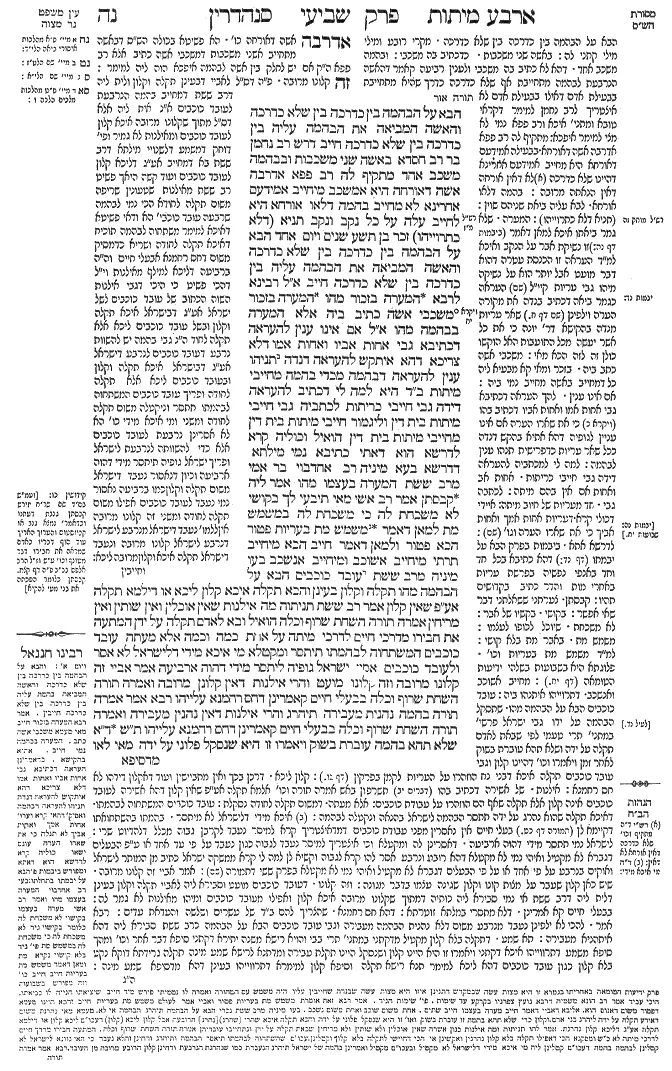
Sanhedrin 55a - Guemara
הבא על הבהמה בין כדרכה בין שלא כדרכה והאשה המביאה את הבהמה עליה בין כדרכה בין שלא כדרכה חייב דרש רב נחמן בר רב חסדא באשה שני משכבות ובבהמה משכב אחד מתקיף לה רב פפא אדרבה אשה דאורחה היא אמשכב מיחייב אמידעם אחרינא לא מחייב בהמה דלאו אורחא היא לחייב עלה על כל נקב ונקב תניא (דלא כתרוייהו) זכר בן תשע שנים ויום אחד הבא על הבהמה בין כדרכה בין שלא כדרכה והאשה המביאה את הבהמה עליה בין כדרכה בין שלא כדרכה חייב א"ל רבינא לרבא המערה בזכור מהו המערה בזכור (ויקרא יח, כב) משכבי אשה כתיב ביה אלא המערה בבהמה מהו א"ל אם אינו ענין להעראה דכתיבא גבי אחות אביו ואחות אמו דלא צריכא דהא איתקש להעראה דנדה תניהו ענין להעראה דבהמה מכדי בהמה מחייבי מיתות ב"ד היא למה לי דכתיב להעראה דידה גבי חייבי כריתות לכתביה גבי חייבי מיתות בית דין וליגמור חייבי מיתות בית דין מחייבי מיתות בית דין הואיל וכוליה קרא לדרשא הוא דאתי כתיבא נמי מילתא דדרשא בעא מיניה רב אחדבוי בר אמי מרב ששת המערה בעצמו מהו אמר ליה קבסתן אמר רב אשי מאי תיבעי לך בקושי לא משכחת לה כי משכחת לה במשמש מת למאן דאמר משמש מת בעריות פטור הכא פטור ולמאן דאמר חייב הכא מיחייב תרתי מיחייב אשוכב ומיחייב אנשכב בעו מיניה מרב ששת עובד כוכבים הבא על הבהמה מהו תקלה וקלון בעינן והכא תקלה איכא קלון ליכא או דילמא תקלה אע"פ שאין קלון אמר רב ששת תניתוה מה אילנות שאין אוכלין ואין שותין ואין מריחין אמרה תורה השחת שרוף וכלה הואיל ובא לאדם תקלה על ידן המתעה את חבירו מדרכי חיים לדרכי מיתה על אחת כמה וכמה אלא מעתה עובד כוכבים המשתחוה לבהמתו תיתסר ומקטלא מי איכא מידי דלישראל לא אסר ולעובד כוכבים אסר ישראל גופיה ליתסר מידי דהוה ארביעה אמר אביי זה קלונו מרובה וזה קלונו מועט והרי אילנות דאין קלונן מרובה ואמרה תורה השחת שרוף וכלה בבעלי חיים קאמרינן דחס רחמנא עלייהו רבא אמר אמרה תורה בהמה נהנית מעבירה תיהרג והרי אילנות דאין נהנין מעבירה ואמרה תורה השחת שרוף וכלה בבעלי חיים קאמרינן דחס רחמנא עלייהו ת"ש ד"א שלא תהא בהמה עוברת בשוק ויאמרו זו היא שנסקל פלוני על ידה מאי לאו
Comments from Rashi on Masechet Sanhedrin Page 55a
הבא על הבהמה בין כדרכה בין שלא כדרכה . מקרי רובע ומילי מילי קתני לה: באשה שני משכבות . כדכתיב בה משכבי: ובהמה משכב אחד . דהא לא כתיב בה משכבי ולענין רביעה קאמר דהאשה הנרבעת לבהמה מתחייבת אף שלא כדרכה כדרך שהיא מתחייבת בבעילת אדם דאילו בבעילת אדם לא איצטריך לרב נחמן למימר דקראי טובא ומתני' איכא ורב פפא נמי לא מצי למימר איפכא: מתקיף לה רב פפא אדרבה אשה דאורחא . בבעילה אמידעם דאורחא היא מחייב אמידעם אחרינא דהיינו שלא כדרכה לא דאין אורחה דאין הנאתה מרובה: בהמה דלאו אורחא . לבא עליה ביאת שניהם שוין: (תניא דלא כתרוייהו): המערה . שלא גמר ביאתו איכא למאן דאמר (ביבמות דף נה:) זו נשיקת אבר על הנקב ואיכא למ"ד העראה זו הכנסת עטרה דהוא דבר מועט אבל יותר הוא על נשיקה מיהו גבי עריות קיי"ל (שם) העראה כגמר ביאה דכתיב בנדה את מקורה הערה וילפינן (שם דף ח.) שאר עריות מנדה בהקישא דר' יונה כי את כל אשר יעשה מכל התועבות האל הוקשו כולן זה לזה הכא מאי: משכבי אשה כתב ביה . בזכר ומאי קא מבעיא ליה כל דמחייב באשה מחייב נמי ביה: אם אינו ענין . להך העראה דכתיבא גבי אחות אמו ואחות אביו דכתיב בהו (ויקרא כ) כי את שארו הערה אם אינו עניין לגופיה דהא אתיא בהקש דנדה ככל שאר עריות כדפרישית תנהו ענין לבהמה: למה לי למכתביה להעראה דידה גבי חייבי כריתות . אחות אב ואחות אם אין בהם מיתה: לכתבה גבי . חד מעריות של חיוב מיתה: איידי דכולי קרא . דעריות אחות אמך ואחות אביך כי את שארו הערה וגו' (שם): לדרשא אתא . ביבמות בפרק הבא על יבמתו (דף נד:) דהא כתיבא בכל חד וחד באנפי נפשיה בפרשת עריות באחרי מות והדר כתיב בקדושים תהיו: קבסתן . צערתני ששאלתני דבר שאי אפשר: בקושי . בקשיו של אבר: לא משכחת . שיוכל לכופו לעצמו: משמש מת . באבר מת בלא קושי: למ"ד משמש מת בעריות וכו' . פלוגתא היא בשבועות בשלהי ידיעות הטומאה (דף יח.): מחייב אשוכב ואנשכב . דתרוייהו איתנהו ביה: עובד כוכבים הבא על הבהמה מהו . שתסקל הבהמה על ידו גבי ישראל פרשי' במתני' תרי טעמי לפי שבאת לאדם תקלה על ידה ושלא תהא עוברת בשוק לאחר זמן ויאמרו וכו' דהיינו קלון וגבי עובד כוכבים תקלה איכא דבני נח הוזהרו על העריות לקמן בפרקין (סנהדרין דף נו.): קלון ליכא . דרכן בכך ואין מתביישין ועוד דאקלון דידהו לא חס רחמנא: אילנות . של אשירה דכתיב בהו (דברים יב) תשרפון באש אמרה תורה וכו' אלמא תקלה אע"פ שאין קלון דהא אשירה לעובד כוכבים אינה קלון אלא תקלה שאף הם הוזהרו על עבודת כוכבים: אלא מעתה . דמשום תקלה לחודה נסקלת: עובד כוכבים המשתחוה לבהמתו . דאיכא תקלה שהוא נהרג על ידה תתסר הבהמה לישראל בהנאה ונקטל"ה לבהמה: איכא מידי דלישראל לא מיתסר . בהמתו בהשתחואתו דקיימא לן (תמורה דף כט.) בעלי חיים אין נאסרין מפני עבודת כוכבים דמדאיצטריך קרא למיסר נעבד לקרבן גבוה מכלל דלהדיוט שרי: לישראל נמי תתסר מידי דהוה ארביעה . דאסרינן לה ומקטלא וכי איצטריך למיסר נעבד לגבוה כגון נעבד על פי עד אחד או ע"פ הבעלים דגברא לא מקטיל ואיהי נמי לא מקטלא דהא רובע ונרבע אסר להו קרא לגבוה וקשיא לן למה לי קרא ממשקה ישראל כתיב מן המותר לישראל ואוקים בנרבע על פי אחד או על פי הבעלים דגברא לא מקטיל ואיהי נמי לא מקטלא בפרק ששי דתמורה (שם): אמר אביי זה קלונו מרובה . שיש כאן קלון שעבר על מצות קונו וקלון שגינה עצמו בדבר מגונה: וזה קלונו . דעובד כוכבים מועט וסבירא ליה לאביי תקלה וקלון בעינן דלית ליה דרב ששת אי נמי סבירא ליה כותיה דמתוך שקלונו מרובה איכא קלון ואפילו מעובד כוכבים ומיהו מאילנות לא גמר לה: בבעלי חיים קא אמרינן . דלא מתסרי במלתא זוטרתא: דהא חס רחמנא . שהצריך להם ב"ד של עשרים ושלשה והעדאת עדים: רבא אמר . להכי לא ילפינן נעבד מנרבע משום דלא נהנית הבהמה מעבירה וגבי עובד כוכבים הבא על הבהמה כרב ששת סבירא ליה דהא איתהניא מעבירה: תא שמע . דתקלה בלא קלון מקטיל מדקתני במתני' תרי בבי והויא רישא משנה יתירא דקתני סיפא דבר אחר וכו' ומהך סיפא משמע דתרווייהו איכא דקתני ויאמרו זו היא היינו קלון ושנסקל היינו תקלת עבירה ומדתנא לרישא שמע מינה תקלה גרידתא דוקא נקט בלא קלון כגון עובד כוכבים דהא ליכא למימר תנא רישא תקלה וסיפא קלון למימרא דתרווייהו בעינן דהא מדסיפא שמע מינה:
Comments from Tosafot - Sanhedrin 55a
אדרבה אשה דאורחה כו' . הא פשיטא בכולה הש"ס דבאשה מתחייב אשני משכבות דמשכבי אשה כתיב אלא רב פפא ה"ק אם יש לחלק בין אשה לבהמה איפכא הוה ליה למימר: זה קלונו מרובה . פ"ה דס"ל לאביי דבעינן תקלה וקלון ולית ליה דרב ששת דמחייב בהמה הנרבעת לעובד כוכבים א"נ אית ליה אלא דס"ל מתוך שקלונו מרובה איכא קלון לעובד כוכבים ומאילנות לא גמיר ופי' דוחק דמשמע דלשנויי מילתא דרב ששת בא דמחייב אע"ג דליכא קלון לעובד כוכבים ועוד קשה היאך פשיט רב ששת מאילנות שטעונין שריפה משום תקלה לחודא הכי נמי לבהמה שרבעה עובד כוכבי' הא ודאי פשיטא דאיכא למימר משתחוה לבהמה תוכיח דאיכא תקלה לחודה ושריא כדמסיק משום דחס רחמנא אבעלי חיים וה"ה ברביעה דליכא למילף מאילנות וי"ל דהכי פשיט כי היכי דגבי אילנות השוה הכתוב של עובד כוכבים לשל ישראל אע"ג דבישראל איכא תקלה וקלון ובשל עובד כוכבים ליכא אלא תקלה לחוד ה"נ גבי בהמה יש להשוות נרבע דעובד כוכבים לנרבע דישראל אע"ג דבישראל איכא תקלה וקלון ובעובד כוכבים ליכא אלא תקלה לחודה ופריך עובד כוכבים המשתחוה לבהמתו תתסר וניקטלה משום תקלה לחודה ומשני ומי איכא מידי כו' הא לא אסרינן נרבעת לעובד כוכבים אלא כדי להשוותה לנרבעת לישראל ופריך ישראל גופיה תיתסר מידי דהוה ארביעה וכיון דנאסור נעבד דישראל משום תקלה וקלון כמו ברביעה נאסור נמי נעבד לעובד כוכבים אפילו משום תקלה לחודה ומשני זה קלונו מרובה אין ללמו' נעבד דישראל מנרבע לישראל דנרבע לישראל קלונו מרובה ונעבד דישראל תקלה איכא וקלון מרובה ליכא:
Sanhedrin 55a - Mishnah translated into english
or one who engages in intercourse with an animal, whether in a typical manner or in an atypical manner, i.e., anal intercourse, and similarly a woman who engages in intercourse with an animal, whether in a typical manner or in an atypical manner, is liable. This baraita sets the minimum age for the passive male at nine years and one day.
Rav Naḥman bar Rav Ḥisda taught: With regard to a woman there are two manners of lying. A woman who engages in intercourse with an animal, whether it is vaginal or anal intercourse, is liable. But with regard to a man who engages in intercourse with an animal there is only one manner of lying, i.e., vaginal intercourse.
Rav Pappa objects to this opinion: On the contrary, a woman, whose typical manner of intercourse is vaginal, is rendered liable for lying with an animal only in that manner; she is not rendered liable for something else, i.e., for engaging in anal intercourse with an animal. With regard to a man who engages in intercourse with an animal, by contrast, since it is not its typical conduct to engage in intercourse with a man, he should be rendered liable for engaging in intercourse with it through each and every orifice.
It is taught in a baraita in accordance with neither of their opinions: One who engages in homosexual intercourse with a male aged nine years and one day, or one who engages in intercourse with an animal, whether in a typical manner, or in an atypical manner, i.e., anal intercourse, and similarly, a woman who engages in intercourse with an animal, whether in a typical manner or in an atypical manner, are liable. Evidently, there is no difference between the nature of the transgression of a woman who engages in bestiality and a man who engages in bestiality in this regard.
Ravina said to Rava: With regard to one who performs the initial stage of intercourse with another male, i.e., insertion of the penis, without completing the intercourse, what is the halakha? Is he liable for engaging in homosexual intercourse?
The Gemara comments: With regard to one who performs the initial stage of intercourse with a male, what is the question? The expression “as with a woman” (Leviticus 18:22) is written with regard to him, which indicates that any act that is considered an act of intercourse with a woman is also considered an act of intercourse with a man. Rather, the question is as follows: With regard to one who performs the initial stage of intercourse with an animal, what is the halakha?
Rava said to him: In the verse: “And you shall not uncover the nakedness of your mother’s sister nor of your father’s sister; for he has made naked [he’era] his relative” (Leviticus 20:19), the word he’era alludes to the initial stage of intercourse [ha’ara]. If the word he’era is not needed for the matter of the initial stage of intercourse in the context where it is written, i.e., for the prohibition of intercourse with one’s father’s sister and one’s mother’s sister, as it is not necessary in that context since the halakha of the initial stage of intercourse with regard to all forbidden sexual relations is compared by the Torah to the halakha of the initial stage of intercourse mentioned with regard to a menstruating woman, apply it instead to the matter of the initial stage of intercourse with an animal. The superfluous expression that appears in the verse concerning one’s aunt teaches that the initial stage of intercourse is considered intercourse even with regard to an animal.
The Gemara asks: Since one who engages in intercourse with an animal is among those who are liable to receive a court-imposed death penalty, why do I need the halakha of one who performs the initial stage of intercourse with an animal to be written in a verse concerning those who are liable to receive karet, i.e., the case of one who engages in intercourse with his aunt? Let the Torah write this halakha with regard to those who are liable to receive a court-imposed death penalty, and one would then derive this halakha concerning those who are liable to receive a court-imposed death penalty from the halakha of those who are liable to receive a court-imposed death penalty, and not from the less relevant halakha of one who engages in intercourse with his aunt, who is punished with karet.
The Gemara answers: Since the entire verse about the punishment of one who engages in intercourse with the sister of his father or mother is superfluous, and comes for the sake of exposition, as this halakha is already stated in other verses (see Leviticus 18:12–13), this matter, i.e., the fact that the initial stage of intercourse is halakhically defined as intercourse, is also written in this verse for the purpose of an exposition, i.e., in order to indicate that this principle holds true with regard to bestiality as well.
Rav Aḥadevoi bar Ami asked Rav Sheshet: With regard to one who performs the initial stage of homosexual intercourse on himself, what is the halakha? Is he liable for homosexual intercourse? Rav Sheshet said to him: You disgust me with your question; such an act is not possible.
Rav Ashi said: What is your dilemma? With regard to doing so with an erect penis, you cannot find such a case. You can find it only when one performs this act of intercourse with a flaccid penis. And the halakha is subject to a dispute: According to the one who says that a man who engages in intercourse with a flaccid penis, with one of those with whom relations are forbidden, is exempt, as that is not considered intercourse, here too, when one does so to himself, he is exempt. And according to the one who says that he is liable, he is rendered liable here for transgressing two prohibitions according to Rabbi Yishmael; he is rendered liable for engaging in homosexual intercourse actively, and he is rendered liable for engaging in homosexual intercourse passively.
The students asked Rav Sheshet: With regard to a gentile who engages in intercourse with an animal, what is the halakha? Must the animal be killed? The Gemara elaborates: Do we need two reasons to kill the animal, namely that it caused a calamity and that it caused shame, and therefore here the animal is not killed, as while there is a calamity, as it caused a person to sin and be executed, there is no shame, as the Jewish court is not responsible for the shame of a gentile? Or perhaps one reason is enough, and an animal is killed because of the calamity it caused even if there is no shame?
Rav Sheshet said: You learned the answer to this question in a baraita: If with regard to trees, which neither eat nor drink nor smell, and nevertheless, if they are used in idolatrous rites, the Torah says: Destroy, burn, and demolish them (see Deuteronomy, chapters 7, 12), and the reason is since a calamity was caused to people by them, then with regard to one who leads another astray from the ways of life to the ways of death, all the more so he is liable to be destroyed. It can be derived from here that any item used for a transgression that renders one liable to be executed should be destroyed.
The Gemara challenges this ruling: If that is so, in the case of a gentile who bows down to his animal, the animal should be forbidden, i.e., it should be prohibited to derive benefit from it, and it should be killed. The Gemara answers: Is there anything that is not forbidden to a Jew, but is forbidden to a gentile? Since a Jew who bows down to an animal does not render it forbidden (see Temura 29b), a gentile who does so does not render it forbidden either.
The Gemara challenges that assumption: With regard to a Jew himself who bows down to his animal, let the animal be forbidden, just as it is in a case of bestiality, when the animal is forbidden and is killed. Abaye says: The cases are not the same. In this case, where one commits bestiality, his shame is great; but in that case, where one worships an animal, his shame is slight, and he will not be so disgraced if the animal is left alive.
The Gemara asks: But with regard to trees that are used in idolatrous rites, in which case the shame of the idol worshippers is not great, the Torah nevertheless says: Destroy, burn, and demolish them. The Gemara answers: We are speaking of living animals. The halakha is different there, as the Merciful One has pity on them. Therefore, if the shame of the person is not great, the animal is not killed.
Rava says that there is a different reason for the distinction between an animal that was worshipped and an animal with which one committed bestiality: The Torah states that because the animal enjoyed the transgression, it must be killed. This cannot be said about an animal that was worshipped.
The Gemara asks: But with regard to trees that are used in idolatrous rites, which do not enjoy the transgression, nevertheless the Torah says: Destroy, burn, and demolish. The Gemara answers: We are speaking of living animals. The halakha is different there, as the Merciful One has pity on them. Therefore, an animal is killed only if it enjoyed the transgression.
The Gemara suggests: Come and hear a resolution from the mishna to the dilemma concerning an animal with which a gentile committed bestiality: Alternatively, it is so that this animal will not pass through the marketplace, and those who see it will say: This is the animal because of which so-and-so was stoned, and its existence would shame his memory. What, is it not
Traduction : The William Davidson digital edition of the Koren Noé Talmud, with commentary by Rabbi Adin Even-Israel Steinsaltz.