 Talmud Bavli
The learning on the whole site is dedicated : L'ilui Nishmat אסתר בת חיים
The learning on the whole site is dedicated : L'ilui Nishmat יוסף בן מושה
The learning on the whole site is dedicated : L'ilui Nishmat Amram ben Itshak Loubaton
Sanhedrin 32a : Youtube
Daf TubeYoutube
2 video classes :
Sanhedrin Page 32a
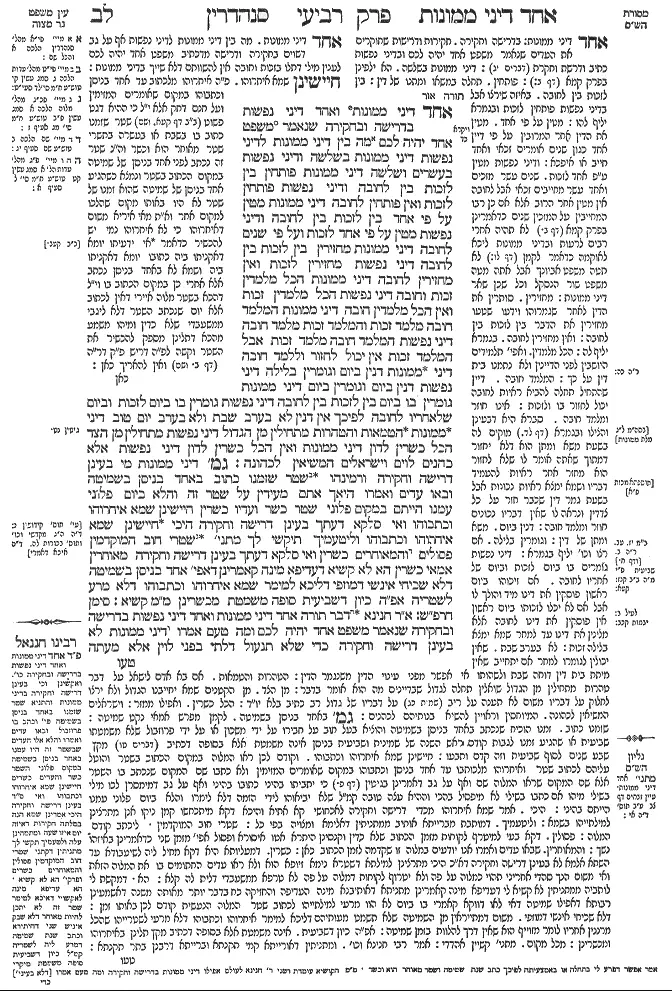
Sanhedrin 32a - Guemara
מתני׳ אחד דיני ממונות ואחד דיני נפשות בדרישה ובחקירה שנאמר (ויקרא כד, כב) משפט אחד יהיה לכם מה בין דיני ממונות לדיני נפשות דיני ממונות בשלשה ודיני נפשות בעשרים ושלשה דיני ממונות פותחין בין לזכות בין לחובה ודיני נפשות פותחין לזכות ואין פותחין לחובה דיני ממונות מטין על פי אחד בין לזכות בין לחובה ודיני נפשות מטין על פי אחד לזכות ועל פי שנים לחובה דיני ממונות מחזירין בין לזכות בין לחובה דיני נפשות מחזירין לזכות ואין מחזירין לחובה דיני ממונות הכל מלמדין זכות וחובה דיני נפשות הכל מלמדין זכות ואין הכל מלמדין חובה דיני ממונות המלמד חובה מלמד זכות והמלמד זכות מלמד חובה דיני נפשות המלמד חובה מלמד זכות אבל המלמד זכות אין יכול לחזור וללמד חובה דיני ממונות דנין ביום וגומרין בלילה דיני נפשות דנין ביום וגומרין ביום דיני ממונות גומרין בו ביום בין לזכות בין לחובה דיני נפשות גומרין בו ביום לזכות וביום שלאחריו לחובה לפיכך אין דנין לא בערב שבת ולא בערב יום טוב דיני ממונות הטמאות והטהרות מתחילין מן הגדול דיני נפשות מתחילין מן הצד הכל כשרין לדון דיני ממונות ואין הכל כשרין לדון דיני נפשות אלא כהנים לוים וישראלים המשיאין לכהונה:
גמ׳ דיני ממונות מי בעינן דרישה וחקירה ורמינהו שטר שזמנו כתוב באחד בניסן בשמיטה ובאו עדים ואמרו היאך אתם מעידין על שטר זה והלא ביום פלוני עמנו הייתם במקום פלוני שטר כשר ועדיו כשרין חיישינן שמא איחרוהו וכתבוהו ואי סלקא דעתך בעינן דרישה וחקירה היכי חיישינן שמא איחרוהו וכתבוהו וליטעמיך תיקשי לך מתני' שטרי חוב המוקדמין פסולים והמאוחרים כשרין ואי סלקא דעתך בעינן דרישה וחקירה מאוחרין אמאי כשרין הא לא קשיא דעדיפא מינה קאמרינן דאפי' אחד בניסן בשמיטה דלא שכיחי אינשי דמוזפי דליכא למימר שמא איחרוהו וכתבוהו דלא מרע לשטריה אפ"ה כיון דשביעית סופה משמטת מכשרינן מ"מ קשיא:
סימן חרפ"ש:
א"ר חנינא דבר תורה אחד דיני ממונות ואחד דיני נפשות בדרישה ובחקירה שנאמר משפט אחד יהיה לכם ומה טעם אמרו דיני ממונות לא בעינן דרישה וחקירה כדי שלא תנעול דלת בפני לוין אלא מעתה
Comments from Rashi on Masechet Sanhedrin Page 32a
מתני' אחד דיני ממונות: בדרישה וחקירה . חקירות ודרישות שחוקרים את העדים שנאמר משפט אחד יהיה לכם ובדיני נפשות כתיב ודרשת וחקרת (דברים יג): דיני ממונות בשלשה . הא ילפינן בפרק קמא (דף ב:): פותחין . תחלה במשאו ומתנו של דין: בין לזכות בין לחובה . באיזה שירצו אבל בדיני נפשות פותחין לזכות ובגמרא יליף להו: מטין על פי אחד . מטין את הדין אחר המרובין על פי דיין אחד כגון שנים אומרים זכאי ואחד חייב או איפכא: ודיני נפשות מטין ע"פ אחד לזכות . שנים עשר מזכים ואחד עשר מחייבים זכאי אבל לחובה אין מטין אחר הרוב אלא אם כן רבו המחייבין על המזכין שנים כדאמרינן בפרק קמא (דף ב.) לא תהיה אחרי רבים לרעות ובדיני ממונות ליכא לאוקמה כדאמר לקמן (סנהדרין דף לו:) לא תטה משפט אביונך אבל אתה מטה משפט שור הנסקל וכל שכן שאר דיני ממונות: מחזירין . סותרין את הדין לאחר שגמרוהו וידעו שטעו מחזירין את הדבר בין לזכות בין לחובה: ואין מחזירין לחובה . בגמרא יליף לה: הכל מלמדין . ואפי' תלמידים היושבין לפני הדיינין ולא נתמנו בית דין על כך: המלמד חובה . דיין שהתחיל תחלה להביא ראיות לחובה יכול לחזור בו ולזכות: אינו חוזר ומלמד חובה . סברא היא דבעינן והצילו ובגמרא (דף לד.) מוקים לה בשעת משא ומתן הוא דלא יחזור דמתוך שאתה אומר לו שלא לחזור הוא מחזר אחר ראיות להעמיד דבריו ושמא ימצא ראיות נכונות אבל בשעת גמר דין שכבר חזר על כל צדדין ונראה לו שאין דבריו נכונים חוזר ומלמד חובה: דנין ביום . משא ומתן של דין: וגומרין בלילה . אם רצו וכו' יליף בגמרא: דיני נפשות גומרים בו ביום לזכות וביום של אחריו לחובה . אם זיכוהו ביום ראשון פוסקין את דינו מיד והולך לו אבל אם לא יכלו לזכותו ביום ראשון אין פוסקין את דינו לחובה אלא מלינין את דינו עד למחר שמא ימצא בלילה זכות: לא בערב שבת . שאין יכולין לגומרו למחר אם יתחייב שאין מיתת בית דין דוחה שבת ולשהותו אי אפשר מפני עינוי הדין משנגמר הדין: הטהרות והטמאות . אם בא אדם לישאל על דבר טהרות מתחילין מן הגדול שואלין תחלה לגדול שבדיינים מה הוא אומר בדבר: מן הצד . מן הקטנים שמא יחייבנו הגדול ולא ירצו לחלוק על דבריו משום לא תענה על ריב (שמות כג) על דבריו של גדול רב כתיב בלא יו"ד: הכל כשרין . ואפילו ממזר: וישראלים המשיאין לכהונה . המיוחסין וראויין להשיא בנותיהם לכהנים: גמ' באחד בניסן בשמיטה . לקמן מפרש אמאי נקט שמיטה: שזמנו כתוב . זמנו הוכיח שנכתב באחד בניסן בשמיטה והוציא בעל חוב על חבירו על ידי משכון או על ידי פרוזבול שלא משמטתו שביעית או שהגיע זמנו לגבות קודם ראש השנה של שמינית ושביעית בניסן אינה משמטת אלא בסופה דכתיב (דברים טו) מקץ שבע שנים לסוף שביעית וזה קדם ותבעו: חיישינן שמא איחרוהו וכתבוהו . וקודם לכן ראו המלוה במקום הכתוב בשטר והוטל עליהם לכתוב שטר ואיחרוהו מלכותבו עד אחד בניסן וכתבוהו במקום שאומרים המזימין ולא כתבו שם המקום שנכתב בו השטר אלא שם המקום שראו המלוה שם ואף על גב דאמרינן בגיטין (דף פ.) כי יתביתו בהיני כתובו בהיני ואף על גב דמימסרן לכו מילי בשילי מיהו אם כתבו בשילי לא מיפסיל בהכי וההיא עצה טובה קמ"ל שלא יביאוהו לידי הזמה דלא לימרו והלא ביום פלוני עמנו הייתם בהיני: היכי . אמר שמא איחרוהו מכדי דרישה וחקירה לאכחושי קא אתיא והיכא דקא מיתכחשו קמן ניקו אנן מתרצינן למילתייהו בשמא: וליטעמיך . דמותבת מברייתא אותיב ממתניתין דאלימא ומצויה בפי כל: שטרי חוב המוקדמין . ליכתב קודם המלוה: פסולין . דקא בעי למיטרף לקוחות מזמן הכתוב שלא כדין וקנסינן היתרא אטו איסורא ופסול אפי' מזמן שני כדאמרינן באיזהו נשך: והמאוחרין . שבאו עדים ואמרו אנו יודעים במלוה זו שקדמה לזמן הכתוב כאן: כשרין . דמעליותא היא דקא מחיל ליה לשיעבודא עד השתא אלמא לא בעינן דרישה וחקירה דא"כ היכי מתרצינן למילתא דשטרא נימא זיופא הוא ולא ראו עדים החתומים בו את המלוה הזאת ואי משום הנך סהדי אחריני תהוי כמלוה על פה ולא יטרוף לקוחות דמלוה על פה לא טרפא ממשעבדי דלית לה קלא: הא . דמקשת לי לותביה ממתניתין לא קשיא לי דעדיפא מינה קאמרינן מתניתא דאותיבנא מינה העדיפה והחזיקה כח בדבר יותר מאותה משנה דאשמעינן רבותא דאפילו שמיטה דאי לאו דווקא קאמרי בו ביום לא הוו מרעי למילתייהו לכתוב שטר המלוה הנעשית קודם לכן באותו זמן: דלא שכיחי אינשי דמוזפי . משום דמתייראין מן השמיטה שלא תשמט מעותיהם דליכא למימר איחרוהו וכתבוהו דלא מרעי לשטרייהו שהכל מרננין אחריו לומר מזוייף הוא שאין דרך להלוות בזמן שמיטה: אפ"ה כיון דשביעית . אינה משמטת אלא בסופה דכתיב מקץ תלינן באיחרוהו ומכשרינן: מכל מקום . מתני' קשיין אהדדי: אמר רבי חנינא וכו' . ומתניתין דאורייתא קמי תקנתא וברייתא דרבנן בתר תקנתא:
Comments from Tosafot - Sanhedrin 32a
מתני' אחד דיני ממונות. מה בין דיני ממונות לדיני נפשות . אף על גב דשוים בחקירה ודרישה מדכתיב משפט אחד יהיה לכם לענין מילי דתלו בזכות וחובה אין להשוותם דלא שייך בדיני ממונות: חיישינן שמא איחרוהו . פ"ה איחרוהו מלכתוב עד אחד בניסן וכתבוהו במקום שאומרים המזימין ועל חנם דחק אלא י"ל כי ההיא דגט פשוט (ב"ב דף קעא. ושם) שטר שזמנו כתוב בו בשבת או בעשרה בתשרי שטר מאוחר הוא וכשר וה"נ שטר זה נכתב לפני אחד בניסן של שמיטה במקום הכתוב בשטר ונמצא כשהגיע אחד בניסן של שמיטה שהוא זמנו של שטר לא היו באותו מקום שהלכו למקום אחר וא"ת מאי איריא משום דאיחרוהו כי לא איחרוהו נמי יש להכשיר כדאמר אי ידעיתו יומא דאקניתו ביה כתובו יומא דאקניתו ביה ושמא לא באחד בניסן נכתב אלא אחרי כן במקום הכתוב בו וי"ל דהכא בשטר מלוה איירי דאין לכתוב אלא יום שנכתב השטר דלא ליגבי ממשעבדי שלא כדין ומיהו משמע מהכא דתלינן מספק להכשיר את השטר וקשה לפ"ה דריש פ"ק דר"ה (דף ב. ושם) ואין להאריך כאן:
Sanhedrin 32a - Mishnah translated into english
MISHNA: Both cases of monetary law and cases of capital law are equal with regard to the requirement for inquiry and interrogation of the witnesses, as it is stated: “You shall have one manner of law” (Leviticus 24:22), meaning that all legal procedures must be uniform.
Having stated the essential similarity between the two, the mishna enumerates the differences between them. What are the differences between cases of monetary law and cases of capital law? Cases of monetary law are judged by a court of three judges, and cases of capital law are judged by a court of twenty-three judges. In cases of monetary law, the court opens the deliberations either with a claim to exempt the accused, or with a claim to find him liable. And in cases of capital law, the court opens the deliberations with a claim to acquit the accused, but it does not open the deliberations with a claim to find him liable.
In cases of monetary law, the court directs, i.e., issues, the ruling based on a majority of one judge, either to exempt, or to find liable. But in cases of capital law, the court directs the judgment based on a majority of one judge to acquit and based on a majority of two judges to find liable.
In cases of monetary law, the court brings the accused back to be judged again if new evidence arises, either with a claim to exempt the accused, or with a claim to find him liable. In cases of capital law, the court brings the accused back to be judged again with a claim to acquit him, but the court does not bring him back to be judged with a claim to find him liable.
In cases of monetary law, all those present at the trial may teach a reason to exempt a litigant or to find him liable. In cases of capital law, all those present at the trial may teach a reason to acquit the accused, but not all present may teach a reason to find him liable. Only the judges can teach a reason to find him liable.
In cases of monetary law, one who initially teaches a reason to find the accused liable may then teach a reason to exempt him, and one who initially teaches a reason to exempt him may then teach a reason to find him liable. In cases of capital law, one who initially teaches a reason to find him liable may then teach a reason to acquit, but one who initially teaches a reason to acquit may not return and teach a reason to find him liable.
In cases of monetary law, the court judges during the daytime, and may conclude the deliberations and issue the ruling even at night. In cases of capital law, the court judges during the daytime, and concludes the deliberations and issues the ruling only in the daytime.
In cases of monetary law, the court may conclude the deliberations and issue the ruling even on that same day, whether to exempt the accused or to find him liable. In cases of capital law, the court may conclude the deliberations and issue the ruling even on that same day to acquit the accused, but must wait until the following day to find him liable. Therefore, since capital cases might continue for two days, the court does not judge cases of capital law on certain days, neither on the eve of Shabbat nor the eve of a Festival.
In cases of monetary law, and likewise in the cases of ritual impurity and purity, the judges commence expressing their opinions from the greatest of the judges. In cases of capital law, the judges commence issuing their opinions from the side, where the least significant judges sit.
All are fit to judge cases of monetary law. But not all are fit to judge cases of capital law; only priests, Levites, and Israelites who are of sufficiently fit lineage to marry their daughters to members of the priesthood are fit to judge cases of capital law.
GEMARA: The mishna teaches that cases of monetary law require inquiry and interrogation of the witnesses. The Gemara asks: Do we require inquiry and interrogation in cases of monetary law? And the Gemara raises a contradiction from a baraita (Tosefta, Makkot 1:2): With regard to a promissory note whose date is written on the first of Nisan of the Sabbatical Year, and witnesses came and said to the signatory witnesses: How is it that you are testifying concerning this promissory note? But is it not so that on such and such day on which the promissory note was written you were with us in such and such place? The promissory note is nevertheless valid, and its witnesses remain fit to bear witness. The reason they are not proven to have signed the promissory note falsely is that we are concerned that perhaps they delayed and wrote it, i.e., the loan was given on an earlier date, and the promissory note was postdated.
The Gemara explains the contradiction: And if it enters your mind to say that we require inquiry and interrogation in cases of monetary law, how are we concerned that perhaps they delayed and wrote it? The signatory witnesses would be asked on which day they signed the promissory note, and when that does not accord with what is written in the promissory note, their testimony would be disregarded.
The Gemara counters: And according to your reasoning that we do not require inquiry and interrogation in cases of monetary law, the mishna elsewhere should pose a difficulty for you as well. As mishnayot are more authoritative than baraitot, it is preferable to raise a contradiction between two mishnayot than to raise a contradiction from a baraita to a mishna. The mishna teaches (Shevi’it 10:5): Antedated promissory notes are not valid, but postdated promissory notes are valid. And if it enters your mind to say we require inquiry and interrogation in cases of monetary law and that if there is a contradiction the testimony is not accepted, why are postdated promissory notes valid? The witnesses’ testimony does not accord with what is written in the document.
The Gemara explains: This is not difficult. There is a reason why the contradiction was raised from the baraita, not from the mishna. We are saying a better, i.e., stronger, contradiction than the one from the mishna. As one sees in the baraita that even with regard to a promissory note written on the first of Nisan in the Sabbatical Year, when it is not common to find people to lend money, as all debts are canceled at the close of the Sabbatical Year, where it is not as reasonable to say that perhaps they delayed and wrote the promissory note, as one would not damage his promissory note by postdating it so close to the end of the Sabbatical Year; even so, since the Sabbatical Year cancels debts only at its close, we are concerned that the promissory note is postdated and we deem it valid. This is why the contradiction was raised from the baraita, not from the mishna.
The Gemara returns to its question: In any case, the contradiction between the mishna and the baraita is difficult. The Gemara presents a mnemonic device for the following discussion, with each letter representing the name of a Sage who suggests an answer: Ḥet, reish, peh, shin.
The Gemara cites the first answer. Rabbi Ḥanina says: By Torah law, both cases of monetary law and cases of capital law are equal with regard to inquiry and interrogation of witnesses, as it is stated: “You shall have one manner of law” (Leviticus 24:22). And what is the reason the Sages said that in cases of monetary law we do not need inquiry and interrogation? It is an ordinance instituted by the Sages so as not to lock the door in the face of potential borrowers. The Sages were concerned that intensive examination of the witnesses would often result in contradictory testimony and render it difficult for lenders to collect their debts. This could lead to people refraining from lending money.
The Gemara asks: If that is so that the Sages removed the requirement for inquiry and interrogation in cases of monetary law,
Traduction : The William Davidson digital edition of the Koren Noé Talmud, with commentary by Rabbi Adin Even-Israel Steinsaltz.