 Talmud Bavli
The learning on the whole site is dedicated : L'ilui Nishmat Jamila bat Chlomo Abensour
The learning on the whole site is dedicated : L'ilui Nishmat Yechayahou ben Moche
The learning on the whole site is dedicated : L'ilui Nishmat אליעזר בן רחל
Sanhedrin 109b : Youtube
Daf TubeYoutube
2 video classes :
Sanhedrin Page 109b
Sanhedrin 109b - Guemara
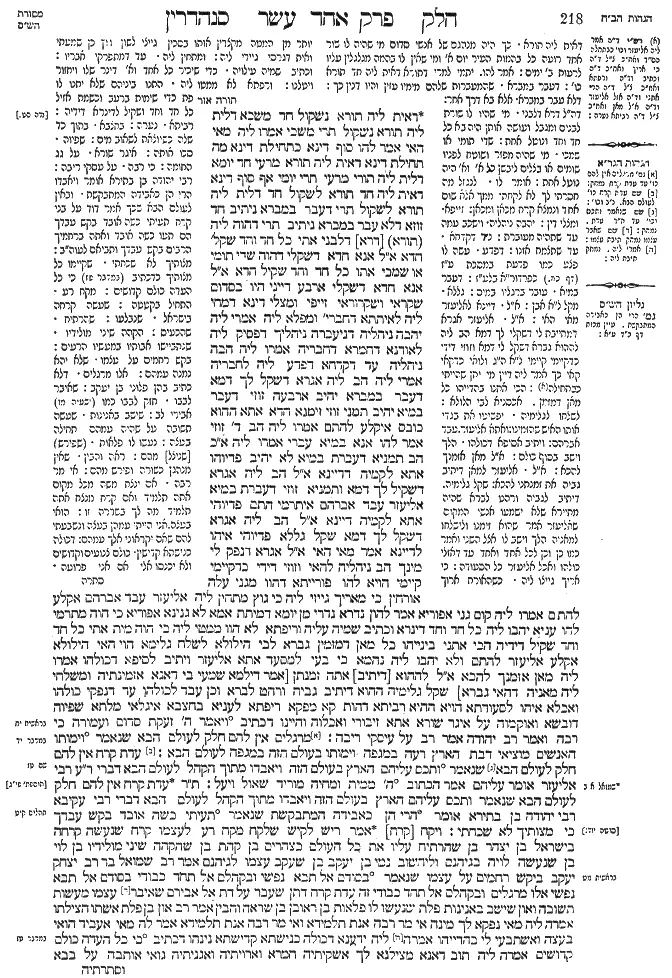
דאית ליה תורא נשקול חד משכא דלית ליה תורא נשקול תרי משכי אמרו ליה מאי האי אמר להו סוף דינא כתחילת דינא מה תחילת דינא דאית ליה תורא מרעי חד יומא דלית ליה תורי מרעי תרי יומי אף סוף דינא דאית ליה חד תורא לשקול חד דלית ליה תורא לשקול תרי דעבר במברא ניתיב חד זוזא דלא עבר במברא ניתיב תרי דהוה ליה (תורא) [דרא] דלבני אתי כל חד וחד שקל' חדא א"ל אנא חדא דשקלי דהוה שדי תומי או שמכי אתו כל חד וחד שקיל חדא א"ל אנא חדא דשקלי ארבע דייני היו בסדום שקראי ושקרוראי זייפי ומצלי דינא דמחי ליה לאיתתא דחברי' ומפלא ליה אמרי ליה יהבה ניהליה דניעברה ניהליך דפסיק ליה לאודנא דחמרא דחבריה אמרו ליה הבה ניהליה עד דקדחא דפדע ליה לחבריה אמרי ליה הב ליה אגרא דשקל לך דמא דעבר במברא יהיב ארבעה זוזי דעבר במיא יהיב תמני זוזי זימנא חדא אתא ההוא כובס איקלע להתם אמרו ליה הב ד' זוזי אמר להו אנא במיא עברי אמרו ליה א"כ הב תמניא דעברת במיא לא יהיב פדיוהו אתא לקמיה דדיינא א"ל הב ליה אגרא דשקיל לך דמא ותמניא זוזי דעברת במיא אליעזר עבד אברהם איתרמי התם פדיוהי אתא לקמיה דיינא א"ל הב ליה אגרא דשקל לך דמא שקל גללא פדיוהי איהו לדיינא אמר מאי האי א"ל אגרא דנפק לי מינך הב ניהליה להאי וזוזי דידי כדקיימי קיימי הויא להו פורייתא דהוו מגני עלה אורחין כי מאריך גייזי ליה כי גוץ מתחין ליה אליעזר עבד אברהם אקלע להתם אמרו ליה קום גני אפוריא אמר להון נדרא נדרי מן יומא דמיתת אמא לא גנינא אפוריא כי הוה מתרמי להו עניא יהבו ליה כל חד וחד דינרא וכתיב שמיה עליה וריפתא לא הוו ממטי ליה כי הוה מית אתי כל חד וחד שקיל דידיה הכי אתני בינייהו כל מאן דמזמין גברא לבי הילולא לשלח גלימא הוי האי הילולא אקלע אליעזר להתם ולא יהבו ליה נהמא כי בעי למסעד אתא אליעזר ויתיב לסיפא דכולהו אמרו ליה מאן אזמנך להכא א"ל לההוא [דיתיב] אתה זמנתן [אמר דילמא שמעי בי דאנא אזמינתיה ומשלחי ליה מאניה דהאי גברא] שקל גלימיה ההוא דיתיב גביה ורהט לברא וכן עבד לכולהו עד דנפקי כולהו ואכלא איהו לסעודתא הויא ההיא רביתא דהות קא מפקא ריפתא לעניא בחצבא איגלאי מלתא שפיוה דובשא ואוקמוה על איגר שורא אתא זיבורי ואכלוה והיינו דכתיב (בראשית יח, כ) ויאמר ה' זעקת סדום ועמורה כי רבה ואמר רב יהודה אמר רב על עיסקי ריבה:
מרגלים אין להם חלק לעולם הבא שנאמר (במדבר יד, לז) וימותו האנשים מוציאי דבת הארץ רעה במגפה וימותו בעולם הזה במגפה לעולם הבא:
עדת קרח אין להם חלק לעולם הבא שנאמר (במדבר טז, לג) ותכס עליהם הארץ בעולם הזה ויאבדו מתוך הקהל לעולם הבא דברי ר"ע רבי אליעזר אומר עליהם אמר הכתוב (שמואל א ב, ו) ה' ממית ומחיה מוריד שאול ויעל:
ת"ר עדת קרח אין להם חלק לעולם הבא שנאמר ותכס עליהם הארץ בעולם הזה ויאבדו מתוך הקהל לעולם הבא דברי רבי עקיבא רבי יהודה בן בתירא אומר הרי הן כאבידה המתבקשת שנאמר (תהלים קיט, קעו) תעיתי כשה אובד בקש עבדך כי מצותיך לא שכחתי:
ויקח [קרח] אמר ריש לקיש שלקח מקח רע לעצמו קרח שנעשה קרחה בישראל בן יצהר בן שהרתיח עליו את כל העולם כצהרים בן קהת בן שהקהה שיני מולידיו בן לוי בן שנעשה לויה בגיהנם וליחשוב נמי בן יעקב בן שעקב עצמו לגיהנם אמר רב שמואל בר רב יצחק יעקב ביקש רחמים על עצמו שנאמר (בראשית מט, ו) בסודם אל תבא נפשי ובקהלם אל תחד כבודי בסודם אל תבא נפשי אלו מרגלים ובקהלם אל תחד כבודי זה עדת קרח דתן שעבר על דת אל אבירם שאיבר עצמו מעשות תשובה ואון שישב באנינות פלת שנעשו לו פלאות בן ראובן בן שראה והבין אמר רב און בן פלת אשתו הצילתו אמרה ליה מאי נפקא לך מינה אי מר רבה אנת תלמידא ואי מר רבה אנת תלמידא אמר לה מאי אעביד הואי בעצה ואשתבעי לי בהדייהו אמרה ליה ידענא דכולה כנישתא קדישתא נינהו דכתיב (במדבר טז, ג) כי כל העדה כולם קדושים אמרה ליה תוב דאנא מצילנא לך אשקיתיה חמרא וארויתיה ואגניתיה גואי אותבה על בבא
Comments from Rashi on Masechet Sanhedrin Page 109b
דעבר במברא . שהמעברות שלהם מימיו עזין והיו דנין כך: דלא עבר במברא . אלא בא דרך אחר: דה"ל דרא דלבני . מי שהיו לו שורת לבנים ומגבל ועושה אותן היה בא כל חד וחד ונוטל אחת: שדי תומי או שמכי . מי שהיה מפזר ושוטח לפניו שומים או בצלים ליבשן כל א' וא' היה נוטל אחת: אומר לו . לנגזל מה חסרתי לך לא לקחתי ממך אלא שום אחד ונמצא קרח מכאן ומכאן: זייפא . ומצלי דין: יהבה ניהליה . וישכב עמה עד שתהיה מעוברת: עד דקדחא . עד שתצמח אזנו: דפדע . עשה לו פצע כמו פדעת במסכת ע"ז (דף כח.) כפרדור"א בלע"ז: דעבר במיא . עובר ברגליו במים: גללא . מקל ל"א אבן: א"ל . דיינא לאליעזר מאי האי: א"ל . אליעזר אגרא דמחייבת לי דשקלי לך דמא הב ליה לההוא גברא דשקל לי דמא וזוזי דידי כדקיימי קיימי ל"א ה"ג ולואי כדקאי קאי כך אמר ליה דיין מי יתן שהייתי כבתחילה: כי אריך גייצו ליה . כשהאורח ארוך יותר מן המטה מקצרין אותו בסכין גייצי לשון גוץ כן שמעתי ואית דגרסי גיידי ליה: ומתחין ליה . עד דמתפרקי אבריו: וכתיב שמיה עילויה . כדי שיכיר כל אחד וא' דינר שלו ויחזור ויטלנו: ורפתא לא ממטו ליה . התנו ביניהם שלא יתנו לו פת כדי שימות ברעב וכשמת אזיל כל חד וחד ושקיל לדינרא דידיה: הכי אתנו בהדייהו כל מאן דמזמן . אכסניא לבי הלולא: לשלחו לגלימיה . יפשיטו את בגדי אותו האיש שהזמינו: ואתא אליעזר . עבד אברהם: ויתיב אסיפא דכולהו . הלך וישב בסוף כולם: א"ל מאן אזמנך . להכא: א"ל . אליעזר למאן דיתיב גביה את זמנתני להכא: שקל גלימיה . דיתיב לגביה ורהט לברא שהיה מתיירא שלא ישמעו אנשי המקום שאליעזר אמר שהוא זימנו ולישלחו למאניה הלך וישב לו אצל השני ואמר כמו כן וכן לכל אחד ואחד עד דאזלי כולהו ואכל אליעזר כל הסעודה: רביתא . נערה: בחצבא . בתוך כד שלה כשיוצאת לשאוב מים: שפיוה . סכו אותה: איגר שורא . על גג החומה: כי רבה . על עסקי ריבה: רבי יהודה בן בתירא אומר ויאבדו הרי הן כאבידה המתבקשת . ובאין לעולם הבא שכך אמר דוד על בני קרח תעיתי כשה אובד בקש עבדך הם תעו כשה אובד ואתה ברחמיך הרבים בקש עבדך ותביאם לעוה"ב: מצותיך לא שכחתי . שקיימו כל מצותיך כדכתיב (במדבר טז) כי כל העדה כולם קדושים: מקח רע . התחיל בקטטה: שעשה קרחה בישראל . שנבלעו: שהרתיח . שהכעיס: הקהה שיני מולידיו . שנתביישו אבותיו במעשיו הרעים: בקש רחמים על עצמו . שלא יהא נמנה עמהם: אלו מרגלים . דלא כתיב בהן פלוני בן יעקב: שאיבר לבבו . חזק לבבו כמו (ישעיהו מו) אבירי לב: שישב באנינות . שעשה תשובה על שהיה עמהם תחילה בעצה: נעשו לו פלאות . (שפירש) [שניצל] מהם: ראה והבין . שאין מנהגן כשורה ופירש מהם: אי מר רבה . אם ינצח משה מכל מקום אתה תלמיד ואם קרח מנצח אתה תלמיד מה לך בשררה זו: הואי בעצה . אני הייתי עמהן בעצה ונשבעתי להם שאם יקראוני אלך עמהם: דכולה כנישתא קדישין . כולם צנועים וקדושים ולא יכנסו אלי אם אני פרועה.
Sanhedrin 109b - Mishnah translated into english
Let anyone who has one ox take one hide and let anyone who does not have an ox take two hides. The people of Sodom said to the orphan: What is the reason for this? The orphan said to them: The ultimate rule is parallel to the initial rule; just as the initial rule is that anyone who has one ox shall herd the city’s animals for one day and anyone who does not have any oxen shall herd the city’s animals for two days, so too, the ultimate rule is: Let anyone who has one ox take one hide and let anyone who does not have an ox take two hides.
Furthermore, they declared in Sodom: Let one who crosses on a ferry give one dinar as payment; let one who does not cross on a ferry, but walks in the river, give two dinars. In addition, when there was anyone who had a row of bricks, each and every one of the people of Sodom would come and take one brick and say to him: I am taking only one, and you are certainly not particular about so inconsequential an item, and they would do this until none remained. And when there was anyone who would cast garlic or onions to dry, each and every one of the people of Sodom would come and take one and say to him: I took only one garlic or onion, and they would do this until none remained.
There were four judges in Sodom and they were named for their actions: Shakrai, meaning liar, and Shakrurai, habitual liar, Zayfai, forger, and Matzlei Dina, perverter of justice. These were the judgments that they rendered: In a case of one who strikes the wife of another and causes her to miscarry, they would say to the woman’s husband: Give the woman to the one who struck her, so that she will be impregnated for you again. In a case of one who severed the ear of another’s donkey, they would say to the owner of the donkey: Give the donkey to the one who caused the damage, until the ear grows back. In a case of one who wounds another, they would say to the injured party: Give the one who wounded you a fee, as he let your blood.
And they instituted an ordinance: One who crossed the river on a ferry gives four dinars, and one who crossed the river in the water gives eight dinars. One time a certain launderer came and arrived there. The people of Sodom said to him: Give four dinars as payment for the ferry. He said to them: I crossed in the water. They said to him: If so, give eight dinars, as you crossed in the water. He did not give the payment, and they struck him and wounded him. He came before the judge to seek compensation. The judge said to him: Give your assailant a fee, as he let your blood, and eight dinars, as you crossed the river in the water.
Eliezer, servant of Abraham, happened to come there, and they wounded him. He came before the judge to seek compensation. The judge said to him: Give your assailant a fee, as he let your blood. He took a stone and he wounded the judge. The judge said: What is this? Eliezer said to him: The fee that is to be paid to me by you, give it to that person who wounded me, and my money will remain where it remains.
The Gemara continues to discuss the sins of the people of Sodom: They had beds on which they would lay their guests; when a guest was longer than the bed they would cut him, and when a guest was shorter than the bed they would stretch him. Eliezer, servant of Abraham, happened to come there. They said to him: Come lie on the bed. He said to them: I took a vow that since the day my mother died I do not lie on a bed.
When a poor person would happen to come to Sodom, each and every person would give him a dinar, and the name of the giver was written on each dinar. And they would not give or sell him bread, so that he could not spend the money and would die of hunger. When he would die, each and every person would come and take his dinar.
This is what the people of Sodom stipulated among themselves: Whoever invites a man to a wedding, his cloak will be removed. There was this wedding, and Eliezer, servant of Abraham, arrived there and they did not give him bread. When he sought to dine, Eliezer came and sat at the end, behind everyone. They said to him: Who invited you to here? He said to the one sitting next to him: You invited me. That man said to himself: Perhaps they will hear that I invited him and they will remove the garment of that man, referring to himself. The one who sat next to him took his cloak and ran outside. And likewise, Eliezer did the same for all of them until they all left, and he ate the meal.
There was a young woman who would take bread out to the poor people in a pitcher so the people of Sodom would not see it. The matter was revealed, and they smeared her with honey and positioned her on the wall of the city, and the hornets came and consumed her. And that is the meaning of that which is written: “And the Lord said: Because the cry of Sodom and Gomorrah is great [rabba]” (Genesis 18:20). And Rav Yehuda says that Rav says: Rabba is an allusion to the matter of the young woman [riva] who was killed for her act of kindness. It is due to that sin that the fate of the people of Sodom was sealed.
§ The mishna teaches: The spies who spread an evil report of their visit to Canaan have no share in the World-to-Come, as it is stated: “And those men who spread the evil report about the land died by plague before the Lord” (Numbers 14:37). “And…died” indicates in this world, and “by plague” indicates for the World-to-Come.
The members of the assembly of Korah have no share in the World-to-Come, as it is stated: “And the earth closed upon them” (Numbers 16:33), meaning in this world, and also: “And they perished from among the assembly” (Numbers 16:33), meaning in the World-to-Come; this is the statement of Rabbi Akiva. Rabbi Eliezer says: About the assembly of Korah, the verse states: “The Lord kills and makes alive; He lowers to the grave, and raises” (I Samuel 2:6), indicating that the assembly of Korah has a share in the World-to-Come.
The Sages taught in a baraita (Tosefta 13:9): The members of the assembly of Korah have no share in the World-to-Come, as it is stated: “And the earth closed upon them” (Numbers 16:33), meaning in this world, and also: “And they perished from among the assembly” (Numbers 16:33), meaning in the World-to-Come; this is the statement of Rabbi Akiva. Rabbi Yehuda ben Beteira says: Although it says that they perished, they are like a lost item that is sought, ultimately found, and rehabilitated, as it is stated: “I have gone astray like a lost sheep; seek out your servant, for I do not forget your mitzvot” (Psalms 119:176).
Apropos Korah, the Gemara proceeds to interpret the verses written concerning him. “And Korah, son of Izhar, son of Kohath, son of Levi, took [vayikkaḥ]” (Numbers 16:1), Reish Lakish says: He purchased [lakaḥ] a bad acquisition for himself, as through his actions he drove himself from the world. “Korah” alludes to the fact that because of him a void [korḥa] was created in the children of Israel. “Son of Izhar,” is referring to a son who incited the wrath of the entire world upon him like the heat of the afternoon [tzohorayim]. “Son of Kohath,” is referring to a son who blunted [hik’ha] the teeth of his parents, i.e., he shamed them with his conduct. “Son of Levi,” is referring to a son who became an escort [levaya] in Gehenna.
The Gemara asks: But if Korah’s lineage is being interpreted disparagingly, why not let the Torah also include: Son of Jacob [Ya’akov], and interpret it: A son who contorted [she’akav] himself until he reached Gehenna? Rav Shmuel bar Rav Yitzḥak says: Jacob prayed for mercy for himself that his name would not be included in the lineage of Korah, as it is stated: “Let my soul not come into their council; to their assembly let my honor not be united” (Genesis 49:6). “Let my soul not come into their council”; these are the spies. Jacob prayed that his name would not be mentioned in their regard. “To their assembly let my honor not be united”; this is referring to the assembly of Korah.
The Gemara proceeds to interpret the names of Korah’s cohorts: “Dathan and Abiram, the sons of Eliab, and On, the son of Peleth, sons of Reuben” (Numbers 16:1). “Dathan” is one who violated the precepts [dat] of God. “Abiram” is one who braced [iber] himself from repenting. “And On” indicates one who sat in acute mourning [aninut] over the sin that he committed, and he repented and was spared. “Peleth” is one for whom wonders [pelaot] were performed. Son of Reuben [Reuven], is a son who saw and understood [ra’a vehevin] the nature of what was transpiring and repented.
Rav says: On, son of Peleth, did not repent on his own; rather, his wife saved him. She said to him: What is the difference to you? If this Master, Moses, is the great one, you are the student. And if this Master, Korah, is the great one, you are the student. Why are you involving yourself in this matter? On said to her: What shall I do? I was one of those who took counsel and I took an oath with them that I would be with them. She said to him: I know that the entire assembly is holy, as it is written: “For all the assembly is holy” (Numbers 16:3), and they observe the restrictions of modesty. She said to him: Sit, for I will save you. She gave him wine to drink and caused him to become drunk and laid him on a bed inside their tent. She sat at the entrance of the tent
Traduction : The William Davidson digital edition of the Koren Noé Talmud, with commentary by Rabbi Adin Even-Israel Steinsaltz.