 Talmud Bavli
The learning on the whole site is dedicated : L'ilui Nishmat Reuven ben Rivka SEBBAG
The learning on the whole site is dedicated : L'ilui Nishmat Amram ben Itshak Loubaton
The learning on the whole site is dedicated : L'ilui Nishmat Margalit bat Ledicia
Sanhedrin 109a : Youtube
Daf TubeYoutube
2 video classes :
Sanhedrin Page 109a
Sanhedrin 109a - Guemara
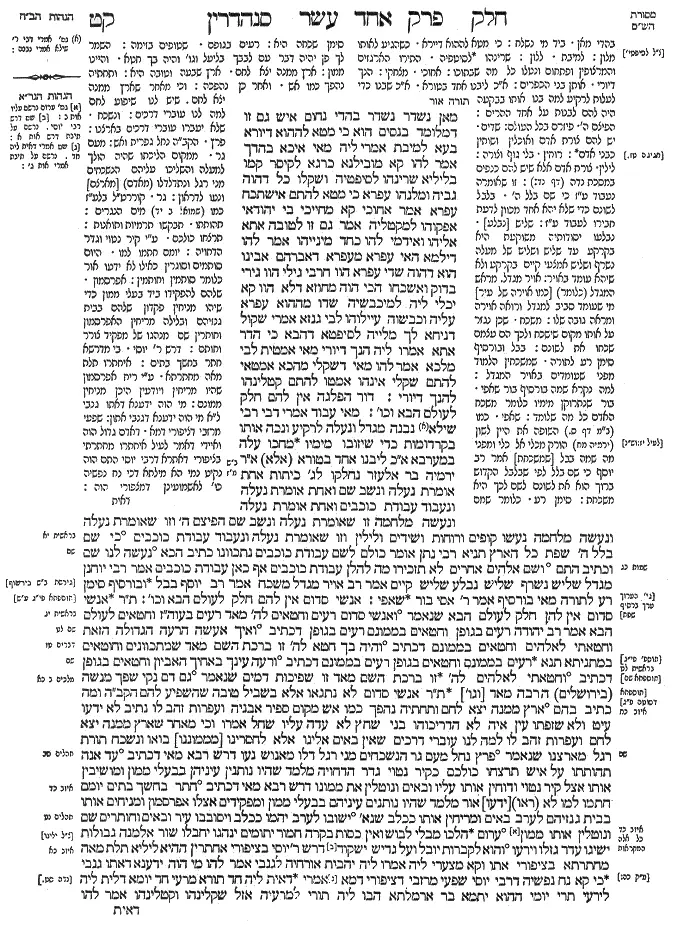
מאן נשדר נשדר בהדי נחום איש גם זו דמלומד בנסים הוא כי מטא לההוא דיורא בעא למיבת אמרי ליה מאי איכא בהדך אמר להו קא מובילנא כרגא לקיסר קמו בליליא שרינהו לסיפטיה ושקלו כל דהוה גביה ומלנהו עפרא כי מטא להתם אישתכח עפרא אמר אחוכי קא מחייכי בי יהודאי אפקוהו למקטליה אמר גם זו לטובה אתא אליהו ואידמי להו כחד מינייהו אמר להו דילמא האי עפרא מעפרא דאברהם אבינו הוא דהוה שדי עפרא הוו חרבי גילי הוו גירי בדוק ואשכחו הכי הוה מחוזא דלא הוו קא יכלי ליה למיכבשיה שדו מההוא עפרא עליה וכבשוה עיילוהו לבי גנזא אמרי שקול דניחא לך מלייה לסיפטא דהבא כי הדר אתא אמרו ליה הנך דיורי מאי אמטית לבי מלכא אמר להו מאי דשקלי מהכא אמטאי להתם שקלי אינהו אמטו להתם קטלינהו להנך דיורי:
דור הפלגה אין להם חלק לעולם הבא וכו':
מאי עבוד אמרי דבי רבי שילא נבנה מגדל ונעלה לרקיע ונכה אותו בקרדומות כדי שיזובו מימיו מחכו עלה במערבא א"כ ליבנו אחד בטורא (אלא) א"ר ירמיה בר אלעזר נחלקו לג' כיתות אחת אומרת נעלה ונשב שם ואחת אומרת נעלה ונעבוד עבודת כוכבים ואחת אומרת נעלה ונעשה מלחמה זו שאומרת נעלה ונשב שם הפיצם ה' וזו שאומרת נעלה ונעשה מלחמה נעשו קופים ורוחות ושידים ולילין וזו שאומרת נעלה ונעבוד עבודת כוכבים (בראשית יא, ט) כי שם בלל ה' שפת כל הארץ תניא רבי נתן אומר כולם לשם עבודת כוכבים נתכוונו כתיב הכא (בראשית יא, ד) נעשה לנו שם וכתיב התם (שמות כג, יג) ושם אלהים אחרים לא תזכירו מה להלן עבודת כוכבים אף כאן עבודת כוכבים אמר רבי יוחנן מגדל שליש נשרף שליש נבלע שליש קיים אמר רב אויר מגדל משכח אמר רב יוסף בבל ובורסיף סימן רע לתורה מאי בורסיף אמר ר' אסי בור שאפי:
אנשי סדום אין להם חלק לעולם הבא וכו':
ת"ר אנשי סדום אין להן חלק לעולם הבא שנאמר (בראשית יג, יג) ואנשי סדום רעים וחטאים לה' מאד רעים בעוה"ז וחטאים לעולם הבא אמר רב יהודה רעים בגופן וחטאים בממונם רעים בגופן דכתיב (בראשית לט, ט) ואיך אעשה הרעה הגדולה הזאת וחטאתי לאלהים וחטאים בממונם דכתיב (דברים טו, ט) והיה בך חטא לה' זו ברכת השם מאד שמתכוונים וחוטאים במתניתא תנא רעים בממונם וחטאים בגופן רעים בממונם דכתיב (דברים טו, ט) ורעה עינך באחיך האביון וחטאים בגופן דכתיב (בראשית לט, ט) וחטאתי לאלהים לה' זו ברכת השם מאד זו שפיכות דמים שנאמר (מלכים ב כא, טז) גם דם נקי שפך מנשה (בירושלים) הרבה מאד [וגו'] ת"ר אנשי סדום לא נתגאו אלא בשביל טובה שהשפיע להם הקב"ה ומה כתיב בהם (איוב כח, ה) ארץ ממנה יצא לחם ותחתיה נהפך כמו אש מקום ספיר אבניה ועפרות זהב לו נתיב לא ידעו עיט ולא שזפתו עין איה לא הדריכוהו בני שחץ לא עדה עליו שחל אמרו וכי מאחר שארץ ממנה יצא לחם ועפרות זהב לו למה לנו עוברי דרכים שאין באים אלינו אלא לחסרינו [מממוננו] בואו ונשכח תורת רגל מארצנו שנאמר (איוב כח, ד) פרץ נחל מעם גר הנשכחים מני רגל דלו מאנוש נעו דרש רבא מאי דכתיב (תהלים סב, ד) עד אנה תהותתו על איש תרצחו כולכם כקיר נטוי גדר הדחויה מלמד שהיו נותנין עיניהן בבעלי ממון ומושיבין אותו אצל קיר נטוי ודוחין אותו עליו ובאים ונוטלין את ממונו דרש רבא מאי דכתיב (איוב כד, טז) חתר בחשך בתים יומם חתמו למו לא (ראו) [ידעו] אור מלמד שהיו נותנים עיניהם בבעלי ממון ומפקידים אצלו אפרסמון ומניחים אותו בבית גנזיהם לערב באים ומריחין אותו ככלב שנא' (תהלים נט, ז) ישובו לערב יהמו ככלב ויסובבו עיר ובאים וחותרים שם ונוטלין אותו ממון (איוב כד, י) ערום הלכו מבלי לבוש ואין כסות בקרה חמור יתומים ינהגו יחבלו שור אלמנה גבולות ישיגו עדר גזלו וירעו (איוב כא, לב) והוא לקברות יובל ועל גדיש ישקוד דרש ר' יוסי בציפורי אחתרין ההיא ליליא תלת מאה מחתרתא בציפורי אתו וקא מצערי ליה אמרו ליה יהבית אורחיה לגנבי אמר להו מי הוה ידענא דאתו גנבי כי קא נח נפשיה דרבי יוסי שפעי מרזבי דציפורי דמא אמרי דאית ליה חד תורא מרעי חד יומא דלית ליה לירעי תרי יומי ההוא יתמא בר ארמלתא הבו ליה תורי למרעיה אזל שקלינהו וקטלינהו אמר להו
Comments from Rashi on Masechet Sanhedrin Page 109a
בהדי מאן . ביד מי נשלח: כי מטא לההוא דיירא . כשהגיע לאותו מלון: למיבת . ללון: שרינהו לסיטפיה . התירו הארגזים והמרצופין ופתחום ונטלו כל מה שבתוכו: אחוכי . מצחקי: הנך דיורי . אותן בני הכפרים: א"כ ליבנו אחד בטורא . א"כ שבנו כדי לעלות לרקיע למה בנו אותו בבקעה היה להם לבנות על אחד ההרים: הפיצם ה' . פיזרם בכל העולם: שדים . יש להם צורת אדם ואוכלין ושותין כבני אדם: רוחין . בלי גוף וצורה: לילין . צורת אדם אלא שיש להם כנפים במסכת נדה (דף נד:): זו שאומרה נעבוד ע"ז כי שם בלל ה' . בלבל לשונם כדי שלא יהא אחד מכוון לדעת חבירו לעבוד ע"ז: שליש [נבלע] . נבלעו יסודותיה משוקעת היא בקרקע עד שליש ושליש של מעלה נשרף ושליש אמצעי קיים בקרקע ולא שיהא עומד באויר: אויר מגדל . מראש המגדל (כלומר) [כמו אוירה של עיר] מי שעומד סביב למגדל ורואה אוירה ומראה גובה שלו: משכח . שכן נגזר על אותו מקום שישכח ולכך הם עצמם שכחו את לשונם: בבל ובורסיף סימן רע לתורה . שמשכחין הלמוד מפני שעומדים באויר המגדל: סימן רע . כלומר שמם סימן שכחה היא: למה נקרא שמה בורסיף בור שאפי . בור שנתרוקן מימיו כלומר משכח האדם כל מה שלומד: שאפי . כמו (ב"מ דף ס.) השופה את היין לשון (ירמיהו מח) הורק מכלי אל כלי ומפני מה שמה בבל [שמשכחת] אמר רב יוסף כי שם בלל לפי שבלבל הקדוש ברוך הוא את לשונם לשם לכך היא משכחת: רעים בגופם . שטופים בזימה: השמר לך פן יהיה דבר עם לבבך בליעל וגו' והיה בך חטא . והיינו ממון: ארץ ממנה יצא לחם . ארץ שבעה וטובה היא: ותחתיה נהפך כמו אש . ואחר כן נהפכה: וכי מאחר שארץ ממנה יצא לחם . שיש לנו שיפוע לחם למה לנו עוברי דרכים: ונשכח . שלא יעברו עוברי דרכים בארצנו: פרץ . הקב"ה נחל גפרית ואש: מעם גר . ממקום הליכתו שהיה הולך למעלה והשליכו עליהם הנשכחים מני רגל ונתדלדלו (מאדם) [מארצם] ונעו לדראון: גר . קוררט"ל בלע"ז כמו (שמואל ב יד) מים הנגרים: תהותתו . תבקשו תרמיות ותואנות: תרצחו כולכם . ע"י קיר נטוי וגדר הדחויה: יומם חתמו למו . היום סותמים וסוגרין כאילו לא ידעו אור כלומר סותמין וחותמין: אפרסמון . שלהם להפקידו ביד בעלי ממון כדי שיהו מניחין פקדון שלהם בבית גנזיהם ובלילה מריחין האפרסמון וחותרין שם מנהגו של מפקיד צורר וחותם: דרש ר' יוסי . בי מדרשא חתר בחשך בתים: איחתרו תלת מאה מחתרתא . ע"י ריח אפרסמון שהיו מריחין ויודעין היכן מניחין ממונם: מי הוה ידענא דאתו גנבי ל"א מי הוה ידענא דגנבי אתון: שפעי מרזבי דציפורי דמא . דאדם גדול הוה ואיידי דאמר לעיל איחתרו מחתרתי בציפורי דאתרא דרבי יוסי התם הוה נקיט נמי הא מילתא דכי נח נפשיה כו' לאשמועינן דמצפורי הוה. דאית ליה תורא. כך היה מנהגם של אנשי סדום מי שהיה לו שור אחד רועה כל בהמות העיר יום א' ומי שאין לו בהמה מגלגלין עליו לרעות ב' ימים: אמר להו . יתמי למרי דתורא דאית ליה חד תורא כו':
Sanhedrin 109a - Mishnah translated into english
whom shall we send the gift? They decided: We will send it with Naḥum of Gam Zo, as he is experienced in miracles.
When he reached a certain lodging, he sought to sleep there. The residents of that lodging said to him: What do you have with you? Naḥum said to them: I am taking the head tax to the emperor. They rose in the night, opened his chest and took everything that was in it, and then filled the chest with dirt. When he arrived there, in Rome, earth was discovered in the chest. The emperor said: The Jews are mocking me by giving me this gift. They took Naḥum out to kill him. Naḥum said: This too is for the best. Elijah the prophet came and appeared to them as one of Naḥum’s traveling party. Elijah said to them: Perhaps this earth is from the earth of Abraham our forefather, who would throw dust and it became swords, and who would throw straw and it became arrows. They examined the dust and discovered that it was indeed the dust of Abraham.
There was a province that the Romans were unable to conquer. They threw some of this earth upon that province and they conquered it. In appreciation for the gift that Naḥum of Gam Zo had brought on behalf of the Jewish people, they brought him into the treasury and said: Take that which is preferable to you. He filled his chest with gold. When he returned to that lodging, those residents said to him: What did you bring to the king’s palace? Naḥum said to them: What I took from here, I brought to there. The residents concluded that the earth with which they had filled the chest had miraculous properties. They took earth and brought it to the emperor. Once the Romans discovered that the earth was ineffective in battle, they executed those residents.
§ The mishna teaches that the members of the generation of the dispersion have no share in the World-to-Come. The Gemara asks: What sin did they perform? Their sin is not explicitly delineated in the Torah. The school of Rabbi Sheila say that the builders of the Tower of Babel said: We will build a tower and ascend to heaven, and we will strike it with axes so that its waters will flow. They laughed at this explanation in the West, Eretz Yisrael, and asked: If that was their objective, let them build a tower on a mountain; why did they build it specifically in a valley (see Genesis 11:2)?
Rather, Rabbi Yirmeya bar Elazar says: They divided into three factions; one said: Let us ascend to the top of the tower and dwell there. And one said: Let us ascend to the top of the tower and engage in idol worship. And one said: Let us ascend to the top of the tower and wage war. With regard to that faction that said: Let us ascend to the top of the tower and dwell there, God dispersed them. And that faction that said: Let us ascend to the top of the tower and wage war, became apes, and spirits, and demons, and female demons. And with regard to that faction that said: Let us ascend to the top of the tower and engage in idol worship, it is written: “Because there the Lord confounded the language of all the earth” (Genesis 11:9).
It is taught in a baraita: Rabbi Natan says: All of those factions intended to build the tower for the sake of idol worship. It is written here: “And let us make a name for us” (Genesis 11:4), and it is written there: “And make no mention of the name of the other gods” (Exodus 23:13). Just as there, the connotation of “name” is idol worship, so too here, the connotation of “name” is idol worship.
Rabbi Yoḥanan says: The uppermost third of the tower was burned, the lowermost third of the tower was swallowed into the earth, and the middle third remained intact. Rav says: The atmosphere of the tower causes forgetfulness; anyone who goes there forgets what he has learned. As a result of the building of the tower, forgetting was introduced into the world. Rav Yosef says: Babylonia and the adjacent place, Bursif, are each a bad omen for Torah, i.e., they cause one to forget his knowledge. The Gemara asks: What is the meaning of Bursif? Rabbi Asi says: It is an abbreviation of empty pit [bor shafi].
§ The mishna teaches: The people of Sodom have no share in the World-to-Come. The Sages taught: The people of Sodom have no share in the World-to-Come, as it is stated: “And the men of Sodom were wicked and sinners before the Lord exceedingly” (Genesis 13:13). “Wicked” indicates in this world; “and sinners” indicates for the World-to-Come.
Rav Yehuda says: “Wicked” is referring to sins they committed with their bodies; “and sinners” is referring to sins they committed with their money. “Wicked” is referring to sins they committed with their bodies, as it is written with regard to Joseph and the wife of Potiphar: “And how can I do this great wickedness, and sin against God” (Genesis 39:9). “And sinners” is referring to sins they committed with their money, as it is written: “And your eye is wicked against your poor brother, and you give him nothing…for it shall be reckoned to you as a sin” (Deuteronomy 15:9). “Before the Lord”; this is referring to blessing, a euphemism for cursing, God. “Exceedingly” means that they had intent and sinned and did not sin unwittingly or driven by lust.
It was taught in a baraita: “Wicked” is referring to sins they committed with their money; “and sinners” is referring to sins they committed with their bodies. “Wicked” is referring to sins they committed with their money, as it is written: “And your eye is wicked against your poor brother and you give him nothing” (Deuteronomy 15:9). “And sinners” is referring to sins they committed with their bodies, as it is written with regard to Joseph and the wife of Potiphar: “And sin against God” (Genesis 39:9). “Before the Lord”; this is referring to blessing, a euphemism for cursing, God. “Exceedingly [meod ]” is referring to bloodshed, as it is stated: “Moreover Manasseh shed very [meod ] much blood” (II Kings 21:16).
The Sages taught: The people of Sodom became haughty and sinned due only to the excessive goodness that the Holy One, Blessed be He, bestowed upon them. And what is written concerning them, indicating that goodness? “As for the earth, out of it comes bread, and underneath it is turned up as it were by fire. Its stones are the place of sapphires, and it has dust of gold. That path no bird of prey knows, neither has the falcon’s eye seen it. The proud beasts have not trodden it, nor has the lion passed thereby” (Job 28:5–8). The reference is to the city of Sodom, which was later overturned, as it is stated thereafter: “He puts forth His hand upon the flinty rock; He overturns the mountains by the roots” (Job 28:9).
The people of Sodom said: Since we live in a land from which bread comes and has the dust of gold, we have everything that we need. Why do we need travelers, as they come only to divest us of our property? Come, let us cause the proper treatment of travelers to be forgotten from our land, as it is stated: “He breaks open a watercourse in a place far from inhabitants, forgotten by pedestrians, they are dried up, they have moved away from men” (Job 28:4).
Rava taught: What is the meaning of that which is written: “How long will you seek to overwhelm a man? You will all be murdered like a leaning wall or a tottering fence” (Psalms 62:4)? This teaches that the people of Sodom set their sights on property owners. They would take one and place him alongside an inclined, flimsy wall that was about to fall, and push it upon him to kill him, and then they would come and take his property.
Rava taught: What is the meaning of that which is written: “In the dark they dig through houses; by day they shut themselves up; they know not the light” (Job 24:16)? This teaches that they would set their sights on property owners. They would take one and they would give him balsam, whose smell diffuses, and the property owner would place it in his treasury. In the evening, the people of Sodom would come and sniff it out like a dog and discover the location of the property owner’s treasury, as it is stated: “They return at evening; they howl like a dog, and go round about the city” (Psalms 59:7). And after discovering the location they would come and dig there, and they would take that property.
The Gemara cites verses that allude to the practices of the people of Sodom: “They lie at night naked without clothing, and they have no covering in the cold” (Job 24:7). And likewise: “They drive away the donkey of the fatherless; they take the widow’s ox as a pledge” (Job 24:3). And likewise: “They trespass; they violently steal flocks and graze them” (Job 24:2). And likewise: “For he is brought to the grave, and watch is kept over his tomb” (Job 21:32).
Rabbi Yosei taught in Tzippori the methods of theft employed in Sodom. That night three hundred tunnels were excavated in Tzippori in order to employ those methods. Homeowners came and harassed him; they said to him: You have given a way for thieves to steal. Rabbi Yosei said to them: Did I know that thieves would come as a result of my lecture? The Gemara relates: When Rabbi Yosei died, the gutters of Tzippori miraculously overflowed with blood as a sign of his death.
The people of Sodom would say: Anyone who has one ox shall herd the city’s oxen for one day. Anyone who does not have any oxen shall herd the city’s oxen for two days. The Gemara relates: They gave oxen to a certain orphan, son of a widow, to herd. He went and took them and killed them. The orphan said to the people of Sodom:
Traduction : The William Davidson digital edition of the Koren Noé Talmud, with commentary by Rabbi Adin Even-Israel Steinsaltz.