 Talmud Bavli
The learning on the whole site is dedicated : L'ilui Nishmat Yechayahou ben Moche
The learning on the whole site is dedicated : For the success of Elyahou ben H'anna & family
The learning on the whole site is dedicated : L'ilui Nishmat אליעזר בן רחל
Sanhedrin 79a : Youtube
Daf TubeYoutube
2 video classes :
Sanhedrin Page 79a
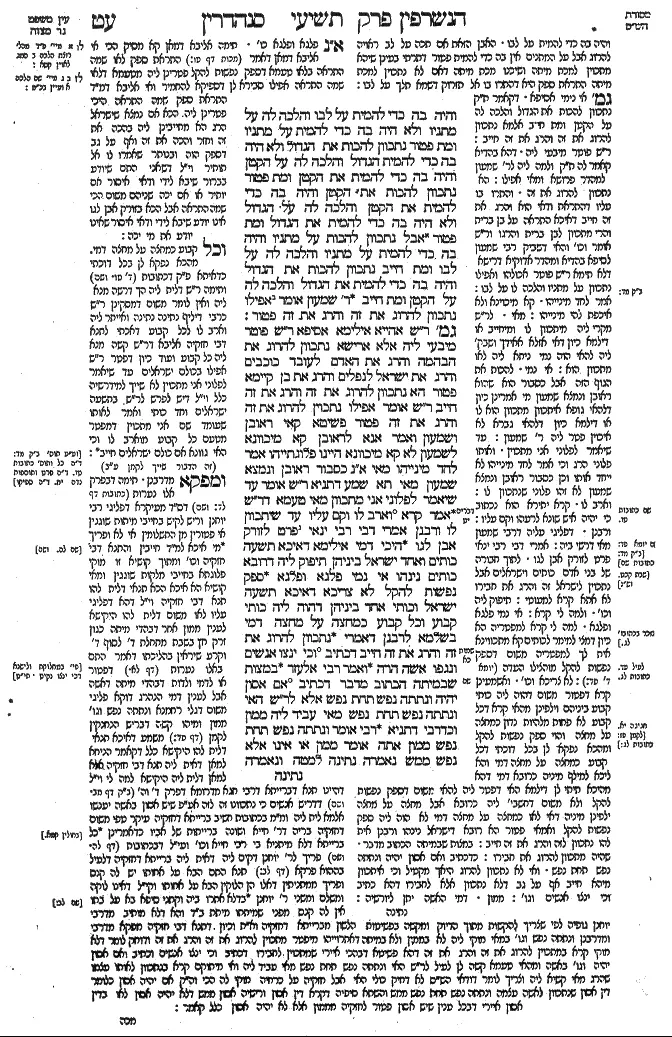
Sanhedrin 79a - Guemara
והיה בה כדי להמית על לבו והלכה לה על מתניו ולא היה בה כדי להמית על מתניו ומת פטור נתכוון להכות את הגדול ולא היה בה כדי להמית הגדול והלכה לה על הקטן והיה בה כדי להמית את הקטן ומת פטור נתכוון להכות את הקטן והיה בה כדי להמית את הקטן והלכה לה על הגדול ולא היה בה כדי להמית את הגדול ומת פטור אבל נתכוון להכות על מתניו והיה בה כדי להמית על מתניו והלכה לה על לבו ומת חייב נתכוון להכות את הגדול והיה בה כדי להמית את הגדול והלכה לה על הקטן ומת חייב ר' שמעון אומר אפילו נתכוון להרוג את זה והרג את זה פטור:
גמ׳ ר"ש אהייא אילימא אסיפא ר"ש פוטר מיבעי ליה אלא ארישא נתכוון להרוג את הבהמה והרג את האדם לעובד כוכבים והרג את ישראל לנפלים והרג את בן קיימא פטור הא נתכוון להרוג את זה והרג את זה חייב ר"ש אומר אפילו נתכוין להרוג את זה והרג את זה פטור פשיטא קאי ראובן ושמעון ואמר אנא לראובן קא מיכוונא לשמעון לא קא מיכוונא היינו פלוגתייהו אמר לחד מינייהו מאי א"נ כסבור ראובן ונמצא שמעון מאי תא שמע דתניא ר"ש אומר עד שיאמר לפלוני אני מתכוון מאי טעמא דר"ש אמר קרא (דברים יט, יא) וארב לו וקם עליו עד שיתכוון לו ורבנן אמרי דבי רבי ינאי פרט לזורק אבן לגו היכי דמי אילימא דאיכא תשעה כותים ואחד ישראל ביניהן תיפוק ליה דרובא כותים נינהו אי נמי פלגא ופלגא ספק נפשות להקל לא צריכא דאיכא תשעה ישראל וכותי אחד ביניהן דהוה ליה כותי קבוע וכל קבוע כמחצה על מחצה דמי בשלמא לרבנן דאמרי נתכוון להרוג את זה והרג את זה חייב דכתיב (שמות כא, כב) וכי ינצו אנשים ונגפו אשה הרה ואמר רבי אלעזר במצות שבמיתה הכתוב מדבר דכתיב (שמות כא, כג) אם אסון יהיה ונתתה נפש תחת נפש אלא לר"ש האי ונתתה נפש תחת נפש מאי עביד ליה ממון וכדרבי דתניא רבי אומר ונתתה נפש תחת נפש ממון אתה אומר ממון או אינו אלא נפש ממש נאמרה נתינה למטה ונאמרה
Comments from Rashi on Masechet Sanhedrin Page 79a
והיה בה כדי להמית על לבו . האבן הזאת אם תכה על לב ראויה להרוג אבל על המתנים אין בה כדי להמית פטור דתרתי בעינן שיהא מתכוין למכת מיתה ושיכנו מכת מיתה דאם לא נתכוין למכת מיתה התראת ספק היא דהתרו בו אל תזרוק דשמא תלך על לבו: גמ' אי נימי אסיפא . דקאמר ת"ק נתכוון להכות את הגדול והלכה לה על הקטן ומת חייב אלמא נתכוון להרוג את זה והרג את זה חייב: ר"ש פוטר מיבעי ליה . דהא בהדיא קאמר לה ת"ק ולמה ליה לר' שמעון למהדר פרושא ומאי אפילו: הא נתכוון להרוג את זה . והתרו בו עליו דהתראת ודאי הוא והרג את זה חייב דאיכא התראה על בן ברית והרי מתכוון לבן ברית והרגו ור"ש אומר וכו' והאי דשביק רבי שמעון לסיפא בהדיא ומהדר אדוקיא דרישא דלא תימא ר"ש פוטר אכולהו ואפילו נתכוון על מתניו והלכה לו על לבו: אמר לחד מינייהו . קא מיכוינא ולא איכפת להי מינייהו: מאי . לר"ש מקרי ליה מיתכוון לו ומיחייב או דילמא כיון דאי אזלא אאידך ושבק' ליה להאי הוה נמי ניחא ליה לאו מתכוון הוא: אי נמי . להכות את הגוף הזה אבל כסבור הוא שהוא ראובן ונמצא שמעון מי אמרינן כיון דלהאי גופא איתכוון מתכוון הוא לו או דילמא כיון דלהאי גברא לא איכוין פטר ליה ר' שמעון: עד שיאמר לפלוני אני מתכוין . ואותו פלוני הרג וכי אמר לחד מינייהו לא ייחד אותו וכן כסבור ראובן ונמצא שמעון לא זהו פלוני שנתכוון לו: וארב לו . קרא יתירא הוא נכתוב כי יהיה איש שונא לרעהו וקם עליו: ורבנן . דפליגי עליה דרבי שמעון מאי דרשי ביה: אמרי דבי רבי ינאי פרט לזורק אבן לגו . לתוך חבורה של בני אדם כותים וישראלים אבל נתכוין לישראל זה והרג את חבירו לא אתא קרא למעוטי: תיפוק ליה וכו' . ולמה לי קרא: אי נמי פלגא ופלגא . למה לי קרא למפטריה הא כיון דמצי למימר לכותים קא מתכווינא אית לך למפטריה משום דספק נפשות להקל מוהצילו העדה (יומא פד:): לא צריכא וכו' . ואשמעינן קרא דפטור משום דהוה ליה כותי קבוע ביניהם וילפינן מהאי קרא דכל קבוע לא פחות מלהיות נדון כמחצה על מחצה והוי ספק נפשות להקל ומהכא נפקא לן בכל דוכתי דכל קבוע כמחצה על מחצה דמי והא ליכא למילף מיניה כרובא דמי דהא מהיכא תיתי לן דילמא האי דפטר ליה להאי משום דספק נפשות להקל ולא משום דחשבי' ליה כרובא אבל מחצה על מחצה ילפינן מיניה דאי לאו כמחצה על מחצה דמי לא הוה ליה ספק נפשות להקל ואמאי פטור הא רובא דישראל נינהו ורבנן אית להו נתכוון לזה והרג את זה חייב: במצות שבמיתה הכתוב מדבר . שהיה מתכוון להרוג את חבירו: כדכתיב ואם אסון יהיה ונתתה נפש תחת נפש . ואי לא נתכוון להרוג היאך מקטיל וכי איתכוון מיהא חייב אף על גב דלא נתכוון אלא לחבירו דהא כתיב וכי ינצו אנשים וגו': ממון . דמי האשה יתן ליורשיה:
Comments from Tosafot - Sanhedrin 79a
א"נ פלגא ופלגא כו' . תימה אליבא דמאן קא מסיק הכי אי אליבא דמאן דאמר (מכות דף טו:) התראת ספק לאו שמה התראה בלאו טעמא דספק נפשות להקל פטרינן ליה מטעמא דלאו שמה התראה אפילו סבירא לן דספיקא להחמיר ואי אליבא דמ"ד התראת ספק שמה התראה היכי פטרינן ליה הכא אם נמצא שישראל הרג הא מחייבינן ליה בהכה את זה וחזר והכה את זה ואף על גב דספק הוה ובנותר שאמרו לו אל תותיר וי"ל דשאני התם שיודע בברור שיבא לידי ודאי איסור אם יותיר או אם יכה שניהם משום הכי שמה התראה אבל הכא בזורק אבן לגו אינו יודע שיבא לידי ודאי איסור שאינו יודע את מי יכה: וכל קבוע כמחצה על מחצה דמי . מהכא נפקא לן בכל דוכתי כדאיתא פ"ק דכתובות (ד' טו. ושם) ותימה ר"ש דלית ליה הך דרשה מנא ליה ואין לומר משום דמסקינן ר"ש כרבי דיליף נתינה נתינה ואייתר ליה וארב לו לכל קבוע דאכתי לתנא דבי חזקיה אליבא דר"ש קשה מנא ליה כל קבוע ועוד כיון דפטר ר"ש אפילו בכולם ישראלים עד שיאמר לפלוני אני מתכוין לא שייך למידרשיה כלל וי"ל דיש לפרש לר"ש בתשעה ישראלים וחד כותי ואמר לאותו שעומד שם אני מתכוין דמפטר מטעם כל קבוע מוארב לו וכי האי גוונא אם כולם ישראלים חייב:
Sanhedrin 79a - Mishnah translated into english
and the blow was powerful enough to kill him were it to land on his chest over his heart, and instead the blow landed on his loins, and it was not powerful enough to kill him when it landed on his loins, and nevertheless the victim died, the assailant is exempt. Although the assailant intended to kill the victim, the blow was not powerful enough to kill. Ostensibly, his death was not a result of the blow.
If one intended to kill an adult and the blow was not powerful enough to kill the adult, and instead the blow landed on a minor, and the blow was powerful enough to kill the minor and the minor died, the assailant is exempt. If one intended to kill a minor and the blow was powerful enough to kill a minor, and the blow landed on an adult and the blow was not powerful enough to kill the adult, and nevertheless, the adult died, the assailant is exempt.
But if one intended to strike another on his loins, and the blow was powerful enough to kill him were it to land on his loins, and instead the blow landed on his chest over his heart, and he died, the assailant is liable, since in any event, his intent was to kill the victim and the blow was powerful enough to kill him wherever it struck him. If one intended to strike an adult and the blow was powerful enough to kill the adult, and the blow landed on a minor and he died, the assailant is liable. Rabbi Shimon says: Even if one intended to kill this one and he killed that one, although he would be liable for killing either, he is exempt, because one is executed only if his action completely corresponded with his intent.
GEMARA: The Gemara asks: With regard to which clause of the mishna does Rabbi Shimon disagree? If we say that he disagrees with the latter clause of the mishna, concerning one who intended to kill an adult and killed a minor, the mishna should have employed the formulation: Rabbi Shimon exempts him, not the extended statement of: Even if one intended to kill this one and he killed that one, he is exempt.
Rather, he disagrees with the first clause of the mishna, which states: If one intended to kill an animal, and he killed a person, or he intended to kill a gentile and he killed a Jew, or he intended to kill non-viable newborns and he killed a viable person, the assailant is exempt from execution; and from which it may be inferred: But if one intended to kill this one and he killed that one, the assailant is liable. Rabbi Shimon disagrees and says: Even if one intended to kill this one and he killed that one, he is exempt.
The Gemara comments: If Reuven and Shimon were standing, and before throwing the stone or shooting the arrow, the assailant said: I intend to kill Reuven, and I do not intend to kill Shimon, it is obvious that this is the dispute between the Rabbis and Rabbi Shimon. If the assailant said: I intend to kill one of them, and he did not specify whether it is Reuven or Shimon, what is the halakha? Alternatively, in a case where he intended to kill one whom he thought was Reuven and he killed him and he was found to be Shimon, what is the ruling? The Gemara suggests: Come and hear a resolution of this matter, as it is taught in a baraita that Rabbi Shimon says: He is not liable until he says: I intend to kill so-and-so, and he then kills him.
The Gemara seeks to clarify the rationale underlying the opinions of the Rabbis and Rabbi Shimon, and asks: What is the reason for the opinion of Rabbi Shimon? The verse states: “But if there will be a man who hates his neighbor, and he lies in wait for him and rises up against him, and strikes him mortally and he dies” (Deuteronomy 19:11). Based on the repeated use of pronouns in the phrase: “And lies in wait for him and rises up against him,” Rabbi Shimon derives: One is not liable to be executed until he intends to kill specifically him, the actual victim. The Gemara asks: And the Rabbis, what do they derive from the repetitive pronouns in that phrase? The Gemara answers: The Sages of the school of Rabbi Yannai say that one derives: This is to the exclusion of one who casts a stone into the midst of a group of people and one of them is killed. Since he did not intend to kill any specific individual, he is not executed.
The Gemara asks: What are the circumstances? If we say that it is a case where there are nine gentiles and one Jew among them, there is no need for a derivation; derive that he is exempt from the fact that they are a majority of gentiles, and based on that majority, the probability is that the stone will strike a gentile. Alternatively, if the group of people comprises half gentiles and half Jews, the principle is that the ruling in a case of uncertainty with regard to cases of capital law is to be lenient, and therefore the one who threw the stone will be exempt from punishment.
The Gemara explains: No, it is necessary to have this derivation only in a case where there are nine Jews and one gentile among them, as this is a case where the gentile is a fixed presence in the group, and the principle is: The legal status of any item fixed in its place is like that of an uncertainty that is equally balanced, and one does not follow the majority. This is what the Rabbis derive from the phrase: “And he lies in wait for him” (Deuteronomy 19:11).
The Gemara asks: Granted, according to the Rabbis, who say that if one intended to kill this individual and he killed that individual he is liable, there is support for their opinion from that which is written: “If men struggle and they hurt a pregnant woman so that her child departs from her, and there is no tragedy, he shall be punished, as the husband of the woman shall impose upon him, and he shall give as the judges determine” (Exodus 21:22). It can be inferred form the verse that if there is a tragedy, i.e., if the woman dies, there is no payment of restitution. And Rabbi Elazar says: It is with regard to a quarrel that involves the intent of each to cause the death of the other that the verse is speaking, as it is written: “But if there shall be a tragedy then you shall give a life for a life” (Exodus 21:23). This is proof that in a case where one intended to kill one individual and he killed a pregnant woman instead, he is liable to be executed, which is why he does not pay restitution.
But according to Rabbi Shimon, this verse: “Then you shall give a life for a life,” what does he do with it? According to his opinion, the party to the quarrel is exempt from the punishment of execution in this case. The Gemara answers: According to Rabbi Shimon, “a life for a life” is not referring to execution; rather, the reference is to monetary restitution. And this understanding is in accordance with the opinion of Rabbi Yehuda HaNasi, as it is taught in a baraita: Rabbi Yehuda HaNasi says that the phrase “then you shall give a life for a life” does not mean execution, but rather monetary restitution for the life that he took. Do you say that it means monetary restitution, or does it mean only the taking of an actual life? Based on the language employed in the verse, it can be determined that the reference is to monetary payment. In these verses, a term of giving is stated below: “And you shall give a life for a life” (Exodus 21:23). And additionally, a term is stated of
Traduction : The William Davidson digital edition of the Koren Noé Talmud, with commentary by Rabbi Adin Even-Israel Steinsaltz.