 Talmud Bavli
Nedarim 91b : Youtube
Daf TubeYoutube
2 video classes :
Nedarim Page 91b
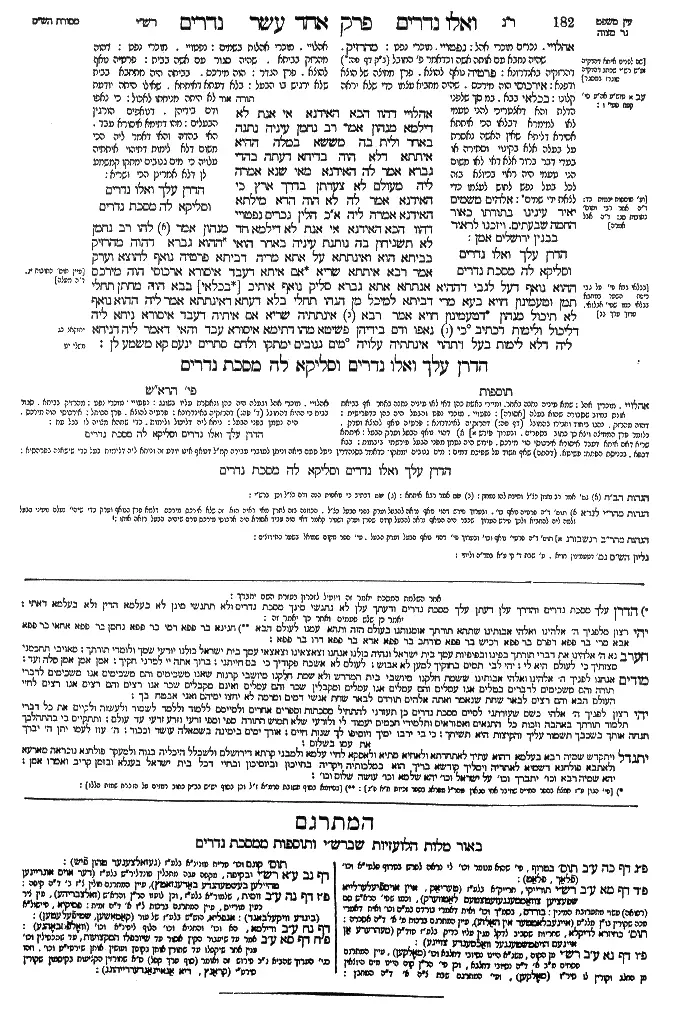
Nedarim 91b - Guemara
אהלויי דהוו הכא האידנא אי אנת לא דילמא מנהון אמר רב נחמן עיניה נתנה באחר ולית בה מששא במלה ההיא איתתא דלא הוה בדיחא דעתה בהדי גברא אמר לה האידנא מאי שנא אמרה ליה מעולם לא צערתן בדרך ארץ כי האידנא אמר לה לא הוה הדא מילתא האידנא אמרה ליה א"כ הלין נכרים נפטויי דהוו הכא האידנא אי אנת לא דילמא חד מנהון אמר להו רב נחמן לא תשגיחון בה נותנת עיניה באחר הואי ההוא גברא דהוה מהרזיק בביתא הוא ואינתתא על אתא מריה דביתא פרטיה נואף להוצא וערק אמר רבא איתתא שריא אם איתא דעבד איסורא ארכוסי הוה מירכס ההוא נואף דעל לגבי דההיא אנתתא אתא גברא סליק נואף איתיב [בכלאי] בבא הוה מחתן תחלי תמן וטעמינון חויא בעא מרי דביתא למיכל מן הנהו תחלי בלא דעתא דאינתתא אמר ליה ההוא נואף לא תיכול מנהון דטעמינון חויא אמר רבא אינתתיה שריא אם איתיה דעבד איסורא ניחא ליה דליכול ולימות דכתיב (יחזקאל כג, לז) כי נאפו ודם בידיהן פשיטא מהו דתימא איסורא עבד והאי דאמר ליה דניחא ליה דלא לימות בעל דתהוי אינתתיה עלויה (משלי ט, יז) מים גנובים ימתקו ולחם סתרים ינעם קא משמע לן
הדרן עלך ואלו נדרים וסליקא לה מסכת נדרים
Comments from Rashi on Masechet Nedarim Page 91b
אהלויי . מוכרי אהלות בשמים: נפטויי . מוכרי נפט: דהוה מהרזק בביתא . שהיה סגור עם אשה בבית: פרטיה נואף להוצא . פרץ הגדר: הוה מירכס . בביתה היה מתחבא בבית שלא ירגיש בו הבעל: בלא דעתא דאיתתא . שאילו היתה יודעת לא היתה מניחתו לאכול: כי נאפו ודם בידיהן . דנואפים הורגין הבעלים: מהו דתימא איסורא עבד . האי בהדה והאי דאמר ליה הכי משום דלא לימות דתיהוי איתתיה עלויה כי מים גנובים ימתקו קמשמע לן דלא אמרינן הכי ושריא:
Comments from Tosafot - Nedarim 91b
אהלויי . מוכרין אהל: שמא עיניה נתנה באחר . ומיירי באשת כהן דאי לאו עיניה נתנה באחר אף בביאת אונס בחיוב שסבורה שהוא בעלה [אסורה]: נפטויי . מוכרי נפט והבעל היה כהן כדפרישית: דהוה מהרזק . נהגו ביחוד וחבירו בהחובל (דף פה:) דהרזקיה לאינדרונא: פרטיה נואף להוצא וערק . כלומר פרץ המחיצה ויצא כך כתוב בספרים . ובערוך פירש דהוי נואף הבעל וערק הבעל: איתתא שריא דאם איתא דעבד איסורא אירכוסי הוי מירכס . פירוש היה נטמן מפני הבעל פירשתי ביבמות: בבא דכפא . בכניסת הפתח: פשיטא . (דהתם) שאף חשוד על שפיכת דמים: מים גנובים ימתקו . כדאמר בסנהדרין ניטל טעם ביאה וניתן לעוברי עבירה קמ''ל דנואף אינו יודע זה וניחא ליה דלימות בעל כדי שישאנה בפרהסיא:
Nedarim 91b - Mishnah translated into english
aloe merchants [ahaloyei] who were here just now should be blamed; if it was not you, perhaps it was one of them. The case came before Rav Naḥman, who said: There is reason to suspect that she might have cast her eyes upon another man, and therefore there is no substance to her words. She lacks credibility and her statement is unreliable, and so she remains permitted to her husband.
It is further related that there was a certain woman who was displeased with her man. He said to her: What is different now? What have I done to make you angry? She said to him: I am upset because you never hurt me while we were engaged in proper relations as you did just now. He said to her: This matter did not occur now. She said to him: If so, it may be that one of the gentile oil merchants [naftoyei] who were here just now should be blamed; if it was not you, perhaps it was one of them. Rav Naḥman said to them: Take no notice of her; she has cast her eyes upon another man, and her words are therefore unreliable.
The Gemara relates another incident about a certain man who was secluding himself [meharzeik] in a house, he and a certain married woman. When the owner of the house entered, the adulterer burst through the wall of palm branches and fled. Rava said: The woman is permitted to her husband. The assumption is that she did not sin, for if it is so that the man had committed a transgression, he would have hidden himself in the house instead of revealing his identity by escaping in the open.
The Gemara concludes with one final incident about a certain adulterer who entered the house of a certain married woman. When the man, i.e., her husband, came home, the adulterer went and sat himself behind the door, so that the husband would not know that he was there. There was some cress [taḥlei] lying there in the house, and the adulterer, but not the husband, saw that a snake had come and tasted of it, perhaps thereby contaminating it with its venom. The master of the house wanted to eat from that cress, without the woman’s knowledge. The adulterer said to him: Do not eat from the cress, as a snake has tasted of it.
The case was brought before Rava, who said: His wife is permitted to him, for were it so that the adulterer had committed a transgression, it would have been preferable for him that the husband should eat the cress and die. This is because one who commits adultery is also suspected of bloodshed, as it is written: “For they have committed adultery and blood is on their hands” (Ezekiel 23:37), indicating that adultery leads to murder.
The Gemara comments: It is obvious that this is the case. What then does Rava come to teach us? The Gemara answers: Rava’s ruling is necessary, lest you say that the man did in fact commit a transgression with the other man’s wife, and the reason that he said to the husband that he should not eat and saved his life is because it is preferable for him that the husband should not die. This is in order that his wife should be to him as it says in the verse: “Stolen waters are sweet, and bread eaten in secret is pleasant” (Proverbs 9:17). That is to say, a person derives greater pleasure from forbidden fruit. Rava therefore teaches us that this is not a concern. Rather, the assumption is that he had not yet actually sinned and therefore acted in the proper manner.
Traduction : The William Davidson digital edition of the Koren Noé Talmud, with commentary by Rabbi Adin Even-Israel Steinsaltz.
Nedarim 91b : Significance
Next step
You have reached the end of tractate Nedarim.
Start tractate NazirFrequently asked questions: Nedarim 91b
Where is Nedarim 91b in tractate Nedarim?
Nedarim 91b is page 180 of 180 in tractate Nedarim (Seder Nashim).
When is daf 91 of Nedarim studied in Daf Yomi?
Daf Yomi covers one daf a day, both sides. Daf 91 of Nedarim will be studied on June 27, 2030.
Is there a video class on Nedarim 91b?
Yes, by Daf Tube, Rabbi Dr. Moshe Weisblum. These classes were published on YouTube by their authors and are gathered on this site.
What is tractate Nedarim about?
The Masechet Nedarim is the third tractate of the Seder Nashim. The gemara Nedarim is the study of the laws relating to the neder, a kind of vow or oath in Judaism. The Nedarim tractate is a gemara which contains 11 chapters.
Your study is also dedicated to them
- L'ilui Nishmat Ledicia bat David Banoun
- L'ilui Nishmat יוסף בן מושה
- L'ilui Nishmat Rav Chlomo Ben Jamilla