 Talmud Bavli
Nedarim 19b : Youtube
Daf TubeYoutube
2 video classes :
Nedarim Page 19b
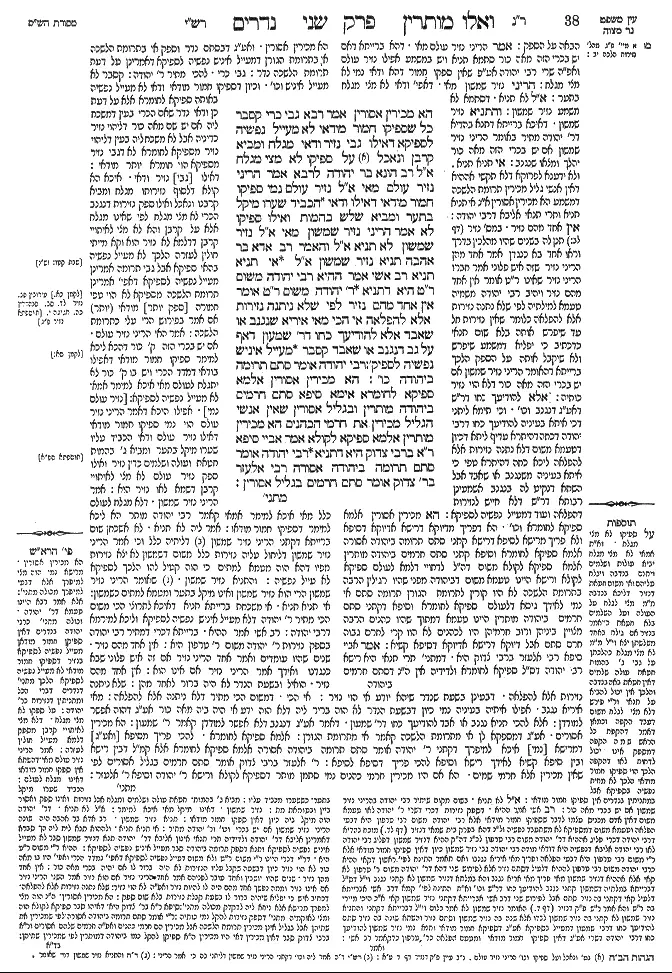
Nedarim 19b - Guemara
הא מכירין אסורין אמר רבא גבי כרי קסבר כל שספיקו חמור מוודאי לא מעייל נפשיה לספיקא דאילו גבי נזיר ודאי מגלח ומביא קרבן ונאכל על ספיקו לא מצי מגלח אמר ליה רב הונא בר יהודה לרבא אמר הריני נזיר עולם מאי אמר ליה נזיר עולם נמי ספיקו חמור מודאי דאילו ודאי הכביד שערו מיקל בתער ומביא שלוש בהמות ואילו ספיקו לא אמר הריני נזיר שמשון מאי אמר ליה נזיר שמשון לא תניא אמר ליה והאמר רב אדא בר אהבה תניא נזיר שמשון אמר ליה אי תניא תניא רב אשי אמר ההיא רבי יהודה משום רבי טרפון היא דתניא רבי יהודה משום רבי טרפון אומר אין אחד מהם נזיר לפי שלא ניתנה נזירות אלא להפלאה אי הכי מאי איריא שנגנב או שאבד אלא להודיעך כוחו דרבי שמעון דאף על גב דנגנב או שאבד קסבר מעייל איניש נפשיה לספיקא רבי יהודה אומר סתם תרומה ביהודה כו' הא מכירין אסורין אלמא ספיקא לחומרא אימא סיפא סתם חרמים ביהודה מותרין ובגליל אסורין שאין אנשי הגליל מכירין את חרמי הכהנים הא מכירין מותרין אלמא ספיקא לקולא אמר אביי סיפא רבי אלעזר ברבי צדוק היא דתניא רבי יהודה אומר סתם תרומה ביהודה אסורה רבי אלעזר ברבי צדוק אומר סתם חרמים בגליל אסורין
Comments from Rashi on Masechet Nedarim Page 19b
הא מכירין אסורין . ואע"ג דבסתם נדר וספק אי בתרומת הלשכה אי בתרומת הגורן דמעייל איניש נפשיה לספיקא דאמרינן על דעת תרומת הלשכה נדר: גבי כרי . להכי מתיר ר' יהודה: קסבר לא מעייל איניש וכו' . וכיון דספיקו חמור מודאי ודאי לא מעייל נפשיה באותה ספיקא לחומרא אלא על דעת כן ודאי נדר שאם הכרי בעין דמשכח ליה אם יש שם מאה כור דליהוי נזיר כדיניה אבל לא משכח ליה בעין דליהוי נזיר מספיקא לחומרא לא דגבי נזיר מספיקא הוי חומרא יותר מודאי: [גבי] נזיר ודאי . איכא הא קולא דלסוף נזירותו מגלח ומביא קרבנו ונאכל ואילו ספק נזירות דנגנב הכרי לא מצי מגלח לפי שאינו מגלח אלא על קרבן והא לא מצי לאיתויי קרבן דדלמא לא נזיר הוא וקא מייתי חולין לעזרה הלכך לא מעייל נפשיה בהאי ספיקא אבל גבי תרומה אמרינן מעייל נפשיה לספיקא דאפי' אמרינן תרומת הלשכה מספיקא לא הוי טפי חמורה [ספק יותר] מודאי (יותר) אם אמר בפירוש הרי עלי כתרומת הלשכה: אמר האי הריני נזיר עולם . אם יש בכרי הזה ק' כור דהכא ליכא למימר ספיקו חמור מודאי דאפילו בודאי דמדד הכרי ויש בו ק' כור לא יתגלח לעולם מאי איכא למימר אמאי לא מעייל נפשיה לספיקא: [נזיר עולם נמי] . אפילו היכא דאמר הריני נזיר עולם הוי נמי ספיקו חמור מודאי דאילו נזיר עולם ודאי הכביד עליו שערו מיקל בתער ומביא ג' בהמות חטאת ועולה ושלמים כדין נזיר ואילו ספק נזיר עולם לא מצי לאיתויי קרבן דשמא לאו נזיר הוא: אמר הריני נזיר שמשון . דלא מגלח לעולם כלל מאי איכא למימר אמאי קאמר רבי יהודה מותר הא ליכא למימר דספיקו חמור מודאו: אמר ליה לא תניא . לא אשכחן שום ברייתא דקתני הריני נזיר שמשון דליתיה כלל וכי אמר הריני נזיר שמשון דליחול עליה נזירות כלל משום דשמשון לא יצא נזירות מפיו דהא היה מטמא למתים כי הוה קטיל להו הלכך לספיקא לא עייל נפשיה: והתניא נזיר שמשון . שאומר הריני נזיר שמשון הרי הוא נזיר שמשון ואינו מיקל בתער ומטמא למתים כשמשון: אי תניא תניא . אי משכחת ברייתא תניא דאיכא לתרוצי הכי משום הכי מתיר ר' יהודה דלא מעייל איניש נפשיה לספיקא וליכא למירמא דרבי יהודה: רב אשי אמר ההיא . ברייתא דכרי דמתיר רבי יהודה בספק נזירות ר' יהודה משום ר' טרפון היא: אין אחד מהם נזיר . שנים שהיו עומדים ואמר אחד הריני נזיר אם זה איש פלוני שבא כנגדנו ואידך אמר הריני נזיר אם אינו הוא: אין אחד מהם נזיר . הואיל ובשעת הנדר לא היה ברור לאחד מהן: שלא ניתנה נזירות אלא להפלאה . דבעינן בשעת שנדר שיהא יודע אי הוי נזיר: אי הכי . דמשום הכי מתיר דלא ניתנה אלא להפלאה: מאי איריא נגנב . אפילו איתיה בעיניה נמי כיון דבשעת הנדר לא הוה בריר ליה דלא הוה ידע אי היה ביה מאה כור אע"ג דהוה אפשר למודדן: אלא להכי תניא נגנב או אבד להודיעך כחו דר' שמעון . דאמר אע"ג דנגנב דלא אפשר למודדן קאמר ר' שמעון: הא מכירין אסורים . אע"ג דמספקא לן אי מתרומת הלשכה קאמר אי מתרומת הגורן: אלמא ספיקא לחומרא . להכי פריך מסיפא [ואע"ג] דמרישא [נמי] איכא למיפרך דקתני ר' יהודה אומר סתם תרומה ביהודה אסורה אלמא ספיקא לחומרא אלא קמ"ל דבין רישא ובין סיפא קשיא לאידך רישא וסיפא להכי פריך דסיפא לסיפא: ר' אלעזר ברבי צדוק אומר סתם חרמים בגליל אסורים לפי שאין מכירין אלא חרמי שמים . הא אם היו מכירין חרמי כהנים נמי סתמן מותר דספיקא לקולא ורישא ר' יהודה וסיפא ר' אלעזר:
Comments from Tosafot - Nedarim 19b
על ספיקו לא מצי מגלח . וא''ת אמאי לא מצי מגלח יביא עולות ושלמים ויתנם בנדבה ויגלח עליהם ואי משום חטאת דנזיר דליכא בנדבה מ''מ מצי לגלח על העולה ועל השלמים בלא חטאת כדאמר בנזיר אם גילח באחד משלשתן יצא וי''ל מ''מ לא מצי מגלח כהלכתן על גבי ג' בהמות חטאת עולה שלמים דאין חטאת באה בנדבה והלכך אין יכול להביא על תנאי ור''י פירש דלא מצי לגלח משום דעבד הקפה וכמאן דאמר דהקפת כל הראש שמה הקפה דמספק אינו יכול לדחות לאו דהקפה הלכך הוי ספיקו חמור מודאי הלכך לא מחית נפשיה בספיקא אבל במתניתין בנדרים אין ספיקו חמור מודאי: א''ל לא תניא . בשום מקום שיתיר רבי יהודה בהריני נזיר שמשון אם יש בכרי מאה כור: רב אשי אמר ההיא . דספק נזירות דכרי דשרי ר' יהודה לאו טעמא משום דאין אדם מכניס עצמו לדבר שספיקו חמור מודאי אלא רבי יהודה משום רבי טרפון היא דבעי הפלאה וטעמא משום דמספיקא לא משתעבד נפשיה ול''נ דהא בפרק בית שמאי דנזיר (דף לד.) מוכח בהדיא דרבי יהודה דכרי פליג אההיא דר' יהודה משום רבי טרפון לכ''נ דה''ק ההיא דנזיר שמשון דפליג רבי יהודה לאו רבי יהודה אליבא דנפשיה היא דודאי מודה רבי יהודה גבי נזיר שמשון כיון דאין ספיקו חמור מודאי אלא ר''י משום רבי טרפון היא דבעי הפלאה ופריך מאי איריא נגנבו ואם תאמר התינח לפי' ראשון דקאי ההיא כרבי יהודה משום רבי טרפון לההיא דלעיל דסתם נזיר אלא לפירוש שני דהא דר' יהודה משום ר' טרפון לא קאי אלא אההיא דנזיר שמשון מאי פריך מאי אריא נגנב והא במלתא דנזיר שמשון לא קתני נגנב וי''ל דס''ל דברייתא במלתיה דשמשון קתני נגנב להודיעך כחו דר''ש וכו' וא''ת התינח לפי' קמא דרב אשי אברייתא דלעיל קאי דקתני בה נזיר סתם אבל לפירוש שני דרב אשי אברייתא דקתני נזיר שמשון קאי א''כ היכי מיירי בה ר''ש והא אמר ר''ש פ''ק דנזיר (דף ד.) האומר נזיר שמשון לא אמר כלום וי''ל דברייתא דקתני והתניא נזיר שמשון לא קתני בה נזיר שמשון לבדו אלא שנה בה נזיר שמשון וסתם נזיר והשתא שונה בה נזיר סתם להודיעך כחו דרבי שמעון דמעייל בספיקא אע''ג דספיקא חמור מודאי ותנא נמי נזיר שמשון להודיעך כחו דרבי יהודה דשרי אע''ג דאין ספיקו חמור מודאי ומטעם הפלאה כר' טרפון כדקאמר רב אשי:
Nedarim 19b - Mishnah translated into english
but where they are familiar, it is forbidden, even if the person mentioned teruma without specification, and there is still uncertainty with regard to which teruma he was referring.
Rava said that the contradiction can be resolved as follows: With regard to the case of a vow conditioned on the volume of a heap, Rabbi Yehuda holds that wherever uncertainty is more stringent than certainty, one does not enter himself into a state of uncertainty. Uncertain naziriteship is more stringent than definite naziriteship, as while a definite nazirite has a remedy, i.e., at the end of his naziriteship he shaves his hair and brings an offering and it is eaten, one cannot shave his hair for uncertain naziriteship. He cannot bring an offering in case he is not a nazirite, which would render his offering a non-sacred animal in the Temple courtyard. Since he cannot bring an offering he may not shave.
Rav Huna bar Yehuda said to Rava: According to your answer, that Rabbi Yehuda holds that he is not a nazirite only because uncertain naziriteship is more stringent than definite naziriteship, if one said: If there are a hundred kor in this heap I am hereby a permanent nazirite, what is the halakha? In this case, uncertainty is apparently not more stringent than certainty, as the naziriteship will never end even if it is definite.
Rava said to him: Even with regard to a permanent nazirite, his uncertainty is more stringent than certainty with regard to a different halakha: As when the hair of a definite nazirite is too heavy for him he may lighten the hair with a razor and bring the three animal offerings that a nazirite brings when he has completed his term of naziriteship, before continuing to observe naziriteship; whereas in a case of uncertainty he cannot do so. Since it is not certain that he is a nazirite, he cannot bring these offerings and is therefore prohibited from shaving. Therefore, uncertainty is more stringent than certainty with regard to a permanent nazirite as well.
Rav Huna further asked him: If one said: If there are one hundred kor in this heap, I am hereby a nazirite like Samson (Judges, chapters 13–16), i.e., he would be like Samson, whose permanent naziriteship could not be dissolved and who had no remedy at all, even by bringing offerings, and therefore could never shave, what is the halakha? Uncertainty is definitely not more stringent than certainty in this case.
Rava said to him: The concept of a nazirite like Samson is not taught. It was not mentioned at all by the Sages, as the naziriteship of Samson could not have been created through a vow. It was a one-time, divine order that cannot be emulated. Rav Huna said to him: But didn’t Rav Adda bar Ahava say that the concept of a nazirite like Samson is taught in a baraita, which shows that it takes effect? Rava said to him: If this baraita is taught, it is taught, and I cannot take issue with it. Apparently, Rabbi Yehuda acknowledges that in this case even uncertain naziriteship takes effect.
Rav Ashi said a different resolution to the contradiction between the statements of Rabbi Yehuda. That baraita, in which Rabbi Yehuda treats uncertain naziriteship leniently, is the statement of Rabbi Yehuda in the name of Rabbi Tarfon. As it is taught in a baraita: If a number of people wager on the truth of a statement, and they stipulate that whoever is correct will be a nazirite, Rabbi Yehuda says in the name of Rabbi Tarfon: None of them is a nazirite no matter who is correct, because naziriteship was given to take effect only through explicitness of intent. A vow of naziriteship takes effect only if it is taken unconditionally. Therefore, in the case of the heap, since the speaker was uncertain of its volume at the time the vow of naziriteship was taken, the vow does not take effect.
The Gemara asks: If so, why is it specifically stated that the heap was stolen or that it was lost? Even if it was still present and measured, the naziriteship would not have taken effect as it was conditioned and was not a clear expression. The Gemara answers: Rather, that detail was established to convey the far-reaching nature of the opinion of Rabbi Shimon, that even if it is the case that it was stolen or that it was lost and consequently cannot be measured, nevertheless he holds that a person enters himself into uncertainty, and therefore the vow takes effect.
§ It is stated in the mishna that Rabbi Yehuda says: Unspecified teruma in Judea is forbidden, but in the Galilee it is permitted, as the people of the Galilee are unfamiliar with the collection of the Temple treasury chamber. The Gemara infers: Where they are familiar with the collection of the chamber, it is forbidden. Apparently, uncertainty with regard to vows is treated stringently.
However, say the latter clause of the mishna: Unspecified dedications in Judea are permitted, but in the Galilee they are forbidden, because the people of the Galilee are unfamiliar with dedications allotted to the priests. It may be inferred that where they are familiar with dedications allotted to the priests they are permitted, due to the uncertainty. Apparently, uncertainty with regard to vows is treated leniently.
Abaye said: The latter clause is the opinion of Rabbi Elazar, son of Rabbi Tzadok, not of Rabbi Yehuda, as it is taught in a baraita: Rabbi Yehuda says that unspecified teruma in Judea is forbidden. Rabbi Elazar, son of Rabbi Tzadok, says that unspecified dedications in the Galilee are forbidden.
Traduction : The William Davidson digital edition of the Koren Noé Talmud, with commentary by Rabbi Adin Even-Israel Steinsaltz.
Nedarim 19b : Significance
Next step
Finished studying Nedarim 19b? Carry on with the rest of the tractate.
Study Nedarim 20aFrequently asked questions: Nedarim 19b
Where is Nedarim 19b in tractate Nedarim?
Nedarim 19b is page 36 of 180 in tractate Nedarim (Seder Nashim).
When is daf 19 of Nedarim studied in Daf Yomi?
Daf Yomi covers one daf a day, both sides. Daf 19 of Nedarim will be studied on April 16, 2030.
Is there a video class on Nedarim 19b?
Yes, by Daf Tube, Rabbi Dr. Moshe Weisblum. These classes were published on YouTube by their authors and are gathered on this site.
What is tractate Nedarim about?
The Masechet Nedarim is the third tractate of the Seder Nashim. The gemara Nedarim is the study of the laws relating to the neder, a kind of vow or oath in Judaism. The Nedarim tractate is a gemara which contains 11 chapters.
Your study is also dedicated to them
- L'ilui Nishmat אליעזר בן רחל
- L'ilui Nishmat Ledicia bat David Banoun
- L'ilui Nishmat Jacques Isaac Ben Amram Loubaton