 Talmud Bavli
Pesahim 49b : Youtube
Daf TubeYoutube
3 video classes :
Pesahim Page 49b
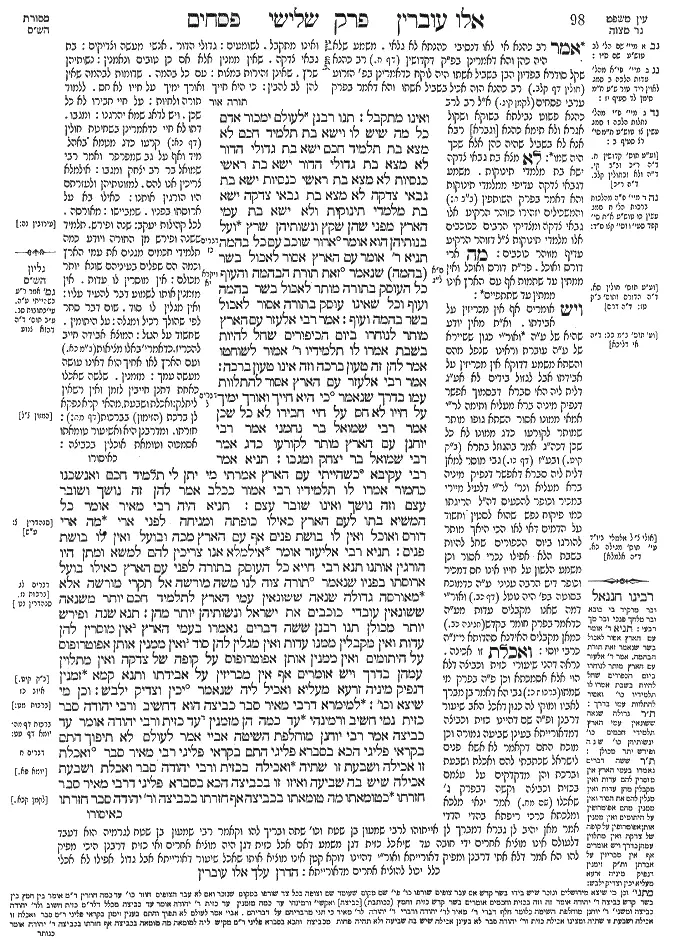
Pesahim 49b - Guemara
ואינו מתקבל:
תנו רבנן לעולם ימכור אדם כל מה שיש לו וישא בת תלמיד חכם לא מצא בת תלמיד חכם ישא בת גדולי הדור לא מצא בת גדולי הדור ישא בת ראשי כנסיות לא מצא בת ראשי כנסיות ישא בת גבאי צדקה לא מצא בת גבאי צדקה ישא בת מלמדי תינוקות ולא ישא בת עמי הארץ מפני שהן שקץ ונשותיהן שרץ ועל בנותיהן הוא אומר (דברים כז, כא) ארור שוכב עם כל בהמה תניא ר' אומר עם הארץ אסור לאכול בשר (בהמה) שנאמר (ויקרא יא, מו) זאת תורת הבהמה והעוף כל העוסק בתורה מותר לאכול בשר בהמה ועוף וכל שאינו עוסק בתורה אסור לאכול בשר בהמה ועוף:
אמר רבי אלעזר עם הארץ מותר לנוחרו ביום הכיפורים שחל להיות בשבת אמרו לו תלמידיו ר' אמור לשוחטו אמר להן זה טעון ברכה וזה אינו טעון ברכה:
אמר רבי אלעזר עם הארץ אסור להתלוות עמו בדרך שנאמר (דברים ל, כ) כי היא חייך ואורך ימיך על חייו לא חס על חיי חבירו לא כל שכן אמר רבי שמואל בר נחמני אמר רבי יוחנן עם הארץ מותר לקורעו כדג אמר רבי שמואל בר יצחק ומגבו:
תניא אמר רבי עקיבא כשהייתי עם הארץ אמרתי מי יתן לי תלמיד חכם ואנשכנו כחמור אמרו לו תלמידיו רבי אמור ככלב אמר להן זה נושך ושובר עצם וזה נושך ואינו שובר עצם:
תניא היה רבי מאיר אומר כל המשיא בתו לעם הארץ כאילו כופתה ומניחה לפני ארי מה ארי דורס ואוכל ואין לו בושת פנים אף עם הארץ מכה ובועל ואין לו בושת פנים:
תניא רבי אליעזר אומר אילמלא אנו צריכין להם למשא ומתן היו הורגין אותנו תנא רבי חייא כל העוסק בתורה לפני עם הארץ כאילו בועל ארוסתו בפניו שנאמר (דברים לג, ד) תורה צוה לנו משה מורשה אל תקרי מורשה אלא מאורסה גדולה שנאה ששונאין עמי הארץ לתלמיד חכם יותר משנאה ששונאין עובדי כוכבים את ישראל ונשותיהן יותר מהן:
תנא שנה ופירש יותר מכולן תנו רבנן ששה דברים נאמרו בעמי הארץ אין מוסרין להן עדות ואין מקבלין ממנו עדות ואין מגלין להן סוד ואין ממנין אותן אפוטרופוס על היתומים ואין ממנין אותן אפוטרופוס על קופה של צדקה ואין מתלוין עמהן בדרך ויש אומרים אף אין מכריזין על אבידתו ותנא קמא זמנין דנפיק מיניה זרעא מעליא ואכיל ליה שנאמר (איוב כז, יז) יכין וצדיק ילבש:
וכן מי שיצא וכו':
למימרא דרבי מאיר סבר כביצה הוא דחשיב ורבי יהודה סבר כזית נמי חשיב ורמינהי עד כמה הן מזמנין עד כזית ורבי יהודה אומר עד כביצה אמר רבי יוחנן מוחלפת השיטה אביי אמר לעולם לא תיפוך התם בקראי פליגי הכא בסברא פליגי התם בקראי פליגי רבי מאיר סבר (דברים ח, י) ואכלת זו אכילה ושבעת זו שתיה ואכילה בכזית ורבי יהודה סבר ואכלת ושבעת אכילה שיש בה שביעה ואיזו זו בכביצה הכא בסברא פליגי דרבי מאיר סבר חזרתו כטומאתו מה טומאתו בכביצה אף חזרתו בכביצה ור' יהודה סבר חזרתו
Comments from Rashi on Masechet Pesahim Page 49b
ואינו מתקבל . לשומעים: גדולי הדור . אנשי מעשה וצדיקים: בת גבאי צדקה . שאין ממנין אלא אם כן טובים ונאמנין: נשותיהן שרץ . שאינן זהירות במצות: עם כל בהמה . שדומות לבהמה שאין להן לב להבין: כי היא חייך ואורך ימיך על חייו לא חס . ללמוד תורה ולחיות: על חיי חברו לא כל שכן . ויש לדאג שמא יהרגנו: ומגבו . דתו לא חיי כדאמרינן בשחיטת חולין (דף כא:) קרעו כדג מטמא באהל מיד ואף על גב שמפרפר ואמר רבי שמואל בר רב יצחק ומגבו: אילמלא צריכין אנו להם . למזונותיהן ולעזרתם היו הורגין אותנו: כאילו בא על ארוסתו בפניו . שמביישו: מאורסה . לכל קהילות יעקב: שנה ופירש . תלמיד ששנה ופירש מן התורה ויודע כמה תלמידי חכמים מגנים את עמי הארץ וכמה הם שפלים בעיניהם שונא יותר מכולם: אין מוסרין לו עדות . אין מזמנין אותו לשמוע דבר להעיד עליו: ואין מגלין לו סוד . שום דבר סתר לפי שהולך רכיל ומגלה: על היתומין . שחשוד על הגזל: המוצא אבידה חייב להכריז . כדאמרי' באלו מציאות (ב"מ כא.) ועם הארץ לאו אחיך הוא דאינו עושה מעשה עמך: מזמנין . שלשה שאכלו כאחת דתנן חייבין לזמן ואין רשאין ליחלק: ואכלת ושבעת . מהאי קרא נפקא לן ברכת (הזימון) בברכות (דף מח:): חזרתו . ומדרבנן היא ואשיעור טומאתו אסמכוה וטומאת אוכלין בכביצה:
Comments from Tosafot - Pesahim 49b
לא מצא בת גבאי צדקה ישא בת מלמדי תינוקות . משמע דגבאי צדקה עדיפי ממלמדי תינוקות והא דאמר בפרק השותפין (ב"ב ח:) והמשכילים יזהירו כזוהר הרקיע אלו גבאי צדקה ומצדיקי הרבים ככוכבים אלו מלמדי תינוקות צ"ל דזוהר הרקיע עדיף מזוהר כוכבים: מה ארי דורס ואוכל . פר"ת דורס ואוכל ואין ממתין עד שתמות אף עם הארץ אינו ממתין עד שתתפייס: ויש אומרים אף אין מכריזין על אבידתו . וא"ת מאין יודע שהיא של ע"ה ואור"י כגון ששיירא של ע"ה עוברת וראינו שנפל מהם והשתא משמע דדוקא אין מכריזין על אבידתו אבל לגזול בידים לא אע"ג דלית ליה האי סברא דבסמוך אפשר דנפיק מיניה ברא מעליא ותימה לר"י אמאי ממונו אסור השתא גופו מותר שמותר לקורעו כדג ממונו לא כל שכן דכה"ג אמר בהגוזל בתרא (ב"ק קיט.) ובע"ז (דף כו.) גבי מוסר למאן דלית ליה סברא דאפשר דנפיק מיניה ברא מעליא ונר' לר"י דלעיל מיירי במכיר וכופר להכעיס דה"ל הריגתו כמו פיקוח נפש שהוא לסטין וחשוד על הדמים דאי לאו הכי היאך מותר להורגו ביום הכפורים שחל להיות בשבת הלא אפילו נכרי אסור וכן משמע הלשון על חייו אינו חס דמכיר וכופר דיש הרבה עניני ע"ה כדמוכח בסוטה בפ' היה נוטל (דף כב.) ואור"י דמה שאנו מקבלים עדות מע"ה כדאמר בפרק חומר בקדש (חגיגה כב.) כמאן מקבלים האידנא סהדותא מע"ה כרבי יוסי: ואכלת זו אכילה . נראה דהני שיעורי כזית וכביצה דלא הוי אלא אסמכתא וכן פ"ה בפרק מי שמתו (ברכות כ:) גבי הא דאמר בן מברך לאביו ומוקי לה כגון דאכל האב שיעור דרבנן ופ"ה שם דהיינו כזית וכביצה דמדאורייתא בעינן שביעה גמורה וכן מוכח התם דקאמר לא אשא פנים לישראל שכתבתי להם ואכלת ושבעת וברכת והן מדקדקים על עצמם בכזית וכביצה וקשה דבפרק ג' שאכלו (שם מח.) אמר ינאי מלכא ומלכתא כרכי ריפתא בהדי הדדי אמר מאן יהיב לן גברא דמברך לן אייתוהו לרבי שמעון בן שטח וכו' שתה ובריך להו וקאמר רבי שמעון בן שטח לגרמיה הוא דעבד דלעולם אינו מוציא אחרים ידי חובה עד שיאכל כזית דגן משמע דאם אכל כזית דגן היה מוציא אחרים ואי כזית דרבנן היכי מפיק להו הא אמר דלא אתי דרבנן ומפיק דאורייתא ואור"י דהיינו דוקא קטן אינו מוציא אותו שאכל שיעור דאורייתא אבל גדול אפילו לא אכלי כלל יכול להוציא אחרים מדאורייתא:
Pesahim 49b - Mishnah translated into english
and unacceptable.
The Sages taught: A person should always be willing to sell all he has in order to marry the daughter of a Torah scholar. If he cannot find the daughter of a Torah scholar, he should marry the daughter of one of the great people of the generation, who are pious although they are not Torah scholars. If he cannot find the daughter of one of the great people of the generation, he should marry the daughter of one of the heads of the congregations. If he cannot find the daughter of one of the heads of the congregations, he should marry the daughter of one of the charity collectors. If he cannot find the daughter of one of the charity collectors, he should marry the daughter of one of the schoolteachers. However, he should not marry the daughter of an ignoramus [am ha’aretz] because they are vermin and their wives are similar to a creeping animal, as their lifestyle involves the violation of numerous prohibitions. And with regard to their daughters the verse states: “Cursed is he who lies with an animal” (Deuteronomy 27:21), as they are similar to animals in that they lack any knowledge or moral sense.
The Gemara continues its discussion with regard to an ignoramus. It was taught in a baraita that Rabbi Yehuda HaNasi says: It is prohibited for an ignoramus to eat meat, as it is stated: “This is the law [torah] of the beast and of the fowl” (Leviticus 11:46). He expounds: Anyone who engages in Torah study is permitted to eat the meat of animals and fowl, and anyone who does not engage in Torah study is prohibited to eat the meat of animals or fowl.
The Gemara proceeds to mention some sharply negative statements of the Sages in which they overstated their negative sentiments with regard to ignoramuses, although these ignoramuses were wicked in addition to being boors (ge’onim). Rabbi Elazar said: It is permitted to stab an ignoramus to death on Yom Kippur that occurs on Shabbat. His students said to him: Master, at least say that it is permitted to slaughter him. He said to them: I intentionally used the word stab, as this term, slaughtering, requires a blessing when one slaughters an animal, and that term, stabbing, does not require a blessing in any context.
Rabbi Elazar said: It is prohibited to accompany an ignoramus while traveling on the road due to concern that the ignoramus might try to harm his traveling partner, as it is stated with regard to Torah: “For it is your life and the length of your days” (Deuteronomy 30:20). An ignoramus has not studied any Torah, indicating that he is not concerned about his own life; with regard to another’s life, all the more so.
Rabbi Shmuel bar Naḥmani said that Rabbi Yoḥanan said: It is permitted to tear open an ignoramus like a fish. Rabbi Shmuel bar Yitzḥak said: And one may cut him open from his back and thereby cause his immediate death by piercing his spinal cord rather than his stomach.
It was taught in a baraita that Rabbi Akiva said: When I was an ignoramus I said: Who will give me a Torah scholar so that I will bite him like a donkey? His students said to him: Master, say that you would bite him like a dog! He said to them: I specifically used that wording, as this one, a donkey, bites and breaks bones, and that one, a dog, bites but does not break bones.
It was taught in a baraita that Rabbi Meir would say: Anyone who marries off his daughter to an ignoramus is considered as though he binds her and places her before a lion. Why is this so? Just as a lion mauls its prey and eats and has no shame, so too, an ignoramus strikes his wife and then engages in sexual relations with her without appeasing her first, and has no shame.
It was taught in a baraita that Rabbi Eliezer says: If we did not need the ignoramuses for business, they would kill us.
The Gemara shifts to a discussion of an ignoramus who has some degree of sensitivity (Me’iri). Rabbi Ḥiyya taught: Anyone who engages in Torah study in the presence of an ignoramus, causing the ignoramus embarrassment and anguish over his inability to study Torah, is considered as though he had sexual relations with the ignoramus’s betrothed bride in his presence, as it is stated: “Moses commanded us the Torah, an inheritance [morasha] for the congregation of Jacob” (Deuteronomy 33:4). Do not read it as inheritance [morasha]; rather, read it as betrothed [me’orasa]. The Torah is compared to the betrothed bride of the Jewish people until one studies it and thereby consummates his marriage with it.
Similarly, he said: The hatred which ignoramuses have for a Torah scholar is greater than the hatred that the nations of the world have for the Jewish people. And the wives of the ignoramuses hate Torah scholars more than the ignoramuses themselves. It was taught in the Tosefta that one who studied Torah and left his studies hates Torah scholars more than all of them.
The Sages taught: Six statements were made with regard to ignoramuses: One may not entrust them with testimony, i.e., one may not appoint them as witnesses to a particular event or transaction. Additionally, one may not accept testimony from them, as they are not considered trustworthy, and one should not reveal a secret to them, as they will reveal it. One may not appoint them as steward [apotropos] over an estate belonging to orphans, due to concern that they might make improper use of the orphans’ property. Likewise, one may not appoint them as guardian over a charity fund. Finally, one should not accompany them while traveling on the road, due to concern for one’s safety. And there are those who say: One does not even announce their lost items, meaning that if one finds a lost article from such a person, he is allowed to keep it without making an effort to locate the owner (Me’iri).
The Gemara asks: What is the reasoning of the first tanna, who holds that one must announce having found the lost article of an ignoramus? The Gemara explains: Sometimes upstanding offspring will come from him and will consume the property, as it is stated: “He may prepare it but the just shall put it on” (Job 27:17). It is possible for a wicked person to prepare something for himself that will later be used by a righteous person.
The Gemara returns to explaining the mishna. It was taught: And so too, one who left Jerusalem with sacrificial meat in his possession must return to Jerusalem to burn it, just as one is required to return in order to remove leaven from his possession. According to Rabbi Meir, this halakha applies with regard to an egg-bulk of sacrificial meat or leaven, whereas Rabbi Yehuda disagrees and says the minimum amount for both is an olive-bulk.
The Gemara asks: Is that to say that Rabbi Meir holds that an egg-bulk is the minimal amount that is considered significant, and Rabbi Yehuda holds that an olive-bulk is also considered significant? The Gemara raises a contradiction from a mishna in Berakhot: How much food must one eat in order to obligate those with whom he ate in a zimmun? An olive-bulk of food is sufficient according to the unattributed opinion in the mishna, which is generally that of Rabbi Meir. And Rabbi Yehuda says: An egg-bulk is the minimum measure to obligate those with whom one ate in a zimmun. This seems to contradict the opinions of Rabbi Meir and Rabbi Yehuda stated in the mishna here.
Rabbi Yoḥanan said: The opinions are reversed in one of these sources, and must be emended.
Abaye said: Actually, do not reverse the opinions. There, they disagree with regard to the interpretation of verses, while here, they disagree with regard to logical reasoning. How so? There, with regard to zimmun, they disagree with regard to the interpretation of verses. Rabbi Meir holds that the verse: “And you shall eat and be satisfied and bless the Lord your God” (Deuteronomy 8:10) should be understood as follows: “And you shall eat,” that is eating; “and be satisfied,” that is drinking. The standard halakhic principle is that eating is defined as the consumption of an olive-bulk. And Rabbi Yehuda holds: “And you shall eat and you shall be satisfied” refers to eating that includes satisfaction. And what is considered eating with satisfaction? It is consumption of an egg-bulk.
However, here, in the cases of leaven and consecrated food, they disagree not with regard to the interpretation of verses but with regard to logical reasoning, as Rabbi Meir holds: The requirement to return consecrated food is analogous to its ritual impurity. Just as its susceptibility to ritual impurity is only when it is the size of an egg-bulk, so too, the requirement to return it is only when it is the size of an egg-bulk. And Rabbi Yehuda holds: The requirement to return consecrated food
Traduction : The William Davidson digital edition of the Koren Noé Talmud, with commentary by Rabbi Adin Even-Israel Steinsaltz.