 Talmud Bavli
Pesahim 48b : Youtube
Daf TubeYoutube
3 video classes :
Pesahim Page 48b
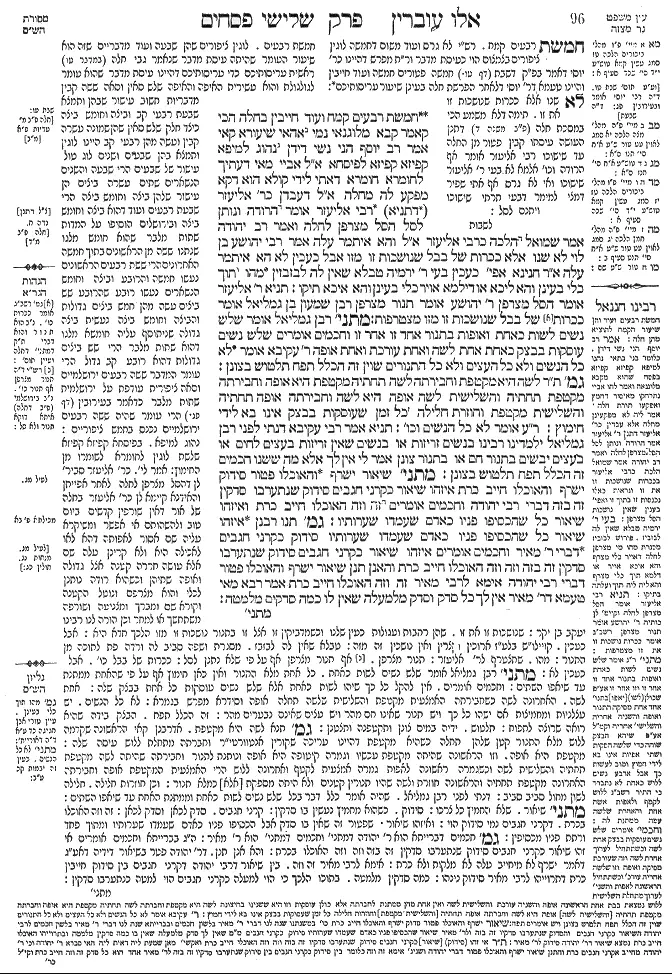
Pesahim 48b - Guemara
חמשת רבעים קמח ועוד חייבין בחלה הכי קאמר קבא מלוגנאי נמי אהאי שיעורא קאי אמר רב יוסף הני נשי דידן נהוג למיפא קפיזא קפיזא לפיסחא א"ל אביי מאי דעתיך לחומרא חומרא דאתי לידי קולא הוא דקא מפקע לה מחלה א"ל דעבדן כר' אליעזר (דתניא) רבי אליעזר אומר הרודה ונותן לסל הסל מצרפן לחלה ואמר רב יהודה אמר שמואל הלכה כרבי אליעזר א"ל והא איתמר עלה אמר רבי יהושע בן לוי לא שנו אלא ככרות של בבל שנושכות זו מזו אבל כעכין לא הא איתמר עלה א"ר חנינא אפי' כעכין בעי ר' ירמיה טבלא שאין לה לבזבזין מהו תוך כלי בעינן והא ליכא או דילמא אויר כלי בעינן והא איכא תיקו:
תניא ר' אליעזר אומר הסל מצרפן ר' יהושע אומר תנור מצרפן רבן שמעון בן גמליאל אומר ככרות של בבל שנושכות זו מזו מצטרפות:
מתני׳ רבן גמליאל אומר שלש נשים לשות כאחת ואופות בתנור אחד זו אחר זו וחכמים אומרים שלש נשים עוסקות בבצק כאחת אחת לשה ואחת עורכת ואחת אופה ר' עקיבא אומר לא כל הנשים ולא כל העצים ולא כל התנורים שוין זה הכלל תפח תלטוש בצונן:
גמ׳ ת"ר לשה היא מקטפת וחבירתה לשה תחתיה מקטפת היא אופה וחבירתה מקטפת תחתיה והשלישית לשה אופה היא לשה וחבירתה אופה תחתיה והשלישית מקטפת וחוזרת חלילה כל זמן שעוסקות בבצק אינו בא לידי חימוץ:
ר"ע אומר לא כל הנשים וכו':
תניא אמר רבי עקיבא דנתי לפני רבן גמליאל ילמדינו רבינו בנשים זריזות או בנשים שאין זריזות בעצים לחים או בעצים יבשים בתנור חם או בתנור צונן אמר לי אין לך אלא מה ששנו חכמים זה הכלל תפח תלטוש בצונן:
מתני׳ שיאור ישרף והאוכלו פטור סידוק ישרף והאוכלו חייב כרת איזהו שיאור כקרני חגבים סידוק שנתערבו סדקין זה בזה דברי רבי יהודה וחכמים אומרים זה וזה האוכלו חייב כרת ואיזהו שיאור כל שהכסיפו פניו כאדם שעמדו שערותיו:
גמ׳ תנו רבנן איזהו שיאור כל שהכסיפו פניו כאדם שעמדו שערותיו סידוק כקרני חגבים דברי ר' מאיר וחכמים אומרים איזהו שיאור כקרני חגבים סידוק שנתערבו סדקין זה בזה וזה וזה האוכלו חייב כרת והאנן תנן שיאור ישרף והאוכלו פטור דברי רבי יהודה אימא לרבי מאיר זה וזה האוכלו חייב כרת אמר רבא מאי טעמא דר' מאיר אין לך כל סדק וסדק מלמעלה שאין לו כמה סדקים מלמטה:
Comments from Rashi on Masechet Pesahim Page 48b
חמשת רבעים . לוגין ציפורים שהן שבעה ועוד מדבריים שזה הוא שיעור העומר שהיתה עיסת מדבר שנאמר גבי חלה (במדבר טו) ראשית עריסותיכם כדי עריסותיכם דהיינו עיסת מדבר שהוא עומר לגולגולת והוא עשירית האיפה והאיפה שלש סאין וסאה ששה קבין מדבריות חשוב עישור שבהן ותמצא שבעת רבעי קב וביצה וחומש ביצה כיצד חלק שלש סאין שהן שמונה עשרה קבין ועשה מהן רבעי קב היינו לוגין ותמצא בהן שבעים ושנים לוג טול עישור של שבעים הרי שבעה והשנים הנשארים שתים עשרה ביצים הן עישור שלהן ביצה וחומש ביצה הרי שבעת רבעים ועוד דהוא ביצה וחומש ביצה ובירושלים הוסיפו על המדות שתות מלבר שהוא חומש מלגו שנתנו ששה מן הראשונים בתוך חמשה האחרונים הרי ששת רבעים הראשונים נעשו חמשה והרובע וביצה וחומש הנשארים נעשו רובע שהרובע שש ביצים עשה מהן חמש ביצים גדולות והביצה וחומש ביצה נעשית ביצה גדולה שניתוסף עליה חומשא מלגו דהוא שתות מלבר הרי שש ביצים גדולות דהוא רובע קב גדול הרי עומר המדבר ששה רבעים ירושלמיים וסאה ציפורית עודפת על ירושלמית שתות מלבר כדאמר בעירובין (דף פג.) הרי עומר שהיה ששה רבעים ירושלמיים נכנס בחמש ציפוריים: נהוג למיפא . בפיסחא קפיזא קפיזא שלשת לוגין לחומרא לשומרו מן החימוץ: אמר ליה . כר' אליעזר סביר' לן דהסל מצרפן לחלה לאחר אפייתן והאידנא קיימא לן כר' אליעזר בחלה של אור דאין שורפין קדשים ביום טוב ולהשהותם אי אפשר ומשיקרא עליה שם אסור לאפותה דהא לאו לאכילה היא ולא קרינן עלה שם אלא עושה חררה קטנה אצל גדולה ואופה שתיהן וכשהוא רודה נותנן לכלי והוא מצרפם ונוטל הקטנה וקורא שם ומברך ומצניעה ושורפה משתחשך או למחר וכן הורה לנו רבינו יעקב בן יקר: שנושכות זו את זו . שהן רחבות ועגולות כעין שלנו וכשמדביקין זו אצל זו בתנור נושכות זו מזו הלכך חדא היא: אבל כעכין . קויילו"ש (קילי"ש: יתדות (של משחק. וכאן, בהשאלה, לחמים מוארכים בעלי קצוות חדים)) בלעז ארוכין וקצרין ואין נושכין זה מזה: טבלא שאין לה לבזבז . מסגרת ושפה סביב לה ורדה פת לתוכה מן התנור: מהו . שתצטרף לר' אליעזר: תנור מצרפן . אף תנור מצרפן אף על פי שלא נתנן לסל: ככרות של בבל כו' . אבל כעכין לא: מתני' רבן גמליאל אומר שלש נשים לשות כאחת . כל אחת מלא התנור ואין כאן חימוץ אף על פי שהאחת ממתנת עד שיאפו השתים: וחכמים אומרים . אין להקל כל כך שיהו לשות כאחת אלא שלש נשים עוסקות כל אחת בבצק שלה: אחת לשה . האחרונה לשה כשחבירתה האמצעית מקטפת והשלישית שלשה תחלה אופה וסידרא מפרש בגמרא: לא כל הנשים . יש עצלניות ומחמיצות אם ישהו כל כך ויש תנור שאינו חם מהר ויש עצים שאינם נבערים מהר: זה הכלל תפח . הבצק בידה שהיא רואה שרוצה לתפוח: תלטוש . ידיה במים צונן ותקטפנה ותצטנן: גמ' תנא לשה היא מקטפת . אדרבנן קאי הראשונה שקדמה ללוש מלא התנור קטן שלהן תחלה כשהיא מקטפת דהיינו עריכה שקורין אנטוורטי"ר (אינטורטי"ר: להעגיל (לעצב מאפה בצורה עגולה)) וחברתה מתחלת ללוש עיסה שלה: מקטפת היא אופה . וזו הראשונה שהיתה מקטפת עכשיו וגמרה קיטופה היא אופה ונותנת לתנור וחבירתה שהיתה לשה מקטפת תחתיה והשלישית לשה וכשגמרה ראשונה לאפות גמרה אמצעית לקטף ואחרונה ללוש הרי האמצעית המקטפת אופה וחבירתה האחרונה מקטפת תחתיה והראשונה חוזרת ולשה שהיו תנורין קטנים ולא היתה מספקת [אלא] כמלא תנור: וכן חוזרות חלילה . חלילה לשון מחול סביב סביב: דנתי לפני רבן גמליאל . שהיה אומר כלל דבר בכל שלש נשים לשות כאחת וממתנת האחת עד שיאפו השתים: מתני' שיאור . שלא החמיץ כל צרכו: סידוק . כשהוא מחמיץ נעשין בו סדקין: קרני חגבים . סדק לכאן וסדק לכאן: זה וזה האוכלו בכרת . דקרני חגבים נמי סידוק הוי: ואיזהו שיאור . שפטור זה שאין בו סדק אבל הכסיפו פניו כאדם שעמדו שערותיו ומתוך פחד ורתת פניו מכסיפין: גמ' חכמים . דברייתא הוא ר' יהודה דמתני' וחכמים דמתני' הוא ר' מאיר: ה"ג בברייתא וחכמים אומרים אי זהו שיאור כקרני חגבים סידוק שנתערבו סדקין זה בזה וזה וזה האוכלו בכרת: והא אנן תנן . דר' יהודה פטר בשיאור דידיה דאע"ג דאמר ישרף לא מיחייב עלה לא מלקות ולא כרת: אימא לרבי מאיר זה וזה . בין שיאור דרבי יהודה דקרני חגבים בין סידוק חייבין כרת דתרוייהו לרבי מאיר סידוק נינהו: כמה סדקין מלמטה . בתוכו הלכך כי הוי למעלה כקרני חגבים הוי למטה כנתערבו סדקין:
Comments from Tosafot - Pesahim 48b
חמשת רבעים קמח . רש"י לא גרס ועוד משום דחמשה לוגין ציפורים בצמצום הוי כעיסת מדבר ור"ת מפרש דהיינו כר' יוסי דאמר בפ"ק דשבת (דף טו.) חמשה פטורים חמשה ועוד חייבין והיינו טעמא דר' יוסי דלאחר הפרשת חלה בעינן שיעור עריסותיכם: לא שנו אלא ככרות שנושכות זו את זו . תימה דלא משמע הכי במסכת חלה (פ"ב משנה ד) דתנן העושה עיסתו קבין פטור מן החלה עד שישוכו רבי אליעזר אומר אף הרודה וכו' אלמא לא בעי ר' אליעזר שישוכו ואי לא גרס אף אתי שפיר דמצי למימר דבעי תרתי שישוכו ויתנם לסל:
Pesahim 48b - Mishnah translated into english
Dough made from five-quarters of a log of flour and a bit more obligates one to separate ḥalla? The Gemara answers that this is what Rav is saying: A kav from Melogna is the same measure as this, as it is not a regular kav but a larger measure, identical to the amount from which one is required to separate ḥalla.
Rav Yosef said: These women of our family ordinarily bake kefiza by kefiza, i.e., three-quarters of a log at a time, on Passover, since it is easier to prevent small quantities of dough from becoming leavened. Abaye said to him: What is your opinion? Do you tell them to do this in order to be stringent? That is a stringency that leads to a leniency, as by working with small quantities one removes the dough from the obligation to separate ḥalla.
Rav Yosef said to him: They do separate ḥalla from the dough, in accordance with the opinion of Rabbi Eliezer. As it was taught in a baraita that Rabbi Eliezer says: One who removes loaves of bread from an oven and places them in a basket, the basket combines them to reach the quantity from which one is required to separate ḥalla, even if each of the loaves would not attain the necessary measure for separating ḥalla on their own. And Rav Yehuda said that Shmuel said: The halakha is in accordance with the opinion of Rabbi Eliezer. Therefore, the women of Rav Yosef’s household would put all the finished matzot into a basket and separate ḥalla from them.
Abaye said to him: But wasn’t it stated with regard to that baraita that Rabbi Yehoshua ben Levi said: They taught that a basket combines the loaves only with regard to Babylonian loaves that bite from one another. In other words, the loaves are slightly attached, and when one separates them, a bit from one loaf comes off with the other loaf. However, it does not apply to long, rod-like loaves [ke’akhin] that were baked separately. Therefore, that principle cannot be applied to the case discussed here, in which each batch of matza was baked on its own. Rav Yosef answered: Wasn’t it stated with regard to that baraita that Rabbi Ḥanina said: The halakha is in accordance with the opinion of Rabbi Eliezer even with regard to long, rod-like loaves? This indicates that Rav Yosef accepted the view of Rabbi Ḥanina.
In light of this discussion, Rabbi Yirmeya raised a dilemma: With regard to a board without a rim [levizbezin], what is the halakha? Is it considered to be a vessel that combines loaves baked separately into one unit with regard to ḥalla? Do we require the inside of the vessel in order to combine the loaves, and that is lacking, since the board is flat rather than concave? Or perhaps we require the airspace of the vessel, and that is present in this case? The Gemara concludes: Let it stand unresolved.
It was taught in a baraita that Rabbi Eliezer says: A basket combines different loaves placed in it with regard to the obligation to separate ḥalla. Rabbi Yehoshua says: An oven combines them. Rabban Shimon ben Gamliel says: Babylonian loaves that bite from one another are combined; however, if the loaves are connected to any lesser degree, e.g., if they are together in an oven or basket, they are not considered combined for the purpose of separating ḥalla.
MISHNA: Rabban Gamliel says: Three women may knead their dough as one, meaning at one time, and bake the batches of dough in one oven, one after the other, and they need not be concerned that their dough will become leavened while they are waiting to use the oven.
And the Rabbis say: Three women may be engaged in preparing dough as one, in the following manner: One kneads her dough as another one arranges her own dough so it takes the form of matza, while another one bakes her dough.
Rabbi Akiva says: Not all women, not all wood, and not all ovens are the same, and therefore no set rules should be established. Rather, this is the principle: If the dough begins to rise, she should spread cold water in which she immersed her hands, onto the dough, in order to stop the leavening process.
GEMARA: The Sages taught in a baraita: When the woman who kneads first completes her kneading, she arranges her dough and another woman kneads in her place. When the first woman finishes arranging her dough, she bakes and another woman arranges her dough in her place, and the third woman kneads her dough. When the first woman finishes baking, she kneads the dough for her next batch, and another woman bakes in her place, and the third woman arranges her dough, and they continue in turn. As long as they are engaged in handling the dough, it will not become leavened.
It was taught in the mishna that Rabbi Akiva says that not all women, not all wood, and not all ovens are the same. It was taught in a baraita that Rabbi Akiva said: I deliberated this matter before Rabban Gamliel, asking: May our master teach us if your statement, cited in the mishna, was said with regard to diligent women or women who are not diligent? Was it said with regard to an oven fueled with moist wood or dry wood? Was it said with regard to a hot oven or a cold oven? Rabban Gamliel himself said to me: You have only what the Sages taught, which is that this is the principle: If the dough begins to rise such that there is a concern that it may become leavened, she should spread cold water onto the dough to prevent it from becoming leavened.
MISHNA: Dough at the beginning of the leavening process [siur], must be burned, but one who eats it is exempt from the punishment of karet because the dough had not become fully leavened. Dough that has reached the stage of cracking must be burned, and one who eats it intentionally is liable to receive karet, as he has intentionally eaten leavened bread during Passover.
What is considered siur? Dough that has been leavened to the point that it has cracks that look like the antennae of locusts. The stage of cracking occurs later in the leavening process, when the cracks intermingle. This is the statement of Rabbi Yehuda. And the Rabbis say: One who intentionally eats either this or that, dough with cracks like locust antennae or with cracks that have become intermingled, is liable to receive karet, as once dough begins to crack it has certainly become leavened. And what is siur? It is any dough whose surface has becomes pale like the face of a person whose hair stands on end due to fear.
GEMARA: The Sages taught: What is siur? It is any dough whose surface has become pale like the face of a person whose hair stands on end due to fear. Cracking is considered to have occurred when cracks like the antennae of locusts appear. This is the statement of Rabbi Meir. And the Rabbis say: What is siur? It is when the dough forms cracks like the antennae of locusts, and cracking is when the cracks intermingle. And one who intentionally eats either this or that is liable to receive karet.
The Gemara asks: But didn’t we learn in the mishna that siur must be burned but that one who eats it is exempt from karet; this is the statement of Rabbi Yehuda. The opinion attributed to the Rabbis in the baraita appears to be the same as that which is attributed to Rabbi Yehuda in the mishna, but according to Rabbi Yehuda, one who eats siur is exempt from karet. The Gemara answers: Say that the baraita should be understood in the following manner: According to the opinion of Rabbi Meir, whose opinion was mentioned previously, one who intentionally eats either this or that is liable to receive karet, whereas according to the Rabbis he is exempt.
Rava said: What is the reason for the opinion of Rabbi Meir? It is that there is no crack above that does not have several cracks below. Therefore, even if only one small crack appears on the surface, it is a sign that the inside of the dough is filled with cracks and has become leavened.
Traduction : The William Davidson digital edition of the Koren Noé Talmud, with commentary by Rabbi Adin Even-Israel Steinsaltz.