 Talmud Bavli
Pesahim 111b : Youtube
Daf TubeYoutube
3 video classes :
Pesahim Page 111b
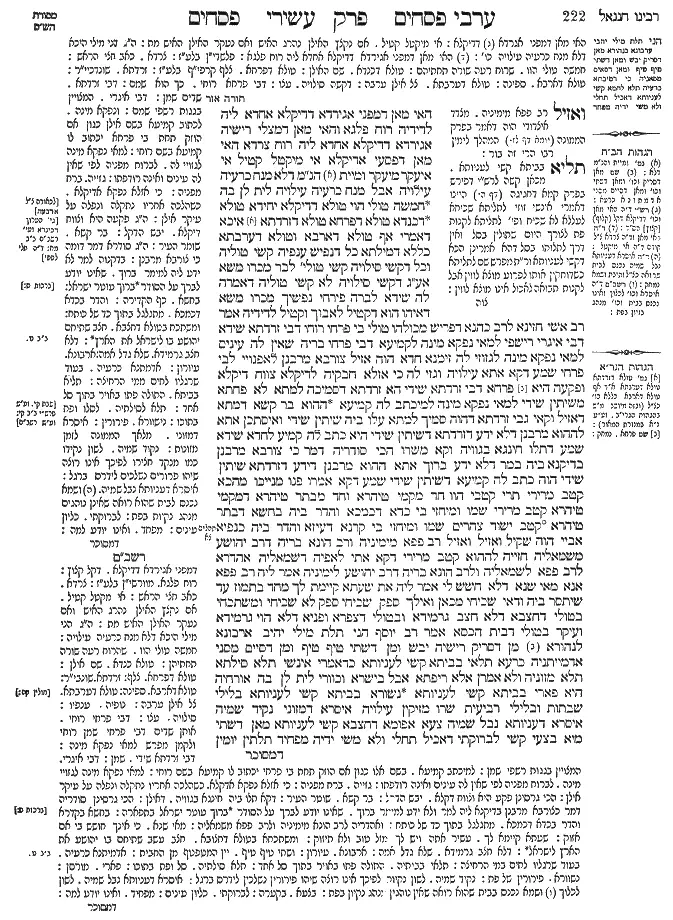
Pesahim 111b - Guemara
האי מאן דמפני אגירדא דדיקלא אחדא ליה לדידיה רוח פלגא והאי מאן דמצלי רישיה אגירדא דדיקלא אחדא ליה רוח צרדא האי מאן דפסעי אדיקלא אי מיקטל קטיל אי איעקר מיעקר ומיית הנ"מ דלא מנח כרעיה עילויה אבל מנח כרעיה עילויה לית לן בה חמשה טולי הוי טולא דדיקלא יחידא טולא דכנדא טולא דפרחא טולא דזרדתא איכא דאמרי אף טולא דארבא וטולא דערבתא כללא דמילתא כל דנפיש ענפיה קשי טוליה וכל דקשי סילויה קשי טולי' לבר מכרו משא אע"ג דקשי סילויה לא קשי טוליה דאמרה לה שידא לברה פירחי נפשיך מכרו משא דאיהו הוא דקטיל לאבוך וקטיל לדידיה אמר רב אשי חזינא לרב כהנא דפריש מכולהו טולי בי פרחי רוחי דבי זרדתא שידא דבי איגרי רישפי למאי נפקא מינה לקמיעא דבי פרחי בריה שאין לה עינים למאי נפקא מינה לגזוזי לה זימנא חדא הוה אזיל צורבא מרבנן לאפנויי לבי פרחי שמע דקא אתא עילויה וגזי לה כי אזלא חבקיה לדיקלא צווח דיקלא ופקעה היא פרחא דבי זרדתא שידי הא זרדתא דסמיכה למתא לא פחתא משיתין שידי למאי נפקא מינה למיכתב לה קמיעא ההוא בר קשא דמתא דאזיל וקאי גבי זרדתא דהוה סמיך למתא עלו ביה שיתין שידי ואיסתכן אתא לההוא מרבנן דלא ידע דזרדתא דשיתין שידי היא כתב לה קמיע לחדא שידא שמע דתלו חינגא בגוויה וקא משרו הכי סודריה דמר כי צורבא מרבנן בדיקנא ביה במר דלא ידע ברוך אתא ההוא מרבנן דידע דזרדתא שיתין שידי הוה כתב לה קמיעא דשיתין שידי שמע דקא אמרו פנו מנייכו מהכא קטב מרירי תרי קטבי הוו חד מקמי טיהרא וחד מבתר טיהרא דמקמי טיהרא קטב מרירי שמו ומיחזי בי כדא דכמכא והדר ביה בחשא דבתר טיהרא (תהלים צא, ו) קטב ישוד צהרים שמו ומיחזי בי קרנא דעיזא והדר ביה כנפיא אביי הוה שקיל ואזיל ואזיל רב פפא מימיניה ורב הונא בריה דרב יהושע משמאליה חזייה לההוא קטב מרירי דקא אתי לאפיה דשמאליה אהדרא לרב פפא לשמאליה ולרב הונא בריה דרב יהושע לימיניה אמר ליה רב פפא אנא מאי שנא דלא חשש לי אמר ליה את שעתא קיימת לך מחד בתמוז עד שיתסר ביה ודאי שכיחי מכאן ואילך ספק שכיחי ספק לא שכיחי ומשתכחי בטולי דחצבא דלא חצב גרמידא ובטולי דצפרא ופניא דלא הוי גרמידא ועיקר בטולי דבית הכסא אמר רב יוסף הני תלת מילי יהיב ארבונא לנהורא מן דסריק רישיה יבש ומן דשתי טיף טיף ומן דסיים מסני אדמייתניה כרעא תלאי בביתא קשי לעניותא כדאמרי אינשי תלא סילתא תלא מזוניה ולא אמרן אלא ריפתא אבל בישרא וכוורי לית לן בה אורחיה היא פארי בביתא קשי לעניותא נשורא בביתא קשי לעניותא בלילי שבתות ובלילי רביעית שרו מזיקין עילויה איסרא דמזוני נקיד שמיה איסרא דעניותא נבל שמיה צעא אפומא דחצבא קשי לעניותא מאן דשתי מיא בצעי קשי לברוקתי דאכיל תחלי ולא משי ידיה מפחיד תלתין יומין
Comments from Rashi on Masechet Pesahim Page 111b
האי מאן דמפני אגרדא דדיקלא: האי מאן דמפני אגירדא דדיקלא אחדא ליה רוח פלגא . פלשדי"ן (פליישי"ן: שיתוק) בלע"ז: צרדא . כאב חצי הראש: אי מיקטל קטיל . אם נקצץ האילן נהרג האיש ואם נעקר האילן האיש מת: ה"ג הני מילי היכא דלא מנח כרעיה עילויה כו': חמשה טולי הוו . שרוח רעה שורה תחתיהם: טולא דכנדא . שם האילן: טולא דפרחא . צלף קרפי"ף ([[:קטגוריה:{קטן (קפריי"ר: שיח|{קטן, (קפריי"ר:שיח]][[קטגוריה:{קטן (קפריי"ר: שיח]])} בלע"ז: זרדתא . שונדכיי"ר (שורביי"ר: חוזרר (אילן)) : טולא דארבא . ספינה: טולא דערבתא . צל אילן ערבה: דקשה סילויה . עצו: דבי פרחא רוחי . כך הוא שמם: דבי זרדתא . שדים שמן: דבי איגרי . המצויין בגגות רשפי שמם: ונפקא מינה . לכתוב קמיעא בשם אילן כגון אם הוזק תחת בי פרחא יכתוב לו קמיעא בשם רוחי: למאי נפקא מינה לגזויי לה . לברוח מפניה לפי שאין לה עינים ואינה רודפתו: גזייה . ברח מפניה: כי אזלא נפקא אדיקלא . כשהלכה אחריו נתקלה ונפלה על עיקר אילן: ה"ג פקעה היא וצווח דיקלא . יבש הדקל: בר קשא . שומר העיר: ה"ג סודרא דמר דומה כי צורבא מרבנן: בדקנוה למר לא ידע ליה למימר ברוך . שאינו יודע לברך על הסודר ברוך עוטר ישראל: בחשא . כף הקדירה: והדר בכדא דכמכא . מתגלגל בתוך כד של כותח: ומשתכח בטולא דחצבא . חצב שתיחם יהושע בו לישראל את הארץ: דלא חצב גרמידא . שלא גדל אמה: ארבונא . עיורון: אדמתנא כרעיה . בעוד שרגליו לחים ממי הרחיצה: תליא בביתא . התולה פתו באויר בתוך סל אחד: תלא לסילתיה . לסלו ופת בתוכו: נישוורא . פירורין: איסרא דמזוני . מלאך הממונה לזמן מזונות: נקוד שמיה . לשון נקידו כמו מנקד חצירו לפיכך אינו רוצה שיהו פרורים נשלכים לידרס ברגל: איסרא דעניותא נבל שמיה . ושמא נכנס לבית שהוא רואה שאינן נוהגים מנהג נקיות בפת: לברוקתי . כליון עינים: מפחד . ואינו יודע למה:
Comments from Rashbam - Pesahim 111b
דמפני אגירדא דדיקלא . דקל קצוץ: רוח פלגא . מוורשי''ן בלע''ז: צרדא . כאב חצי הראש: אי מקטל קטיל . אם נקצץ האילן נהרג האיש ואם נעקר האילן האיש מת: ה''ג הני מילי היכא דלא מנח כרעיה עילויה: חמשה טולי הוו . שהרוח רעה שורה תחתיהן: טולא כנדא . שם אילן: טולא דפרחא . צלף: זרדתא . שונבי''ר: טולא דארבא . ספינה: טולא דערבתא . צל אילן ערבה: נופיה . ענפיו: סילויה . עצו: דבי פרחי רוחי . אותן שדים דבי פרחי שמן רוחי ולקמן מפרש למאי נפקא מינה: דבי זרדתא שידי . שמן: דבי איגרי . המצויין בגגות רשפי שמן: למיכתב קמיעא . בשם אלו כגון אם הוזק תחת בי פרחי יכתוב לו קמיעא בשם רוחי: למאי נפקא מינה לגזויי מינה . לברוח מפניה לפי שאין לה עינים ואינה רודפתו: גזייה . ברח מפניה: כי אזלה נפקא אדקלא . כשהלכה אחריו נתקלה ונפלה על עיקר אילן: הכי גרסינן פקע היא וצווח דקלא . יבש הדקל: בר קשא . שוטר העיר: דקא תלו ביה חינגא בגוויה . דאילן: הכי גרסינן סודריה דמר כצורבא מרבנן בדיקנא ליה למר ולא ידע למימר ברוך . שאינו יודע לברך על הסודר ברוך עוטר ישראל בתפארה: בחשא בקדרא והדר בכדא דבמכא . מתגלגל בתוך כד של כותח: ואהדריה לרב הונא מימיניה ולרב פפא משמאליה: מאי שנא . כי אינך חושש בי אם אזוק: שעתא קיימא לך . עשיר אתה ויש לך מזל טוב ולא תיזוק: ומשתכחא בטולא דחצובא . חצב עשב שתיחם בו יהושע את הארץ לישראל: דלא חצב גרמידא . שלא גדל אמה: ארבונה . עיורון: ושתי טיף טיף . יין המטפטף מן החבית: אדמיתנא כרעיה . בעוד שרגליו לחים במי הרחיצה: תלאי בביתיה . התולה פתו באויר בתוך סל אחד: תלא סילתיה . סל ופת בתוכו: פארי . מורסן: נשוורא . פירורין של פת: נקיד שמיה . לשון נקיות לפיכך אינו רוצה שיהו פירורין נשלכין לידרס ברגל: איסרא דעניותא נבל שמיה . לשון לכלוך ושמא נכנס בבית שהוא רואה שאין נוהגין מנהג נקיון בפת: בצעא . בקערה: לברוקתי . כליון עינים: מפחיד . ואינו יודע למה:
Comments from Tosafot - Pesahim 111b
ואזיל רב פפא מימיניה . מצדד איצדודי הוה דאמר בפרק הממונה (יומא דף לז.) המהלך לימין רבו הרי זה בור: תליא בביתא קשי לעניותא . מכאן קשה לרש"י דפירש בפרק קמא דחגיגה (דף ה.) היינו דאמרי אינשי זוזי לתליתא שכיחא לעללא לא שכיח ופי' לתליתא לקנות פת לצורך היום שתולין בסל ואין דרך לתלותו בסל דהא אמרינן הכא דקשי לעניותא ור"ת מפרש שם לתליתא כשדוחקין אותו לפרוע מוצא לווין אבל לקנות תבואה לאכול אינו מוצא לווין:
Pesahim 111b - Mishnah translated into english
The Gemara continues to discuss harmful spirits. One who relieves himself on the stump of a palm tree will be seized by a spirit of sickness, and one who places his head on the stump of a palm tree will be seized by a spirit of a headache of half his head, i.e., a migraine. One who walks over a palm tree, if the tree is cut down, he too will be killed. If that tree is uprooted, he will also be uprooted and will die. The Gemara comments: This statement applies only if he does not place his legs upon it; however, if he places his legs upon it, we have no problem with it.
The Gemara cites another statement with regard to shadows. There are five types of dangerous shadows: The shadow of a single palm tree, the shadow of a tree called kanda, the shadow of a caper-bush, and the shadow of the sorb tree. Some say: Also the shadow of a ship and the shadow of a willow. The general rule of the matter is: Whatever has many branches, its shadow is dangerous.
And any tree whose wood is hard, its shadow is dangerous, except for the tree called kero masa. Although its wood is hard, its shadow is not dangerous, as the demon said to her son: Leave the kero masa tree alone, as it was that tree that killed your father. And the tree later killed the son too. The kero masa tree is harmful to demons. Rav Ashi said: I saw that Rav Kahana avoided all types of shadows.
The Gemara comments: The demons near the caper-bush are called ruḥei. A demon found near the sorb trees is called shida. The demons found on roofs are called rishfei. The Gemara asks: What is the practical difference of these definitions? It makes a difference for writing an amulet on behalf of one who has been harmed. It is necessary to know the name of the demon who caused the damage.
The Gemara further comments: The demon found near the caper-bush is a creature with no eyes. What is the practical halakhic difference of this observation? It is relevant with regard to fleeing from it. The Gemara relates: Once a Torah scholar went to relieve himself near a caper-bush. He heard the demon coming and fled from it. When this evil spirit went, it grabbed a palm tree and got stuck there. The palm tree dried out and the demon burst.
It was stated above that the demons found near the sorb tree are called sheidei. The Gemara comments: This sorb tree that is close to the city contains no less than sixty demons. The Gemara asks: What is the practical difference of this statement? The Gemara answers: It is relevant for writing an amulet for this number.
The Gemara relates: A certain ruler of a city walked and stood by a sorb tree that was near a city. Sixty sheidei demons came upon him and he was in danger. One of the Sages who did not know that it was a sorb tree of sixty sheidei came and wrote him an amulet for one shida demon. That man heard that there was a celebration inside the tree, and the demons were singing: The scarf of the Master is like that of a Torah scholar, but we checked the Master and he does not know how to say barukh, the blessing when donning a scarf. The demons were mocking him and saying that he did not know how to write an amulet. Another one of the Sages, who knew that it was a sorb tree of sixty sheidei, came and wrote an amulet against sixty demons. He heard them saying: Clear your items away from here.
The Gemara discusses the ketev meriri, a demon mentioned in the Torah (Deuteronomy 32:24). There are two types of ketev demons, one that comes before noon in the morning and the other one comes in the afternoon. The one that comes before noon is called ketev meriri, and it appears in a jug of kutaḥ, a Babylonian spice, and continuously revolves around inside it. The ketev in the afternoon is called ketev yashud tzaharayim (Psalms 91:6), and it appears inside the horn of a goat and revolves around inside it like a sifter.
The Gemara relates: Abaye was coming and walking along the street. And Rav Pappa was walking on his right and Rav Huna, son of Rav Yehoshua, was on his left. Abaye saw a certain ketev meriri coming on his left side and he switched Rav Pappa to his left and Rav Huna, son of Rav Yehoshua, to his right. Rav Pappa said to Abaye: And I, what is different that you were not concerned about any possible harm to me? Abaye said to him: The time is in your favor. You are wealthy and fortunate, and therefore I believe that you will most likely not be harmed by the demon.
The Gemara comments: From the first of Tammuz to the sixteenth of that month, these demons are certainly found. From here onward it is uncertain whether they are found or whether they are not found. And they can be found in the shadow of a sea squill that has not grown a cubit, and in the shadow of objects in the morning and evening when their length is less than a cubit. And they are mostly found in the shadow of a privy.
Rav Yosef said: These three matters cause blindness to the light of one’s eyes: One who combs his hair when it is dry, one who drinks wine that is dripping from the barrel, and one who puts on shoes when his feet are wet after being washed.
If a food is hanging in one’s house, it causes poverty. This is as people say in a popular proverb: He who hangs the basket hangs his sustenance, i.e., he loses it. And we said this only about hanging bread; however, if one hangs meat and fish, we have no problem with it. The reason is that it is the common practice to hang meat and fish. Bran [parei] in the house causes poverty. Bread crumbs in the house cause poverty. If these crumbs are spread throughout the house on Shabbat nights, i.e., Friday nights, or on Tuesday nights, when demons are present, harmful spirits rest on them.
The administering angel appointed over food is called Nakid, i.e., he is clean [naki] and particular about cleanliness. The administering angel appointed over poverty is called Naval. The angel appointed over food will not stay in a dirty place, while the angel appointed over poverty will thrive there. A plate placed on a jug causes poverty. One who drinks water from a plate causes eye pain. One who eats cress without washing his hands will be afraid for thirty days.
Traduction : The William Davidson digital edition of the Koren Noé Talmud, with commentary by Rabbi Adin Even-Israel Steinsaltz.