 Talmud Bavli
The learning on the whole site is dedicated : L'ilui Nishmat Amram ben Itshak Loubaton
The learning on the whole site is dedicated : L'ilui Nishmat Nissim ben Barukh Malka
The learning on the whole site is dedicated : L'ilui Nishmat Yaakov ben Myriam
Sanhedrin 112b : Youtube
Daf TubeYoutube
2 video classes :
Sanhedrin Page 112b
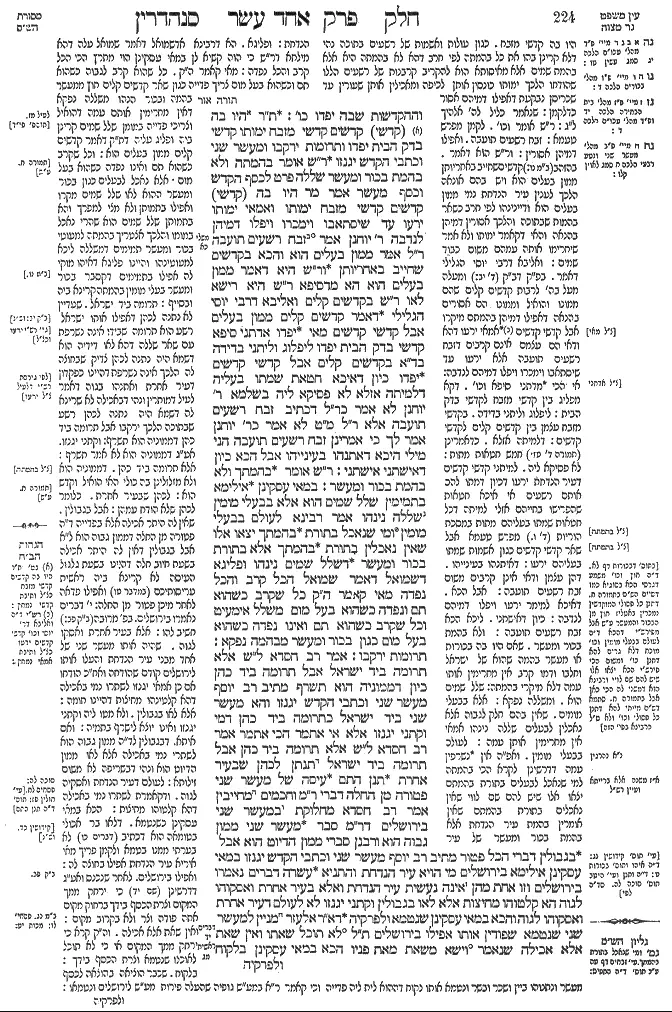
Sanhedrin 112b - Guemara
וההקדשות שבה יפדו כו':
ת"ר היו בה (קדשי) קדשים קדשי מזבח ימותו קדשי בדק הבית יפדו ותרומות ירקבו ומעשר שני וכתבי הקדש יגנזו ר"ש אומר בהמתה ולא בהמת בכור ומעשר שללה פרט לכסף הקדש וכסף מעשר אמר מר היו בה (קדשי) קדשים קדשי מזבח ימותו ואמאי ימותו ירעו עד שיסתאבו וימכרו ויפלו דמיהן לנדבה ר' יוחנן אמר (משלי כא, כז) זבח רשעים תועבה ר"ל אמר ממון בעלים הוא והכא בקדשים שחייב באחריותן ור"ש היא דאמר ממון בעלים הוא הא מדסיפא ר"ש היא רישא לאו ר"ש בקדשים קלים ואליבא דרבי יוסי הגלילי דאמר קדשים קלים ממון בעלים אבל קדשי קדשים מאי יפדו אדתני סיפא קדשי בדק הבית יפדו ליפלוג וליתני בדידה בד"א בקדשים קלים אבל קדשי קדשים יפדו כיון דאיכא חטאת שמתו בעליה דלמיתה אזלא לא פסיקא ליה בשלמא ר' יוחנן לא אמר כר"ל דכתיב זבח רשעים תועבה אלא ר"ל מ"ט לא אמר כר' יוחנן אמר לך כי אמרינן זבח רשעים תועבה הני מילי היכא דאתנהו בעינייהו אבל הכא כיון דאישתני אישתני:
ר"ש אומר בהמתך ולא בהמת בכור ומעשר:
במאי עסקינן אילימא בתמימין שלל שמים הוא אלא בבעלי מומין שללה נינהו אמר רבינא לעולם בבעלי מומין ומי שנאכל בתורת בהמתך יצאו אלו שאין נאכלין בתורת בהמתך אלא בתורת בכור ומעשר דשלל שמים נינהו ופליגא דשמואל דאמר שמואל הכל קרב והכל נפדה מאי קאמר ה"ק כל שקרב כשהוא תם ונפדה כשהוא בעל מום משלל אימעיט וכל שקרב כשהוא תם ואינו נפדה כשהוא בעל מום כגון בכור ומעשר מבהמה נפקא:
תרומות ירקבו:
אמר רב חסדא ל"ש אלא תרומה ביד ישראל אבל תרומה ביד כהן כיון דממוניה הוא תשרף מתיב רב יוסף מעשר שני וכתבי הקדש יגנזו והא מעשר שני ביד ישראל כתרומה ביד כהן דמי וקתני יגנזו אלא אי אתמר הכי אתמר אמר רב חסדא ל"ש אלא תרומה ביד כהן אבל תרומה ביד ישראל תנתן לכהן שבעיר אחרת תנן התם עיסה של מעשר שני פטורה מן החלה דברי ר"מ וחכמים מחייבין אמר רב חסדא מחלוקת במעשר שני בירושלים דר"מ סבר מעשר שני ממון גבוה הוא ורבנן סברי ממון הדיוט הוא אבל בגבולין דברי הכל פטור מתיב רב יוסף מעשר שני וכתבי הקדש יגנזו במאי עסקינן אילימא בירושלים מי הויא עיר הנדחת והתניא עשרה דברים נאמרו בירושלים וזו אחת מהן אינה נעשית עיר הנדחת ואלא בעיר אחרת ואסקוהו לגוה הא קלטוהו מחיצות אלא לאו בגבולין וקתני יגנזו לא לעולם דעיר אחרת ואסקוהו לגוה והכא במאי עסקינן שנטמא ולפרקיה דא"ר אלעזר מניין למעשר שני שנטמא שפודין אותו אפילו בירושלים ת"ל (דברים יד, כד) לא תוכל שאתו ואין שאת אלא אכילה שנאמר (בראשית מג, לד) וישא משאת מאת פניו הכא במאי עסקינן בלקוח
Comments from Rashi on Masechet Sanhedrin Page 112b
היו בה קדשי מזבח . כגון עולות ואשמות של רשעים בתוכה נהי דלא קרינן בהו את כל בהמתה לפי חרב דהא לא בהמתה היא אלא בהמת שמים אלא מאיסותא הוא להקריב קרבנות של רשעים הללו שהודחו הלכך ימותו כונסין אותן לכיפה ומאכילין אותן שעורין עד שכריסן נבקעת דאפילו דמיהם אסור כדלקמן: שנאמר כליל לה' אלהיך ל"ג: ר"ש אומר וכו' . לקמן מפרש טעמא: זבח רשעים תועבה . ואפילו דמיהן אסורין: ור"ש הוא דאמר . בהזהב (ב"מ נו:) קדשים שחייב באחריותן ממון בעלים הוא ויש בהם אונאה הלכך לענין עיר הנדחת נמי ממון . בעלים הוא ודיינינהו לפי חרב כשאר בהמות שבתוכה והלכך אסורין דמיהן בהנאה והאי דקאמר ימותו ולא אמר שיחרימו אותה עמהם משום כבוד שמים: ואליבא דרבי יוסי הגלילי דאמר . בפ"ק דב"ק (ד' יב:) ומעלה מעל בה' לרבות קדשים קלים שהם ממונו והואיל וממונו הם אסורים בהנאה דאפילו דמיהן בהמתם מיקרו אבל קדשי קדשים אמאי ירעו דהא ודאי הם עצמם אינם קרבים דזבח רשעים תועבה אלא ירעו עד שיסתאבו וימכרו ויפלו דמיהם לנדבה: אי הכי מדתני סיפא וכו' . דקא מפליג בין קדשי מזבח לקדשי בדק הבית: ליפלוג וליתני בדידה . בקדשי מזבח עצמן בין קדשים קלים לקדשי קדשים: דלמיתה אזלא . כדאמרינן (תמורה ד' טז.) חמש חטאות מתות: לא פסיקא ליה . למיתני קדשי קדשים דעיר הנדחת ירעו דכיון דמתו להם אותם רשעים אי איכא חטאות שהפרישו בחייהם אזלי למיתה דכל חטאות שמתו בעליהם מתות במסכת הוריות (ד' ו.) מפרש טעמא אבל שאר קדשי קדשים כגון אשמות שמתו בעליהם ירעו: דאיתנהו בעינייהו . דהן עצמן ודאי אינן קרבים משום זבח רשעים תועבה: אבל הכא . דאיכא למימר ירעו ויפלו דמיהם לנדבה: כיון דאישתני . ליכא הכא זבח רשעים תועבה: ולא בהמת בכור ומעשר . שאם היו בה בכורות או מעשר בהמה שהוא של ישראל וחלבו ודמו קרב אין מחרימין אותו עמה דלא מיקרי בהמתה: שלל שמים הוא . ומשללה נפקא: אלא בבעלי מומים . שאין בהם חלק לגבוה אלא נאכלין לבעלים שללה נינהו אמאי אין מחרימין אותן עמה: לעולם בבעלי מומין . ואפ"ה אין נשרפין עמה דדרשינן לקרא הכי בהמתה למי שנאכל לבעלים בתורת בהמתם יצאו אלו שיש להם שם לווי שאין נאכלים בתורת בהמתם שאין אומרין בהמת עיר הנדחת אלא בהמת בכור ומעשר של עיר הנדחת: ופליגא . הא דרבינא אדשמואל דאמר שמואל עלה דהא מילתא דר"ש כי הוה קשיא לן במאי עסקינן הוי מתרץ הכי הכל קרב והכל נפדה: מאי קאמר ה"ק כל . שהוא קרב לגבוה כשהוא תם וכשהוא בעל מום צריך פדייה כגון שאר קדשים קלים חוץ ממעשר בהמה ובכור הנהו משללה נפקא דאין מחרימין אותם עמה דהואיל וצריכי פדייה במומן שלל שמים קרינן ביה ופליג עליה דת"ק דאמר קדשים קלים ממון בעלים הוא: וכל שקרב כשהוא תם ואינו נפדה כשהוא בעל מום . אלא נאכל לבעלים כגון בכור ומעשר ההוא לאו שלל שמים מקרו ואפילו בתמותן ולא מצי למפרך והא בתמותן שלל שמים הוא שהרי נאכל במומו והלכך אצטריך בהמתה למעוטי בכור ומעשר תמימים דמשללה ליכא למעוטינהו והיינו פליגא דאיהו מוקי לה אפילו בתמימים דקסבר בכור ומעשר בעלי מומין בהמתה קרינא ביה ובסייף: תרומה ביד ישראל . שעדיין לא נתנה לכהן דאפילו אותו ישראל רשע הוא תרומה שבידו אינה נשרפת עם שאר שללה דהא לאו דידיה הוא דשמא היה נתנה לכהן צדיק שבחוצה לה הלכך אינה נשרפת דהיינו כפקדון דעיר אחרת ואתנהו בגוה דאמר לעיל דמותרין ונהי דבאכילה לא שרינא לה דשמא היה נתנה לכהן רשע שבתוכה הלכך ירקבו אבל תרומה ביד כהן דממוניה הוא תשרף: וקתני יגנזו . אע"ג דממוניה הוא לא אמר תשרף: אלא תרומה ביד כהן . דממוניה הוא ולא מזלזלינן בה כולי האי הואיל וקדש הוא: לכהן שבעיר אחרת . כלומר לכהן שלא הודח עמהן: אבל בגבולין . שאין לה היתר אכילה אלא בפדייה ד"ה פטורה מן החלה דממון גבוה הוא ל"א אבל בגבולין דאין לה היתר אכילה בשעת חיוב חלה דהיינו בשעת גלגול העיסה לא קרינא ביה ראשית עריסותיכם (במדבר טו) ואפילו פדאה לאחר מיכן פטור מן החלה: י' דברים נאמרו בירושלים . בפ' מרובה (ב"ק פב:) חשיב להו: אלא בעיר אחרת ואסקו לגוה . שהיה אותו מעשר שני של אחד מבני עיר הנדחת והעלו אותו לירושלים קודם שהודחה ואח"כ הודחו אם כן אמאי יגנזו לשתרו נמי באכילה דהא קלטינהו מחיצות דהיינו חומה: אלא לאו בגבולין . ולא מטו ליה וקתני יגנזו ואינו יוצא לישרף בתמיה: ואם איתא . דבגבולין לד"ה ממון גבוה הוא לשתרי נמי באכילה אלא לאו ממון הדיוט הוא ונהי דבשריפה לא משום זילותא: לעולם דעיר הנדחת ואסקיה לגוה . ודקאמרת לשתרו נמי באכילה דהא קלטוהו מחיצות: הכא במאי עסקינן כשנטמא . דלאו בר אכולי בטומאה הוא דכתיב (דברים כו) לא בערתי ממנו בטמא ולקמן פריך מאי איריא עיר הנדחת אפילו בחוצה לה: ואפילו בירושלים . לאחר שנכנס ואע"ג דדרשינן (שם יד) כי ירחק ממך המקום וצרת הכסף בידך ברחוק מקום אתה פודה וצר ולא בקרוב מקום: ואין שאת אלא אכילה . וה"ק קרא כי ירחק ממך המקום או כי לא תוכל לאוכלו שנטמא וצרת הכסף בידך: בלקוח . שכבר הוציאה בהוצאה לכסף מעשר ונתנוהו ביין ושכר ובשר ונטמא אותו לקוח דההוא לית ליה פדייה וכי קאמר ר"א במע"ש גופיה שהעלה פירות מע"ש לירושלים ונטמאו:
Sanhedrin 112b - Mishnah translated into english
§ The mishna teaches: And the consecrated property in it must be redeemed. The Sages taught in a baraita (Tosefta 14:5): If there were offerings of the most sacred order in it, if they were animals consecrated for sacrifice on the altar, they shall die; one causes their death. Items consecrated for Temple maintenance must be redeemed, and terumot must be left to decay, and second tithe and sacred scrolls must be interred. Rabbi Shimon says: That is not so; rather, the term: “Its animals” (Deuteronomy 13:16), serves to exclude a firstborn animal and animal tithe, as they never belonged to the idolatrous city. The term: “Its spoils” (Deuteronomy 13:17), serves to exclude consecrated money and tithe money.
The Gemara proceeds to analyze the baraita. The Master said: If there were offerings of the most sacred order in it, if they were animals consecrated for sacrifice on the altar, they shall die. The Gemara asks: But why shall they die? They should graze until they become unfit, and then they should be sold and their value should be allocated for communal gift offerings.
Rabbi Yoḥanan says: They shall die, as it is written: “The offering of the wicked is an abomination” (Proverbs 21:27), and it is unacceptable for sacrifice on the altar. Reish Lakish says: They shall die because the animal is the property of its owner and is not exclusively consecrated property. And the reason it is considered the property of the owner is that here, the tanna is referring to offerings with regard to which one bears financial responsibility for their replacement. That responsibility renders the status of these consecrated animals like that of his property. And this is in accordance with the opinion of Rabbi Shimon, who says: An offering with regard to which one bears financial responsibility for its replacement is the property of its owner.
The Gemara challenges: From the fact that the latter clause of the baraita is the opinion of Rabbi Shimon, one may infer that the first clause is not in accordance with the opinion of Rabbi Shimon. The Gemara suggests a new explanation: Rather, the animals that shall die are offerings of lesser sanctity, and the ruling of the baraita is in accordance with the opinion of Rabbi Yosei HaGelili, who says: Offerings of lesser sanctity are the property of their owner. The Gemara infers: But offerings of the most sacred order, what shall be done with them? They shall be redeemed.
The Gemara asks: If so, rather than teaching in the latter clause of the baraita: Items consecrated for Temple maintenance must be redeemed, let the tanna distinguish and teach a distinction within the category of animals consecrated for sacrifice on the altar itself, as follows: In what case is this statement, that animals shall die, said? It is stated with regard to offerings of lesser sanctity; but with regard to offerings of the most sacred order, they shall be redeemed. The Gemara answers: Since there is among offerings of the most sacred order the case of the sin-offering whose owners were killed in the idolatrous city, rendering the animal a sin-offering whose owners have died, which is left to die, that distinction is not clear-cut for the tanna, as offerings of the most sacred order are not always redeemed. Therefore, the tanna preferred to cite a distinction without exceptions.
The Gemara comments: Granted, Rabbi Yoḥanan does not say his explanation of the baraita in accordance with the opinion of Reish Lakish, due to the fact that it is written: “The offering of the wicked is an abomination,” and he bases his explanation on that verse. But Reish Lakish, what is the reason he does not say his explanation of the baraita in accordance with the opinion of Rabbi Yoḥanan? The Gemara answers: He could have said to you that when we say: “The offering of the wicked is an abomination,” this statement applies in a case where the offering is in its unadulterated form. But here, since if they were to redeem it, it would have changed and would no longer be the animal of the wicked itself, but rather an animal purchased with the proceeds of the redemption of the original, it would have changed, and it would no longer be an abomination.
§ The baraita continues. Rabbi Shimon says that the term “its animals” serves to exclude a firstborn animal and animal tithe. The Gemara asks: What animals are we dealing with? If we say that Rabbi Shimon is speaking with regard to unblemished animals, like all other offerings they are the spoils of Heaven and not the spoils of the inhabitants of the city. Rather, Rabbi Shimon is speaking with regard to blemished animals, which belong to their owners. If so, they are the spoils of the city, and what is the reason that Rabbi Shimon says that there is no obligation to destroy these animals?
Ravina says: Actually, Rabbi Shimon is speaking with regard to blemished animals, and his statement should be understood as follows: The mitzva is to destroy that which is eaten as its animals, i.e., as the property of an inhabitant of an idolatrous city. Excluded are those firstborn and tithe animals, which, even when blemished, are not eaten as its animals; rather, they are eaten as firstborn and tithe animals. They are given as gifts to priests, and are considered the spoils of Heaven.
And this halakha disputes the statement of Shmuel, as Shmuel says: Everything is sacrificed and everything is redeemed. The Gemara asks: What is he saying? The Gemara explains that this is what he is saying: Any offering that is sacrificed on the altar when it is unblemished and is redeemed when it is blemished is excluded from the term “its spoils,” since it is considered the spoils of Heaven. And the halakha concerning any offering that is sacrificed on the altar when it is unblemished and is not redeemed when it is blemished, e.g., a firstborn animal and animal tithe, is derived from the term “its animals,” as they are not the city’s animals and they are not included in the city’s property.
§ The baraita continues: Terumot must be left to decay. Rav Ḥisda says: The Sages taught this only with regard to teruma that is still in the possession of an Israelite, who has not yet given it to a priest. But concerning teruma that is already in the possession of a priest who lives in the idolatrous city, since it is his property, it shall be burned.
Rav Yosef raises an objection from the mishna: Second tithe and sacred scrolls must be interred. But isn’t the status of second tithe in the possession of an Israelite like that of teruma in the possession of a priest, as he may partake of it and benefit from it in Jerusalem; and nevertheless, it is taught: They must be interred? Rather, if the statement of Rav Ḥisda was stated, this is what was stated: Rav Ḥisda says: The Sages taught this only with regard to teruma that is already in the possession of a priest who lives in the idolatrous city, as even though it is his property, it maintains the sanctity of teruma. But teruma that is still in the possession of an Israelite, which is not his property at all, shall be given to a priest who is in another city, and should not be left to decay.
We learned in a baraita there: Second-tithe dough is exempt from having ḥalla separated since it is property belonging to the Most High; this is the statement of Rabbi Meir. And the Rabbis deem one liable to separate ḥalla from second-tithe dough. Rav Ḥisda says: This dispute is with regard to second tithe in Jerusalem; as Rabbi Meir holds: Second-tithe produce is property belonging to the Most High, but the Torah permitted its owners to partake of it in Jerusalem. Since it is the property of Heaven, one is exempt from separating priestly gifts. And the Rabbis hold: It is non-sacred property from which one is liable to separate ḥalla. But with regard to second-tithe dough in the outlying areas, everyone agrees that one is exempt from separating ḥalla, as outside of Jerusalem it is prohibited to partake of it.
Rav Yosef raises an objection from the mishna: Second tithe and sacred scrolls must be interred. What are we dealing with? If we say that the reference is to second tithe in Jerusalem, can Jerusalem be an idolatrous city? But isn’t it taught in a baraita: Ten matters were stated with regard to Jerusalem, and this is one of them: It does not become an idolatrous city. Rather, apparently the reference is to second tithe in a different city that was rendered an idolatrous city, and before it was so rendered one took the second-tithe produce up into Jerusalem. The Gemara asks: In that case, wasn’t the produce admitted by the walls of Jerusalem, making it no longer associated with the idolatrous city, and it should therefore be permitted to partake of it?
Rather, is the reference in the mishna not to second-tithe produce in an outlying area? And it is taught: They must be interred. Apparently, second-tithe produce is not the property of Heaven; it belongs to an inhabitant of the idolatrous city. The Gemara rejects this: No, actually, the reference in the mishna is to second-tithe produce in a different city, and before it was rendered an idolatrous city one took the second-tithe produce up into Jerusalem. And what are we dealing with here? We are dealing with a case where that second-tithe produce became ritually impure. Since it is prohibited to partake of it, there is no alternative to interment.
The Gemara challenges: And let him redeem it in Jerusalem, as Rabbi Elazar says: From where is it derived with regard to second-tithe produce that became impure, that one may redeem it even in Jerusalem? As the verse states: “And if the way is too long for you so that you are unable to carry it [se’eto]…and you shall turn it into money” (Deuteronomy 14:24–25). And se’et means nothing other than eating, as it is stated: “And he took portions [masot] from before him” (Genesis 43:34), indicating that second-tithe produce that cannot be eaten, whether due to the distance from Jerusalem or due to its impurity, may be redeemed. The Gemara answers: What are we dealing with here? It is not a case where the second-tithe produce became impure; rather, it is a case where an item purchased with second-tithe money became impure.
Traduction : The William Davidson digital edition of the Koren Noé Talmud, with commentary by Rabbi Adin Even-Israel Steinsaltz.