 Talmud Bavli
Sanhedrin 113b : Youtube
Daf TubeYoutube
2 video classes :
Sanhedrin Page 113b
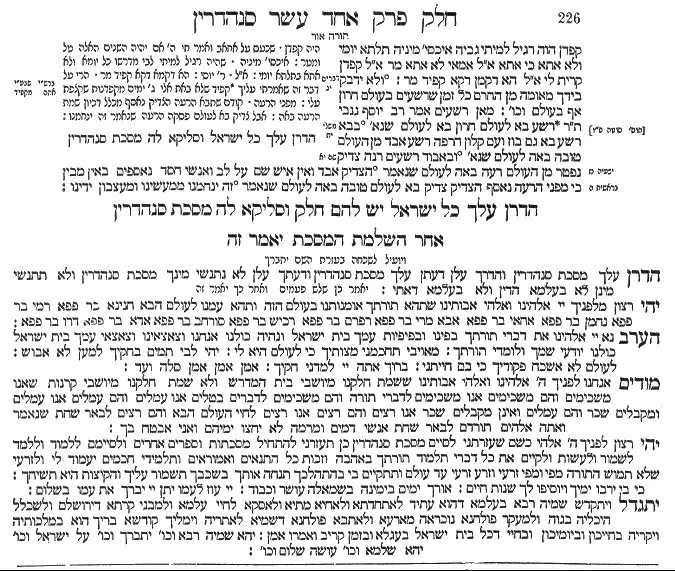
Sanhedrin 113b - Guemara
קפדן הוה רגיל למיתי גביה איכסי' מיניה תלתא יומי ולא אתא כי אתא א"ל אמאי לא אתא מר א"ל קפדן קרית לי א"ל הא דקמן דקא קפיד מר:
(דברים יג, יח) ולא ידבק בידך מאומה מן החרם כל זמן שרשעים בעולם חרון אף בעולם וכו':
מאן רשעים אמר רב יוסף גנבי ת"ר רשע בא לעולם חרון בא לעולם שנא' (משלי יח, ג) בבא רשע בא גם בוז ועם קלון חרפה רשע אבד מן העולם טובה באה לעולם שנא' (משלי יא, י) ובאבוד רשעים רנה צדיק נפטר מן העולם רעה באה לעולם שנאמר (ישעיהו נז, א) הצדיק אבד ואין איש שם על לב ואנשי חסד נאספים באין מבין כי מפני הרעה נאסף הצדיק צדיק בא לעולם טובה באה לעולם שנאמר (בראשית ה, כט) זה ינחמנו ממעשינו ומעצבון ידינו:
הדרן עלך כל ישראל יש להם חלק וסליקא לה מסכת סנהדרין
Comments from Rashi on Masechet Sanhedrin Page 113b
היה קפדן . שכעס על אחאב ואמר חי ה' אם יהיה השנים האלה טל ומטר: איכסי' מיניה . שהיה רגיל למיתי לבי מדרשו כל יומא ולא אתא בתלתא יומי: א"ל . ר' יוסי: הא דקמא דקא קפיד מר . הרי על דבר זה שאמרתי עליך קפיד שלא באת אלי ג' ימים מקפדנות שקצפת עלי: מפני הרעה . קודם שתבא הרעה הצדיק נאסף מכלל דכיון שמת הרעה באה: אבל צדיק בא לעולם פסקה הרעה שנאמר זה ינחמנו:
Sanhedrin 113b - Mishnah translated into english
was difficult. Elijah was accustomed to coming and revealing himself before Rabbi Yosei each day. He was obscured from him for three days and did not come. When he came again, Rabbi Yosei said to him: Why did the Master not come? Elijah said to him: You denigrated me when you called me difficult. Rabbi Yosei said to Elijah: This example that is before us illustrates the point, as my Master was being difficult by not coming during those days.
§ The mishna teaches with regard to the verse: “And there shall cleave nothing of that which was devoted to your hand” (Deuteronomy 13:18), as long as the wicked exist in the world, there is wrath in the world. The Gemara asks: Who are these wicked people mentioned in the mishna? Rav Yosef said: They are thieves.
The Sages taught in a baraita: When a wicked person comes into the world, wrath comes into the world, as it is stated: “When the wicked comes into the world, contempt also comes, and with ignominy, reproach” (Proverbs 18:3). When a wicked person is eliminated from the world, good comes into the world, as it is stated: “And when the wicked perish there is jubilation” (Proverbs 11:10). When a righteous person passes from the world, evil comes into the world, as it is stated: “The righteous perishes and no man lays it to heart; and merciful men are taken, none understand that due to the evil the righteous is taken” (Isaiah 57:1) When a righteous person comes into the world, good comes into the world with him, as it is stated with regard to Noah: “This is one who shall comfort us for our work and the toil of our hands” (Genesis 5:29).
Traduction : The William Davidson digital edition of the Koren Noé Talmud, with commentary by Rabbi Adin Even-Israel Steinsaltz.
Sanhedrin 113b : Significance
Next step
You have reached the end of tractate Sanhedrin.
Start tractate MakkotFrequently asked questions: Sanhedrin 113b
Where is Sanhedrin 113b in tractate Sanhedrin?
Sanhedrin 113b is page 224 of 224 in tractate Sanhedrin (Seder Nezikin).
When is daf 113 of Sanhedrin studied in Daf Yomi?
Daf Yomi covers one daf a day, both sides. Daf 113 of Sanhedrin will be studied on September 10, 2032.
Is there a video class on Sanhedrin 113b?
Yes, by Daf Tube, Rabbi Dr. Moshe Weisblum. These classes were published on YouTube by their authors and are gathered on this site.
What is tractate Sanhedrin about?
The Masechet Sanhedrin is the fourth tractate of the Seder Nezikin. The Gemara Sanhedrin is the study of the laws relating to the civil and criminal courts, the king, the High Priest. The different capital punishments by fire, sword, strangulation... As well as the consequences for the souls of criminals during the resurrection of the dead.The Sanhedrin tractate is a gemara which contains 11 chapters.
Your study is also dedicated to them
- For the success of Elyahou ben H'anna & family
- L'ilui Nishmat Yechayahou ben Moche
- L'ilui Nishmat Amram ben Itshak Loubaton