 Talmud Bavli
Pesahim 79b : Youtube
Daf TubeYoutube
3 video classes :
Pesahim Page 79b
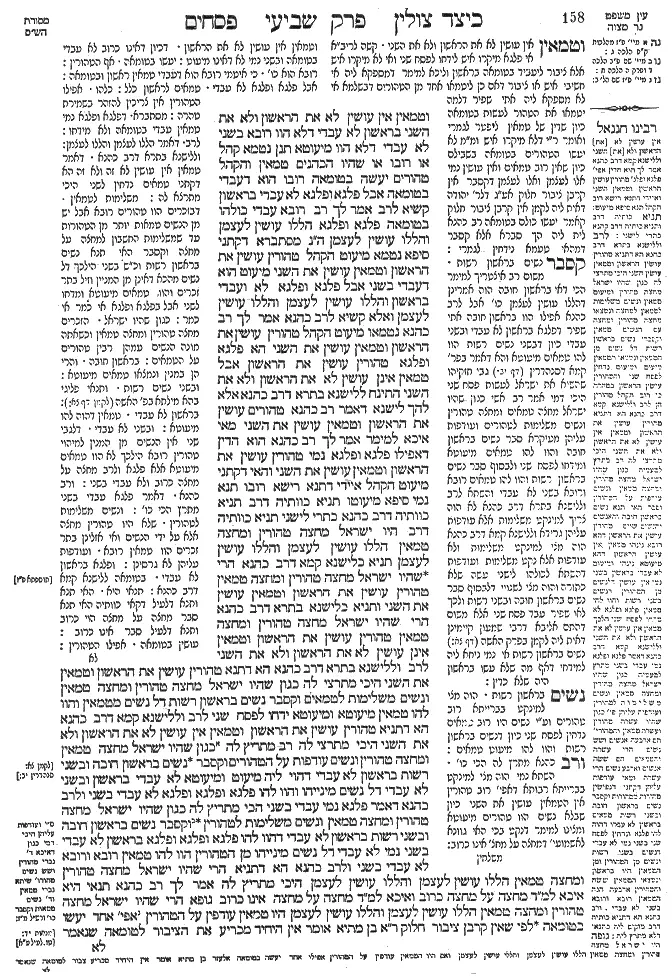
Pesahim 79b - Guemara
וטמאין אין עושין לא את הראשון ולא את השני בראשון לא עבדי דלא הוו רובא בשני לא עבדי דלא הוו מיעוטא תנן נטמא קהל או רובו או שהיו הכהנים טמאין והקהל טהורים יעשה בטומאה רובו הוא דעבדי בטומאה אבל פלגא ופלגא לא עבדי בראשון קשיא לרב אמר לך רב רובא עבדי כולהו בטומאה פלגא ופלגא הללו עושין לעצמן והללו עושין לעצמן ה"נ מסתברא דקתני סיפא נטמא מיעוט הקהל טהורין עושין את הראשון וטמאין עושין את השני מיעוט הוא דעבדי בשני אבל פלגא ופלגא לא ועבדי בראשון והללו עושין לעצמן והללו עושין לעצמן ואלא קשיא לרב כהנא אמר לך רב כהנא נטמאו מיעוט הקהל טהורין עושין את הראשון וטמאין עושין את השני הא פלגא ופלגא טהורין עושין את הראשון אבל טמאין אינן עושין לא את הראשון ולא את השני התינח ללישנא בתרא דרב כהנא אלא להך לישנא דאמר רב כהנא טהורים עושין את הראשון וטמאין עושין את השני מאי איכא למימר אמר לך רב כהנא הוא הדין דאפילו פלגא ופלגא נמי טהורין עושין את הראשון וטמאין עושין את השני והאי דקתני מיעוט הקהל איידי דתנא רישא רובו תנא נמי סיפא מיעוטו תניא כוותיה דרב תניא כוותיה דרב כהנא כתרי לישני תניא כוותיה דרב היו ישראל מחצה טהורין ומחצה טמאין הללו עושין לעצמן והללו עושין לעצמן תניא כלישנא קמא דרב כהנא הרי שהיו ישראל מחצה טהורין ומחצה טמאין טהורין עושין את הראשון וטמאין עושין את השני ותניא כלישנא בתרא דרב כהנא הרי שהיו ישראל מחצה טהורין ומחצה טמאין טהורין עושין את הראשון וטמאין אינן עושין לא את הראשון ולא את השני לרב וללישנא בתרא דרב כהנא הא דתנא טהורין עושין את הראשון וטמאין את השני היכי מתרצי לה כגון שהיו ישראל מחצה טהורין ומחצה טמאין ונשים משלימות לטמאים וקסבר נשים בראשון רשות דל נשים מטמאין והוו להו טמאין מיעוטא ומיעוטא ידחו לפסח שני לרב וללישנא קמא דרב כהנא הא דתניא טהורין עושין את הראשון וטמאין אין עושין לא את הראשון ולא את השני היכי מתרצי לה רב מתריץ לה כגון שהיו ישראל מחצה טמאין ומחצה טהורין ונשים עודפות על הטהורים וקסבר נשים בראשון חובה ובשני רשות בראשון לא עבדי דהוי ליה מיעוט ומיעוטא לא עבדי בראשון ובשני לא עבדי דל נשים מינייהו והוו להו פלגא ופלגא ופלגא לא עבדי בשני ולרב כהנא דאמר פלגא נמי עבדי בשני הכי מתריץ לה כגון שהיו ישראל מחצה טהורין ומחצה טמאין ונשים משלימות לטהורין וקסבר נשים בראשון חובה ובשני רשות בראשון לא עבדי דהוו להו פלגא ופלגא ופלגא בראשון לא עבדי בשני נמי לא עבדי דל נשים מינייהו מן הטהורין הוו להו טמאין רובא ורובא לא עבדי בשני ולרב כהנא הא דתניא הרי שהיו ישראל מחצה טהורין ומחצה טמאין הללו עושין לעצמן והללו עושין לעצמן היכי מתריץ לה אמר לך רב כהנא תנאי היא איכא למ"ד מחצה על מחצה כרוב ואיכא למ"ד מחצה על מחצה אינו כרוב גופא הרי שהיו ישראל מחצה טהורין ומחצה טמאין הללו עושין לעצמן והללו עושין לעצמן היו טמאין עודפין על הטהורין אפי' אחד יעשו בטומאה לפי שאין קרבן ציבור חלוק ר"א בן מתיא אומר אין היחיד מכריע את הציבור לטומאה שנאמר
Comments from Rashi on Masechet Pesahim Page 79b
וטמאין אין עושין לא את הראשון . דכיון דאינו כרוב לא עבדי בטומאה ובשני נמי לא דאינו מיעוט: יעשו בטומאה . אף הטהורין: רובא הוא כו' . כי איטמי רובא הוא דעבדי טמאין ראשון ובטומאה: אבל פלגא ופלגא לא עבדי . טמאים לראשון כלל: כלהו . אפילו הטהורין אין צריכין להזהר בשמירת טהרה: מסתברא . דפלגא ופלגא נמי טמאין עבדי בטומאה ולא מידחו: לרב . דאמר הללו לעצמן והללו לעצמן: וללישנא בתרא דרב כהנא . דאמר טמאין אין עושין לא זה ולא זה הא דקתני טמאים נדחין לשני היכי מתרצא לה: משלימות לטמאין . דבזכרים הוו טהורים רובא אבל יש מן הנשים טמאות יותר מן הטהורות עד שמשלימות החשבון למחצה על מחצה וקסבר האי תנא נשים בראשון רשות וכ"ש בשני הילכך דל נשים מהכא דאינן מן המניין וזיל בתר זכרים והוו טמאים מיעוטא ומדחו לשני אבל בפלגא ופלגא אי כמר אי כמר: כגון שהיו ישראל . הזכרים מחצה טהורין ומחצה טמאין וכשאתה מונה הנשים עמהן רבין טהורים על הטמאים: בראשון חובה . והרי הן במנין ונמצאו טמאים מיעוטא: ובשני נשים רשות . ותנאי פליגי בהא מילתא בפ' האשה (לקמן פסחים דף צא:): בראשון לא עבדי . טמאין דהוה להו מיעוטא: ובשני לא עבדי . דלגבי שני אין הנשים מן המנין למיהוי טהורין רובא הילכך לא הוו טמאים מיעוטא אלא פלגא ולרב מחצה על מחצה כרוב ולא עבדי בשני: ורב כהנא . דאמר פלגא עבדי בשני מתרץ הכי כו': ונשים משלימות לטהורין . שלא היו טהורין מחצה אלא על ידי הנשים ואי אזלינן בתר זכרים הוו טמאין רובא. ועודפות עליהן לא גרסינן: ופלגא בראשון לא עבדי . בטומאה ללישנא קמא דרב כהנא: תנאי היא . האי תנא ותנא דלעיל דקאי כוותיה האי תנא סבר מחצה על מחצה הוי כרוב ותנא דלעיל סבר אינו כרוב: עושין בטומאה . אפילו הטהורין:
Comments from Tosafot - Pesahim 79b
וטמאין אין עושין לא את הראשון ולא את השני . קשה לריב"א אי פלגא מיקרו איש לידחו לפסח שני ואי לא מיקרו איש אלא ציבור ליעביד בטומאה בראשון וליכא למימר דמספקא ליה אי חשיבי איש או ציבור דאם כן ליטמאו אחד מן הטהורים דבשלמא אי לא מספקא ליה אתי שפיר דלמה יטמאו את הטהור לעשות בטומאה כיון שדין של טמאין ליפטר לגמרי ואומר ר"י דלא מיקרו איש ומ"מ לא יעשו הטהורים בטומאה בשבילם כיון שאין רוב טמאים ואין עושין נמי אלו לעצמן ואלו לעצמן דקסבר אין קרבן ציבור חלוק אע"ג דלר' יהודה דאית ליה לקמן אין קרבן ציבור חלוק קאמר יעשו כולם בטומאה רב כהנא לית ליה הך סברא אלא קסבר דמהאי טעמא נידחין לגמרי: קסבר נשים בראשון רשות . משום רב איצטריך למימר הכי דאי בראשון חובה הוה אמרינן דהללו עושין לעצמן כו' אבל לרב כהנא אפילו הוו בראשון חובה אתי שפיר דפלגא בראשון לא עבדי ובשני עבדי כיון דבשני נשים רשות הוו להו טמאים מיעוטא והא דאמר בפר' קמא דסנהדרין (דף יב.) גבי חזקיהו שהשיא את ישראל לעשות פסח שני היכי דמי אמר רב אשי כגון שהיו ישראל מחצה טמאים ומחצה טהורין ונשים משלימות לטהורים ועודפות עליהן מעיקרא סבר נשים בראשון חובה והוו להו טמאים מיעוטא ומידחו לפסח שני ולבסוף סבר נשים בראשון רשות והוו להו טמאים רובא ורובא בשני לא עבדי והשתא לרב וללישנא בתרא דרב כהנא לא הוה צריך למינקט משלימות אלא עודפות עליהן גרידא וללישנא קמא דרב כהנא הוה מצי למינקט משלימות ולא עודפות אלא נקט משלימות ועודפות דהשתא לכולהו לישני עשה שלא כתורה והוה מצי לשנויי דלבסוף סבר נשים בראשון חובה ובשני רשות ולכך לאו שפיר עבד פסח שני אלא משום דהתם אליבא דרבי שמעון קיימינן דאית ליה לקמן בפרק האשה (פסחים דף צא:) נשים בראשון רשות אי נמי ניחא ליה למידחי דאף מה שלא עשו בראשון היה שלא כדין: נשים בראשון רשות . הוה מצי למינקט בברייתא רוב טהורים וע"י נשים היו רוב טמאים נדחין לפסח שני כיון דנשים בראשון רשות והוו להו מיעוט טמאים: ורב כהנא מתרץ לה הכי כו' . השתא נמי הוה מצי למינקט בברייתא רבותא דאפי' רוב טהורין אין הטמאין עושין את השני כיון שבלא נשים הוו טהורים מיעוטא ומצינו למימר דנקט בכי האי גוונא לאשמועי' דמחצה על מחצ' אינו כרוב:
Pesahim 79b - Mishnah translated into english
and those who are impure do not perform the ritual of the Paschal lamb on the first Pesaḥ or the second. They do not perform the ritual of the Paschal lamb on the first Pesaḥ because they are not the majority, and the Paschal lamb may be sacrificed in a state of impurity only when the majority of the community is impure. Additionally, they may not perform the ritual of the Paschal lamb on the second Pesaḥ because they are not the minority, and only the sacrifice of a minority of the community is deferred to the second Pesaḥ.
The Gemara raises an objection from that which we learned in the mishna: If the entire community became ritually impure, or if most of it became impure, or if the priests were impure and the community was pure, they should perform the ritual of the Paschal lamb in impurity. This indicates that it is only when most of the community is impure that they perform the ritual of the Paschal lamb in impurity, but if it is half and half, they do not perform the ritual of the Paschal lamb on the first Pesaḥ. This poses a difficulty to the opinion of Rav.
Rav could have said to you: When a majority of the community is impure, they may all perform the ritual of the Paschal lamb in impurity. Even those who are still pure are not required to ensure that they remain pure in order to sacrifice the Paschal lamb. When it is half and half, these who are pure perform the ritual of the Paschal lamb for themselves in a state of purity and these who are impure perform the ritual of the Paschal lamb for themselves in a state of impurity.
The Gemara adds: So too, it is reasonable to understand the mishna in this way, as the latter clause teaches: If a minority of the community became impure, those who are pure perform the ritual of the Paschal lamb on the first Pesaḥ and those who are impure perform the ritual of the Paschal lamb on the second Pesaḥ. This indicates that it is only when the minority has become impure that they perform the ritual of the Paschal lamb on the second Pesaḥ. But when it is half and half this is not the case; rather, these perform the ritual of the Paschal lamb for themselves in a state of purity and those perform the ritual of the Paschal lamb for themselves in a state of impurity on the first Pesaḥ.
However, if so, it then poses a difficulty to the opinion of Rav Kahana. The Gemara responds: Rav Kahana could have said to you that the latter clause of the mishna should be understood as follows: If a minority of the community became ritually impure, those who are pure perform the ritual of the Paschal lamb on the first Pesaḥ and those who are impure perform the ritual of the Paschal lamb on the second Pesaḥ. This indicates that if it is half and half, those who are pure perform the ritual of the Paschal lamb on the first Pesaḥ and those who are impure do not perform the ritual of the Paschal lamb on the first or the second Pesaḥ.
The Gemara asks: This works out well according to the latter version of Rav Kahana’s statement, according to which this is the halakha when exactly half of the community is pure and half is impure. But according to that first version, in which Rav Kahana said that when half the community is pure and half is impure, those who are pure perform the ritual of the Paschal lamb on the first Pesaḥ and those who are impure perform the ritual of the Paschal lamb on the second Pesaḥ, what is there to say?
Rav Kahana could have said to you that the mishna should be understood as follows: The same is true even in a case of half and half as well; those who are pure perform the ritual of the Paschal lamb on the first Pesaḥ, and those who are impure perform the ritual of the Paschal lamb on the second Pesaḥ. And that which was taught in the mishna that the sacrifice of a minority of the community is deferred to the second Pesaḥ is not meant to indicate that half the community cannot observe the second Pesaḥ. Rather, since it taught in the first clause of the mishna the case in which the majority of the community became ritually impure, it also taught in the latter clause the case in which the minority of the community became impure, so as to employ a parallel formulation.
The Gemara points out that it was taught in a baraita in accordance with the opinion of Rav, and it was taught in a baraita in accordance with the opinion of Rav Kahana, in accordance with each of the two versions of his opinion. It was taught in the following baraita in accordance with the opinion of Rav: If the Jewish people were divided, and half were pure and half were impure, those who are pure perform the ritual of the Paschal lamb for themselves in a state of purity, and those who are impure perform the ritual of the Paschal lamb for themselves in a state of impurity on the first Pesaḥ.
It was taught in the following baraita in accordance with the first version of the opinion of Rav Kahana: If the Jewish people were divided, and half were pure and half were impure, those who are pure perform the ritual of the Paschal lamb on the first Pesaḥ, and those who are impure perform the ritual of the Paschal lamb on the second Pesaḥ.
And it was taught in the following baraita in accordance with the latter version of the opinion of Rav Kahana: If the Jewish people were divided, and half were pure and half were impure, those who are pure perform the ritual of the Paschal lamb on the first Pesaḥ, and those who are impure do not perform the ritual of the Paschal lamb on the first Pesaḥ or the second Pesaḥ.
The Gemara asks: According to Rav and according to the latter version of the opinion of Rav Kahana, with regard to that which was taught in the second baraita quoted above, that those who are pure perform the ritual of the Paschal lamb on the first Pesaḥ and those who are impure perform the ritual of the Paschal lamb on the second Pesaḥ, how do they reconcile it? The Gemara answers: According to them, the case under discussion is one where the Jewish people are divided, and half are pure and half are impure. However, the majority of the men are pure, and the majority of the women are impure and the women complete the number of impure people necessary to reach half of the community.
And this tanna holds that the participation of women in the first Pesaḥ is optional. Therefore, remove the women from those who are impure, and the impure become the minority. And the sacrifice of the minority is deferred to the second Pesaḥ according to all opinions.
The Gemara asks: According to the opinion of Rav and according to the first version of the opinion of Rav Kahana, with regard to that which was taught in the third baraita cited above: Those who are pure perform the ritual of the Paschal lamb on the first Pesaḥ and those who are impure do not perform the ritual of the Paschal lamb on the first Pesaḥ or on the second Pesaḥ, how do they reconcile it according to their opinions?
Rav reconciles the baraita by explaining that it is referring to a case where the men of the Jewish people were divided, and half were impure and half were pure, and the women, a majority of whom were pure, added on to the number of those who were pure so that the majority of the community was pure. And this tanna holds that the participation of women in the first Pesaḥ is obligatory, and their participation in the second Pesaḥ is optional.
Therefore, on the first Pesaḥ, those who are impure do not perform the ritual of the Paschal lamb because they are a minority, and a minority of the community that is ritually impure may not perform the ritual of the Paschal lamb on the first Pesaḥ. And on the second Pesaḥ they do not perform the ritual of the Paschal lamb because when one removes the women from them, those who were impure are half of the community, and half the community does not perform the ritual of the Paschal lamb on the second Pesaḥ.
And according to the first version of the opinion of Rav Kahana, in which he said that half the community also performs the ritual of the Paschal lamb on the second Pesaḥ, this is how he would reconcile the baraita with his opinion: It is addressing a case where the Jewish people were divided, and half were pure and half were impure. However, the majority of the men were impure, and it is the women who completed the necessary number of the pure so that the division was half and half. And this tanna holds that the participation of women on the first Pesaḥ is obligatory, and their participation on the second Pesaḥ is optional.
Therefore, on the first Pesaḥ they may not perform the ritual of the Paschal lamb because they are half and half, and according to his opinion, half of the community may not perform the ritual of the Paschal lamb on the first Pesaḥ in a state of impurity. On the second Pesaḥ as well, they may not perform the ritual of the Paschal lamb because one must remove the women from the number of those who are pure, and the impure become the majority, and the majority does not perform the ritual of the Paschal lamb on the second Pesaḥ.
The Gemara asks further: And according to Rav Kahana, with regard to that which was taught in the first of the three baraitot above: If the Jewish people were divided, half were pure and half were impure, those who were pure perform the ritual of the Paschal lamb for themselves on the first Pesaḥ, and those who were impure perform the ritual of the Paschal lamb for themselves on the second Pesaḥ, how does he reconcile it? Rav Kahana could have said to you: This matter is subject to a dispute between the tanna’im. There is one who said that in a case of half and half, each half by itself is considered like the majority, and there is one who said that half and half is not like the majority.
The Gemara addresses the matter itself discussed in the baraita cited previously. If the Jewish people were divided, half were pure and half were impure, those who were pure perform the ritual of the Paschal lamb for themselves on the first Pesaḥ and those who were impure perform the ritual of the Paschal lamb for themselves on the second Pesaḥ. If those who were impure outnumbered those who were pure even by one person, they should perform the ritual of the Paschal lamb in ritual impurity on the first Pesaḥ because a communal offering is not divided. Therefore, the entire community may sacrifice the Paschal lamb in a state of impurity. This includes those who were pure; they do not need to take care to remain pure in order to sacrifice the Paschal lamb.
Rabbi Elazar ben Matya says: The individual cannot tip the balance of the entire public toward ritual impurity, as it is stated:
Traduction : The William Davidson digital edition of the Koren Noé Talmud, with commentary by Rabbi Adin Even-Israel Steinsaltz.