 Talmud Bavli
Pesahim 59b : Youtube
Daf TubeYoutube
3 video classes :
Pesahim Page 59b
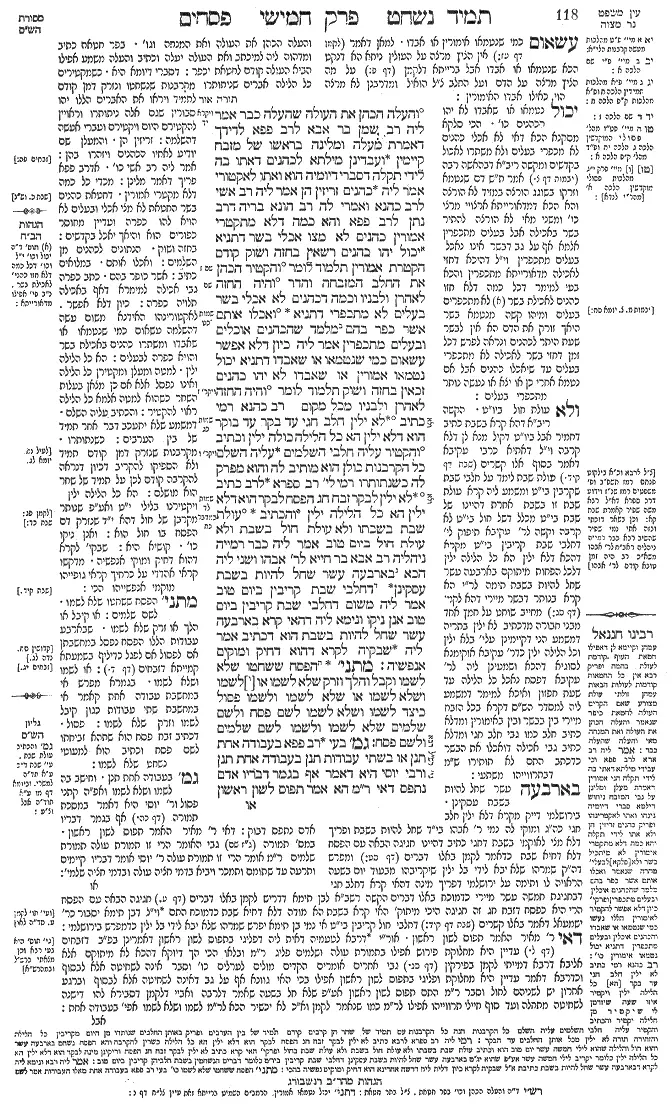
Pesahim 59b - Guemara
(ויקרא יד, כ) והעלה הכהן את העולה שהעלה כבר אמר ליה רב שמן בר אבא לרב פפא לדידך דאמרת מעלה ומלינה בראשו של מזבח קיימין ועבדינן מילתא לכהנים דאתו בה לידי תקלה דסברי דיומיה הוא ואתו לאקטורי אמר ליה כהנים זריזין הן אמר ליה רב אשי לרב כהנא ואמרי לה רב הונא בריה דרב נתן לרב פפא והא כמה דלא מתקטרי אמורין כהנים לא מצו אכלי בשר דתניא יכול יהו כהנים רשאין בחזה ושוק קודם הקטרת אמורין תלמוד לומר (ויקרא ז, לא) והקטיר הכהן את החלב המזבחה והדר (ויקרא ז, לא) והיה החזה לאהרן ולבניו וכמה דכהנים לא אכלי בשר בעלים לא מתכפרי דתניא (שמות כט, לג) ואכלו אותם אשר כפר בהם מלמד שהכהנים אוכלים ובעלים מתכפרין אמר ליה כיון דלא אפשר עשאום כמי שנטמאו או שאבדו דתניא יכול נטמאו אמורין או שאבדו לא יהו כהנים זכאין בחזה ושוק תלמוד לומר (ויקרא ז, לא) והיה החזה לאהרן ולבניו מכל מקום רב כהנא רמי כתיב (שמות כג, יח) לא ילין חלב חגי עד בקר עד בוקר הוא דלא ילין הא כל הלילה כולה ילין וכתיב (ויקרא ו, ה) והקטיר עליה חלבי השלמים עליה השלם כל הקרבנות כולן הוא מותיב לה והוא מפרק לה כשנתותרו רמי לי' רב ספרא לרב כתיב (שמות לד, כה) לא ילין לבקר זבח חג הפסח לבקר הוא דלא ילין הא כל הלילה ילין והכתיב (במדבר כח, י) עולת שבת בשבתו ולא עולת חול בשבת ולא עולת חול ביום טוב אמר ליה כבר רמייה ניהליה רב אבא בר חייא לר' אבהו ושני ליה הכא בארבעה עשר שחל להיות בשבת עסקינן דחלבי שבת קריבין ביום טוב אמר ליה משום דחלבי שבת קריבין ביום טוב אנן ניקו ונימא ליה דהאי קרא בארבעה עשר שחל להיות בשבת הוא דכתיב אמר ליה שבקיה לקרא דהוא דחיק ומוקים אנפשיה:
מתני׳ הפסח ששחטו שלא לשמו וקבל והלך וזרק שלא לשמו או לשמו ושלא לשמו או שלא לשמו ולשמו פסול כיצד לשמו ושלא לשמו לשם פסח ולשם שלמים שלא לשמו ולשמו לשם שלמים ולשם פסח:
גמ׳ בעי רב פפא בעבודה אחת תנן או בשתי עבודות תנן בעבודה אחת תנן ורבי יוסי היא דאמר אף בגמר דבריו אדם נתפס דאי ר"מ הא אמר תפוס לשון ראשון
Comments from Rashi on Masechet Pesahim Page 59b
והעלה הכהן את העולה ואת המנחה וגו' . בפר חטאת כתיב ומדהוה ליה למיכתב ואת העולה יעלה וכתיב והעלה משמע אפילו הביא העולה קודם לחטאת יכפר: דסברי דיומא היא . כשמקטירים כל הלילה אברים שניתותרו מקרבנות שנשחטו ונזרק דמן קודם לתמיד ויראו את האברים הללו יהו סבורין שגם אלה ניתותרו וראויין להקטירם היום ויקטירם ועברי אעשה דהשלמה: זריזין הן . והמעלן שם יודיע לאחיו הכהנים ויזהרו בהן: אמר ליה רב אשי כו' . אדרב פפא פריך דאמר מלינן: מכדי כל כמה דלא מקטרי אמורין . דחטאת כהנים בשר החטאת לא מצי אכלי ובעלים לא הויא להו כפרה ועדיין מחוסר כפורים הוא והיאך יאכל בקדשים: בחזה ושוק . הנתונים לכהנים מן השלמים: ואכלו אותם . במלואים כתיב: אשר כופר בהם . כתב כפרה גבי אכילה למימרא דאף באכילה תלויה כפרה: כיון דלא אפשר . לאקטורינהו האידנא משום עשה דהשלמה עשאום כמי שנטמאו או שאבדו ומשתרו כהנים באכילת בשר והויא כפרה לבעלים: הא כל הלילה ילין . למטה ומעלן ומקטירן כל הלילה ואינו נפסל אלא אם כן מצאן בעלות השחר כשהוא למטה אלמא כל הלילה ראוי להקטיר: והכתיב עליה השלם . דמשמע שלא יתעכב דבר אחר תמיד של בין הערבים: כשנתותרו . מקרבנות שנזרק דמן קודם תמיד ולא הספיקו להקריב דכיון דנראה להקרבה קודם לכן על תמיד של שחר הוא מושלם: הא כל הלילה ילין . ויקטירנו בלילי י"ט ואע"פ שנותר מקרבן של חול דהא י"ד שנזרק דם הפסח בו חול הוא: ואנן ניקו כו' . קושיא היא: שבקי' לקרא דהוא דחיק ומוקי אנפשיה . מדקשו קראי אהדדי על כרחיך קראי גופייהו מוקמי אנפשייהו הכי: מתני' הפסח ששחטו שלא לשמו . לשם שלמים: או קיבל או הלך או זרק שלא לשמו . שבארבע עבודות הללו הפסח נפסל במחשבתן אם לפסול אם לפגל כדיליף בשמעתא קמייתא דזבחים (דף ד.): או לשמו ושלא לשמו . בגמרא מפרש אי במחשבת עבודה אחת קאמר אי במחשבת שתי עבודות כגון קיבל לשמו וזרק שלא לשמו: פסול . דכתיב זבח פסח הוא שתהא זביחתו לשם פסח וכתיב הוא למעוטי נשחט שלא לשמו: גמ' בעבודה אחת תנן . וחישב בה לשמו ושלא לשמו ואפ"ה קתני פסול ור' יוסי היא דאמר במסכת תמורה (דף כה.) אף בגמר דבריו אדם נתפס דבוק: דאי ר' מאיר האמר תפוס לשון ראשון . במסכת תמורה (ג"ז שם) גבי האומר הרי זו תמורת עולה תמורת שלמים ר"מ אומר הרי זו תמורת עולה ר' יוסי אומר דבריו קיימים ותרעה עד שתומם ותמכר ויביא בדמי חציה עולה ובדמי חציה שלמי':
Comments from Tosafot - Pesahim 59b
עשאום כמי שנטמאו אימורין או אבדו . למאן דאמר (לקמן פסחים דף עז:) אין הציץ מרצה על העולין ניחא הא דנקט הכא שנטמאו או אבדו אבל ברייתא דלקמן (פסחים דף פ:) על מה הציץ מרצה על הדם ועל החלב צ"ל הואיל ומדרבנן לא מרצה הוי כאילו אבדו האימורין: יכול נטמאו או שאבדו לא יהו הכהנים כו' . הכי סלקא מסקנא הכא דאי לא אכלי כהנים לא מכפרי בעלים ולא משתרו לאכול בקדשים ומקשה ריב"א דבהאשה רבה (יבמות דף צ.) אמר ת"ש דם שנטמא וזרקו בשוגג הורצה במזיד לא הורצה והא הכא דמדאורייתא ארצויי מרצי כו' ומשני מאי לא הורצה להתיר בשר באכילה אבל בעלים מתכפרין אלמא אף על גב דבשר אינו נאכל בעלים מתכפרין וי"ל דהיכא דחזי לאכילה מדאורייתא מתכפרין והכא בעי למימר דכל כמה דלא חזו כהנים לאכילת בשר לא מתכפרים בעלים ומיהו קשה מנטמא בשר היאך זורק את הדם הא אין לבשר שעת היתר לכהנים ונראה לפרש דכל זמן דחזי בשר לאכילה לא מתכפרי בעלים עד שיאכלו כהנים אבל אם נטמא אחרי כן או יצא או נעשה נותר מתכפרי בעלים: ולא עולת חול ביו"ט . הקשה ריב"א דהא קרא בשבת כתיב דחמיר אבל ביו"ט דקיל מנא לן דלא קרבה וי"ל דאתיא כרבי עקיבא דאמר בסוף אלו קשרים (שבת דף קיד.) עולת שבת לימד על חלבי שבת שקרבין בי"ט ומשמע ליה קרא עולת שבת זו בשבת אחרת דהיינו של שבת בי"ט מכלל דשל חול בי"ט לא קרבה וקשה לר' עקיבא תיפוק לי' דחלבי שבת קריבין בי"ט מקרא דהכא דלא ילין הא כל הלילה ילין דלכל הפחות מיתוקם בארבעה עשר שחל להיות בשבת תימה לר"י הא קרא בנותר דבשר מיירי דהא לקמן (פסחים דף סג:) מחייב שוחט על חמץ אחד מבני חבורה מדכתיב לא ילין בתריה דמשמע הני דקיימינן עלי' בלא ילין וכל הלילה ילין כדר' עקיבא אוקימנא לסוגיא דהכא ושמעינן ליה לר' עקיבא דפסח נאכל כל הלילה עד שעת חפזון ואיכא למימר דמשמע ליה למסדר הש"ס דקרא בכל הזבח מיירי בין בבשר ובין באימורין ומדלא כתיב חלב כמו גבי חלב חגי ומדלא כתיב גבי אכילה דואכלו את הבשר כדכתב התם לא תותירו ש"מ דבתרווייהו משתעי: בארבעה עשר שחל להיות בשבת עסקינן . בירושלמי דייק מקרא דלא ילין חלב חגי כה"ג ומוקי לה נמי ר' אבהו בי"ד שחל להיות בשבת ופריך דלא מצי לאוקמי בשבת דחגי כתיב דהיינו חגיגה הבאה עם הפסח דלא דחיא שבת כדאמר לקמן באלו דברים (פסחים דף סט:) ומפרש דה"ק שמרהו שלא יבא לידי בל ילין שיקריבהו מבעוד יום בשעה הראויה לו ותימה על ירושלמי דפריך מינה דהאי קרא דחלב חגי דבחגיגת חמשה עשר מיירי כדמוכח באלו דברים הקשה רשב"א לבן תימא דדריש לקמן באלו דברים (פסחים דף ע.) חגיגה הבאה עם הפסח הרי היא כפסח דזבח חג זה חגיגה היכי מיתוק' האי קרא בשבת הא מודה דלא דחיא שבת כדמוכח התם וי"ל דבן תימא יסבור כר' ישמעאל דאמר באלו קשרים (שבת דף קיד:) דחלבי חול קריבין בי"ט אי נמי בן תימא יפרש שמרהו שלא יבא לידי בל ילין כדמפרש בירושלמי: דאי ר' מאיר האמר תפוס לשון ראשון . אור"י דרבא לטעמיה דאית ליה דפליגי בתפוס לשון ראשון דאמרינן בפ"ב דזבחים (דף ל.) עדיין היא מחלוקת פירוש אפילו בתמורת עולה ושלמים פליג ר"מ ובלאו הכי הך דיוקא דהכא לא מיתוקם אלא אליבא דרבא דמייתי לקמן בפירקין (פסחים דף סג.) גבי אחרים אומרים הקדים מולים לערלים כו' וסבר אינה לשחיטה אלא לבסוף וכדרבא דאמר עדיין היא מחלוקת ופליגי בתפוס לשון ראשון אפילו בכי האי גוונא אף על גב דאינה לשחיטה אלא לבסוף וברגע אחרון יש לשניהם לחול וסבר ר"מ התם תפוס לשון ראשון אע"פ שלא חל בשעה שאמר דלרבה ואביי דלקמן דסבירא להו דישנה לשחיטה מתחלה ועד סוף חיילי תרווייהו אפילו לר"מ כמו שנאמר לקמן וא"כ לא יכשיר הכא לר"מ לשמו ושלא לשמו אפי' בעבודה אחת:
Pesahim 59b - Mishnah translated into english
“And the priest shall offer the burnt-offering” (Leviticus 14:20); this is interpreted as referring to the burnt-offering that has already been offered. From here it is derived that the leper achieves atonement even if the standard order is reversed and the burnt-offering is brought before the sin-offering.
Rav Shemen bar Abba said to Rav Pappa: According to your opinion, that you said he brings them up and leaves them overnight at the top of the altar, do we stand and perform an action for the priests whereby they may come to a mishap. As they may think that these fats are from offerings brought on that day, and so they may burn them that day, although these fats must be left until the next day. He said to him: Priests are vigilant and may be relied upon to avoid that mistake and to warn their fellow priests to be careful as well.
Rav Ashi said to Rav Kahana, and some say it Rav Huna, son of Rav Natan, said to Rav Pappa: But, isn’t it the case that as long as the sacrificial parts of the sin-offering have not been burned on the altar, the priests may not eat the meat? As it was taught in a baraita with regard to peace-offerings: I might have thought that the priests would be permitted to eat the breast and thigh, which are designated for them from the peace-offering, prior to burning the sacrificial parts of the offering on the altar. Therefore, the verse states: “And the priest shall burn the fat upon the altar, and the breast shall be for Aaron and his sons” (Leviticus 7:31). From here it is derived that the priest is first obligated to burn the fat, and only then: “The breast shall be for Aaron and his sons.
And, in addition, as long as the priests have not eaten the meat of the offering, the owners of the offering have not achieved complete atonement, as it was taught in a baraita that the verse: “And they shall eat those things with which atonement was made to consecrate them, to sanctify them; but a stranger shall not eat of them for they are sacred” (Exodus 29:33), teaches that the priests eat, and consequently the owners of the offerings achieve atonement. If so, how can one who lacks atonement achieve atonement that day when the priests may not eat the meat of his sin-offering until the sacrificial parts are burned the next day?
He said to him: Since it is impossible to complete the offering any other way, due to the positive mitzva of completion, they rendered these sacrificial parts as ones that became ritually impure or were lost. In those cases, it is permitted for priests to eat their portions. As it was taught in a baraita: I might have thought that if the sacrificial parts became ritually impure or were lost, the priests would not be entitled to the breast and thigh, the eating of which ordinarily depends upon burning the sacrificial parts on the altar. Therefore, the verse states: “And the breast shall be for Aaron and his sons” (Leviticus 7:31), which indicates that in any event it is an absolute gift, even if some of the accompanying rites were not performed in the proper manner.
Rav Kahana raised a contradiction: It is written in one verse: “Neither may the fat of My festive-offering remain overnight until morning” (Exodus 23:18), which indicates that the fat may not remain overnight and into the morning hours, but it may remain all through the night. However, in another verse it is written: “And he shall burn upon it the fat of the peace-offerings” (Leviticus 6:5), and it is interpreted: Upon it you shall complete all the offerings, which indicates that the fats of all the offerings brought during the day must be burned before the daily afternoon offering.
Rav Kahana raised the objection and he resolved it: The verse which indicates that the fat may remain all through the night is referring to fats that were left over after the blood was sprinkled during the day, after the daily morning offering, and there was no opportunity to offer them on the altar before the daily afternoon offering. Although ideally they should be offered on the altar before the daily afternoon offering, if they were left over, they may be offered until morning.
Similarly, Rav Safra raised a contradiction before Rav: In one verse it is written: “Neither shall the sacrifice of the feast of Passover be left over until morning” (Exodus 34:25), from which it can be inferred that it may not remain overnight and into the morning hours, but it may remain all through the night. Accordingly, the fats of a Paschal lamb that was slaughtered on a weekday Passover eve may be offered on the altar on the night of the Festival. However, elsewhere it is written: “The burnt-offering of each Shabbat on its own Shabbat in addition to the continual burnt-offering and its libation” (Numbers 28:10), from which it is derived that the burnt-offering of a weekday is not offered on Shabbat, and the burnt-offering of a weekday is not offered on a Festival. Therefore, it should be prohibited to burn the fats of the Paschal lamb on the altar on the Festival, as it is a weekday offering and consequently may not be offered on a Festival.
Rav said to him: Rav Abba bar Ḥiyya already raised this contradiction before Rabbi Abbahu, and he answered him: Here, in the verse that says that the fat may not remain overnight and into the morning hours but it may remain on the altar all through the night, we are dealing with a case where the fourteenth of Nisan occurs on Shabbat, as the fats of a Shabbat offering may be sacrificed on the altar on a Festival. It is only in that specific case that the fats of the Paschal lamb may be burned on the night of the Festival.
He said to him: Because the fats of Shabbat offerings may be sacrificed on a Festival, shall we arise and say that this verse is written exclusively with regard to the special case of the fourteenth of Nisan that occurs on Shabbat, and not with regard to the standard case? He said to him: Leave the interpretation of this verse alone, since it compels itself to be established as referring exclusively to this special case, because the contradiction needs to be resolved in some manner.
MISHNA: The Paschal lamb that the priest slaughtered not for its own purpose, i.e., at the time of slaughter he said that his intent was to slaughter it as a different offering, e.g., a peace-offering or burnt-offering, rather than as a Paschal lamb; or if the priest received the blood, or carried the blood to the altar, or sprinkled the blood on the altar while saying that it was not for the purpose of the Paschal lamb; or if the priest performed the rites both for its own purpose and not for its own purpose; or not for its own purpose and for its own purpose; in all these cases, the Paschal lamb is disqualified.
How does one perform the rites for its own purpose and not for its own purpose? It is in a case where the priest said that his intent is for the purpose of the Paschal lamb and for the purpose of a peace-offering. And how does one perform rites not for its own purpose and for its own purpose? It is in a case where the priest says that the offering is for the purpose of a peace-offering and for the purpose of a Paschal lamb.
GEMARA: Rav Pappa raised a dilemma: The mishna says: For its own purpose and not for its own purpose. Did we learn in the mishna concerning a case where the priest had both intentions while performing one rite, i.e., he stated both intentions while slaughtering? Or, did we learn in the mishna concerning a case where the priest had the two intentions while performing two rites, i.e., during one rite he said that it was for its own purpose and in another of the four rites he said that it was not for its own purpose?
Rav Pappa elaborates on the difference between these two different explanations. Shall we say that we learn in the mishna with regard to one rite, and therefore our mishna is in accordance with the opinion of Rabbi Yosei, who said that a person is held accountable even for the conclusion of his statement? Rabbi Yosei and Rabbi Meir disagree in the case of one who says: This animal is a burnt-offering and a peace-offering. Rabbi Yosei says that not only the beginning but also the conclusion of his statement is significant, and the animal has been consecrated as both a burnt-offering and a peace-offering. It is therefore unfit to be offered on the altar; rather, it must be sold when it develops a defect and the money used to purchase animals for both a burnt-offering and a peace-offering. And similarly in the case of our mishna, where the priest says that his intent is for the purpose of a Paschal lamb and for the purpose of a peace-offering, Rabbi Yosei would say that the animal has been slaughtered for both a Paschal lamb and a peace-offering, and is therefore disqualified.
For if our mishna is in accordance with the opinion of Rabbi Meir, surely he said: Hold one accountable for the first expression, and what he says after that is of no consequence. Rabbi Meir disagrees with Rabbi Yosei about the case of one who says: This animal is a burnt-offering and a peace-offering, for he maintains that the sacrifice has the status of a burnt-offering. Since the first term that he uttered was burnt-offering, the animal is consecrated as a burnt-offering, and it can no longer become a peace-offering. And similarly in the case of our mishna, where the priest says that his intent is for the purpose of a Paschal lamb and for the purpose of a peace-offering, Rabbi Meir would say that the animal has been slaughtered only for a Paschal lamb and the offering is fit.
Traduction : The William Davidson digital edition of the Koren Noé Talmud, with commentary by Rabbi Adin Even-Israel Steinsaltz.