 Talmud Bavli
Pesahim 61b : Youtube
Daf TubeYoutube
3 video classes :
Pesahim Page 61b
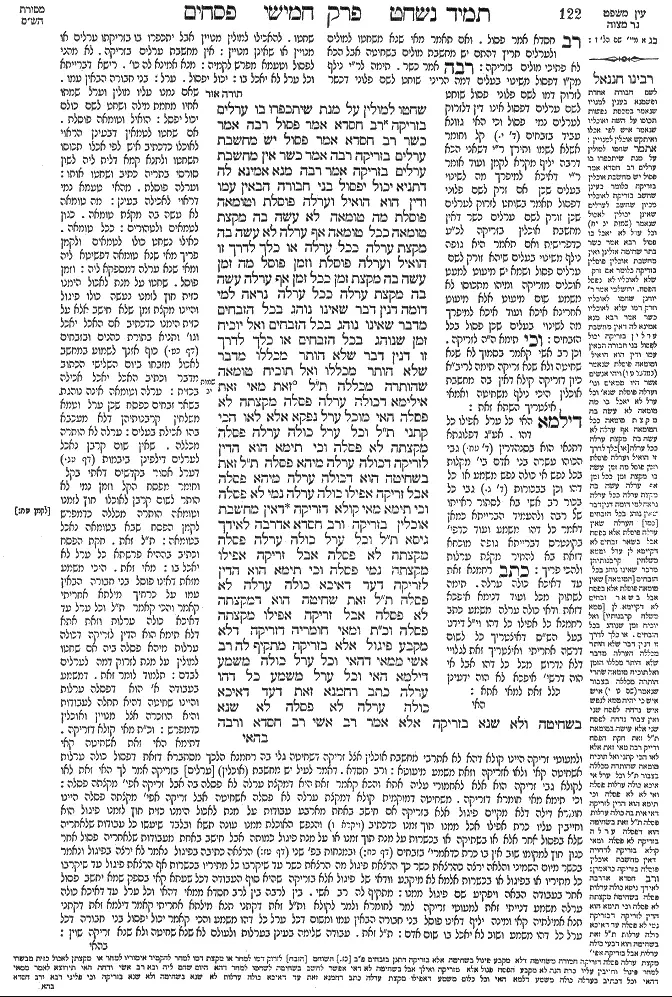
Pesahim 61b - Guemara
שחטו למולין על מנת שיתכפרו בו ערלים בזריקה רב חסדא אמר פסול רבה אמר כשר רב חסדא אמר פסול יש מחשבת ערלים בזריקה רבה אמר כשר אין מחשבת ערלים בזריקה אמר רבה מנא אמינא לה דתניא יכול יפסול בני חבורה הבאין עמו ודין הוא הואיל וערלה פוסלת וטומאה פוסלת מה טומאה לא עשה בה מקצת טומאה ככל טומאה אף ערלה לא עשה בה מקצת ערלה ככל ערלה או כלך לדרך זו הואיל וערלה פוסלת וזמן פוסל מה זמן עשה בה מקצת זמן ככל זמן אף ערלה עשה בה מקצת ערלה ככל ערלה נראה למי דומה דנין דבר שאינו נוהג בכל הזבחים מדבר שאינו נוהג בכל הזבחים ואל יוכיח זמן שנוהג בכל הזבחים או כלך לדרך זו דנין דבר שלא הותר מכללו מדבר שלא הותר מכללו ואל תוכיח טומאה שהותרה מכללה ת"ל (שמות יב, כה) זאת מאי זאת אילימא דכולה ערלה פסלה מקצתה לא פסלה האי מוכל ערל נפקא אלא לאו הכי קתני ת"ל וכל ערל כולה ערלה פסלה מקצתה לא פסלה וכי תימא הוא הדין לזריקה דכולה ערלה מיהא פסלה ת"ל זאת בשחיטה הוא דכולה ערלה מיהא פסלה אבל זריקה אפילו כולה ערלה נמי לא פסלה וכי תימא מאי קולא דזריקה דאין מחשבת אוכלין בזריקה ורב חסדא אדרבה לאידך גיסא ת"ל וכל ערל כולה ערלה פסלה מקצתה לא פסלה אבל זריקה אפילו מקצתה נמי פסלה וכי תימא הוא הדין לזריקה דעד דאיכא כולה ערלה לא פסלה ת"ל זאת שחיטה הוא דמקצתה לא פסלה אבל זריקה אפילו מקצתה פסלה וכ"ת ומאי חומריה דזריקה דלא מקבע פיגול אלא בזריקה מתקיף לה רב אשי ממאי דהאי וכל ערל כולה משמע דילמא האי וכל ערל משמע כל דהו ערלה כתב רחמנא זאת דעד דאיכא כולה ערלה לא פסלה לא שנא בשחיטה ולא שנא בזריקה אלא אמר רב אשי רב חסדא ורבה
Comments from Rashi on Masechet Pesahim Page 61b
שחטו . להאכילו למולין מנויין אבל יתכפרו בו בזריקתו ערלים או מנויין או שאינן מנויין: אין מחשבת ערלים בזריקה . לא מהני לפסול וטעמא מפרש לקמיה: מנא אמינא לה כו' . רישא דברייתא וכל ערל לא יאכל בו: יכול יפסול . ערל: בני חבורה הבאין עמו . שאם נמנו עליו מולין וערל שמתו אחיו מחמת מילה ושחט לשם כולם יכול יפסל: הואיל וטומאה פוסלת . אם שחטו לטמאין דבעינן הראוי לאוכלו כדכתיב איש לפי אכלו תכוסו תשחטו ולתנא קמא דלית ליה לשון סורסי בתריה כתיב ושחטו אותו: וערלה פוסלת . מהאי טעמא נמי דראוי לאכילה בעינן: מה טומאה לא עשה בה מקצת טומאה . כגון לטמאים ולטהורים: ככל טומאה . כאילו נשחט כולו לטמאים ולקמן פריך מאי שנא טומאה דפשיטא ליה ומאי שנה ערלה דמספקא ליה: וזמן פוסל . שחטו על מנת לאכול הימנו כזית חוץ לזמנו נעשה כולו פיגול והיינו מקצת זמן שלא חישב אלא על כזית הימנו כדכתיב אם האכל יאכל וגו' ותניא בתורת כהנים ובזבחים (דף כט.) כוף אזנך לשמוע במחשב לאכול מזבחו ביום השלישי הכתוב מדבר וכתיב האכל יאכל אכילה בכזית: ערלה וטומאה אינה נוהגת בשאר זבחים כפסח שכן ערל וטמא משלחין קרבנותיהן דלא מעכבא בהו אכילת בעלים: ערלה לא הותרה מכללה . שאין שום קרבן נאכל לערלים דילפינן ביבמות (דף עג.) דערל אסור בקדשים דאתי בקל וחומר מפסח הקל וזמן נמי לא הותר לשום קרבן לאוכלו חוץ לזמנו וטומאה הותרה מכללה כדמפרש לקמן הפסח שבא בטומאה נאכל בטומאה: ת"ל זאת . חקת הפסח וכתיב בההיא פרשתא כל ערל לא יאכל בו: מאי זאת . היכי משמע מזאת דאינו פוסל בני חבורה הבאין עמו על כרחיך מילתא אחריתי קאמר והכי קאמר ת"ל וכל ערל עד דאיכא כולה ערלות וזאת אתא דלא תימא הוא הדין לזריקה דכולה ערלות מיהא פסלה ביה אם שחטו למולין על מנת לזרוק דמה לערלים לבדם: תלמוד לומר זאת . דמשמע בעבודה א' הוא דפסלה ערלות והיינו שחיטה דהיא תחלה לעבודות והיא הוזכרה אצל מנויין ואוכלין כדמפרש: וכ"ת מאי קולא דזריקה . דתימא האי זאת אשחיטה קאי ולמעוטי זריקה היינו קולא דהא לא אתרבי מחשבת אוכלין אצל זריקה דשחיטה גלי בה רחמנא הלכך מסתברא דזאת דפסול כולה ערלות אשחיטה קאי ולאו אזריקה וזאת משמע מיעוטא: ורב חסדא . דאמר לעיל יש מחשבת (אוכלין) [ערלים] בזריקה אמר לך האי זאת לאו לקולא גבי זריקה הוא אלא לאחמורי עליה אתא והכא קאמר זאת היא דמקצת ערלה לא פסלה בה אבל זריקה אפילו מקצתה פסלה: וכ"ת מאי קולא דזריקה . דתימא האי זאת אשחיטה קאי ולמעוטי זריקה היינו קולא דהא לא אתרבי מחשבת אוכלין אצל זריקה דשחיטה גלי בה רחמנא הלכך מסתברא דזאת דפסול כולה ערלות אשחיטה קאי ולאו אזריקה וזאת משמע מיעוטא: מתקיף לה רב אשי . בין לרבה בין לרב חסדא ממאי דהאי וכל ערל עד דאיכא כולה ערלה משמע דנייתי זאת למעוטי זריקה למר לחומרא ולמר לקולא ות"ל זאת דקתני תנא מילתא אחריתי קאמר דילמא זאת דקתני תנא. אמילתיה קאי ומינה יליף דאינו פוסל בני חבורה הבאין עמו ומשום דכל ערל כל דהו משמע והכי קאמר יכול יפסול בני חבורה דכל ערל כל דהו משמע ושוב לא יאכל בו שום אדם: ת"ל זאת . עבודה שלימה בעינן בערלות ולעולם לא שנא שחיטה ולא שנא זריקה שוין:
Comments from Tosafot - Pesahim 61b
שחטו למולין על מנת שיתכפרו בו ערלים . אם שחטו למנויו על מנת שיתכפרו בו שאינם מנויו הא פשיטא דפסול לכ"ע דהיינו שינוי בעלים דפסול בפסח ובחטאת ומיהו נראה לר"י דה"נ פליגי בשחט לאוכליו על מנת שיתכפרו שאינם אוכלין כגון חולה וזקן דפסל ביה רב חסדא כמו בערלים אע"ג דקראי דמייתי בערל כתיבי דמחד קרא דלפי אכלו נפקי וילפי מהדדי לכל מילי דהא לאוכליו ושלא לאוכליו דכשר היינו משום דילפי' מלמולים ולערלים ודווקא בשחט למולים ע"מ שיתכפרו ערלים פסל רב חסדא אבל נזרק לשם ערלים אפי' רב חסדא מודה דכשר דאין מחשבת אוכלין בזריקה דהא בכ"מ פשוט זה למסדר הש"ס בכולה שמעתי' ובריש זבחים (ד' ד.) דקאמר אשכחן זביחה שאר עבודות מנלן וכי תימא נילף מזביחה מה לזביחה שכן פסולה שלא לשם אוכלין בפסח משמע דליכא מאן דפליג דאין מחשבת אוכלין בזריקה ועוד דרב אשי מסיק דרבה לא פליג בהא אדרב חסדא ובפ' כיצד צולין (ד' עח.) דתניא שחטו לאוכליו לזרוק דמו שלא לאוכליו פסח עצמו כשר ואדם יוצא בו ידי חובתו לא גרסינן לזרוק דמו אלא ונזרק דמו דלא תיקשי לרב חסדא וכן יש במקצת ספרים וריב"א פי' דדוקא נקט על מנת שיתכפרו שחישב להתכפר בו ערלים אבל אם לא חישב להתכפר אלא חישב לזרוק להאכיל הבשר לערלים אפי' רב חסדא מודה דכשר דלא שייך בזריקה מחשבת פסול דאכילה אלא פסול דכפרה ובשחיטה דווקא אם חישב להאכיל שלא לאוכליו ולערלים פסול דשחיטה ודאי בעינן לשם בעלים הראויים לאוכלו כדכתיב איש לפי אכלו תכוסו והיינו דאין מחשבת אוכלין בזריקה: רבה אמר כשר . תימה לר"י נילף מק"ו דפסול משינוי בעלים דמה הריני שוחט לשם פלוני דכשר לזרוק דמו לשם פלוני פסול שוחט לשם ערלים דפסול אינו דין דלזרוק לערלים נמי פסול וכי האי גוונא עביד בזבחים (ד' י.) קל וחומר אשלא לשמו ותירץ ר"י דשאני הכא דרבה יליף מקרא לקמן ועוד אומר ר"י דאיכא למיפרך מה לשינוי בעלים שכן אם זרק לשם פלוני דפסול תאמר בשוחט לזרוק לערלים שכן זורק לשם ערלים כשר דאין מחשבת אוכלין בזריקה לכ"ע כדפרישית ואם תאמר היא גופה נילף משינוי בעלים שיהא זורק לשם ערלים פסול ושמא יש מיעוט למעט אוכלים מזריקה ומיהו מתכוסו לא משמע שום מיעוט אלא מיעוט אחרינא איכא ועוד איכא למיפרך מה לשינוי בעלים שכן פסול בכל הזבחים: וכי תימא ה"ה לזריקה . וכן רב אשי קאמר בסמוך לא שנא שחיטה ולא שנא זריקה תימה לריב"א כיון דזריקה קילא דאין בה מחשבת אוכלין היכי נילף משחיטה ואמאי איצטריך השתא זאת: דילמא האי כל ערל אפילו כל דהו . אע"ג דפלוגתא דתנאי הוא בסנהדרין (ד' עח.) גבי הכוהו עשרה בני אדם בי' מקלות בכל נפש אי כולה נפש משמע או כל דהו וכן בבכורות (ד' ג.) גבי כל בכור רב אשי בא לסתור ראייתו של רבה ולהעמיד הברייתא כמאן דאמר כל דהו משמע ועוד כדפי' בקונטרס דברייתא גופה מוכחא דזאת בא להתיר מקצת ערלות ולהכי פריך: כתב רחמנא זאת עד דאיכא כולה ערלה . תימה לשתוק מכל ועוד דנימא איפכא דזאת ודאי כולה ערלה משמע כתב רחמנא כל אפילו כל דהו וי"ל דידע בעל הש"ס דאיצטריך כל לשום דרשה אחריתי ואיצטריך זאת לגלויי דלא נדרוש מכל כל דהו אבל אי הוה דרשי' איפכא לא הוה ידעינן כלל זאת למאי אתא:
Pesahim 61b - Mishnah translated into english
If one slaughtered the Paschal lamb for people who are circumcised on condition that uncircumcised people achieve atonement through the sprinkling of its blood, i.e., although the uncircumcised people are prohibited from eating the Paschal lamb, it was his intention that they achieve atonement through the blood of the offering, Rav Ḥisda said: The offering is disqualified. Rabba said: It is valid. The Gemara explains: Rav Ḥisda said it is disqualified because intent that the offering should be for uncircumcised people has sufficient force to disqualify the offering at the time of the sprinkling. Rabba said that it is valid because intent that the offering should be for uncircumcised people can only disqualify the offering during the slaughter and not during the sprinkling.
Rabba said: From where do I derive to say this halakha? As it was taught in a baraita: I might have thought that an uncircumcised person would disqualify the other fit members of the group who come with him. And it may be inferred logically to the contrary that he does not disqualify the others: Since lack of circumcision disqualifies a Paschal lamb slaughtered for that person, and similarly, ritual impurity disqualifies it, the following can be said: Just as with ritual impurity, partial impurity was not made to be like full impurity, meaning that if one member of the group for which the offering is slaughtered is ritually impure, the offering is not disqualified for the entire group, so too, with lack of circumcision; partial lack of circumcision was not made to be like full lack of circumcision, meaning that if one member of the group is uncircumcised, the offering is not disqualified as it would be if all members of the group were uncircumcised.
Or perhaps go this way and maintain the following: Since lack of circumcision disqualifies the offering, and similarly, intent to eat the offering beyond the allotted time disqualifies the offering, this can be said: Just as if one said at the time of the slaughter that he intended to eat part of the offering beyond the allotted time, partial invalid intent was made to be like intent to eat the entire offering at an invalid time, and the offering is disqualified, so too, with lack of circumcision; partial lack of circumcision was made to be like full lack of circumcision, and the offering is disqualified.
Let us see to which it is similar, i.e., which comparison seems more reasonable: Do we derive a matter, namely, the halakha with regard to uncircumcised males, that does not apply to all offerings, from another matter, namely, the halakha with regard to the ritually impure, that does not apply to all offerings, as when it comes to other offerings, one who is ritually impure may send his offering with a proxy and thereby achieve atonement? And the halakha with regard to intent to eat the offering beyond the allotted time, which applies to all other offerings, should not be used to prove anything about our case.
Or, perhaps, go this way: We derive a matter, namely, the law with regard to uncircumcised males, for which no allowance is made from its rule, from a matter, namely improper intent with regard to the time, for which no allowance is made from its rule, as there are no exceptions for either of these two disqualifications. And the law with regard to ritual impurity should not be used to prove anything, as there are circumstances in which an allowance is made from its rule. Under certain circumstances it is permitted to offer the Paschal lamb while ritually impure, such as when the entire Jewish people is ritually impure.
In order to resolve this issue, the verse states: “This,” as it says: “And the Lord said to Moses and Aaron: This is the ordinance of the Passover: No stranger shall eat of it; but every man’s servant that is bought for money, when you have circumcised him, then shall he eat of it” (Exodus 12:43–44). What is implied from the emphasis of “this”? If you say that it comes to teach that if all the members of the group are uncircumcised the offering is disqualified, but if only part of the group is uncircumcised it is not disqualified, this is derived from the words “and all uncircumcised males,” in the verse: “And all uncircumcised males shall not eat of it” (Exodus 12:48). The amplification indicated by the word all teaches that the offering is invalidated only if all members of the group are uncircumcised.
Rather, is this not what it is teaching: The verse states: “And all uncircumcised males,” to teach that only if all members of the group are uncircumcised is the offering disqualified, but if only part of the group is uncircumcised it is not disqualified. And if you say that the same is true of sprinkling the blood of the offering, i.e., that if it is done for a group whose members are all uncircumcised, the offering is in any event disqualified; therefore the verse states: “This,” to restrict application of this law and teach: It is during slaughter that if all members of a group are uncircumcised, the offering is disqualified; but during sprinkling, even if all members of the group are uncircumcised, it is not disqualified.
And if you say: What is the leniency of sprinkling such that this intent for a group whose members are all uncircumcised disqualifies the offering only during the slaughter but not during the sprinkling? Rabba’s reasoning is that there is no intent concerning those who may eat of the offering during the sprinkling. Intent to feed the Paschal lamb to those who are unable to eat it invalidates the offering only during the slaughter, but not during the sprinkling.
And Rav Ḥisda is of the opinion that, on the contrary, the baraita should be understood in the opposite direction. The verse states: “And all uncircumcised males,” teaching that only if all the members of the group are uncircumcised is the offering disqualified, but if only part of the group is uncircumcised, it is not disqualified. This applies during slaughter; however, during the sprinkling, even if only part of the group is uncircumcised it is disqualified. And if you say that the same is true of sprinkling in that the offering is not disqualified unless all members are uncircumcised; therefore the verse states “this” to restrict the application of this halakha and teach that it is only during slaughter that part of the group does not disqualify the offering, but during the sprinkling even part of the group disqualifies the offering.
And if you say: What is the stringency of sprinkling such that part of the group being uncircumcised disqualifies the offering during the sprinkling, but not during slaughter? The answer is that piggul status is established only during sprinkling. The status of piggul applies to an offering when one performs at least one of the rites with the intent that the offering be consumed outside the allotted time, but only if no rite was performed with some other invalid intent, such as intending that the offering be eaten outside its designated place. This can only be confirmed at the time of the sprinkling, which is the last of the four essential rites. Consequently, sprinkling is the rite most likely to disqualify an offering due to improper intent.
Rav Ashi strongly objects to this method of interpretation: From where do you derive that this expression “and all uncircumcised males” means that all the members of the group are uncircumcised? Perhaps this expression “and all [kol] uncircumcised males” means that any of its members is uncircumcised. Therefore, the Merciful One says in the Torah: “This,” to teach that the offering is not disqualified unless all of its members are uncircumcised, and there is no difference between slaughtering and sprinkling. Therefore, the dispute between Rabba and Rav Ḥisda must be based on some other proof text and issue. Rather, Rav Ashi said: Rav Ḥisda and Rabba
Traduction : The William Davidson digital edition of the Koren Noé Talmud, with commentary by Rabbi Adin Even-Israel Steinsaltz.