 Talmud Bavli
The learning on the whole site is dedicated : L'ilui Nishmat Jacques Isaac Ben Amram Loubaton
The learning on the whole site is dedicated : L'ilui Nishmat Nissim ben Barukh Malka
The learning on the whole site is dedicated : For the success of Elyahou ben H'anna & family
Pesahim 54b : Youtube
Daf TubeYoutube
3 video classes :
Pesahim Page 54b
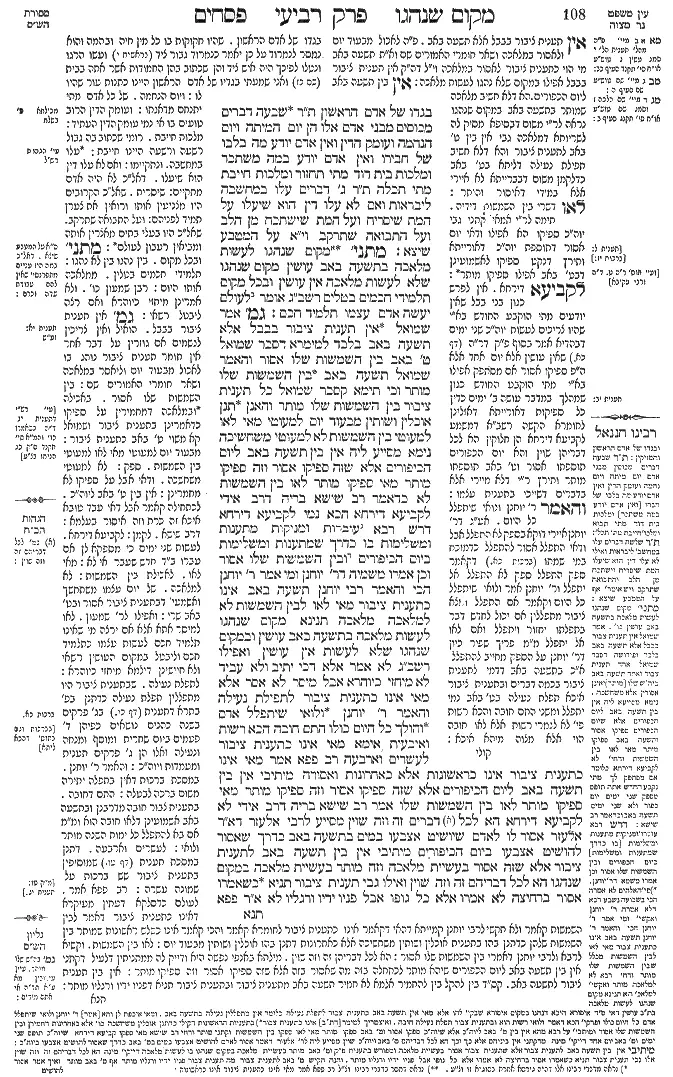
Pesahim 54b - Guemara
בגדו של אדם הראשון ת"ר שבעה דברים מכוסים מבני אדם אלו הן יום המיתה ויום הנחמה ועומק הדין ואין אדם יודע מה בלבו של חבירו ואין אדם יודע במה משתכר ומלכות בית דוד מתי תחזור ומלכות חייבת מתי תכלה ת"ר ג' דברים עלו במחשבה ליבראות ואם לא עלו דין הוא שיעלו על המת שיסריח ועל המת שישתכח מן הלב ועל התבואה שתרקב וי"א על המטבע שיצא:
מתני׳ מקום שנהגו לעשות מלאכה בתשעה באב עושין מקום שנהגו שלא לעשות מלאכה אין עושין ובכל מקום תלמידי חכמים בטלים רשב"ג אומר לעולם יעשה אדם עצמו תלמיד חכם:
גמ׳ אמר שמואל אין תענית ציבור בבבל אלא תשעה באב בלבד למימרא דסבר שמואל ט' באב בין השמשות שלו אסור והאמר שמואל תשעה באב בין השמשות שלו מותר וכי תימא קסבר שמואל כל תענית ציבור בין השמשות שלו מותר והאנן תנן אוכלין ושותין מבעוד יום למעוטי מאי לאו למעוטי בין השמשות לא למעוטי משחשיכה נימא מסייע ליה אין בין תשעה באב ליום הכיפורים אלא שזה ספיקו אסור וזה ספיקו מותר מאי ספיקו מותר לאו בין השמשות לא כדאמר רב שישא בריה דרב אידי לקביעא דירחא הכא נמי לקביעא דירחא דרש רבא עוברות ומניקות מתענות ומשלימות בו כדרך שמתענות ומשלימות ביום הכיפורים ובין השמשות שלו אסור וכן אמרו משמיה דר' יוחנן ומי אמר ר' יוחנן הכי והאמר רבי יוחנן תשעה באב אינו כתענית ציבור מאי לאו לבין השמשות לא למלאכה מלאכה תנינא מקום שנהגו לעשות מלאכה בתשעה באב עושין ובמקום שנהגו שלא לעשות אין עושין ואפילו רשב"ג לא אמר אלא דכי יתיב ולא עביד לא מיחזי כיוהרא אבל מיסר לא אסר אלא מאי אינו כתענית ציבור לתפילת נעילה והאמר ר' יוחנן ולואי שיתפלל אדם והולך כל היום כולו התם חובה הכא רשות ואיבעית אימא מאי אינו כתענית ציבור לעשרים וארבעה רב פפא אמר מאי אינו כתענית ציבור אינו כראשונות אלא כאחרונות ואסורה מיתיבי אין בין תשעה באב ליום הכיפורים אלא שזה ספיקו אסור וזה ספיקו מותר מאי ספיקו מותר לאו בין השמשות שלו אמר רב שישא בריה דרב אידי לא לקביעא דירחא הא לכל דברים זה וזה שוין מסייע לרבי אלעזר דא"ר אלעזר אסור לו לאדם שיושיט אצבעו במים בתשעה באב כדרך שאסור להושיט אצבעו ביום הכיפורים מיתיבי אין בין תשעה באב לתענית ציבור אלא שזה אסור בעשיית מלאכה וזה מותר בעשיית מלאכה במקום שנהגו הא לכל דבריהם זה וזה שוין ואילו גבי תענית ציבור תניא כשאמרו אסור ברחיצה לא אמרו אלא כל גופו אבל פניו ידיו ורגליו לא א"ר פפא
Comments from Rashi on Masechet Pesahim Page 54b
בגדו של אדם הראשון . שהיו חקוקות בו כל מין חיה ובהמה והוא נמסר לנמרוד על כן יאמר כנמרוד גבור ציד (בראשית י) ועשו הרגו ונטלו לפיכך היה איש ציד והן שכתוב בהן החמודות אשר אתה בבית (שם כז) ואני שמעתי בגדיו של אדם הראשון היינו כתנות עור שהיו לו: ויום הנחמה . של כל אדם מתי יתנחם מדאגתו: ועומק הדין . הרוב טועים בו אי נמי עומק הדין העתיד: מלכות חייבת . רומי שכתוב בה גבול רשעה ורשעה היינו חייבת: עלו במחשבה . ונתקיימו: ואם לא עלו דין הוא שיעלו . דאל"כ לא היה אדם מתקיים: שיסריח . שאל"כ הקרובים היו מצניעין אותו ורואין את צערן תמיד לפניהם: ועל התבואה שתרקב . שאל"כ היו בעלי בתים מאצרין אותה ומביאין רעבון לעולם: מתני' ובכל מקום . בין נהגו בין לא נהגו: תלמידי חכמים בטלין . ממלאכה אותו היום: רבן שמעון כו' . ולא אמרינן מיחזי כיוהרא ואם רצה ליבטל רשאי: גמ' אין תענית ציבור בבבל . הואיל ואין צריכין לגשמים אם גוזרין על דבר אחר אין חומר תענית ציבור נוהג בו לאכול מבעוד יום וליאסר במלאכה ושאר חומרי האמורים שם: בין השמשות שלו אסור . באכילה ובמלאכה דמחמירין על ספיקו כדאמרינן בתענית ציבור ושמואל קא משוי ט' באב כתענית ציבור: מבעוד יום למעוטי מאי לאו למעוטי בין השמשות . ספק: לא למעוטי משחשכה . ודאי אבל על ספיקו לא מחמרינן: אין בין ט' באב ליוה"כ . לכתחילה קאמר אבל דאי עבד טובא איכא זה כרת וזה איסור בעלמא: דרב שישא . לקמן: לקביעא דירחא . לעשות שני ימים כי מספקא לן אם עברו ב"ד חדש שעבר אי לא: מאי לאו . לאכילת בין השמשות: לא למלאכה . של יום עצמו משתחשך ואשמעי' דבתענית ציבור אסור ובט' באב שרי: ואפילו לר' שמעון . לאו למיסר אתא אלא אם ירצה מי שאינו תלמיד חכם לעשות עצמו כתלמיד חכם וליבטל במקום העושין רשאי ולא חיישינן דילמא מיחזי כיוהרא: לתפלת נעילה . שבתענית ציבור היו מתפללין תפלת נעילה כדתנן בפ' בתרא דתענית (דף כו.) בג' פרקים בשנה כהנים נושאים כפיהן ד' פעמים ביום שחרית ומוסף ומנחה ונעילה ואלו הן ג' פרקים תענית ומעמדות ויוה"כ: והאמר ר' יוחנן . במסכת ברכות דאין בתפלה יתירה משום ברכה לבטלה: התם דחובה . בתענית צבור חובה מדרבנן ובתשעה באב אשמועינן דלאו חובה הוא ומ"מ אם בא להתפלל כל ימות השנה מותר ולואי: לעשרים וארבעה . דתנן במסכת תענית (דף טו.) שמוסיפין בתענית ציבור שש ברכות על שמונה עשרה: רב פפא אמר . לעולם כדסלקא דעתין מעיקרא דאינו כתענית ציבור דאמר לבין השמשות קאמר ולא תקשי לרבי יוחנן קמייתא דהאי דקאמר אינו כתענית ציבור לחומרא קאמר והכי קאמר אינו כשלש ראשונות שמותר בין השמשות שלהן כדתנן בהו בתענית אוכלין ושותין משחשיכה אלא כאחרונות דתנן בהו אוכלין ושותין מבעוד יום: לאו בין השמשות . וקשיא לרבא ולרבי יוחנן דאמרי בין השמשות שלו אסור: הא לכל דבריהן זה וזה שוין . מילתא באנפי נפשה היא ודייק לה ממתניתין דלעיל דקתני אין בין תשעה באב ליום הכפורים שיהא מותר לכתחלה בזה מה שאסור בזה אלא שזה ספיקו אסור וזה ספיקו מותר: אין בין תענית ציבור לתשעה באב . קס"ד בין להקל בין להחמיר אלמא לא חמיר תשעה באב מתענית ציבור ובתענית ציבור תניא דפניו ידיו ורגליו מותר:
Comments from Tosafot - Pesahim 54b
אין תענית ציבור בבבל אלא תשעה באב . פ"ה לאכול מבעוד יום ולאסור במלאכה ושאר חומרי האמורים שם וא"ת תשעה באב מי הוי כתענית ציבור לאסור במלאכה וי"ל דה"ק אין תענית ציבור בבבל אפילו במקום שלא נהגו לעשות מלאכה: אין בין תשעה באב ליום הכפורים . הא דלא חשיב מלאכה שמותר בתשעה באב במקום שנהגו נראה לר"י משום דבסיפא מסיק לה לשריותא דמלאכה גבי אין בין ט' באב לתענית ציבור והא דלא חשיב תפילת נעילה דליתא בט' באב כדלקמן משום דבברייתא לא איירי אלא במידי דאיסור והיתר: לאו דשרי בין השמשות דידיה . תימה לר"י אמאי קתני גבי יוה"כ ספיקו הא אפילו ודאי יום אסור דתוספת יוה"כ דאורייתא ותירץ דנקט ספיקו לאשמועינן דבט' באב אפילו ספיקו מותר: לקביעא דירחא . אין לפרש כגון בני בבל שאין יודעים מתי הוקבע החודש בא"י שהיו צריכים לעשות יוה"כ שני ימים דבהדיא אמר בסוף פ"ק דר"ה (דף כא.) שאין עושין אלא יום אחד אלא ה"פ ספיקו אסור אם מסתפק אפילו בא"י מתי הוקבע החודש כגון שמהלך במדבר עושה ב' ימים כדין כל ספיקות דאורייתא דאזלינן לחומרא הקשה רשב"א דמשמע לקביעא דירחא הן חלוקין הא לכל דבריהן שוין והא יום הכפורים תוספתו אסור וט' באב תוספתו מותר ותירץ ר"י דלא מיירי אלא בדברים דשייכי בתענית עצמו: והאמר ר' יוחנן ולואי שיתפלל כל היום . אע"ג דר' יוחנן איירי דוקא בספק לא התפלל אבל ודאי התפלל אסור להתפלל כדמוכח במי שמתו (ברכות כא.) דקאמר ספק התפלל ספק לא התפלל אל יתפלל ור' יוחנן אמר ולואי שיתפלל כל היום וקאמר אם התפלל ומצא ציבור מתפללין אם יכול לחדש דבר בתפלתו יחזור ויתפלל ואם לאו אל יתפלל מ"מ פריך שפיר כיון דר' יוחנן על הספק מחייב להתפלל א"כ בתשעה באב דדמי לתענית ציבור בכמה דברים ובתענית ציבור איכא תפלת נעילה בט' באב נמי יתפלל ומשני התם חובה והכא רשות פי' לא לגמרי רשות אלא לאו חובה הוי אלא מצוה מיהא איכא:
Pesahim 54b - Mishnah translated into english
the garment of Adam, the first man, was created at this time, as it is stated: “And God made for Adam and his wife garments of skins and clothed them” (Genesis 3:21).
Apropos the list of items created during twilight, the Gemara cites that the Sages taught: Seven matters are concealed from people, and they are: The day of death; and the day of consolation from one’s concerns; the profundity of justice, ascertaining the truth in certain disputes; and a person also does not know what is in the heart of another; and a person does not know in what way he will earn a profit; and one does not know when the monarchy of the house of David will be restored to Israel; and when the wicked Roman monarchy will cease to exist.
The Sages taught on a similar note: The thoughts of three matters arose in God’s mind to be created, and if they did not arise in His thoughts, by right they should have arisen in His thoughts, as they are fundamental to the existence of the world. God created a world in which a corpse rots, so that it requires burial and the family does not continually suffer by seeing the corpse; that the deceased are forgotten from the heart, and the sense of pain and loss diminishes with time; and that grain will rot so that it cannot be hoarded forever, and therefore one must sell his produce. And some say: He instituted that currency will circulate so that people will accept money as a method of payment.
MISHNA: This mishna continues the previous discussion of customs. In a place where people were accustomed to perform labor on the Ninth of Av, one performs labor. In a place where people were accustomed not to perform labor, one does not perform labor. And in all places Torah scholars are idle and do not perform labor on the Ninth of Av, due to the mourning over the Temple’s destruction. Rabban Shimon ben Gamliel says: With regard to the Ninth of Av, a person should always conduct himself as a Torah scholar and refrain from performing labor.
GEMARA: Shmuel said: The only communal fast in Babylonia during which all the stringencies of a communal fast are observed is the Ninth of Av. The Gemara asks: Is that to say, based on the parallel he drew between them, that Shmuel holds that the Ninth of Av is as stringent as communal fast days, in that during twilight on the Ninth of Av all activities prohibited on the Ninth of Av are prohibited? But didn’t Shmuel say: During twilight of the Ninth of Av all activities prohibited on the Ninth of Av are permitted, and the Sages did not decree any prohibitions during this time? And if you say that Shmuel holds: With regard to every communal fast, during twilight those activities considered to be afflictions are permitted, didn’t we learn in a mishna with regard to a public fast day: One may eat and drink while it is still day? The Gemara analyzes this statement: What does the expression: While it is still day, come to exclude? What, isn’t it to exclude twilight of a communal fast day, when these activities are prohibited? The Gemara rejects this: No, it is to exclude the time after dark, when these afflictions are certainly in effect.
The Gemara suggests: Let us say that this baraita supports Shmuel’s opinion: The only difference between the Ninth of Av and Yom Kippur is that with regard to this, Yom Kippur, its uncertainty is prohibited, as eating and drinking on Yom Kippur is prohibited by Torah law, whereas with regard to that, the Ninth of Av, its uncertainty is permitted, as the afflictions of the Ninth of Av are rabbinic decrees.
The Gemara explains the support for Shmuel’s opinion: What is the meaning of the expression: With regard to that, the Ninth of Av, its uncertainty is permitted? Is it not referring to twilight, with regard to which there is uncertainty whether it is day or night? Apparently, it is permitted to eat during twilight on the Ninth of Av. The Gemara rejects this: No, it is as Rav Sheisha, son of Rav Idi, said in a different context: It is referring to uncertainty with regard to the determination of the first day of the new month, which would require observance of the Festival for two days. Here, too, the baraita is referring to uncertainty with regard to determination of the first day of the new month. Since the Ninth of Av is a fast of rabbinic origin, there is no requirement to observe two days.
Rava taught: Pregnant women and nursing women fast and complete the fast on the Ninth of Av in the manner that they fast and complete the fast on Yom Kippur, and during twilight on the Ninth of Av it is prohibited to eat or drink. And they likewise said so in the name of Rabbi Yoḥanan. The Gemara asks: And did Rabbi Yoḥanan actually say that? Didn’t Rabbi Yoḥanan say: The Ninth of Av is not like a communal fast decreed to pray for rain? What, isn’t it referring to the matter of twilight? Apparently, Rabbi Yoḥanan holds that it is permitted to eat and drink during twilight on the Ninth of Av. The Gemara answers: No, it is referring to performing labor, which is prohibited on the Ninth of Av, in contrast to other fasts.
The Gemara expresses surprise: It is referring to performing labor? We already learned explicitly in the mishna: In a place where people were accustomed to perform labor on the Ninth of Av, one performs labor; in a place where people were accustomed not to perform labor, one does not perform labor. Apparently, the prohibition against performing labor on the Ninth of Av depends on local custom and is not an outright prohibition. And even Rabban Shimon ben Gamliel only said that one may conduct himself as a Torah scholar and refrain from performing labor because when one sits and does not perform labor, it does not appear as presumptuousness on his part. It does not create the impression that he actually considers himself a Torah scholar because others may simply think that he has no work to do. However, in terms of prohibiting the performance of labor, he does not prohibit performing labor on the Ninth of Av.
Rather, what is the meaning of the expression: The Ninth of Av is not like a communal fast? It was stated with regard to the closing prayer. On a communal fast day there are four prayers, and on Yom Kippur there are five prayers, but on the Ninth of Av there are only three prayers, like an ordinary weekday. But didn’t Rabbi Yoḥanan say: If only a person would continue to pray throughout the entire day? This indicates that according to Rabbi Yoḥanan, a person may recite additional prayers if he so chooses.
The Gemara answers: There, on a communal fast day, it is a requirement to recite four prayers; here, on the Ninth of Av, reciting additional prayers is optional according to Rabbi Yoḥanan. And if you wish, say instead: What is the meaning of the expression: The Ninth of Av is not like a communal fast? It is with regard to the twenty-four blessings that are recited on a communal fast, as six blessings were added to the eighteen blessings of the daily Amida prayer. On the Ninth of Av one recites only the standard eighteen blessings.
Rav Pappa said: What is the meaning of the phrase: The Ninth of Av is not like a communal fast? It comes to teach a stringency. There are different types of communal fasts for rain. The first three fasts are the least stringent; the next three are more stringent; and the final seven fasts are the most stringent of all. The statement teaches that the Ninth of Av is not like the first fast days, which are more lenient in several respects; for example, they do not begin during twilight. Rather, it is like the final fast days, when eating and performing labor are prohibited during twilight.
The Gemara raises an objection: Didn’t we already learn that the only difference between the Ninth of Av and Yom Kippur is that with regard to this, Yom Kippur, its uncertainty is prohibited, because eating and drinking on Yom Kippur are prohibited by Torah law, whereas with regard to that, the Ninth of Av, its uncertainty is permitted? What is the meaning of the expression referring to the Ninth of Av: Its uncertainty is permitted? Is it not referring to its twilight, contrary to the statement of Rav Pappa? The Gemara rejects this. Rav Sheisha, son of Rav Idi, said in a different context: No. It is uncertainty with regard to the determination of the first day of the new month. There is no requirement to observe a second day of the Ninth of Av. By inference, with regard to all other matters this and that are equal.
The Gemara comments: This statement supports the opinion of Rabbi Elazar, as Rabbi Elazar said: It is prohibited for a person to extend his finger into water on the Ninth of Av, just as it is prohibited for him to extend his finger into water on Yom Kippur.
The Gemara raises an objection: The only difference between the Ninth of Av and a communal fast is that on this day, a communal fast, performance of labor is prohibited, and on that day, the Ninth of Av, performance of labor is permitted in a place where people are accustomed to perform labor. By inference, with regard to all other matters this and that are equal. However, with regard to a communal fast, it was taught in a baraita: When the Sages said that bathing is prohibited, they said it only with regard to washing one’s entire body, but with regard to washing one’s face, one’s hands, and one’s feet in increments, the Sages did not say that it was prohibited. Apparently, with respect to washing, the Rabbis were stricter with regard to the Ninth of Av than they were with regard to a communal fast.
Rav Pappa said:
Traduction : The William Davidson digital edition of the Koren Noé Talmud, with commentary by Rabbi Adin Even-Israel Steinsaltz.