 Talmud Bavli
Pesahim 13b : Youtube
Daf TubeYoutube
3 video classes :
Pesahim Page 13b
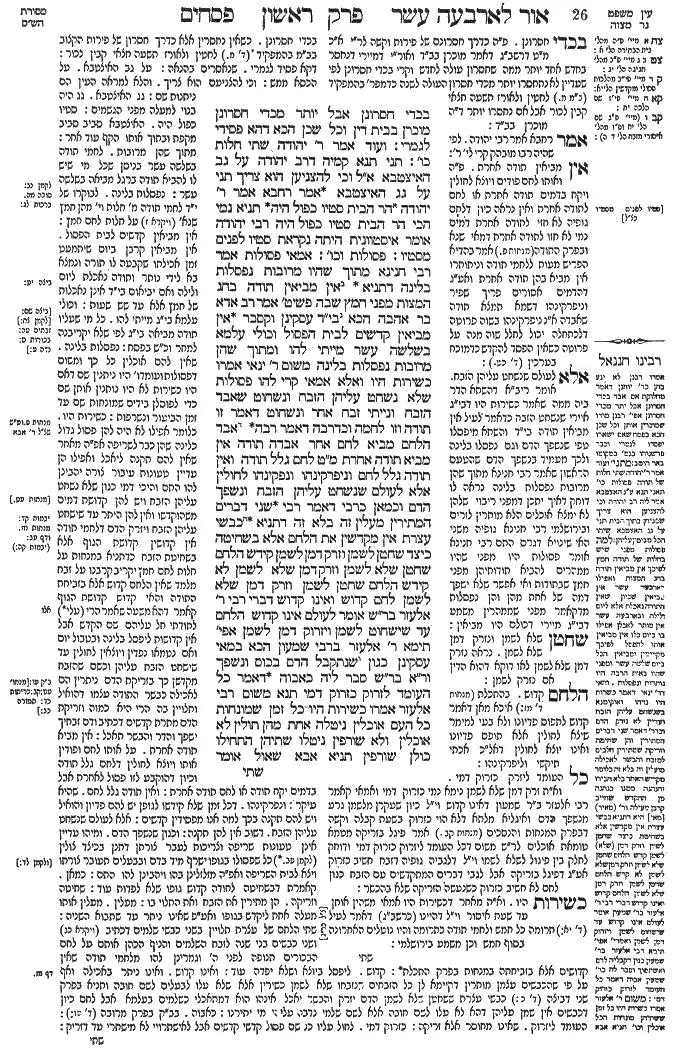
Pesahim 13b - Guemara
בכדי חסרונן אבל יותר מכדי חסרונן מוכרן בבית דין וכל שכן הכא דהא פסידי לגמרי:
ועוד אמר ר' יהודה שתי חלות כו':
תני תנא קמיה דרב יהודה על גב האיצטבא א"ל וכי להצניען הוא צריך תני על גג האיצטבא אמר רחבא אמר ר' יהודה הר הבית סטיו כפול היה תניא נמי הכי הר הבית סטיו כפול היה רבי יהודה אומר איסטוונית היתה נקראת סטיו לפנים מסטיו:
פסולות וכו':
אמאי פסולות אמר רבי חנינא מתוך שהיו מרובות נפסלות בלינה דתניא אין מביאין תודה בחג המצות מפני חמץ שבה פשיט' אמר רב אדא בר אהבה הכא בי"ד עסקינן וקסבר אין מביאין קדשים לבית הפסול וכולי עלמא בשלשה עשר מייתי להו ומתוך שהן מרובות נפסלות בלינה משום ר' ינאי אמרו כשירות היו ואלא אמאי קרי להו פסולות שלא נשחט עליהן הזבח ונשחוט שאבד הזבח ונייתי זבח אחר ונשחוט דאמר זו תודה וזו לחמה וכדרבה דאמר רבה אבד הלחם מביא לחם אחר אבדה תודה אין מביא תודה אחרת מ"ט לחם גלל תודה ואין תודה גלל לחם וניפרקינהו ונפקינהו לחולין אלא לעולם שנשחט עליהן הזבח ונשפך הדם וכמאן כרבי דאמר רבי שני דברים המתירין מעלין זה בלא זה דתניא כבשי עצרת אין מקדשין את הלחם אלא בשחיטה כיצד שחטן לשמן וזרק דמן לשמן קידש הלחם שחטן שלא לשמן וזרק דמן שלא לשמן לא קידש הלחם שחטן לשמן וזרק דמן שלא לשמן לחם קדוש ואינו קדוש דברי רבי ר' אלעזר בר"ש אומר לעולם אינו קדוש הלחם עד שישחוט לשמן ויזרוק דמן לשמן אפי' תימא ר' אלעזר ברבי שמעון הכא במאי עסקינן כגון שנתקבל הדם בכוס ונשפך ור"א בר"ש סבר ליה כאבוה דאמר כל העומד לזרוק כזרוק דמי תנא משום רבי אלעזר אמרו כשירות היו כל זמן שמונחות כל העם אוכלין ניטלה אחת מהן תולין לא אוכלין ולא שורפין ניטלו שתיהן התחילו כולן שורפין תניא אבא שאול אומר
Comments from Rashi on Masechet Pesahim Page 13b
בכדי חסרונן . כשאין נחסרין אלא כדרך חסרון של פירות הקצוב בב"מ בהמפקיד (ד' מ.) לחטין ולאורז תשעה חצאי קבין לכור: דקא פסיד לגמרי . שנאסרים בהנאה: על גב האיצטבא . על הכסא ממש: וכי להצניעם הוא צריך . והלא למראה העין הם ניתנות שם: גג האיצטבא . גג היה בנוי למעלה מפני הגשמים: סטיו כפול היה . האיצטבא סביב סביב מקפת ובתוך אותו הקף עוד אחר: מתוך שהן מרובות . לחמי תודה בשלשה עשר בניסן שכל מי שיש לו להביא תודה ברגל מביאה בשלשה עשר: נפסלות בלינה . לבוקרו של י"ד לחמי תודה מ' חלות וי' מהן חמץ שנא' (ויקרא ז) על חלות לחם חמץ: אין מביאין קדשים לבית הפסול . אין מביאין קרבן ביום שיתמעט זמן אכילתו שקבעה לו תורה ונמצא בא לידי נותר ותודה נאכלת ליום ולילה ואם יביאום בי"ד אינן נאכלות של חמץ אלא עד שש שעות: וכולי עלמא בי"ג מייתי להו . כל מי שעליו תודה מביאה בי"ג לפי שלא יקריבנה למחר וכ"ש בפסח: נפסלות בלינה . שאין להם אוכלין כל כך ומשום דפסולות ועומדות היו ניתנין שם דאם היו כשירות לא היו נותנין אותן שם כדי לפוסלן בידים שמונחות שם עד זמן הביעור ונשרפות: כשירות היו . כלומר אפילו לא היה להן פסול גדול כלינה שהן כבר לשריפה אפ"ה מאחר שאין להם תקנה ליאכל ואפילו הן עדיין טעונות עיבור צורה יהבינן להו התם והיכי דמי כגון שלא נשחט עליהן הזבח ויש להן קדושת דמים משהוקדשו ואין להן היתר עד שישחט עליהן הזבח ויזרק הדם דלחמי תודה אין קדושין קדושת הגוף אלא בשחיטת הזבח כדתניא במנחות על חלות לחם חמץ יקריב קרבנו על זבח מלמד שאין הלחם קדוש אלא בזביחת התודה והאי קדוש קדושת הגוף קאמר דהא משעה שאמר הרי (עלי) לתודתי חל עליהם שם הקדש אבל אין קדושות ליפסל בלינה ובטבול יום ואם נטמאו נפדין ויוצאין לחולין עד שישחט הזבח עליהן וכשם שהזבח מקדשן כך בזריקת הדם ניתרין הם לאכילה כבשר התודה עצמו דהואיל ותלויין בה הרי היא כמוה וזריקת הדם מתרת קדשים דכתיב ודם זבחיך ישפך והדר והבשר תאכל: אין מביא תודה אחרת . על אותו לחם ופודין אותו ויוצא לחולין דלחם גלל תודה וכיון דהוקבע לזו פסול לאחרת אבל בדמים יקח תודה או לחם תודה אחרת: ואין תודה גלל לחם . שהיא עיקר: ונפרקינהו . דכל זמן שלא קידשו לגופן יש להם פדיון והואיל ויש להם תקנה בכך למה אנו מפסידין קדשים: אלא לעולם שנשחט עליהן הזבח . דשוב אין להם תקנה: וכגון שנשפך הדם . ומיהו עדיין אינן טעונות שריפה וצריכות לעבר צורתן דתנן בכיצד צולין (לקמן פסחים פב.) כל שפסולו בגופו ישרף מיד בדם ובבעלים תעובר צורתו ויצא לבית השריפה ואפ"ה מזלזלינן בהו ויהבינן להו התם: כמאן . קאמרת דבשחיטה לחודה קדוש גופו שלא לפדות עוד: שחיטה וזריקה . הן מתירין את הזבח ואת התלוי בו: מעלין . מעלין אותו מעלה אחת ליקדש בגופו ואע"פ שאינו ניתר עד שתבוא השניה: שתי הלחם של עצרת תלויין בשני כבשי שלמים . דכתיב (ויקרא כג) ושני כבשים בני שנה לזבח השלמים והניף הכהן אותם על לחם הבכורים תנופה לפני ה' וגמרינן להו מלחמי תודה שאין קדושים אלא בזביחתה במנחות בפרק התכלת: קדוש . ליפסל ביוצא ושלא יפדה עוד: ואינו קדוש . ואינו ניתר באכילה ואף על פי שהכבשים עצמן מותרין דקיימא לן כל הזבחים שנזבחו שלא לשמן כשירין אלא שלא עלו לבעלים לשם חובה ותניא בפרק שני דביצה (ד' כ:) כבשי עצרת ששחטן שלא לשמן הדם יזרק והבשר יאכל אינהו הוא דמתאכלי כשלמים בעלמא אבל לחם כיון דכבשים אין שמן עליהן דהא לא עלו לשם חובה אלא לשם שלמי נדבה עליהן מי יתירנו: כאבוה . בב"ק בפרק מרובה (ד' עו:): העומד ליזרוק . שאינו מחוסר אלא זריקה: כזרוק דמי . לחול עליו כל שם פסול קדשי קדשים אבל לאישתרויי לא מישתרי עד דזריק:
Comments from Tosafot - Pesahim 13b
בכדי חסרונן . פ"ה כדרך חסרונם של פירות וקשה לר"י א"כ מ"ט דרשב"ג דאמר מוכרן בב"ד ואור"י דמיירי דנחסר בחדש אחד יותר ממה שחסרון עולה לחדש וקרי בכדי חסרונן לפי שעדיין לא נתחסרו יותר מכדי חסרון העולה לשנה כדמפר' בהמפקיד (ב"מ מ.) לחטין ולאורז תשעה חצאי קבין לכור אבל אם נחסרו יותר ד"ה מוכרן בב"ד: אמר רחבא אמר רבי יהודה . לפי שהיה רבו מובהק קרי לי' ר': אין מביאין תודה אחרת . פ"ה ואותו לחם פודים ויוצא לחולין ויקח בדמים תודה אחרת או לחם לתודה אחרת ואין נראה כיון דלחם גופיה לא חזי לתודה אחרת דמים נמי לא חזו לתודה אחרת דמאי שנא ובפרק התודה (מנחות פ.) אמר בהדיא הפריש מעות ללחמי תודה וניתותרו אין מביא בהן תודה אחרת ואע"ג דהדמים אסורים פריך שפיר וניפרקינהו דשמא תמצא תודה שאבדה א"נ ניפרקינהו בשוה פרוטה דלכתחלה יכול לחלל שוה מנה על פרוטה כשאין הפסד להקדש כדמוכח בערכין (ד' כט.): אלא לעולם שנשחט עליהן הזבח . אומר ריב"א דהשתא הדר ביה ממה שאמר כשירות היו דבי"ג איירי שנשחט הזבח כדאמר לעיל אין מביאין תודה בי"ד והשתא מיפסלו טפי שנשפך הדם וגם נפסלו בלינה ולכך מעמיד בנשפך הדם שהטעם הראשון שאמר רבי חנינא מתוך שהן מרובות נפסלות בלינה נראה לו דוחק דאיך יתכן דמפני ריבוי שלהן לא ימצא אוכלים הלא מותרין לזרים ובירושלמי רבי חנינא גופיה משני האי שינויא דגרס התם רבי חנינא אומר פסולות היו מפני שהיו ממהרים להביא תודותיהן מפני חמץ שבתודות ואי אפשר שלא ישפך דמה של אחת מהן והן נפסלות מדקאמר מפני שממהרין משמע דבי"ג מיירי דכולם היו מביאין: שחטן שלא לשמן ונזרק דמן שלא לשמן . נראה נזרק דמן שלא לשמן לאו דוקא דהוא הדין אם נזרק לשמן: הלחם קדוש . בהתכלת (מנחות ד' מז:) איכא מאן דאמר קדוש לתפוס פדיונו ולא בעי למימר שיצא לחולין אלא תופס פדיונו ואינו יוצא לחולין דאל"כ אכתי תיקשי וליפרקינהו: כל העומד ליזרק כזרוק דמי . וא"ת זרק דמן שלא לשמן נימא נמי כזרוק דמי ואמאי קאמר רבי אלעזר ב"ר שמעון דאינו קדוש וי"ל כיון שעקרן מלשמן גרע מנשפך הדם ואיגליא מלתא דלא הוי כזרוק בשעת קבלה וקשה דבפרק המנחות והנסכים (מנחות קב.) אמר פיגל בזריקה מטמא טומאת אוכלים לר"ש משום דכל העומד ליזרוק כזרוק דמי ודוחק לחלק בין פיגול לשלא לשמו וי"ל דלגביה גופיה דזבח חשיב כזרוק אע"ג דפיגל בזריקה אבל לגבי דברים המתקדשים עם הזבח כגון לחם לא חשיב כזרוק כשנעשה הזריקה שלא בהכשר: כשירות היו . וא"ת מאחר דכשירות היו אמאי משהין אותן עד שעת איסור וי"ל דהיינו (כרשב"ג) דאמר לעיל (פסחים ד' יא:) תרומה כל חמש ולחמי תודה כתרומה והיו נוטלים האחרונה בסוף חמש וכן משמע בירושלמי:
Pesahim 13b - Mishnah translated into english
their decrease in value is at the standard rate of stored produce, due to rot and rodents. However, if their decrease in value is beyond the standard rate, everyone agrees that one sells them in court; and all the more so in the case here, with regard to leavened bread, as the bread will be entirely lost. Once the leaven is prohibited, it remains prohibited even after Passover. Consequently, everyone agrees that one is obligated to sell the leaven.
We learned in the mishna: And furthermore, Rabbi Yehuda said: Two disqualified loaves of a thanks-offering are placed on the pillars surrounding the Temple as an indicator. The tanna who recited mishnayot in the study hall taught a baraita before Rav Yehuda: The loaves were placed on [al gav] the bench in the Temple. He said to him: And does he need to conceal them? No one would see them if they were placed there. Rather, teach the baraita: On the roof of [al gag] the colonnade, where everyone could see them.
Raḥava said that Rabbi Yehuda said: The Temple Mount was a double colonnade, i.e., surrounded by two rows of columns. That was also taught in a baraita: Rabbi Yehuda says it was called an istevanit and it was a colonnade within a colonnade.
We learned in the mishna that Rabbi Yehuda says these two loaves placed outside were disqualified. The Gemara asks: Why were they disqualified? What caused their disqualification? Rabbi Ḥanina said: Since the thanks-offerings brought that day are numerous, and the priests are unable to eat their portions from the loaves of all the offerings, the remaining loaves are disqualified by virtue of their being left overnight. The Gemara explains that so many loaves were brought that day, as it was taught in a baraita: One may not bring a thanks-offering on the festival of Passover due to the leavened bread included with it, as ten of the forty loaves brought with a thanks-offering are loaves of leavened bread.
The Gemara raises a difficulty: It is obvious that one may not bring this offering on Passover, as it contains leaven. Rav Adda bar Ahava said: Here this baraita is not referring to the prohibition against bringing the offering on Passover itself. Rather, we are dealing with the issue of sacrificing a thanks-offering on the fourteenth of Nisan, and this tanna maintains: One may not bring consecrated offerings to a situation where the time that they may be eaten is restricted, thereby increasing the likelihood of disqualification. Although it is permitted to eat leavened bread until the sixth hour of the fourteenth of Nisan, one may not bring a thanks-offering on Passover eve. The reason is that a thanks-offering may be eaten for one full day and the following night, and if it is brought on the eve of Passover, the time available before disqualification is reduced.
And therefore, everyone who ascended on the pilgrimage to Jerusalem and were obligated to bring thanks-offerings brought them on the thirteenth of Nisan. And since these thanks-offerings are numerous, they are disqualified by virtue of their being left overnight, as priests are unable to eat their portions from the loaves of all the offerings brought that day.
They said in the name of Rabbi Yannai: The loaves placed as an indicator were not disqualified by being left overnight. Rather, why did the tanna call them disqualified? It was due to the fact that no animal offering was slaughtered together with them to consecrate them, but they were consecrated as thanks-offering loaves independently. They could not be eaten until the offering with which they were brought was slaughtered. The Gemara asks: And let us slaughter the thanks-offering to render the loaves permitted. The Gemara answers: The mishna is referring to a case where the animal for the offering was lost.
The Gemara raises a further difficulty: And let us bring another animal to replace the first one for sacrifice and let them slaughter it. The Gemara answers: This is a case where the one who consecrated the thanks-offering said: This is a thanks-offering and these are its loaves. He consecrated the animal and the loaves together, and this is in accordance with the opinion of Rabba, as Rabba said: If the loaf of a thanks-offering is lost, its owner brings another loaf to complete the offering. However, if the thanks-offering was lost and the loaves remain, one may not bring another thanks-offering. What is the reason for this? The loaves are brought due to the thanks-offering but the thanks-offering is not brought on account of the loaves. The animal sacrificed is the primary component of the offering while the loaves are subordinate to it.
The Gemara asks: And let us redeem the loaves from their consecrated status and render them non-sacred, and there will be no need to burn the loaves. Rather, the Gemara explains that actually the case is one where the animal offering was indeed slaughtered over the loaves to permit them, but the animal’s blood spilled before it could be sprinkled on the altar. Once the animal has been slaughtered, the loaves are fully consecrated and cannot be redeemed, but in this case, neither can they be eaten, as the blood was not sprinkled on the altar.
And in accordance with whose opinion is this statement that the slaughter of the animal consecrates the loaves and from that point they can no longer be redeemed? It is in accordance with the opinion of Rabbi Yehuda HaNasi, as Rabbi Yehuda HaNasi said: Each of two factors that are indispensable in permitting the sacrifice of an offering, elevates the subordinate components of the offering to consecrated status, without the other. In this case, the loaves are consecrated when the animal to be sacrificed is slaughtered, even if the blood was not sprinkled, as it was taught in a baraita: The lambs sacrificed on the festival of Assembly, i.e., Shavuot, consecrate the loaves that accompany them only by means of their slaughter. How so? If one slaughtered the lambs for their own sake, i.e., as lambs for Shavuot, in the appropriate manner, and the priest sprinkled their blood for their own sake, the loaves are consecrated.
However, if one slaughtered them not for their own sake, and the priest sprinkled their blood not for their own sake, the loaves are not consecrated, as the factors indispensable in rendering the offering permitted were not properly performed. If one slaughtered them for their own sake, and he sprinkled their blood not for their own sake, the fact that the lambs were properly slaughtered renders the loaves partially consecrated. Therefore, the loaves are consecrated to the extent that they cannot be redeemed, but they are not consecrated to the extent that they may be eaten. This is the statement of Rabbi Yehuda HaNasi.
Rabbi Elazar, son of Rabbi Shimon, says: Actually, the loaves are consecrated only when one slaughters the offerings for their own sake and sprinkles their blood for their own sake, i.e., only if both factors indispensable in rendering the offering permitted were properly performed. The previous answer in the Gemara is in accordance with the opinion of Rabbi Yehuda HaNasi.
The Gemara adds: Even if you say that the previous answer is in accordance with the opinion of Rabbi Elazar, son of Rabbi Shimon, it is understood, as with what case are we dealing here? It is in a unique case where after the slaughter, the blood was received in the cup and it only then spilled before it was sprinkled.
And Rabbi Elazar, son of Rabbi Shimon, holds in accordance with the opinion of his father, Rabbi Shimon, who stated a principle: The legal status of any blood that is about to be sprinkled and prepared for sprinkling is like that of blood that had already been sprinkled. Therefore, the loaves are consecrated when the blood is received in the vessel and thereby prepared to be sprinkled. They may not be eaten until the blood is actually sprinkled.
It was taught in the Tosefta that they said in the name of Rabbi Elazar: These loaves were entirely fit. As long as the loaves were placed there, the entire nation continued to eat leaven. When one of the loaves was taken away, the people knew that the time had come to place the leaven in abeyance, meaning that they neither eat nor burn their leaven. When both of the loaves were taken away, they all began burning their leaven.
It was taught in a baraita that Abba Shaul says:
Traduction : The William Davidson digital edition of the Koren Noé Talmud, with commentary by Rabbi Adin Even-Israel Steinsaltz.