 Talmud Bavli
Pesahim 11b : Youtube
Daf TubeYoutube
3 video classes :
Pesahim Page 11b
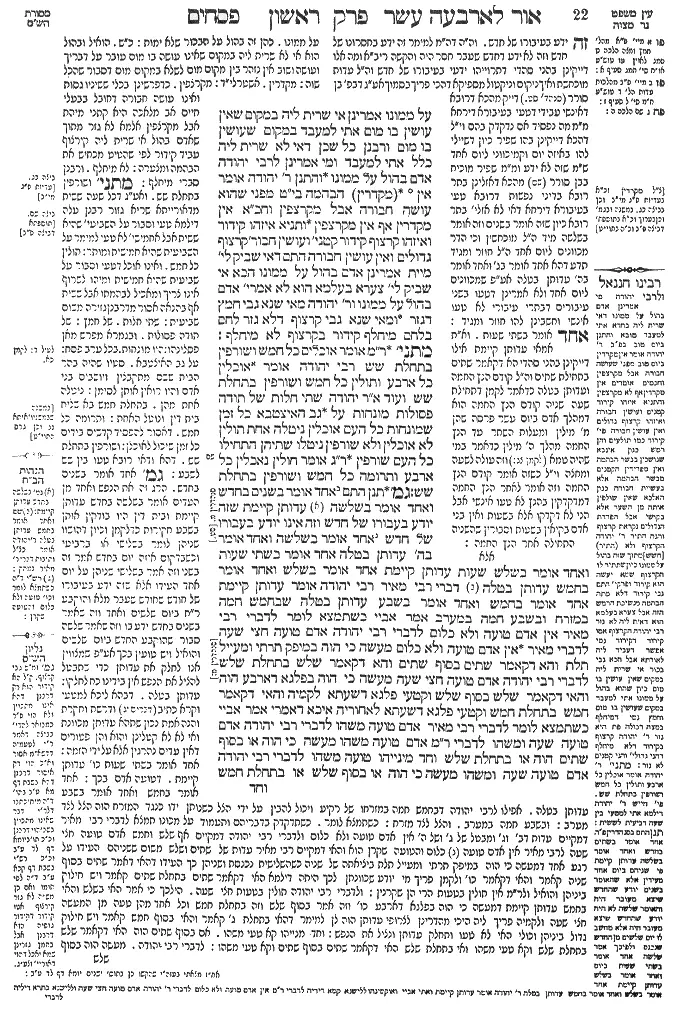
Pesahim 11b - Guemara
על ממונו אמרינן אי שרית ליה במקום שאין עושין בו מום אתי למעבד במקום שעושין בו מום ורבנן כל שכן דאי לא שרית ליה כלל אתי למעבד ומי אמרינן לרבי יהודה אדם בהול על ממונו והתנן ר' יהודה אומר אין (מקדרין) הבהמה בי"ט מפני שהוא עושה חבורה אבל מקרצפין וחכ"א אין מקדרין אף אין מקרצפין ותניא איזהו קידור ואיזהו קרצוף קידור קטני' ועושין חבור' קרצוף גדולים ואין עושין חבורה התם דאי שביק לי' מיית אמרינן אדם בהול על ממונו הכא אי שביק לי' צערא בעלמא הוא לא אמרי' אדם בהול על ממונו ור' יהודה מאי שנא גבי חמץ דגזר ומאי שנא גבי קרצוף דלא גזר לחם בלחם מיחלף קידור בקרצוף לא מיחלף:
מתני׳ ר"מ אומר אוכלים כל חמש ושורפין בתחלת שש רבי יהודה אומר אוכלין כל ארבע ותולין כל חמש ושורפין בתחלת שש ועוד א"ר יהודה שתי חלות של תודה פסולות מונחות על גב האיצטבא כל זמן שמונחות כל העם אוכלין ניטלה אחת תולין לא אוכלין ולא שורפין ניטלו שתיהן התחילו כל העם שורפין ר"ג אומר חולין נאכלין כל ארבע ותרומה כל חמש ושורפין בתחלת שש:
גמ׳ תנן התם אחד אומר בשנים בחדש ואחד אומר בשלשה עדותן קיימת שזה יודע בעבורו של חדש וזה אינו יודע בעבורו של חדש אחד אומר בשלשה ואחד אומר בה' עדותן בטלה אחד אומר בשתי שעות ואחד אומר בשלש שעות עדותן קיימת אחד אומר בשלש ואחד אומר בחמש עדותן בטלה דברי רבי מאיר רבי יהודה אומר עדותן קיימת אחד אומר בחמש ואחד אומר בשבע עדותן בטלה שבחמש חמה במזרח ובשבע חמה במערב אמר אביי כשתמצא לומר לדברי רבי מאיר אין אדם טועה ולא כלום לדברי רבי יהודה אדם טועה חצי שעה לדברי ר"מ אין אדם טועה ולא כלום מעשה כי הוה במיפק תרתי ומעייל תלת והא דקאמר שתים בסוף שתים והא דקאמר שלש בתחלת שלש לדברי רבי יהודה אדם טועה חצי שעה מעשה כי הוה בפלגא דארבע הוה והאי דקאמר שלש בסוף שלש וקטעי פלגא דשעתא לקמיה והאי דקאמר חמש בתחלת חמש וקטעי פלגא דשעתא לאחוריה איכא דאמרי אמר אביי כשתמצא לומר לדברי רבי מאיר אדם טועה משהו לדברי רבי יהודה אדם טועה שעה ומשהו לדברי ר"מ אדם טועה משהו מעשה כי הוה או בסוף שתים הוה או בתחלת שלש וחד מינייהו טועה משהו לדברי רבי יהודה אדם טועה שעה ומשהו מעשה כי הוה או בסוף שלש או בתחלת חמש
Comments from Rashi on Masechet Pesahim Page 11b
על ממונו . כהן זה בהול על הבכור שלא ימות: כ"ש . הואיל ובהול הוא אי לא שרית ליה במקום שאינו עושה בו מום עובר על דבריך ועושה ושוב אין נזהר בין מקום מום לשלא במקום מום דסבור שהכל שוה: מקדרין . אשטרלי"ד: מקרצפין . כדפרשינן בכלי ששיניו גסות ואינו עושה חבורה דחובל בבעלי חיים אב מלאכה היא קתני מיהת אבל מקרצפין אלמא לא גזר מתוך שאדם בהול אי שרית ליה קירצוף עביד קידור לפי שהטיט מכחיש את הבהמה ומצערה: לא מיחלף . ורבנן סברי מיחלף: מתני' ושורפין בתחלת שש . ואע"ג דכל שעה ששית מדאורייתא שריא גזור רבנן עלה דילמא טעי וסבור על השביעי' שהיא ששית אבל אחמישי' לא טעי למימר על השביעית שהיא חמישית ומותר: תולין כל חמש . ואינו אוכל דטעי וסבור על שביעית שהיא חמישית ומיהו לשרוף אינו צריך ומאכיל לבהמתו אבל ששית אף בהנאה אסור מדרבנן גזירה משום שביעית: שתי חלות . של חמץ: של תודה פסולות . ובגמרא מפרש מאן פסלינהו: היו מונחות . בכל ערב פסח: על גב האיצטבא . סטיו שהיה בהר הבית ששם מתקבצין ויושבין בני אדם והיו רואין אותן לסימן: ניטלה אחת מהן . בתחלת חמש בא שליח בית דין ונוטל האחת: ותרומה כל חמש . דאסור להפסיד קדשים בידים כל זמן שיכול לאוכלן: ושורפין בתחלת שש . דהא ודאי רובא טעו בין שש לשבע: גמ' אחד אמר בשנים בחדש . הרג זה את הנפש ואחד מן העדים אומר בשלשה בחדש עדותן קיימת ובית דין היו בודקין אותן בשבע חקירות כדלקמן וכיון דהושוו שניהן לומר בשלישי או ברביעי וכשבדקום איזה יום בחדש אמר זה בשני וזה אמר בשלישי שניהן על יום אחד העידו אלא שזה ידע בעיבורו של חודש שחודש שעבר מלא והוקבע ר"ח ביום שלשים ואחד וזה שאמר בשנים בחדש ידע בו וזה שאמר שלשה סבור שהוקבע החדש ביום שלשים והואיל ויש טועין בכך אע"פ שמצווין אנו לחלק את עדותן כדי שתבטל להציל את הנפש אין בידינו כח לחלקו: עדותן בטלה . דבהא ליכא למטעי וקרא כתיב (דברים יג) ודרשת וחקרת והנה אמת נכון שתהא עדותן מכוונת ואי לא לא קטלינן והוא והן פטורים דאין עדים נהרגין אלא על ידי הזמה: אחד אומר בשתי שעות כו' עדותן קיימת . דטועה אדם בכך: אחד אומר בחמש ואחד אומר בשבע עדותן בטלה . אפילו לר' יהודה דבחמש חמה במזרחו של רקיע ויכול להבין על ידי הצל כשנותן ידו כנגד המזרח הוה הצל לצד מערב: ובשבע חמה במערב . והצל לצד מזרח: כשתמצא לומר . כשתדקדק בדבריהם ותעמוד על מכונו תמצא לדברי רבי מאיר דמקיים עדות דב' וג' ומבטל של ג' ושל ה' אין אדם טועה ולא כלום ולדברי ר' יהודה דמקיים אף שלש וחמש אדם טועה חצי שעה לר' מאיר אין אדם טועה כלום והטועה שקרן הוא והאי דמקיים ר' מאיר עדות של שתים ושלש משום ששניהם העידו על רגע אחד דמעשה כי הוה במיפק תרתי ומעייל תלת ביציאתה של שניה כשהשלישית נכנסת ושניהן כך העידו דהאי דאמר שתים בסוף שניה קאמר והאי דקאמר כו' ולקמן פריך מי יודע שכוונתן לכך היתה דילמא האי דקאמר שתים בתחלת שתים קאמר ויש חילוק ביניהן והואיל ולר"מ אין תולין בטעות הרי הן שקרנין: ולדברי רבי יהודה תולין בטעות חצי שעה . הילכך כי אמר האי בשלש והאי בחמש עדותן קיימת דמעשה כי הוה בפלגא דארבע וכו' וזה אמר בסוף שלש וזה בתחלת חמש וכל אחד מהן טעה מן המעשה חצי שעה ולקמיה פריך ליה היכי מהדרינן לצרופי עדותן הוה לן למימר דהאי בתחלת ג' קאמר והאי בסוף חמש קאמר ויש חילוק גדול ביניהן וכולי האי לא טעו ותחלק עדותן ונציל את הנפש: וחד מנייהו קא טעי משהו . אם בסוף שתים הוה האי דקאמר שלש בתחלת שלש וקאי טעי משהו ואי בתחלת ג' האי דקאמר שתים בסוף שתים וקא טעי משהו: לדברי רבי יהודה . מעשה הוה בסוף שלש והאי דאמר בתחילת חמש טעי שעה רביעית ומשהו של סוף שלש אי נמי בתחילת חמש הוה והאי דאמר בסוף שלש טעה שעה רביעית ומשהו:
Comments from Tosafot - Pesahim 11b
זה ידע בעיבורו של חדש . וה"ה דה"מ למימר זה ידע בחסרונו של חדש וזה לא ידע דחדש שעבר חסר היה והקשה ריב"א ומה אלו דייקינן בהני סהדי דתרוייהו ידעי בעיבורו של חדש וה"ל עדות מוכחשת ואיך ניקום וניקטול מספיקא דהכי פריך בסמוך אע"ג דבפ' בן סורר (סנהד' סט.) דייק מהכא דרובא דאינשי עבידי דטעי בעיבורא דירחא מ"מ מה נפסיד אם נדקדק בהם וי"ל דהכא דייקינן בהו שפיר כיון דשיילי להו באיזה יום וקמיכווני ליום אחד ש"מ שזה לא ידע ומ"מ שפיר מוכיח בבן סורר (שם) מהכא דאזלינן בתר רובא בדיני נפשות דרובא טעי בעיבורא דירחא דאי לא אזלי' בתר רובא כיון שזה אומר בשנים וזה אומר בשלשה מיד ה"ל מוכחשין וכי הדר מכוונים ליום אחד ה"ל חוזר ומגיד תדע דהא אחד אומר בג' ואחד אומר בה' עדותן בטלה אע"פ שמכוונים ליום אחד ולא אמרינן דטעו בשני עיבורים דבתרי עיבורי לא טעו אינשי וחשבינן להו חוזר ומגיד: אחד אומר בשתי שעות . וא"ת אמאי עדותן קיימת אילו דייקינן בהני סהדי הא דקאמר שתים בתחילת שתים וה"ל קודם הנץ החמה ועדותן בטלה כדאמר לקמן דתחילת שעה שניה קודם הנץ החמה הוא דמהלך אדם ביום עשר פרסה שהן מ' מילין ומעלות השחר עד הנץ החמה מהלך ה' מילין כדאמר במי שהיה טמא (לקמן פסחים צג:) וזה עולה לשעה ומחצה וי"ל כשזה אומר קודם הנץ החמה וזה אומר לאחר הנץ החמה דמדקדקין בהנץ לא טעו אינשי אבל הני לא דקדקו אלא בשעות ואין בני אדם בקיאין בשעות וסבורין שהשניה התחילה אחר הנץ החמה:
Pesahim 11b - Mishnah translated into english
about his property, as the priest who is watching the firstborn wants to slaughter it before it dies, as if it dies, eating it would be prohibited. Therefore, we say: If you permit him to let blood in a place that does not cause a blemish in the animal, he will come to do so in a place that causes a blemish in it, to save his animal.
And the Rabbis respond that if that is the case, all the more so should it be permitted to let blood in a manner that will not cause a blemish, for if you do not permit him to take any steps to save the animal at all, he will come to act in a prohibited manner and cause a blemish. If there is a legitimate alternative, he will not cause a blemish in the firstborn.
The Gemara challenges this explanation: And do we say that according to Rabbi Yehuda a person is agitated about his property? But didn’t we learn in a mishna that Rabbi Yehuda says: One may not scrape an animal on a Festival with a fine-tooth comb, because in doing so he inflicts a wound, which is prohibited on Festivals? However, one may scratch an animal with a wide-tooth comb, as this does not inflict a wound. And the Rabbis say: One may neither scrape nor even scratch, for if one were permitted to scratch an animal he might come to scrape it as well.
And it was taught in the Tosefta: What is scraping and what is scratching? Scraping is performed with a comb with small teeth and with which one inflicts a wound. Scratching is performed with a comb that has large teeth and with which one does not inflict a wound. Apparently, Rabbi Yehuda does not issue a decree to prohibit scratching lest one come to scrape, even though he is agitated over his property.
The Gemara rejects this contention: There, with regard to a firstborn, it is different, for if he leaves it and does nothing the animal will die, and therefore we say that a person is agitated over his property. In his agitated state he will overlook the details of permitted and prohibited actions and violate a prohibition. Here, however, if he leaves his animal and does not comb it, it will merely suffer pain from the stinging insects. In that case we do not say that a person is agitated about his property.
The Gemara asks: And according to Rabbi Yehuda, what is different with regard to leavened bread that he issued a decree lest a person come to eat the prohibited food, and what is different with regard to scraping that he did not issue a comparable decree? The Gemara answers: Rabbi Yehuda maintains that unleavened bread might be interchanged with leavened bread, whereas scraping would not be interchanged with scratching. Since one uses a completely different utensil in the performance of the prohibited action, interchanging the two actions is unlikely.
MISHNA: The tanna’im disagree regarding until what time leaven may be eaten and at what time it must be removed on Passover eve. Rabbi Meir says: One may eat leaven the entire fifth hour of the fourteenth of Nisan, and one must burn it immediately afterward at the beginning of the sixth hour. Rabbi Yehuda says: One may eat the entire fourth hour and one places it in abeyance for the entire fifth hour, and one burns it at the beginning of the sixth hour.
And furthermore, Rabbi Yehuda said: Two disqualified loaves of a thanks-offering are placed on the bench in the colonnade in the Temple as an indicator. There was a specially designated place for these loaves in the Temple. As long as the loaves are placed there, the entire nation continues to eat leaven. When one of the loaves was taken away, the people know that the time had come to place the leaven in abeyance, meaning that they neither eat nor burn their leaven. When they were both taken away, the entire nation began burning their leaven.
Rabban Gamliel says that the times are divided differently: Non-sacred foods are eaten the entire fourth hour, and teruma may be eaten during the entire fifth hour. Since it is a mitzva to eat teruma and burning it is prohibited, additional time was allocated for its consumption. And one burns all leaven including teruma at the beginning of the sixth hour.
GEMARA: The Gemara seeks to draw a comparison between this dispute of Rabbi Meir and Rabbi Yehuda and a dispute between them on a different topic. We learned in a mishna there: If one witness says that an incident occurred on the second day of the month and one other witness says that it happened on the third day of that month, their testimony is valid. This minor contradiction does not invalidate the testimony.
The mishna explains: The reason is that this witness knows about the addition of an extra day to the previous month. Since he knows that the court added a day to the previous month, which lasted thirty days, he testifies that the incident occurred on the second day of the month. And that witness does not know about the addition of an extra day to the previous month, and he therefore thinks that the incident in question occurred on the third of the month.
If one says that the incident occurred on the third day of the month and one says it happened on the fifth, their testimony is void, as there is no way to rationalize this contradiction. Similarly, if one says the incident occurred at two hours of the day and one says it happened at three hours, their testimony is valid, as that discrepancy could be the result of the lack of precision. However, if one says it occurred at three hours and one says it took place at five hours, their testimony is void. This is the statement of Rabbi Meir.
Rabbi Yehuda says: In the last case, their testimony is valid, as it could be that one is slightly mistaken. However, if one says it happened at five hours and one says at seven hours, everyone agrees that their testimony is void. That is a clear contradiction that cannot be rationalized as a miscalculation, as at five hours of the day the sun is in the east, and at seven hours the sun is already in the west. It is impossible to confuse the fifth hour with the seventh.
Abaye said: When analyzing the matter, you will find that you can say that according to the statement of Rabbi Meir a person does not err at all, as Rabbi Meir assumes that people know the exact time of day. According to the statement of Rabbi Yehuda a person errs up to half an hour. Abaye elaborates: According to the statement of Rabbi Meir, a person does not err at all, and the reason that in the case where one says two hours and one says three the testimony is valid is that the incident actually occurred as the second hour ended and the third hour began. And when this witness said it happened in the second hour he was referring to the end of the second hour. When that witness said the third hour he was referring to the beginning of the third hour. It is possible that both witnesses spoke the truth.
Abaye continues his explanation: According to the statement of Rabbi Yehuda, a person errs by half an hour, as when the incident occurred, it occurred at the midpoint of the fourth hour, at three and a half hours of the day. And this witness, who says three hours, means the end of the third hour, and he errs by saying that it occurred half an hour before the incident actually occurred. And that witness, who says five hours, means the beginning of the fifth hour, i.e., the end of the fourth hour, and he errs by saying that it occurred half an hour after the incident actually occurred. Since it is possible that their testimonies do not conflict, their testimony is valid.
Some say a different version of this statement. Abaye said: When analyzing the matter, you will find that you can say that according to Rabbi Meir a person errs a bit, and according to Rabbi Yehuda a person errs by an hour and a bit. Abaye elaborates: According to Rabbi Meir, a person errs a bit, as when the incident occurred, it occurred either at the end of the second hour or at the beginning of the third hour, and one of the two witnesses errs a bit. According to Rabbi Yehuda, a person errs by an hour and a bit, as when the incident occurred, it occurred either at the end of the third hour or at the beginning of the fifth hour,
Traduction : The William Davidson digital edition of the Koren Noé Talmud, with commentary by Rabbi Adin Even-Israel Steinsaltz.