 Talmud Bavli
Sanhedrin 93b : Youtube
Daf TubeYoutube
2 video classes :
Sanhedrin Page 93b
Sanhedrin 93b - Guemara
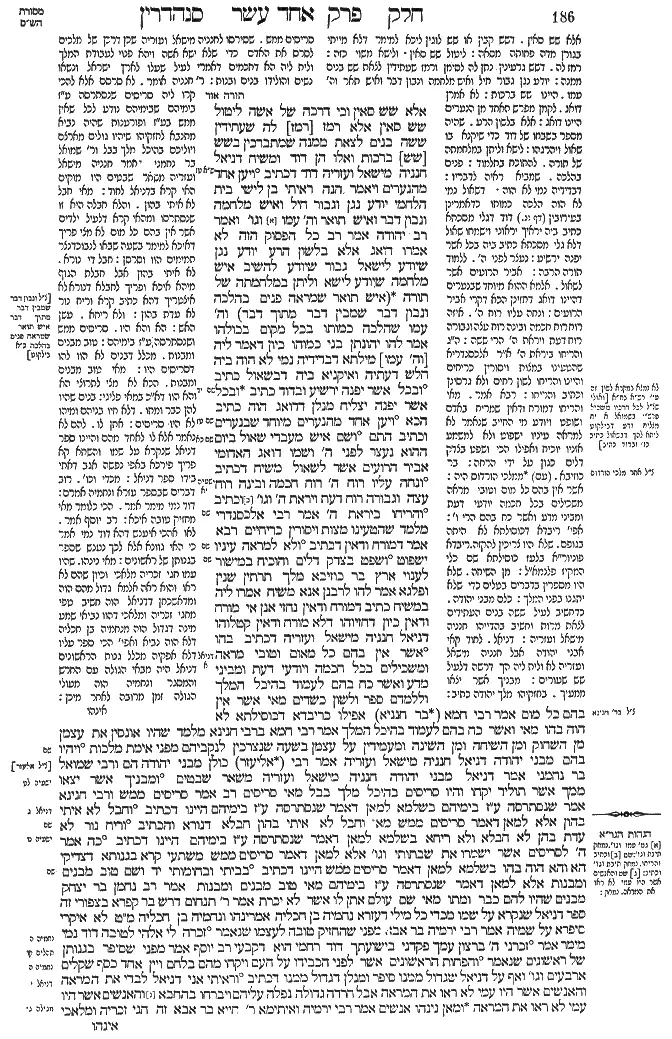
אלא שש סאין וכי דרכה של אשה ליטול שש סאין אלא רמז [רמז] לה שעתידין ששה בנים לצאת ממנה שמתברכין בשש [שש] ברכות ואלו הן דוד ומשיח דניאל חנניה מישאל ועזריה דוד דכתיב (שמואל א טז, יח) ויען אחד מהנערים ויאמר הנה ראיתי בן לישי בית הלחמי יודע נגן וגבור חיל ואיש מלחמה ונבון דבר ואיש תואר וה' עמו וגו' ואמר רב יהודה אמר רב כל הפסוק הזה לא אמרו דואג אלא בלשון הרע יודע נגן שיודע לישאל גבור שיודע להשיב איש מלחמה שיודע לישא וליתן במלחמתה של תורה (איש תואר שמראה פנים בהלכה ונבון דבר שמבין דבר מתוך דבר) וה' עמו שהלכה כמותו בכל מקום בכולהו אמר להו יהונתן בני כמוהו כיון דאמר ליה [וה' עמו] מילתא דבדידיה נמי לא הוה ביה חלש דעתיה ואיקניא ביה דבשאול כתיב (שמואל א יד, מז) ובכל אשר יפנה ירשיע ובדוד כתיב ובכל אשר יפנה יצליח מנלן דדואג הוה כתיב הכא (שמואל א טז, יח) ויען אחד מהנערים מיוחד שבנערים וכתיב התם (שמואל א כא, ח) ושם איש מעבדי שאול ביום ההוא נעצר לפני ה' ושמו דואג האדומי אביר הרועים אשר לשאול משיח דכתיב (ישעיהו יא, ב) ונחה עליו רוח ה' רוח חכמה ובינה רוח עצה וגבורה רוח דעת ויראת ה' וגו' וכתיב (ישעיהו יא, ג) והריחו ביראת ה' אמר רבי אלכסנדרי מלמד שהטעינו מצות ויסורין כריחיים רבא אמר דמורח ודאין דכתיב (ישעיהו יא, ג) ולא למראה עיניו ישפוט (ישעיהו יא, ד) ושפט בצדק דלים והוכיח במישור לענוי ארץ בר כוזיבא מלך תרתין שנין ופלגא אמר להו לרבנן אנא משיח אמרו ליה במשיח כתיב דמורח ודאין נחזי אנן אי מורח ודאין כיון דחזיוהו דלא מורח ודאין קטלוהו דניאל חנניה מישאל ועזריה דכתיב בהו (דניאל א, ד) אשר אין בהם כל מאום וטובי מראה ומשכילים בכל חכמה ויודעי דעת ומביני מדע ואשר כח בהם לעמוד בהיכל המלך וללמדם ספר ולשון כשדים מאי אשר אין בהם כל מום אמר רבי חמא (בר חנניא) אפילו כריבדא דכוסילתא לא הוה בהו מאי ואשר כח בהם לעמוד בהיכל המלך אמר רבי חמא ברבי חנינא מלמד שהיו אונסין את עצמן מן השחוק ומן השיחה ומן השינה ומעמידין על עצמן בשעה שנצרכין לנקביהם מפני אימת מלכות (דניאל א, ו) ויהיו בהם מבני יהודה דניאל חנניה מישאל ועזריה אמר רבי (אליעזר) כולן מבני יהודה הם ורבי שמואל בר נחמני אמר דניאל מבני יהודה חנניה מישאל ועזריה משאר שבטים (ישעיהו לט, ז) ומבניך אשר יצאו ממך אשר תוליד יקחו והיו סריסים בהיכל מלך בבל מאי סריסים רב אמר סריסים ממש ורבי חנינא אמר שנסתרסה ע"ז בימיהם בשלמא למאן דאמר שנסתרסה ע"ז בימיהם היינו דכתיב (דניאל ג, כה) וחבל לא איתי בהון אלא למאן דאמר סריסים ממש מאי וחבל לא איתי בהון חבלא דנורא והכתיב (דניאל ג, כז) וריח נור לא עדת בהן לא חבלא ולא ריחא בשלמא למאן דאמר שנסתרסה ע"ז בימיהם היינו דכתיב (ישעיהו נו, ד) כה אמר ה' לסריסים אשר ישמרו את שבתותי וגו' אלא למאן דאמר סריסים ממש משתעי קרא בגנותא דצדיקי הא והא הוה בהו בשלמא למאן דאמר סריסים ממש היינו דכתיב (ישעיהו נו, ה) בביתי ובחומותי יד ושם טוב מבנים ומבנות אלא למאן דאמר שנסתרסה ע"ז בימיהם מאי טוב מבנים ומבנות אמר רב נחמן בר יצחק מבנים שהיו להם כבר ומתו מאי שם עולם אתן לו אשר לא יכרת אמר ר' תנחום דרש בר קפרא בצפורי זה ספר דניאל שנקרא על שמו מכדי כל מילי דעזרא נחמיה בן חכליה אמרינהו ונחמיה בן חכליה מ"ט לא איקרי סיפרא על שמיה אמר רבי ירמיה בר אבא מפני שהחזיק טובה לעצמו שנאמר (נחמיה ה, יט) זכרה לי אלהי לטובה דוד נמי מימר אמר (תהלים קו, ד) זכרני ה' ברצון עמך פקדני בישועתך דוד רחמי הוא דקבעי רב יוסף אמר מפני שסיפר בגנותן של ראשונים שנאמר (נחמיה ה, טו) והפחות הראשונים אשר לפני הכבידו על העם ויקחו מהם בלחם ויין אחד כסף שקלים ארבעים וגו' ואף על דניאל שגדול ממנו סיפר ומנלן דגדול ממנו דכתיב (דניאל י, ז) וראיתי אני דניאל לבדי את המראה והאנשים אשר היו עמי לא ראו את המראה אבל חרדה גדולה נפלה עליהם ויברחו בהחבא והאנשים אשר היו עמי לא ראו את המראה ומאן נינהו אנשים אמר רבי ירמיה ואיתימא ר' חייא בר אבא זה חגי זכריה ומלאכי
Comments from Rashi on Masechet Sanhedrin Page 93b
אלא שש סאין . דשש קבין או שש לוגין ליכא למימר דלא מייתי בגורן מדה פחותה מסאה: ליטול שש סאין . ולישא משוי כזה: רמז לה . דשש גרעינין נתן לה לסימן ורמז שעתידין לצאת שש בנים ממנה: יודע נגן גבור חיל ואיש מלחמה ונבון דבר ואיש תאר וה' עמו . היינו שש ברכות: לא אמרן דואג . לקמן מפרש האחד מן הנערים היינו דואג: אלא בלשון הרע . שהיה מספר בשבחו של דוד כדי שיקנא בו שאול ויהרגהו: לישא וליתן במלחמתה של תורה . להתוכח בתלמוד: פנים בהלכה . שמביא ראיה לדבריו: דבדידיה נמי לא הוה . דשאול נמי לא הוה הלכה כמותו כדאמרינן בעירובין (דף נג.) דוד דגלי מסכתא כתיב ביה יראיך יראוני וישמחו שאול דלא גלי מסכתא כתיב ביה בכל אשר יפנה ירשיע: נעצר לפני ה' . ללמוד תורה הרבה: אביר הרועים אשר לשאול . אלמא ההוא מיוחד שבנערים דהיינו דואג דחזינן הכא דקרי אביר הרועים: ונחה עליו רוח ה' . איזה רוח רוח חכמה ובינה רוח עצה וגבורה רוח דעת ויראת ה' הרי ששה: ה"ג והריחו ביראת ה' א"ר אלכסנדריא שהטעינו במצות ויסורין כריחים והיינו והריחו לשון רחים ולא גרסינן וכתיב והריחו: רבא אמר . מאי והריחו דמורח ודאין שמריח באדם ושופט ויודע מי החייב שנאמר לא למראה עיניו ישפוט ולא למשמע אזניו יוכיח ואפילו הכי ושפט בצדק דלים כגון על ידי הרחה: בר כוזיבא . (עם) ממלכי הורדוס היה: אשר אין בהם כל מום וטובי מראה משכילים בכל חכמה יודעי דעת ומביני מדע ואשר כח בהם הרי ו': אפי' ריבדא דכוסילתא לא היתה בגופם . שלא היו צריכין להקזה. ריבדא פוניור"א בלעז כוסילתא שם כלי המקיז פלנמא"ל: מן השיחה . שלא היו מספרין בדברים בטלים כדי שלא יתגנו בפני המלך: כלם מבני יהודה . כדחשיב לעיל ששה בנים העתידים לצאת מרות וחשיב בהדייהו חנניה מישאל ועזריה: דניאל . לחוד קאי אבני יהודה אבל חנניה מישאל ועזריה לא ולית ליה הך דרשה דלעיל שש שעורים: מבניך אשר יצאו ממעיך . בחזקיהו מלך יהודה כתיב: סריסים ממש . שסירסו לחנניה מישאל ועזריה שכן דרכן של מלכים לסרס את האדם כדי שלא ישא אשה ויהא פנוי לעבודת המלך ולית ליה הא דחכמים דאמרי לעיל שעלו לארץ ישראל ונשאו נשים והולידו בנים ובנות: ר' חנניה אומר . לא סרסם אלא להכי קרו ליה סריסים שנסתרסה ע"ז בימיהם שבימיהם נודע לכל שאין ממש בע"ז ופורענות שהיה נביא מתנבא לחזקיהו שיהיו גולים מארצם ויוליכם בהיכל מלך בבל ור' שמואל בר נחמני דאמר חנניה מישאל ועזריה משאר שבטים היו מוקים האי קרא בדניאל לחוד: מאי חבל לא איתי בהון . והלא חבלה היא זו שנסתרסו ומהאי קרא דלעיל ילדים אשר אין בהם כל מום לא מצי פריך דאיכא למימר בשעה שבאו לנבוכדנצר תמימים הוו וסרסן: חבל די נורא . לא איתי בהון אבל חבלת הגוף מיהא איכא ופריך לחבלא דנורא לא איצטריך דהא כתיב קרא וריח נור לא עדת בהון: ולא ריחא . עשן האש: הא והא היו . סריסים ממש ושנסתרסה ע"ז בימיהם: טוב מבנים ומבנות . מכלל דבנים לא הוו להו דסריסים היו: מאי טוב מבנים ומבנות . הכא לא מצי לתרוצי הא והא הוו דא"כ במאי פליגי: בנים שהיו להן כבר ומתו . דלא חיו בניהם ומיהו לא היו סריסים: אתן לו . להם לא נאמר אלא לו לאחד מהם והיינו ספר דניאל שנקרא על שמו והשתא קא פריך פירכא באפי נפשה אגב דאתי בידו ספר דניאל: מכדי וכו' . רוב דברים שבספר עזרא ונחמיה אמרם: דוד נמי מימר אמר . הכי כלומר מאי מחזיק טובה איכא: רב יוסף אמר . לאו אהכי איענש דהא דוד נמי אמר כי האי גוונא אלא לכך נענש שספר בגנותן של ראשונים: מאי נינהו . שהיו עמו חגי זכריה מלאכי וכיון שהם לא ראו והוא ראה אלמא גדול מהם הוה ומדאשכחן דדניאל הוה חשיב טפי מחגי זכריה ומלאכי דהוו נביאי שמע מינה דגדול הוה מנחמיה בן חכליה דלא הוה נביא ואפי' הכי ספר עליו דלא אפקיה מכלל גנות הראשונים דניאל היה מבאי הגולה עם החרש והמסגר ונחמיה הוה מעולי הגולה זמן מרובה לאחר מיכן:
Sanhedrin 93b - Mishnah translated into english
Rather, he gave her six se’a.
The Gemara asks: And is it the typical manner of a woman to take a heavy burden of six se’a of barley? Rather, Boaz alluded to Ruth that six descendants are destined to emerge from her who would each be blessed with six blessings, and these are they: David, and the Messiah, Daniel, Hananiah, Mishael, and Azariah. The Gemara elaborates: David was blessed with six virtues, as it is written: “And one of the servants answered and said: Behold, I have seen a son of Yishai of the house of Bethlehem who knows to play, and is a fine warrior, and a man of war, and prudent in speech, and a comely man, and the Lord is with him” (I Samuel 16:18).
Rav Yehuda says that Rav says: Doeg the Edomite, one of Saul’s servants, stated this entire verse only as malicious speech, in an attempt to incite Saul to be jealous of David. “Who knows how to play” means that he knows how to ask complex and germane questions about Torah matters. “A fine warrior” means that he knows how to answer questions raised with regard to matters of Torah. “A man of war,” means that he knows to negotiate his way in the battle to understand the Torah. “A comely man” is one who displays understanding in facets of halakha and explains it well. “And prudent in speech [davar]” means that he infers one matter [davar] from another matter. “And the Lord is with him” means that the halakha is ruled in accordance with his opinion in every area of halakha.
The Gemara relates: In response to all of these virtues listed in praise of David, Saul said to his servants: My son Jonathan is his equal. Once Doeg said to Saul: “And the Lord is with him,” meaning that the halakha is ruled in accordance with his opinion in every area of halakha, a matter that did not apply even to Saul himself, he was offended and grew jealous of David. As with regard to Saul it is written: “And wherever he turned he put them to the worse” (I Samuel 14:47), and with regard to David it is written: And wherever he turns he does prosper. Although the verse about Saul is referring to his victories and his prominence in Torah, he was not privileged to have all of his conclusions accepted as halakha.
The Gemara asks: From where do we derive that it was Doeg who listed the virtues in this verse? The Gemara answers that it is written here: “And one [eḥad] of the servants answered,” meaning the most notable [meyuḥad] of the servants. And it is written there: “And a certain man of the servants of Saul was there that day, detained before the Lord, and his name was Doeg the Edomite, the chief of the herdsmen that belonged to Saul” (I Samuel 21:8).
The Messiah was blessed with six virtues, as it is written: “And the spirit of the Lord shall rest upon him, the spirit of wisdom and understanding, the spirit of counsel and might, the spirit of knowledge and of the fear of the Lord” (Isaiah 11:2); and it is written: “And his delight [vahariḥo] shall be the fear of the Lord, and he shall neither judge after the sight of his eyes, nor decide after the hearing of his ears” (Isaiah 11:3).
Rabbi Alexandri says that the term hariḥo teaches that God burdened the Messiah with mitzvot and afflictions like millstones [reiḥayim]. Rava says that hariḥo teaches that the Messiah will smell [demoraḥ] and then judge on that basis, sensing who is right, as it is written: “And he shall neither judge after the sight of [lemareh] his eyes, nor decide after the hearing of his ears; and with righteousness shall he judge the poor, and decide equity for the meek of the earth” (Isaiah 11:3–4).
The Gemara relates: Bar Koziva, i.e., bar Kokheva, ruled for two and a half years. He said to the Sages: I am the Messiah. They said to him: With regard to the Messiah it is written that he is able to smell and judge, so let us see ourselves whether he, bar Kokheva, is able to smell and judge. Once they saw that he was not able to smell and judge, the gentiles killed him.
Six virtues were ascribed to Daniel, Hananiah, Mishael, and Azariah, as it is written in their regard: “Youths in whom was found no blemish, and well favored, and skillful in all wisdom, and discerning in knowledge, and perceptive in understanding, and who had strength in them to stand in the king’s palace, and whom they might teach the learning and the tongue of the Chaldeans” (Daniel 1:4).
The Gemara asks: What is the meaning of the phrase “in whom was found no blemish”? Rabbi Ḥama bar Ḥanina says: Even a scratch like the wound that remains after bloodletting was not found in them. What is the meaning of the phrase “and who had strength in them to stand in the king’s place”? What strength is needed to do so? Rabbi Ḥama, son of Rabbi Ḥanina, says: This teaches that they would force themselves to refrain from laughter, and from conversation, and from sleep, and would restrain themselves when they felt the urge to relieve themselves via their orifices, due to fear of the monarchy.
§ The Gemara explores more of their attributes. The verse states: “Now among these were, of the descendants of Judah: Daniel, Hananiah, Mishael, and Azariah” (Daniel 1:6). Rabbi Eliezer says: They were all of the descendants of Judah. And Rabbi Shmuel bar Naḥmani says: Daniel was of the descendants of Judah, and Hananiah, Mishael, and Azariah were descendants of other tribes.
Isaiah prophesied to Hezekiah: “And of your sons that shall issue from you, they shall be taken away; and they shall be officers [sarisim] in the palace of the king of Babylonia” (Isaiah 39:7). The Gemara asks: What is the meaning of sarisim? Rav says: It means literally eunuchs, whom the Babylonians castrated to render them suitable for employment in all aspects of the king’s service. And Rabbi Ḥanina says: It means that idol worship was emasculated during their lifetime, as it became clear to all that it lacks substance.
The Gemara asks: Granted, according to the one who says that idol worship was emasculated during their lifetime, that is as it is written: “And they have no hurt” (Daniel 3:25), indicating that the bodies of Hananiah, Mishael, and Azariah were intact and they were not castrated. But according to the one who says that they were literally eunuchs, what is the meaning of the phrase “And they have no hurt”? The Gemara answers: It means they had no hurt from the fire of the furnace, not that their bodies were completely intact. The Gemara asks: But isn’t it already written: “Nor had the odor of fire passed over them” (Daniel 3:27)? There was no need to repeat that they were unaffected by the fire. The Gemara answers: This means that there was neither hurt from the fire nor harm from the odor of the fire.
The Gemara asks: Granted, according to the one who says that idol worship was emasculated during their lifetime, that is as it is written: “For so says the Lord to the sarisim who observe My Shabbatot, and choose what pleases Me, and keep My covenant” (Isaiah 56:4). This verse calls them sarisim due to their miraculous deliverance from the furnace. But according to the one who says that they were literally eunuchs, would the verse speak in denigration of the righteous? Would the verse identify Hananiah, Mishael, and Azariah by their blemish rather than by their names? The Gemara answers: According to the one who says that they were literally eunuchs, both this, the physical imperfection, and that, the fact that idol worship was emasculated during their lifetime, were true concerning them.
The Gemara asks from another perspective: Granted, according to the one who says that they were literally eunuchs, that is as it is written in the next verse: “And to them I will give in My house and within My walls a memorial better than sons and daughters: I will give him an everlasting name, that shall not be excised” (Isaiah 56:5). But according to the one who says that idol worship was emasculated during their lifetime, what is the meaning of the phrase “better than sons and daughters”? Rav Naḥman bar Yitzḥak says: It is consolation concerning children that they already had and who died, that they would also be memorialized. The Gemara asks: What is the meaning of the phrase “an everlasting name that shall not be excised”? Rabbi Tanḥum says that bar Kappara taught in Tzippori: This is referring to the book of Daniel, which is called by his name.
§ Apropos books of the Bible named for a prominent person, the Gemara asks: Now with regard to all the matters of the book of Ezra, Nehemiah, son of Hacaliah, said them and wrote most of them; and with regard to Nehemiah, son of Hacaliah, what is the reason that a book was not called by his name? Over the course of many generations, extending many years after the talmudic period, the book that is today named for Nehemiah was not a separate book and was included in the book of Ezra. Rabbi Yirmeya bar Abba says: The book was not named for Nehemiah because he took credit for himself and boasted about his good deeds, as it is stated: “Remember me, God, for good” (Nehemiah 13:31). The Gemara asks: Is that a shortcoming? King David also said: “Remember me, Lord, when You show favor to Your people; visit me with Your salvation” (Psalms 106:4). The Gemara answers: David was asking for compassion and formulated his words as a prayer. Nehemiah stated them as a fact and a demand.
Rav Yosef says: Nehemiah was punished because he spoke in denigration of his predecessors, as it is stated: “But the former governors who were before me placed burdens upon the people, and took from them for bread and wine beyond forty shekels of silver; even their servants ruled over the people; but I did not do so, due to the fear of God” (Nehemiah 5:15). And he related these disparaging statements even about Daniel, who was greater than he was.
The Gemara asks: From where do we derive that Daniel was greater than he was? The Gemara answers: It is derived from a verse, as it is written: “And I, Daniel, alone saw the vision, and the men who were with me did not see the vision; but a great trembling fell upon them, and they fled to hide” (Daniel 10:7). The Gemara asks: “And the men who were with me did not see the vision”; and who were these men? Rabbi Yirmeya, and some say Rabbi Ḥiyya bar Abba, says: That is referring to Haggai, Zechariah, and Malachi, who were with him and did not see. Evidently, Daniel was greater than these prophets, and all the more so was he greater than Nehemiah, who was never privileged to prophesy.
Traduction : The William Davidson digital edition of the Koren Noé Talmud, with commentary by Rabbi Adin Even-Israel Steinsaltz.