 Talmud Bavli
The learning on the whole site is dedicated : L'ilui Nishmat Yechayahou ben Moche
The learning on the whole site is dedicated : For the success of Elyahou ben H'anna & family
The learning on the whole site is dedicated : L'ilui Nishmat אסתר בת חיים
Sanhedrin 96b : Youtube
Daf TubeYoutube
2 video classes :
Sanhedrin Page 96b
Sanhedrin 96b - Guemara
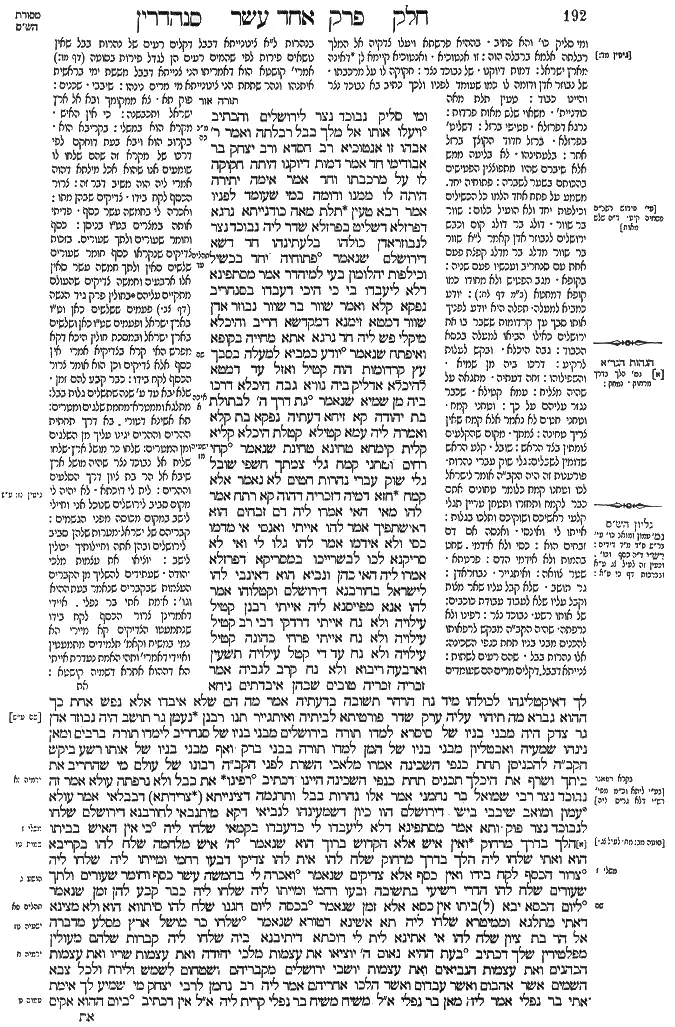
ומי סליק נבוכד נצר לירושלים והכתיב (מלכים ב כה, ו) ויעלו אותו אל מלך בבל רבלתה ואמר ר' אבהו זו אנטוכיא רב חסדא ורב יצחק בר אבודימי חד אמר דמות דיוקנו היתה חקוקה לו על מרכבתו וחד אמר אימה יתירה היתה לו ממנו ודומה כמי שעומד לפניו אמר רבא טעין תלת מאה כודנייתא נרגא דפרזלא דשליט בפרזלא שדר ליה נבוכדנצר לנבוזראדן כולהו בלעתינהו חד דשא דירושלם שנאמר (תהלים עד, ו) פתוחיה יחד בכשיל וכילפות יהלומון בעי למיהדר אמר מסתפינא דלא ליעבדו בי כי היכי דעבדו בסנחריב נפקא קלא ואמר שוור בר שוור נבוזראדן שוור דמטא זימנא דמקדשא חריב והיכלא מיקלי פש ליה חד נרגא אתא מחייה בקופא ואיפתח שנאמר (תהלים עד, ה) יודע כמביא למעלה בסבך עץ קרדומות הוה קטיל ואזל עד דמטא להיכלא אדליק ביה נורא גבה היכלא דרכו ביה מן שמיא שנאמר (איכה א, טו) גת דרך ה' לבתולת בת יהודה קא זיחא דעתיה נפקא בת קלא ואמרה ליה עמא קטילא קטלת היכלא קליא קלית קימחא טחינא טחינת שנאמר (ישעיהו מז, ב) קחי רחים וטחני קמח גלי צמתך חשפי שובל גלי שוק עברי נהרות חטים לא נאמר אלא קמח חזא דמיה דזכריה דהוה קא רתח אמר להו מאי האי אמרו ליה דם זבחים הוא דאישתפיך אמר להו אייתי ואנסי אי מדמו כסי ולא אידמו אמר להו גלו לי ואי לא סריקנא לכו לבשרייכו במסריקא דפרזלא אמרו ליה האי כהן ונביא הוא דאינבי להו לישראל בחורבנא דירושלם וקטלוהו אמר להו אנא מפייסנא ליה אייתי רבנן קטיל עילויה ולא נח אייתי דרדקי דבי רב קטיל עילויה ולא נח אייתי פרחי כהונה קטיל עילויה ולא נח עד די קטל עילויה תשעין וארבעה ריבוא ולא נח קרב לגביה אמר זכריה זכריה טובים שבהן איבדתים ניחא לך דאיקטלינהו לכולהו מיד נח הרהר תשובה בדעתיה אמר מה הם שלא איבדו אלא נפש אחת כך ההוא גברא מה תיהוי עליה ערק שדר פורטיתא לביתיה ואיתגייר תנו רבנן נעמן גר תושב היה נבוזר אדן גר צדק היה מבני בניו של סיסרא למדו תורה בירושלים מבני בניו של סנחריב לימדו תורה ברבים ומאן נינהו שמעיה ואבטליון מבני בניו של המן למדו תורה בבני ברק ואף מבני בניו של אותו רשע ביקש הקב"ה להכניסן תחת כנפי השכינה אמרו מלאכי השרת לפני הקב"ה רבונו של עולם מי שהחריב את ביתך ושרף את היכלך תכניס תחת כנפי השכינה היינו דכתיב (ירמיהו נא, ט) רפינו את בבל ולא נרפתה עולא אמר זה נבוכדנצר רבי שמואל בר נחמני אמר אלו נהרות בבל ותרגמה דצינייתא (צרידתא) דבבלאי אמר עולא עמון ומואב שיבבי בישי דירושלם הוו כיון דשמעינהו לנביאי דקא מיתנבאי לחורבנא דירושלם שלחו לנבוכדנצר פוק ותא אמר מסתפינא דלא ליעבדו לי כדעבדו בקמאי שלחו ליה (משלי ז, יט) כי אין האיש בביתו הלך בדרך מרחוק ואין איש אלא הקדוש ברוך הוא שנאמר (שמות טו, ג) ה' איש מלחמה שלח להו בקריבא הוא ואתי שלחו ליה הלך בדרך מרחוק שלח להו אית להו צדיקי דבעו רחמי ומייתו ליה שלחו ליה (משלי ז, כ) צרור הכסף לקח בידו ואין כסף אלא צדיקים שנאמר (הושע ג, ב) ואכרה לי בחמשה עשר כסף וחומר שעורים ולתך שעורים שלח להו הדרי רשיעי בתשובה ובעו רחמי ומייתו ליה שלחו ליה כבר קבע להן זמן שנאמר (משלי ז, כ) ליום הכסא יבא (לביתו אין כסא אלא זמן שנאמר (תהלים פא, ד) בכסה ליום חגנו שלח להו סיתווא הוא ולא מצינא דאתי מתלגא וממיטרא שלחו ליה תא אשינא דטורא שנאמר (ישעיהו טז, א) שלחו כר מושל ארץ מסלע מדברה אל הר בת ציון שלח להו אי אתינא לית לי דוכתא דיתיבנא ביה שלחו ליה קברות שלהם מעולין מפלטירין שלך דכתיב (ירמיהו ח, א) בעת ההיא נאום ה' יוציאו את עצמות מלכי יהודה ואת עצמות שריו ואת עצמות הכהנים ואת עצמות הנביאים ואת עצמות יושבי ירושלים מקבריהם ושטחום לשמש ולירח ולכל צבא השמים אשר אהבום ואשר עבדום ואשר הלכו אחריהם אמר ליה רב נחמן לרבי יצחק מי שמיע לך אימת אתי בר נפלי אמר ליה מאן בר נפלי א"ל משיח משיח בר נפלי קרית ליה א"ל אין דכתיב (עמוס ט, יא) ביום ההוא אקים
Comments from Rashi on Masechet Sanhedrin Page 96b
ומי סליק כו' והא כתיב . בההיא פרשתא ויעלו צדקיה אל המלך רבלתה אלמא ברבלה הוה: זו אנטוכיא . ואנטוכיא קיימא לן דאינה מארץ ישראל: דמות דיוקנו . של נבוכדנצר: חקוקה לו על מרכבתו . של נבוזראדן ודומה לו כמו שעומד לפניו ולכך כתיב בא נבוכד נצר והיינו כבוד: טעין תלת מאה כודניית' . משאוי שלש מאות פרדות: נרגא דפרזלא . פטישי ברזל: דשליט' בפרזלא . ברזל חדוד הקוצץ ברזל אחר: בלעתינהו . לא בליעה ממש אלא שיברם שהיו מתפוצצין הפטישים בהכותם בשער לשברה: פתוחיה יחד . משמע על פתח אחד הלמו כל הכשילים וכילפות יחד ולא הועיל כלום: שוור בר שוור . דולג בר דולג קום וכבש ירושלים לנבוזראדן קאמר ל"א שוור בר שוור מדלג בר מדלג קפצת פעם אחת עם סנחריב ועכשיו פעם שניה: בקופא . מגב הפטיש ולא מחודו כמו קופא דמחטא (ב"מ דף לח:): יודע כמביא למעלה . תפלה היא יודע לפניך אותו סבך עץ קרדומות ששבר בו את ירושלים כאילו הביאו למעלה בכסא הכבוד: גבה היכלא . ובקש לעלות לרקיע: דרכו ביה מן שמיא . והשפילוהו: זחה דעתיה . מתגאה על שהיה מצליח: עמא קטילא . שכבר נגזר עליהם על כך: וטחני קמח . וטחני חטים לא נאמר אלא קמח שאין צריך טחינה: צמתך . מקום שהקלעים צומתין בצד הראש: שובל . קלע הראש שדומין לשבלים: גלי שוק עברי נהרות . פורענות זה היה הקב"ה אומר לישראל לכו וטחנו קמח כלומר טחונים אתם כבר לקמח ותחזרו ותטחן עדיין תגלי קלעי ראשיכם ושוקיכם ותלכו בגלות: אייתו לי ואינסי . ואנסה אם דם זבחים הוא: כסי ולא אידמי . שחט בהמות ולא אידמי הדם: פרטתא . שטר צוואה: ואיתגייר . נבוזראדן: גר תושב . שלא קבל עליו שאר מצות וקבל עליו שלא לעבוד עבודת כוכבים: של אותו רשע . נבוכדנצר: רפינו ולא נרפתה . שהיה הקב"ה מבקש לרפאותו להכניס מבני בניו תחת כנפי השכינה: אלו נהרות בבל . שהם רעים לשתות: צנייתא דבבל . דקלים מרים הם שעומדים בנהרות ל"א צינונייתא דבבל דקלים רעים של נהרות בבל שאין נושאים פירות לפי שהמים רעים הן לגדל פירות בסוטה (דף מו:) אמרי' קושטא הוא דאמריתו הני צנייתא דבבל מששת ימי בראשית איתנהו ונהר שתחת הני צינונייתא מי מרים נינהו: שיבבי . שכנים: פוק תא . צא ממקומך ובא אל ארץ ישראל ותכבשנה: כי אין האיש . מקרא הוא במשלי: בקריבא הוא . בקרוב הוא ויבא בעת דוחקם לפי דרכו של מקרא זה שהם שלחו לו שומעים אנו שהוא אכל מילתא דהוה אמרי ליה הוה משיב דבר זה: צרור הכסף לקח בידו . צדיקים שבהן מתו: ואכרה לי בחמשה עשר כסף . פדיתי אותה במצרים בט"ו בניסן: כסף וחומר שעורים ולתך שעורים . בזכות צדיקים שנקראו כסף חומר שעורים שלשים סאין ולתך חמשה עשר סאין אלו ארבעים וחמשה צדיקים שהעולם מתקיים עליהם בחולין פרק גיד הנשה (דף צב.) פעמים ששלשים כאן וט"ו בארץ ישראל ופעמים שט"ו כאן ושלשים בארץ ישראל ובמסכת חולין היכא דקא מפרש האי קרא בצדיקיא אמרי אין כסף אלא צדיקים וכן הוא אומר צרור הכסף לקח בידו: כבר קבע להם זמן . שלא יבא עד ע' שנה שתשלים גלות בבל: מתלגא וממטרא . מחמת שלגים ומטרים: תא אשינא דטורי . בא דרך תחתית ההרים וההרים יגינו עליך מן השלגים ומן המטרים: שלחו כר מושל ארץ . שלחו שליח אל נבוכדנצר שהיה מושל ארץ שיבא אל הר בת ציון דרך הסלעים וההרים: לית לי דוכתא . לא יהיה לי מקום סביב לירושלים שנוכל אני וחיילי לישב במקום מכוסה מפני הגשמים: קבריהם של ישראל . מערות שלהן סביב לירושלים ובהן אתה וחיילותיך יכולין לישב: יוציאו את עצמות מלכי יהודה . שעתידים להשליך מן הקברים העצמות שבקברים שנאמר בעת ההיא וגו': אימת אתי בר נפלי . איידי דאמרינן צרור הכסף לקח בידו שנתמעטו הצדיקים קא מיירי הא נמי במשיח וקאמ' תלמידים מתמעטין ואיידי דאמרי' ותהי האמת נעדרת אייתי הא דההוא אתרא דשמיה קושטא:
Sanhedrin 96b - Mishnah translated into english
The Gemara asks: And did Nebuchadnezzar ascend to Jerusalem? But isn’t it written with regard to Zedekiah: “And they took the king, and brought him up to the king of Babylonia, to Riblah” (II Kings 25:6), and Rabbi Abbahu says: This place called Riblah is a reference to Antioch. Apparently, Nebuchadnezzar was in Antioch, not in Jerusalem. Rav Ḥisda and Rav Yitzḥak bar Avudimi resolved this apparent contradiction. One says: An image of Nebuchadnezzar’s likeness was engraved on Nebuzaradan’s chariot, and he regarded that image as though Nebuchadnezzar were actually there. And one says: Nebuzaradan was in extreme fear of Nebuchadnezzar, and it was as though Nebuzaradan was always standing before Nebuchadnezzar. That is an example of the honor of a servant to his master mentioned in the verse.
§ The Gemara proceeds to discuss the role of Nebuzaradan in the destruction of the Temple. Rava says: Nebuchadnezzar sent to Nebuzaradan three hundred mules laden with iron axes that cut iron. All of them were incapacitated in the attempt to breach one gate of Jerusalem, as it is stated: “And now they pound its carved work together with hatchet and with hammers” (Psalms 74:6). Nebuzaradan sought to return to Babylonia and said: I am afraid. I want to ensure that they will not do to me just as they did to Sennacherib, whose downfall was in Jerusalem.
A Divine Voice emerged and said: Leaper, son of a leaper; Nebuzaradan, take the leap, as the time has arrived for the Temple to be destroyed and the Sanctuary to burn. One ax remained for him to use. He went and struck the gate with the dull end of the ax and it opened, as it is stated: “He became known as the wielder of axes upward in a thicket of trees” (Psalms 74:5). At the appropriate time the gate was breached as though the ax were cutting trees.
He was proceeding and killing until he reached the Sanctuary. When he reached the Sanctuary, he ignited a fire in it. The Sanctuary rose, seeking to enter Heaven so that it would not burn. They trod upon it from Heaven and returned it to its place, as it is stated: “The Lord has trodden the virgin, the daughter of Judah, as in a winepress” (Lamentations 1:15). Nebuzaradan became haughty, taking pride in his conquest. A Divine Voice emerged and said to him: Your haughtiness is unwarranted, as you killed a nation that was already dead, you burned a Sanctuary that was already burned, and you ground flour that was already ground, as it is stated with regard to Babylonia: “Take millstones and grind flour; uncover your locks, tuck up the train, uncover the leg, pass over rivers” (Isaiah 47:2). It was not stated: Grind wheat, but “grind flour,” indicating that all the destruction had already been wrought by God, and the role played by the enemy was insignificant.
When he reached the Sanctuary, he saw the blood of Zechariah the priest boiling. It had not calmed since he was killed in the Temple (see II Chronicles 24:20–22). Nebuzaradan said to the priests there: What is this? They said to him: It is the blood of offerings that was spilled. Nebuzaradan said to them: Bring animals and I will test to determine if the blood of the animals is similar to the blood that is boiling. He slaughtered the animals and their blood was not similar to the boiling blood. Nebuzaradan said to the priests: Reveal the source of that blood to me, and if not I will comb your flesh with an iron comb.
The priests said to Nebuzaradan: This blood is the blood of a priest and a prophet who prophesied for the Jewish people with regard to the destruction of Jerusalem and whom they killed. He said to the priests: I will pacify the blood so the boiling will stop. He brought the Sages and killed them over the blood and its boiling did not cease. He brought schoolchildren and killed them over the blood and its boiling did not cease. He brought young priests and killed them over the blood and its boiling did not cease. He continued killing until he killed 940,000 people over the blood, and its boiling did not cease.
Nebuzaradan approached the blood and said: Zechariah, Zechariah, the worthy among them I killed on your behalf. Is it satisfactory for you that I kill them all? Immediately the boiling ceased. Nebuzaradan contemplated repentance. He said: If they, who caused only one person to perish, gained atonement only after all this killing, then with regard to that man, referring to himself, what will be required for him to gain atonement? He deserted his army and dispatched a last will to his house and converted.
The Sages taught in a baraita: Naaman the Aramean (see II Kings, chapter 5) was a ger toshav, meaning that he accepted upon himself to refrain from idol worship but did not convert to Judaism. Nebuzaradan was a completely righteous convert. Among the descendants of Sisera (see Judges, chapter 4) were those who studied Torah in Jerusalem. Among the descendants of Sennacherib were those who taught Torah in public. The Gemara asks: And who are they? The Gemara answers: They were Shemaya and Avtalyon.
The baraita continues: Among the descendants of Haman were those who studied Torah in Bnei Brak. And even among the descendants of that wicked person, Nebuchadnezzar, were those whom the Holy One, Blessed be He, sought to bring beneath the wings of the Divine Presence and have them convert. The ministering angels said before the Holy One, Blessed be He: Master of the Universe: The one who destroyed Your House and burned Your Sanctuary, will You introduce him beneath the wings of the Divine Presence? The Gemara explains: That is the meaning of that which is written: “We have healed Babylonia, but she is not healed” (Jeremiah 51:9). Ulla says: This verse is a reference to Nebuchadnezzar, none of whose children converted. Rabbi Shmuel bar Naḥmani says: This is not a reference to a person; rather, these are the rivers of Babylonia, and interpret it as referring to the bitter saltwater rivers of Babylonia.
§ On a related note, the Gemara describes the events that led to the destruction of the Temple. Ulla says: Ammon and Moab were bad neighbors of Jerusalem. Once they heard the prophets who prophesied about the destruction of the Jerusalem, they sent to Nebuchadnezzar: Emerge from your dwelling place and come conquer them. Nebuchadnezzar said to them: I am afraid. I want to ensure that they will not do to me just as they did to my predecessors.
Ammon and Moab sent to him that it is written: “For the ish is not at home; he is gone on a long journey” (Proverbs 7:19), and ish is referring to no one but the Holy One, Blessed be He, as it is stated: “The Lord is an ish of war” (Exodus 15:3). Nebuchadnezzar sent to them in response: He is in a nearby location, and He will come. They sent to Nebuchadnezzar: “He has gone on a journey from afar” (Proverbs 7:19). Nebuchadnezzar said to them: They have righteous among them who will pray for mercy and bring Him to return.
Ammon and Moab sent to Nebuchadnezzar: “He has taken a bundle of kesef with him” (Proverbs 7:20), and kesef is referring to nothing other than the righteous, as it is stated: “So I bought her to me for fifteen pieces of kesef and for a kor of barley and a half-kor of barley” (Hosea 3:2). The inference is that God acquired the congregation of Israel due to the presence of righteous people among them, and Ammon and Moab sent a message to Nebuchadnezzar that God had already taken the righteous and they no longer offered protection.
Nebuchadnezzar sent to them: Perhaps the wicked will repent and become righteous and they will pray for mercy and they will bring Him to return. Ammon and Moab sent to Nebuchadnezzar: God already designated the time of their redemption, as it is stated: “On the day of the keseh, He will come home” (Proverbs 7:20), and keseh is referring to nothing other than a designated time, as it is stated: “Sound a shofar at the New Moon, at the keseh on the day of our feast” (Psalms 81:4). Since there is a time designated for redemption, until then you can do as you please. Nebuchadnezzar sent to them: It is winter now and I cannot come and conquer Jerusalem due to the snow and the rain.
Ammon and Moab sent to him: Come on the peaks of mountains, where the rain does not pool, as it is stated: “Send the lamb to the ruler of the land from the peaks of the wilderness to the mount of the daughter of Zion” (Isaiah 16:1). Nebuchadnezzar sent to them: If I come to Jerusalem, I will have no place to dwell while laying siege to the city. Ammon and Moab sent to him: Their burial caves are superior to your palaces, and you can clear the caves and dwell there, as it is written: “At that time, says the Lord, they shall remove the bones of the kings of Judea, and the bones of his princes, and the bones of the priests, and the bones of the prophets and the bones of the inhabitants of Jerusalem from their graves; and they shall spread them before the sun and the moon and all of the hosts of heaven, whom they have loved, and whom they have served, and after whom they have walked” (Jeremiah 8:1–2). Ultimately Nebuchadnezzar came to conquer Judea and removed the corpses to make room for his army.
§ Rav Naḥman said to Rabbi Yitzḥak: Have you heard when the son of giants [bar niflei] will come? Rabbi Yitzḥak said to him: Who is the son of giants? Rav Naḥman said to him: He is the Messiah. Rabbi Yitzḥak asked him: Do you call the Messiah son of giants? Rav Naḥman said to him: Yes, as it is written: “On that day I will establish
Traduction : The William Davidson digital edition of the Koren Noé Talmud, with commentary by Rabbi Adin Even-Israel Steinsaltz.