 Talmud Bavli
The learning on the whole site is dedicated : L'ilui Nishmat Chemouel Eliezer ben Batcheva
The learning on the whole site is dedicated : L'ilui Nishmat Jacques Isaac Ben Amram Loubaton
The learning on the whole site is dedicated : L'ilui Nishmat Amram ben Itshak Loubaton
Sanhedrin 35b : Youtube
Daf TubeYoutube
2 video classes :
Sanhedrin Page 35b
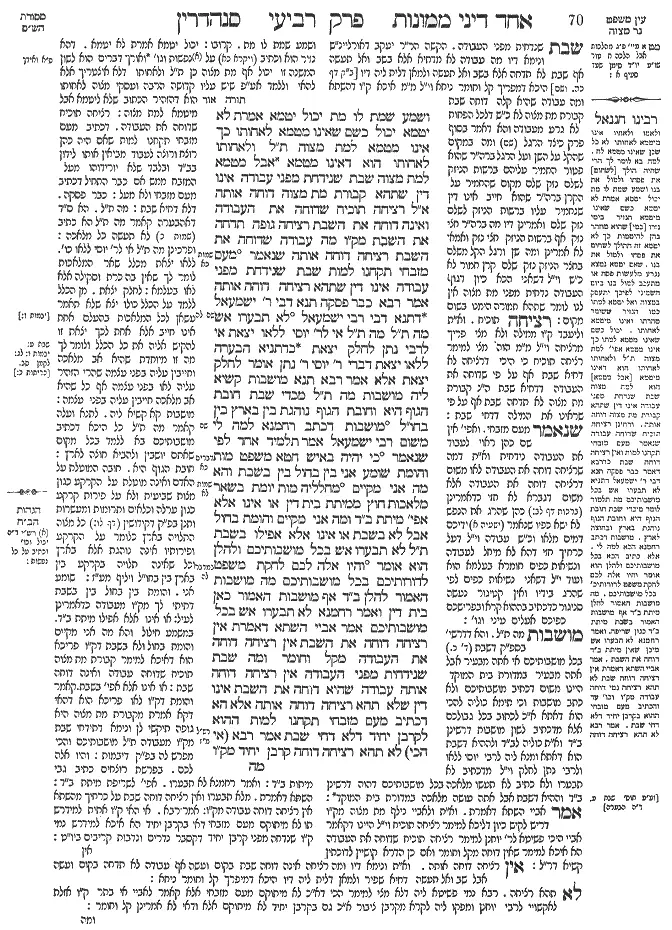
Sanhedrin 35b - Guemara
ושמע שמת לו מת יכול יטמא אמרת לא יטמא יכול כשם שאינו מטמא לאחותו כך אינו מטמא למת מצוה ת"ל ולאחותו לאחותו הוא דאינו מטמא אבל מטמא למת מצוה שבת שנידחת מפני עבודה אינו דין שתהא קבורת מת מצוה דוחה אותה א"ל רציחה תוכיח שדוחה את העבודה ואינה דוחה את השבת רציחה גופה תדחה את השבת מק"ו מה עבודה שדוחה את השבת רציחה דוחה אותה שנאמר (שמות כא, יד) מעם מזבחי תקחנו למות שבת שנידחת מפני עבודה אינו דין שתהא רציחה דוחה אותה אמר רבא כבר פסקה תנא דבי ר' ישמעאל דתנא דבי רבי ישמעאל (שמות לה, ג) לא תבערו אש מה ת"ל מה ת"ל אי לר' יוסי ללאו יצאת אי לרבי נתן לחלק יצאת כדתניא הבערה ללאו יצאת דברי ר' יוסי ר' נתן אומר לחלק יצאת אלא אמר רבא תנא מושבות קשיא ליה מושבות מה ת"ל מכדי שבת חובת הגוף היא וחובת הגוף נוהגת בין בארץ בין בחו"ל (שמות לה, ג) מושבות דכתב רחמנא למה לי משום רבי ישמעאל אמר תלמיד אחד לפי שנאמר (דברים כא, כב) כי יהיה באיש חטא משפט מות והומת שומע אני בין בחול בין בשבת והא מה אני מקיים (שמות לא, יד) מחלליה מות יומת בשאר מלאכות חוץ ממיתת בית דין או אינו אלא אפי' מיתת ב"ד ומה אני מקיים והומת בחול אבל לא בשבת או אינו אלא אפילו בשבת ת"ל לא תבערו אש בכל מושבותיכם ולהלן הוא אומר (במדבר לה, כט) והיו אלה לכם לחקת משפט לדורותיכם בכל מושבותיכם מה מושבות האמור להלן ב"ד אף מושבות האמור כאן בית דין ואמר רחמנא לא תבערו אש בכל מושבותיכם אמר אביי השתא דאמרת אין רציחה דוחה את השבת אין רציחה דוחה את העבודה מקל וחומר ומה שבת שנידחית מפני העבודה אין רציחה דוחה אותה עבודה שהיא דוחה את השבת אינו דין שלא תהא רציחה דוחה אותה אלא הא דכתיב מעם מזבחי תקחנו למות ההוא לקרבן יחיד דלא דחי שבת אמר רבא (אי הכי) לא תהא רציחה דוחה קרבן יחיד מק"ו
Comments from Rashi on Masechet Sanhedrin Page 35b
ושמע שמת לו מת . קרובו: יכול יטמא אמרת לא יטמא . דהא נזיר הוא וכתיב (ויקרא כא) על נפשות וגו' ואורך דברים הוא לשון המשנה זו יכול אף מת מצוה כן ת"ל ולאחותו דלא איצטריך אלא להאי וללמד אע"פ שיש עליו קדושה הרבה ועסקי מצוה לאחותו הוא דהזהיר הכתוב שלא ליטמא אבל מיטמא למת מצוה: רציחה תוכיח שדוחה את העבודה . דכתיב מעם מזבחי תקחנו למות שאם היה כהן רוצח ורוצה לעבוד מביאין אותו לידון בב"ד ובלבד שלא יורידוהו מעל המזבח ממש אם כבר התחיל דכתיב מעם מזבחי ולא מעל: כבר פסקה . דלא דחיא שבת: מה ת"ל . הא ס"ד דאהבערה קאמר מה ת"ל הא כתיב (שמות כ) לא תעשה כל מלאכה: ופרכינן מה ת"ל אי לר' יוסי ללאו כו' . ללאו יצאת מכלל שאר המלאכות לומר לך שאין בה כרת וסקילה אלא לאו בעלמא: לחלק יצאת . מן הכלל ללמד על הכלל כולו יצא שלא תאמר עשאן לכל המלאכות בהעלם אחת אינו חייב אלא אחת לכך יצאת זו להקיש אליה את כל הכלל ולומר לך מה זו מיוחדת שהיא אב מלאכה וחייבין עליה בפני עצמה שהרי הזהיר עליה לאו בפני עצמה אף כל שהיא אב מלאכה חייבין עליה בפני עצמה: מושבות קא קשיא ליה . לתנא ועלה קאמר מה ת"ל כל היכא דכתיב מושבותיכם בא ללמד בכל מקום שאתם יושבין ולהביא חוצה לארץ: חובת הגוף היא . חובה המוטלת על האדם ואינה מוטלת על הקרקע כגון מצות שביעית ולא על פירות קרקע כגון ערלה וכלאים ותרומות ומעשרות ותנן בפ"ק דקידושין (דף לו:) כל מצוה התלויה בארץ כלומר על הקרקע ופירותיו אינה נוהגת אלא בארץ וכל שאינה תלויה בקרקע בין בארץ בין בחו"ל ויליף מע"ז: שומע אני . והומת בין בחול בין בשבת דתיתי לך מק"ו מעבודה כדאמרינן לעיל: או אינו אלא אפילו מיתת ב"ד . במשמע חילול והא מה אני מקיים והומת בחול ולא בשבת דק"ו פריכא הוא דאיכא למימר קבורת מת מצוה תוכיח שדוחה עבודה ואינה דוחה שבת: או אינו אלא אפי' בשבת . קאמר והומת דק"ו לאו פריכא הוא דהאי דקא אמרת מקבורת מת מצוה היא גופה תיקשי לן ונימא דתידחי שבת מק"ו מעבודה ת"ל מושבותיכם והכי מפרש לה בפ"ק דיבמות: והיו אלה לכם . בפרשת רוצחים כתיב גבי מיתות ב"ד: ואמר רחמנא לא תבערו . אפי' לשריפת מיתת ב"ד: השתא דאמרת . מלא תבערו ואין רציחה דוחה שבת על כרחיך מהשתא אין רציחה דוחה עבודה מק"ו: אמר רבא . אי האי ק"ו אתית למידרש תו לא מיתוקם מעם מזבחי דאי בקרבן יחיד הא איכא למידרש נמי ק"ו שנדחה מפני קרבן יחיד דקסבר נדרים ונדבות קריבים ביו"ט:
Comments from Tosafot - Sanhedrin 35b
שבת שנדחית מפני העבודה . הקשה הר"ר יעקב דאורליינ"ש ונימא דיו מה עבודה לא מדחיא אלא בשב ואל תעשה אף שבת לא תדחה אלא בשב ואל תעשה ולמאן דלית ליה דין [ב"ק דף כה. ושם] היכא דמפריך קל וחומר ניחא וי"ל מ"מ איכא ק"ו דהשתא ומה עבודה שהיא קלה דוחה שבת קבורת מת מצוה לא כ"ש דלכל הפחות לא גרע מעבודה והא דאמר בסוף פרק כיצד הרגל (שם) ומה במקום שהקל על השן ועל הרגל ברה"ר שהוא פטור החמיר עליהם ברשות הניזק לשלם נזק שלם מקום שהחמיר על הקרן ברה"ר שהוא חייב אינו דין שנחמיר עליו ברשות הניזק לשלם נזק שלם ואמרינן דיו מה ברה"ר חצי נזק אף ברשות הניזק חצי נזק ואמאי לא אמרינן ומה שן ורגל הקל משלם בחצר הניזק נזק שלם קרן חמור לא כ"ש וי"ל דשאני הכא כיון דגוף העבודה נדחית מפני מת מצוה אין לנו לומר שתהא חמורה הימנו בשום מקום: רציחה תוכיח . וא"ת וליעבד ק"ו ממילה ולא מצי פריך מרציחה וי"ל מ"מ הוה מצי למימר רציחה תוכיח כי היכי דרציחה לא דחיא שבת אף על פי שדוחה את העבודה דדחיא שבת ה"נ קבורת מת מצוה לא תדחה שבת אף על פי שראינו את המילה דדחי שבת: שנאמר מעם מזבחי . ואפי' אין שם כהן ראוי לעבוד את העבודה נידחית וא"ת דמה שרציחה דוחה את העבודה לאו משום דרציחה דוחה את העבודה אלא משום דגברא לא חזי כדאמרינן (ברכות דף לב:) כהן שהרג את הנפש לא ישא כפיו שנאמר (ישעיהו א) ידיכם דמים מלאו וכ"ש עבודה וי"ל דעל כרחיך חזי דהא לא מיחל לעבודה ונשיאות כפים חומרא בעלמא הוא ועוד י"ל דשאני נשיאות כפים לפי שהרג בידיו ואין קטיגור נעשה סניגור כדכתיב בההוא קרא ובפרישכם כפיכם אעלים עיני וגו': מושבות מה ת"ל . והא דדרשי' בספ"ק דשבת (ד' כ.) בכל מושבותיכם אי אתה מבעיר אבל אתה מבעיר במדורת בית המוקד היינו משום דכתיב מושבותיכם ולא כתב מושבות וכי תימא כוליה להכי הוא דאתא א"כ לכתוב בכל גבולכם אלא מדכתיב לשון מושבות דרשינן ב"ד וא"ת כוליה לב"ד ולההיא דשבת הוא דאתא ומנא ליה לרבי יוסי ללאו ולרבי נתן לחלק וי"ל מדכתיב לא תבערו ולא כתיב לא תעשו מלאכה בכל מושבותיכם דהוה דרשינן ב"ד וההיא דשבת אבל אתה עושה מלאכה במדורת בית המוקד: אמר אביי השתא דאמרת . וא"ת ולאביי נילף מת מצוה מק"ו דריש לקיש כיון דליכא למימר רציחה תוכיח וי"ל היינו דקאמר אביי היכי פשיטא לר' יוחנן למימר רציחה תוכיח שדוחה את העבודה הא איכא למימר שאין דוחה מקל וחומר ואם כן הדרא קושיין לדוכתין קשיא דר"ל: אין רציחה דוחה אותה . וא"ת ונימא דיו ומה רציחה אינה דוחה שבת בקום ועשה אף עבודה לא תדחה בקום ועשה אבל שב ואל תעשה דחיא שפיר ולמאן דלית ליה דיו היכא דמיפרך קל וחומר ניחא: לא תהא רציחה . רבא נמי פשיטא ליה דלא מצי למימר הכי דא"כ לא מיתוקם מעם מזבחי אלא קאמר לאביי אי בתר ק"ו אזלת לאקשויי לרבי יוחנן ומפקו ליה לקרא מקרבן ציבור א"כ גם בקרבן יחיד לא מיתוקם אלא ודאי לא אמרינן קל וחומר:
Sanhedrin 35b - Mishnah translated into english
and he heard that a relative of his died, one might have thought that he should return and become ritually impure with the impurity imparted by a corpse to bury his relative. You said: “He shall not make himself impure”; the death of his relative will not override so significant a mitzva from the Torah.
One might have thought: Just as he may not become impure to bury his sister, so he may not become impure to bury a met mitzva. Therefore, the verse states specifically: “Or for his sister”; teaching that he may not become impure only to bury his sister, as others can attend to her burial, but he may become impure to bury a met mitzva.
Having cited the baraita proving that the burial of a met mitzva overrides the Temple service, Reish Lakish continues his suggestion: With regard to Shabbat, which is overridden due to the Temple service, is it not logical that the burial of a met mitzva overrides it?
Rabbi Yoḥanan said to him: The halakha of murder, i.e., the obligation to kill one found liable to receive court-imposed capital punishment, proves that this is not the case, as it overrides the Temple service, e.g., if the only priest present is liable to receive court-imposed capital punishment, he is taken to be killed despite this resulting in the negation of the Temple service, but it does not override Shabbat.
The Gemara asks: Murder itself should override Shabbat based on this a fortiori inference: Just as with regard to the Temple service, which overrides Shabbat, nevertheless murder overrides it, and the source for this is as it is stated: “And if a man come presumptuously upon his neighbor, to slay him with guile; you shall take him from My altar, that he may die” (Exodus 21:14); then with regard to Shabbat, which is overridden due to the Temple service, is it not logical that murder should override it?
Rava said in response: It has already been ruled by a tanna of the school of Rabbi Yishmael, as the school of Rabbi Yishmael taught: What is the meaning when the verse states: “You shall kindle no fire throughout your habitations on Shabbat day” (Exodus 35:3)? All labor is forbidden on Shabbat, based on the verse: “In it you shall not do any manner of work” (Exodus 20:10). Why is kindling fire singled out?
The Gemara interjects: What is the meaning when the verse states this? If this question is in accordance with the opinion of Rabbi Yosei, this transgression was singled out to teach that one who lights a fire on Shabbat violates an ordinary prohibition, as opposed to the performance of other types of labor on Shabbat, for which one is liable to receive court-imposed capital punishment. If this question is in accordance with the opinion of Rabbi Natan, this transgression was singled out to divide the various labors and to establish liability to receive court-imposed capital punishment for performance of any one of them. The Gemara explains: As it is taught in a baraita: Kindling of fire was singled out to teach that one who lights a fire on Shabbat violates an ordinary prohibition, this is the statement of Rabbi Yosei. Rabbi Natan says: It was singled out to divide the various labors. Either way, it is clear what the meaning of the verse is.
The Gemara clarifies: Rather, Rava said: The term “habitations” in the verse poses a difficulty for the tanna: What is the meaning when the verse states: “You shall kindle no fire throughout your habitations on Shabbat day”? After all, Shabbat is an obligation on the person himself, not an obligation bound to any specific location. And the halakha is that an obligation on the person himself is practiced whether in Eretz Yisrael or outside of Eretz Yisrael. Why do I need the term “habitations” that the Merciful One writes in the Torah?
Rava continues: One student said in the name of Rabbi Yishmael that since it is stated: “And if there is in a man a sin deserving of death and he is put to death” (Deuteronomy 21:22), I would derive that the court administers capital punishment both during the week and on Shabbat. And accordingly, how do I realize the meaning of what the verse states concerning Shabbat: “Everyone that desecrates it shall be put to death” (Exodus 31:14)? One possibility is that the term: Desecration of Shabbat, applies only to other cases in which labor is performed, and excludes instances of the death penalty administered by a court, which is not a desecration of Shabbat. Or rather, derive that even the death penalty administered by a court is prohibited as desecration of Shabbat. And how do I realize the meaning of: “And he is put to death”? One possibility is that the mitzva of executing transgressors applies on weekdays, but not on Shabbat. Or rather, the other possibility is that it applies even on Shabbat.
As these verses can be interpreted in either manner, the verse states: “You shall kindle no fire throughout your habitations on Shabbat day,” and there, with regard to the punishment administered to a murderer, the verse states: “And these shall be for you a statute of judgment throughout your generations in all your habitations” (Numbers 35:29). Just as the term “habitations” that is stated there is referring to the act of a court, so too the term “habitations” that is stated here concerning Shabbat is referring to the act of a court. And the Merciful One states: “You shall kindle no fire throughout your habitations.” This teaches that the court does not administer capital punishment on Shabbat.
Abaye says: Now that you have said that murder of one condemned by the court does not override Shabbat, one should say that murder does not override the performance of the Temple service either, based on an a fortiori inference: And just as with regard to Shabbat, which is overridden for the performance of the Temple service, murder does not override it, then with regard to performance of the Temple service, which overrides Shabbat, is it not logical that murder should not override it?
The Gemara questions this inference: But if so, how would one explain that which is written in the verse concerning one liable to receive court-imposed capital punishment: “You shall take him from My altar, that he may die” (Exodus 21:14)? This verse indicates that the court administering capital punishment does override the performance of the Temple service. The Gemara explains: That verse serves to teach the halakha concerning an offering of an individual, which does not override Shabbat. The verse is teaching that the court takes the priest to execute him even if this will result in the offering of an individual not being sacrificed.
Rava says: If that is so, one should say that murder should not override even an offering of an individual based on an a fortiori inference:
Traduction : The William Davidson digital edition of the Koren Noé Talmud, with commentary by Rabbi Adin Even-Israel Steinsaltz.