 Talmud Bavli
The learning on the whole site is dedicated : L'ilui Nishmat Chemouel Eliezer ben Batcheva
The learning on the whole site is dedicated : L'ilui Nishmat Reuven ben Rivka SEBBAG
The learning on the whole site is dedicated : For the success of Elyahou ben H'anna & family
Sanhedrin 33b : Youtube
Daf TubeYoutube
2 video classes :
Sanhedrin Page 33b
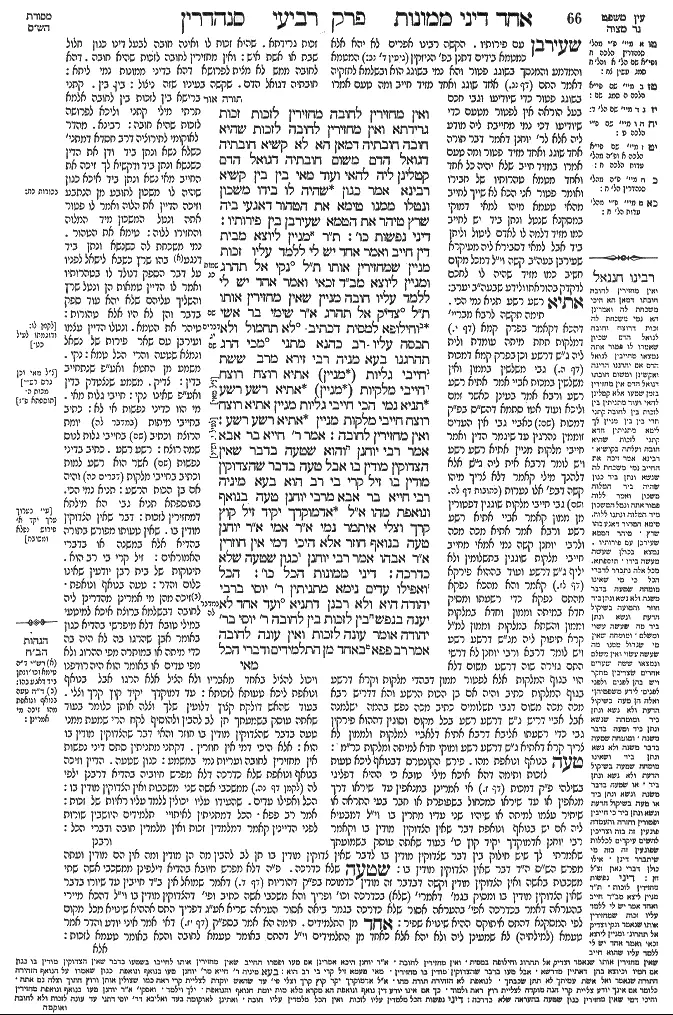
Sanhedrin 33b - Guemara
ואין מחזירין לחובה מחזירין לזכות זכות גרידתא ואין מחזירין לחובה לזכות שהיא חובה חובתיה דמאן הא לא קשיא חובתיה דגואל הדם משום חובתיה דגואל הדם קטלינן ליה להאי ועוד מאי בין בין קשיא רבינא אמר כגון שהיה לו בידו משכון ונטלו ממנו טימא את הטהור דאגעי ביה שרץ טיהר את הטמא שעירבן בין פירותיו:
דיני נפשות כו':
ת"ר מניין ליוצא מבית דין חייב ואמר אחד יש לי ללמד עליו זכות מניין שמחזירין אותו ת"ל (שמות כג, ז) נקי אל תהרג ומניין ליוצא מב"ד זכאי ואמר אחד יש לי ללמד עליו חובה מניין שאין מחזירין אותו ת"ל (שמות כג, ז) צדיק אל תהרג א"ר שימי בר אשי וחילופא למסית דכתיב (דברים יג, ט) לא תחמול ולא תכסה עליו רב כהנא מתני (דברים יג, י) מכי הרג תהרגנו בעא מניה רבי זירא מרב ששת חייבי גליות (מניין) אתיא רוצח רוצח חייבי מלקיות (מניין) אתיא רשע רשע תניא נמי הכי חייבי גליות מניין אתיא רוצח רוצח חייבי מלקות מניין אתיא רשע רשע:
ואין מחזירין לחובה:
אמר ר' חייא בר אבא אמר רבי יוחנן והוא שטעה בדבר שאין הצדוקין מודין בו אבל טעה בדבר שהצדוקין מודין בו זיל קרי בי רב הוא בעא מיניה רבי חייא בר אבא מרבי יוחנן טעה בנואף ונואפת מהו א"ל אדמוקדך יקיד זיל קוץ קרך וצלי איתמר נמי א"ר אמי א"ר יוחנן טעה בנואף חוזר אלא היכי דמי אין חוזרין א"ר אבהו אמר רבי יוחנן כגון שטעה שלא כדרכה:
דיני ממונות הכל כו':
הכל ואפילו עדים נימא מתניתין ר' יוסי ברבי יהודה היא ולא רבנן דתניא (במדבר לה, ל) ועד אחד לא יענה בנפש בין לזכות בין לחובה ר' יוסי בר' יהודה אומר עונה לזכות ואין עונה לחובה אמר רב פפא באחד מן התלמידים ודברי הכל
Comments from Rashi on Masechet Sanhedrin Page 33b
זכות גרידתא . שהיא זכות לו ואינה חובה לבעל דינו כגון חלול שבת או אשת איש: ואין מחזירין לחובה לזכות שהיא חובה . דהא לחובה ממש לא מצית לפרושא דהא בדיני ממונות נמי ליתא: חובתיה דגואל הדם . שקשה בעיניו שזה ניצול: בין בין . קתני ברישא בין לזכות בין לחובה אלמא תרתי מילי קתני וליכא לפרושה לזכות שהיא חובה: רבינא . מהדר לאוקומי לתירוציה דרב חסדא דמתני' כשלא נשא ונתן ביד ודן את הדין כשנשא ונתן ביד ודקשיא לך זיכה את החייב מאי נשא ונתן ביד איכא כגון שהיה לו משכון לתובע מן הנתבע וזיכה הדיין את הלוה ואמר לו פטור אתה ונטל המשכון מיד המלוה והחזירו ללוה: טימא את הטהור . נמי משכחת לה כשנשא ונתן ביד דנגע בהו שרץ כשבא לישאל לפניו על דבר הספק דנולד לו בטהרותיו ואמר לו הדיין טמאות הן ונטל שרץ והשליך עליהם שלא יהא עוד ספק בדבר והן לא היו אלא טהורות: טיהר את הטמא . ונטלו הדיין עצמו ועירבן עם שאר פירות של נשאל ונמצא שטעה והרי הכל טמא: נקי . משמע מן החטא ואע"פ שנתחייב בדין: צדיק . משמע שנצטדק בדין ואע"פ שאינו נקי: חייבי גלות מאי . מי הוו כדיני נפשות אי לא: כתיב בחייבי מיתות (במדבר לה) יומת הרוצח וכתיב (שם) בחייבי גלות לנוס שמה רוצח: רשע רשע . כתיב בדיני נפשות (שם) אשר הוא רשע למות וכתיב בחייבי מלקות (דברים כה) והיה אם בן הכות הרשע: תניא נמי הכי . בתוספתא תניא גבי הא מילתא דמחזירין לזכות: דבר שאין הצדוקין מודין בו . שאין טעותו מפורש בתורה בהדיא אלא במשנה או בדברי האמוראים: זיל קרי בי רב הוא . תינוקות של בית רבן יודעין שאינו כלום והדר: טעה בנואף ונואפת . זיכה מהן מי אמרינן מהדרינן ליה לחובה דבשלמא ברוצח איכא למיטעי במילי טובא דלא מיפרשי בהדיא כגון באומר אבן שהרגו בה לא היה בה כדי מיתה או במותרה מפי ההרוג ולא מפי עדים או באומר הוא היה רודפנו ויכול להציל באחד מאבריו ולא הציל אלא הרגו אבל בנואף ונואפת ליכא טעותא לזכותא: עד דמוקדך יקיד קוץ קרך וצלי . בעוד שהאש דולקת קצוץ דלועין שלך וצלה אותן כלומר בעוד שאתה עוסק בשמעתך תן לב להבין ולהוסיף לקח הרי שמעת ממני טעה בדבר שהצדוקין מודין בו חוזר והאי דבר שהצדוקין מודין בו הוא: אלא היכי דמי אין חוזרין . דקתני מתניתין סתם דיני נפשות אין מחזירין לחובה ועריות נמי במשמע: כגון שטעה . הדיין וזיכה בנואף ונואפת שלא כדרכה דלא מפרש חיוביה בהדיא דרבנן ילפי לה (לקמן סנהדרין דף נה.) ממשכבי אשה שני משכבות ואין הצדוקין מודין בו: הכל ואפילו עדים . שהעידו עליו יכולין ללמד עליו ראיות של זכות: אמר רב פפא . הכל דמתניתין לאיתויי תלמידים היושבין שורות לפני הדיינין קאמר דמלמדין זכות ואין מלמדין חובה ודברי הכל:
Comments from Tosafot - Sanhedrin 33b
שעירבן עם פירותיו . הקשה רבינו אפרים לא יהא אלא כמטמא בידים דתנן בפ' הניזקין (גיטין ד' נב:) המטמא והמדמע והמנסך בשוגג פטור והא נמי בשוגג הוא ובשלמא לחזקיה דאמר התם (דף נג.) אחד שוגג ואחד מזיד חייב ומה טעם אמרו בשוגג פטור כדי שיודיעו וגבי חכם בעל הוראה אין לפטור מטעם כדי שיודיעו דכי נמי מחייבת ליה מודע ליה אלא לר' יוחנן דאמר דבר תורה אחד שוגג ואחד מזיד פטור ומה טעם אמרו במזיד חייב שלא יהיה כל אחד ואחד מטמא טהרותיו של חבירו ואומר פטור אני הכא לא שייך לחייב מהאי טעמא מיהו למאי דמוקי במסקנא שנטל ונתן ביד יש לחייב כמו מזיד דלמה לו לאדם ליטול וליתן ביד אבל למאי דסבירא ליה מעיקרא שעירבן בעה"ב קשה וי"ל דמכל מקום חשיב כמו מזיד שהיה לו לחכם לדקדק בהוראתו ולידע שבעה"ב יערב: אתיא רשע רשע תניא נמי הכי . תימה תקשה לרבא מבריי' דהכא דקאמר בפרק קמא (דף י.) דמלקות תחת מיתה עומדת ולית ליה ג"ש דרשע וכן בפרק קמא דמכות (דף ה.) גבי משלשין בממון ואין משלשין במכות אביי אמר אתיא רשע רשע ורבא אמר בעינן כאשר זמם וליכא ועוד אטו סתמא דהש"ס בפ"ק דמכות (שם:) כאביי גבי אין העדים זוממין נהרגין עד שיגמר הדין ואמר חייבי מלקות מניין אתיא רשע רשע ויש לומר דרבא אית ליה ג"ש אלא דלהנך מילי קאמר דלא צריך מיהו קשה דבפ' אלו נערות (כתובות דף לה. ושם) גבי חייבי מלקות שוגגין דפטורין מן ממון קאמר אביי אתיא רשע רשע ורבא אמר אתיא מכה מכה ולרבי יוחנן קשה נמי אמאי מחייב חייבי מלקות שוגגין בתשלומין ולא יליף ג"ש דרשע ועוד בההוא פירקא (דף לז.) קאמר והא מהכא נפקא מהתם נפקא כדי רשעתו ומסיק חדא במיתה וממון וחדא במלקות וממון והשתא במלקות וממון למ"ל קרא תיפוק ליה מג"ש דרשע רשע ויש לומר דרבא ורבי יוחנן לא דרשי התם גזירה שוה דרשע משום דלא הוי בגוף המלקות אלא לפטור ממון דבהדי מלקות וקרא דרשע בגוף המלקות כתיב והיה אם בן הכות הרשע והא דדריש רבא מכה מכה משום דגבי תשלומים כתיב מכה נפש בהמה ישלמנה אבל אביי דריש ג"ש דרשע רשע בכל מקום וסוגין דההוא פירקין גבי כדי רשעתו אליבא דרבא אתיא דלאביי למלקות ולממון לא צריך קרא דאתיא ג"ש דרשע רשע ומוקי חדא למיתה ומלקות כר"מ: טעה בנואף ונואפת מהו . פירש הקונטרס דבנואף ליכא טעות לזכות ותימה דהא איכא מילי טובא כי ההיא דפליגי בשילהי פ"ק דמכות (דף ז.) אי אמרינן במנאפין עד שיראו דרך מנאפין או עד שיראו כמכחול בשפופרת או חבר בעי התראה או שיתיר עצמו למיתה או שיהיו שני עדיו מתרין בו וי"ל דמבעיא ליה אם יש בנואף ונואפת דבר שאין הצדוקין מודין בו וקאמר רבי יוחנן אדמוקדך יקיד קוץ כו' בעוד שאתה עוסק בשמועתך שאמרתי לך שיש חילוק בין דבר שצדוקין מודין בו לדבר שאין צדוקין מודין בו תן לב להבין מה הן מודין ומה אין הם מודין ועתה מפרש הש"ס ה"ד דבר שאין הצדוקין מודין בו: שטעה שלא כדרכה . פ"ה דלא מפרש חיובא בהדיא דילפינן ממשכבי אשה שתי משכבות באשה ואין הצדוקין מודין וקשה דבדבר זה מודין כדמוכח בפ"ק דהוריות (דף ד.) דאמר שמואל אין ב"ד חייבין עד שיורו בדבר שאין הצדוקין מודין בו ומסיק בגמ' דאמרי' (שלא) בכדרכה וכו' ופריך והא משכבי אשה כתיב ופי' דהצדוקין מודין בו וי"ל דהכא מיירי בהעראה דאמר בכדרכה אפי' בהעראה אסור שלא כדרכה בגמר ביאה אסור העראה שריא אע"ג דפריך התם אההיא שינויא מכל מקום לפי המסקנא דהתם איתוקם ההיא שינויא שפיר: אחד מן התלמידים . תימה הא אמר בספ"ק (דף יז.) דאי אמר איני יודע והדר אמר טעמא (למילתיה) לא שמעינן ליה ולא יהא אלא כאחד מן התלמידים וי"ל דהתם באומר טעמא לחובה והכא באומר טעמא לזכות:
Sanhedrin 33b - Mishnah translated into english
but they do not bring him back to be judged with a claim to find him liable. When the mishna says: The court brings the accused back to acquit him, this is an acquittal alone and is not to anyone’s liability. When it says: But they do not bring him back to be judged with a claim to find him liable, this is an acquittal that is also a liability. The court does not bring the accused back to acquit him if this entails a liability to another.
The Gemara clarifies: A liability for whom? There is no other litigant in cases of capital law. The Gemara answers: This is not difficult, this is to the liability, i.e., the detriment, of the blood redeemer, as he desires that the murderer be killed, and he will no longer be allowed to kill him. The Gemara questions this explanation: Is it reasonable that due to the liability of the blood redeemer, we kill this one and do not reverse the verdict to acquit him even when there is a reason to do so? And further, what is the meaning of the term: Whether with a claim to exempt the accused, or whether with a claim to find him liable? It is clear that this is referring to two separate matters, not to two types of acquittal. The Gemara comments: This is difficult.
The Gemara cites another explanation of how one can find a judge giving the item from one to another with regard to the clause of: He exempts a liable party. Ravina said: It is possible in a case where the one who lodged the claim had in his possession an item belonging to the other litigant that functioned as collateral for a debt, and when the judge issued a verdict in favor of the other he took the collateral from him, thereby physically transferring it to the wrong party.
In the case from the mishna in tractate Bekhorot: He ruled that a pure item is impure, how could he cause a loss with his own hands? It is where he had the litigant’s ritually pure item touch a creeping animal to emphasize that he believes it was already impure, and he thereby imparted impurity to it. In that mishna’s case of: He ruled that an impure item is pure, how could he cause a loss with his own hands? It is where he mixed this impure produce of the litigant’s with the litigant’s ritually pure produce, and he thereby caused all of the produce to be considered impure.
§ The mishna teaches that in cases of capital law, the court brings the accused back to be judged again with a claim to acquit him, but does not bring him back to be judged with a claim to find him liable. To explain the terms “innocent” and “righteous” in the verse: “And the innocent and the righteous you shall not slay” (Exodus 23:7), the Sages taught: From where is it derived that with regard to one who is leaving the court having been found liable, and someone said: I have the ability to teach a reason to acquit him, from where is it derived that the court brings the accused back to be judged again? The verse states: The innocent you shall not slay, and the accused may in fact be innocent.
And from where is it derived that with regard to one who is leaving the court, having been acquitted, and someone says: I have the ability to teach a reason to find him liable, from where is it derived that the court does not bring the accused back to be judged again? The verse states: “The righteous you shall not slay,” and the accused was found righteous in his trial.
Rav Shimi bar Ashi says: And the opposite of this is the halakha with regard to one who entices others to engage in idol worship, as it is written concerning him: “Neither shall you spare, neither shall you conceal him” (Deuteronomy 13:9). He is brought back to court to find him liable, but not to acquit him. Rav Kahana teaches this last halakha citing a different verse concerning the enticer: “But you shall kill him [harog tahargennu]” (Deuteronomy 13:10). The repetition of the verb indicates that he is killed even in circumstances where transgressors of other prohibitions would not be.
Rabbi Zeira asked Rav Sheshet: From where is it derived that the halakha concerning those liable to be exiled to a city of refuge for killing unintentionally is the same with regard to retrying a court case as the halakha concerning one who killed intentionally, who is found liable to receive court-imposed capital punishment? Rav Sheshet answered: It is derived from a verbal analogy employing the term “murderer” stated with regard to one who kills intentionally (see Numbers 35:16) and the term “murderer” stated with regard to one who kills unintentionally (see Numbers 35:19).
Rabbi Zeira asked Rav Sheshet: From where is it derived that the halakha concerning those liable to receive forty lashes is the same with regard to retrying a court case as the halakha concerning one who killed intentionally, who is found liable to receive court-imposed capital punishment? Rav Sheshet answered: It is derived from a verbal analogy employing the term “wicked” stated with regard to one who kills intentionally (see Numbers 35:31) and the term “wicked” stated with regard to those liable to receive lashes (see Deuteronomy 25:2).
The Gemara comments: This is also taught in a baraita (Tosefta 7:3): From where is it derived that the halakha concerning those liable to be exiled for killing unintentionally is the same with regard to retrying a court case as the halakha concerning one who killed intentionally, who is found liable to receive court-imposed capital punishment? It is derived from a verbal analogy employing the term “murderer” stated with regard to one who kills intentionally and the term “murderer” stated with regard to one who kills unintentionally. From where is it derived that the halakha concerning those liable to receive forty lashes is the same with regard to retrying a court case as the halakha concerning one who killed intentionally, who is found liable to receive court-imposed capital punishment? It is derived from a verbal analogy employing the term “wicked” stated with regard to one who kills intentionally and the term “wicked” stated with regard to those liable to receive lashes.
§ The mishna teaches concerning cases of capital law: But the court does not bring him back to be judged with a claim to find him liable. Rabbi Ḥiyya bar Abba says that Rabbi Yoḥanan says: And this is the halakha only in a case where the judge erred with regard to a matter for which the Sadducees do not admit to its validity, i.e., he erred in a matter learned from tradition or established by the Sages. But if the judge erred in a matter for which the Sadducees admit to its validity, i.e., a matter that is written explicitly in the Torah, it is a topic that you could go learn in a children’s school, and such an error negates the verdict and is reversed.
Rabbi Ḥiyya bar Abba asked of Rabbi Yoḥanan: What is the halakha in the case of a judge who erred with regard to the judgment of an adulterer and adulteress, by ruling that only the man is liable but not the woman? Rabbi Yoḥanan said to him: While your fire is burning, cut your squash and roast it, i.e., seize the opportunity to add this case to the principle I taught you earlier. It was also stated: Rabbi Ami says that Rabbi Yoḥanan says: Concerning a judge who erred with regard to an adulterer, the court revokes the verdict.
The Gemara asks: Rather, what are the circumstances where the court does not revoke the acquittal? Rabbi Abbahu says that Rabbi Yoḥanan says: In a case where he erred and acquitted the adulterer who engaged in sexual intercourse in an atypical manner, i.e., anal intercourse. The halakha that this is considered sexual intercourse is not explicit in a verse. Therefore, if a court acquits one so accused, the verdict is not revoked.
§ The mishna teaches that in cases of monetary law, all those present at the trial may teach a reason to exempt a litigant or to find him liable. In cases of capital law, all those present at the trial may teach a reason to acquit the accused, but not all present may teach a reason to find him liable. The Gemara asks: In capital cases, may all those present teach a reason to acquit, and even witnesses? The Gemara suggests: Let us say that the mishna is in accordance with the opinion of Rabbi Yosei, son of Rabbi Yehuda, and not in accordance with the opinion of the Rabbis.
The Gemara explains: As it is taught in a baraita: The verse states: “But one witness shall not testify against any person that he die” (Numbers 35:30). A witness cannot state anything other than his testimony, whether to provide a reason to acquit the accused or to provide a reason to find him liable; this is the opinion of the Rabbis. Rabbi Yosei, son of Rabbi Yehuda, says: A witness may answer to provide a reason to acquit, but a witness may not answer to provide a reason to find the accused liable. The mishna here seems to be in accordance with the minority opinion of Rabbi Yosei, son of Rabbi Yehuda.
Rav Pappa says: When the mishna refers to all those present at the trial, it is not referring to the witnesses but to one of the students sitting before the court, and therefore all agree with the ruling of the mishna.
Traduction : The William Davidson digital edition of the Koren Noé Talmud, with commentary by Rabbi Adin Even-Israel Steinsaltz.