 Talmud Bavli
Pesahim 68b : Youtube
Daf TubeYoutube
3 video classes :
Pesahim Page 68b
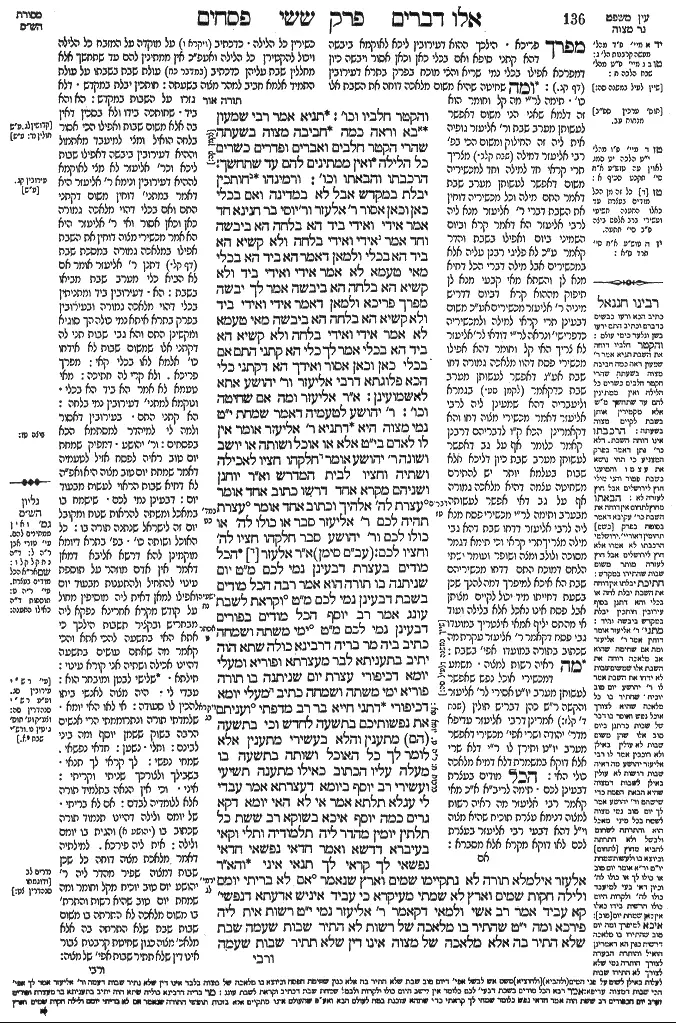
Pesahim 68b - Guemara
והקטר חלביו וכו':
תניא אמר רבי שמעון בא וראה כמה חביבה מצוה בשעתה שהרי הקטר חלבים ואברים ופדרים כשרים כל הלילה ואין ממתינים להם עד שתחשך:
הרכבתו והבאתו וכו':
ורמינהו חותכין יבלת במקדש אבל לא במדינה ואם בכלי כאן וכאן אסור ר' אלעזר ור' יוסי בר חנינא חד אמר אידי ואידי ביד הא בלחה הא ביבשה וחד אמר אידי ואידי בלחה ולא קשיא הא ביד הא בכלי ולמאן דאמר הא ביד הא בכלי מאי טעמא לא אמר אידי ואידי ביד ולא קשיא הא בלחה הא ביבשה אמר לך יבשה מפרך פריכא ולמאן דאמר אידי ואידי ביד ולא קשיא הא בלחה הא ביבשה מאי טעמא לא אמר אידי ואידי בלחה ולא קשיא הא ביד הא בכלי אמר לך כלי הא קתני התם אם בכלי כאן וכאן אסור ואידך הא דקתני כלי הכא פלוגתא דרבי אליעזר ור' יהושע אתא לאשמועינן:
א"ר אליעזר ומה אם שחיטה וכו':
ר' יהושע לטעמיה דאמר שמחת י"ט נמי מצוה היא דתניא ר' אליעזר אומר אין לו לאדם בי"ט אלא או אוכל ושותה או יושב ושונה ר' יהושע אומר חלקהו חציו לאכילה ושתיה וחציו לבית המדרש וא"ר יוחנן ושניהם מקרא אחד דרשו כתוב אחד אומר (דברים טז, ח) עצרת לה' אלהיך וכתוב אחד אומר (במדבר כט, לה) עצרת תהיה לכם ר' אליעזר סבר או כולו לה' או כולו לכם ור' יהושע סבר חלקהו חציו לה' וחציו לכם:
(עב"ם סימן) א"ר אלעזר הכל מודים בעצרת דבעינן נמי לכם מ"ט יום שניתנה בו תורה הוא אמר רבה הכל מודים בשבת דבעינן נמי לכם מ"ט (ישעיהו נח, יג) וקראת לשבת עונג אמר רב יוסף הכל מודים בפורים דבעינן נמי לכם מ"ט (אסתר ט, כב) ימי משתה ושמחה כתיב ביה מר בריה דרבינא כולה שתא הוה יתיב בתעניתא לבר מעצרתא ופוריא ומעלי יומא דכיפורי עצרת יום שניתנה בו תורה פוריא ימי משתה ושמחה כתיב מעלי יומא דכיפורי דתני חייא בר רב מדפתי (ויקרא כג, לב) ועניתם את נפשותיכם בתשעה לחדש וכי בתשעה (הם) מתענין והלא בעשירי מתענין אלא לומר לך כל האוכל ושותה בתשעה בו מעלה עליו הכתוב כאילו מתענה תשיעי ועשירי רב יוסף ביומא דעצרתא אמר עבדי לי עגלא תלתא אמר אי לא האי יומא דקא גרים כמה יוסף איכא בשוקא רב ששת כל תלתין יומין מהדר ליה תלמודיה ותלי וקאי בעיברא דדשא ואמר חדאי נפשאי חדאי נפשאי לך קראי לך תנאי איני והא"ר אלעזר אילמלא תורה לא נתקיימו שמים וארץ שנאמר (ירמיהו לג, כה) אם לא בריתי יומם ולילה חקות שמים וארץ לא שמתי מעיקרא כי עביד איניש אדעתא דנפשי' קא עביד אמר רב אשי ולמאי דקאמר ר' אליעזר נמי י"ט רשות אית ליה פירכא ומה י"ט שהתיר בו מלאכה של רשות לא התיר שבות שעמה שבת שלא התיר בה אלא מלאכה של מצוה אינו דין שלא תתיר שבות שעמה
Comments from Rashi on Masechet Pesahim Page 68b
כשירין כל הלילה . כדכתיב (ויקרא ו) על מוקדה על המזבח כל הלילה ויכול להקטירן כל הלילה ואע"פ כן אין ממתינין להם עד שתחשך אלא מחללין שבת עליהן כדכתיב (במדבר כח) עולת שבת בשבתו על עולת התמיד אלמא חביב למהר מצוה בשעתה: חותכין יבלת במקדש . דלא גזרו על השבות במקדש: הא והא ביד . שחותכה בידו ולא בסכין דאין בה אלא משום שבות ואפילו הכי אסור בלחה הואיל ומצי למיעבד מאתמול וההיא דעירובין ביבשה דאפילו שבות ליכא וכר' אליעזר לא מצי לאוקמא לההיא דעירובין ונימא ר' אליעזר היא דאמר במתני' דוחין משום דקתני התם ואם בכלי דהוי מלאכה גמורה כאן וכאן אסור ואי ר' אליעזר היא הא אמר מכשירי מצוה דוחין את השבת אפילו במלאכה גמורה במסכת שבת (דף קל.) דתנן ר' אליעזר אומר אם לא הביא כלי מערב שבת מביאו בשבת: הא . דעירובין ביד ומתניתין בכלי דהוי מלאכה גמורה ובעירובין בפרק בתרא איתא נמי כולה הך סוגיא ומקשינן התם והא גבי שבות תני לה דקתני אלו שמשום שבות לא אידחו כו' אלמא לאו בכלי קאי: מפרך פריכא . ולא קרי לה חתיכה: מאי טעמא לא אמר הא ביד הא בכלי . ונוקמא למתני' דעירובין נמי בלחה: הא קתני התם . בעירובין דאסור ולמה לי למיהדר למסתמא הכא בפסחים: ור' יהושע . דמפיק שמחת יום טוב ראיה לפסח אזיל לטעמיה דאמר שמחת יום טוב מצוה היא ואפ"ה לא דחיא שבות הראוי לעשות מבעוד יום: דבעינן נמי לכם . שישמח בו במאכל ומשתה להראות שנוח ומקובל יום זה לישראל שנתנה תורה בו: כל האוכל ושותה כו' . בפ' בתרא דיומא מוקמינן להא דרשא אליבא דמאן דאמר אין אדם מוזהר על תוספת עינוי להתחיל ולהתענות מבעוד יום ואפילו למאן דאית ליה מוסיפין מחול על קודש מקרא אחרינא נפקא ליה מבחריש ובקציר תשבות הילכך כי אתא האי בתשעה להכי אתא והכי קאמר מה שאתם עושים בתשעה דהיינו אכילה ושתיה אני קורא עינוי: תילתא . שלישי לבטן ומובחר הוא: עבדי לי . היה מצוה לאנשי ביתו להכין לו סעודה: אי לאו האי יומא . שלמדתי תורה ונתרוממתי הרי אנשים הרבה בשוק ששמן יוסף ומה ביני לבינם: ותלי . נשען: חדאי נפשאי . שמחי נפשי: לך קראי לך תנאי . בשבילך ולצורכך שניתי וקריתי: איני . וכי אין הנאה בתלמוד תורה אלא ללומדיה לבדם: אם לא בריתי . של יומם ולילה דהיינו תלמוד תורה שכתוב בו (יהושע א) והגית בו יומם ולילה: אית ליה פירכא . למילתיה דאמר מלאכת מצוה דוחה כל שכן שבות דמצוה שפיר מהדר ליה ר' יהושע יום טוב יוכיח מקל וחומר ומה שמחת יום טוב שהיא רשות והתרת' בו משום מלאכה לא התרתה בו משום שבות שבת שלא התרתה בה אלא מלאכ' מצוה כגון שחיטת קרבנות צבור אינו דין שלא תתיר שבות אפי' של מצוה:
Comments from Tosafot - Pesahim 68b
מפרך פריכא . הילכך ההוא דעירובין ליכא לאוקמא ביבשה דהא קתני סיפא ואם בכלי כאן וכאן אסור ויבשה כיון דמפרכא אפילו בכלי נמי שריא והכי מוכח בפרק בתרא דעירובין (דף קג): ומה שחיטה שהיא משום מלאכה דוחה את השבת אלו כו' . תימה לר"י מה קל וחומר הוא זה דלמא שאני הני משום דאפשר לעשותן מערב שבת ור' אליעזר גופיה אית ליה זה החילוק ומשום הכי בפ' רבי אליעזר דמילה (שבת קלב.) מצריך תרי קראי חד למילה וחד למכשיריה משום דאפשר לעשותן מערב שבת דאמר התם מילה וכל מכשיריה דוחין את השבת דברי ר' אליעזר מנא ליה לרבי אליעזר הא דאמר קרא וביום השמיני ביום ואפילו בשבת והדר קאמר ע"כ לא פליגי רבנן עליה אלא במכשירים אבל מילה דברי הכל דחיא מנא לן והשתא מאי קבעי מנא לן תיפוק מההוא קרא דביום דדריש מיניה ר' אליעזר מכשירים אע"כ משום דבעינן תרי קראי למילה ולמכשיריה כדפרישי' ונראה לר"י דודאי לר' אליעזר לא צריך האי קל וחומר דהא אפילו מכשירי פסח דהוו מלאכה גמורה דחו שבת אע"ג דאפשר לעשותן מערב שבת כדקאמר (לקמן פסחים סט.) בגמרא וליעבריה דהא שמעינן ליה לרבי אליעזר דאמר מכשירי מצוה דחו והא דקאמרינן הכא ק"ו לדבריהם דרבנן קאמר כלומר אף על גב דאפשר לעשותן מערב שבת כיון דליכא אלא שבות בעלמא יותר יש להתירם משחיטה עצמה דהיא מלאכה גמורה אף על גב דאי אפשר לעשותה מבערב ותימה לר"י מכשירי פסח מנא ליה לרבי אליעזר דדחו שבת דהא גבי מילה מצריך תרי קראי וכי תימא דגמר מסוכה ולולב ומצה ושופר ועומר ושתי הלחם דמוכח התם דדחו מכשיריהם שבת הא איכא למיפרך דמה להנך שכן בשעת דחייתו מיד יכול לקיים מצותן אבל פסח אינו נאכל אלא בלילה ועוד אי מהתם יליף אמאי איצטריך במועדו גבי פסח דקאמר ר' אליעזר עקרת מה שכתוב בתורה במועדו אפי' בשבת: הכל מודים בעצרת דבעינן לכם . תימה לריב"א א"כ מאי קאמר רבי אליעזר מה ראיה רשות למצוה דנימא עצרת תוכיח שהיא מצוה וי"ל דהא דבעי רבי אליעזר בעצרת לכם לאו דוקא מקרא אלא מסברא: ומה שחיטה שהיא משום מלאכה דוחה את השבת אלו כו' . תימה לר"י מה קל וחומר הוא זה דלמא שאני הני משום דאפשר לעשותן מערב שבת ור' אליעזר גופיה אית ליה זה החילוק ומשום הכי בפ' רבי אליעזר דמילה (שבת קלב.) מצריך תרי קראי חד למילה וחד למכשיריה משום דאפשר לעשותן מערב שבת דאמר התם מילה וכל מכשיריה דוחין את השבת דברי ר' אליעזר מנא ליה לרבי אליעזר הא דאמר קרא וביום השמיני ביום ואפילו בשבת והדר קאמר ע"כ לא פליגי רבנן עליה אלא במכשירים אבל מילה דברי הכל דחיא מנא לן והשתא מאי קבעי מנא לן תיפוק מההוא קרא דביום דדריש מיניה ר' אליעזר מכשירים אע"כ משום דבעינן תרי קראי למילה ולמכשיריה כדפרישי' ונראה לר"י דודאי לר' אליעזר לא צריך האי קל וחומר דהא אפילו מכשירי פסח דהוו מלאכה גמורה דחו שבת אע"ג דאפשר לעשותן מערב שבת כדקאמר (לקמן פסחים סט.) בגמרא וליעבריה דהא שמעינן ליה לרבי אליעזר דאמר מכשירי מצוה דחו והא דקאמרינן הכא ק"ו לדבריהם דרבנן קאמר כלומר אף על גב דאפשר לעשותן מערב שבת כיון דליכא אלא שבות בעלמא יותר יש להתירם משחיטה עצמה דהיא מלאכה גמורה אף על גב דאי אפשר לעשותה מבערב ותימה לר"י מכשירי פסח מנא ליה לרבי אליעזר דדחו שבת דהא גבי מילה מצריך תרי קראי וכי תימא דגמר מסוכה ולולב ומצה ושופר ועומר ושתי הלחם דמוכח התם דדחו מכשיריהם שבת הא איכא למיפרך דמה להנך שכן בשעת דחייתו מיד יכול לקיים מצותן אבל פסח אינו נאכל אלא בלילה ועוד אי מהתם יליף אמאי איצטריך במועדו גבי פסח דקאמר ר' אליעזר עקרת מה שכתוב בתורה במועדו אפי' בשבת: מה ראיה רשות למצוה . משמע דמכשירי אוכל נפש שאפשר לעשותן מערב יו"ט אסירי לר' אליעזר והקשה ר"ש כהן דבריש תולין (שבת ד' קלז:) אמרינן דרבי אליעזר עדיפא מדר' יהודה ושרי אפי' מכשירי דאפשר מערב יו"ט ותירץ לו ר"י דלא שרי אלא דוקא במשמרת דלא דמיא מלאכה כולי האי:
Pesahim 68b - Mishnah translated into english
We learned in the mishna that when the eve of Passover occurs on Shabbat, burning the fats of the Paschal lamb overrides Shabbat. The Gemara notes that it was taught in the Tosefta: Rabbi Shimon said: Come and see how dear is a mitzva performed in its proper time. For burning the fats and limbs and inner fats is valid all night and it would have been possible to wait until the conclusion of Shabbat and burn them at night, but nonetheless we do not wait with them until nightfall; rather, we burn them immediately, even on Shabbat.
The mishna also taught that carrying the Paschal lamb through a public domain, bringing it from outside the Shabbat limit and cutting off its wart do not override Shabbat. The Gemara raises a contradiction from another mishna in tractate Eiruvin, which teaches: One may cut off a wart by hand on Shabbat in the Temple but not in the rest of the country outside the Temple. And if the wart is to be removed with an instrument, it is forbidden both here, in the Temple, and there, outside the Temple. From here we see that in the Temple cutting off a wart, at least by hand, is permitted.
Two amora’im, Rabbi Elazar and Rabbi Yosei bar Ḥanina, disagreed about how to resolve this contradiction. One of them said: Both this mishna in Pesaḥim and that mishna in Eiruvin speak of cutting off the wart by hand. This mishna that forbids cutting it off refers to a moist wart, which is considered like the flesh of the animal. It is therefore prohibited by rabbinic decree to cut off the wart; and since it could have been removed before Shabbat, the decree applies even in the Temple, where rabbinic decrees are generally not applicable. That mishna that permits cutting it off refers to a dry wart, which breaks apart by itself, and so there is no prohibition even by rabbinic decree to cut it off. And the other one said: Both this mishna and that mishna speak of cutting off a moist wart, and it is not difficult. This mishna that says it is permitted talks about removing the wart by hand, which is prohibited only by a rabbinic decree that was not applied to the Temple; whereas that mishna that says it is prohibited talks about removing the wart with an instrument, which is prohibited by Torah law and forbidden everywhere.
The Gemara asks: And according to the one who says that this mishna speaks about cutting off the wart by hand and that mishna speaks about cutting it off with an instrument, what is the reason that he did not state like the other amora that this and that talk about cutting off the wart by hand, and it is not difficult; this mishna speaks of a moist wart, while that mishna speaks of a dry wart? The Gemara answers that he could have said to you: A dry wart breaks apart by itself, and so there would be no need to teach us that it may be removed. Both mishnayot must therefore refer to a moist wart, and the difference between them is whether the wart is being removed by hand or with an instrument.
The Gemara reverses the question: And according to the one who says that both this mishna and that mishna talk about removing the wart by hand, and it is not difficult; this speaks of a moist wart while that speaks of a dry wart. What is the reason that he did not state like the other amora that this and that are discussing a moist wart and it is not difficult; this mishna in Eiruvin speaks about cutting off the wart by hand and that mishna in Pesaḥim speaks about cutting it off with an instrument? The Gemara answers that he could have said to you: The case of cutting off the wart with an instrument is taught there in Eiruvin in that very same mishna: If the wart is to be removed with an instrument, it is forbidden both here, in the Temple, and there, outside the Temple. Therefore, there would be no reason to repeat the same halakha here in this mishna, as it is stated explicitly in the other mishna.
The Gemara asks: And the other amora, how does he account for the repetition according to his explanation? The mishna here teaches the law with regard to an instrument because it comes to teach us the dispute between Rabbi Eliezer and Rabbi Yehoshua; for according to our mishna, Rabbi Eliezer permits cutting off a moist wart even with an instrument in order to render the animal fit to be brought as a Paschal offering.
We learned in the mishna that Rabbi Eliezer said that if slaughter, which is ordinarily forbidden on Shabbat as a biblically prohibited labor, nevertheless overrides Shabbat when performed for the sake of the Paschal lamb, then activities that are prohibited by rabbinic decree should certainly override Shabbat when performed for that purpose. Rabbi Yehoshua disagreed, arguing that the law governing a Festival proves otherwise. Rabbi Eliezer countered that the law governing an optional activity, such as preparing food on a Festival, cannot be brought as proof with regard to the mitzva of offering the Paschal lamb. The Gemara notes that Rabbi Yehoshua follows his regular line of reasoning, for he said that rejoicing on a Festival is also a mitzva, and therefore whatever one does in order to enhance one’s enjoyment of the Festival is considered an act performed for the sake of a mitzva, just like the offering of a sacrifice.
For it was taught in a baraita that these two tanna’im disagreed about this matter: Rabbi Eliezer says: A person has nothing but to choose on a Festival; he either eats and drinks or sits and learns the entire day, but there is no specific mitzva to eat on the Festival. Rabbi Yehoshua, on the other hand, says: Divide the day, half of it for eating and drinking and half of it for the study hall, for he holds that eating and drinking are obligatory on the Festival.
And Rabbi Yoḥanan said: And both of them derived their opinions from one verse, i.e., the two of them addressed the same textual difficulty, resolving it in different ways. For one verse says: “It shall be an assembly for the Lord your God; you shall do no labor” (Deuteronomy 16:8), which indicates that the day is set aside for Divine service, and another verse says: “It shall be an assembly for you; you shall do no servile labor” (Numbers 29:35), which indicates a celebratory assembly for the Jewish people. Rabbi Eliezer holds that the two verses should be understood as offering a choice: The day is to be either entirely for God or entirely for you. And Rabbi Yehoshua holds that it is possible to fulfill both verses: Split the day into two, half of it for God and half of it for you.
Ayin, beit, mem is a mnemonic consisting of the first letter of Atzeret, the middle letter of Shabbat and the final letter of Purim. Rabbi Elazar said: All agree with regard to Atzeret, the holiday of Shavuot, that we require that it be also “for you,” meaning that it is a mitzva to eat, drink, and rejoice on that day. What is the reason? It is the day on which the Torah was given, and one must celebrate the fact that the Torah was given to the Jewish people. Rabba said: All agree with regard to Shabbat that we require that it be also “for you.” What is the reason? Because the verse states: “If you proclaim Shabbat a delight, the sacred day of God honored” (Isaiah 58:13). Rav Yosef said: All agree with regard to Purim that we require that it be also “for you.” What is the reason? Because it is written: “To observe them as days of feasting and gladness” (Esther 9:22).
The Gemara relates: Mar, son of Ravina, would spend the entire year fasting during the day and eating only sparsely at night, except for Shavuot, Purim, and the eve of Yom Kippur. He made these exceptions for the following reasons: Shavuot because it is the day on which the Torah was given and there is a mitzva to demonstrate one’s joy on that day; Purim because “days of feasting and gladness” is written about it; the eve of Yom Kippur, as Ḥiyya bar Rav of Difti taught: “And you shall afflict your souls on the ninth day of the month in the evening, from evening to evening you shall keep your Sabbath” (Leviticus 23:32). But does one fast on the ninth of Tishrei? Doesn’t one fast on the tenth of Tishrei? Rather, this comes to tell you: One who eats and drinks on the ninth, the verse ascribes him credit as if he fasted on both the ninth and the tenth of Tishrei.
The Gemara relates that Rav Yosef, on the day of Shavuot, would say: Prepare me a choice third-born calf. He said: If not for this day on which the Torah was given that caused the Jewish people to have the Torah, how many Yosefs would there be in the market? It is only due to the importance of Torah study that I have become a leader of the Jewish people, and I therefore have a special obligation to rejoice on this day.
A somewhat similar story is told about Rav Sheshet, that every thirty days he would review his studies that he had learned over the previous month, and he would stand and lean against the bolt of the door and say: Rejoice my soul, rejoice my soul, for you I have read Scripture, for you I have studied Mishna. The Gemara asks: Is that so, that Torah study is beneficial only for the soul of the person who has studied? But didn’t Rabbi Elazar say: If not for the Torah and its study, heaven and earth would not be sustained, as it is stated: “If not for My covenant by day and by night, I would not have set up the laws of heaven and earth” (Jeremiah 33:25). It is the Torah, the eternal covenant that is studied day and night, that justifies the continued existence of the world. The Gemara answers: This is indeed correct, but at the outset when a person does this mitzva, he does it for himself, and only afterward does he have in mind the benefit that will be brought to the entire world.
Rav Ashi said: And even according to what Rabbi Eliezer said, that rejoicing on a Festival is optional, there is a refutation: If on a Festival, when a biblically prohibited labor, such as slaughtering, baking, or cooking, is permitted even when it is performed for an optional activity, nonetheless a rabbinic decree that is with it is not permitted, and we do not say that since they permitted an optional activity they permitted everything associated with it; how much more so on Shabbat, when a biblically prohibited labor is only permitted when it is performed for a mitzva, isn’t it right not to permit a rabbinic decree that is with it? Activities that are forbidden due to a rabbinic decree should thus be prohibited on Shabbat even for the purpose of a mitzva, against the opinion of Rabbi Eliezer.
Traduction : The William Davidson digital edition of the Koren Noé Talmud, with commentary by Rabbi Adin Even-Israel Steinsaltz.