 Talmud Bavli
The learning on the whole site is dedicated : L'ilui Nishmat Reuven ben Rivka SEBBAG
The learning on the whole site is dedicated : L'ilui Nishmat Jamila bat Chlomo Abensour
The learning on the whole site is dedicated : L'ilui Nishmat Nissim ben Barukh Malka
Sanhedrin 68b : Youtube
Daf TubeYoutube
2 video classes :
Sanhedrin Page 68b
Sanhedrin 68b - Guemara
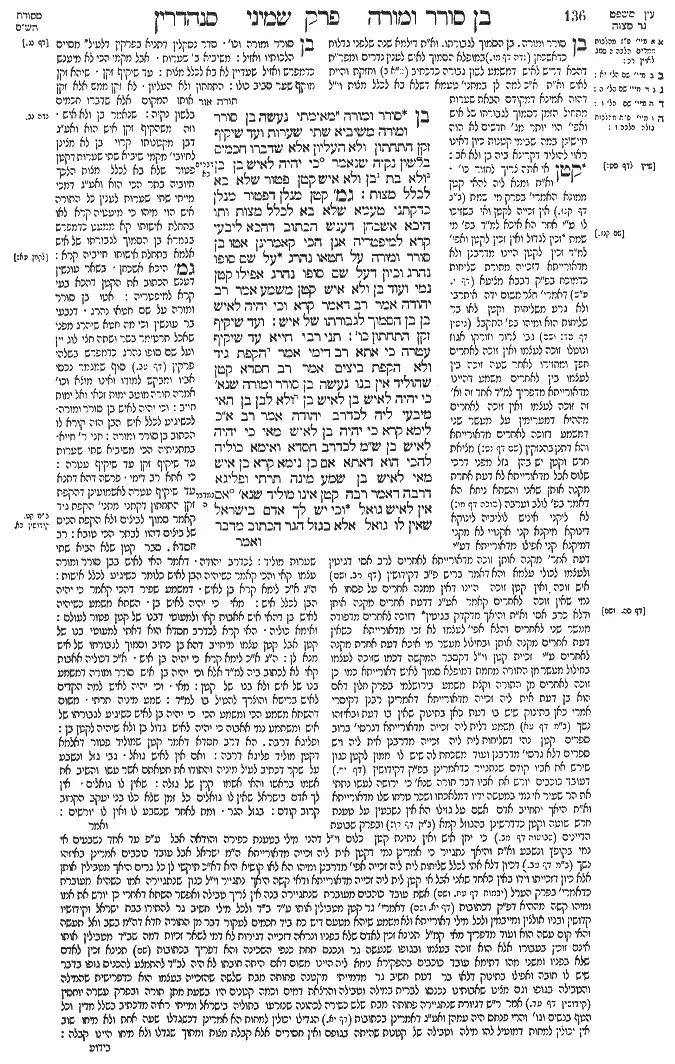
מתני׳ בן סורר ומורה מאימתי נעשה בן סורר ומורה משיביא שתי שערות ועד שיקיף זקן התחתון ולא העליון אלא שדברו חכמים בלשון נקיה שנאמר (דברים כא, יח) כי יהיה לאיש בן בן ולא בת בן ולא איש קטן פטור שלא בא לכלל מצות:
גמ׳ קטן מנלן דפטור מנלן כדקתני טעמא שלא בא לכלל מצות ותו היכא אשכחן דענש הכתוב דהכא ליבעי קרא למיפטריה אנן הכי קאמרינן אטו בן סורר ומורה על חטאו נהרג על שם סופו נהרג וכיון דעל שם סופו נהרג אפילו קטן נמי ועוד בן ולא איש קטן משמע אמר רב יהודה אמר רב דאמר קרא וכי יהיה לאיש בן בן הסמוך לגבורתו של איש:
ועד שיקיף זקן התחתון כו':
תני רבי חייא עד שיקיף עטרה כי אתא רב דימי אמר הקפת גיד ולא הקפת ביצים אמר רב חסדא קטן שהוליד אין בנו נעשה בן סורר ומורה שנא' כי יהיה לאיש בן לאיש בן ולא לבן בן האי מיבעי ליה לכדרב יהודה אמר רב א"כ לימא קרא כי יהיה בן לאיש מאי כי יהיה לאיש בן ש"מ לכדרב חסדא ואימא כוליה להכי הוא דאתא אם כן נימא קרא בן איש מאי לאיש בן שמע מינה תרתי ופליגא דרבה דאמר רבה קטן אינו מוליד שנא' (במדבר ה, ח) אם אין לאיש גואל וכי יש לך אדם בישראל שאין לו גואל אלא בגזל הגר הכתוב מדבר
Comments from Rashi on Masechet Sanhedrin Page 68b
מתני' בן סורר ומורה וכו' . סדר נסקלין דתניא בפרקין דלעיל מסיים הלכותיו ואזיל: משיביא ב' שערות . אבל מקמי הכי לא מיענש כדמפרש ואזיל שעדיין לא בא לכלל מצות: עד שיקיף זקן . שיהא זקן מוקף שער סביב כולו: התחתון ולא העליון . לא זקן ממש אלא זקן אותו המקום אלא שדברו חכמים בלשון נקיה: שנאמר בן ולא איש . וזה משהקיף זקן איש הוא ואע"ג דבן מקטנותו קרוי בן לא מצינן לחיובי' מקמי שיביא שתי שערות דקטן פטור שלא בא לכלל מצות הלכך חיוביה בתר הכי הוא ואע"ג דמכי מייתי שתי שערות לענין כל התורה איש הוי מיהו כי מיעטיה קרא לאו בתחלת אישותו קא ממעט כדמפרש בגמרא בן הסמוך לגבורתו של איש אלמא בתחלת אישותו חייביה קרא: גמ' היכא אשכחן . בשאר עונשין דענש הכתוב את הקטן דהכא בעי קרא למיפטריה: אטו בן סורר ומורה על שם חטאו נהרג . דנבעי בר עונשין וכי מה חטא שיהרג מפני שאכל תרטימר בשר ושתה חצי לוג יין ועל שם סופו נהרג כדמפרש בשלהי פרקין (דף עב.) סוף שמגמר נכסי אביו ומבקש למודו ואינו מוצא וכו' אמרה תורה מוטב ימות זכאי ואל ימות חייב: וכי יהיה לאיש בן סורר ומורה . לכשיגיע לכלל איש הבן הזה קורא לו הכתוב בן סורר ומורה: תני ר' חייא . במתניתיה הכי משיביא שתי שערות עד שיקיף זקן עד שיקיף עטרה: כי אתא רב דימי . פרשה דהא דתנא עד שיקיף עטרה לאשמועינן דהקפת זקן התחתון דקתני מתני' הקפת גיד קאמר סמוך לביצים ולא הקפת הכיס של ביצים דהוו לבתר הכי טובא: רב חסדא . סבר קטן שלא הביא שתי שערות מוליד: לכדרב יהודה . דאמר האי לאיש בבן סורר ומורה עצמו קאי והכי קאמר כשיהיה הבן לאיש כלומר כשיגיע לכלל אישות: ה"ג א"כ לימא קרא בן לאיש . דמשמע שפיר דהכי קאמר כי יהיה הבן לכלל איש: מאי כי יהיה לאיש בן . השתא משמע כשיהיה לאיש בן דהאי איש אאבות קאי ולמעוטי דבנו של קטן פטור לעולם: ואימא כוליה . האי קרא לכדרב חסדא הוא דאתי למעוטי בנו של קטן אבל קטן עצמו מיחייב דהא בן כתיב וסמוך לגבורתו של איש מנא לן: ה"ג א"כ לימא קרא כי יהיה בן איש . א"כ דכוליה אאבות קאי לא לכתוב ביה למ"ד אלא וכי יהיה בן איש סורר ומורה דמשמע בנו של איש ולא בנו של קטן: מאי . וכי יהיה לאיש למה הקדים לאיש ברישא והוצרך להטיל בו למ"ד: שמע מיניה תרתי . משום דהשתא משמע הכי ומשמע הכי כי יהיה בן לאיש כשיגיע לגבורתו של איש ומשתמע נמי אאבוה כי יהיה לאיש גדול בן ולא שיהיה לקטן בן: ופליגא דרבה . הא דרב חסדא דאמר קטן שמוליד פטור דאלמא דקטן מוליד פליגא דרבה: ואם אין לאיש גואל . גבי גזל ונשבע על שקר דכתיב לעיל מיניה והתודו את חטאתם אשר עשו והשיב את אשמו בראשו והאי אשמו קרן של גזלה: שאין לו גואלים . אין לך אדם בישראל שאין לו גואלים כל זמן שלא כלו בני יעקב הקרוב קרוב קודם: בגזל הגר . ומת לאחר שנשבע לו ואין לו יורשים:
Comments from Tosafot - Sanhedrin 68b
מתני' בן סורר ומורה . בן הסמוך לגבורתו. וא"ת דילמא שנה שלפני גדלות כדאשכחן (נדה דף מו.) במופלא הסמוך לאיש לענין נדרים ומפר"ת דהכא דריש לאיש דמשמע לשון גבורה כדכתיב (מלכים א ב) וחזקת והיית לאיש וא"ת א"כ למה לן במתני' טעמא דשלא בא לכלל מצות וי"ל דהוה אמינא דמקודם הבאת שערות מתחיל הזמן דסמוך לגבורתו של איש ואפי' הוי יותר מג' חדשים לא הוה חיישינן במה שבימי קטנות כיון דאינו ראוי להוליד דקרינא ביה בן ולא אב:
Sanhedrin 68b - Mishnah translated into english
MISHNA: The Torah describes the punishment given to a son who steals money from his parents to eat a gluttonous meal of meat and wine in the company of lowly men. If his parents bring him to court for this act, he is exhorted to desist and is punished with lashes. If he repeats the same misdeed and is again brought to court by his parents within the same three-month period, he is considered a stubborn and rebellious son [ben sorer umoreh]. He is liable to receive the death penalty, which in this case is execution by stoning. From when does a stubborn and rebellious son become liable to receive the death penalty imposed upon a stubborn and rebellious son?
From when he grows two pubic hairs, which are a sign of puberty and from which time he is considered an adult, until he has grown a beard around. The reference here is to the lower beard surrounding his genitals, and not the upper beard, i.e., his facial hair, but the Sages spoke in euphemistic terms. As it is stated: “If a man has a stubborn and rebellious son” (Deuteronomy 21:18), which indicates that the penalty for rebelliousness is imposed upon a son, but not upon a daughter; and upon a son, but not upon a fully grown man. A minor under the age of thirteen is exempt from the penalty imposed upon a stubborn and rebellious son, because he has not yet reached the age of inclusion in mitzvot.
GEMARA: The Gemara inquires about the source of the halakha taught in the mishna: From where do we derive that a minor is exempt from the punishment imposed upon a stubborn and rebellious son? The Gemara comments: This question is puzzling: From where do we derive this halakha? The reason is as is taught in the mishna: Because he has not yet reached the age of inclusion in mitzvot. And furthermore, where do we find that the verse punishes a minor, so that a special verse should be required here in order to exempt him?
The Gemara clarifies: This is what we are saying: Is this to say that a stubborn and rebellious son is killed for a sin that he already committed? But, as will be explained (71b), he is killed for what he will become in the end. The Torah understands that since the boy has already embarked on an evil path, he will continue to be drawn after his natural tendencies and commit many offenses that are more severe. It is therefore preferable that he should be killed now so that he may die in relative innocence, rather than be put to death in the future bearing much more guilt. And since he is executed for what he will become in the end, one might have thought that even a minor as well can be sentenced to the death penalty as a stubborn and rebellious son. And furthermore, the exclusion: “A son,” but not a man, indicates that a minor is in fact included in the halakha, as he is not yet a man.
Rav Yehuda says that Rav says: A minor is exempt from the punishment imposed upon a stubborn and rebellious son, as the verse states: “If a man has a son” (Deuteronomy 21:18), which indicates that the halakha applies to a son who is close to the stage of having the strength of a man, i.e., close to full maturity, but not to a younger boy.
§ The mishna teaches that a boy can be sentenced as a stubborn and rebellious son only until he has grown a lower beard. Rabbi Ḥiyya teaches a baraita that states: Until the hair surrounds the corona. When Rav Dimi came from Eretz Yisrael to Babylonia he said in explanation of Rabbi Ḥiyya’s statement: The reference in the mishna is to hair surrounding the penis and not to hair surrounding the sac holding the testicles, which grows later.
§ Rav Ḥisda says: In the case of a minor who fathered a child, his son cannot become a stubborn and rebellious son, as it is stated: “If a man has a stubborn and rebellious son,” which indicates that the halakha applies only if a man has a son, but not if a son, i.e., one who is not yet a man, has a son. The Gemara asks: How can Rav Ḥisda derive his halakha from this verse? Doesn’t he require this verse to teach us that which Rav Yehuda says that Rav says, namely, that a minor is exempt from the punishment imposed upon a stubborn and rebellious son? The Gemara answers: This verse teaches two halakhot, as, were the intention to teach only the halakha that a minor is exempt, let the verse say: If there be a son to a man. For what reason does the verse introduce a change into the normal word order and state: “If a man has a son”? Conclude from it that the verse serves to teach the ruling of Rav Ḥisda.
The Gemara asks: If so, say that the entire verse comes to teach us this, i.e., what Rav Ḥisda said, and that it does not teach that a minor is not included in the halakha of a stubborn and rebellious son. The Gemara answers: If so, the verse should have stated: If there be the son of a man. What is the meaning of: “If a man has a son”? Conclude two conclusions from it, both that a minor cannot become a stubborn and rebellious son and that if a minor fathered a son, the son cannot become a stubborn and rebellious son.
The Gemara comments: And Rav Ḥisda’s statement disagrees with the opinion of Rabba, as Rabba says in connection with one who returns stolen property after having taken a false oath that he did not steal it: A minor cannot father a child, as it is stated: “But if the man has no relative to whom restitution may be made, let the trespass that is recompensed to the Lord be the priest’s” (Numbers 5:8). And is there any man in the Jewish people who does not have a relative? All members of the Jewish people are related, as they all descend from the patriarch Jacob, and therefore every person has a relative who is fit to inherit from him.
Rather, the verse is speaking of the robbery of a convert, who is treated like a newborn child and considered to have no ties to his natural parents or relatives. If he did not father any children after his conversion, he is a man with no relatives at all, and therefore if he dies, property that had been stolen from him must be returned to a priest.
Traduction : The William Davidson digital edition of the Koren Noé Talmud, with commentary by Rabbi Adin Even-Israel Steinsaltz.