 Talmud Bavli
The learning on the whole site is dedicated : L'ilui Nishmat Rav Chlomo Ben Jamilla
The learning on the whole site is dedicated : L'ilui Nishmat Jacques Isaac Ben Amram Loubaton
The learning on the whole site is dedicated : For the success of Elyahou ben H'anna & family
Sanhedrin 64b : Youtube
Daf TubeYoutube
2 video classes :
Sanhedrin Page 64b
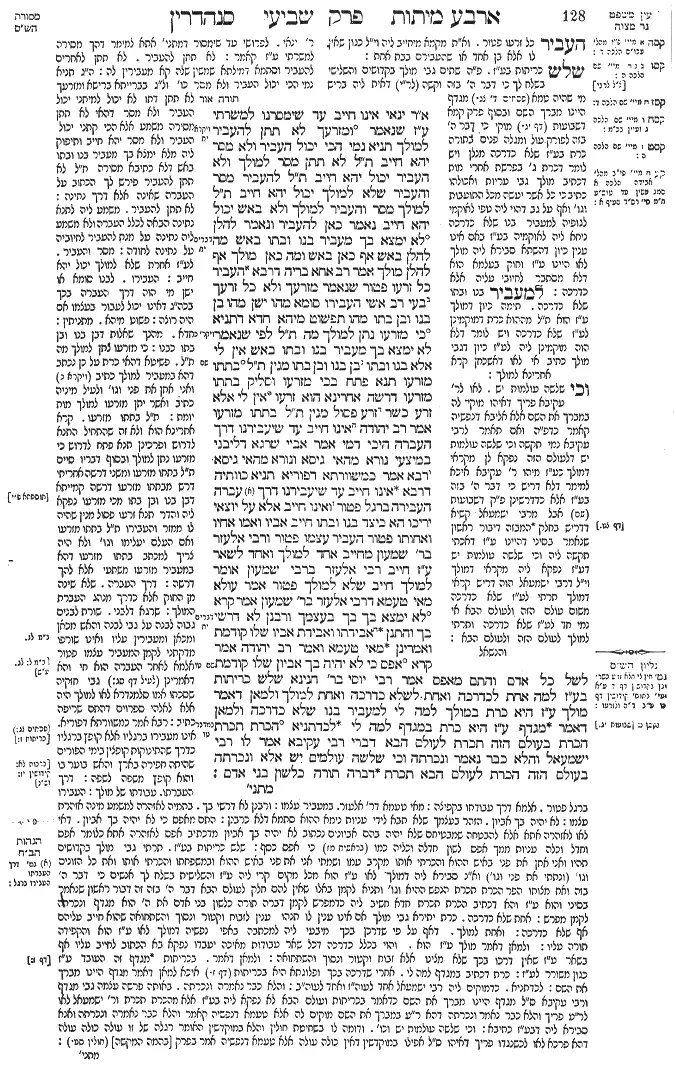
Sanhedrin 64b - Guemara
א"ר ינאי אינו חייב עד שימסרנו למשרתי ע"ז שנאמר (ויקרא יח, כא) ומזרעך לא תתן להעביר למולך תניא נמי הכי יכול העביר ולא מסר יהא חייב ת"ל לא תתן מסר למולך ולא העביר יכול יהא חייב ת"ל להעביר מסר והעביר שלא למולך יכול יהא חייב ת"ל למולך מסר והעביר למולך ולא באש יכול יהא חייב נאמר כאן להעביר ונאמר להלן (דברים יח, י) לא ימצא בך מעביר בנו ובתו באש מה להלן באש אף כאן באש ומה כאן מולך אף להלן מולך אמר רב אחא בריה דרבא העביר כל זרעו פטור שנאמר מזרעך ולא כל זרעך בעי רב אשי העבירו סומא מהו ישן מהו בן בנו ובן בתו מהו תפשוט מיהא חדא דתניא (ויקרא כ, ג) כי מזרעו נתן למולך מה ת"ל לפי שנאמר לא ימצא בך מעביר בנו ובתו באש אין לי אלא בנו ובתו בן בנו ובן בתו מנין ת"ל (ויקרא כ, ד) בתתו מזרעו תנא פתח בכי מזרעו וסליק בתתו מזרעו דרשה אחרינא הוא זרעו אין לי אלא זרע כשר זרע פסול מנין ת"ל בתתו מזרעו אמר רב יהודה אינו חייב עד שיעבירנו דרך העברה היכי דמי אמר אביי שרגא דליבני במיצעי נורא מהאי גיסא ונורא מהאי גיסא רבא אמר כמשוורתא דפוריא תניא כוותיה דרבא אינו חייב עד שיעבירנו דרך עברה העבירה ברגל פטור ואינו חייב אלא על יוצאי יריכו הא כיצד בנו ובתו חייב אביו ואמו אחיו ואחותו פטור העביר עצמו פטור ורבי אלעזר בר' שמעון מחייב אחד למולך ואחד לשאר ע"ז חייב רבי אלעזר ברבי שמעון אומר למולך חייב שלא למולך פטור אמר עולא מאי טעמא דרבי אלעזר בר' שמעון אמר קרא (דברים יח, י) לא ימצא בך בך בעצמך ורבנן לא דרשי בך והתנן אבידתו ואבידת אביו שלו קודמת ואמרינן מאי טעמא ואמר רב יהודה אמר קרא (דברים טו, ד) אפס כי לא יהיה בך אביון שלו קודמת לשל כל אדם והתם מאפס אמר רבי יוסי בר' חנינא שלש כריתות בע"ז למה אחת לכדרכה ואחת לשלא כדרכה ואחת למולך ולמאן דאמר מולך ע"ז היא כרת במולך למה לי למעביר בנו שלא כדרכה ולמאן דאמר מגדף ע"ז היא כרת במגדף למה לי לכדתניא (במדבר טו, לא) הכרת תכרת הכרת בעולם הזה תכרת לעולם הבא דברי רבי עקיבא אמר לו רבי ישמעאל והלא כבר נאמר ונכרתה וכי שלשה עולמים יש אלא ונכרתה בעולם הזה הכרת לעולם הבא תכרת דברה תורה כלשון בני אדם:
Comments from Rashi on Masechet Sanhedrin Page 64b
ר' ינאי . לפרושי עד שימסור דמתני' אתא למימר דהך מסירה למשרתי ע"ז קאמר: לא תתן להעביר . לא תתן לאחרים להעביר וסתמא דמילתא שמשין שלה קא מעבירין לה: ה"ג תניא נמי הכי יכול העביר ולא מסר כו' . ול"ג בברייתא ברישא ומזרעך לא תתן דתו לא יכול למיתני יכול העביר ולא מסר דהאי לא תתן מסירה משמע אלא הכי קתני יכול העביר ולא מסר יהא חייב ותיפוק ליה מלא ימצא בך מעביר בנו ובתו באש דלא כתיבא מסירה ת"ל לא תתן להעביר פירש לך הכתוב על העברה שאינה אלא דרך נתינה: לא תתן להעביר . משמע ליה לתנא נתינה הבאה לכלל העברה ולא משמע ליה נתינה על מנת להעביר לחיוביה על נתינה לחודה: מסר והעביר . לע"ז אחרת שלא למולך יכול יהא חייב: העבירו . לבנו סומא או ישן מי הוה דרך העברה בכך בכה"ג דאינו יכול לעבור בעצמו אם היה רוצה: פשוט מיהא . מתניתין: חדא . מהנך שאלות דבן בנו ובן בתו כבנו: כי מזרעו נתן למולך מה ת"ל . פשיטא דהאי כרת על כן נכתב דהא במעביר למולך כתיב (ויקרא כ) ואני אתן את פני וגו' ולעיל מיניה כתיב ואשר יתן מזרעו למולך מות יומת: ת"ל בתתו מזרעו . קרא אחרינא הוא ולא זה שהתחיל התנא לדרוש ופרכינן תנא פתח לדרוש כי מזרעו נתן למולך ובסוף דבריו סיים ת"ל בתתו מזרעו ומשני דרשה אחריתי דרש מבתתו מזרעו דרשה קמייתא דבן בנו ובן בתו מכי מזרעו נפקא ליה והדר תנא זרעו פסול מנין שהיה לו ממזר והעבירו ת"ל בתתו מזרעו ואם העלם יעלימו וגו' ולא היה צריך למכתב בתתו מזרעו דהא במעביר מזרעו משתעי אלא להך דרשה: דרך העברה . שלא שינה מן החוק אלא כדרך מנהג העברת המולך: שרגא דלבני . שורת לבנים גבוה לבנה על גבי לבנה והאש מכאן ומכאן ומעבירין עליו ואינו שורפו מדקתני לקמן המעביר עצמו פטור אלמא לאחר העברה הוא חי והא דאמרינן (לעיל סנהדרין דף סג:) גבי חזקיה שסכתו אמו סלמנדרא לאו למולך היה אלא לאלהי ספרוים דהתם שריפה כתיב: רבא אמר כמשוורתא דפוריא . אינו מעבירו ברגליו אלא קופץ ברגליו כדרך שהתינוקות קופצין בימי הפורים שהיתה חפירה בארץ והאש בוער בו והוא קופץ משפה לשפה: דרך העברתו . עבודתו של מולך: העבירו ברגל פטור . אלמא דרך עבודתו בקפיצה: מאי טעמא דר' אלעזר . במעביר עצמו: ורבנן לא דרשי בך . בתמיה לאזהרה למשמע מינה אזהרת עצמו: לא יהיה בך אביון . הזהר בעצמך שלא תבא לידי עניות נימא ההוא סתמא דלא כרבנן: התם מאפס כי לא יהיה בך אביון . דאי לאו לאזהרה אתא אלא להבטחה שמבטיחם שלא יהיה בהם אביונים נכתוב לא יהיה בך אביון מדכתיב אפס לאזהרה אתא כלומר אפס וחדל וכלה עניות ממך אפס לשון חדלה וכליה כמו (בראשית מז) כי אפס כסף: שלש כריתות בע"ז . תרתי גבי מולך בקדושים תהיו ואני אתן את פני באיש ההוא והכרתי אותו מקרב עמו ושמתי אני את פני באיש ההוא ובמשפחתו והכרתי אותו ואת כל הזונים וגו' (ונתתי את פני וגו') וא"נ סבירא ליה דמולך לאו ע"ז הוא מכל מקום קרי ליה ע"ז והשלישית בשלח לך אנשים כי דבר ה' בזה ואת מצותו הפר הכרת תכרת הנפש ההיא וגו' ותניא לקמן באלו שאין להם חלק לעולם הבא דבר ה' בזה זה דבור ראשון שנאמר בסיני והוא ע"ז והא דכתיב הכרת תכרת חדא חשיב ליה כדמפרש לקמן דברה תורה כלשון בני אדם את ה' הוא מגדף ונכרתה לקמן מפרש: אחת שלא כדרכה . כרת יתירא גבי מולך אם אינו ענין לו תנהו ענין לזבוח וקטור ונסוך והשתחואה שהוא חייב עליהם אף שלא כדרכה: ואחת למולך . דאף על פי שדרכן בכך מיבעי ליה למכתבה באפי נפשיה דמולך לאו ע"ז הוא והקפידה תורה עליו: ולמאן דאמר מולך ע"ז הוא . והוי בכלל כדרכה דכל שאר עבודות מאיכה יעבדו נפקא בא הכתוב לחייב עליו אף בשאר ע"ז שאין דרכו בכך שלא מצינו אלא זבוח וקטור ונסוך והשתחואה: ולמאן דאמר . בכריתות מגדף זה העובד ע"ז כגון משורר לע"ז: כרת דכתיב במגדף למה לי . אחרי שדרכה בכך ופלוגתא היא בכריתות (דף ז.) איכא למאן דאמר מגדף היינו מברך את השם: לכדתניא . כדמוקים ליה רבי ישמעאל אחד לעוה"ז ואחד לעוה"ב: והלא כבר נאמרה ונכרתה . באותה פרשה עצמה גבי מגדף ורבי עקיבא ס"ל מגדף היינו מברך את השם כדאמר בכריתות ועולם הבא לא נפקא ליה בע"ז אלא מהכרת תכרת ור' ישמעאל לאו לר"ע פריך והלא כבר נאמר ונכרתה דהא ר"ע במברך את השם מוקים לה אלא טעמא דנפשיה קאמר והלא כבר נאמרה ונכרתה ואנא סבירא ליה דבע"ז כתיבא: וכי שלשה עולמות יש וכו' . ודומה לו בשחיטת חולין והלא במוקדשין האומר רגלה של זו עולה כולה עולה דהא פרכא לאו לכשנגדו פריך דאיהו ס"ל אפילו במוקדשין דאין כולה עולה אלא טעמא דנפשיה אמר בפרק [בהמה המקשה] (חולין סט:):
Comments from Tosafot - Sanhedrin 64b
העביר כל זרעו פטור . וא"ת מקמא מיחייב ליה וי"ל כגון שאין לו אלא בן אחד או שהעבירם בבת אחת: שלש כריתות בע"ז . פ"ה שתים גבי מולך בקדושים והשלישי בשלח לך כי דבר ה' בזה וקשה (לר"י) דאית ליה בריש מי שהיה טמא (פסחים ד' צג.) מגדף היינו מברך השם ובסוף פרק קמא דשבועות (דף יג.) מוקי כי דבר ה' בזה לפורק עול ומגלה פנים בתורה כרת בע"ז שלא כדרכה מנלן ויש לומר דכרת ג' בפרשת אחרי מות דכתיב מולך גבי עריות ואכולהו כתיב כי כל אשר יעשה מכל התועבות וגו' ואף על גב דהוי ליה טפי לאוקמי לגופיה למעביר בנו שלא כדרכה ניחא ליה לאוקמיה בע"ז באם אינו ענין כיון דהשתא סבירא ליה מולך לאו היינו ע"ז וחוק בעלמא הוא דלא מסתבר לחיובי עליה אלא כדרכה: למעביר בנו ובתו שלא כדרכה . תימה כיון דמולך ע"ז הוא ת"ל מההוא כרת דמוקמינן לע"ז שלא כדרכה ויש לומר דלא הוה מוקמינן ליה לע"ז כיון דגבי מולך כתיב אי לאו דאשכחן קרא אחרינא למולך: וכי שלשה עולמות יש . לאו לר' עקיבא פריך דאיהו מוקי לה במברך את השם אלא אליבא דנפשיה קאמר כדפ"ה ואם תאמר לרבי עקיבא נמי תקשה וכי שלשה עולמות יש דלעולם הזה נפקא לן מקראי דמולך כע"ז מיהו ר' עקיבא איכא למימר דלא דריש כי דבר ה' בזה בע"ז אלא כדדרשינן פ"ק דשבועות (שם) אבל מרבי ישמעאל קשיא דדריש בחלק המבזה דיבור ראשון שנאמר בסיני דהיינו ע"ז דאכתי תקשה ליה וכי שלשה עולמות יש דע"ז נפקא ליה מקראי דמולך וי"ל דרבי ישמעאל הוה דריש קראי דמולך תרתי לע"ז שלא כדרכה משום עולם הזה ולעולם הבא אי נמי חד לע"ז שלא כדרכה ותרתי למולך לעולם הזה ולעולם הבא:
Sanhedrin 64b - Mishnah translated into english
§ Rabbi Yannai says: One is not liable for passing his child through fire to Molekh unless he hands him over to the priests of Molekh, as it is stated: “And you shall not give any of your offspring to pass them over to Molekh” (Leviticus 18:21), which indicates that the prohibition is to give, i.e., to hand the child over to the priests.
This is also taught in a baraita: One might have thought that one who passed his child through fire but did not hand him over to the priests of Molekh should be liable. Therefore, the verse states: “You shall not give.” If one handed over his son to the priests of Molekh but did not pass him through fire, one might have thought that he should be liable. Therefore, the verse states: “To pass,” indicating that passing is also necessary. If one handed over the child and passed him through fire, not to priests of Molekh but rather to priests of another object of idol worship, one might have thought that he should be liable. Therefore, the verse states: “To Molekh.”
If one handed over his child and passed him over to the priests of Molekh, but he did not pass him through the fire, one might have thought that he should be liable. It is stated here, in the verse: “To pass,” and it is stated there, in another verse: “There shall not be found among you one who passes his son or his daughter through the fire” (Deuteronomy 18:10). Just as there, the verse is referring to passing one’s child through the fire, so too here, the reference is to passing one’s child through the fire. And just as here, the verse is referring to one who passes his child over to the priests of Molekh, so too there, the reference is to Molekh alone, excluding any other object of idol worship.
Rav Aḥa, son of Rava, says: One who passed all his offspring through fire to the priests of Molekh is exempt, as it is stated: “Of your offspring,” indicating: But not all your offspring.
Rav Ashi raises a dilemma: If one passed through the fire a child of his who is blind, what is the halakha? Furthermore, if one passed his child through the fire while the child was asleep, what is the halakha? Does the child need to be capable of passing through on his own, or is that not necessary? Likewise, if one passed his son’s son or his daughter’s son through the fire, what is the halakha?
The Gemara answers: Resolve at least one of these dilemmas, as it is taught in a baraita: Why must the verse state: “Because he has given of his offspring to Molekh” (Leviticus 20:3)? What is added by this statement? Because it is stated: “There shall not be found among you one who passes his son or his daughter through the fire,” I have derived only that it is prohibited for one to pass his son or daughter. From where do I derive that one who passes his son’s son or his daughter’s son is also liable? The verse states: “When he gives of his offspring” (Leviticus 20:4). The term “offspring” indicates that grandchildren are included. This resolves one of Rav Ashi’s dilemmas.
The Gemara asks: The tanna began his exposition with the phrase in the verse “because he has given of his offspring,” and ended with an interpretation of the phrase in the verse “when he gives of his offspring.” Why did he cite two different verses as proof for his halakhic statement?
The Gemara answers: The second verse is stated in the baraita for a different exposition, which was omitted from the baraita and reads as follows: From the term in the verse “his offspring” I have derived only that one is liable for passing through the fire his offspring of unflawed lineage, i.e., his descendants from a woman whom he was permitted to marry. From where do I derive that one is liable for passing through the fire his offspring of flawed lineage, e.g., a mamzer, as well? The verse states: “When he gives of his offspring,” indicating that one is liable for passing any of his offspring.
§ Rav Yehuda says: One is not liable for passing his child through fire to Molekh unless he passes him in the typical manner of passing. The Gemara asks: What is considered the typical manner of passing? Abaye says: The child is taken by foot along a latticework [sirega] of bricks in the middle, between the fire on this side and the fire on that side.
Rava says: The typical manner of passing is like the leaps of children on Purim. It was customary to light a bonfire on Purim inside a pit, and children would amuse themselves by leaping over the bonfires. Passing one’s child over a fire in such a fashion is the typical manner of passing a child over to Molekh.
The Gemara comments: It is taught in a baraita in accordance with the opinion of Rava: One is not liable unless he passes his child through the fire in the typical manner of passing. If he passed him by foot, he is exempt. Evidently, the passing ritual is performed by leaping and not by walking.
The baraita continues: And one is liable only for passing his descendants. How so? If one passed his son or his daughter through the fire, he is liable. If he passed his father, or his mother, his brother, or his sister, he is exempt. If one passed himself over to Molekh, he is exempt. And Rabbi Elazar, son of Rabbi Shimon, deems him liable.
Both one who passes his child through fire to Molekh and one who passes his child through fire to other objects of idol worship are liable. Rabbi Elazar, son of Rabbi Shimon, says: If he passes him over to Molekh, he is liable, but if he transfers him to another object of idol worship, not to Molekh, he is exempt.
Ulla says: What is the reason for the opinion of Rabbi Elazar, son of Rabbi Shimon, who deems one who passes himself over to Molekh liable? The verse states: “There shall not be found among you one who passes his son or his daughter through the fire” (Deuteronomy 18:10), and the term “among you” is interpreted homiletically to mean: Among yourself.
The Gemara asks: And do the Rabbis not interpret the term “among you” as referring to oneself? But didn’t we learn in a mishna (Bava Metzia 33a): If one finds his lost item and his father’s lost item, taking care of his own lost item takes precedence. And we said in discussion of that mishna: What is the reason for this? And Rav Yehuda said that it is because the verse states: “Only so that there shall be no needy among you” (Deuteronomy 15:4), meaning that one must avoid becoming needy. Therefore, if one lost an item, tending to his lost item takes precedence over tending to the lost item of any other person. Apparently, this interpretation of the verse is based on the understanding that the term “among you” is referring to oneself, i.e., one must take care of himself so that he will not become needy.
The Gemara answers: And there, in that discussion, the halakha is derived from the word “only,” a limiting term, which is interpreted to mean that in preventing destitution one should begin with himself.
§ Rabbi Yosei, son of Rabbi Ḥanina, says: Why is the punishment of excision from the World-to-Come [karet] mentioned three times with regard to idol worship? It is stated twice with regard to the ritual of Molekh, in the verse: “I will also set My face against that man, and I will excise him from among his people” (Leviticus 20:3), and in the verse: “Then I will set My face against that man, and against his family, and I will excise him” (Leviticus 20:5). The third mention of karet is with regard to one who blasphemes: “That person blasphemes the Lord, and that soul shall be excised from among his people” (Numbers 15:30).
One mention is for worshipping an idol in its typical manner of worship, and one mention is for worshipping an idol not in its typical manner of worship, and one mention is for performing the ritual of Molekh.
The Gemara asks: And according to the one who says that Molekh is an object of idol worship, why do I need a special mention of karet with regard to Molekh? The Gemara answers: It is necessary for the case of one who passes his child through fire to an idol other than Molekh, where this is not its typical manner of worship. According to this opinion, one who passes his son through fire to any idol is liable.
The Gemara asks: And according to the one who says that the verse concerning one who blasphemes is referring to one who engages in idol worship and not to one who curses God, why do I need karet to be mentioned with regard to one who blasphemes?
The Gemara answers that it is necessary for that which is taught in a baraita: It is stated with regard to one who blasphemes: “Because he has despised the word of the Lord, and has breached His mitzva, that soul shall be excised [hikkaret tikkaret], his iniquity shall be upon him” (Numbers 15:31). The phrase “hikkaret tikkaret” is interpreted as follows: “Hikkaret”; the sinner is excised in this world, meaning that he will die prematurely. “Tikkaret”; the sinner is excised in the World-to-Come, and he will not merit everlasting life. This is the statement of Rabbi Akiva.
Rabbi Yishmael said to him: But isn’t it already stated in the previous verse: “He blasphemes the Lord; that soul shall be excised [venikhreta]” (Numbers 15:30)? Are there three worlds in which the sinner is excised? Rather, from the term in the verse “venikhreta” it is derived that the sinner is excised in this world, from the term “hikkaret” it is derived that the sinner is excised in the World-to-Come, and nothing is derived from the doubled verb “hikkaret tikkaret,” as the Torah spoke in the language of people.
Traduction : The William Davidson digital edition of the Koren Noé Talmud, with commentary by Rabbi Adin Even-Israel Steinsaltz.