 Talmud Bavli
Hullin 41b : Youtube
Rabbi Dr. Moshe WeisblumYoutube
1 video class :
Hullin Page 41b
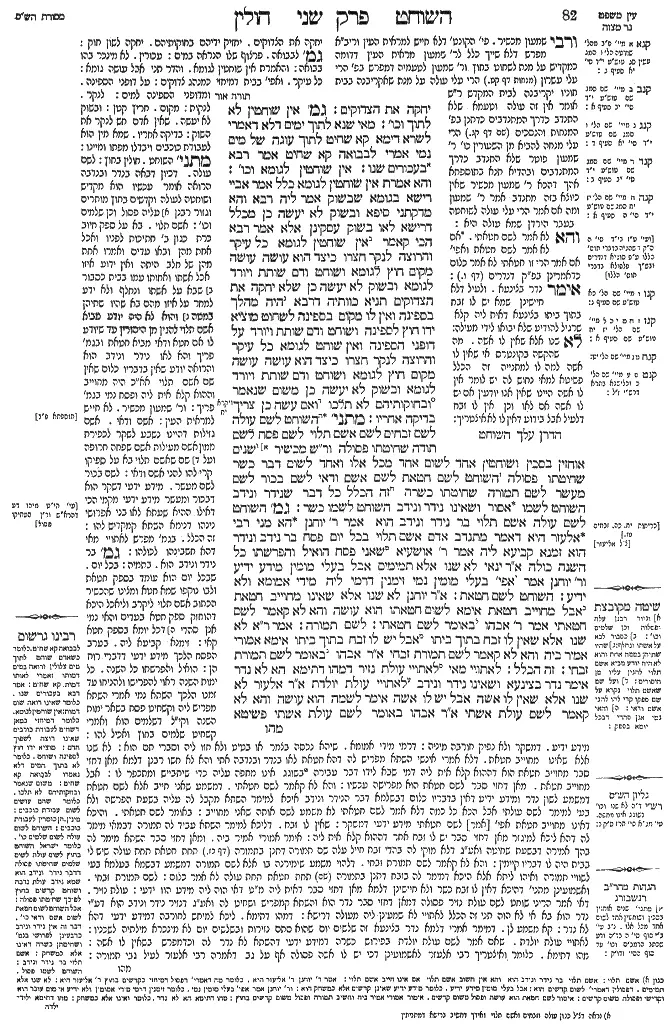
Hullin 41b - Guemara
יחקה את הצדוקים:
גמ׳ אין שוחטין לא לתוך וכו':
מאי שנא לתוך ימים דלא דאמרי לשרא דימא קא שחיט לתוך עוגה של מים נמי אמרי לבבואה קא שחיט אמר רבא בעכורים שנו:
אין שוחטין לגומא וכו':
והא אמרת אין שוחטין לגומא כלל אמר אביי רישא בגומא שבשוק אמר ליה רבא והא מדקתני סיפא ובשוק לא יעשה כן מכלל דרישא לאו בשוק עסקינן אלא אמר רבא הכי קאמר אין שוחטין לגומא כל עיקר והרוצה לנקר חצרו כיצד הוא עושה עושה מקום חוץ לגומא ושוחט ודם שותת ויורד לגומא ובשוק לא יעשה כן שלא יחקה את הצדוקים תניא כוותיה דרבא היה מהלך בספינה ואין לו מקום בספינה לשחוט מוציא ידו חוץ לספינה ושוחט ודם שותת ויורד על דופני הספינה ואין שוחט לגומא כל עיקר והרוצה לנקר חצרו כיצד הוא עושה עושה מקום חוץ לגומא ושוחט ודם שותת ויורד לגומא ובשוק לא יעשה כן משום שנאמר (ויקרא יח, ג) ובחוקותיהם לא תלכו ואם עשה כן צריך בדיקה אחריו:
מתני׳ השוחט לשם עולה לשם זבחים לשם אשם תלוי לשם פסח לשם תודה שחיטתו פסולה ור"ש מכשיר שנים אוחזין בסכין ושוחטין אחד לשום אחד מכל אלו ואחד לשום דבר כשר שחיטתו פסולה השוחט לשם חטאת לשם אשם ודאי לשם בכור לשם מעשר לשם תמורה שחיטתו כשרה זה הכלל כל דבר שנידר ונידב השוחט לשמו אסור ושאינו נידר ונידב השוחט לשמו כשר:
גמ׳ השוחט לשם עולה אשם תלוי בר נידר ונידב הוא אמר ר' יוחנן הא מני רבי אלעזר היא דאמר מתנדב אדם אשם תלוי בכל יום פסח בר נידב ונידר הוא זמנא קביעא ליה אמר ר' אושעיא שאני פסח הואיל והפרשתו כל השנה כולה א"ר ינאי לא שנו אלא תמימים אבל בעלי מומין מידע ידיע ור' יוחנן אמר אפי' בעלי מומין נמי זימנין דרמי ליה מידי אמומא ולא ידיע:
השוחט לשם חטאת:
א"ר יוחנן לא שנו אלא שאינו מחוייב חטאת אבל מחוייב חטאת אימא לשום חטאתו הוא עושה והא לא קאמר לשם חטאתי אמר ר' אבהו באומר לשם חטאתי:
לשם תמורה:
אמר ר"א לא שנו אלא שאין לו זבח בתוך ביתו אבל יש לו זבח בתוך ביתו אימא אמורי אמיר ביה והא לא קאמר לשם תמורת זבחי א"ר אבהו באומר לשם תמורת זבחי:
זה הכלל:
לאתויי מאי לאתויי עולת נזיר דמהו דתימא הא לא נדר אימר נדר בצינעא ושאינו נידר ונידב לאתויי עולת יולדת א"ר אלעזר לא שנו אלא שאין לו אשה אבל יש לו אשה אימר לשמה הוא עושה והא לא קאמר לשם עולת אשתי א"ר אבהו באומר לשם עולת אשתי פשיטא
Comments from Rashi on Masechet Hullin Page 41b
יחקה את הצדוקים . יחזיק ידיהם בחוקותיהם. יחקה לשון חוק: גמ' לבבואה . פרצוף שלו הנראה במים: עכורין . לא מינכר בהו בבואה: והאמרת אין שוחטין לגומא . והדר תני אבל עושה גומא: כל עיקר . ואפי' בבית דמיחזי כמנהג צדוקים: על דופני הספינה . ומדופני הספינה למים: לנקר . לנקות: מקום . חריץ קטן: ובשוק לא יעשה . שאין אדם חש לנקר את השוק: בדיקה אחריו . שמא מין הוא לעבודת כוכבים ויבדלו מפתו ומיינו: מתני' השוחט . חולין בחוץ: לשם עולה . דכיון דבאה בנדר ובנדבה הרואה אומר עכשיו הוא מקדיש ושוחטה לעולה וקדשים בחוץ מותרים וגזור רבנן עליה פסול וכן שלמים וכו': אשם תלוי . בא על ספק חיוב כרת כגון ב' חתיכות לפניו ואכל אחת מהן ובאו עדים ואמרו אחת מהן של חלב היתה ואין ידוע איזו אכל אשתו ואחותו עמו בבית כסבור שבא על אשתו ונחלף ולא ידע למחר על איזו מהם בא שהיו שתיהן במטה והוא לא היה יודע מביא אשם תלוי להגין מן היסורין עד שיודע לו אם חטא ודאי מביא חטאת. ובגמ' פריך והא לאו נידר ונידב הוא והרואה יודע שאין בדבריו כלום שאין שם אשם תלוי אא"כ היה מחוייב וההוא קלא אית ליה ופסח נמי בגמ' פריך: ור' שמעון מכשיר . לא חייש למראית העין: אשם ודאי . אשם גזילות דהיינו נשבע לשקר לכפירת ממון אשם מעילות אשם שפחה חרופה. ועל שם שאשם תלוי בא על ספיקו קרי להו להני אשם ודאי: לשם בכור לשם מעשר . מידע ידעי דשקר הוא דבכור ומעשר מידע ידעי מקמי הכי דאילו ההיא שעתא לאו בני אפרושי נינהו דנימא השתא קמקדיש להו: זה הכלל . בגמ' מפרש לאתויי מאי דהא חשבינהו לכולהו: גמ' בר נידר ונידב הוא . בתמיה: בכל יום . שבכל יום הוא עומד בספק חטאת ולבו נוקפו שמא חטא ומצינו שהכשיר הכתוב אשם תלוי ליקרב וליאכל היכא דהוחזק ספק חטא בעדים והאי נמי אנן סהדי דכל יומא בספק חטא קאי: זימנא קביעא ליה . בערב הפסח הלכך מידע ידעי דדברי רוח הן: הואיל והפרשתו כל השנה . כל ימות השנה ראוי להפרישו ולהניחו עד זמנו הלכך השתא נמי אמרי השתא מפריש ליה וקשחיט פסח בשאר ימות השנה וקי"ל דשלמים הוא ואמרי קשחיט שלמים בחוץ ואכיל להו: מידע ידיע . דמשקר ולא נפיק חורבה מיניה: דרמי מידי אמומא . שיהא נכסה בצמר או בטיט ולא חזו ליה וסברי תם הוא: לא שנו אלא שאינו מחוייב חטאת . דלא אמרי אינשי השתא מפריש לה דהא חטאת לאו בנדר ובנדבה אתי והא לא חשו רבנן דלמא מאן דחזי סבר מחוייב חטאת הוא דההוא קלא אית ליה דמי שבא לידו דבר עבירה בשוגג אינו מחפה עליה כדי שיתבייש ומתכפר לו: אבל מחוייב חטאת . מאן דחזי סבר לשם חטאת הוא מפרישה עכשיו: והא לא קאמר לשם חטאתי . דמשמע שאני חייב אלא לשם חטאת דמשמע לשון נדר ומידע ידיע דאין בדבריו כלום דבשלמא דבר הנידר ונידב איכא למימר השתא מקבל לה עליה בשעת הפרשה ולא בעי למימר לשם עולתי אבל הכא כל כמה דלא אמר לשם חטאתי לא משמע לשם אותה שאני מחוייב: באומר לשם חטאתי . והיכא דאינו מחוייב חטאת אפי' [אמר] לשם חטאתי מידע ידעי דמשקר: שאין לו זבח . דליכא למימר השתא עביד לה תמורה דבמאי מימר לה דהא ליכא למיגזר מאן דחזי סבר יש לו זבח אחר דההוא קלא אית ליה: אימר אמורי אמיר ביה . ומאן דחזי סבר השתא מימר לה בהך אמירה דבשעת שחיטה ואע"ג דלא מוקי לה בהדי זבח חייל עלה שם תמורה דתנן בתמורה (דף כז.) תחת חטאת תחת עולה שיש לי בבית היה לו דבריו קיימין: והא לא קאמר לשם תמורת זבחי . דלהוי משמע שימירנה בו אלא לשם תמורה דמשמע דבשמא בעלמא בעי לשוויי תמורה ואיהו ליתא אלא היכא דמימר לה בזבח דתנן בתמורה (שם) תחת חטאת תחת עולה לא אמר כלום: לשם תמורת זבחי . ואשמועינן מתני' דהיכא דאין לו זבח כשרה ולא חיישינן דלמא מאן דחזי סבר דאית ליה מ"ט דאי הוה ליה מידע הוו ידעי: עולת נזיר . דאי אמר הריני שוחט לשם עולת נזיר פסולה דמאן דחזי סבר נדר הוא והשתא קמפריש ושחיט לה. ואע"ג דנזיר נידר ונידב הוא דע"י נדר הוא בא אי לא הוה תני זה הכלל לאתויי לא שמעינן ליה מעולה דרישא: דמהו דתימא . ליכא למיחש לחורבה דמידע ידעי דהא לא נדר: קא משמע לן . דמימר אמרי דלמא נדר בצינעא זה שלשים יום שהוא סתם נזירות ובשלשים יום לא מינכרא מילתיה לשכניו: לאתויי עולת יולדת . שאם אמר לשם עולת יולדת בפירוש כשרה דמידע ידעי דהשתא לא נדר לה וכדמפרש בשאין לו אשה:
Comments from Tosafot - Hullin 41b
ורבי שמעון מכשיר . פי' הקונט' דלא חייש למראית העין וריב"א מפרש דלא שייך כלל לר' שמעון מראית העין דדומה כמקדיש על מנת לשחוט בחוץ ור' שמעון לטעמיה דמפרש בפ' הרי עלי עשרון (מנחות דף קט.) הרי עלי עולה על מנת שאקריבנה בבית חוניו יקריבנה לבית המקדש ר"ש אומר אין זה עולה וטעמא שלא התנדב כדרך המתנדבים כדתנן בפ' המנחות והנסכים (שם דף קג.) הרי עלי מנחה להביא מן השעורין כו' ר' שמעון פוטר שלא התנדב כדרך המתנדבים ובהדיא תנא בתוספתא אהך דהכא ר' שמעון מכשיר שאין כיוצא בזה מתנדב אמר ר' שמעון ומה אם אמר הרי עלי עולה לשוחטה בעבר הירדן שמא עולה היא: והא לא אמר לשם חטאתי . אם לא אמר לשם חטאת ואפי' אם אמר הרי זו חטאתי לא אמר כלום כדאמרינן בפ"ק דנדרים (דף ו.): אימר נדר בצינעא . ולעיל דלא חיישינן שמא יש לו זבח בתוך ביתו בצינעא דאית ליה קלא שרגיל להודיע שלא יבואו לידי מעילה: לא שנו אלא שאין לו אשה . מה שהקשה בקונטרס אי שאין לו אשה למה לו למתנייה זה הכלל פשיטא למאי נחוש לה יש לומר אין לו אשה היינו שאין אנו יודעין אם יש לו אשה אם לאו וכן אין לו זבח דלעיל אבל בידוע דאין לו לא איצטריך:
Hullin 41b - Mishnah translated into english
appear to emulate [yeḥakkeh] the heretics.
GEMARA: The mishna teaches: One may not slaughter an animal and have its blood flow, neither into seas, nor into rivers, nor into vessels, but one may slaughter an animal and have its blood flow into a round excavation containing water. The Gemara asks: What is different about slaughter into seas? Is it that one may not perform it, as onlookers will say: He is slaughtering to the angel of the sea? If so, slaughter into a round excavation containing water should also be prohibited, as onlookers will say: He is slaughtering to his reflection [bavua], which is also similar to idolatry. Rava said: The tanna’im taught that halakha in the case of murky water, in which no reflection can be seen.
§ The mishna states: One may not slaughter an animal and have its blood flow into a small hole in the ground at all, but one may fashion a small hole inside his house so that the blood will enter into it. The Gemara asks: How is it permitted to slaughter and have the blood flow into a hole inside his house? But didn’t you initially say that one may not slaughter an animal and have its blood flow into a small hole in the ground at all? Abaye said: The first clause of the mishna, where there is a blanket prohibition against having the blood flow into a small hole, is referring to a small hole that is in the marketplace.
Rava said to him: But isn’t it so that from the fact that the latter clause teaches: And in the marketplace one may not do so, it may be inferred that in the first clause we are not dealing with the marketplace?
Rather, Rava said that this is what the mishna is saying: One may not slaughter an animal and have its blood flow into a small hole in the ground at all. And one who wishes to clean his courtyard and ensure that it will not be sullied in blood, how does he do so? He fashions a place with an incline or a furrow outside the small hole, and slaughters the animal there, and the blood flows and descends into the hole. And in the marketplace one may not do so, so that he will not appear to emulate the heretics.
It is taught in a baraita in accordance with the opinion of Rava: If one was traveling on a ship and he has no place on the ship to slaughter an animal, he extends his hand with a knife, holds the head of the animal outside the walls of the ship, and slaughters the animal there; and the blood flows and descends down the sides of the ship. He may not slaughter an animal and have its blood flow directly into the sea. And one may not slaughter an animal and have its blood flow into a small hole in the ground at all.
And one who wishes to clean his courtyard and ensure that it will not be sullied with blood, how does he do so? He fashions a place with an incline or a furrow outside the small hole, and slaughters the animal there, and the blood flows and descends into the hole. And in the marketplace, one may not do so, as it is stated: “Neither shall you follow their statutes” (Leviticus 18:3). And if he did so, he requires examination after his actions to ascertain whether he is a heretic.
MISHNA: In the case of one who slaughters an animal and asserts that he is slaughtering it for the sake of a burnt offering, for the sake of a peace offering, for the sake of a provisional guilt offering, for the sake of a Paschal offering, or for the sake of a thanks offering, his slaughter is not valid, as it appears that he is consecrating animals and slaughtering sacrificial animals outside the Temple. And Rabbi Shimon deems his slaughter valid.
If there were two people grasping a knife together and slaughtering an animal, one slaughtering for the sake of one of all those enumerated in the first clause of the mishna and one slaughtering for the sake of a legitimate matter, their slaughter is not valid. With regard to one who slaughters an animal for the sake of a sin offering, for the sake of a guilt offering for a definite transgression, for the sake of the offering of a firstborn, for the sake of the offering of animal tithe, or for the sake of a substitute for a sacrificial animal, his slaughter is valid. All of these offerings may be brought only as obligations and not as gifts. Therefore, there is no concern that he consecrated the animals.
This is the principle: For any item, i.e., offering, which is consecrated as a voluntary vow or gift, in the case of one who slaughters for its sake the animal is forbidden. And for any offering that is not consecrated as a voluntary vow or gift but is an obligation that is incumbent upon him, in the case of one who slaughters for its sake the animal is permitted.
GEMARA: The mishna teaches: In the case of one who slaughters an animal and asserts that he is slaughtering it for the sake of a burnt offering, for the sake of a peace offering, for the sake of a provisional guilt offering, for the sake of a Paschal offering, or for the sake of a thanks offering, the slaughter is not valid. This is because one who slaughters for the sake of any type of offering that is consecrated as a vow or as a gift renders the animal forbidden. The Gemara asks: Is a provisional guilt offering fit to be consecrated as a vow or as a gift? A provisional guilt offering is brought only when one is obligated to do so due to uncertainty whether or not he is liable to bring a sin offering. Rabbi Yoḥanan said: In accordance with whose opinion is this halakha in the mishna? It is in accordance with the opinion of Rabbi Elazar, who says in a mishna (Karetot 25a): A person donates a provisional guilt offering every day if he chooses, due to concern that perhaps he violated a prohibition.
The Gemara asks: Is a Paschal offering fit to be consecrated as a vow or as a gift? The time is fixed for its offering on Passover eve, when bringing it is an obligation, and it may not be brought on any other day. Rabbi Oshaya said: The Paschal offering is different, since although the date for bringing and slaughtering it is the fourteenth of Nisan, its designation can be performed throughout the entire year.
Rabbi Yannai says: The Sages taught that slaughter of an animal for the sake of an offering is not valid only if the animals were unblemished. But with regard to animals with blemishes, the slaughterer knows that they are blemished and disqualified from sacrifice. Therefore, despite his declaration, there is no concern that his actual intent was to slaughter the animal for that purpose. And Rabbi Yoḥanan says: Slaughter of an animal for the sake of an offering is not valid even if the animals were blemished as well, as there are times that an item is cast over the blemish and covers it, and he does not know that the animal is blemished.
The mishna teaches: With regard to one who slaughters an animal for the sake of a sin offering, his slaughter is valid, as, since one cannot voluntarily contribute a sin offering, there is no concern that the onlookers will draw the wrong conclusion. Rabbi Yoḥanan says: The Sages taught that slaughter of an animal for the sake of a sin offering is valid only with regard to a slaughterer who is not liable to bring a sin offering. But a slaughterer who knows that he is liable to bring a sin offering, his slaughter is not valid. Say that he is performing consecration and slaughter for the sake of his sin offering. The Gemara asks: But didn’t he say before the slaughter: For the sake of a sin offering, and he did not say: For the sake of my sin offering? Why, then, is that a concern? Rabbi Abbahu said: Indeed, the reference is to a case where he says: I am slaughtering this animal for the sake of my sin offering.
The mishna teaches: With regard to one who slaughters for the sake of a substitute for a sacrificial animal, his slaughter is valid. Rabbi Elazar says: The Sages taught that the slaughter is valid only in a case where he does not have an animal consecrated as an offering inside his house for which it can be the substitute, but if he has an animal consecrated as an offering in his house, say that he is substituting this animal for it, and the slaughter is not valid. The Gemara asks: But didn’t he say before the slaughter: For the sake of a substitute for a sacrificial animal, and he did not say: For the sake of a substitute for my animal consecrated as an offering? Why, then, is that a concern? Rabbi Abbahu said: Indeed, the reference is to a case where he says: I am slaughtering this animal for the sake of a substitute for my animal consecrated as an offering.
The mishna states that this is the principle: For any offering that is consecrated as a voluntary vow or gift, in the case of one who slaughters for its sake, the animal is forbidden. The Gemara asks: What case does this clause add? The list in the mishna appears to be comprehensive. The Gemara answers: The clause serves to add the burnt offering of a nazirite. As, lest you say there is no concern in that case, as that person did not vow to become a nazirite and could not possibly be obligated to bring that offering, therefore, the tanna teaches that there is a concern if he said he was slaughtering for the sake of the burnt offering of a nazirite. Say that perhaps he vowed to become a nazirite in private, and no one else was aware of it.
The Gemara asks: What is added by the second half of the principle: And for any offering that is not consecrated as a voluntary vow or as a gift, in the case of one who slaughters for its sake the animal is permitted? The Gemara answers: It serves to add the burnt offering of a woman after childbirth. If one slaughters an animal for the sake of a burnt offering of a woman after childbirth, the slaughter is valid, as it is an obligation.
Rabbi Elazar says: The Sages taught that the slaughter is valid only in a case where he does not have a wife. But if he has a wife, say that he performs consecration and slaughter of the animal for her sake and therefore the slaughter is not valid. The Gemara asks: But didn’t he say before the slaughter: For the sake of the burnt offering of a woman after childbirth, and he did not say: For the sake of the burnt offering of my wife after childbirth? Why, then, is that a concern? Rabbi Abbahu said: Indeed, the reference is to a case where he says: I am slaughtering this animal for the sake of the burnt offering of my wife after childbirth.
The Gemara objects: This is obvious. Clearly, if he explicitly declared that the slaughter is for the sake of the burnt offering of his wife after childbirth the slaughter is not valid.
Traduction : The William Davidson digital edition of the Koren Noé Talmud, with commentary by Rabbi Adin Even-Israel Steinsaltz.