 Talmud Bavli
Hullin 78a : Youtube
Rabbi Dr. Moshe WeisblumYoutube
1 video class :
Hullin Page 78a
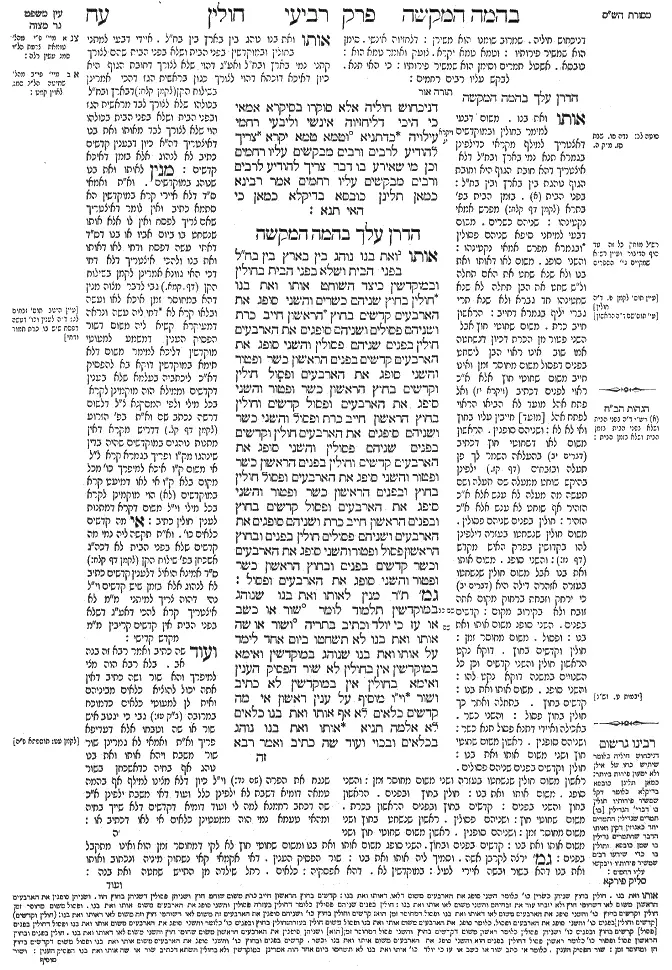
Hullin 78a - Guemara
דניכחוש חיליה אלא סוקרו בסיקרא אמאי כי היכי דליחזיוה אינשי וליבעי רחמי עילויה כדתניא (ויקרא יג, מה) וטמא טמא יקרא צריך להודיע לרבים ורבים מבקשים עליו רחמים וכן מי שאירע בו דבר צריך להודיע לרבים ורבים מבקשים עליו רחמים אמר רבינא כמאן תלינן כובסא בדיקלא כמאן כי האי תנא:
הדרן עלך בהמה המקשה
מתני׳ אותו ואת בנו נוהג בין בארץ בין בח"ל בפני הבית ושלא בפני הבית בחולין ובמוקדשין כיצד השוחט אותו ואת בנו חולין בחוץ שניהם כשרים והשני סופג את הארבעים קדשים בחוץ הראשון חייב כרת ושניהם פסולים ושניהם סופגים את הארבעים חולין בפנים שניהם פסולין והשני סופג את הארבעים קדשים בפנים הראשון כשר ופטור והשני סופג את הארבעים ופסול חולין וקדשים בחוץ הראשון כשר ופטור והשני סופג את הארבעים ופסול קדשים וחולין בחוץ הראשון חייב כרת ופסול והשני כשר ושניהם סופגים את הארבעים חולין וקדשים בפנים שניהם פסולין והשני סופג את הארבעים קדשים וחולין בפנים הראשון כשר ופטור והשני סופג את הארבעים ופסול חולין בחוץ ובפנים הראשון כשר ופטור והשני סופג את הארבעים ופסול קדשים בחוץ ובפנים הראשון חייב כרת ושניהם סופגים את הארבעים ושניהם פסולים חולין בפנים ובחוץ הראשון פסול ופטור והשני סופג את הארבעים וכשר קדשים בפנים ובחוץ הראשון כשר ופטור והשני סופג את הארבעים ופסול:
גמ׳ ת"ר מנין לאותו ואת בנו שנוהג במוקדשין תלמוד לומר (ויקרא כב, כז) שור או כשב או עז כי יולד וכתיב בתריה (ויקרא כב, כח) ושור או שה אותו ואת בנו לא תשחטו ביום אחד לימד על אותו ואת בנו שנוהג במוקדשין ואימא במוקדשין אין בחולין לא שור הפסיק הענין ואימא בחולין אין במוקדשין לא כתיב ושור וי"ו מוסיף על ענין ראשון אי מה קדשים כלאים לא אף אותו ואת בנו כלאים לא אלמה תניא אותו ואת בנו נוהג בכלאים ובכוי ועוד שה כתיב ואמר רבא
Comments from Rashi on Masechet Hullin Page 78a
דניכחוש חיליה . שמרוב שומנו הוא משירן: דלחזיוה אינשי . סימן הוא שמשיר פירותיו: וטמא טמא יקרא . צועק ואומר טמא הוא: כובסא . אשכול תמרים וסימן הוא שמשיר פירותיו: כי האי תנא . לבקש עליו רבים רחמים: מתני' אותו ואת בנו . משום דבעי למימר בחולין ובמוקדשים דאצטריך למילף מקראי כדילפינן בגמרא תנא נמי בארץ ובח"ל דלא איצטריך דהא חובת הגוף היא וחובת הגוף נוהגת בין בארץ ובין בח"ל: בפני הבית . בזמן הבית. בפ' בתרא (לקמן חולין דף קלח:) מפרש אמאי נקטינהו: שניהם כשרים . משום דבעי למיתני סיפא שניהם פסולין ובגמרא מפרש אמאי נקטינהו: והשני סופג . משום לאו דאותו ואת בנו. ולא שנא שחט את האם תחלה ול"ש שחט את הבן תחלה לא שנא שחטינהו חד גברא ולא שנא תרי גברי יליף בגמרא דחייב: הראשון חייב כרת . משום שחוטי חוץ אבל השני פטור מן הכרת דכיון דנשחטה אמו שוב אינו ראוי הבן לישחט בפנים דפסול משום מחוסר זמן ואינו חייב משום שחוטי חוץ אלא א"כ ראוי לפנים דכתיב (ויקרא יז) ואל פתח אהל מועד לא הביאו הראוי לפתח אהל [מועד] חייבין עליו בחוץ ואי לא לא: ושניהם סופגין . הראשון משום לאו דשחוטי חוץ דכתיב בהעלאה (דברים יב) השמר לך פן תעלה ובזבחים (דף קז.) ילפינן בהיקש שוחט ממעלה שם תעלה ושם תעשה מה מעלה לא ענש אלא א"כ הזהיר אף שוחט לא ענש אלא א"כ הזהיר: חולין בפנים שניהם פסולין . משום חולין שנשחטו בעזרה דילפינן להו בקדושין בפרק האיש מקדש (דף נז:): והשני סופג . משום אותו ואת בנו. אבל משום חולין שנשחטו בעזרה אזהרה דילה היא (דברים יב) כי ירחק וזבחת ברחוק מקום אתה זובח ולא בקירוב מקום: קדשים בפנים . השני סופג משום אותו ואת בנו: ופסול . משום מחוסר זמן: חולין וקדשים בחוץ . דוקא נקט הראשון חולין והשני קדשים וכן כל השנויים במשנה דוקא נקט להו: והשני סופג . משום אותו ואת בנו: קדשים בחוץ . בתחלה ואחר כך חולין בחוץ פסול: והשני כשר . באכילה ואיידי דתנא פסול תנא כשר: ושניהם סופגין . ראשון משום שחוטי חוץ ושני משום אותו ואת בנו: חולין וקדשים בפנים שניהם פסולים . ראשון משום חולין שנשחטו בעזרה ושני משום מחוסר זמן: והשני סופג . משום אותו ואת בנו: חולין בחוץ ובפנים . הראשון בחוץ והשני בפנים: קדשים בחוץ ובפנים הראשון בכרת . משום שחוטי חוץ: ושניהם פסולין . ראשון שנשחט בחוץ ושני משום מחוסר זמן: ושניהם סופגין . ראשון משום שחוטי חוץ ושני משום אותו ואת בנו: קדשים בפנים ובחוץ . השני סופג משום אותו ואת בנו. ומשום שחוטי חוץ לא לקי דמחוסר זמן הוא ואינו מתקבל בפנים: גמ' ירצה לקרבן אשה . וסמיך ליה אותו ואת בנו: שור הפסיק הענין . דאי אקמאי קאי נשתוק מיניה ונכתוב ואותו ואת בנו דהא בשור ובשה איירי לעיל: במוקדשין לא . דהא אפסקיה: כלאים . רחל שילדה מן התייש שחטה ואת בנה: ועוד . קשיא לי עלה דהא דקתני נוהג בכלאים האמר רבא כו':
Comments from Tosafot - Hullin 78a
מתני' אותו ואת בנו נוהג בין בארץ בין בח"ל . איידי דבעי למתני בחולין ובמוקדשין בפני הבית ושלא בפני הבית שהם לצורך קתני נמי בארץ ובח"ל ואע"ג דהוי שלא לצורך דחובת הגוף היא כיון דאיכא דוכתא דהוי לצורך כגון בראשית הגז דהכי אמרינן בשילוח הקן (לקמן חולין קלח:) דבארץ ובח"ל בכולהו שלא לצורך לבד מראשית הגז ובפני הבית ושלא בפני הבית בכולהו הוי שלא לצורך לבד מאותו ואת בנו דאיצטריך דה"א כיון דבענין קדשים כתיב לא לנהוג אלא בזמן דאיכא קדשים: מנין לאותו ואת בנו שנוהג במוקדשים . וא"ת ואמאי ס"ד דלא איירי קרא במוקדשין הא סתמא כתיב ואין לומר דאיצטריך שאם צריך לפסח ואין לו אלא אותו שנשחט בו ביום אביו או בנו דס"ד דאתי עשה דפסח ודחי לאו דאותו ואת בנו ולהכי איצטריך דלא דחי דכי האי גוונא אמרינן לקמן בשילוח הקן (חולין דף קמא.) גבי לדבר מצוה מנין דהא במחוסר זמן איכא לאו ועשה ובלאו קרא לא דחי ליה עשה ונראה דמעיקרא קשיא ליה משום דשור הפסיק הענין דמשמע למעוטי מוקדשין דליכא למימר משום דלא תימא במוקדשין דוקא בא להפסיק דא"כ ליכתביה בעלמא שלא בענין דקדשים וממילא הוה מוקמינן לקרא בכל מילי ולפי המסקנא צ"ל דלשום דרשה נכתב שם וא"ת בפ' הזרוע (לקמן חולין דף קל.) דדריש מקרא דאין מתנות נוהגים במוקדשים שהיה בדין שינהגו מק"ו ופריך בגמרא קרא ל"ל אי משום ק"ו איכא למיפרך כו' מכל מקום בלא ק"ו אי לאו דמיעט קרא במוקדשים (לא) הוי מוקמינן לקרא בכל מילי וי"ל משום דקרא דמתנות לענין חולין כתיב: אי מה קדשים כלאים כו' . וא"ת תקשה ליה נמי מה קדשים שלא בפני הבית לא דכה"ג אשכחן בפ' שילוח הקן (לקמן חולין דף קלח:) ס"ד אמינא הואיל דלענין קדשים כתיב לא לנהוג אלא בזמן שיש קדשים וי"ל נהי דהוה צריך למיתני מ"מ לא איצטריך קרא להכי דאע"ג דשלא בפני הבית אין קדשים קריבין מ"מ מקדש קדישי: ועוד שה כתיב ואמר רבא זה בנה אב . בלא רבא הוה מצי למיפרך והא שור ושה כתיב דאין אתה יכול להוציא כלאים מביניהם ואית לן למעוטי כלאים כדמוכח במרובה (ב"ק עז:) גבי כי יגנוב איש שור או שה וטבחו אלא דעדיפא פריך וא"ת ואמאי לא גמרינן שור שור משבת ויהא אותו ואת בנו נוהג אף בחיה כדאשכחן בשור שנגח את הפרה (שם נד:) וי"ל כיון דלא מצינו למילף אף בהמה טמאה דומיא דשבת לא ילפינן כלל ועוד דאי משבת ילפינן א"כ שה דכתב רחמנא למה לי ועוד דומיא דקדשים דלא שייך בחיה ומהאי טעמא נמי הוה ממעטינן כלאים אי לאו דכתיב או:
Hullin 78a - Mishnah translated into english
that the tree’s strength will lessen. It is possible that the tree shed its fruits prematurely due to excessive blossoming. It taxes the tree to sustain these blossoms, and this may render the tree incapable of sustaining the fruits that subsequently grow from the blossoms. Stones were used to weaken the tree during blossoming, thereby reducing the number of blossoms that it needed to nourish. But with regard to painting it with red paint, for what benefit is it performed that makes it permitted despite the fact that this was the practice of the Amorites? The Gemara explains: One does so in order that people will see the tree and pray for it.
As it is taught in a baraita: It is derived from the verse: “And he will cry: Impure, impure” (Leviticus 13:45), that a leper must publicize the fact that he is ritually impure. He must announce his pain to the masses, and the masses will pray for mercy on his behalf. And likewise, one to whom any unfortunate matter happens must announce it to the masses, and then the masses will pray for mercy on his behalf.
Ravina said: In accordance with whose opinion do we hang bunches of unripe dates on a palm tree that casts off its dates, despite the fact that this is the practice of the Amorites? It is in accordance with the opinion of this tanna of the baraita just cited, who states that one must announce such occurrences to the masses so that they will pray for mercy.
MISHNA: The prohibition against slaughtering an animal itself and its offspring applies both in Eretz Yisrael and outside of Eretz Yisrael, both in the presence, i.e., the time, of the Temple and not in the presence of the Temple, and it applies with regard to non-sacred animals and with regard to sacrificial animals.
How so? In the case of one who slaughters an animal itself and its offspring, both of which are non-sacred, and slaughters them outside the Temple courtyard, both of the animals are fit for consumption, but for slaughtering the second animal, one incurs [sofeg] the forty lashes for violating the prohibition: “You shall not slaughter it and its offspring both in one day” (Leviticus 22:28).
If both animals were sacrificial animals slaughtered outside the Temple courtyard, then for slaughtering the first animal, one is liable to receive excision from the World-to-Come [karet]. For slaughtering the second animal one is not liable to receive karet. The second animal was not fit for sacrifice, since one may not slaughter an animal and its offspring on the same day. And both animals are disqualified for use as offerings, and for the slaughter of both of them, one incurs forty lashes apiece: The first being a sacrificial animal slaughtered outside the courtyard and the second being the offspring of an animal slaughtered that day.
If both animals were non-sacred and slaughtered inside the Temple courtyard, both of them are unfit to be sacrificed, being non-sacred animals slaughtered in the courtyard. And for slaughter of the second animal, one incurs the forty lashes for slaughtering an animal and its offspring on a single day. If both animals were sacrificial animals slaughtered inside the Temple courtyard, the first is fit for sacrifice, and one who slaughters it is exempt from any punishment. But for slaughter of the second animal, one incurs the forty lashes for slaughtering an animal and its offspring on a single day, and it is unfit for sacrifice, because one was not allowed to slaughter it on that day.
If the first animal was non-sacred and the second a sacrificial animal, and both were slaughtered outside the Temple courtyard, the first is fit for consumption and one who slaughters it is exempt from any punishment. But for slaughtering the second animal, one incurs the forty lashes for slaughtering an animal and its offspring on a single day, and the animal is unfit for sacrifice.
If the first animal was a sacrificial animal and the second was non-sacred and both were slaughtered outside the Temple courtyard, for the first animal, one is liable to receive karet for slaughtering a sacrificial animal outside the courtyard, and the animal is unfit for sacrifice. And the second is fit for consumption; and for the slaughter of both of them one incurs forty lashes apiece: The first being a sacrificial animal slaughtered outside the courtyard and the second being the offspring of an animal slaughtered that day.
If the first animal was non-sacred and the second was a sacrificial animal and both were slaughtered inside the Temple courtyard, both of them are unfit for sacrifice. And for slaughtering the second animal, one incurs the forty lashes. If the first animal was a sacrificial animal and the second was non-sacred and both were slaughtered inside the Temple courtyard, the first is fit for sacrifice and one who slaughters it is exempt from any punishment. And for slaughtering the second animal, one incurs the forty lashes, and the animal is unfit for sacrifice, as it is non-sacred.
If both animals were non-sacred, and one slaughters them, the first outside the Temple courtyard and the second inside the Temple courtyard, the first is fit for consumption and one who slaughters it is exempt from any punishment. And for slaughtering the second animal, one incurs the forty lashes for slaughtering an animal and its offspring on a single day, and the animal is unfit for sacrifice as it is non-sacred.
If both animals were sacrificial animals, and one slaughters them, the first outside the Temple courtyard and the second inside the Temple courtyard, for slaughtering the first animal one is liable to receive karet, and for slaughtering both of them one incurs forty lashes apiece. One set of lashes is given because the first was a sacrificial animal slaughtered outside the courtyard, and the second set of lashes is given because the second animal is the offspring of an animal slaughtered that day. And both of them are unfit for sacrifice.
If both animals were non-sacred, and one slaughters them, the first inside the Temple courtyard and the second outside the Temple courtyard, the first is unfit for sacrifice, as it is non-sacred, and the one who slaughters it is exempt. And for the second, one incurs the forty lashes and the animal is fit for consumption. If both animals were sacrificial animals, and one slaughters them, the first inside the Temple courtyard and the second outside the Temple courtyard, the first is fit for sacrifice and one who slaughters it is exempt. And for the second animal, one incurs the forty lashes, and the animal is unfit for sacrifice because its requisite time has not yet arrived.
GEMARA: The Sages taught in a baraita: From where is it derived that the prohibition against slaughtering an animal itself and its offspring in a single day applies to sacrificial animals? It is derived from a verse, as the verse states: “When a bull, or a sheep, or a goat, is born…but from the eighth day and forward it may be accepted for an offering…to the Lord” (Leviticus 22:27), and it is written in the following verse: “And whether it be a bull or a sheep, you shall not slaughter it and its offspring both in one day.” The juxtaposition of the verses teaches with regard to the prohibition against slaughtering an animal itself and its offspring that it applies to sacrificial animals as well.
The Gemara challenges: But since this prohibition is taught in the context of other halakhot of consecrated animals, perhaps I will say: Yes, it applies to sacrificial animals, but it does not apply to non-sacred animals. The Gemara explains: The repetitive phrase “and whether it be a bull or a sheep” in the second verse, when those types of animals, i.e., bulls and sheep, were already mentioned in the first verse, interrupted the topic, clarifying that the second verse is not referring to sacrificial animals.
The Gemara challenges: But if so, I will say: Yes, the prohibition applies to non-sacred animals, but it does not apply to sacrificial animals. The Gemara explains: Since in that verse it is written: “And whether it be a bull…you shall not slaughter it and its offspring,” the conjunction “and” adds the prohibition stated in the second verse to the first matter, including sacrificial animals as well.
The Gemara challenges: If this prohibition also applies to sacrificial animals, perhaps just as with regard to sacrificial animals, the offspring of diverse kinds is not included, e.g., the offspring of a ewe and a goat is unfit to be an offering, so too with regard to the prohibition of: A mother and its offspring, the offspring of diverse kinds should not be included, so that in the case of the offspring of a ewe and a goat, it would be permitted to slaughter the mother and offspring on the same day. Why, then, is it taught in a baraita (see Tosefta 5:1): The prohibition of: A mother and its offspring, applies to the offspring of diverse kinds and to a koy, a kosher animal with characteristics of both domesticated and undomesticated animals?
And additionally, why should the prohibition of: A mother and its offspring, apply to the offspring of diverse kinds? “A sheep,” is written in the verse with regard to that prohibition, and Rava said
Traduction : The William Davidson digital edition of the Koren Noé Talmud, with commentary by Rabbi Adin Even-Israel Steinsaltz.