 Talmud Bavli
Hullin 110a : Youtube
Rabbi Dr. Moshe WeisblumYoutube
1 video class :
Hullin Page 110a
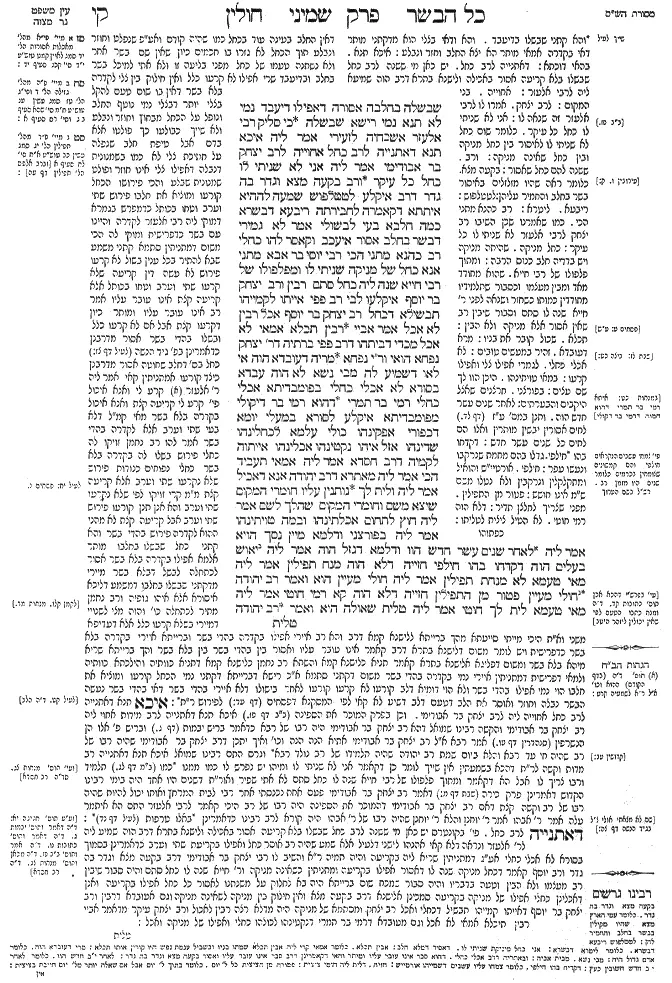
Hullin 110a - Guemara
שבשלה בחלבה אסורה דאפילו דיעבד נמי לא תנא נמי רישא שבשלה כי סליק רבי אלעזר אשכחיה לזעירי אמר ליה איכא תנא דאתנייה לרב כחל אחוייה לרב יצחק בר אבודימי אמר ליה אני לא שניתי לו כחל כל עיקר ורב בקעה מצא וגדר בה גדר דרב איקלע לטטלפוש שמעה לההיא איתתא דקאמרה לחבירתה ריבעא דבשרא כמה חלבא בעי לבשולי אמר לא גמירי דבשר בחלב אסור איעכב וקאסר להו כחלי רב כהנא מתני הכי רבי יוסי בר אבא מתני אנא כחל של מניקה שניתי לו ומפלפולו של רבי חייא שנה ליה כחל סתם רבין ורב יצחק בר יוסף איקלעו לבי רב פפי אייתו לקמייהו תבשילא דכחל רב יצחק בר יוסף אכל רבין לא אכל אמר אביי רבין תכלא אמאי לא אכל מכדי דביתהו דרב פפי ברתיה דר' יצחק נפחא הואי ור"י נפחא מריה דעובדא הוה אי לאו דשמיע לה מבי נשא לא הוה עבדא בסורא לא אכלי כחלי בפומבדיתא אכלי כחלי רמי בר תמרי דהוא רמי בר דיקולי מפומבדיתא איקלע לסורא במעלי יומא דכפורי אפקינהו כולי עלמא לכחלינהו שדינהו אזל איהו נקטינהו אכלינהו אייתוה לקמיה דרב חסדא אמר ליה אמאי תעביד הכי אמר ליה מאתרא דרב יהודה אנא דאכיל אמר ליה ולית לך נותנין עליו חומרי המקום שיצא משם וחומרי המקום שהלך לשם אמר ליה חוץ לתחום אכלתינהו ובמה טויתינהו אמר ליה בפורצני ודלמא מיין נסך הויא אמר ליה לאחר שנים עשר חדש הוו ודלמא דגזל הוה אמר ליה יאוש בעלים הוה דקדחו בהו חילפי חזייה דלא הוה מנח תפילין אמר ליה מאי טעמא לא מנחת תפילין אמר ליה חולי מעיין הוא ואמר רב יהודה חולי מעיין פטור מן התפילין חזייה דלא הוה קא רמי חוטי אמר ליה מאי טעמא לית לך חוטי אמר ליה טלית שאולה היא ואמר רב יהודה
Comments from Rashi on Masechet Hullin Page 110a
איכא תנא . בהאי דוכתא: דאתנייה לרב כחל . יש כאן מי ששנה לרב כחל שבשלו בלא קריעה אסור באכילה ולישנא בתרא דרב הוה שמיעא ליה לרבי אלעזר: אחוייה . בני המקום: לרב יצחק . אמרו לו לרבי אלעזר זה שנאה לו: אני לא שניתי לו כחל כל עיקר . כלומר שום כחל לא שניתי לו לאיסור בין כחל מניקה ובין כחל שאינה מניקה: ורב . ששנה להם כחל שאסור: בקעה מצא . כלומר ראה שהיו מזלזלים באיסור בשר בחלב והחמיר עליהן: לטטלפוש: ריבעא . ליטרא: רב כהנא מתני הכי . כמו שאמרנו שכן השיבו רב יצחק לרבי אלעזר לא שניתי לו כל עיקר: כחל מניקה . שהיתה מניקה ויש בדדיה חלב כנוס הרבה: ומתוך פלפולו של רבי חייא . שהוא מחודד מאד ומבין מעצמו וכסבור שתלמידיו מחודדין כמותו כשחזר ושנאה לפני ר' חייא שנה לו סתם וסבור שיבין רב שאין אסור אלא מניקה ולא הבין: תכלא . שכול קובר את בניו: מרא דעובדא . זהיר במעשים טובים: לא אכלי כחלי . לגמרי אפילו צלי ואפילו קרעו: במאי טויתינהו . היכן הוו לך שם עצים: בפורצני . חרצנים שאצל היקבים והבערתים: לאחר שנים עשר חדש הוה . ותנן במס' ע"ז (דף לד.) לחים אסורין יבשין מותרין ואלו הם לחים כל שנים עשר חדש: דקדחו בהו חילפי . גדלו בהם מחמת שנרקבו ונעשו עפר: חילפי . אורטיי"ש והואיל ומתקלקלין ונרקבין ולא נטלו משם ש"מ אינו חושש: פטור מן התפילין . מפני שצריך לחלצן תדיר: דלא הוה רמי חוטי . לא הטיל ציצית לטליתו:
Comments from Tosafot - Hullin 110a
איכא תנא דאתנייה לרב כחל אחוייה ליה לרב יצחק בר אבודימי . וכן בפרק המוכר את הספינה (ב"ב דף פז.) איכא תנא דאתנייה לרב מידות אתוי ליה רב יצחק בר אבודימי והקשה רבינו שמואל דהא רב יצחק בר אבודימי היה רבו של רבא כדאמר בריש יבמות (דף ג.) ובריש פ' אלו הן הנשרפין (סנהדרין דף עו.) אמר רבא א"ל רב יצחק בר אבודימי אתיא הנה הנה וכו' ואיך יתכן דרב יצחק בר אבודימי שהיה רבו של רב שהיה חי עד רבא והלא ביום שמת רב יהודה שהיה תלמידו של רב נולד רבא וגרס התם רבינו שמואל איכא תנא דאתנייה רב מדות וקשה לר"ת דהכא בשמעתין אין שייך לומר כן דקאמר אני לא שניתי לו ומיהו יש לפרש לו כמו ממנו כמו (ב"מ דף לג.) תלמיד ורבו צריך לו אבל הא דקאמר ומתוך פלפולו של רבי חייא שנה לו כחל סתם לא אתי שפיר ואור"ת דשנים היו אחד היה בימי רבינו הקדוש דאמרינן פרק כירה (שבת דף מ:) דאמר רב יצחק בר אבודימי פעם אחת נכנסתי אחר רבי לבית המרחץ ואותו יכול להיות שהיה רבו של רב וקשה קצת דאם רב יצחק בר אבודימי דהמוכר את הספינה היה רבו של רב היכי קאמר לרבי אלעזר התם הא איתמר עלה אמר ר' אבהו אמר ר' יוחנן והלא ר' יוחנן שהיה רבו של ר' אבהו היה קורא לרב רבינו כדאמרינן באלו טרפות (לעיל חולין דף נד): דאתנייה לרב כחל . פי' בקונטרס יש כאן מי ששנה לרב כחל שבשלו בלא קריעה אסור באכילה ולישנא בתרא דרב הוה שמיע ליה לר' אלעזר ונראה דלא קאי אהנהו לישני דלעיל אלא שמע שהיה רב אוסר כחל ואפילו בקריעת שתי וערב כדאמרינן בסמוך בסורא לא אכלי כחלי אע"ג דמתניתין שריא ליה בקריעה והיה תמיה ר"א והשיב לו רבי יצחק בר אבודימי דרב בקעה מצא וגדר בה גדר ורב יוסף קאמר דכחל מניקה שנה לו דאסור אפילו בקריעה ומתניתין כשאינה מניקה ור' חייא שנה לו כחל סתם והיה סבור שיבין רב מעצמו ולא הבין וטעה בדבריו והיה סבור שמכח שום ברייתא היה בא לחלוק על משנתנו לאסור כל כחל אפילו בקריעה ואנן דאכלינן כחלי אפילו של מניקה בקריעה סמכינן אלישנא דרב בקעה מצא ואין חילוק בין מניקה לשאינה מניקה וגם אעובדא דרבין ורב יצחק בר יוסף דאייתו קמייהו תבשיל דכחלי ואכל רב יצחק ומסתמא של מניקה היה מדלא רצה רבין לאכול ורב יצחק עיקר מדאמר אביי רבין תיכלא אמאי לא אכל וגם מעובדא דרמי בר תמרי דנקטינהו לכולהו כחלי ואפילו של מניקה ואכל:
Hullin 110a - Mishnah translated into english
of a suckling lamb or calf that one cooked together with the milk it contains is prohibited. There, even if one roasted it he may not eat it after the fact. To preserve symmetry, the tanna of the baraita taught in the first clause in this manner as well, stating: An udder that one cooked in its milk is permitted.
§ The Gemara above cited a second version of Rav’s opinion, according to which an udder that was roasted without being torn is prohibited for consumption. The Gemara relates: When Rabbi Elazar ascended from Babylonia to Eretz Yisrael he found Ze’eiri and said to him: Is there a tanna who taught Rav that an udder roasted without first being torn is prohibited? Ze’eiri showed him Rav Yitzḥak bar Avudimi. Rav Yitzḥak bar Avudimi said to Rabbi Elazar: I did not teach Rav that an udder is prohibited at all; rather, Rav found an unguarded valley and fenced it in. Rav taught this stringent ruling as an additional safeguard in Babylonia, where Jews were not careful about the prohibition of meat cooked in milk.
The Gemara elaborates: As when Rav arrived in Tatlefush, he heard a certain woman saying to another: How much milk does it require to cook a quarter weight of meat? Rav said: Evidently, these people are not learned enough in halakha to know that meat cooked in milk is prohibited. Rav tarried in that place, and prohibited even udders to them, so that they would not come to violate the prohibition of meat cooked in milk.
Rav Kahana teaches that Rav Yitzḥak bar Avudimi replied to Rabbi Elazar in that manner described above. By contrast, Rabbi Yosei bar Abba teaches that Rav Yitzḥak bar Avudimi said: I taught Rav only that the udder of an animal nursing offspring is prohibited, as its udder contains much milk. And due to the sharp mind of Rav Ḥiyya, Rav’s teacher, he assumed that Rav too would understand this without his saying so explicitly. Therefore, he taught this halakha to Rav with regard to an unspecified udder. Rav mistakenly thought that the ruling applies to all animals.
The Gemara relates that Ravin and Rav Yitzḥak bar Yosef arrived at the house of Rav Pappi. The servants brought before them a dish made of udder. Rav Yitzḥak bar Yosef ate of it, but Ravin did not eat. Abaye said: Bereaved Ravin, why do you not eat? After all, Rav Pappi’s wife is the daughter of Rabbi Yitzḥak Nappaḥa, and Rabbi Yitzḥak Nappaḥa was a master of good deeds, who was meticulous in his performance of mitzvot. Had Rav Pappi’s wife not heard in her father’s house that such a dish is permitted, she would not have made it.
The Gemara relates: In Sura they would not eat udders at all, even torn and roasted. But in Pumbedita they would eat udders. Rami bar Tamrei, who is also called Rami bar Dikulei, from Pumbedita, arrived in Sura on the eve of Yom Kippur. Since it is a mitzva to eat and drink then, large quantities of meat were cooked, and everyone brought out their udders from the animals they had slaughtered and threw them away. Rami bar Tamrei went and gathered the udders, roasted them, and ate them, in accordance with his custom.
The residents of Sura brought Rami bar Tamrei before Rav Ḥisda, who said to him: Why did you do this? Rami bar Tamrei said to Rav Ḥisda: I am from the place of Rav Yehuda, who eats udders, and this is the accepted custom in Pumbedita. Rav Ḥisda said to him: And do you not hold by the principle that the Sages impose upon a traveler the stringencies of the place that he left and also the stringencies of the place to which he went? You should have accepted the stringency of Sura and not eaten the udders. Rami bar Tamrei said to Rav Ḥisda: That principle applies only to one who remains in the place he is visiting, but I ate the udders outside the boundaries of Sura.
Rav Ḥisda further asked Rami bar Tamrei: And with what did you roast the udders? Rami bar Tamrei said to him: I roasted them with grape seeds [purtzenei] I found in the vines there. Rav Ḥisda objected: But how could you roast the udders with grape seeds, as perhaps they were from wine used for a libation to idolatry, from which it is prohibited to derive benefit. Rami bar Tamrei said to him: These were old seeds that still lay there after twelve months had passed since the grapes were used, and any prohibition had expired, as by that point they are assumed to have lost any prohibited liquid that previously remained inside (see Avoda Zara 34a).
Rav Ḥisda further objected: But perhaps these seeds were from stolen property, i.e., they belonged to someone and it was prohibited for you to take them. Rami bar Tamrei said to him: Even so, in this case there was certainly despair of the owners of recovering them, as grass was growing among them. Since the owners had allowed them to lie there for so long, they had clearly given up all hope of retrieving them.
Rav Ḥisda saw that Rami bar Tamrei had not donned phylacteries, and said to him: What is the reason that you have not donned phylacteries? Rami bar Tamrei said to him: He, i.e., I, am suffering from intestinal illness, and Rav Yehuda said that one who has intestinal illness is exempt from the mitzva of phylacteries, which require a clean body, because he would have to remove them constantly to defecate.
Rav Ḥisda further saw that Rami bar Tamrei had not placed the threads of ritual fringes on his garment and said to him: What is the reason that you do not have the threads of ritual fringes? Rami bar Tamrei said to him: It is a borrowed robe, and Rav Yehuda said:
Traduction : The William Davidson digital edition of the Koren Noé Talmud, with commentary by Rabbi Adin Even-Israel Steinsaltz.