 Talmud Bavli
The learning on the whole site is dedicated : L'ilui Nishmat Yaakov ben Myriam
The learning on the whole site is dedicated : L'ilui Nishmat Ledicia bat David Banoun
The learning on the whole site is dedicated : L'ilui Nishmat Margalit bat Ledicia
Hullin 33a : Youtube
Rabbi Dr. Moshe WeisblumYoutube
1 video class :
Hullin Page 33a
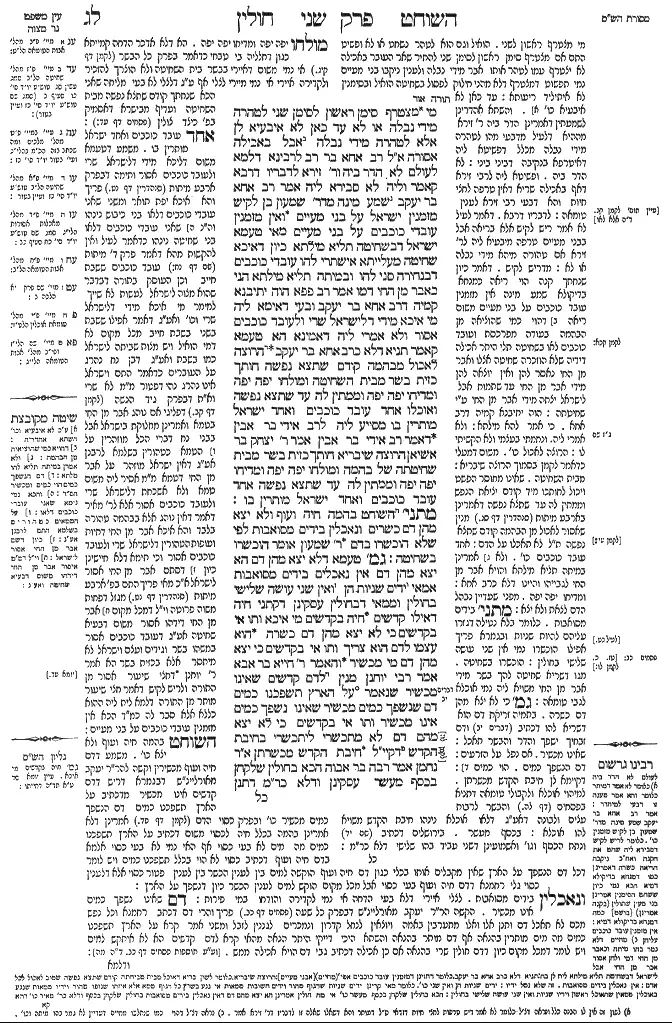
Hullin 33a - Guemara
מי מצטרף סימן ראשון לסימן שני לטהרה מידי נבלה או לא עד כאן לא איבעיא לן אלא לטהרה מידי נבלה אבל באכילה אסורה א"ל רב אחא בר רב לרבינא דלמא לעולם לא הדר ביה ור' זירא לדבריו דרבא קאמר וליה לא סבירא ליה אמר רב אחא בר יעקב שמע מינה מדר' שמעון בן לקיש מזמנין ישראל על בני מעיים ואין מזמנין עובדי כוכבים על בני מעיים מאי טעמא ישראל דבשחיטה תליא מילתא כיון דאיכא שחיטה מעלייתא אישתרי להו עובדי כוכבים דבנחירה סגי להו ובמיתה תליא מילתא הני כאבר מן החי דמו אמר רב פפא הוה יתיבנא קמיה דרב אחא בר יעקב ובעי דאימא ליה מי איכא מידי דלישראל שרי ולעובד כוכבים אסור ולא אמרי ליה דאמינא הא טעמא קאמר תניא דלא כרב אחא בר יעקב הרוצה לאכול מבהמה קודם שתצא נפשה חותך כזית בשר מבית השחיטה ומולחו יפה יפה ומדיחו יפה יפה וממתין לה עד שתצא נפשה ואוכלו אחד עובד כוכבים ואחד ישראל מותרין בו מסייע ליה לרב אידי בר אבין דאמר רב אידי בר אבין אמר ר' יצחק בר אשיאן הרוצה שיבריא חותך כזית בשר מבית שחיטתה של בהמה ומולחו יפה יפה ומדיחו יפה יפה וממתין לה עד שתצא נפשה אחד עובד כוכבים ואחד ישראל מותרין בו:
מתני׳ השוחט בהמה חיה ועוף ולא יצא מהן דם כשרים ונאכלין בידים מסואבות לפי שלא הוכשרו בדם ר' שמעון אומר הוכשרו בשחיטה:
גמ׳ טעמא דלא יצא מהן דם הא יצא מהן דם אין נאכלים בידים מסואבות אמאי ידים שניות הן ואין שני עושה שלישי בחולין וממאי דבחולין עסקינן דקתני חיה דאילו קדשים חיה בקדשים מי איכא ותו אי בקדשים כי לא יצא מהן דם כשרה הוא עצמו לדם הוא צריך ותו אי בקדשים כי יצא מהן דם מי מכשיר והאמר ר' חייא בר אבא אמר רבי יוחנן מנין לדם קדשים שאינו מכשיר שנאמר (דברים יב, טז) על הארץ תשפכנו כמים דם שנשפך כמים מכשיר שאינו נשפך כמים אינו מכשיר ותו אי בקדשים כי לא יצא מהם דם לא מתכשרי ליתכשרי בחיבת הקדש דקיי"ל חיבת הקדש מכשרתן א"ר נחמן אמר רבה בר אבוה הכא בחולין שלקחן בכסף מעשר עסקינן ודלא כר"מ דתנן
Comments from Rashi on Masechet Hullin Page 33a
מי מצטרף ראשון לשני . הואיל וגם הוא לטהר נשחט או לא ופשיט התם אם מצטרף סימן ראשון לסימן שני להתיר שאר העובר באכילה לא יצטרף עמו לטהר אותו אבר מידי נבלה. ולענין ניקבו בני מעיים נמי תפשוט דמצטרף דלא מהני חילוק לפסול בשחיטה הואיל ובסימנין לא איתיליד ריעותא: עד כאן לא איבעיא כו' . והשתא אהדרינן לשמעתין דאמרינן הדר ביה ר' זירא מההיא דלעיל מדבעי מהו לטהרה מידי נבלה מכלל דפשיטא ליה דאיטרפא בנקיבה דביני ביני: לא הדר ביה . ופשיטא ליה לרבי זירא דאף באכילה שריא דאין טרפה לחצי חיות. והא דבעי רבי זירא לענין טומאה: לדבריו דרבא . דאמר לעיל לא אמר ריש לקיש אלא בריאה אבל בבני מעיים טרפה מיבעיא ליה לר' זירא אם טהורה מיהא מידי נבלה או לא: מדריש לקיש . דאמר כיון שנחתך קנה הוי ריאה כמנחא בדיקולא שמע מינה אין מזמנין עובד כוכבים על בני מעיים משום ריאה דהוי כמי שהוציאה מן הבהמה בעודה מפרכסת ועובד כוכבים לאו בשחיטה תלי היתר אכילה דידיה שלא הוזכרה שחיטה אצלו ואבר מן החי נאסר להן ואין יוצאה להן מידי אבר מן החי עד שתמות אבל לישראל יצתה מידי אבר מן החי ע"י שחיטתה: הוה יתיבנא קמיה דרב אחא . כי אמר להא מילתא: ולא אמרי ליה . ונחמתי בעצמי ולא הקשיתי לו: הרוצה לאכול כו' . משום דמעלי כדאמר לקמן בסמוך הרוצה שיבריא: מבית השחיטה . שאינו מחוסר הפשט ויכול לחותכו מיד קודם יציאת הנפש וממתין לה עד שתצא נפשה דאמרינן בארבע מיתות (סנהדרין דף סג.) מנין שאסור לאכול מן הבהמה קודם שתצא נפשה ת"ל לא תאכלו על הדם: אחד עובד כוכבים כו' . ולא אמרינן במיתה תליא מילתא והויא אבר מן החי לגבייהו והיינו דלא כרב אחא: ומדיחו יפה יפה . מפני שעדיין נבהל הדם לצאת ולא יצא: מתני' בידים מסואבות . כלומר בלא נטילה דגזרו עליהם להיות שניות. ובגמרא פריך אפילו הוכשרו נמי אין שני עושה שלישי בחולין: הוכשרו בשחיטה . מגו דשריא שחיטה להך בשר מידי אבר מן החי משויא ליה נמי אוכלא לגבי טומאה: גמ' כי לא יצא מהן דם כשרה . בתמיה. זריקת דם הוא דשריא להו דכתיב (דברים יב) ודם זבחיך ישפך והדר והבשר תאכל: שאינו מכשיר . אם נפל על הזרעים: דם הנשפך כמים . הוי כמים: דקיימא לן חיבת הקדש מכשרתן . למיהוי אוכלא ולקבולי טומאה דתניא בפסחים (דף לה.) והבשר לרבות עצים ולבונה דאע"ג דלאו אוכלא נינהו חיבת הקדש משויא להו אוכלא: בכסף מעשר . בירושלים דכתיב (דברים יד) ונתת הכסף וגו' ואשמועינן דשני עביד בהו שלישי דלא כר"מ:
Comments from Tosafot - Hullin 33a
מולחו יפה יפה ומדיחו יפה יפה . הא דלא אדכר הדחה קמייתא כגון דחלליה בי טבחי כדאמר בפרק כל הבשר (לקמן חולין דף קיג.) אי נמי משום דאיירי בבשר בית השחיטה ולא הוצרך להזכיר ולקדירה איירי אי נמי מיירי לצלי אף ע"ג דלצלי לא בעי מליחה שאני הכא שנחתך קודם שתצא נפשה מבית השחיטה ועדיף מבישרא דאסמיק בפ' כיצד צולין (פסחים דף עד:): אחד עובד כוכבים ואחד ישראל מותרין בו . משמע דטעמא משום דליכא מידי דלישראל שרי ולעובד כוכבים אסור ותימה דבפרק ארבע מיתות (סנהדרין דף נט.) פריך והא איכא יפת תואר ומשני שאני עובדי כוכבים דלאו בני כיבוש נינהו וה"נ שאני עובדי כוכבים דלאו בני שחיטה נינהו כדאמר לעיל ואין להקשות מהא דאמר פרק ד' מיתות (שם דף נח:) עובד כוכבים ששבת חייב וכן העוסק בתורה דבדבר שהוא מצוה לישראל לעשות לא שייך למימר מי איכא מידי דלישראל שרי וכו' ואע"ג דאמר אפילו ששבת בשני בשבת חייב מכל מקום לא דמי הואיל ויש מצות שביתה לישראל כמו בשבת ואע"ג דבן נח נהרג על העוברים כדאמר התם וישראל אינו נהרג נהי דפטור מ"מ לא שרי וא"ת דבפרק גיד הנשה (לקמן חולין דף קב.) דפליגי אם נוהג אבר מן החי בטמא ואמרינן מחלוקת בישראל אבל בבני נח דברי הכל מוזהרין על הטמא כטהורין בשלמא לרבנן אע"ג דאין ישראל מוזהר על אבר מן החי דטמא מ"מ אסיר ליה משום טמא ולא אשכחת דלישראל שרי ולעובד כוכבים אסור אלא לר' מאיר דאמר דאין נוהג אלא בבהמה טהורה בלבד והא איכא אבר מן החי דחיות ועופות הטהורין דלישראל שרי ולעובד כוכבים אסור וכי תימא דלא חיישינן כיון דסתם אבר מן החי אסור לישראל א"כ מאי פריך התם בפ' ארבע מיתות (סנהדרין דף נט.) מגזל דפחות משוה פרוטה וי"ל דמכל מקום אבר מן החי דידהו אסור משום דבעיא שחיטה אע"ג דעובד כוכבים אסור במשהו בשר וגידים ועצם וישראל לא מיתסר אלא בכזית בשר הא אמר ר' יוחנן דחצי שיעור אסור מן התורה ולריש לקיש דאמר חצי שיעור מותר מן התורה דלמא לית ליה ההוא כללא אלא סבר לה כמ"ד הכא אין מזמנין עובדי כוכבים על בני מעיים: השוחט בהמה חיה ועוף ולא יצא כו' . משמע דדם חיה ועוף מכשירין וקשה להר"ר יעקב מאורליינ"ש דבגמרא דריש דדם קדשים אינו מכשיר מדכתיב על הארץ תשפכנו כמים דם הנשפך כמים מכשיר כו' ובפרק כסוי הדם (לקמן חולין דף פד.) אמרינן דלא אמרינן בהמה בכלל חיה לכסוי משום דכתיב על הארץ תשפכנו כמים מה מים לא בעי כסוי אף האי נמי לא בעי כסוי אלמא בדם חיה ועוף דכתיב כסוי לא הוי בכלל תשפכנו כמים ויש לומר דכל דם הנשפך על הארץ שאין מקבלים אותו בכלי כגון דם חיה ועוף הוקשה למים בין לענין הכשר בין לענין פטור כסוי אלא דלענין כסוי גלי רחמנא דדם חיה ועוף בעי כסוי אבל מכל מקום הוקש למים לענין הכשר כיון דנשפך על הארץ: ונאכלין בידים מסואבות . לצלי איירי דלא בעי הדחה אי נמי לקדירה והודחו במי פירות: דם שאינו נשפך כמים אינו מכשיר . הקשה הר"ר יעקב מאורליינ"ש דבפרק כל שעה (פסחים דף כב.) פריך והרי דם דכתב רחמנא וכל נפש מכם לא תאכל דם ותנן אלו ואלו מתערבין באמה ויוצאין לנחל קדרון ונמכרים לגננין לזבל ומשני אמר קרא על הארץ תשפכנו כמים מה מים מותרין בהנאה אף דם מותר בהנאה והשתא היכי דייקי היתר הנאה מהאי קרא לדם קדשים הא לא איתקש למים ויש לומר דמכל מקום כיון דדם חולין שרי בהנאה אם כן אכילה דכתיב גבי דם הויא אכילה ממש. [וע"ע תוספות פסחים דף כב. ד"ה מה]:
Hullin 33a - Mishnah translated into english
The Gemara clarifies this dilemma: Does the first siman join together with the second siman to purify the animal from the impurity of an unslaughtered carcass or not? In both cases the dilemma is: Does the cutting of the first siman, which serves the dual purpose of being a component of permitting consumption and preventing impurity of the animal, join together with the cutting of the second siman, which serves only the purpose of preventing impurity, in order to constitute a single act of slaughter and thereby prevent the animal from assuming the impurity of an unslaughtered carcass? Or perhaps because the cutting of each siman is performed for a different purpose they do not join together?
In any event, we raise the dilemma only in order to purify the foreleg from the impurity of an unslaughtered carcass. But with regard to eating the slaughtered animal, all agree that it is forbidden, as even Rabbi Zeira concedes that the animal is a tereifa and retracts his objection to the distinction that Rava proposed between the lungs and the innards.
Rav Aḥa bar Rav said to Ravina: Perhaps Rabbi Zeira actually did not retract his opinion, as even initially he held that there is no distinction between lungs and innards. If either is perforated after one siman was cut, the animal is a tereifa. And Rabbi Zeira stated his objection to the distinction of Rava in accordance with the statement of Rava, but he himself does not hold accordingly.
The Gemara continues its analysis of the statement of Reish Lakish, who said that after the windpipe is cut, the lung is considered as though it was placed in a basket, and if it is perforated before the slaughter is completed, the animal does not become a tereifa. Rav Aḥa bar Yaakov said: Learn from the statement of Rabbi Shimon ben Lakish that one may invite Jews to eat the innards of an animal that was slaughtered, but one may not invite gentiles to eat the innards of an animal that was slaughtered, because they are forbidden to gentiles.
What is the reason? For Jews the matter of rendering the meat of the animal fit for consumption is dependent upon the performance of a valid act of slaughter. Once there is full-fledged slaughter and both simanim are cut, the innards are permitted to them even if the animal is convulsing. But with regard to gentiles, for whom stabbing is sufficient and slaughter is not required, the innards are permitted only after the animal is completely dead, since the matter of rendering the meat of the animal fit for consumption is dependent upon its death. Therefore, if the animal is still convulsing, these innards, which are considered to be outside the body after the cutting of the two simanim, are considered like a limb from a living animal and it is forbidden for gentiles to eat them.
Rav Pappa said: I was sitting before Rav Aḥa bar Yaakov and I sought to say to him that his statement is difficult: Is there anything that is permitted for a Jew but prohibited for a gentile? But I did not say that to him, as I said to myself: Didn’t he say a reason for his ruling? Therefore, there is no reason to ask the question.
The Gemara notes: It is taught in a baraita not in accordance with the opinion of Rav Aḥa bar Yaakov: One who seeks to eat from the meat of an animal before its soul departs may cut an olive-bulk of meat from the area of the slaughter, the neck, and salt it very well, i.e., more than is normally required, and rinse it very well in water to remove the salt and the blood, and wait until the animal’s soul departs, and eat it. It is permitted for both a gentile and a Jew to eat it. Contrary to the statement of Rav Aḥa bar Yaakov, there is no distinction between Jew and gentile.
This baraita supports the statement of Rav Idi bar Avin, as Rav Idi bar Avin says that Rav Yitzḥak bar Ashyan says: One who seeks to recuperate from an illness should cut an olive-bulk of meat from the area of slaughter, i.e., the neck, of an animal, and salt it very well, and rinse it very well, and wait until the animal’s soul departs, and eat it. It is permitted for both a gentile and a Jew to eat it.
MISHNA: In the case of one who slaughters a domesticated animal, an undomesticated animal, or a bird, and blood did not emerge from them during the slaughter, all of these are permitted for consumption and do not require the ritual washing of the hands as they may be eaten with ritually impure [mesoavot] hands, because they were not rendered susceptible to ritual impurity through contact with blood, which is one of the seven liquids that render food susceptible to impurity. Rabbi Shimon says: They were rendered susceptible to ritual impurity by means of the slaughter itself.
GEMARA: The reason that they may be eaten with ritually impure hands is that blood did not emerge from the animals or birds during the slaughter; but if blood emerged from them during slaughter, they may not be eaten with ritually impure hands. The Gemara asks: Why not? Ordinary hands are impure with second-degree ritual impurity and an item of second-degree impurity cannot impart third-degree impurity to non-sacred items with which it comes into contact.
The Gemara clarifies: From where is it ascertained that we are dealing in the mishna with non-sacred food, and not with the slaughter of an offering? That is clear, as the tanna teaches in the list of those slaughtered: An undomesticated animal. As, if the tanna is referring to the slaughter of sacrificial animals and birds, is there any undomesticated animal included in the framework of sacrificial animals? And furthermore, if the tanna is referring to sacrificial animals, when no blood emerges from them are the offerings valid? The offering itself requires blood, as it is only through the presenting of the blood upon the altar that the offering is accepted.
And furthermore, if the tanna is referring to sacrificial animals, when blood emerges from them, does it render them susceptible to ritual impurity? But doesn’t Rabbi Ḥiyya bar Abba say that Rabbi Yoḥanan says: From where is it derived that the blood of sacrificial animals does not render food susceptible to ritual impurity? It is derived from a verse, as it is stated: “You shall not eat it; you shall pour it upon the earth like water” (Deuteronomy 12:24). Blood of a non-sacred animal, which is poured like water when it is slaughtered, renders food susceptible to ritual impurity. By contrast, blood of a sacrificial animal, which is not poured like water but is presented on the altar, does not render food susceptible to ritual impurity.
And furthermore, if the tanna is referring to sacrificial animals, when blood does not emerge from them are they not nevertheless rendered susceptible to ritual impurity? Let them be rendered susceptible to ritual impurity by means of regard for sanctity, as we maintain that regard for sanctity renders food suceptible to ritual impurity even in the absence of contact with any of the seven liquids.
Rav Naḥman said that Rabba bar Avuh said: Here we are dealing with non-sacred food that one purchased in Jerusalem with second-tithe money, which assumes the status of the second-tithe produce. This produce, in turn, assumes third-degree impurity through contact with hands that have second-degree impurity. And this mishna is not in accordance with the opinion of Rabbi Meir, as we learned in a mishna (Para 11:5):
Traduction : The William Davidson digital edition of the Koren Noé Talmud, with commentary by Rabbi Adin Even-Israel Steinsaltz.