 Talmud Bavli
The learning on the whole site is dedicated : L'ilui Nishmat Nissim ben Barukh Malka
The learning on the whole site is dedicated : For the success of Elyahou ben H'anna & family
The learning on the whole site is dedicated : L'ilui Nishmat Jacques Isaac Ben Amram Loubaton
Hullin 112a : Youtube
Rabbi Dr. Moshe WeisblumYoutube
1 video class :
Hullin Page 112a
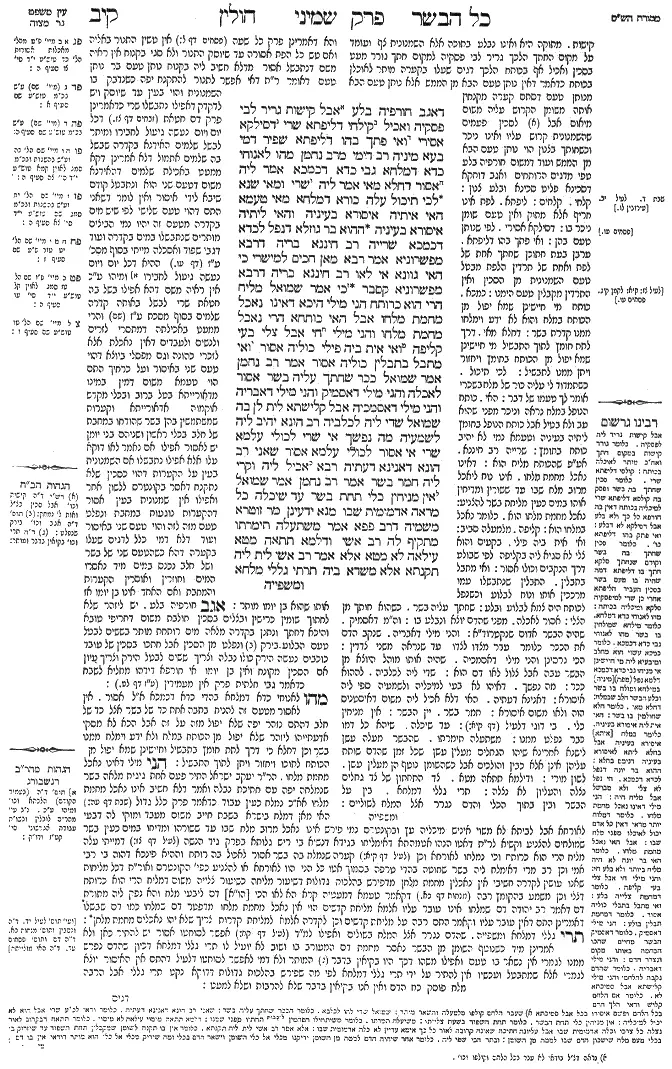
Hullin 112a - Guemara
דאגב חורפיה בלע אבל קישות גריר לבי פסקיה ואכיל קילחי דליפתא שרי דסילקא אסירי ואי פתך בהו דליפתא שפיר דמי עא מיניה רב דימי מרב נחמן מהו לאנוחי כדא דמלחא גבי כדא דכמכא אמר ליה אסור דחלא מאי אמר ליה שרי ומאי שנא לכי תיכול עלה כורא דמלחא מאי טעמא האי איתיה איסורא בעיניה והאי ליתיה איסורא בעיניה ההוא בר גוזלא דנפל לכדא דכמכא שרייה רב חיננא בריה דרבא מפשרוניא אמר רבא מאן חכים למישרי כי האי גוונא אי לאו רב חיננא בריה דרבא מפשרוניא קסבר כי אמר שמואל מליח הרי הוא כרותח הני מילי היכא דאינו נאכל מחמת מלחו אבל האי כותחא הרי נאכל מחמת מלחו והני מילי חי אבל צלי בעי קליפה ואי אית ביה פילי כוליה אסור ואי מתבל בתבלין כוליה אסור אמר רב נחמן אמר שמואל ככר שחתך עליה בשר אסור לאכלה והני מילי דאסמיק והני מילי דאבריה והני מילי דאסמכיה אבל קלישתא לית לן בה שמואל שדי ליה לכלביה רב הונא יהיב ליה לשמעיה מה נפשך אי שרי לכולי עלמא שרי אי אסור לכולי עלמא אסור שאני רב הונא דאנינא דעתיה רבא אכיל ליה וקרי ליה חמר בשר אמר רב נחמן אמר שמואל אין מניחין כלי תחת בשר עד שיכלה כל מראה אדמומית שבו מנא ידעינן מר זוטרא משמיה דרב פפא אמר משתעלה תימרתו מתקיף לה רב אשי ודלמא תתאה מטא עילאה לא מטא אלא אמר רב אשי לית ליה תקנתא אלא משדא ביה תרתי גללי מלחא
Comments from Rashi on Masechet Hullin Page 112a
קישות . מתוקה היא ואינו נבלע בתוכה אלא השמנונית צף ועומד על מקום החתך הלכך גריר לבי פסקיה למקום חתך גורר מעט בסכין ואכיל אף בכותח. הלכך דגים שעלו בקערה מותר לאוכלן בכותח כדאמר דאין נותן טעם הבא מן הממש אלא נותן טעם הבא מנותן טעם דסתם קערה מקנחין אותה משומן הקרוש עליה משום מיאוס אבל לסכין פעמים שהשמנונית קרוש עליו ואינו ניכר וכשחותך בצנון הוי נותן טעם הבא מן הממש ועוד דמשום חורפיה בלע טפי מדגים הרותחים ואגב דוחקא דסכינא פליט סכינא ובלע צנון: קלחי . קלחים: ליפתא . לפת אינו חריף אלא מתוק ואין טעם שומן ניכר בו: דסילקא אסירי . לפי שנותן טעם בהן: ואי פתך בהו דליפתא . ערבן בעת חתוכן שחתך אחת של לפת ואחת של תרדין הלפת מבטל טעם השמנונית מן הסכין ואין התרדין מקבלין טעם הימנו: כמכא . כותח. מי חיישינן שמא יפול מן הכותח במלח והוא לא ידע וימלחו ממנו קדרת בשר: דחלא מאי . דרך לתת חומץ לתוך התבשיל. מי חיישינן שמא יפול מן הכותח בחומץ ויחזור ויתן ממנו לתבשיל: לכי תיכול . כשתמדוד לי עליה כור של מלח בשכרי אומר לך טעמו של דבר: האי . כותח הנופל במלח נראה וניכר מפני שהוא עב ולא בטיל אבל כותח הנופל בחומץ ליתיה בעיניה וטעמא נמי לא יהיב כותח בחומץ: שרייה רב חיננא . אע"פ שהכותח מליח הוא: דאינו נאכל מחמת מלחו . אינו נוח ליאכל מרוב מלח שבו עד ששורין ומדיחין אותו במים כעין מליחת בשר להצניע: נאכל מחמת מלחו הוא . כלומר נאכל במלחו הוא: קליפה . מלמעלה סביב: ואי אית ביה פילי . בקעים והוא צלי לא סגיא ליה בקליפה לפי שבולע דרך הנקבים וכולו אסור: ואי מתבל בתבלין . התבלין שנתבשלו עמו מרככין אותו ונוח לבלוע וכשנפל לכותח היה צמא לבלוע ובלע: שחתך עליה בשר . כשהוא חותך מן הצלי: אסור לאכלה . מפני שהדם יוצא ונבלע בו: וה"מ דאסמיק . שהיה הבשר אדום שנקטרוד"א: והני מילי דאבריה . שנקב הדם את הככר כלומר עבר מצדו לצדו עד שנראה משני צדדין: הכי גרסינן והני מילי דאסמכיה . שהיה אותו מוהל היוצא מן הבשר עבה אבל צלול לאו דם הוא: שדי ליה לכלביה . לההוא ככר: מה נפשך . דאיהו לא בעי למיכליה ולשמעיה ספי ליה איסורא: דאנינא דעתיה . האי דלא אכיל ליה משום דאיסטניס הוה ולאו משום איסורא: חמר בשר . יין הבשר: אין מניחין כלי . בי דוגי דלעיל (חולין דף קיא:): עד שיכלה . שיהא כל דמו כבר נפלט ממנו: משתעלה תימרתו . שהבשר מעלה עשן. לישנא אחרינא שיהו הגחלים מעלין עשן שכל זמן שהדם שותת עליהן אינן אלא כבין והולכים אבל כשהשומן נוטף הן מעלין עשן. לשון מורי: ודילמא תתאה מטא . צד התחתון של צד גחלים נצלה והעליון לא נצלה: תרי גללי דמלחא . בין על הבשר ובין בתוך הכלי והדם נגרר אצל המלח לשוליים:
Comments from Tosafot - Hullin 112a
אגב חורפיה בלע . יש ליזהר שלא לחתוך שומין כרישין ובצלים בסכין חולבת משום דחריפי טובא והיכא דחתך ונתנן בקדרה מלאה מים רותחת מותר בששים לבטל טעם הבלוע בירק ונפלט מן הסכין אבל חתכו בסכין של עובד כוכבים נעשה הירק כולו נבלה וצריך ששים לבטל הירק וצריך עיון אם הסכין מקונח ואין בן יומו אי חורפא דידהו מחליא לשבח כדאמר גבי חלתית פרק אין מעמידין (ע"ז דף לט.): מהו לאנוחי כדא דמלחא בהדי כדא דכמכא א"ל אסור . אין לאסור מטעם זה להניח בתבה אחת כד של בשר אצל כד של חלב דהתם נזהר יפה שלא יפול מזה על זה אבל הכא לא מסקי אדעתייהו ליזהר שלא יפול מן הכותח במלח ולא ידע וימלח ממנו בשר וכן דחלא כי דרך לתת חומץ בתבשיל וחיישינן שמא יפול מן הכותח לתוכו ויחזור ויתן לתוך התבשיל: הני מילי דאינו נאכל מחמת מלחו . הר"ר יעקב ישראל התיר פעם אחת גיגית מלאה בשר שנמלחה יפה עם חתיכת נבלה ואמר דלא חשיב אינו נאכל מחמת מלחו אא"כ נמלח כעין עבוד כדאמר פרק כלל גדול (שבת דף עה:) האי מאן דמלח בישרא בשבת חייב משום מעבד ומוקי לה דבעי לאורחא אבל לביתא לא משוי איניש מיכליה עץ ובקונטרס נמי פירש אינו נאכל מרוב מלח שבו עד ששורהו ומדיחו במים כעין בשר שמולחים להצניע וקשיא לר"ת דאטו הנהו אטמהתא דאימליחו בגידא דנשיא בי ריש גלותא בפרק גיד הנשה (לעיל חולין דף צז:) דמייתי עלה מליח הרי הוא כרותח וכי נמלחו לאורחא וכן (לעיל חולין דף קיא:) קערה שנמלח בה בשר אסור לאכול בה רותח וההיא פינכא דהוה בי רבי אמי וכן רב מרי דאימלח ליה בשר שחוטה בהדי טרפה בסמוך אטו כל הני הוו לאורחא או להצניע כפי' הקונטרס ואור"ת דכל מליחות שאנו עושין לקדרה חשיבי אין נאכלין מחמת מלחן מדפירש בהלכות גדולות דשיעור מליחה כשיעור צלייה משום דמליח הרי הוא כרותח דצלי וכן משמע בהקומץ רבה (מנחות דף כא.) דקאמר טעמא דמעטיה קרא הא לאו הכי [הו"א] דם ליבעי מלח והא נפק ליה מתורת דם דאמר רב יהודה דם שמלחו אינו עובר עליו אלמא מליחת קדשים הוי אין נאכל מחמת מלחו מדפטר דם שמלחו כמו דם שבשלו דאמרינן התם דאין עובר עליו וקאמר התם רבה על מליחת קדשים וכן לקדרה אלמא למליחת קדרות צריך שלא יהו נאכלים מחמת מלחן: תרי גללי דמלחא ומשפייה . שהדם נגרר אצל המלח בשולים ואפילו למ"ד (לעיל חולין דף קח:) אפשר לסוחטו אסור יש להתיר כאן ולא אמרינן מיד כשנוטף השומן מן הבשר נאסר מחמת דם המעורב בו ושוב לא יועיל לו תרי גללי דמלחא דכיון שהדם נפרש ממנו לגמרי אין נשאר בו טעם ואפילו משהו דכך היו בקיאין בדבר המותר ולא דמי לאפשר לסוחטו דלעיל דהתם אין האיסור יוצא לגמרי אלא שמתבטל ועכשיו אין להתיר על ידי תרי גללי דמלחא לפי מה שפירש בהלכות גדולות דדוקא נקט תרי גללי אבל הרבה מלח פוסק כח הדם ואין אנו בקיאין בדבר שלא להרבות ושלא למעט:
Hullin 112a - Mishnah translated into english
as due to its sharpness it absorbs the fat on the knife. But if one cut a cucumber with the same knife, it does not absorb the fat to the same extent. One may therefore simply scrape the place of the cut to remove any fat residue, and then one may eat the cucumber with kutaḥ.
Likewise, turnip stalks cut with such a knife are permitted for consumption with kutaḥ. But chard cut with such a knife is prohibited for consumption with kutaḥ, as it absorbs flavor from the knife. And if one alternated between cutting chard and turnip stalks it is permitted, as the turnip stalks nullify the taste of the meat in the knife.
§ Rav Dimi inquired of Rav Naḥman: What is the halakha with regard to placing a jug of salt, used to salt meat, alongside a jug of kamka, i.e., kutaḥ, a milk dish? Need one be concerned lest some of the kutaḥ fall on the salt without his knowledge and ultimately contaminate his meat? Rav Naḥman said to him: It is prohibited to place the two jugs next to each other. Rav Dimi further inquired: What is the halakha with regard to a similar case involving a jug of vinegar used to season meat? Need one be concerned lest the kutaḥ fall into the vinegar? Rav Naḥman said to him: It is permitted to place these two jugs next to each other.
Rav Dimi asked: And what is different about the vinegar? Rav Naḥman responded: When you have thought about it long enough to eat a kor of salt, you will know the reason. The Gemara clarifies: What is the reason then? In this case of the salt, the prohibited substance is substantive, as the traces of kutaḥ are discernible and not nullified by the salt. But in that case of the vinegar, the prohibited substance is not substantive, since the kutaḥ melts away in the vinegar and will no longer impart flavor.
The Gemara relates: There was a certain young bird that fell into a jug of kamka, i.e., kutaḥ. Rav Ḥinnana, son of Rava of the city of Pashronya, permitted the bird. Rava said about this: Who is wise enough to discern reasons to permit the food in difficult cases like this, if not Rav Ḥinnana, son of Rava of Pashronya? He maintains that when Shmuel said that a salted food imparts flavor like a boiling food, that statement applies only to a food so salty that it is not eaten due to its salt, but this kutaḥ can still be eaten due to, i.e., despite, its salt. Therefore, it is as if both foods are cold and unsalted, and they do not impart flavor to one another, provided one rinses the area of contact.
The Gemara adds: And this statement applies only if the bird is raw, but if it is roasted, it requires peeling to remove the outer layer, since roasting softens the meat and causes it to absorb more flavor. And if it has cracks [pilei], it is entirely forbidden, because the milk is absorbed into the cracks. And if it has been flavored with spices it is likewise entirely forbidden, because the spices soften the meat and render it absorbent.
Rav Naḥman said that Shmuel says: It is prohibited to eat a loaf of bread upon which one cut unsalted roasted meat, since the blood expelled from the roasted meat is absorbed in the loaf. The Gemara adds: And this statement applies only if the meat is ruddy from the blood it contains. And furthermore, this statement applies only if so much blood was absorbed in the loaf that it passed through from one side of the loaf to the other and was visible from both sides. And furthermore, this statement applies only if the liquid emitted by the roasted meat is viscous. But if it is runny, we have no problem with it, i.e., the loaf is permitted.
The Gemara relates: Shmuel would throw to his dog such a loaf of bread that he held was prohibited. Rav Huna would not eat the loaf himself but would rather give it to his attendant. The Gemara objects: Whichever way you look at it, Rav Huna’s behavior is problematic: If the loaf is permitted, it is permitted for everyone, including Rav Huna himself. And if it is prohibited, then it is prohibited for everyone, and he should not give it to his attendant. The Gemara explains: In fact, the loaf is permitted for consumption, and Rav Huna is different, as he is of delicate constitution and did not want to eat the loaf himself. The Gemara further relates: Rava would eat a loaf of this type, and he would call the red liquid meat wine.
Rav Naḥman says that Shmuel says: One may not place a vessel under roasting meat to catch the drippings of fat until all the ruddiness of the meat’s appearance has dissipated. Beforehand, though, one must be concerned that blood will fall with the drippings into the vessel, rendering the mixture and the vessel prohibited. The Gemara asks: How do we know when all the meat’s redness has disappeared? Mar Zutra said in the name of Rav Pappa: As soon as its smoke rises, one can be sure that all the blood has been expelled from the meat.
Rav Ashi objects to this: But perhaps the underside of the meat, which is closest to the coals, has been fully roasted, but its upper part is still not roasted and still expels blood at this stage. Rather, Rav Ashi said: One who wishes to collect the drippings has no remedy except to place two lumps of salt in it, i.e., one in the receptacle under the meat and one on top, in the meat itself.
Traduction : The William Davidson digital edition of the Koren Noé Talmud, with commentary by Rabbi Adin Even-Israel Steinsaltz.