 Talmud Bavli
The learning on the whole site is dedicated : L'ilui Nishmat Yechayahou ben Moche
The learning on the whole site is dedicated : L'ilui Nishmat Jamila bat Chlomo Abensour
The learning on the whole site is dedicated : L'ilui Nishmat Chemouel Eliezer ben Batcheva
Hullin 92a : Youtube
Rabbi Dr. Moshe WeisblumYoutube
1 video class :
Hullin Page 92a
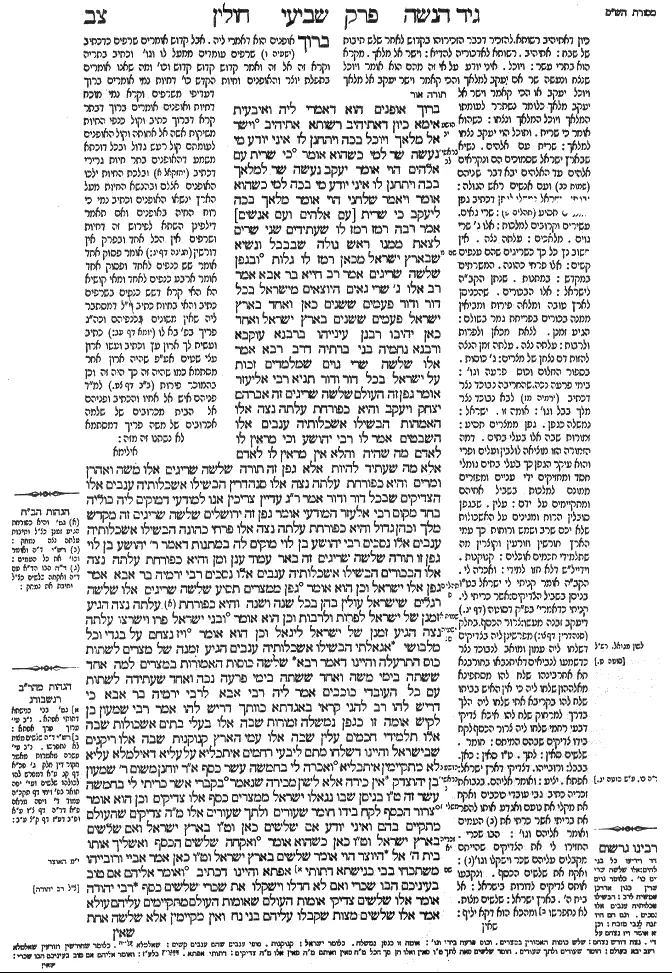
Hullin 92a - Guemara
ברוך אופנים הוא דאמרי ליה ואיבעית אימא כיון דאתיהיב רשותא אתיהיב (הושע יב, ה) וישר אל מלאך ויוכל בכה ויתחנן לו איני יודע מי נעשה שר למי כשהוא אומר (בראשית לב, כט) כי שרית עם אלהים הוי אומר יעקב נעשה שר למלאך בכה ויתחנן לו איני יודע מי בכה למי כשהוא אומר ויאמר שלחני הוי אומר מלאך בכה ליעקב כי שרית [עם אלהים ועם אנשים] אמר רבה רמז רמז לו שעתידים שני שרים לצאת ממנו ראש גולה שבבבל ונשיא שבארץ ישראל מכאן רמז לו גלות (בראשית מ, י) ובגפן שלשה שריגים אמר רב חייא בר אבא אמר רב אלו ג' שרי גאים היוצאים מישראל בכל דור ודור פעמים ששנים כאן ואחד בארץ ישראל פעמים ששנים בארץ ישראל ואחד כאן יהיבו רבנן עינייהו ברבנא עוקבא ורבנא נחמיה בני ברתיה דרב רבא אמר אלו שלשה שרי גוים שמלמדים זכות על ישראל בכל דור ודור תניא רבי אליעזר אומר גפן זה העולם שלשה שריגים זה אברהם יצחק ויעקב והיא כפורחת עלתה נצה אלו האמהות הבשילו אשכלותיה ענבים אלו השבטים אמר לו רבי יהושע וכי מראין לו לאדם מה שהיה והלא אין מראין לו לאדם אלא מה שעתיד להיות אלא גפן זה תורה שלשה שריגים אלו משה ואהרן ומרים והיא כפורחת עלתה נצה אלו סנהדרין הבשילו אשכלותיה ענבים אלו הצדיקים שבכל דור ודור אמר ר"ג עדיין צריכין אנו למודעי דמוקים ליה כוליה בחד מקום רבי אלעזר המודעי אומר גפן זה ירושלים שלשה שריגים זה מקדש מלך וכהן גדול והיא כפורחת עלתה נצה אלו פרחי כהונה הבשילו אשכלותיה ענבים אלו נסכים רבי יהושע בן לוי מוקים לה במתנות דאמר ר' יהושע בן לוי גפן זו תורה שלשה שריגים זה באר עמוד ענן ומן והיא כפורחת עלתה נצה אלו הבכורים הבשילו אשכלותיה ענבים אלו נסכים רבי ירמיה בר אבא אמר גפן אלו ישראל וכן הוא אומר (תהלים פ, ט) גפן ממצרים תסיע שלשה שריגים אלו שלשה רגלים שישראל עולין בהן בכל שנה ושנה והיא כפורחת עלתה נצה הגיע זמנן של ישראל לפרות ולרבות וכן הוא אומר (שמות א, ז) ובני ישראל פרו וישרצו עלתה נצה הגיע זמנן של ישראל ליגאל וכן הוא אומר (ישעיהו סג, ג) ויז נצחם על בגדי וכל מלבושי אגאלתי הבשילו אשכלותיה ענבים הגיע זמנה של מצרים לשתות כוס התרעלה והיינו דאמר רבא שלשה כוסות האמורות במצרים למה אחד ששתה בימי משה ואחד ששתה בימי פרעה נכה ואחד שעתידה לשתות עם כל העובדי כוכבים אמר ליה רבי אבא לרבי ירמיה בר אבא כי דריש להו רב להני קראי באגדתא כוותך דריש להו אמר רבי שמעון בן לקיש אומה זו כגפן נמשלה זמורות שבה אלו בעלי בתים אשכולות שבה אלו תלמידי חכמים עלין שבה אלו עמי הארץ קנוקנות שבה אלו ריקנים שבישראל והיינו דשלחו מתם ליבעי רחמים איתכליא על עליא דאילמלא עליא לא מתקיימין איתכליא (יהושע ג, ב) ואכרה לי בחמשה עשר כסף א"ר יוחנן משום ר' שמעון בן יהוצדק אין כירה אלא לשון מכירה שנאמר (בראשית נ, ה) בקברי אשר כריתי לי בחמשה עשר זה ט"ו בניסן שבו נגאלו ישראל ממצרים כסף אלו צדיקים וכן הוא אומר (משלי ז, כ) צרור הכסף לקח בידו חומר שעורים ולתך שעורים אלו מ"ה צדיקים שהעולם מתקיים בהם ואיני יודע אם שלשים כאן וט"ו בארץ ישראל ואם שלשים בארץ ישראל וט"ו כאן כשהוא אומר (זכריה יא, יג) ואקחה שלשים הכסף ואשליך אותו בית ה' אל היוצר הוי אומר שלשים בארץ ישראל וט"ו כאן אמר אביי ורובייהו משתכחי בבי כנישתא דתותי אפתא והיינו דכתיב (זכריה יא, יב) ואומר אליהם אם טוב בעיניכם הבו שכרי ואם לא חדלו וישקלו את שכרי שלשים כסף רבי יהודה אומר אלו שלשים צדיקי אומות העולם שאומות העולם מתקיימים עליהם עולא אמר אלו שלשים מצות שקבלו עליהם בני נח ואין מקיימין אלא שלשה אחת
Comments from Rashi on Masechet Hullin Page 92a
כיון דאתיהיב רשותא . להזכיר דכבר הזכירוהו בקדוש לאחר שלש תיבות של שבח: אתיהיב . רשותא לאדכוריה להדיא: וישר אל מלאך . מקרא הוא בתרי עשר: ויוכל איני יודע . על אי זה מהם הוא אומר ויוכל שנצח ונעשה שר אם יעקב למלאך והכי קאמר וישר יעקב אל מלאך ויוכל יעקב או הכי קאמר וישר אל יעקב מלאך כלומר נשתרר לעומתו המלאך ויוכל המלאך ונצחו: כשהוא אומר כי שרית . ותוכל הוי יעקב נצחו למלאך: שרית עם אלהים . נשיא שבארץ ישראל שסמוכים הם ונקראים אלהים עד האלהים יבא דבר שניהם (שמות כב) ועם אנשים ראש הגולה: ובגפן . ישראל נמשלו לגפן דכתיב גפן ממצרים תסיע (תהלים פ): שרי גאים . עשירים וקרובים למלכות: אלו ג' שרי גוים . מלאכים: עלתה נצה . אין חשוב נץ כל כך כשריגים שהם ענפים קשים: אלו פרחי כהונה . המשרתים במקדש: במתנות . שנתן הקב"ה לישראל: אלו הבכורים . שהכניסן לארץ טובה ומלאה פירות ומביאין ממנה בכורים בפריחת גמר בשולם: הגיע זמנן . לצאת מכאן ולפרות ולרבות: עלתה נצה . עלתה זמן הנצה להזות דם נצחן של מצרים: ג' כוסות . בספור החלום וכוס פרעה וגו': בימי פרעה נכה . שהחריבה נבוכד נצר דכתיב (ירמיהו מז) לבא נבוכד נצר מלך בבל וגו': אומה זו . ישראל: נמשלה כגפן . גפן ממצרים תסיע: זמורות שבה אלו בעלי בתים . דמה הזמורה הזו מוציאה לולבין ועלים ופרי והוא עיקר הגפן כך בעלי בתים גומלי חסד ומחזיקים ידי עניים ומפזרים ממונם למלכות בשביל אחיהם ומתקיימים על ידם: עלין . שבגפן סובלין הרוח ומגינים על האשכולות שלא יכם שרב ושמש ורוחות כך עמי הארץ חורשין וזורעין וקוצרין מה שתלמידי חכמים אוכלים: קנוקנות . וידייל"ש דלא חזו למידי: ואכרה לי . הקב"ה אומר קניתי לי ישראל בט"ו בניסן בשביל הצדיקים: אשר כריתי לי . קניתי כדאמרי' בפ"ק דסוטה (דף יג.) דיעקב זבנה מעשו: צרור הכסף . בחלק (סנהדרין דף צו:) מפרשינן ליה בצדיקים דשלחו ליה עמון ומואב לנבוכד נצר כדשמעו לנביאים דאיתנבאו בחורבנא תא אחרבינהו שלח להו מסתפינא מאלההון שלחו ליה כי אין האיש בביתו שלח להו בקריבא אתי שלחו ליה הלך בדרך למרחוק שלח להו איכא צדיקי דבעי רחמי שלחו ליה צרור הכסף לקח בידו צדיקים שבהם המיתם: חומר . שלשים סאין: לתך . ט"ו סאין: כאן . בבבל: ואקח את שלשים הכסף . ונקבעו אותם צדיקים לדורות בישראל: אל בית ה' . בארץ ישראל: ורובייהו . דצדיקי דארץ ישראל: אפתא . יציע: ואומר אליהם . בנבואת זכריה כתיב גבי עובדי כוכבים ואקח את מקלי את נועם ואגדע אותו להפר את בריתי אשר כרתי את העמים ואומר אליהם וגו': הבו שכרי . החזירו לי את הצדיקים שהייתם מקבלים עליהם שכר וישקלו וגו': שלשים מצות . לא נתפרשו ומהכא הוא דקא יליף:
Comments from Tosafot - Hullin 92a
ברוך אופנים הוא דאמרי ליה . אבל קדוש אומרים שרפים כדכתיב (ישעיהו ו) שרפים עומדים ממעל לו וגו' וכתיב בתריה וקרא זה אל זה ואמר קדוש קדוש קדוש וכו' ומה שאנו אומרים בתפלת יוצר והאופנים וחיות הקדש כו' דחיות נמי אומרים ברוך דעדיפי משרפים וקרא נמי מוכח דחיות ואופנים אומרים ברוך דבתר קרא דברוך כתיב וקול כנפי החיות משיקות אשה אל אחותה וקול האופנים לעומתם קול רעש גדול ובכל דוכתא משמע דהאופנים בתר חיות גרירי דכתיב (יחזקאל א) ובלכת החיות ילכו האופנים אצלם ובהנשא החיות מעל הארץ ינשאו האופנים וכתיב נמי כי רוח החיה באופנים ואם תאמר דילפינן השתא לפירוש זה דחיות ושרפים אין הכל אחד ובפרק אין דורשין (חגיגה דף יג:) אומר פסוק אחד אומר שש כנפים לאחד ופסוק אחד אומר ארבע כנפים לאחד ומאי קושיא הא האי קרא דשש כנפים בשרפים כתיב והאי בחיות כתיב וי"ל דמסתבר ליה שאין משונים בכנפיהם וכה"ג פריך בפ' בא לו (יומא דף עב:) כתיב ועשית לך ארון עץ וכתיב ועשו ארון עצי שטים אע"פ שהיה ארון אחר מסתמא כמו שהיה זה כך היה זה וכן בהמוכר פירות (ב"ב דף צט.) למ"ד פניהם איש אל אחיו והכתיב ופניהם אל הבית מכרובים של שלמה אכרובים של משה פריך דמסתמא לא נשתנו זה מזה:
Hullin 92a - Mishnah translated into english
The Gemara answers that it is the ofanim who say the verse: “Blessed be the glory of the Lord from His place,” as the next verse mentions “the noise of the ofanim” (Ezekiel 3:13), and Rav Ḥanina’s statement citing Rav was referring not to ofanim but to ministering angels. And if you wish, say that once permission has been given to them to mention the name of God after three words when they say: “Holy, holy, holy,” permission is also given to them to mention the name of God again while praising Him even after fewer than three words.
The Gemara continues to discuss Jacob wrestling with the angel. The prophet states: “So he strove [vayyasar] with an angel, and prevailed; he wept, and made supplication to him; at Beth El he would find him, and there he would speak with us” (Hosea 12:5). From this verse I do not know who became master [sar], i.e., was victorious, over whom. When another verse states: “And he said: Your name shall no longer be called Jacob, but Israel; for you have striven with angels and with men, and have prevailed” (Genesis 32:29), you must say that Jacob became master over the angel.
The verse in Hosea states: “He wept, and made supplication to him.” From this verse I do not know who cried to whom. When another verse states: “And he said: Let me go, for the dawn has risen” (Genesis 32:27), you must say that the angel cried to Jacob.
The verse states: “And he said: Your name shall no longer be called Jacob, but Israel; for you have striven with angels [elohim] and with men, and have prevailed” (Genesis 32:29). Rabba says: The angel intimated to Jacob that in the future two princes would emerge from him: They are the Exilarch who is in Babylonia and the Nasi who is in Eretz Yisrael. And from here he also intimated to Jacob that there would be an exile.
Similarly, with regard to the dream of Pharaoh’s butler, the verse states: “And in the vine were three branches [sarigim]; and as it was budding, its blossoms shot forth, and its clusters brought forth ripe grapes” (Genesis 40:10). Rav Ḥiyya bar Abba says that Rav says: These three branches refer to the three proud princes [sarei ge’im] who emerge from the Jewish people in each and every generation. There are times when two are here in Babylonia and one is in Eretz Yisrael, and there are times when two are in Eretz Yisrael and one is here in Babylonia. When this was stated in the study hall, the Sages present turned their eyes toward Rabbana Ukva and Rabbana Neḥemya, the sons of the daughter of Rav, who were from the family of the Exilarch and were two leaders of the generation who resided in Babylonia.
Rava says a different explanation of the verse: These three branches [sarigim] are the three ministering angels appointed to oversee the gentiles [sarei goyim], who plead in favor of the Jewish people in each and every generation.
It is taught in a baraita: Rabbi Eliezer says an alternate interpretation of the verse. “Vine”; this is a reference to the world. “Three branches”; this is a reference to Abraham, Isaac, and Jacob. “And as it was budding, its blossoms shot forth”; these are the matriarchs. “And its clusters brought forth ripe grapes”; these are the twelve tribes, i.e., the twelve sons of Jacob.
Rabbi Yehoshua said to him: But is a person shown in a dream what was in the past? Isn’t it true that one is shown only what will be in the future? Since the patriarchs, matriarchs, and sons of Jacob were all born prior to this dream, the dream was not alluding to them. Rather, the verse should be interpreted as follows: “Vine”; this is a reference to the Torah. “Three branches”; these are Moses, Aaron, and Miriam. “And as it was budding, its blossoms shot forth”; these are the members of the Sanhedrin. “And its clusters brought forth ripe grapes”; these are the righteous people who live in each and every generation.
Rabban Gamliel said: In order to understand this verse (Genesis 40:10) we still need the explanation of Rabbi Elazar HaModa’i, who is an expert in matters of aggada, as he interprets all of the phrases in the verse as referring to one location. Rabbi Elazar HaModa’i says: “Vine”; this is a reference to Jerusalem. “Three branches”; this is a reference to the Temple, the king and the High Priest. “And as it was budding [poraḥat], its blossoms shot forth”; these are the young priests [pirḥei khehunna]. “And its clusters brought forth ripe grapes”; these are the wine libations.
Rabbi Yehoshua ben Levi interprets it with reference to the gifts that God gave the Jewish people, as Rabbi Yehoshua ben Levi said: “Vine”; this is a reference to the Torah. “Three branches”; this is a reference to the miraculous items that accompanied the Jewish people in the wilderness and sustained and protected them: The well, the pillar of cloud, and the manna. “And as it was budding, its blossoms shot forth”; these are the first fruits that are brought to the Temple. “And its clusters brought forth ripe grapes”; these are the wine libations.
Rabbi Yirmeya bar Abba says: “Vine”; this is a reference to the Jewish people, and similarly another verse states: “You plucked up a vine out of Egypt; You drove out the nations and planted it” (Psalms 80:9). “Three branches”; these are the three pilgrimage Festivals, on which the Jewish people ascend to Jerusalem every year. “And as it was budding, its blossoms shot forth,” means that the time has arrived for the Jewish people to be fruitful and multiply, and similarly another verse states: “And the children of Israel were fruitful, and increased abundantly, and multiplied, and became exceeding mighty; and the land was filled with them” (Exodus 1:7).
“Its blossoms [nitzah] shot forth” means that the time has arrived for the Jewish people to be redeemed. And similarly another verse states: “And their eternity [nitzḥam] is dashed against My garments, and I have redeemed all My raiment” (Isaiah 63:3). “And its clusters brought forth ripe grapes” means that the time has arrived for Egypt to drink the cup of fury, i.e., to receive its punishment.
And this is as Rava said: Why are there three cups stated with regard to Egypt in the dream of Pharaoh’s butler (see Genesis 40:11)? They are an allusion to three cups of misfortune that would later befall Egypt: One that Egypt drank in the days of Moses during the ten plagues and the Exodus; one that Egypt drank in the days of Pharaoh Nekho, the king of Egypt defeated by Nebuchadnezzar; and one that Egypt will drink in the future with all the other nations, when they are punished in the time of the Messiah.
Rabbi Abba said to Rabbi Yirmeya bar Abba: When Rav interpreted these verses homiletically he interpreted them according to the way in which you have interpreted them, and not according to any of the other opinions cited above.
Similar to Rabbi Yirmeya bar Abba’s interpretation of the word vine as an allusion to the Jewish people, Rabbi Shimon ben Lakish says: This nation is likened to a vine. The branches of the vine support the clusters of grapes, the leaves, and the tendrils; these are represented among the Jewish people by the homeowners, who provide financial support for the entire nation. The clusters of grapes on the vine, these are the Torah scholars. The leaves on the vine, which protect the grapes, these are the ignoramuses, who protect the Torah scholars. The tendrils of the vine, which do not directly serve the grapes themselves, these are the empty ones of the Jewish people.
And this is the meaning of the instruction that they sent from there, i.e., from Eretz Yisrael: Let the clusters of grapes pray for the leaves, as were it not for the leaves, the clusters of grapes would not survive.
§ The Gemara cites homiletical interpretations of other verses that pertain to the leaders of the Jewish people in Eretz Yisrael and Babylonia. The verse states: “So I bought her [va’ekkereha] to me for fifteen pieces of silver, and a ḥomer of barley, and a half-ḥomer of barley” (Hosea 3:2). Rabbi Yoḥanan says in the name of Rabbi Shimon ben Yehotzadak: The term kira, which forms the basis of the verb va’ekkereha, is nothing other than language referring to a sale [mekhira], as it is stated that Joseph said: “My father made me swear, saying: Lo, I die; in my grave that I have acquired [kariti] for me in the land of Canaan, there shall you bury me” (Genesis 50:5).
Rabbi Yoḥanan continues: “For fifteen pieces of silver”; this is a reference to the fifteenth of Nisan, the date on which the Jewish people were redeemed from Egypt. “Silver”; these are the righteous people. And similarly, another verse states: “He has taken the bag of silver with him” (Proverbs 7:20), a reference to God taking the righteous away prior to the destruction of the First Temple (see Sanhedrin 96b).
The verse states: “A ḥomer of barley, and a half-ḥomer of barley.” A ḥomer equals thirty se’a, and a half-ḥomer equals fifteen se’a, totaling forty-five se’a; these are the forty-five righteous individuals in whose merit the world continues to exist. And although the verse alludes to the fact that thirty of these righteous individuals are in one place and fifteen are elsewhere, I do not know if thirty are here in Babylonia and fifteen are in Eretz Yisrael, or if thirty are in Eretz Yisrael and fifteen are here in Babylonia. When it says in a different verse: “And I took the thirty pieces of silver and cast them into the treasury, in the house of the Lord” (Zechariah 11:13), you must say that thirty of the righteous individuals are in Eretz Yisrael and fifteen are here in Babylonia.
Abaye said: And most of the fifteen righteous individuals in Babylonia are found in the synagogue under the upper room. And this is the meaning of that which is written: “And I said to them: If it is good in your eyes, give me my hire; and if not, refrain. And they weighed for my hire thirty pieces of silver” (Zechariah 11:12).
Rabbi Yehuda says: These are the thirty righteous individuals among the nations of the world, in whose merit the nations of the world continue to exist. Ulla says: These are the thirty mitzvot that the descendants of Noah initially accepted upon themselves; but they fulfill only three of them. One of these three mitzvot is
Traduction : The William Davidson digital edition of the Koren Noé Talmud, with commentary by Rabbi Adin Even-Israel Steinsaltz.