 Talmud Bavli
Hullin 53a : Youtube
Rabbi Dr. Moshe WeisblumYoutube
1 video class :
Hullin Page 53a
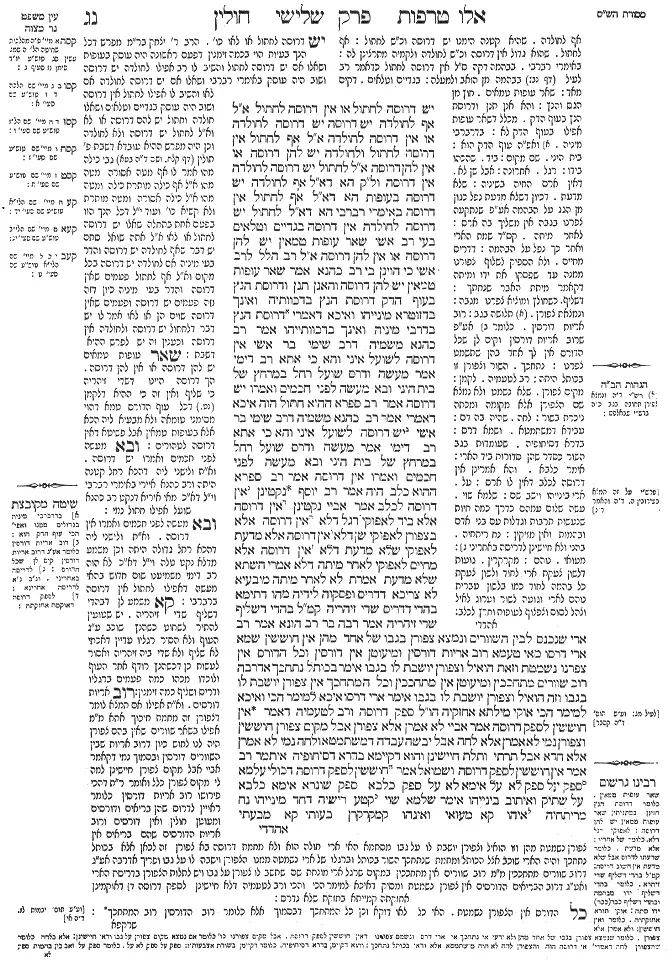
Hullin 53a - Guemara
יש דרוסה לחתול או אין דרוסה לחתול א"ל אף לחולדה יש דרוסה יש דרוסה לחולדה או אין דרוסה לחולדה א"ל אף לחתול אין דרוסה לחתול ולחולדה יש להן דרוסה או אין להן דרוסה א"ל לחתול יש דרוסה לחולדה אין דרוסה ול"ק הא דא"ל אף לחולדה יש דרוסה בעופות הא דא"ל אף לחתול אין דרוסה באימרי רברבי הא דא"ל לחתול יש דרוסה לחולדה אין דרוסה בגדיים וטלאים בעי רב אשי שאר עופות טמאין יש להן דרוסה או אין להן דרוסה א"ל רב הלל לרב אשי כי הוינן בי רב כהנא אמר שאר עופות טמאין יש להן דרוסה והאנן תנן ודרוסת הנץ בעוף הדק דרוסת הנץ בדכוותיה ואינך בדזוטרא מינייהו ואיכא דאמרי דרוסת הנץ בדרבי מיניה ואינך בדכוותייהו אמר רב כהנא משמיה דרב שימי בר אשי אין דרוסה לשועל איני והא כי אתא רב דימי אמר מעשה ודרס שועל רחל במרחץ של בית היני ובא מעשה לפני חכמים ואמרו יש דרוסה אמר רב ספרא ההיא חתול הוה איכא דאמרי אמר רב כהנא משמיה דרב שימי בר אשי יש דרוסה לשועל איני והא כי אתא רב דימי אמר מעשה ודרס שועל רחל במרחץ של בית היני ובא מעשה לפני חכמים ואמרו אין דרוסה אמר רב ספרא ההוא כלב הוה אמר רב יוסף נקטינן אין דרוסה לכלב אמר אביי נקטינן אין דרוסה אלא ביד לאפוקי רגל דלא אין דרוסה אלא בצפורן לאפוקי שן דלא אין דרוסה אלא מדעת לאפוקי שלא מדעת דלא אין דרוסה אלא מחיים לאפוקי לאחר מיתה דלא אמרי השתא שלא מדעת אמרת לא לאחר מיתה מיבעיא לא צריכא דדריס ופסקוה לידיה מהו דתימא בהדי דדריס שדי זיהריה קמ"ל בהדי דשליף שדי זיהריה אמר רבה בר רב הונא אמר רב ארי שנכנס לבין השוורים ונמצא צפורן בגבו של אחד מהן אין חוששין שמא ארי דרסו מאי טעמא רוב אריות דורסין ומיעוטן אין דורסין וכל הדורס אין צפרנו נשמטת וזאת הואיל וצפורן יושבת לו בגבו אימר בכותל נתחכך אדרבה רוב שוורים מתחככין ומיעוטן אין מתחככין וכל המתחכך אין צפורן יושבת לו בגבו וזה הואיל וצפורן יושבת לו בגבו אימר ארי דרסו איכא למימר הכי ואיכא למימר הכי אוקי מילתא אחזקיה הו"ל ספק דרוסה ורב לטעמיה דאמר אין חוששין לספק דרוסה אמר אביי לא אמרן אלא צפורן אבל מקום צפורן חוששין וצפורן נמי לא אמרן אלא לחה אבל יבשה עבדה דמשתמטא ולחה נמי לא אמרן אלא חדא אבל תרתי ותלת חיישינן והוא דקיימא בדרא דסיחופיה איתמר רב אמר אין חוששין לספק דרוסה ושמואל אמר חוששין לספק דרוסה דכולי עלמא ספק על ספק לא על אימא לא על ספק כלבא ספק שונרא אימא כלבא על שתיק ואיתוב בינייהו אימר שלמא שוי קטע רישיה דחד מינייהו נח מריתחיה איהו קא מעואי ואינהו קמקרקרן בעותי קא מבעתי
Comments from Rashi on Masechet Hullin Page 53a
אף לחולדה . שהיא קטנה הימנו יש דרוסה וכ"ש לחתול: אף לחתול . שהוא גדול אין דרוסה וכ"ש לחולדה ולקמיה מתרצינן לה: באימרי רברבי . בבהמה דקה ס"ל אין דרוסה לחתול כדאמר רב לעיל (חולין דף נב:) בבהמה מן הזאב ולמעלה: בגדיים וטלאים . דקים מאד: שאר עופות טמאים . חוץ מן הגס והנץ: והא אנן תנן ודרוסת הנץ בעוף הדק . מכלל דשאר עופות אפילו בעוף הדק לא: בדרברבי מיניה . ואפ"ה עוף הדק הוא: בית היני . שם מקום: ביד . שהכהו בידו: רגל . אחרונה: אבל שן לא . דאין ארס החיה בשיניה: שלא מדעת . דכיון דשלא מדעת נפל כגון מן הגג על הבהמה אע"פ שנתקעה צפרנו בגבה אין משליך בה ארס: לאחר מיתה . קס"ד שמת הארי ואחר כך נפל על הבהמה: דדריס . מחיים ולא הספיק לשלוף צפורנו ממנה עד שפסקו את ידו ומיתה דקאמר מיתת האבר שנחתך: דשליף . כשחולץ ומוציא צפרנו מגבה: ונמצאת צפורן . תלושה בגב: רוב אריות דורסין . כלומר אע"פ שרוב אריות דורסין וקים לן שכל הדורס אין לך אחד בהן שתשמט צפרנו: נתחכך . השור וצפורן זו בכותל היתה: רב לטעמיה . לקמן: מקום צפורן . שלא נשמט ולא נמצא שם הצפורן אלא מקומה ומכתה ניכרת בשור: לחה . שהיה בה דם: עבידא דמשתמטא . ושמא דרס: בדרא דסיחופיה . שעומדות בגב השור כסדר שהן סדורות ביד הארי: אימר כלבא . והא אמרינן אין דרוסה לכלב דאין לו ארס: על . ארי בינייהו וישב שם: שלמא שוי . עשה שלום עמהם כדרך כמה חיות שנעשות תרבות וגדלות עם בני אדם ובהמות ואין מזיקין: נח ריתחיה . בהני ולא חיישינן לדריסה באחריני: מעואי . נוהם: מקרקרין . גועות. דלשון צעקת ארי לחוד ולשון צעקת כל בהמה לחוד כמו בלשון עברית נוהם לארי וגועה לשור וערוג לאיל וצהל לסוס וצפצוף לעופות וחרץ לכלב:
Comments from Tosafot - Hullin 53a
יש דרוסה לחתול או לאו כו' . הרב ר' יצחק בר"מ מפרש דכל הנך בעיות הוי בכמה זימנין דפעם ראשונה היה עוסק בעופות ושאלו אם יש דרוסה לחתול והשיב לו רב אפילו לחולדה יש דרוסה ושוב היה עוסק באימרי רברבי ושאלו אם יש דרוסה לחולדה אם לאו והשיב לו אפילו לחתול אין דרוסה ושוב היה עוסק בגדיים וטלאים ושאלו חולדה וחתול יש להם דרוסה או לא וא"ל לחתול יש דרוסה ולא לחולדה וכן היה מפרש ההיא עובדא דשבת פ' תולין (דף קלח. ושם ד"ה בעא) גבי כילה מהו אמר לו אף מטה אסורה מטה מהו א"ל אף כילה מותרת כילה ומטה מהו א"ל כילה אסורה ומטה מותרת ולא קשיא כו' ועוד י"ל דכל הנך הוו בפעם אחת בתחלה שאלו יש דרוסה לחתול או לאו א"ל אתה שואל סתם יש דבר שאף לחולדה יש דרוסה והדר בעי מיניה אם לחולדה יש דרוסה בכל מקום וא"ל אף לחתול פעמים שאין דרוסה והדר בעי מיניה כיון דזה וזה פעמים יש דרוסה ופעמים שאין דרוסה שוים הן או לאו אמר לו יש דבר דלחתול יש דרוסה ולחולדה אין דרוסה וכענין זה יש לפרש ההיא דשבת: שאר עופות טמאים יש להן דרוסה או אין להן דרוסה . הך דרוסה היינו דשדי זיהריה כי שליף ואין זה כי ההיא דלקמן (חולין נט.) דכל עוף הדורס טמא דהוי מסימני טומאה ולא מבעיא ליה הכא אלא בעופות טמאין אבל פשיטא דאין דרוסה לטהורים: ובא מעשה לפני חכמים ואמרו יש דרוסה . וא"ת ולישני ליה דהכא רחל קטנה היתה ורב כהנא איירי באימרי רברבי וי"ל דא"כ מאי איריא דנקט רב כהנא שועל אפילו חתול נמי: ובא מעשה לפני חכמים ואמרו אין דרוסה . וא"ת ולישני ליה דהכא רחל גדולה היתה וכן משמע מדלא נקט טלה וי"ל דא"כ לא הוה רב דימי משמיענו שום חדוש בהאי מעשה דאפילו לחתול אין דרוסה ברברבי: קא משמע לן דבהדי דשליף שדי זיהריה . יש שטועין להתיר לשחוט כשהנץ שוכב ע"ג העוף ולא הסיר רגליו עדיין דאכתי לא שליף ולא שדי ביה זיהריה ואסור לעשות כן דכשהנץ רודף אחר העוף ולוכדו מכהו כמה פעמים ברגליו ודריס ושליף כמה זימנין: רוב אריות דורסים . וא"ת אפילו אם תמצא לומר דצפורן זה מחמת חיכוך אתא מ"מ אפילו בשאר שוורים שאין בהם צפורן היה לנו לחוש כיון דרוב אריות שבין השוורים דורסין ובסמוך נמי דקאמר אביי אבל מקום צפורן חיישינן למה לי מקום צפורן כלל ואומר ר"ת דהכי פירושו רוב אריות דורסין כלומר ראויין לדרוס שהן בריאים ודורסים ומעוטן חולין ואין דורסים ורוב אריות הדורסים שהם בריאים אין צפורן נשמטת מהן וזו הואיל וצפורן יושבת לו על גבו מסתמא האי ארי חולה הוא ולא מחמת דרוסה בא צפורן זה לכאן אלא בכותל נתחכך והיה הארי שוכב אצל הכותל ומחמת שנתחכך השור בכותל וברגלו של ארי נשמטה ממנו הצפורן וישבה לו על גבו ופריך אדרבה אע"ג דרוב שוורים מתחככין מ"מ רוב שוורים אין מתחככין במקום שרגל ארי מונחת שם שתשב לו צפורן על גבו ויש לתלות הצפורן בדריסת הארי ואע"ג דרוב הבריאים הדורסים אין צפורן נשמטת ומסיק דאיכא למימר הכי והכי ורב לטעמיה דלא חיישינן לספק דרוסה דאוקמינן אחזקתה קמייתא בחזקת שלא נדרס: כל הדורס אין הצפורן נשמטת . האי כל לאו דוקא וכן כל המתחכך דבסמוך אלא כלומר רוב הדורסין רוב המתחכך:
Hullin 53a - Mishnah translated into english
Does a cat render an animal a tereifa through clawing, or does a cat not render it a tereifa through clawing? Rav said to him: Even a weasel, which is smaller than a cat, does render an animal a tereifa through clawing. Rav Kahana also asked him: Does a weasel render an animal a tereifa through clawing, or does a weasel not render it a tereifa through clawing? Rav said to him: Even a cat does not render an animal a tereifa through clawing.
Rav Kahana also asked him: With regard to a cat and a weasel, do they render an animal a tereifa through clawing, or do they not render it a tereifa through clawing? Rav said to him: A cat does render an animal a tereifa through clawing, but a weasel does not render it a tereifa through clawing.
The Gemara clarifies: And the apparent contradiction between these responses is not difficult. That which Rav said to him: Even a weasel does render an animal a tereifa through clawing, was stated about a case of clawed birds. That which he said to him: Even a cat does not render an animal a tereifa through clawing, was stated about a case of adult sheep. That which Rav said to him: A cat does render an animal a tereifa through clawing, but a weasel does not render it a tereifa through clawing, was stated about a case of kids and lambs.
§ The mishna states that a small bird clawed by a hawk is a tereifa. Rav Ashi raises a dilemma: With regard to other non-kosher birds beside a hawk, do they render a bird a tereifa through clawing, or do they not render it a tereifa through clawing? Rav Hillel said to Rav Ashi: When we were in the study hall of Rav Kahana, he said: Other non-kosher birds do render a bird a tereifa through clawing.
The Gemara asks: But didn’t we learn in the mishna: Or if it was clawed by a hawk in the case of a small bird, it is a tereifa? Apparently, only a hawk renders a small bird a tereifa through clawing. The Gemara responds: The mishna means that a small bird clawed by a hawk is rendered a tereifa even in a case where it is as large as the hawk. But these other non-kosher birds can render a small bird a tereifa only in a case where it is smaller than them. And there are those who say: A small bird clawed by a hawk is rendered a tereifa even in a case where it is larger than the hawk. But these other non-kosher birds can render a small bird a tereifa only in a case where it is, at most, as large as them.
§ Rav Kahana said in the name of Rav Shimi bar Ashi: A fox does not render an animal a tereifa through clawing. The Gemara asks: Is that so? But when Rav Dimi came from Eretz Yisrael to Babylonia he said: There was an incident in which a fox clawed a ewe in the bathhouse of Beit Hini, and the incident came before the Sages, and they said: This is a case of clawing. Rav Safra said in response: In that case the predator was a cat, not a fox.
There are those who say the above exchange differently: Rav Kahana said in the name of Rav Shimi bar Ashi: A fox does render an animal a tereifa through clawing. The Gemara asks: Is that so? But when Rav Dimi came from Eretz Yisrael to Babylonia he said: There was an incident in which a fox clawed a ewe in the bathhouse of Beit Hini, and the incident came before the Sages, and they said: This is not a case of clawing. Rav Safra said in response: In that case the predator was a dog, not a fox. And Rav Yosef said: We have a tradition that a dog does not render an animal a tereifa through clawing.
§ With regard to the definition of clawing that renders an animal a tereifa, Abaye said: We have a tradition: Clawing is only with the foreleg, to the exclusion of clawing with the hind leg, which does not render the animal a tereifa. Additionally, clawing is only with the claw, to the exclusion of savaging with the tooth, which does not render the animal a tereifa, because the teeth contain no venom. And clawing is only through an intentional act, to the exclusion of an unintentional act, which does not render the animal a tereifa, e.g., if the predator accidentally fell on the prey with its claws outstretched. And clawing is only while the predator is alive, to the exclusion of a case where it clawed an animal after death, which does not render the animal a tereifa.
The Sages say: Now that you said that an unintentional act of clawing does not render an animal a tereifa, is it necessary to say that clawing after death is ineffective? The Gemara responds: No, it is necessary to teach this halakha for a case where the predator clawed while still alive, and they cut off its hand with its claws still inside the prey’s flesh. Lest you say: It injects its venom while it claws, Abaye teaches us that it injects its venom while it withdraws its claws. Accordingly, where the venom has yet to be injected before its death, i.e., before its hand is severed, the animal is kosher.
§ Rabba bar Rav Huna says that Rav says: If a lion entered among the oxen, and afterward a claw was found stuck in the back of one of the oxen, one need not be concerned that perhaps the lion clawed it. What is the reason for this? Even though a majority of lions claw their prey and only a minority of them do not claw, still, it is known with regard to any lion that claws that its claw is not ripped out in the process. And therefore, with regard to this ox, since a claw sits in its back, say that it rubbed against a wall that had a claw embedded in it.
The Gemara objects: On the contrary, say that even though a majority of oxen rub against the wall and only a minority do not rub, still, it is known with regard to any ox that rubs that a claw does not sit in its back. And therefore, with regard to this ox, since a claw sits in its back, say that the lion clawed it.
The Gemara responds: One can say this, and one can say that. Therefore, establish the matter according to its presumptive status, in which case the ox is not a tereifa. Accordingly, the ox is permitted because this case is one of uncertainty as to whether the animal was clawed, and Rav conforms to his standard line of reasoning, as he says: One need not be concerned in a case of uncertainty as to whether an animal was clawed.
Abaye said: We said that one need not be concerned that the lion clawed the ox only when the claw was found in its back, since it is known that a claw is not ripped out during clawing. But if only the spot of a claw was found, i.e., a perforation, one must be concerned. And even if the claw was found in its back, we said that one need not be concerned only when it was moist, since this indicates it was well connected to the flesh. Accordingly, if the lion had clawed the ox, this claw would not have been ripped out. But if the claw was dry, one must be concerned, because it happens that such a claw is ripped out during clawing.
And with regard to a moist claw as well, we said that one need not be concerned only when one claw was found in its back. But if there were two or three claws embedded in its back, we must be concerned, because multiple claws were not likely to be embedded in the wall. And this is the halakha only where they are situated in a row as they are in the paw of a lion.
§ It was stated: Rav says: One need not be concerned in a case of uncertainty as to whether an animal was clawed. And Shmuel says: One must be concerned in a case of uncertainty as to whether an animal was clawed, and the animal must be inspected.
The Gemara explains: Everyone agrees that in a case where it is uncertain whether a predator entered the pen or coop and uncertain whether it did not enter, I will say that it did not enter. Furthermore, if it is known that an animal entered but it is uncertain whether it was a dog and uncertain whether it was a cat, I will say that it was a dog, which cannot render an animal a tereifa through clawing. And even if a predator entered, but it was quiet and sat among the animals, I will say it made peace with them, as though it were tame, and did not claw them. And if it decapitated one of them, I will say that its anger subsided afterward, and it did not claw other animals. And if it was roaring and they were clucking, I will say that they are only frightening
Traduction : The William Davidson digital edition of the Koren Noé Talmud, with commentary by Rabbi Adin Even-Israel Steinsaltz.