 Talmud Bavli
The learning on the whole site is dedicated : L'ilui Nishmat יוסף בן מושה
The learning on the whole site is dedicated : L'ilui Nishmat Reuven ben Rivka SEBBAG
The learning on the whole site is dedicated : L'ilui Nishmat רינה בת לדיסיה
Hullin 43b : Youtube
Rabbi Dr. Moshe WeisblumYoutube
1 video class :
Hullin Page 43b
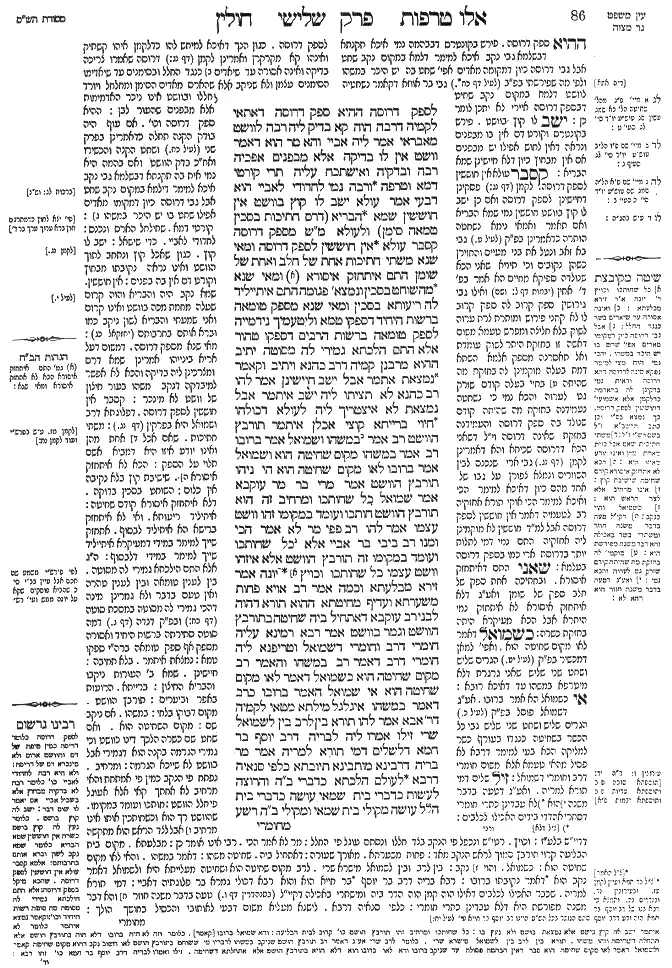
Hullin 43b - Guemara
לספק דרוסה ההיא ספק דרוסה דאתאי לקמיה דרבה הוה קא בדיק ליה רבה לוושט מאבראי אמר ליה אביי והא מר הוא דאמר וושט אין לו בדיקה אלא מבפנים אפכיה רבה ובדקיה ואישתכח עליה תרי קורטי דמא וטרפה ורבה נמי לחדודי לאביי הוא דבעי אמר עולא ישב לו קוץ בוושט אין חוששין שמא הבריא (דרס חתיכות בסכין טמאה סימן) ולעולא מ"ש מספק דרוסה קסבר עולא אין חוששין לספק דרוסה ומאי שנא משתי חתיכות אחת של חלב ואחת של שומן התם איתחזק איסורא ומאי שנא מהשוחט בסכין ונמצא' פגומה התם איתייליד לה ריעותא בסכין ומאי שנא מספק טומאה ברשות היחיד דספקו טמא וליטעמיך נידמייה לספק טומאה ברשות הרבים דספקו טהור אלא התם הלכתא גמירי לה מסוטה יתיב ההוא מרבנן קמיה דרב כהנא ויתיב וקאמר נמצאת אתמר אבל ישב חיישינן אמר להו רב כהנא לא תציתו ליה ישב איתמר אבל נמצאת לא איצטריך ליה לעולא דכולהו חיוי ברייתא קוצי אכלן איתמר תורבץ הוושט רב אמר במשהו ושמואל אמר ברובו רב אמר במשהו מקום שחיטה הוא ושמואל אמר ברובו לאו מקום שחיטה הוא הי ניהו תורבץ הוושט אמר מרי בר מר עוקבא אמר שמואל כל שחותכו ומרחיב זה הוא תורבץ הוושט חותכו ועומד במקומו זהו וושט עצמו אמר להו רב פפי מר לא אמר הכי ומנו רב ביבי בר אביי אלא כל שחותכו ועומד במקומו זה תורבץ הוושט אלא איזהו וושט עצמו כל שחותכו וכויץ יונה אמר זירא מבלעתא וכמה אמר רב אויא פחות משערתא ועדיף מחיטתא ההוא תורא דהוה לבני רב עוקבא דאתחיל ביה שחיטה בתורבץ הוושט וגמר בוושט אמר רבא רמינא עליה חומרי דרב וחומרי דשמואל וטריפנא ליה חומרי דרב דאמר רב במשהו והאמר רב מקום שחיטה הוא כשמואל דאמר לאו מקום שחיטה הוא אי שמואל האמר ברובו כרב דאמר במשהו איגלגל מילתא מטאי לקמיה דר' אבא אמר להו תורא בין לרב בין לשמואל שרי זילו אמרו ליה לבריה דרב יוסף בר חמא דלשלים דמי תורא למריה אמר מר בריה דרבינא מותבינא תיובתא כלפי סנאיה דרבא לעולם הלכתא כדברי ב"ה והרוצה לעשות כדברי בית שמאי עושה כדברי בית הלל עושה מקולי בית שמאי ומקולי ב"ה רשע
Comments from Rashi on Masechet Hullin Page 43b
לספק דרוסה . כגון הנך דאיכא למיחש להו כדלקמן איהו קשתיק ואינהו קא מקרקרן ואמרינן לקמן (חולין דף נג:) דרוסה שאמרו צריכה בדיקה ואינה אסורה עד שיאדים כנגד החלל ובסימנים עד שיאדימו הסימנים עצמן ולא שניקב אלא שהארס מאדים הסימן ומחלחל ויורד לחללו ובוושט אינו ניכר האדמימות אלא מבפנים שהעור לבן: ההיא ספק דרוסה וכו' . אם עוף היה בודק הקנה תחלה כדאמרינן בפרק שני (לעיל חולין כח.) ושחט הקנה והכשירו ואח"כ בדק הוושט ואם בהמה היא נמי אית בה תקנתא דבשלמא גבי נקב איכא למימר דילמא במקום נקב שחט אבל גבי דרוסה כיון דמקומו מאדים אפילו שחט בו יש היכר במשהו: קורטי דמא . שחילחל הארס ונכנס: לחדודי לאביי . כדי שישאל: ישב לו קוץ . כגון שאכל קוץ ונתחב לתוך הוושט ואינו נראה נקובתו מבחוץ וקורט דם אין בה בפנים: אין חוששין . שמא נקב היה והבריא והוה קרום שעלה מחמת מכה בוושט ואינו קרום. ואני שמעתי והבריא לשון ניקב כמו וברא אותם בחרבותם (יחזקאל כג): מאי שנא מספק דרוסה . דמשום דעל אריא בינייהו אמרינן שמא דרס ומצרכינן ליה בדיקה והכא לא אפשר למיבדקה דנקב משהו בעור חיצון של וושט לא מינכר: קסבר אין חוששין לספק דרוסה . דפלוגתא דרב ושמואל היא בפרקין (דף נג.): משתי חתיכות . שאם אכל אחת מהן ואינו יודע איזו היא דמביא אשם תלוי על הספק: הכא לא איתחזק איסורא . שישיבת קוץ בלא נקיבה אין כלום: השוחט בסכין . בדוקה דלא איתחזק איסורא קודם שחיטה: איתיליד ריעותא . ואי לא איתחזק ברישא הא איתיליד לבסוף. אתחזק שייך למימר במידי דמעיקרא איתייליד שייך למימר במידי דלבסוף: ה"ג אלא התם הילכתא גמירי לה מסוטה . בין לענין טומאה ובין לענין טהרה ואין טעם בדבר ולא גמרינן מינה דהכי גמירי לה מסוטה במסכת סוטה (דף כח:) ובפ"ק דנדה (דף ג.) דמה סוטה סתירתה ברשות היחיד ואסורה מספק אף ספק טומאה ברה"י ספקו טמא: נמצאת איתמר . בלא תחיבה: חיישינן . שמא ב' העורות ניקבו והבריא החיצון: ברייתא . הרועות באפר וביערים: תורבץ הוושט . מקום דבוקו בלחי: במשהו . אם ניקב שם: מקום השחיטה הוא . ואם שחט שם כשרה הלכך דינו כוושט וכי גמירי הגרמה בקנה הוא דגמירי אבל בוושט לא שייכא הגרמה: ומרחיב . נפתח פי הנקב כמין פי אמתחת. והאי מרחיב לא אחתך קאי אלא אעוגל פי חלל הוושט: חותכו ועומד במקומו . שהוושט רך הוא וכשחותכין אותו אינו מרחיב אבל לצד הראש הוא מתקשה דדיי"ש בלע"ז: מר לא אמר הכי . רבי אינו אומר כן: וכויץ . רטיי"ש ונכפל פי הנקב בצד חללו ונסתם עוגל פי החלל: מבלעתא . מקום בית הבליעה קרוי תורבץ סמוך לראש הנקב מאד: פחות משערתא . מאורך שעורה: דאתחיל ביה שחיטה . משהו: דאמר במשהו . והאי לאו מקום שחיטה הוא: כשמואל . והוי נקב: בין לרב ובין לשמואל מישרא שרי . לרב מקום שחיטה הוא ושחיטה מעלייתא היא ולשמואל דאמר נקב הוא דאמר נקובתו ברובו: רבא בריה דרב בר יוסף בר חייא הוא והוא רבא דכולי גמרא בר פלוגתיה דאביי: דמי תורא למריה . שכבר האכילו לכלבים דאילו הוה קמן הוה הדר ביה ומישתרי באכילה דקיי"ל (בסנהדרין דף ו.) טעה בדבר משנה חוזר והא דבר משנה מפורשת היא דלא עבדינן כתרי חומרי: כלפי סנאיה דרבא . לישנא מעליא משום דבעי לאותובי והכסיל בחושך הולך:
Comments from Tosafot - Hullin 43b
ההיא ספק דרוסה . פירש בקונטרס דבבהמה נמי איכא תקנתא דבשלמא גבי נקב איכא למימר דלמא במקום נקב שחט אבל גבי דרוסה כיון דמקומה מאדים אפי' שחט בה יש היכר במשהו ולפי מה שפירשתי בפ"ב (לעיל חולין דף כח.) גבי בר אווזא דקאמר נשחטיה לוושט דלמא במקום נקב שחיט דבספק דרוסה איירי לא יתכן לומר כן: ישב לו קוץ בוושט . פירש בקונטרס וקורט דם אין בו מבפנים ונראה דאין לחוש אפילו יש מבפנים אם אין מבחוץ כיון דלא חיישינן שמא הבריא: קסבר עולא אין חוששין לספק דרוסה . לקמן (חולין דף נג:) פסקינן דחיישינן לספק דרוסה ואם כן ישב לו קוץ בוושט חוששין נמי שמא הבריא ואם תאמר ואמאי נימא נשחטה הותרה כדאמרינן בפ"ק (לעיל חולין ט.) גבי בא זאב ונטל את בני מעיים והחזירן כשהן נקובים וכי תימא שאני הכא שנולדה ספיקא מחיים הא אמר בפ' ד' אחין (יבמות דף ל: ושם) ואילו גבי גירושין ספק קרוב לה ספק קרוב לו לא קתני פירוש ומותרת צרת ערוה לשוק בלא חליצה ומפרש טעמא משום דאשה זו בחזקת היתר לשוק עומדת ואל תאסרנה מספק אלמא השתא דמת בעלה מוקמינן לה בחזקת מה שהיתה בחיי בעלה קודם שזרק גט לערוה והכא נמי כי נשחטה נעמידנה בחזקת מה שהיתה קודם שנולד בה ספק דרוסה והעמידנה בחזקת שאינה דרוסה וי"ל דשאני הכא דדרוסה שכיחא והא דאמרינן לקמן (חולין דף נג.) גבי ארי שנכנס לבין השוורים ונמצא צפורן על גבו של אחד מהם כיון דאיכא למימר הכי ואיכא למימר הכי אוקי תורא אחזקיה רב לטעמיה דאמר אין חוששין לספק דרוסה אבל למ"ד חוששין לא מוקמינן ליה אחזקיה התם נמי דמי לתלות יותר בדרוסת ארי כמו בספק דרוסה בעלמא: שאני התם דאיתחזק איסורא . ובחתיכה אחת ספק של חלב ספק של שומן ואע"ג דלא איתחזק איסורא לא איתחזק נמי היתרא אבל הכא מעיקרא היתה בחזקת כשרה: כשמואל דאמר לאו מקום שחיטה הוא . ואפי' למאן דמכשיר בפ"ק (לעיל חולין יט.) הגרים שליש ושחט שני שליש שאני גרגרת דלא מיטרפא במשהו עד דאיכא רובא: אי כשמואל הא אמר ברובו . אע"ג דשמואל פוסל בפ"ק (לעיל חולין כ.) הגרים שליש ושחט שני שליש גבי כל הכשר בשחיטה כנגדו בעורף כשר למליקה הכא בעי למימר דרבא לא פסיל מהאי טעמא אלא משום חומרי דרב וחומרי דשמואל: זיל שלים דמי תורא למריה . ואע"ג דטעה בדבר משנה הוא לא עבדינן כתרי חומרי דסתרי אהדדי בידים האכילו לכלבים:
Hullin 43b - Mishnah translated into english
The Gemara responds: The halakha is necessary for a case in which it was uncertain whether an animal was clawed by a predator. If the animal was in fact clawed, the gullet would have become red. Since the outer lining is always red, the gullet must be checked on the inside to ascertain whether it is still white.
The Gemara recounts the case of a certain animal concerning which it was uncertain whether it was clawed by a predator, which came before Rabba. Rabba was checking its gullet from the outside. Abaye said to him: But isn’t it you, Master, who says: The gullet may be inspected only from the inside? Rabba turned over the gullet and checked it from the inside, and found on it two drops of blood, and deemed it a tereifa due to clawing. The Gemara notes: And Rabba as well desired only to sharpen Abaye by inducing him to ask. He did not forget his own statement.
Ulla says: If a thorn sat in the animal’s gullet but did not perforate the outer lining, one need not be concerned that perhaps it perforated the outer lining beforehand and the perforation healed and a scab formed over it, in which case the animal would be a tereifa, as stated above. Rather, one assumes that the thorn never perforated the outer lining and the animal is kosher.
The Gemara provides a mnemonic for the following questions with regard to Ulla’s statement: Clawed, pieces, with a knife, ritually impure.
The Gemara asks: But according to Ulla, given that this is a case of uncertainty, in what way is it different from a case of uncertainty as to whether an animal was clawed, where the animal must be checked and cannot be presumed kosher? The Gemara responds: Ulla holds that one need not be concerned with regard to an uncertainty as to whether the animal was clawed.
The Gemara asks: And in what way is this case different from a case where there were two pieces of fat before a person, one of forbidden fat and one of permitted fat, and the person ate one piece but does not know which one, where the halakha is that one must bring a provisional guilt offering due to the possibility that he consumed forbidden fat? Evidently, one may not presume that an item is permitted in a case of uncertainty. The Gemara responds: There, one finds a presumption of prohibition, since one of the pieces is certainly prohibited. Here, with regard to the thorn, there is no presumption of prohibition.
The Gemara asks: And in what way is the case of the thorn different from the case of one who slaughters with a knife that was previously checked for flaws but was then found to be notched after the slaughter? In that case, it is uncertain whether the notch existed at the time of slaughter, yet the animal is prohibited. The Gemara responds: There, a deficiency was born in the knife. Accordingly, one must be concerned that it was notched beforehand as well. By contrast, the wall of the gullet is currently intact, and one may therefore presume that it was intact beforehand as well.
The Gemara asks: And in what way is this case different from an uncertainty with regard to ritual impurity in a private domain, whose uncertainty is presumed impure? The Gemara responds: But according to your reasoning, let us compare it instead to uncertainty with regard to impurity in a public domain, whose uncertainty is presumed pure. Rather, there, with regard to the presumption of impurity in a private domain and purity in a public domain, the Sages learned this halakha through tradition from the halakha of a woman suspected by her husband of having been unfaithful [sota]. Therefore, one cannot extend it to other cases.
The Gemara relates that one of the Sages was sitting before Rav Kahana, and he was sitting and saying: It was stated that one need not be concerned that the thorn perforated the linings of the gullet only if it was found loose inside the gullet. But if it sat embedded in the gullet wall, we must be concerned that the outer lining was perforated and later healed, rendering the animal a tereifa. Rav Kahana said to the other Sages: Do not listen to him. Rather, it was stated that one need not be concerned about a possible perforation if the thorn sat embedded in the gullet wall. But in a case where it was simply found there loose, it was not necessary for Ulla to say that the animal is kosher, since all animals that live outside eat thorns, and it is reasonable to expect to find them in the gullet without presuming injury.
§ The mishna teaches that if the gullet was perforated, the animal is a tereifa. It was stated: In a case where the entrance [turbatz] of the gullet from the pharynx was perforated, Rav says: The animal is a tereifa if any part of the gullet was perforated. And Shmuel says: It is a tereifa only if its majority was perforated. Rav says: If any part was perforated, because he holds that the entrance of the gullet is a location fit for slaughter and is therefore considered part of the gullet. And Shmuel says: If its majority was perforated, because he holds that it is not a location fit for slaughter and is not considered part of the gullet.
The Gemara clarifies: Which area is the entrance of the gullet? Mari bar Mar Ukva said that Shmuel said: All of the area that widens outward when cut along its width, this is the entrance of the gullet; all the area that remains in place when cut, this is the gullet itself. Rav Pappi said to them: Master did not say so. And who is that Master? It is Rav Beivai bar Abaye. Rather, he said that all of the area that remains in place when cut, this is the entrance of the gullet. But which area, then, is the gullet itself? It is all of the area that constricts when cut and closes inward. The Sage Yona says in the name of Rabbi Zeira: The entrance of the gullet is only the area of the throat immediately bordering the gullet. And how much of the throat qualifies as the entrance of the gullet? Rav Avya said: Less than the length of a barley kernel and more than the length of a wheat kernel.
The Gemara relates an incident involving a certain bull that belonged to the sons of Rav Ukva, where its slaughter began with a small incision in the entrance of the gullet and concluded in its majority in the gullet. Rava said: I impose upon it the stringencies of Rav and the stringencies of Shmuel, and deem it a tereifa.
I impose the stringencies of Rav, as Rav said: The animal is a tereifa if any part of the entrance of the gullet was perforated before slaughter. Such is the case here, since the incision began in the entrance of the gullet. Perhaps one will ask: But doesn’t Rav say that the entrance of the gullet is a location fit for slaughter, in which case the initial incision should be considered the beginning of the act of slaughter? To this I will respond: I hold in accordance with the opinion of Shmuel, who says that it is not a location fit for slaughter. If one asks: If I hold in accordance with the opinion of Shmuel, doesn’t he say: It is a tereifa only if it was perforated in its majority? To this I will respond: I hold in accordance with the opinion of Rav, who says: If any part was perforated. Consequently, I deem the animal a tereifa.
The Gemara relates that the matter circulated, and it came before Rabbi Abba, who said to his students: This bull is permitted for consumption, both according to Rav, who holds that the entrance of the gullet is a location fit for slaughter, and according to Shmuel, who holds that it is not a tereifa unless it is perforated in its majority. Therefore, go tell the son of Rav Yosef bar Ḥama, i.e., Rava, that he is to pay the value of the bull to its owner, since he improperly deemed it a tereifa.
Mar, son of Ravina, said: I offer a conclusive refutation to the enemies of Rava, a euphemism for Rava himself, from a baraita: The halakha is always in accordance with the statement of Beit Hillel, but one who wishes to act in accordance with the statement of Beit Shammai may do so, and one who wishes to act in accordance with the statement of Beit Hillel may do so. But if one wishes to adopt both the leniencies of Beit Shammai and also the leniencies of Beit Hillel, he is a wicked person.
Traduction : The William Davidson digital edition of the Koren Noé Talmud, with commentary by Rabbi Adin Even-Israel Steinsaltz.