 Talmud Bavli
The learning on the whole site is dedicated : L'ilui Nishmat יוסף בן מושה
The learning on the whole site is dedicated : L'ilui Nishmat Ledicia bat David Banoun
The learning on the whole site is dedicated : L'ilui Nishmat Nissim ben Barukh Malka
Hullin 45b : Youtube
Rabbi Dr. Moshe WeisblumYoutube
1 video class :
Hullin Page 45b
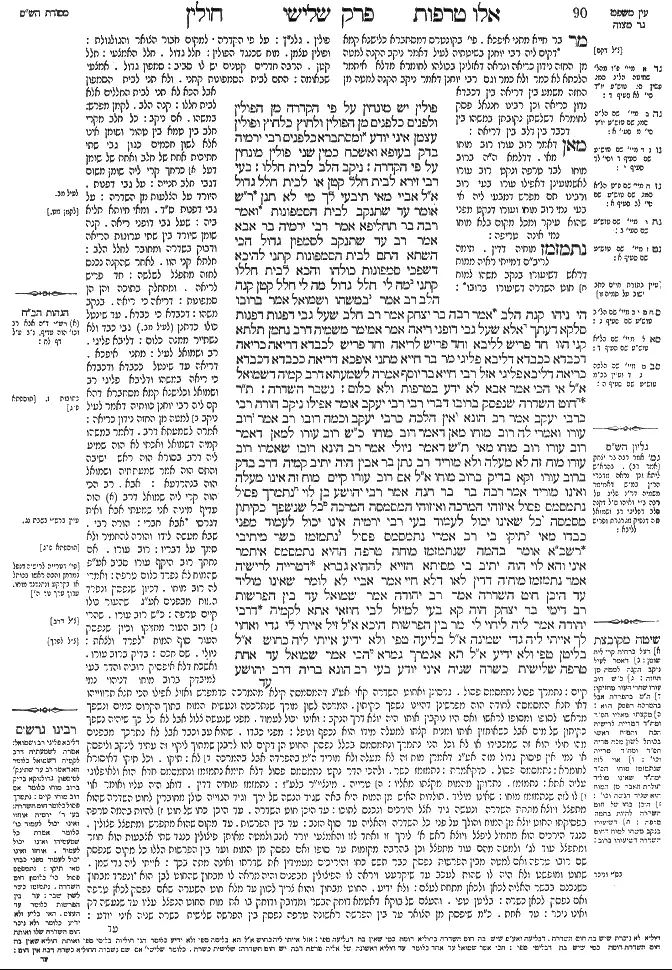
Hullin 45b - Guemara
פולין יש מונחין על פי הקדרה מן הפולין ולפנים כלפנים מן הפולין ולחוץ כלחוץ ופולין עצמן איני יודע ומסתברא כלפנים רבי ירמיה בדק בעופא ואשכח כמין שני פולין מונחין על פי הקדרה:
ניקב הלב לבית חללו:
בעי רבי זירא לבית חלל קטן או לבית חלל גדול א"ל אביי מאי תיבעי לך מי לא תנן ר"ש אומר עד שתנקב לבית הסמפונות ואמר רבה בר תחליפא אמר רבי ירמיה בר אבא אמר רב עד שתנקב לסמפון גדול הכי השתא התם לבית הסמפונות קתני להיכא דשפכי סמפונות כולהו והכא לבית חללו קתני מה לי חלל גדול מה לי חלל קטן קנה הלב רב אמר במשהו ושמואל אמר ברובו הי ניהו קנה הלב אמר רבה בר יצחק אמר רב חלב שעל גבי דפנות דפנות סלקא דעתך אלא שעל גבי דופני ריאה אמר אמימר משמיה דרב נחמן תלתא קני הוו חד פריש לליבא וחד פריש לריאה וחד פריש לכבדא דריאה כריאה דכבדא ככבדא דליבא פליגי מר בר חייא מתני איפכא דריאה ככבדא דכבדא כריאה דליבא פליגי אזל רבי חייא בר יוסף אמרה לשמעתא דרב קמיה דשמואל א"ל אי הכי אמר אבא לא ידע בטרפות ולא כלום:
נשבר השדרה:
ת"ר חוט השדרה שנפסק ברובו דברי רבי רבי יעקב אומר אפילו ניקב הורה רבי כרבי יעקב אמר רב הונא אין הלכה כרבי יעקב וכמה רובו רב אמר רוב עורו ואמרי לה רוב מוחו מאן דאמר רוב מוחו כ"ש רוב עורו למאן דאמר רוב עורו רוב מוחו מאי ת"ש דאמר ניולי אמר רב הונא רובו שאמרו רוב עורו מוח זה לא מעלה ולא מוריד רב נתן בר אבין הוה יתיב קמיה דרב בדק ברוב עורו וקא בדיק ברוב מוחו א"ל אם רוב עורו קיים מוח זה אינו מעלה ואינו מוריד אמר רבה בר בר חנה אמר רבי יהושע בן לוי נתמרך פסול נתמסמס פסול איזוהי המרכה ואיזוהי המסמסה המרכה כל שנשפך כקיתון מסמסה כל שאינו יכול לעמוד בעי רבי ירמיה אינו יכול לעמוד מפני כבדו מאי תיקו בי רב אמרי נתמסמס פסול נתמזמז כשר מיתיבי רשב"א אומר בהמה שנתמזמז מוחה טרפה ההיא נתמסמס איתמר איני והא לוי הוה יתיב בי מסותא חזייא לההוא גברא דטרייה לרישיה אמר נתמזמז מוחיה דדין לאו דלא חיי אמר אביי לא לומר שאינו מוליד עד היכן חוט השדרה אמר רב יהודה אמר שמואל עד בין הפרשות רב דימי בר יצחק הוה קא בעי למיזל לבי חוזאי אתא לקמיה דרבי יהודה אמר ליה ליחוי לי מר בין הפרשות היכא א"ל זיל אייתי לי גדי ואחוי לך אייתי ליה גדי שמינה א"ל בליעה טפי ולא ידיע אייתי ליה כחוש א"ל בליטן טפי ולא ידיע א"ל תא אגמרך גמרא הכי אמר שמואל עד אחת טרפה שלישית כשרה שניה איני יודע בעי רב הונא בריה דרב יהושע
Comments from Rashi on Masechet Hullin Page 45b
פולין . גלנ"ץ: על פי הקדרה . למקום חבור הצואר והגולגולת: ופולין עצמן . מוח שכנגד הפולין: חלל גדול . חלל האמצעי: חלל קטן . הרבה חדרים קטנים יש לו סביב: סמפון גדול . אמצעי שבאומה: התם לבית הסמפונות קתני . ולא תני לבית הסמפון אבל הכא לא תני לבית החללים אלא לבית חללו: קנה הלב . לקמן מפרש: במשהו . אם ניקב:
כל חלב מקרי חלב בין טמא בין טהור ושומן אינו אלא לשון חכמים כגון גבי שתי חתיכות אחת של חלב ואחת של שומן דעל כרחך קרי ליה שומן משום דגבי חלב תנייה: על גבי דפנות . היורד על הצלעות מן השדרה: על גבי דפנות ס"ד . ומאי חיותא תליא ביה: שעל גבי דופני ריאה . קנה שומן שיורד בין שתי ערוגות הריאה ודבוק בשדרה ומחובר לחלל הלב: תלתא קני הוו . לאחר שהקנה נכנס לחזה מתפצל לשלשה: חד פריש לריאה . ומתחלק בתוכה והן הן סמפונות: דריאה כי ריאה . בנקב משהו: דכבדא כי כבדא . עד שינטל כולו כדתנן (לעיל חולין מב.) גבי כבד ולא נשתייר ממנה כלום: דליבא פליגי . רב ושמואל לעיל: מתני איפכא . דריאה עד שינטל ככבדא ודכבדא כי ריאה במשהו ודליבא פליגי רב ושמואל. וכלישנא קמא מסתברא דהא קם ליה רבי יוחנן כוותיה דאמר לעיל ניקב למטה מן החזה נידון כריאה: אמרה לשמעתא דרב . דאמר במשהו קמיה דשמואל ואכתי לא הוה שמיע ליה דרב בסורא הוה ראש ישיבה והתם הוה אמר שמעתתיה ושמואל הוה בנהרדעא: אבא . רב. הכי הוה קרי ליה שמואל דרב הוה עדיף מיניה אני שמעתי אבא ואית דגרסי אבא חברי: הורה רבי . שבא מעשה לידו והורה להחמיר ולא סמך על דבריו: רוב עורו . אם נחתך רוב היקף עורו סביב אע"פ שהמוח לא נפרד כלום טרפה: ואמרי לה רוב מוחו . דכיון שנפסק ונפרד המוח מבפנים אע"ג שהעור כולו קיים טרפה: כ"ש רוב עורו . שהרי רוב העור מחזיקו וכיון שנפסק העור סוף המוח לפרד ולצאת: ניולי . שם חכם: בדיק ברוב עורו . ואשכח דלא איפסיק רוביה והדר בעי למיבדק ברוב מוחו דניהוי נמי קיים: נתמרך פסול נתמסמס פסול גרסינן . ואחוט השדרה קאי. אע"ג דהמסמסה קילא מהמרכה כדמפרש ואזיל אפילו הכי תנא תרווייהו דאי תנא המסמסה לחודה הוה מפרשינן דהיינו נשפך כקיתון. המרכה לשון מורך שנתרככה ונעשית המוח בתוך הקרום כמים ונשפך מראשו לסופו ומסופו לראשו ואם היו נוקבין אותו היה יוצא דרך הנקב: ואינו יכול לעמוד . מפני שנעשה צלול אבל לא כל כך שיהיה נשפך כקיתון של מים אבל כשאוחזין אותו ומניח קצתו למעלה מידו הוא נכפף ונופל: מפני כבדו . שהוא עב וכבד אבל לא נתרכך מבפנים מהו חולי הוא זה שמכבידו או לא. וכל הני נתמרך ונתמסמס בכלל נפסק החוט הן דקים להו לרבנן שמתוך ליקוי זה עתיד לינקב וליפסק אי נמי אין פיסוק גדול מזה אע"ג דאמרן מוח זה לא מעלה ולא מוריד ה"מ בהפרדה אבל בהמרכה לא: תיקו . וכל תיקו דאיסורא לחומרא: נתמסמס פסול . כדקאמרת: נתמזמז כשר . ולהכי הדר נקט נתמסמס פסול דלא תימא נתמזמז ונתמסמס חדא הוא ולאיפלוגי עליה אתא: נתמזמז . נתרוקן מהמוח מקצתו מאליו: טרייה . מינציי"ר בלע"ז: נתמזמז מוחיה דדין . דואג היה עליו ואומר אוי לו לזה שנתמזמז מוחו: שאינו מוליד . תולדות האיש מן המוח היא באה שגיד הנשה של ירך וגיד הגוייה כולן מחוברין לחוט השדרה שהוא מתפצל ויוצא מתחת השדרה ונעשה גיד אצל הירכים ונכנס לתוכו: עד היכן חוט השדרה . עד היכן כחו של חוט להיות בהמה טרפה בפסיקתו. החוט יוצא מן המוח והולך על פני כל השדרה והאליה עד סוף הזנב: עד בין הפרשות . עד מקום שהוא מתפרש ומתפצל פצולין. כנגד הירכים הוא מתחיל ליפצל ויוצא ראש א' לירך זו ואחד לזו והאמצעי יורד לזנב ולמטה מאותן פיצולין כנגד שתי אצבעות הוא חוזר ומתפצל עוד לג' ולמטה מהם עוד מתפצל וכן בהרבה מקומות עד סופו. ואם נפסק מן המוח ועד בין הפרשות הללו כל מקום שנפסק שם רובו טרפה ואם למטה מבין הפרשות נפסק כבר תשש כחו והיריכים מעמידין את שדרתו ואינה מתה בכך: אייתי ליה גדי שמן . שחוט ומופשט ולא היה לו שהות לעכב עד שיקרענו ויראה לו הפיצולין מבפנים והיה מראה לו מבחוץ שהחוט לבן הוא ונפרד מבחוץ כשנכנס בבשר האליה לכאן ולכאן מתחת לעצם: ולא ידיע . החוט מבחוץ והוא צריך לכוון עד מלא חוט השערה שאם נפסק לכאן טרפה ואם נפסק לכאן כשרה: בליטן טפי . והעצם של בוקא דאטמא דוחק הבשר ומדובק ודוחק בו את מוח החוט הנפצל עליו עד שנעשה דק ואינו ניכר: עד אחת . כ"מ שיפסק מן הצואר עד בין הפרשה ראשונה טרפה נפסק בין הפרשה שלישית כשרה שניה איני יודע:
Comments from Tosafot - Hullin 45b
מר בר חייא מתני איפכא . פי' בקונטרס דמסתברא כלישנא קמא דקים ליה רבי יוחנן בשיטתיה לעיל דאמר ניקב הקנה למטה מן החזה נידון כריאה ונראה דאזלינן בכולהו לחומרא מדלא איתמר הלכתא לא כמר ולא כמר וגם רבי יוחנן דאמר ניקב הקנה למטה מן החזה משמע בין דריאה בין דכבדא נדון כריאה וכן רבינו חננאל פסק לחומרא דשלשתן נקובתן במשהו בין דכבד בין דלב בין דריאה: מאן דאמר רוב עורו רוב מוחו מאי . דדלמא ה"ה ברוב מוחו לבד טרפה ונקט רוב עורו לאשמועינן דאפילו עורו בעי רוב ורבינו תם מפרש דמבעי ליה אי בעי נמי רוב מוחו ועורו דנקט מפני שהוא עיקר ומכל מקום בלא מוחו נמי אינה טריפה: נתמזמז מוחיה דדין . תימה לריב"ם דמייתי ראיה ממוח דראש דשיעורו בנקב משהו למוח חוט השדרה דשיעורו ברובו:
Hullin 45b - Mishnah translated into english
beans lie at the opening of the skull, where the spinal cord exits. From the beans inward, the nerve tissue is considered like the inside, i.e., the brain. Therefore, if its membrane is perforated, even minimally, the animal is a tereifa. From the beans outward, the nerve tissue is considered like the outside, i.e., the spinal cord. A perforation of the membrane in this area renders the animal a tereifa only if the spinal cord is mostly cut. And with regard to the area of the beans themselves, I do not know what the halakha is; but it stands to reason that it is considered like the inside.
The Gemara relates that Rabbi Yirmeya inspected a bird and found protrusions similar to two beans lying on the opening of the skull.
§ The mishna states: If the heart was perforated to its chamber, the animal is a tereifa. Rabbi Zeira raises a dilemma: Is the mishna referring to the small chamber within the heart or to the large chamber? Abaye said to him: What is your dilemma? Didn’t we learn in the mishna with regard to the lung: Rabbi Shimon says: It is not a tereifa unless it is perforated through to the bronchi? And Rabba bar Taḥlifa says that Rabbi Yirmeya bar Abba says that Rav says: Rabbi Shimon means that it is not a tereifa unless it is perforated through to the large bronchus. If so, it may be presumed that the mishna is referring to the large chamber of the heart as well.
The Gemara responds: How can these cases be compared? There, the mishna teaches: To the bronchi [simponot], in the plural form, i.e., the one bronchus into which all the bronchi [simponot] empty out. But here, with regard to the heart, it teaches: To the chamber. What is it to me if this is a large chamber and what is it to me if it is a small chamber? The language does not indicate one or the other.
§ With regard to the aorta, the chief artery exiting the heart, Rav says: Like the heart itself, if it is perforated in any amount the animal is a tereifa. And Shmuel says: The animal is a tereifa only if the aorta is perforated in its majority.
The Gemara asks: Which blood vessel is the aorta? Rabba bar Yitzḥak says that Rav says: This is the artery found in the fat on the sides. The Gemara asks: Can it enter your mind to say that this is referring to the sides of the animal, i.e., the ribs, which are not adjacent to the heart? Rather, this is referring to the artery covered in fat that exits the heart and passes on the sides of the lung.
Ameimar says in the name of Rav Naḥman: There are three ducts adjacent to one another in an animal’s chest. One separates to the heart, and one separates to the lung, and one separates to the liver. The duct of the lung is treated like the lung, and renders the animal a tereifa if perforated in any amount. The duct of the liver is treated like the liver, and only if it is completely missing does it render the animal a tereifa, in accordance with the mishna. As for the duct of the heart, the aorta, Rav and Shmuel disagree as to the measure of its perforation, as mentioned above.
Mar bar Ḥiyya teaches the opposite: The duct of the lung is treated like the liver and renders the animal a tereifa only if it is completely missing. The duct of the liver is treated like the lung, and a perforation of any amount renders the animal a tereifa. And with regard to the duct of the heart, Rav and Shmuel disagree.
The Gemara relates that Rabbi Ḥiyya bar Yosef went and stated the halakha of Rav, that an aorta perforated in any amount renders an animal a tereifa, before Shmuel. Shmuel said to him: If Abba, i.e., Rav, actually said so, he knows nothing at all about tereifot.
§ The mishna states: If the spinal column was broken and its cord was cut, the animal is a tereifa. With regard to this the Sages taught: If the spinal cord was cut in its majority, the animal is a tereifa. This is the statement of Rabbi Yehuda HaNasi. Rabbi Ya’akov says: It is a tereifa even if the spinal cord was only perforated.
The Gemara notes: Rabbi Yehuda HaNasi ruled in accordance with the opinion of Rabbi Ya’akov that even a small perforation of the spinal cord renders the animal a tereifa. Rav Huna says: The halakha is not in accordance with the opinion of Rabbi Ya’akov.
The Gemara asks: And how much is considered a majority of the spinal cord to render the animal a tereifa? Rav says: A majority of the circumference of its surrounding membranes, the meninges. And some say a majority of the nerve tissue of the spinal cord itself. In other words, even if the meninges are intact, the animal is a tereifa if a majority of the nerve tissue is cut.
The Gemara notes: According to the one who says that the animal is a tereifa if a majority of the nerve tissue is severed, all the more so if a majority of the meninges is cut, since if the meninges, the protective membranes, are damaged, the nerve tissue itself will certainly be damaged soon thereafter. But according to the one who says that a tear in a majority of the meninges renders it a tereifa, what is the halakha in a case where only a majority of the nerve tissue was cut? Perhaps the intact membranes will keep the damage from spreading.
The Gemara suggests: Come and hear a proof: As Nayyoli says that Rav Huna says: The majority of the spinal cord, which they said renders the animal a tereifa if cut, is the majority of the meninges. But this nerve tissue makes no difference.
The Gemara relates that Rav Natan bar Avin was sitting before Rav. Rav Natan first checked the spinal cord to make sure that a majority of the meninges was intact, and then was checking to see that a majority of its nerve tissue was intact. Rav said to him: If a majority of the meninges is intact, this nerve tissue makes no difference.
§ Rabba bar bar Ḥana says that Rabbi Yehoshua ben Levi says: If the spinal cord was liquefied [nitmareikh], the animal is unfit for consumption. Even if it softened [nitmasmeis], the animal is unfit, i.e., a tereifa. What is liquefaction, and what is softening? Liquefaction is any case in which the nerve tissue becomes liquid, and if the membrane is punctured it can be poured out like water from a jug. Softening is any case in which the nerve tissue cannot stand upright on its own and sags when it is not being supported.
Rabbi Yirmeya raises a dilemma: In a case where the spinal cord became unusually heavy such that it cannot stand upright due to its weight, but not due to softening or melting, what is the halakha? The Gemara responds: The question shall stand unresolved. In the study hall they say: If the spinal cord softened due to disease, the animal is unfit for consumption. But if some of its tissue softened and was emptied from the spinal cord, the animal remains kosher. The Gemara raises an objection based on a baraita: Rabbi Shimon ben Elazar says: An animal whose nerve tissue was emptied [nitmazmez] from the spinal cord is a tereifa. The Gemara responds: That version of the baraita is incorrect. In fact, the word softened [nitmasmes] was stated, not the word emptied.
The Gemara asks: Is that so, that an animal whose nerve tissue has dissolved is kosher? But didn’t it happen that Levi was sitting in the bathhouse, where he saw a certain man who banged his head severely, whereupon he said: This man’s nerve tissue has softened and been emptied? Is it not that Levi meant that the man cannot live? If so, the softening and emptying of the nerve tissue should render an animal a tereifa. Abaye said: No, he intended to say that the man cannot reproduce, since head trauma might lead to infertility.
§ The Gemara asks: Until where does the spinal cord extend downward, such that if it is cut above that point the animal is a tereifa? Rav Yehuda says that Shmuel says: Until the point between the branches of the spinal cord that split off behind the thighs.
The Gemara recounts: Rav Dimi bar Yitzḥak wanted to go to Bei Ḥozai. He came before Rabbi Yehuda and said to him: Master, show me, where is the area between the branches to which Shmuel referred? Rabbi Yehuda said to him: Go bring me a kid and I will show you. Rav Dimi bar Yitzḥak brought him a choice kid with much fat. Rabbi Yehuda said to him: The location is buried very deep in the fat and is not recognizable. He brought Rabbi Yehuda a lean kid. Rabbi Yehuda said to him: The bones jut out very far, and the location is not recognizable.
Rabbi Yehuda said to him: Come, I will teach you a tradition without showing you: This is what Shmuel said: There are three successive points around the same bone behind the pelvis at which branches diverge from the spinal cord. If the spinal cord is cut anywhere until the first gap between these branches, the animal is a tereifa. If it is severed anywhere after the third gap, i.e., after the third branch, the animal is kosher. If it was severed within the second gap, i.e., between these areas, I do not know the halakha.
Rav Huna, son of Rav Yehoshua, raises a dilemma:
Traduction : The William Davidson digital edition of the Koren Noé Talmud, with commentary by Rabbi Adin Even-Israel Steinsaltz.