 Talmud Bavli
Hullin 50a : Youtube
Rabbi Dr. Moshe WeisblumYoutube
1 video class :
Hullin Page 50a
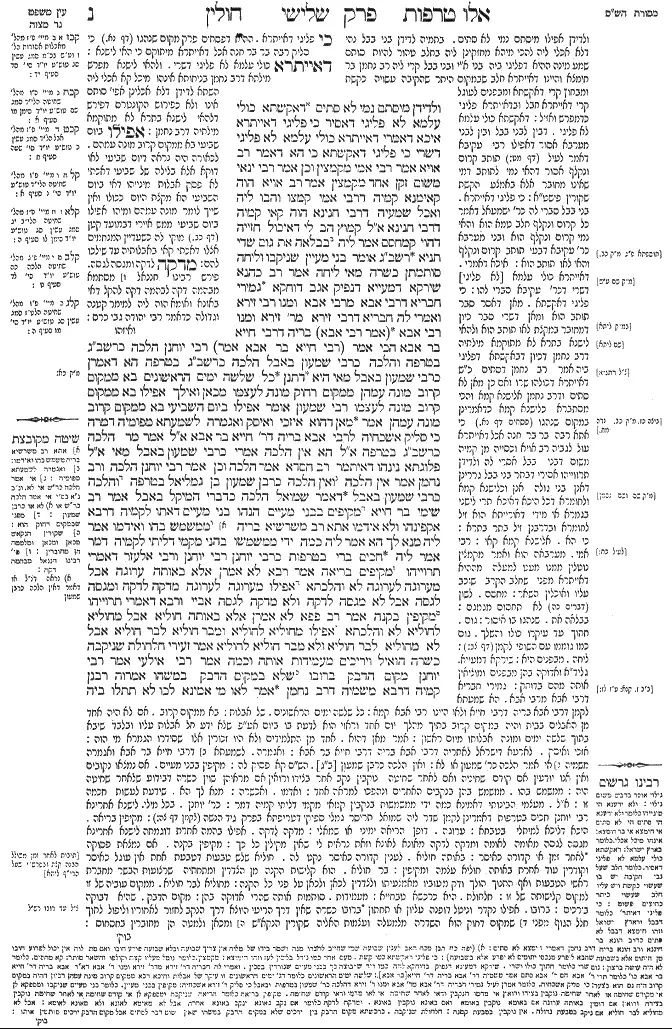
Hullin 50a - Guemara
ולדידן מיסתם נמי לא סתים דאקשתא כולי עלמא לא פליגי דאסיר כי פליגי דאייתרא איכא דאמרי דאייתרא כולי עלמא לא פליגי דשרי כי פליגי דאקשתא כי הא דאמר רב אויא אמר רבי אמי מקמצין וכן אמר רבי ינאי משום זקן אחד מקמצין אמר רב אויא הוה קאימנא קמיה דרבי אמי קמצו והבו ליה ואכל שמעיה דרבי חנינא הוה קאי קמיה דרבי חנינא א"ל קמוץ הב לי דאיכול חזייה דהוי קמחסם אמר ליה בבלאה את גום שדי תניא רשב"ג אומר בני מעיין שניקבו וליחה סותמתן כשרה מאי ליחה אמר רב כהנא שירקא דמעייא דנפיק אגב דוחקא גמירי חבריא דרבי אבא מרבי אבא ומנו רבי זירא ואמרי לה חבריא דרבי זירא מר' זירא ומנו רבי אבא (אמר רבי אבא) בריה דרבי חייא בר אבא הכי אמר (רבי חייא בר אבא אמר) רבי יוחנן הלכה כרשב"ג בטרפה והלכה כרבי שמעון באבל הלכה כרשב"ג בטרפה הא דאמרן כרבי שמעון באבל מאי היא דתנן כל שלשה ימים הראשונים בא ממקום קרוב מונה עמהן ממקום רחוק מונה לעצמו מכאן ואילך אפילו בא ממקום קרוב מונה לעצמו רבי שמעון אומר אפילו ביום השביעי בא ממקום קרוב מונה עמהן אמר מאן דהוא איזכי ואיסק ואגמרה לשמעתא מפומיה דמרה כי סליק אשכחיה לרבי אבא בריה דר' חייא בר אבא א"ל אמר מר הלכה כרשב"ג בטרפה א"ל הא אין הלכה אמרי כרבי שמעון באבל מאי א"ל פלוגתא נינהו דאיתמר רב חסדא אמר הלכה וכן אמר רבי יוחנן הלכה ורב נחמן אמר אין הלכה ואין הלכה כרבן שמעון בן גמליאל בטרפה והלכה כרבי שמעון באבל דאמר שמואל הלכה כדברי המיקל באבל אמר רב שימי בר חייא מקיפים בבני מעיים הנהו בני מעיים דאתו לקמיה דרבא אקפינהו ולא אידמו אתא רב משרשיא בריה ממשמש בהו ואידמו אמר ליה מנא לך הא אמר ליה כמה ידי ממשמשו בהני מקמי דליתי לקמיה דמר אמר ליה חכים ברי בטרפות כרבי יוחנן רבי יוחנן ורבי אלעזר דאמרי תרוייהו מקיפים בריאה אמר רבא לא אמרן אלא באותה ערוגה אבל מערוגה לערוגה לא והלכתא אפילו מערוגה לערוגה מדקה לדקה ומגסה לגסה אבל לא מגסה לדקה ולא מדקה לגסה אביי ורבא דאמרי תרוייהו מקיפין בקנה אמר רב פפא לא אמרן אלא באותה חוליא אבל מחוליא לחוליא לא והלכתא אפילו מחוליא לחוליא ומבר חוליא לבר חוליא אבל לא מחוליא לבר חוליא ולא מבר חוליא לחוליא אמר זעירי חלחולת שניקבה כשרה הואיל ויריכים מעמידות אותה וכמה אמר רבי אילעי אמר רבי יוחנן מקום הדבק ברובו שלא במקום הדבק במשהו אמרוה רבנן קמיה דרבא משמיה דרב נחמן אמר לאו מי אמינא לכו לא תתלו ביה
Comments from Rashi on Masechet Hullin Page 50a
ולדידן אפילו מיסתם נמי לא סתים . בתמיה. לדידן בני בבל נהי דלא אכלי ליה להכי מיהא מחזקינן ליה בחלב טהור להיות סותם. שמע מינה ההיא דפליגי ביה בני א"י ובני בבל קרי ליה רב נחמן בר חימצא והיינו דאייתרא חלב שבמקום היתר שהקיבה עשויה כקשת ומבחוץ קרי דאקשתא ומבפנים לעוגל קרי דאייתרא חבל ובדאייתרא פליגי כדמפרש ואזיל: דאקשתא כולי עלמא לא פליגי . דבין לבני בבל ובין לבני מערבא אסור דאפילו רבי עקיבא דאמר לעיל (חולין דף מט:) תותב קרום ונקלף אסור דהאי נמי לתותב דמי שאינו מחובר אלא באמצע הקשת שקורין פישט"א: כי פליגי דאייתרא . בני בבל סברי לה כר' ישמעאל דאמר כל קרום ונקלף חלב טמא הוא והאי נמי קרום ונקלף הוא ובני מערבא כר' עקיבא דבעי תותב קרום ונקלף והאי לאו תותב הוא: איכא דאמרי דאייתרא כולי עלמא [לא פליגי] דשרי . דכר' עקיבא סברי להו: כי פליגי דאקשתא . מאן דאסר סבר תותב הוא ומאן דשרי סבר כיון דמחובר במקצת לאו תותב הוא. ולהאי לישנא בתרא לא מתוקמא מילתיה דרב נחמן דכיון דבאקשתא דפליגי ביה אמר רב נחמן דסתים כ"ש דאייתרא דכולהו שרו ואם כן מאן לא סתים ודרב נחמן אלישנא קמא והכי מסתברא כלישנא קמא כדאמרינן במקום שנהגו (פסחים דף נא.) כי אתא רבה בר בר חנה אכל דאייתרא עול לגביה רב אויא וכסייה מן קמיה משום דבני בבל אסרי לה. ולדידן תרווייהו אסירי דבתר בני בבל גררינן דאנן בני גולה אנן וכלישנא קמא ולחומרא דכל היכא דאיכא תרי לישני בגמרא אי מידי דאורייתא הוא זיל לחומרא ובדרבנן זיל בתר בתרא: כי הא . אלישנא קמא קאי: רבי אמי . מערבאה הוא ואמר מקמצין נוטלין ממנו מעט למעלה מההיא דאייתרא מפני שחלב הקרב שוכב עליו ואוכלין השאר: מחסם . לשון (דברים כה) לא תחסום. מגמגם: בבלאה את . שנהגו בו איסור: גום . חתוך עד עיקרו כולו והשלך. גום כמו גוממו עם השופי לקמן (חולין דף צב:): ליחה . מבפנים היא: שירקא דמעייא . גליד"א ואדוקה בהן מבפנים ומוציאין אותה מהם בדוחק: גמירי חבריא דרבי אבא מרבי אבא . הא שמעתא לקמן דרבי אבא בריה דרבי חייא ולאו היינו רבי אבא קמא: כל שלשה ימים הראשונים . של אבלות: בא ממקום קרוב . אם לא היה אחד מן האבלים בבית והיה במקום קרוב בתוך מהלך יום אחד וראוי הוא לדעת בו ביום אע"פ שלא ידע חל אבלות עליו ובלבד שיבא בתוך שלשה ימים ומונה אבלותו מיום ראשון: אמר מאן דהוא . אחד מן התלמידים ולא היו זכורין אלו שסידרו הגמרא מי הוה: אזכי ואיסק . לארעא דישראל לאתריה דרבי אבא בריה דרבי חייא בר אבא: ואגמרה . לשמעתא דרבי חייא בר אבא ואגמרה משמיה אי אמר הלכה כר' שמעון או לא: ואין הלכה כרבן שמעון [ב"ג] . הש"ס קא פסיק לה: מקיפין בבני מעיים . אם נמצאו נקובים ואין אנו יודעין אם קודם שחיטה ואם לאחר שחיטה נוקבין נקב אחר בצידו ורואין אם מראיהן שוין כשרה דבידוע שלאחר שחיטה היה: ממשמש בהו . ממשמש בהן בנקבים האחרים ונהפכו למראה אחד: ואדמו . ואכשרה: מנא לך הא . שידעת לעשות חכמה זו: א"ל . מעצמי הבינותי דאמינא כמה ידי ממשמשות בנקבין קמאי מקמי דליתי קמיה דמר: כר' יוחנן . בכל מילי. לישנא אחרינא רבי יוחנן חכים בטרפות דאמרינן לקמן שדר ליה שמואל תריסר גמלי ספיקי דטריפתא בפרק גיד הנשה (לקמן חולין דף צה:): מקיפין בריאה . היכא דליכא למיתלי בטבחא: ערוגה . דופן הריאה ימיני או שמאלי: מדקה לדקה . אפילו בהמה אחרת דוגמתה. לישנא אחרינא מגסה לגסה מאומה לאומה ומדקה לדקה מאונא לאונא וזאת נראית לי שאין מקילין כל כך: מקיפין בקנה . אם נמצאת פסוקה לאחר זמן או קדורה כאיסר: באותה חוליא . לענין קדורה כאיסר נקט לה. חוליא שלש טבעות דטבעת אחת אין עוגל כאיסר וקודרין עוד אחרת באותה חוליא עצמה ומקיפין: בר חוליא . הוא קלישות הקנה מן הצדדין ומתחתיה שרצועות הבשר מחברת ראשי הטבעות ואף התנוך הולך ודק מעוביו מאמצעיתו ולצדדין לכאן ולכאן על פני כל הקנה: מחוליא לבר חוליא . ממקום עוביה של זו למקום קלישותה של זו: חלחולת . היא כרכשא טבחיי"א: מעמידות . סותמות אותה שהרי אדוקה בהן: מקום הדבק . שהיא דבוקה בירכים: ברובו . אפילו נקדר וניטל דופנה עליון או תחתון ברובו כשרה שאין דרך הריעי היוצא דרך הנקב לחזור לאחוריו וליפול לתוך חלל הגוף מפני שמקום דחוק הוא השדרה מלמעלה ועצמות האליה שקורין הנקא"ש ומכאן ולמטה הן מחוברין בחסחוס:
Comments from Tosafot - Hullin 50a
כי פליגי דאייתרא . ההיא דפסחים פרק מקום שנהגו (דף נא.) כי סליק רבה בר בר חנה אכל דאייתרא מיתוקם כי האי לישנא: דאייתרא כולי עלמא לא פליגי דשרי . ולהאי לישנא מפרש מילתא דרב נחמן בניחותא אינהו מיכל קא אכלי ליה השתא לדידן דלא אכלינן אפי' סותם אינו ולא כפירוש הקונטרס דפירש דלהאי לישנא בתרא לא מתוקמא מילתיה דרב נחמן: אפילו ביום שביעי בא ממקום קרוב מונה עמהם . לכאורה היה נראה דיום שביעי לאו דוקא אלא בלילה של שביעי דאכתי לא פסק אבלות מינייהו דאי ביום השביעי הא מקצת היום ככולו ואין שייך לומר מונה עמהם ומיהו אפילו ביום שביעי ממש איירי דבמועד קטן (דף כב.) מוקי לה כשעדיין המנחמים אצלו דאכתי קאי באבלותיה עד שילכו להם: מדקה לדקה ומגסה לגסה . פירש רבינו חננאל מסתמא מבהמה דקה לבהמה דקה להקל דאי באונא ואומא הוה ליה למימר קטנה וגדולה כדאמר רבי יהודה גבי כרס:
Hullin 50a - Mishnah translated into english
and to us, the residents of Babylonia, not only is it forbidden but it also does not seal a perforation? It cannot be that this fat is forbidden by Torah law if they permit it for consumption. Even though we are stringent with regard to its consumption, we may still maintain that it effectively seals a perforation.
The Gemara explains: The abomasum is shaped like a bow. The side facing outward is curved like the bow itself, while the side facing inward is flat and straight like the bowstring. With regard to the fat that is on the bow, everyone agrees, even the residents of Eretz Yisrael, that it is forbidden for consumption. This fat, then, is the ḥimtza, which does not seal a perforation according to Rav Naḥman. When they disagree, it is with regard to the fat that is on the bowstring. The residents of Eretz Yisrael permit it for consumption, while those of Babylonia prohibit it. According to Rav Naḥman, the residents of Babylonia should concede that it is nevertheless an effective seal. This, then, is the bar ḥimtza.
There are those who say that with regard to the fat that is on the bowstring, everyone agrees that it is permitted. This, then, is the bar ḥimtza. When they disagree, it is with regard to the fat that is on the bow. The residents of Eretz Yisrael permit it, but the residents of Babylonia prohibit it. This, then, is the ḥimtza.
The Gemara adds: When it was stated that only the residents of Eretz Yisrael permit the fat on the bowstring for consumption, this means that they would eat it in a manner like that which Rav Avya says that Rabbi Ami says: One takes a handful of the fat that lies above the fat on the bowstring, since this is the fat prohibited by the verse: “And all the fat that is upon the innards” (Leviticus 3:3), and the rest is permitted for consumption. And so says Rabbi Yannai, also a resident of Eretz Yisrael, in the name of a certain elder: One takes a handful. Rav Avya said: I was standing before Rabbi Ami. The people there took a handful of the fat on the bowstring and gave him the remaining fat, and he ate from it.
The Gemara relates: The attendant of Rabbi Ḥanina was standing before Rabbi Ḥanina, a resident of Eretz Yisrael. Rabbi Ḥanina said to him: Take off a handful from that fat on the bowstring and give me the rest so that I will eat from it. Rabbi Ḥanina saw that the attendant was hesitating, so he said to him: You are a Babylonian and usually consider all of this fat forbidden. If so, cut off all the fat and throw it away.
§ The mishna states that if the small intestines are perforated, the animal is a tereifa. With regard to this, it is taught in a baraita: Rabban Shimon ben Gamliel says: If the intestines were perforated but mucus seals the perforated intestines, the animal is kosher. The Gemara asks: What is this mucus? Rav Kahana said: It is the mucus of the intestines that comes out under pressure, when one scrapes with a knife.
The Gemara relates: The colleagues of Rabbi Abba learned a tradition from Rabbi Abba. And who are they? The phrase: Colleagues of Rabbi Abba, is referring to Rabbi Zeira. And some say the colleagues of Rabbi Zeira learned it from Rabbi Zeira. And who are they? Rabbi Abba. This is the tradition: Rabbi Abba, son of Rabbi Ḥiyya bar Abba, said that this is what Rabbi Ḥiyya bar Abba says that Rabbi Yoḥanan says: The halakha is in accordance with the opinion of Rabban Shimon ben Gamliel with regard to a tereifa, and the halakha is in accordance with the opinion of Rabbi Shimon with regard to the halakhot of mourning.
The Gemara elaborates: The halakha is in accordance with the opinion of Rabban Shimon ben Gamliel with regard to a tereifa; this is the halakha that we stated above, that mucus forms an effective seal in the intestines. The halakha is in accordance with the opinion of Rabbi Shimon with regard to mourning; what is this halakha? As we learned in a baraita: If one learns of the death of an immediate relative after other relatives have already begun their period of mourning, the halakha is as follows: During the entire first three days of mourning, if a mourner comes to the house of mourning from a nearby place, he counts his days of mourning with the other mourners and completes his mourning with them.
The baraita continues: If he came from a distant place, he counts seven days on his own from the time that he was informed of the death. From this point forward, i.e., after the first three days, even if he comes from a nearby place, he counts seven days on his own. Rabbi Shimon says: Even on the seventh day, if he comes from a nearby place, he counts and completes his mourning with the other mourners.
Someone whose name was not given said: May I merit to go up to Eretz Yisrael and learn this halakha from the mouth of its Master. When he went up from Babylonia to Eretz Yisrael, he found Rabbi Abba, son of Rabbi Ḥiyya bar Abba, and said to him: Is it true that the Master said that the halakha is in accordance with the opinion of Rabban Shimon ben Gamliel with regard to a tereifa? Rabbi Abba said to him: This is not true. Rather, I said just the opposite, that the halakha is not in accordance with Rabban Shimon ben Gamliel, and even if mucus seals the perforation of the intestine, the animal is a tereifa.
The anonymous man asked Rabbi Abba again: What about the other ruling reported in your name, that the halakha is in accordance with the opinion of Rabbi Shimon with regard to mourning; is this accurate? Rabbi Abba said to him: There are conflicting opinions with regard to this matter, as it was stated that Rav Ḥisda says that the halakha is in accordance with the opinion of Rabbi Shimon, and so says Rabbi Yoḥanan: That is the halakha. But Rav Naḥman says: That is not the halakha.
The Gemara concludes: And the halakha is not in accordance with the opinion of Rabban Shimon ben Gamliel with regard to a tereifa, and the halakha is in accordance with the opinion of Rabbi Shimon with regard to mourning, in accordance with the statement of Shmuel, who says: The halakha is in accordance with the statement of the more lenient authority in matters relating to mourning.
§ Rav Shimi bar Ḥiyya says: One may compare perforations in the intestines. If one is unsure whether a perforation occurred before or after slaughter, one may make an additional perforation and compare the two. If their appearance is similar, one may conclude that the perforation occurred after slaughter, and the animal is kosher.
The Gemara relates: There were certain perforated intestines that came before Rava. Rava made other perforations and compared them, but they were not similar. Rav Mesharshiyya, his son, came and rubbed the new perforations, and they were similar. Rav Mesharshiyya therefore deemed the animal kosher. Rava said to him: From where did you know to do this? Rav Mesharshiyya said to him: I reasoned: How many hands rubbed these earlier perforations before they came before the Master? Therefore, I thought that if I handled the new ones, perhaps they would look similar. Rava said to him: My son is as wise in matters of tereifot as Rabbi Yoḥanan.
Similarly, Rabbi Yoḥanan and Rabbi Elazar both say: One may compare perforations in the lung to determine whether they occurred after slaughter. Rava said: We said this only when the two perforations are on the same side of the lungs. But one may not compare perforations from one side to the other side. The Gemara rules: And the halakha is: One may compare even from one side to the other side, and even from a small animal to another small animal, or from a large animal to another large animal, but not from a large animal to a small animal, and not from a small animal to a large animal.
Similarly, Abaye and Rava both say: One may compare severed or perforated areas in the windpipe. Rav Pappa said: We said this only when the two areas are in the same segment of the windpipe. But one may not compare from one segment to another segment. The Gemara rules: And the halakha is: One may even compare from one segment to another segment, and from one subsegment, i.e., a thin segment between the main segments, to another subsegment, but not from a segment to a subsegment, and not from a subsegment to a segment.
§ Ze’eiri says: If the rectum was perforated, the animal is kosher, since the hips hold it up and seal the perforation. And to how much of the rectum does this apply? Rabbi Ilai says that Rabbi Yoḥanan says: If the rectum was perforated in the place where it is attached to the hips, even if it was perforated in its majority, the animal is kosher. If the perforation was not in the place where it is attached to the hips, the animal is a tereifa if it was perforated in any amount.
The Sages said this halakha before Rava in the name of Rav Naḥman. Rava said to them: Have I not told you not to hang on Rav Naḥman
Traduction : The William Davidson digital edition of the Koren Noé Talmud, with commentary by Rabbi Adin Even-Israel Steinsaltz.