 Talmud Bavli
The learning on the whole site is dedicated : L'ilui Nishmat אליעזר בן רחל
The learning on the whole site is dedicated : L'ilui Nishmat Avraham Ben Simha
The learning on the whole site is dedicated : L'ilui Nishmat Yaakov ben Myriam
Hullin 102a : Youtube
Rabbi Dr. Moshe WeisblumYoutube
1 video class :
Hullin Page 102a
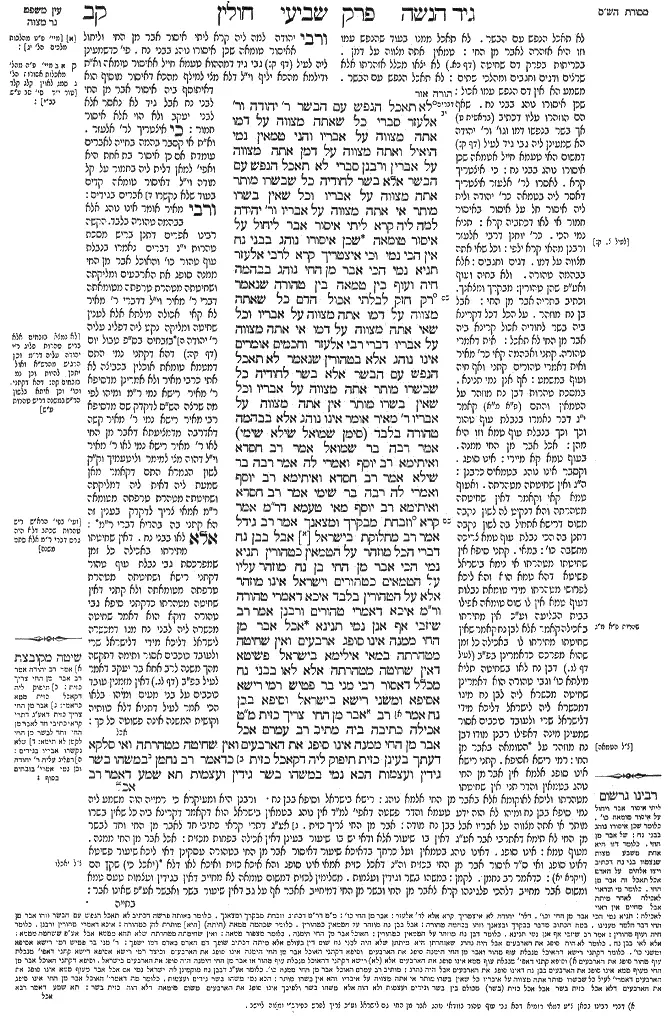
Hullin 102a - Guemara
(דברים יב, כג) לא תאכל הנפש עם הבשר ר' יהודה ור' אלעזר סברי כל שאתה מצווה על דמו אתה מצווה על אבריו והני טמאין נמי הואיל ואתה מצווה על דמן אתה מצווה על אברין ורבנן סברי לא תאכל הנפש עם הבשר אלא בשר לחודיה כל שבשרו מותר אתה מצווה על אבריו וכל שאין בשרו מותר אי אתה מצווה על אבריו ור' יהודה למה ליה קרא ליתי איסור אבר ליחול על איסור טומאה שכן איסורו נוהג בבני נח אין הכי נמי וכי איצטריך קרא לרבי אלעזר תניא נמי הכי אבר מן החי נוהג בבהמה חיה ועוף בין טמאה בין טהורה שנאמר (דברים יב, כג) רק חזק לבלתי אכול הדם כל שאתה מצווה על דמו אתה מצווה על אבריו וכל שאי אתה מצווה על דמו אי אתה מצווה על אבריו דברי רבי אלעזר וחכמים אומרים אינו נוהג אלא בטהורין שנאמר לא תאכל הנפש עם הבשר אלא בשר לחודיה כל שבשרו מותר אתה מצווה על אבריו וכל שאין בשרו מותר אין אתה מצווה על אבריו ר' מאיר אומר אינו נוהג אלא בבהמה טהורה בלבד (סימן שמואל שילא שימי) אמר רבה בר שמואל אמר רב חסדא ואיתימא רב יוסף ואמרי לה אמר רבה בר שילא אמר רב חסדא ואיתימא רב יוסף ואמרי לה רבה בר שימי אמר רב חסדא ואיתימא רב יוסף מאי טעמא דר"מ אמר קרא (דברים יב, כא) וזבחת מבקרך ומצאנך אמר רב גידל אמר רב מחלוקת בישראל אבל בבן נח דברי הכל מוזהר על הטמאין כטהורין תניא נמי הכי אבר מן החי בן נח מוזהר עליו על הטמאים כטהורים וישראל אינו מוזהר אלא על הטהורין בלבד איכא דאמרי טהורה ור"מ איכא דאמרי טהורים ורבנן אמר רב שיזבי אף אנן נמי תנינא אכל אבר מן החי ממנה אינו סופג ארבעים ואין שחיטה מטהרתה במאי אילימא בישראל פשיטא דאין שחיטה מטהרתה אלא לאו בבני נח מכלל דאסור רבי מני בר פטיש רמי רישא אסיפא ומשני רישא בישראל וסיפא בבן נח אמר רב אבר מן החי צריך כזית מ"ט אכילה כתיבה ביה מתיב רב עמרם אכל אבר מן החי ממנה אינו סופג את הארבעים ואין שחיטה מטהרתה ואי סלקא דעתך בעינן כזית תיפוק ליה דקאכל כזית כדאמר רב נחמן במשהו בשר גידין ועצמות הכא נמי במשהו בשר גידין ועצמות תא שמע דאמר רב
Comments from Rashi on Masechet Hullin Page 102a
לא תאכל הנפש עם הבשר . לא תאכל ממנו בעוד שהנפש עמו וזו היא אזהרה לאבר מן החי: טמאין אתה מצווה על דמן . בכריתות בפרק דם שחיטה (דף כא.) לא יצאו מכלל אזהרתו אלא שרצים ודגים וחגבים ומהלכי שתים: לא תאכל הנפש עם הבשר . משמע הא אין דם הנפש עמו אכול: שכן איסורו נוהג בבני נח . שאף הם הוזהרו עליו דכתיב (בראשית ט) אך בשר בנפשו דמו וגו' ור' יהודה הא שמעינן ליה גבי גיד לעיל (חולין דף ק:) דמשום האי טעמא חייל אטמאה שכן איסורו נוהג בבני נח: כי איצטריך קרא . לאסרו לר' אלעזר איצטריך דאסר ליה בטמאה כר' יהודה ולית ליה איסור חל על איסור באיסור חמור אי לאו דכתביה קרא: תניא נמי הכי . כר' יוחנן דרבי אלעזר ורבנן מהאי קרא ילפי: וכל שאי אתה מצווה על דמו . דגים וחגבים: אלא בבהמה טהורה . ולא בחיה ועוף ואע"פ שהן טהורין: מבקרך ומצאנך . וכתיב בתריה אבר מן החי: אבל בן נח מוזהר . על הכל דכל דקרינא ביה בשר לחודיה אכול קרינא ביה אבר מן החי לא תאכל: אית דאמרי טהורה . קתני ואבהמה קאי כר' מאיר ואית דאמרי טהורים קתני ואף חיה ועוף במשמע: אף אנן נמי תנינא . במסכת טהרות דבן נח מוזהר על הטמאין והתם (פ"א מ"א) קאמר י"ג דבר נאמרו בנבלת עוף טהור וכך וכך בנבלת עוף טמא וזו היא מהן: אכל אבר מן החי ממנה . בעוף טמא קא מיירי: אינו סופג . וקסבר אינו נוהג בטמאים כרבנן: ה"ג ואין שחיטתה מטהרתה . ואעוף טמא קאי וקאמר דאין שחיטתה מטהרתה והא דנקיט לה לשון נקבה משום דרישא אתחיל בה לשון נקבה דתנן בה הכי נבלת עוף טמא צריכה מחשבה כו': במאי . קתני סיפא אין שחיטתו מטהרתו אי נימא בישראל פשיטא דהא טמא הוא והא ליכא לפרושי מטהרתו מידי טומאת נבלות דעוף טמא אין לו שום טומאה אפילו בבית הבליעה וע"כ אין מתירתו באכילה קאמר אלא לבן נח קאמר שאין שחיטתו מתירתו לו באכילה כל זמן שהוא מפרכס כדאמרינן בפ"ב (לעיל חולין דף לג.) דבן נח לאו בשחיטה תליא מילתא כו' וגבי טהורה הוא דאמרינן שחיטה מכשרא ליה לבן נח מיגו דמכשרא ליה לישראל דליכא מידי דלישראל שרי ולעובד כוכבים אסור שמעינן מינה דאפילו רבנן מודו דבן נח מוזהר על הטומאה באבר מן החי: רמי רישא אסיפא . קתני רישא אינו סופג אלמא אין אבר מן החי נוהג בטמאין והדר תני אין שחיטתו מטהרתו וליכא לאוקומא אלא באבר מן החי אלמא נוהג: רישא בישראל וסיפא בבן נח . ורבנן היא. ומעיקרא כי רמייה הוה משמע ליה נמי סיפא בבן נח ומיהו לא הוה ידע טעמא והדר פשטה דאפי' למ"ד אין נוהג בטמאין בישראל הוא דקאמר דקרינא ביה כל שאין בשרו מותר אי אתה מצווה על אבריו אבל בבן נח מודה: אבר מן החי צריך כזית . אע"ג דתרי קראי כתיבי חד לאבר מן החי וחד לבשר מן החי לא תימא דאתרבי אבר אע"ג דאין בו שיעור אלא ודאי יש בו שיעור בעינן דאין אכילה בפחות מכזית: אכל אבר מן החי ממנה . מעוף טמא: אינו סופג . דאינו נוהג בטמאין ועל כרחך בדאיכא שיעור דאיסור אבר מן החי בטהורה עסקינן דאי ליכא שיעור פשיטא דאינו סופג ואי ס"ד איסור אבר מן החי בכזית וה"נ דאכל כזית אמאי אינו סופג והא איכא כזית ואיכא לאו דלא (יאכל כי) שקץ הם (ויקרא יא): כדאמר רב נחמן . לקמן: במשהו בשר וגידין ועצמות . משלימין לכזית דמשום טומאה לא מחייב דאין בגידין ועצמות טעם טמא ומשום אבר מחייב דלהכי פלגינהו קרא לאבר מן החי ובשר מן החי דמיחייב אאבר אף על גב דאין שיעור בשר ואבשר אע"פ שאינו אבר:
Comments from Tosafot - Hullin 102a
ורבי יהודה למה ליה קרא ליתי איסור אבר מן החי וליחול אאיסור טומאה שכן איסורו נוהג בבני נח . פי' כדשמעינן ליה לעיל (חולין דף ק:) גבי גיד דמההוא טעמא חייל אאיסור טומאה וא"ת ודילמא מהכא יליף וי"ל דלא מצי למילף מהכא דאיסור מוסיף הוא דאיתוסף ביה איסור אבר מן החי לבני נח אבל גיד לא נאסר אלא לבני יעקב ולא הוי אלא איסור חמור: כי איצטריך לר' אלעזר . וא"ת אי קסבר בהמה בחייה לאברים עומדת אם כן איסור בת אחת היא ואפי' למאן דלית ליה בחמור על קל מודה וי"ל דאיסור טומאה קדים בעוד שלא נקשרו אברים בגידים: ורבי מאיר אומר אינו נוהג אלא בבהמה טהורה בלבד . הקשה רבינו אפרים דתנן בריש מסכת טהרות י"ג דברים נאמרו בנבלת עוף טהור כו' והאוכל אבר מן החי ממנה סופג את הארבעים ומליקתה ושחיטתה מטהרת טרפתה מטומאתה דברי ר' מאיר וי"ל דדברי ר' מאיר לא קאי אכולה מילתא אלא לענין שחיטה ומליקה נקט ליה דפליג עליה ר' יהודה בזבחים בס"פ טבול יום (דף קה:) דהא דקתני נמי התם דמטמא טומאת אוכלין בכביצה לא אתי כרבי מאיר ולא אמרינן מדסיפא ר' מאיר רישא נמי ר"מ ומיהו לפי מה שרצה הש"ס לדקדק שם מדסיפא רבי מאיר רישא נמי ר' מאיר קשה דאדרבה מדמציעתא דאבר מן החי לאו ר' מאיר רישא נמי לאו ר' מאיר וי"ל דהוה מצי למימר וליטעמיך וק"ק לשון הגמרא התם דקאמר מאן שמעת ליה דאית ליה דמליקתה ושחיטתה מטהרת טרפתה מטומאה ר"מ אמאי צריך לדקדק בענין זה הא קתני בה בהדיא דברי ר"מ: אלא לאו בבני נח . דאין שחיטתו מתירתו באכילה כל זמן שמפרכסת גבי נבלת עוף טהור דקתני רישא ושחיטתה מטהרת טרפתה מטומאתה ולא קתני דאין שחיטה מטהרתו כדקתני סיפא גבי טהורה דוקא הוא דאמר שחיטה מכשרה ליה לבני נח מגו דמכשרה לישראל דליכא מידי דלישראל שרי ולעובד כוכבים אסור ותימה דתקשה מהך משנה לרב אחא בר יעקב דאמר לעיל בפ"ב (חולין דף לג.) דאין מזמנין עובד כוכבים על בני מעים ומיהו בלאו הכי אמר לעיל דתניא דלא כוותיה וקושית המשנה אינה פשוטה כל כך:
Hullin 102a - Mishnah translated into english
and you shall not eat the life with the flesh” (Deuteronomy 12:23). Rabbi Yehuda and Rabbi Elazar hold that with regard to any animal whose blood you are commanded not to eat, you are commanded with regard to its limbs, i.e., you are prohibited from eating its limbs that were severed while it was still alive. Consequently, with regard to these non-kosher species also, since you are commanded not to eat their blood, you are commanded with regard to their limbs.
And the Rabbis hold that the verse indicates: “And you shall not eat the life with the flesh” (Deuteronomy 12:23), but rather you shall eat the flesh alone, i.e., when the animal is no longer alive. Consequently, with regard to any animal whose flesh is permitted when it is slaughtered, you are commanded with regard to its limbs, i.e., you are prohibited from eating its limbs that were severed while it was still alive. But with regard to any animal whose flesh is not permitted when it is slaughtered, you are not commanded with regard to its limbs, i.e., the prohibition of eating limbs that were severed while it was still alive does not apply.
The Gemara asks: But according to Rabbi Yehuda, who holds that a prohibition takes effect upon an already existing, less stringent prohibition, why does he need to derive this from a verse? Let the prohibition of eating a limb from a living animal come and take effect on the prohibition of eating meat from a non-kosher animal, as it is more stringent since its prohibition applies also to descendants of Noah, i.e., gentiles.
The Gemara responds: Yes, that is indeed so. Rabbi Yehuda does not need to derive this halakha from a verse, and the verse was necessary only according to the opinion of Rabbi Elazar, who holds that a prohibition does not take effect where there is an already existing prohibition, even if the second prohibition is more stringent.
This fact that it is Rabbi Elazar who derives this halakha from the verse, as opposed to Rabbi Yehuda, is also taught in a baraita: The prohibition of eating a limb from a living animal applies with regard to a limb from a domesticated animal, an undomesticated animal, or a bird, and whether it is from a non-kosher species or a kosher species, as it is stated: “Only be steadfast in not eating the blood, for the blood is the life; and you shall not eat the life with the flesh” (Deuteronomy 12:23).
This verse indicates that with regard to any species whose blood you are commanded not to eat, you are commanded with regard to its limbs, i.e., you are prohibited from eating its limbs that were severed while it was still alive. And any species about whose blood you are not commanded, i.e., with regard to which the prohibition of eating blood does not apply, you are not commanded with regard to their limbs. Since the prohibition of eating blood applies even with regard to non-kosher species, the prohibition of eating limbs severed from a living animal also applies; this is the statement of Rabbi Elazar.
And the Rabbis say: The prohibition of eating a limb from a living animal applies only to kosher species, as it is stated in the verse: “And you shall not eat the life with the flesh” (Deuteronomy 12:23), but rather you shall eat the flesh alone, i.e., when the animal is no longer alive. Consequently, with regard to any animal whose flesh is permitted when it is slaughtered, you are commanded with regard to its limbs, i.e., you are prohibited from eating its limbs that were severed while it was still alive. But with regard to any animal whose flesh is not permitted when it is slaughtered, you are not commanded with regard to its limbs, i.e., the prohibition of eating limbs that were severed while it was still alive does not apply.
Rabbi Meir says that the prohibition of eating a limb from a living animal applies only with regard to a kosher species of domesticated animal, but not with regard to undomesticated animals or fowl, even if they are kosher.
The Gemara provides a mnemonic for the different opinions with regard to the name of one of the Sages cited in the upcoming discussion: Shmuel, Sheila, Shimi.
Rabba bar Shmuel said that Rav Ḥisda said, and some say that it was Rav Yosef who said the following statement. And some say the attributions as follows: Rabba bar Sheila said that Rav Ḥisda said, and some say that it was Rav Yosef who said; and some say the attributions as follows: Rabba bar Shimi said that Rav Ḥisda said, and some say that it was Rav Yosef who said: What is the reason for the opinion of Rabbi Meir that the prohibition of eating a limb from a living animal applies only with regard to a kosher species of domesticated animal?
It is that the verse states: “Then you shall slaughter of your cattle and of your sheep” (Deuteronomy 12:21). This verse is closely followed by the verse that serves as the source of the prohibition to eat a limb severed from a living animal (Deuteronomy 12:23), indicating that the prohibition applies only to kosher domesticated animals.
Rav Giddel says that Rav says: The dispute between the Rabbis and Rabbi Yehuda and Rabbi Eliezer about whether the prohibition of eating a limb severed from a living animal applies with regard to non-kosher species is only with regard to Jews. But with regard to descendants of Noah, i.e., gentiles, everyone agrees that they are prohibited from eating a limb from a living non-kosher species of animal just like they are prohibited from eating a limb from a living kosher species.
The Gemara comments that this is also taught in a baraita: A descendant of Noah is prohibited from eating a limb from a living animal from non-kosher species just as from kosher species. But a Jew is prohibited from eating a limb from a living animal of kosher species only.
There are those who say that the correct wording of the baraita is that a Jew is prohibited from eating a limb from a living kosher species, in singular, and it is in accordance with the opinion of Rabbi Meir, who holds that the prohibition is limited to kosher domestic animals. And there are those who say that the correct wording of the baraita is that a Jew is prohibited from eating a limb from living kosher species, in plural, and it is in accordance with the opinion of the Rabbis, who hold that the prohibition also applies to a limb from a living bird or a living undomesticated animal of kosher species.
Rav Sheizvi said: We learn in the mishna as well that a gentile is prohibited from eating a limb from a living being even with regard to non-kosher species (Teharot 1:3): If one ate a limb severed from a living non-kosher bird, he does not incur forty lashes, and slaughter does not purify it, i.e., cause it to become permitted for consumption.
Rav Sheizvi clarifies: With regard to what case does the mishna issue this ruling? If we say that it is referring to a Jew who ate the limb, it is obvious that slaughter does not purify it, because it is a non-kosher species and cannot be made kosher. Rather is it not referring to descendants of Noah and teaching that even after the bird is slaughtered the limb severed while it was alive remains forbidden? By inference, it is clear from the mishna that it is prohibited for a gentile to eat a limb severed from a living being even from a non-kosher species.
Rabbi Mani bar Pattish raises a contradiction between the first clause of that mishna, which states that one does not receive lashes for eating a limb severed from a living non-kosher bird, and the latter clause of the mishna, which states that a limb severed from a living non-kosher bird remains forbidden after the bird is slaughtered. The first clause indicates that the prohibition of eating a limb severed from a living creature applies only to kosher species, while the latter clause indicates that it applies also to non-kosher species. And he answers this contradiction by explaining that the first clause is referring to a Jew and the latter clause is referring to a descendant of Noah.
§ The Gemara continues discussing the prohibition of eating a limb severed from a living creature. Rav says: A limb severed from a living animal requires an olive-bulk in order to render one who eats it liable to receive lashes. What is the reason for this? It is because the term: Eating, is written with regard to the prohibition of a limb severed from a living animal, and the definition of eating is the consumption of at least one olive-bulk.
Rav Amram raises an objection from the mishna cited above (Teharot 1:3): If one ate a limb severed from a living non-kosher bird, he does not incur the forty lashes, and slaughter does not purify it, i.e., cause it to become permitted. But if it enters your mind that we require an olive-bulk in order for one to receive lashes for eating a limb severed from a living creature, that mishna must be referring to such a case; therefore, it should emerge that he is liable to receive lashes because he ate an olive-bulk of a non-kosher bird.
The Gemara answers: This can be explained as Rav Naḥman said with regard to another issue, that it is referring to a case of eating a small amount of meat together with sinews and bones and the total volume is an olive-bulk. Here also, the mishna is referring to a case of eating a small amount of meat together with sinews and bones.
The Gemara raises another challenge to Rav’s statement that one receives lashes for eating a limb severed from a living animal only if he eats an olive-bulk: Come and hear a proof in this regard, as Rav said:
Traduction : The William Davidson digital edition of the Koren Noé Talmud, with commentary by Rabbi Adin Even-Israel Steinsaltz.