 Talmud Bavli
The learning on the whole site is dedicated : L'ilui Nishmat Jamila bat Chlomo Abensour
The learning on the whole site is dedicated : L'ilui Nishmat Rav Chlomo Ben Jamilla
The learning on the whole site is dedicated : L'ilui Nishmat יוסף בן מושה
Hullin 141a : Youtube
Rabbi Dr. Moshe WeisblumYoutube
1 video class :
Hullin Page 141a
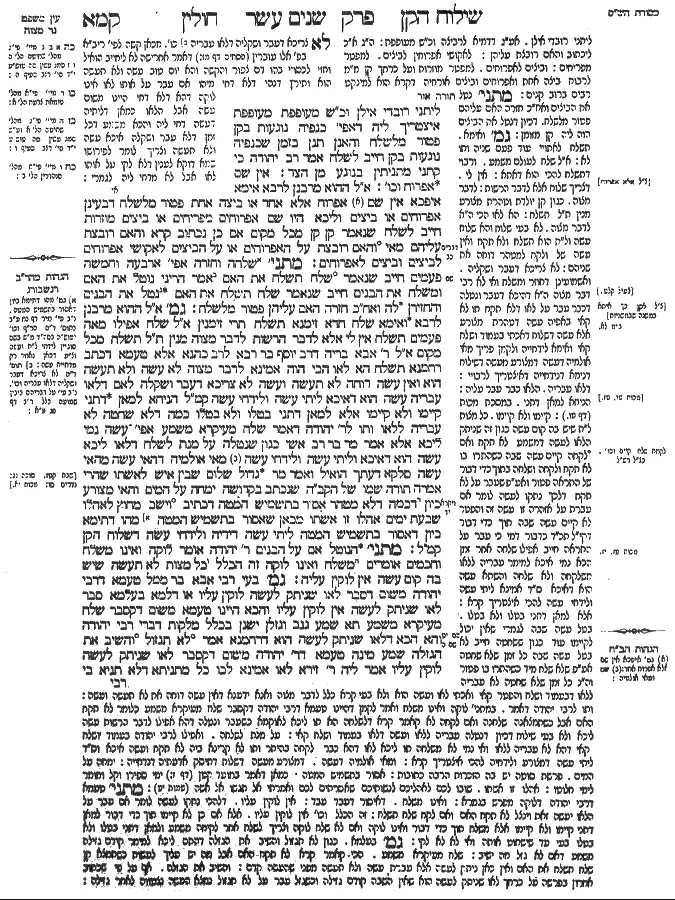
Hullin 141a - Guemara
ליתני רובדי אילן וכ"ש מעופפת מעופפת איצטריך ליה דאפי' כנפיה נוגעות בקן פטור מלשלח והאנן תנן בזמן שכנפיה נוגעות בקן חייב לשלח אמר רב יהודה כי קתני מתניתין בנוגע מן הצד:
אין שם אפרוח וכו':
א"ל ההוא מרבנן לרבא אימא איפכא אין שם אפרוח אלא אחד או ביצה אחת פטור מלשלח דבעינן אפרוחים או ביצים וליכא היו שם אפרוחים מפריחים או ביצים מוזרות חייב לשלח שנאמר קן קן מכל מקום אם כן נכתוב קרא והאם רובצת עליהם מאי (דברים כב, ו) והאם רובצת על האפרוחים או על הביצים לאקושי אפרוחים לביצים וביצים לאפרוחים:
מתני׳ שלחה וחזרה אפי' ארבעה וחמשה פעמים חייב שנאמר (דברים כב, ז) שלח תשלח את האם אמר הריני נוטל את האם ומשלח את הבנים חייב שנאמר שלח תשלח את האם נטל את הבנים והחזירן לה ואח"כ חזרה האם עליהן פטור מלשלח:
גמ׳ א"ל ההוא מרבנן לרבא ואימא שלח חדא זימנא תשלח תרי זימנין א"ל שלח אפילו מאה פעמים תשלח אין לי אלא לדבר הרשות לדבר מצוה מנין ת"ל תשלח מכל מקום א"ל ר' אבא בריה דרב יוסף בר רבא לרב כהנא אלא טעמא דכתב רחמנא תשלח הא לאו הכי הוה אמינא לדבר מצוה לא עשה ולא תעשה הוא ואין עשה דוחה לא תעשה ועשה לא צריכא דעבר ושקלה לאם דלאו עבריה עשה הוא דאיכא ליתי עשה ולידחי עשה קמ"ל הניחא למאן דתני קיימו ולא קיימו אלא למאן דתני בטלו ולא בטלו כמה דלא שחטה לא עבריה ללאו ותו לר' יהודה דאמר שלח מעיקרא משמע אפי' עשה נמי ליכא אלא אמר מר בר רב אשי כגון שנטלה על מנת לשלח דלאו ליכא עשה הוא דאיכא וליתי עשה ולידחי עשה מאי אולמיה דהאי עשה מהאי עשה סלקא דעתך הואיל ואמר מר גדול שלום שבין איש לאשתו שהרי אמרה תורה שמו של הקב"ה שנכתב בקדושה ימחה על המים והאי מצורע כיון דכמה דלא מטהר אסור בתשמיש המטה דכתיב (ויקרא יד, ח) וישב מחוץ לאהלו שבעת ימים אהלו זו אשתו מכאן שאסור בתשמיש המטה מהו דתימא כיון דאסור בתשמיש המטה ליתי עשה דידיה ולידחי עשה דשלוח הקן קמ"ל:
מתני׳ הנוטל אם על הבנים ר' יהודה אומר לוקה ואינו משלח וחכמים אומרים משלח ואינו לוקה זה הכלל כל מצות לא תעשה שיש בה קום עשה אין לוקין עליה:
גמ׳ בעי רבי אבא בר ממל טעמא דרבי יהודה משום דסבר לאו שניתק לעשה לוקין עליו או דלמא בעלמא סבר לאו שניתק לעשה אין לוקין עליו והכא היינו טעמא משום דקסבר שלח מעיקרא משמע תא שמע גנב וגזלן ישנן בכלל מלקות דברי רבי יהודה והא הכא דלאו שניתק לעשה הוא דרחמנא אמר (ויקרא יט, יג) לא תגזול (ויקרא ה, כג) והשיב את הגזלה שמע מינה טעמא דר' יהודה משום דקסבר לאו שניתק לעשה לוקין עליו אמר ליה ר' זירא לאו אמינא לכו כל מתניתא דלא תניא בי
Comments from Rashi on Masechet Hullin Page 141a
ליתני רובדי אילן . אע"ג דדמיא לרביצה וכ"ש מעופפת: ה"ג א"כ ליכתוב והאם רובצת עליהן: לאקושי אפרוחין לביצים . למפטר מפריחים: וביצים לאפרוחים . למפטר מוזרות. ועל כרחך קן מ"מ לרבות ביצה אחת ואפרוחים וביצים אורחיה דקרא הוא למינקט רבים ברוב קנים: מתני' נטל את הביצים ואח"כ חזרה האם עליהם פטור מלשלח . דכיון דנטל את הביצים הוה ליה קן מזומן: גמ' ואימא . תשלח לאתויי עוד פעם שניה ותו לא: א"ל שלח לעולם משמע . ורבוי דתשלח להכי הוא דאתא: אין לי . דצריך שלוח אלא לדבר הרשות: לדבר מצוה . כגון קן יולדת וטהרת מצורע מנין ת"ל תשלח: הא לאו הכי ה"א לדבר מצוה . לא בעי שלוח והא שלוח עשה ול"ת הוא תשלח ולא תקח ואין עשה של ולקח למטהר דוחה את שניהם: לא צריכא דעבר ושקליה . ואשמועינן דחוזר ומשלח ואי לא רבי דבר מצוה ה"א דהיכא דעבר ונטלה דכבר עבר על לאו דלא תקח תו לא קאי באפיה עשה דטהרת מצורע אלא עשה דשלוח דאכתי בעמוד ושלח קאי ואימא לידחייה. ולקמן פריך מאי אולמיה דעשה דמצורע מעשה דשילוח דנימא דנידחייה דאיצטריך לרבויי: דלאו עבריה . הלאו כבר עבר עליה: הניחא למאן דתני . במסכת מכות (דף טו.): קיימו ולא קיימו . כל מצות ל"ת שיש בה קום עשה כגון זה שניתק הלאו לעשה דמשמע לא תקח ואם לקחה קיים עשה שבה כשהתרו בו לא תקח ולקחה ושלחה בתוך כדי דבור של התראה פטור ואע"פ שעבר על לא תקח דלכך נתקו לעשה לומר אם עברת על אזהרה זו עשה זה והפטר לא קיים עשה שבה תוך כדי דבור דקי"ל תכ"ד כדבור דמי כי עבר על התראה חייב אפילו שלחה אחר זמן הכא נמי איכא למימר עבריה ללאו משלקחה ולא שלחה והשתא עשה הוא דאיכא ס"ד אמינא ליתי עשה ולידחי עשה להכי איצטריך קרא: אלא למאן דתני בטלו ולא בטלו . בטל עשה שבה לגמרי שאין יכול לקיימו עוד כגון ששחטה חייב לא בטל עשה שבה כל זמן שלא שחטה אע"פ שלא שלח מיד כשהתרו בו פטור וה"נ כל זמן שלא שחטה לא עבריה ללאו דבעמוד ושלח והפטר קאי ואכתי לאו ועשה הוא ולא בעי קרא כלל לדבר מצוה ואנא ידענא דאין עשה דוחה את לא תעשה ועשה: ותו לרבי יהודה דאמר . במתני' לוקה ואינו משלח ואמר לקמן דהיינו טעמא דרבי יהודה דקסבר שלח מעיקרא משמע כלומר לא תקח האם אבל כשתמצאנה שלחנה ואם לקחה לא קאמר קרא דלשלחה הא תו ליכא לאוקמא כשעבר ונטלה דהא אפילו לדבר הרשות עשה ליכא ולא בעי שילוח דכיון דנטלה עבריה ללאו ועשה דלאו בעמוד ושלח קאי: על מנת לשלחה . ואפילו לרבי יהודה בעמוד ושלח קאי דהא לא עבריה ללאו ואי נמי לא משלחה תו ליכא לאו דהא כבר לקחה בהיתר ותו לא קרינא ביה לא תקח ועשה איכא וס"ד ליתי עשה דמצורע ולידחיה להכי איצטריך קרא: ומאי אולמיה . דעשה דמצורע מעשה דשלוח דתיסק אדעתיה דנדחייה: ימחה על המים . פרשת סוטה יש בה הזכרות הרבה כתובות: אסור בתשמיש המטה . כמאן דאמר במועד קטן (דף ז:) ימי ספירו וקל וחומר לימי חלוטו: אהלו זו אשתו . שובו לכם לאהליכם לנשותיכם שאסרתים לכם ואמרתי אל תגשו אל אשה (שמות יט): מתני' טעמא דרבי יהודה דלוקה מפרש בגמרא: ואינו משלח . דאיסור דעבד עבד: אין לוקין עליו . דלהכי נתקו לעשה לומר אם עבר על הלאו יעשה זאת וינצל לא תקח האם ואם לקח שלח תשלח: זה הכלל וכו' אין לוקין עליו . אלא אם כן לא קיימו תוך כדי דבור למאן דתני קיימו ולא קיימו אלא משלח תוך כדי דבור ואינו לוקה ואם לא שלח לוקה וצריך לשלח אחר לקיחה משמע ולמאן דתני בטלו ולא בטלו בעי עד שישחוט אותה ואי לא לא לקי: גמ' בעלמא . כגון לא תגזול והשיב את הגזלה דהתם ליכא למימר קודם גזילה משמע דאם לא גזל מה ישיב: שלח מעיקרא משמע . הכי קאמר קרא לא תקח האם אבל מה יש עליך לעשות כשתמצא קן שלח תשלח את האם ואין כאן ניתק לעשה אלא עברת עשה ולא תעשה מפני שהעשה קדם: והשיב את הגזלה . אף על פי שכתוב אחרון בפרשה על כרחך לאו שניתק לעשה הוא שאין השבה קודם גזילה וכשגזל עבר על לא תגזול נמצא העשה נצטווה לאחר גזילה:
Comments from Tosafot - Hullin 141a
לא צריכא דעבר ושקליה דלאו עבריה כו' . מכאן קשה לפי' ריב"א בפ' אלו עוברין (פסחים דף מז:) דאמר אחרישה לא ליחייב הואיל וחזי לכסויי בהו דם צפור והקשה והא יום טוב עשה ולא תעשה הוא ותירץ דנהי דלא דחי מיהו אם עבר על אותו לאו אינו לוקה דהא דלא דחי היינו משום עשה אבל הלאו כמאן דליתיה דעשה דחי ליה והכא משמע דכל זמן דלא עבר ושקלה איכא עשה ולא תעשה וצריך לומר לפירושו שמא דוקא לענין דלא לקי על אותו לאו אבל לא מדחי ליה לגמרי:
Hullin 141a - Mishnah translated into english
let the baraita teach that one is exempt in a case where the bird is sitting between two tree branches, which resembles a case where the bird is resting upon the nest itself in that the bird is sitting in both cases, and it would be clear all the more so that one is exempt if the mother is hovering. The Gemara responds: It was necessary for the baraita to teach the case of a hovering bird in order to teach that even if its wings are touching the nest, one is exempt from sending away the mother bird. Had the baraita taught the exemption in a case of a bird resting between two tree branches, one might have thought that this is because the bird’s wings are not touching the nest.
The Gemara now questions the baraita itself: How can the baraita state that even if the hovering bird’s wings are touching the nest, one is exempt from sending the bird? But didn’t we learn in the mishna: When its wings are touching the nest, one is obligated to send away the mother? Rav Yehuda said: When the case of the hovering mother bird is taught in the baraita, it is referring to a bird touching the nest from the side. In such a case, one is exempt because its wings are not touching the nest from above. By contrast, the mishna is referring to a case where the bird is hovering directly above the nest and touching the nest with its wings from above.
§ The mishna teaches: Even if there is only one fledgling or one egg, one is obligated to send away the mother, as it is stated: “If a bird’s nest happens before you” (Deuteronomy 22:6), indicating that one is obligated to send the mother bird away from the nest in any case. Additionally, if there were fledglings capable of flying or unfertilized eggs, one is exempt from sending away the mother bird, as it is stated in the same verse: “And the mother is resting upon the fledglings or upon the eggs.” From the juxtaposition of the fledglings and the eggs, one derives that the eggs or fledglings must be capable of living and they must require their mothers. With regard to this, one of the Sages said to Rava: Say the opposite, that if there is only one fledgling or one egg, one is exempt from sending away the mother, since we require that the mother be “resting upon the fledglings or upon the eggs,” and this condition is not fulfilled with fewer than two.
Additionally, if there were fledglings capable of flying or unfertilized eggs in the nest, say that one is obligated to send the mother bird away, as it is stated in that verse: “Nest,” indicating that one is obligated to send the mother bird away from the nest in any case. Rava responds: If so, let the verse write: And the mother is resting upon them. For what reason does the verse state: “And the mother is resting upon the fledglings or upon the eggs”? It is to compare the fledglings to the eggs and the eggs to the fledglings, i.e., to indicate that the eggs or fledglings must be capable of living and must require their mothers. Fledglings that can fly and unfertilized eggs are therefore not included in the mitzva. Consequently, the word “nest” serves to indicate that one is obligated to send away the mother bird even if there is only one egg or fledgling in the nest.
MISHNA: If one sent away the mother bird and it returned to rest on the eggs, even if it returned four or five times, one is obligated to send it away again, as it is stated: “You shall send [shalle’aḥ teshallaḥ] the mother” (Deuteronomy 22:7). The doubled verb indicates that one must send away the mother bird multiple times if needed. If one said: I am hereby taking the mother and sending away the offspring, he is still obligated to send away the mother even if he sent away the offspring, as it is stated: “You shall send the mother.” If one sent away the mother and took the offspring and then returned them to the mother’s nest, and thereafter the mother returned and rested upon them, one is exempt from sending away the mother bird.
GEMARA: The mishna teaches that if the mother bird returned to rest on the eggs, even if it returned four or five times, one is obligated to send it away again, as it is stated: “You shall send [shalle’aḥ teshallaḥ].” With regard to this, one of the Sages said to Rava: But say instead that the word “shalle’aḥ” indicates that one must send away the mother once, and the word “teshallaḥ” indicates that one must do so twice, and beyond that there is no obligation.
Rava said to him: Actually, the halakha that one must send away the mother multiple times is not derived from the phrase “shalle’aḥ teshallaḥ.” Rather, the word “shalle’aḥ” indicates that one must send away the mother bird even one hundred times, and the word “teshallaḥ” teaches another matter: I have derived only the obligation to send away the mother bird in a case where one takes the eggs or the fledglings and wants to take the mother bird for a discretionary purpose, e.g., to eat it. In a case where one takes the eggs or the fledglings and needs the mother bird for a matter involving a mitzva, e.g., the purification of a leper, from where is the halakha that he must send away the mother derived? The verse states: “Teshallaḥ,” to teach that in any case one must send away the mother bird.
Rabbi Abba, son of Rav Yosef bar Rava, said to Rav Kahana: But according to this explanation, the only reason that one must send away the mother bird even when needed for a matter involving a mitzva is that the Merciful One wrote: “Teshallaḥ”; but if not for this, I would say that when the mother is needed for a matter involving a mitzva, one is not obligated to send her away. But this is difficult, as the sending of the mother bird is both a positive mitzva and a prohibition, as the verse states: “You shall not take the mother with the young; you shall send the mother” (Deuteronomy 22:6–7), and there is a principle that a positive mitzva cannot override both a prohibition and a positive mitzva.
Rav Kahana replied: No, the word “teshallaḥ” is necessary for a case where one transgressed and took the mother with the fledglings. In such a case, he has already transgressed the prohibition, and there is now only a positive mitzva to send away the mother. Perhaps one might say: Let the positive mitzva performed with the mother, e.g., the purification of the leper, come and override the positive mitzva of sending away the mother. Therefore, the word “teshallaḥ” teaches us that this is not so, and one is obligated to send away the mother.
The Gemara notes: This works out well according to the one who teaches that the criterion for determining whether one is flogged for violating a prohibition that entails fulfillment of a positive mitzva is whether he fulfilled the mitzva immediately afterward or did not fulfill it. If he does not fulfill the mitzva immediately, he is flogged when he fails to do so. Consequently, if one does not send away the mother bird immediately after taking her with the fledglings, he has immediately violated the prohibition, and only the requirement to fulfill the positive mitzva remains.
The Gemara continues: But according to the one who teaches that the criterion for determining whether one is flogged in that case is whether he negated the possibility of fulfilling the positive mitzva or did not negate it, and one is flogged only if he performed an action that renders it impossible to fulfill the mitzva, this explanation does not work out well. After all, as long as one has not slaughtered the mother bird, he has not transgressed the prohibition, since he may still send her away. Consequently, even if one takes the mother, as long as he has not slaughtered her, the prohibition remains in addition to the positive mitzva. If so, there is no need for the Torah to teach that the obligation to send away the mother bird applies in the case of a mitzva.
And furthermore, one may ask: According to the opinion of Rabbi Yehuda, who said that the word “shalle’aḥ” indicates that the mitzva to send away the mother bird applies only at the outset, i.e., before taking the fledglings, one who takes the mother together with the fledglings violates both the prohibition and the positive mitzva associated with it, such that even a positive mitzva does not remain.
Rather, Mar bar Rav Ashi said: The word “teshallaḥ” is necessary to indicate that the mitzva to send away the mother bird applies in a case where one took her in order to send her away immediately. In such a case, there is no prohibition, as one intends to send her away, but there is still a positive mitzva to send her away. And therefore, one might have said: Let another positive mitzva, e.g., taking the mother for the purification of a leper, come and override the positive mitzva of sending the mother. Therefore, the word “teshallaḥ” indicates that the mitzva of sending the mother bird applies even in such a case.
The Gemara asks: What is the strength of that other positive mitzva over this positive mitzva of sending away the mother bird? Why might the former override the latter? The Gemara responds: It might enter your mind to say that since the Master said: Great is peace between a man and his wife, as the Torah said that the name of the Holy One, Blessed be He, which is written in sanctity, shall be erased on the waters as part of the ritual of a woman suspected by her husband of adultery (see Numbers 5:23) in order to clear her from suspicion and restore peace between her and her husband, therefore, perhaps the halakha should be more lenient with regard to the leper.
The Gemara explains: And with regard to this leper, since as long as he is not purified he is prohibited from engaging in marital relations, as it is written: “But he shall dwell outside his tent seven days” (Leviticus 14:8), and when the verse states: “His tent,” this is referring to his wife, such that one may derive from here that a leper is prohibited from engaging in marital relations, perhaps his purification ceremony should take precedence. This is because perhaps you will say: Since he is prohibited from engaging in marital relations, let his positive mitzva of purification come and override the positive mitzva of the sending away of the mother bird from the nest. Therefore, the word “teshallaḥ” teaches us that even so, one may not take the mother bird.
MISHNA: With regard to one who takes the mother bird with its fledglings, Rabbi Yehuda says: He is flogged for taking the mother bird, and he does not send away the mother. And the Rabbis say: He sends away the mother and is not flogged, as this is the principle: With regard to any prohibition that entails a command to arise and perform a mitzva, one is not flogged for its violation.
GEMARA: The mishna teaches that according to Rabbi Yehuda, one who takes the mother with the offspring is flogged. With regard to this, Rabbi Abba bar Memel raises a dilemma: Is the reasoning for the ruling of Rabbi Yehuda that he holds that one is flogged for violation of a prohibition that entails fulfillment of a positive mitzva? Accordingly, one is flogged for transgressing the prohibition: “You shall not take the mother with the young,” which entails the fulfillment of: “You shall send the mother.”
The second possibility is now presented: Or perhaps in general Rabbi Yehuda holds that one is not flogged for violation of a prohibition that entails fulfillment of a positive mitzva; and here, this is the reason one is flogged for taking the mother: It is because he holds that when the verse states: “You shall send the mother [shalle’aḥ teshallaḥ]” (Deuteronomy 22:7), the word “shalle’aḥ” indicates that the mitzva to sending the mother bird applies only at the outset, i.e., when encountering the nest. Accordingly, this is not a case of a prohibition that entails the performance of a positive mitzva, but an independent prohibition, for which one is liable to receive lashes.
The Gemara suggests: Come and hear a resolution to the dilemma from that which is taught: A thief and a robber are included among those who are liable to receive lashes by Torah law. A thief violates the prohibition of: “You shall not steal” (Leviticus 19:11), and a robber violates the prohibition of: “You shall not rob” (Leviticus 19:13); this is the statement of Rabbi Yehuda. The Gemara continues: But here, the prohibition against robbing is a prohibition that entails fulfillment of a positive mitzva, as the Merciful One states: “You shall not rob” (Leviticus 19:13), and: “And he shall restore the robbed item” (Leviticus 5:23). And nevertheless, Rabbi Yehuda deems one liable to receive lashes for transgressing the prohibition against robbing. Therefore, conclude from it that the reasoning of the ruling of Rabbi Yehuda in the mishna is that he holds that one is flogged for violation of a prohibition that entails fulfillment of a positive mitzva.
Rabbi Zeira said to him: Didn’t I already tell you that any baraita that is not taught in the study hall
Traduction : The William Davidson digital edition of the Koren Noé Talmud, with commentary by Rabbi Adin Even-Israel Steinsaltz.