 Talmud Bavli
Hullin 121a : Youtube
Rabbi Dr. Moshe WeisblumYoutube
1 video class :
Hullin Page 121a
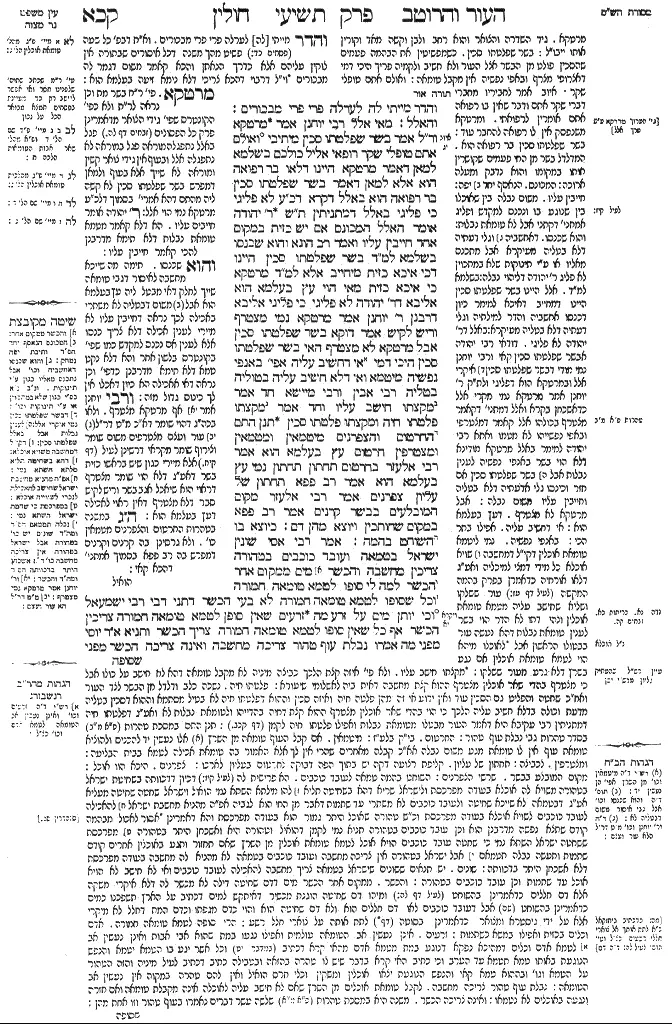
Hullin 121a - Guemara
והדר מייתי לה לערלה פרי פרי מבכורים:
והאלל:
מאי אלל רבי יוחנן אמר מרטקא ור"ל אמר בשר שפלטתו סכין מיתיבי (איוב יג, ד) ואולם אתם טופלי שקר רופאי אליל כולכם בשלמא למאן דאמר מרטקא היינו דלאו בר רפואה הוא אלא למאן דאמר בשר שפלטתו סכין בר רפואה הוא באלל דקרא דכ"ע לא פליגי כי פליגי באלל דמתניתין ת"ש ר' יהודה אומר האלל המכונס אם יש כזית במקום אחד חייבין עליו ואמר רב הונא והוא שכנסו בשלמא למ"ד בשר שפלטתו סכין היינו דכי איכא כזית מיחייב אלא למ"ד מרטקא כי איכא כזית מאי הוי עץ בעלמא הוא אליבא דר' יהודה לא פליגי כי פליגי אליבא דרבנן ר' יוחנן אמר מרטקא נמי מצטרף וריש לקיש אמר דוקא בשר שפלטתו סכין אבל מרטקא לא מצטרף האי בשר שפלטתו סכין היכי דמיאי דחשיב עליה אפי' באנפי נפשיה מיטמא ואי דלא חשיב עליה בטוליה בטליה רבי אבין ורבי מיישא חד אמר מקצתו חישב עליו וחד אמר מקצתו פלטתו חיה ומקצתו פלטתו סכין תנן התם החרטום והצפרנים מיטמאין ומטמאין ומצטרפין חרטום עץ בעלמא הוא אמר רבי אלעזר בחרטום תחתון תחתון נמי עץ בעלמא הוא אמר רב פפא תחתון של עליון צפרנים אמר רבי אלעזר מקום המובלעים בבשר קרנים אמר רב פפא במקום שחותכין ויוצא מהן דם:
כיוצא בו השוחט בהמה:
אמר רבי אסי שונין ישראל בטמאה ועובד כוכבים בטהורה צריכין מחשבה והכשר מים ממקום אחר הכשר למה לי סופו לטמא טומאה חמורה וכל שסופו לטמא טומאה חמורה לא בעי הכשר דתני דבי רבי ישמעאל (ויקרא יא, לח) וכי יותן מים על זרע מה זרעים שאין סופן לטמא טומאה חמורה צריכין הכשר אף כל שאין סופו לטמא טומאה חמורה צריך הכשר ותניא א"ר יוסי מפני מה אמרו נבלת עוף טהור צריכה מחשבה ואינה צריכה הכשר מפני
Comments from Rashi on Masechet Hullin Page 121a
מרטקא . גיד השדרה והצואר והוא רחב ולבן וקשה מאד וקורין אותו ייבו"ל: בשר שפלטתו סכין . כשמפשיטין את הבהמה פעמים שהסכין פולט מן הבשר אצל העור ולא חשיב. ולקמיה פריך היכי דמי דאצרופי מצרף ובאפי נפשיה אין מקבל טומאה: ואולם אתם טופלי שקר . איוב אמר לחביריו מחברי דברי שקר אתם ודבר שאין בו רפואה אתם אומרין לרפואתי. ומרטקא משנפסק אין לו רפואה להחבר עוד: בשר שפלטתו סכין בר רפואה הוא . המדלדל בשר מן החי פעמים שקושרין אותו במקומו והוא נדבק ומעלה ארוכה: המכונס . הנאסף יחד יפה: חייבין עליו . משום נבלה בין שאוכלו בין שנוגע בו ונכנס למקדש ופליג אמתני' דקתני אבל לא טומאת נבלות: והוא שכנסו . דאחשביה וגלי דעתיה דלא בטליה מעיקרא אבל מתכנס מאליו או ע"י תינוקות שלא במתכוין לא פליג ר' יהודה דליהוי נבלה: בשלמא למ"ד . אלל היינו בשר שפלטתו סכין היינו דמחייב דאיכא למימר כיון דכנסו אחשביה והדר למילתיה וגלי דעתיה דלא בטליה מעיקרא: באלל דר' יהודה לא פליגי . דודאי רבי יהודה אבשר שפלטתו סכין קאי ורבי יוחנן נמי מודי דבשר שפלטתו סכין איקרי אלל ובמרטקא הוא דפליגי ולת"ק ר' יוחנן אמר מרטקא נמי מקרי אלל כדאשכחן בקרא ואלל דמתני' דקאמר מצטרף בכולהו אלל קאמר דמצטרפי ובאפי נפשייהו לא מטמו ואתא רבי יהודה למימר באלל מרטקא מודינא דלא הוי בשר באנפי נפשיה לענין נבלות אבל בשר שפלטתו סכין אם חזר וכינסו גלי אדעתיה דלא בטליה וחייבין עליו משום נבלה: אבל מרטקא לא מצטרף . דעץ בעלמא הוא: אי דחשיב עליה . אפילו בתר הכי: באנפי נפשיה . נמי ליטמא טומאת אוכלין דקי"ל דמחשבה שויא אוכלא כל מידי דמצי למיכליה ואע"ג דלאו אורחיה כדאמרן בפרק בהמה המקשה (לעיל חולין דף עז:) עור ששלקו ושליא שחישב עליה מטמא טומאת אוכלין ונהי דתו לא הדר הוי בשר לענין טומאת נבלות דהא נעשה עור בבטולו הראשון אבל לאוכלו מיהא הוי לטמא טומאת אוכלין אם נגע בשרץ דלא גרע מעור ששלקו: מקצתו חישב עליו . ולא פי' איזה קצת הלכך כביצה מיניה לא מקבל טומאה דהא לא חישב על כולו אבל כי מצטרף בהדי שאר אוכלין מצטרף ההוא קצת מחשבה דאית ביה לאשלומי שיעורא: פלטתו חיה . נשכה כלב ודלדל מן הבשר לצד העור ואח"כ שחטה והפליט גם הסכין עוד ואין ידוע אי זה מהן פלטה חיה ואיזה סכין וההוא דפלטתו חיה לא בטיל מסתמא וההוא דסכין בטליה מדעת וכולה בדלא חשיב עליה הלכך כי הוי בהדי שאר אוכלין מצטרף ההוא קצת דחיה בהדייהו ולטומאת נבלות לא ואע"ג דפלטתו חיה דמתניתין רבי עקיבא היא דאמר העור מבטלו מטומאת נבלות ואפילו פלטתו חיה לקמן (חולין דף קכב.): תנן התם . במסכת טהרות (פ"א מ"ב) בסדר טהרות גבי נבלת עוף טהור: החרטום . בי"ק בלע"ז: מיטמאין . אם קבל העוף טומאה מן השרץ אלו נעשין יד להכניס ולהוציא טומאת. עוף אין לו טומאת מגע משום נבלה אא"כ קבלה מאחרים שהרי אין לך אלא האמור בה טומאת אכילה לטמא בבית הבליעה: ומצטרפין . לכביצה: תחתון של עליון . קליפת רצועה דקה יש בתוך הפה דבוקה לחרטום בעליון לארכו: צפרנים . היכא הוו אוכל: מקום המובלע בבשר . שרשי הצפרנים: השוחט בהמה טמאה לעובד כוכבים . הא פרישית לה (לעיל חולין קיז:) דכיון דדכוותה בשחיטת ישראל בטהורה משויא לה אוכלא בעודה מפרכסת ולישראל שריא דהא בשחיטה תליא להו מילתא השתא נמי הואיל וישראל שחטה שחיטה מעליא אע"ג דבטמאה לא שייכא שחיטה ולעובד כוכבים לא משתרי עד שתמות דאבר מן החי הוא לגביה אפ"ה מהניא מחשבת ישראל להאכילה לעובד כוכבים לשויא אוכלא בעודה מפרכסת וכ"ש טהורה שאוכל היתר גמור הוא בעודה מפרכסת והא דאמרינן אסור לאכול מבהמה קודם שתצא נפשה מדרבנן הוא וכן עובד כוכבים בטהורה תניא נמי לקמן דהואיל וטהורה היא ואשכחן היתר בטהורה מפרכסת ששחטה ישראל השתא נמי כי שחטה עובד כוכבים הויא אוכל לטמא טומאת אוכלין מן השרץ שאם תחזור ותגע באוכלין אחרים קודם שתמות ותעשה נבלה תטמאם אבל ישראל בטהורה אין צריכה מחשבה ועובד כוכבים בטמאה לא מהניא לה מחשבה בעודה מפרכסת דלא אשכחן היתר בדכוותה: שונים . יש תנאים ששונים שישראל בטמאה צריך מחשבה להאכילה לעובד כוכבים ואי לא חישב לא הויא אוכל עד שתמות וכן עובד כוכבים בטהורה: והכשר . ממקום אחר הכשר מים דדם שחיטה דילה לא מכשר לה דלא איקרי משקה אלא דם חללים כדאמרינן בהשוחט (לעיל חולין דף לה:) ומיהו דם שחיטה הוגנת מכשיר דאיתקש למים דכתיב על הארץ תשפכנו כמים כדאמרינן בהשוחט (שם) אבל דעובד כוכבים לאו דם חללים הוא ולא דם שחיטה הוא והוי כדם מגפתו וכדם המת דחלל לא מיקרי אלא על ידי גיסטרא ומצואר כדאמרינן בסוטה (דף) לתת אותה על צוארי חלל רשע: הרי סופה לטמא טומאה חמורה . אדם וכלים בכזית ואפילו במשא כשתמות: זרעים . אינן נעשין אב הטומאה עולמית ואפילו נגעו במת שהוא אבי אבות ואינן נעשין אב לטמא אדם וכלים דמהיכא נפקא דנוגע במת מטמא אדם מהאי קרא דכתיב (במדבר יט) וכל אשר יגע בו הטמא יטמא והנפש הנוגעת באותו טמא תטמא עד הערב וכי כתיב האי קרא בדבר שיש לו טהרה בהזאה ובטבילה כתיב דכתיב לעיל מיניה והזה הטהור על הטמא וגו' ובההוא טמא קאי והנפש הנוגעת יצאו אוכלין ומשקין וכלי חרס הואיל ואין להם טהרה במקוה אין נעשין אב הטומאה: נבלת עוף טהור צריכה מחשבה . לקבל טומאת אוכלים מן השרץ שאם לא חישב עליה לאוכלה אינה מקבלת טומאה ואם חזרה ונגעה באוכלים לא נטמאו: ואינה צריכה הכשר . משנה היא במסכת טהרות (פ"א מ"א) שלשה עשר דברים נאמרו בעוף טהור וזו אחת מהן:
Comments from Tosafot - Hullin 121a
והדר מייתי [לה] לערלה פרי פרי מבכורים . וא"ת דבפ' כל שעה (פסחים כד:) פשיט מהך משנה דכל איסורים שבתורה אין לוקין עליהם אלא כדרך הנאתן והכא קאמר משום דגמר לה מבכורים וי"ל דרבוי דהכא צריכי דלא נימא זיעה בעלמא הוא: מרטקא . פי' ר"ח בשר מת וכן נראה לר"ת ולא כפי' הקונטרס שפי' גידי הצואר מדאמרינן פרק כל הפסולים (זבחים דף לה.) פגל באלל נתפגלה מוראה פגל במוראה לא נתפגלה אלל ובעוף אין גידי צואר קשין ומוראה לא שייך אלא בעוף ולמאן דמפרש בשר שפלטתו סכין לא קשה ליה מהתם דהא אמרי' בסמוך דלכ"ע מרטקא נמי הוי אלל: ר' יהודה אומר חייבים עליו . הא דלא קאמר מטמא טומאת נבלות דלא תימא מדרבנן להכי קאמר חייבין עליו: והוא שכנסו . תימה מה שייכא מחשבה לאיסור דגבי טומאה שייך לחלק דאי מבטל ליה עץ בעלמא הוא אבל משום דבטליה לא משתרי באכילה לכך נראה דחייבין עליו לא מיירי לענין אכילה דלא צריך כנסו אלא לענין אם נכנס למקדש כמו שפי' בקונטרס בלשון אחר והא דלא נקט טמא דלא תימא מדרבנן כדפי' וכן נראה דאי אאכילה הא כיון דאכלו אין לך כינוס גדול מזה: ורבי יוחנן אמר אף מרטקא מצטרף . ולאו בכה"ג דהוי שומר דא"כ מ"ט דר"ל עור ועצם מצטרפים משום שומר וצירוף שומר מקראי דרשינן לעיל (חולין דף קיח.) אלא מיירי כגון שיש בראשו כזית בשר דאע"ג דלא הוי שומר מצטרף דראוי הוא שיאכל אגב בשר וריש לקיש סבר דלא מצטרף דאין ראוי לאכילה דעץ בעלמא הוא: ה"ג במשנה בטהרות החרטום והצפרנים מטמאין כו' . ולא גרסינן בה קרנים וקרנים דמפרש בה רב פפא בסמוך אמתני' דהכא קאי:
Hullin 121a - Mishnah translated into english
And then he derives the halakha of liquid that emerges from orla from first fruits via a verbal analogy between one instance of the word fruit and another instance of the word fruit. With regard to orla the verse states: “And you shall count the fruit thereof as forbidden” (Leviticus 19:23), and with regard to first fruits the verse states: “And you shall take of the first of all the fruit of the ground” (Deuteronomy 26:2). Therefore, just as with regard to first fruits the status of liquid that emerges from the produce is like that of the produce only with regard to grapes and olives, so too with regard to orla one receives lashes only for drinking the liquid of grapes and olives, but not for drinking the liquid of other types of produce.
§The mishna teaches that the alal joins together with the flesh to constitute the requisite egg-bulk to impart the impurity of food, despite not being considered food itself. The Gemara asks: To what is the term alal referring? Rabbi Yoḥanan says: It is referring to the nuchal ligament [marteka]. And Reish Lakish says: It is referring to the meat residue that is attached to the hide after the knife has flayed the flesh.
The Gemara raises an objection to the explanation of Reish Lakish from that which is written: “But you are plasterers of lies, you are all physicians of no value [elil]” (Job 13:4). The term “no value [elil]” stems from the same linguistic root as the word alal. Granted, according to the one who says that the word alal is referring to the nuchal ligament, i.e., Rabbi Yoḥanan, that is why Job accused his companions of giving advice without merit by making an analogy to a physician who attempts to heal the nuchal ligament, which cannot be healed. But according to the one who says that the word alal is referring to the meat residue that is attached to the hide after the knife has flayed the flesh, i.e., Reish Lakish, flesh that is hanging from the hide is able to be healed.
The Gemara answers: With regard to the term elil in the verse, everyone agrees that it is referring to the nuchal ligament. When Rabbi Yoḥanan and Reish Lakish disagree, it is with regard to the definition of the term alal employed by the Sages in the mishna.
Come and hear a resolution from that which is taught in the mishna: Rabbi Yehuda says: With regard to the alal that was collected, if there is an olive-bulk of it in one place it imparts the impurity of animal carcasses. Therefore, one who eats it or touches it and then eats consecrated food or enters the Temple is liable to receive karet for it. And Rav Huna said: This halakha is applicable only when a halakhically competent person collected the alal in one place, but not if the alal was collected by a child or without human intervention. By collecting it in one place, the person indicates that he considers it to be food.
Granted, according to the one who says that the word alal is referring to the meat residue that is attached to the hide after the knife has flayed the flesh, i.e., Reish Lakish, that is why Rabbi Yehuda says that one is rendered liable when there is an olive-bulk of alal collected in one place, because the person who collected it considers it to be food. But according to the one who says that the word alal is referring to the nuchal ligament, i.e., Rabbi Yoḥanan, even in a case when there is an olive-bulk of alal collected in one place, what of it? It is merely wood, i.e., it is unfit for consumption.
The Gemara answers: According to the opinion of Rabbi Yehuda, Rabbi Yoḥanan and Reish Lakish do not disagree; they agree that the term alal is referring to the meat residue attached to the hide after the knife has flayed the flesh. When they disagree, it is with regard to the definition of the word alal according to the opinion of the Rabbis. Rabbi Yoḥanan says: The Rabbis maintain that the nuchal ligament also joins together with the meat to constitute the requisite measure of an egg-bulk to impart the impurity of food. And Reish Lakish says: The Rabbis maintain that specifically the meat residue that is attached to the hide after the knife has flayed the meat joins together with the flesh, but the nuchal ligament does not join together.
What are the circumstances of that which is taught in the mishna, that the meat residue that is attached to the hide after the knife flayed the flesh joins together with the meat to constitute the measure of an egg-bulk required to impart the impurity of food? If it is a case where one intends to eat this meat residue, then it can become impure not only by joining together with the meat, but even by itself, like any other food. And if it is a case where one does not intend to eat this meat residue, why should it be susceptible to impurity at all? One has completely nullified its status as food.
Rabbi Avin and Rabbi Meyasha answered this dilemma. One said: It is a case where one intends to eat part of the meat residue, but it is uncertain which part. Therefore, the meat residue is not susceptible to impurity by itself because it is not entirely considered to be food, but the part that he intends to eat joins together with the meat to constitute the measure of an egg-bulk.
And one said: It is a case where one does not intend to eat any part of the meat residue. Rather, an animal severed part of the meat residue attached to the hide, and therefore that part of the meat residue retains its status as food. And the knife severed part of the meat residue, and one therefore nullified its status as food with regard to that part. Since it is uncertain which part was severed by a knife and which part by an animal, the meat residue itself is not susceptible to impurity, but the part that was severed by an animal joins together with the meat to constitute the measure of an egg-bulk.
§The mishna stated that the horns join together with the flesh to constitute the requisite egg-bulk to impart the impurity of food. The Gemara comments that we learned in a mishna elsewhere (Teharot 1:2): The beak and the talons of a bird that come into contact with a creeping animal can become impure, and transmit impurity to food, and join together with the attached flesh to constitute the requisite measure to impart impurity. The Gemara asks: Why does a beak join together with the flesh to impart impurity? It is merely wood, i.e., it is unfit for consumption.
Rabbi Elazar says: The mishna is stated with regard to the lower half of the beak, i.e., the lower mandible. The Gemara objects: The lower mandible is also merely wood. Rav Pappa says: The mishna is discussing the lower section of the upper mandible and is referring to the membrane inside the mouth that is attached to the beak.
Similarly, with regard to the talons mentioned in that mishna, Rabbi Elazar says: That mishna is not discussing the talons themselves, but rather the place at the base of the talon that is subsumed within the flesh.
Similarly, with regard to the horns mentioned in the mishna, Rav Pappa says: The mishna is not discussing the hard substance of the horn, but rather is referring to the place at the base of the horns where one severs the horns and blood flows from them.
§The mishna teaches: Similarly, in the case of one who slaughters a non-kosher animal for a gentile and the animal is still twitching and comes into contact with a source of impurity, it imparts impurity of food, but does not impart impurity of an animal carcass.
Rabbi Asi says: Some Sages teach that when a Jew slaughters a non-kosher animal or a gentile slaughters a kosher animal, in order for it to be susceptible to impurity of food, it is necessary that the intention of the one performing the slaughter be that the flesh be designated as food while it is still twitching. And furthermore, in order for the animal to be rendered susceptible to impurity, it requires contact with water or another liquid that renders food susceptible to impurity that comes from another place. The blood of this slaughter is not considered a liquid that renders food susceptible to impurity because it flowed from a valid slaughter.
The Gemara asks: Why do I need the animal to come in contact with liquid in order for it to be rendered susceptible to impurity of food? The flesh of the animal will eventually become impure with a more severe level of impurity when it dies, i.e., impurity of an animal carcass. And any food that will eventually become impure with a more severe level of impurity does not require contact with liquid to be rendered susceptible to impurity of food.
The Gemara now explains the source of this principle. As the school of Rabbi Yishmael teaches: With regard to rendering food susceptible to impurity through contact with liquid, the verse states: “But if water is put upon the seed, and any of the carcass falls on it, it is impure for you” (Leviticus 11:38). Just as seeds, which will never contract a more severe level of impurity, because no form of severe impurity applies to foods other than meat, require contact with liquid to render them susceptible to their less severe level of impurity, so too any food that will never contract a more severe level of impurity requires contact with liquid to be rendered susceptible to impurity of food. By contrast, any food that will become impure with a more severe level of impurity does not require contact with liquid to be rendered susceptible to impurity of food.
And similarly, it is taught in a baraita that Rabbi Yosei says: For what reason did the Sages say that in order for the carcass of a kosher bird to become susceptible to impurity it requires that the intention of the one performing the slaughter be to designate the animal as food, but it is not required for the bird to be rendered susceptible to impurity through contact with liquid? The reason is because
Traduction : The William Davidson digital edition of the Koren Noé Talmud, with commentary by Rabbi Adin Even-Israel Steinsaltz.