 Talmud Bavli
The learning on the whole site is dedicated : L'ilui Nishmat Reuven ben Rivka SEBBAG
The learning on the whole site is dedicated : For the success of Elyahou ben H'anna & family
The learning on the whole site is dedicated : L'ilui Nishmat Yaakov ben Myriam
Hullin 72a : Youtube
Rabbi Dr. Moshe WeisblumYoutube
1 video class :
Hullin Page 72a
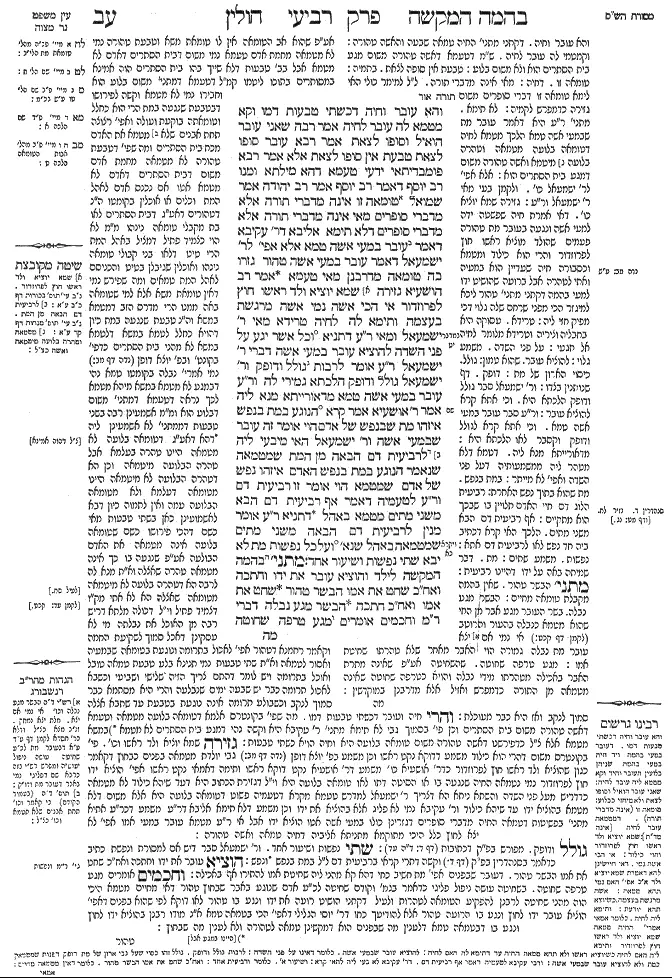
Hullin 72a - Guemara
והא עובר וחיה דכשתי טבעות דמו וקא מטמא לה עובר לחיה אמר רבה שאני עובר הואיל וסופו לצאת אמר רבא עובר סופו לצאת טבעת אין סופו לצאת אלא אמר רבא פומבדיתאי ידעי טעמא דהא מילתא ומנו רב יוסף דאמר רב יוסף אמר רב יהודה אמר שמואל טומאה זו אינה מדברי תורה אלא מדברי סופרים מאי אינה מדברי תורה אלא מדברי סופרים דלא תימא אליבא דר' עקיבא דאמר עובר במעי אשה טמא אלא אפי' לר' ישמעאל דאמר עובר במעי אשה טהור גזרו בה טומאה מדרבנן מאי טעמא אמר רב הושעיא גזירה שמא יוציא ולד ראשו חוץ לפרוזדור אי הכי אשה נמי אשה מרגשת בעצמה ותימא לה לחיה טרידא מאי ר' ישמעאל ומאי ר"ע דתניא (במדבר יט, טז) וכל אשר יגע על פני השדה להוציא עובר במעי אשה דברי ר' ישמעאל ר"ע אומר לרבות גולל ודופק ור' ישמעאל גולל ודופק הלכתא גמירי לה ור"ע עובר במעי אשה טמא מדאורייתא מנא ליה אמר ר' אושעיא אמר קרא (במדבר יט, יג) הנוגע במת בנפש איזהו מת שבנפש של אדם הוי אומר זה עובר שבמעי אשה ור' ישמעאל האי מיבעי ליה לרביעית דם הבאה מן המת שמטמאה שנאמר הנוגע במת בנפש האדם איזהו נפש של אדם שמטמא הוי אומר זו רביעית דם ור"ע לטעמיה דאמר אף רביעית דם הבא משני מתים מטמא באהל דתניא ר"ע אומר מנין לרביעית דם הבאה משני מתים שמטמאה באהל שנא' (ויקרא כא, יא) ועל כל נפשות מת לא יבא שתי נפשות ושיעור אחד:
מתני׳ בהמה המקשה לילד והוציא עובר את ידו וחתכה ואח"כ שחט את אמו הבשר טהור שחט את אמו ואח"כ חתכה הבשר מגע נבלה דברי ר"מ וחכמים אומרים מגע טרפה שחוטה
Comments from Rashi on Masechet Hullin Page 72a
והא עובר וחיה . דקתני מתני' החיה טמאה שבעה והאשה טהורה: וקמטמי לה עובר לחיה . ש"מ דטעמא דאשה טהורה משום מגע בית הסתרים הוא ולא משום בלוע: טבעת אין סופה לצאת . בתמיה: טומאה זו . דחיה: מאי אינה מדברי תורה . ל"ל למימר כולי האי לימא טומאה זו דברי סופרים משום גזירה כדמפרש לקמיה: לא תימא . מתני' ר"ע היא דאמר עובר מת שבמעי אשה טמא הלכך מטמא לחיה דטומאה בלועה מטמאה וטהרה בלועה מיטמא ואשה טהורה משום דמגע בית הסתרים הוא: אלא אפי' לר' ישמעאל כו' . ולקמן בעי מאי ר' ישמעאל ור"ע: גזירה שמא יוציא כו' . דאי אמרת חיה שפשטה ידה למעי אשה ונגעה בעובר מת טהורה פעמים שהולד מוציא ראשו חוץ לפרוזדור והרי הוא כילוד ומטמא וכסבורה חיה שעדיין הוא במעיה ואתי לטהרה אבל ברועה שהושיט ידו למעי בהמה דקתני מתני' טהור ליכא למיגזר הכי מפני שרחם שלה גלוי דכי מפיק חזי ליה: טרידא . עסוקה היא בחבליה וציריה וטרידא מלומר לחיה אל תגעי: על פני השדה . משמע גלוי: להוציא עובר . שהוא טמון: גולל . כיסוי הארון של מת: דופק . דף שנותנין בצדו: ור' ישמעאל סבר גולל ודופק הלכתא היא . וכי אתא קרא להוציא עובר: ור"ע סבר עובר במעי אשה טמא . וכי אתא קרא לגולל ודופק וקסבר לאו הלכתא היא: מדאורייתא מנא ליה . דטמא דלא מטהר ליה ממשמעותיה דעל פני השדה ואפי' לא מייתר: במת בנפש . מת שהוא בתוך נפש האחרת: רביעית הלוג דם חיי האדם תלויין בו שבכך הוא מתקיים: אף רביעית דם הבא משני מתים . הלכך האי קרא דכתיב ביה חד נפש לאו לרביעית דם אתא: נפשות . משמע שתים: מת . דבר שמיתה באה על ידו דהיינו רביעית: מתני' הבשר טהור . שאין בהמה מקבלת טומאה מחיים: הבשר מגע נבלה . בשר העובר מגע אבר מן החי שהוא מטמא כנבלה בהעור והרוטב (לקמן חולין דף קכט:). אי נמי אם יצא עובר מת נבלה גמורה הוי האבר מאחר שלא טהרתו שחיטת אמו: מגע טרפה שחוטה . שהשחיטה אע"פ שאינה מתרת האבר באכילה מטהרתו מידי נבלה והויא כטרפה שחוטה שאינה מטמאה מן התורה כדמפרש ואזיל אלא מדרבנן במוקדשין:
Comments from Tosafot - Hullin 72a
והרי חיה ועובר דכשתי טבעות דמו . מה שפי' בקונטרס אלמא דטומאה בלועה מטמאה וטעמא דאשה טהורה משום בית הסתרים וכן פי' בסמוך גבי לא תימא מתני' ר' עקיבא היא וקשה נהי דמגע בית הסתרים לא מטמא במשא מטמא אלא צ"ל כדפירשנו דאשה טהורה משום טומאה בלועה היא וחיה הויא כשתי טבעות: גזירה שמא יוציא ולד ראשו וכו' . פי' בקונטרס משום דהרי הוא כילוד משמע דדוקא נקט ראשו וכן משמע בפ' יוצא דופן (נדה דף מב:) גבי יולדת מטמאה בפנים כבחוץ דקאמר כגון שהוציא ולד ראשו חוץ לפרוזדור כדר' אושעיא כו' משמע דר' אושעיא נקט דוקא ראשו ותימה דאמאי נקט ראשו אפי' הוציא ידו חוץ לפרוזדור נמי נטמאה החיה שנגעה בו או הסיטה דתו לאו טומאה בלועה היא וי"ל דגזירת הכתוב היא דעד שיהא כילוד לא מטמאה כדדריש מעל פני השדה והשתא ניחא הא דצריך ר' ישמעאל למדרש טעמא מקרא דטעמיה פשוט דטומאה בלועה היא אלא משום דלא מטמא בהוציא ידו עד שיהא כילוד ור' עקיבא נמי לא פליג אלא בהוציא את ידו וכן משמע דלא תימא אליבא דר"ע משמע דכר"ע אתיא מתני' בפשיטות דטמאה החיה מדברי סופרים דגזרינן כולו במעי אשה אטו הוציא ידו אבל אי ר"ע מטמא עובר במעי אמו אפי' לא יצא לחוץ כלל היכי מתוקמא מתניתא אליביה דחיה טמאה ואשה טהורה: גולל ודופק . מפורש בפ"ק דכתובות (דף ד: ד"ה עד): שתי נפשות ושיעור אחד . ור' ישמעאל סבר דיש אם למסורת ונפשת כתיב כדאמר בסנהדרין בפ"ק (דף ד.) וקשה דתרי קראי ברביעית דם ל"ל במת בנפש ונפש: הוציא עובר את ידו וחתכה ואח"כ שחט את אמו הבשר טהור . דעובר שבפנים אפי' מת חשיב כחי דהא קא מהני ליה שחיטת אמו להתירו אף באכילה: וחכמים אומרים מגע טרפה שחוטה . בשחיטה עושה ניפול פליגי כדאמר בגמ' וקודם שחיטה לכ"ע אדם שנוגע באבר שבחוץ טהור דאי מחיים מטמא היכי הוה מהני שחיטה לרבנן להפקיע הטומאה לטהרות ולעיל דקתני הושיט רועה את ידו ונגע בו טהור לאו דוקא לפי שהוא בפנים דאפי' הוציא עובר ידו לחוץ ונגע בו הרועה טהור אלא להודיעך כחו דר' יוסי הגלילי דאפי' הכי בטמאה טמא א"נ מודו רבנן בהוציא ידו לחוץ ונגע בו דבטמאה טמא דלענין מה שבפנים הוא דמקשינן טמאה לטהורה ולא לענין מה שבחוץ:
Hullin 72a - Mishnah translated into english
The Gemara objects: But what about the mishna’s case of a dead fetus in its mother’s womb, and a midwife who touched it there, which is similar to the case of two swallowed rings, and yet the mishna rules that the fetus renders the midwife impure.
Rabba said: A fetus is different from a ring in this regard, since it will ultimately leave the womb. Rava said in puzzlement: Is that to say that a fetus will ultimately leave the womb, but a ring that someone swallowed will not ultimately leave his body? A ring will certainly be expelled eventually as well. Rather, Rava said: The scholars of Pumbedita know the reason for this matter, and who is the Sage referred to as the scholars of Pumbedita? It is Rav Yosef.
As Rav Yosef says that Rav Yehuda says that Shmuel says: This impurity of the midwife in the mishna’s case is not in effect by Torah law; rather, it was decreed by rabbinic law. The Gemara asks: What was Shmuel’s intention in emphasizing: It is not in effect by Torah law; rather, it was decreed by rabbinic law? It should have sufficed for him to say simply the impurity is decreed by rabbinic law. The Gemara answers: He said this so that you should not say that the ruling of the mishna is only in accordance with the opinion of Rabbi Akiva, who says that one who touches a dead fetus in a woman’s womb is impure by Torah law, and that is why the midwife was rendered impure. Rather, even according to the opinion of Rabbi Yishmael, who says that one who touches a dead fetus in a woman’s womb is pure by Torah law, nevertheless, the Sages decreed that a midwife who touches it is impure by rabbinic law.
The Gemara asks: What is the reason for this decree? Rav Hoshaya said: It is a rabbinic decree lest the fetus extend its head out of the concealed opening of its mother’s womb. If it did, it would be regarded as having been born, and it would then be ritually impure by Torah law. The Sages were concerned that the fetus extended its head and then the head returned inside but the midwife did not notice. Consequently, when she touched the fetus she mistakenly assumed she remained ritually pure. To safeguard against this, the Sages decreed that in any case where she touches the dead fetus, she is ritually impure.
The Gemara objects: If so, the Sages should also decree that the woman herself, who is carrying the fetus, is impure, since she also might not notice that the fetus’s head emerged. The Gemara explains: A woman accurately senses with regard to her own body whether the head of the fetus had emerged. The Gemara asks: But then she would have said this to the midwife. Why is there a need for a decree? The Gemara answers: Since the mother is distracted by the pain of childbirth, she does not have the presence of mind to warn the midwife.
The Gemara cited a dispute as to whether one who touches a dead fetus in a woman’s womb is ritually impure. It now elucidates that dispute: What is the opinion of Rabbi Yishmael, and what is the opinion of Rabbi Akiva? As it is taught in a baraita with regard to the verse: “And whoever in the open field touches one who is slain by the sword, or one who dies on his own, or a bone of a man, or a grave, shall be impure seven days” (Numbers 19:16). The phrase “in the open field” indicates that one is rendered impure only in a case where he touches an exposed corpse. This serves to exclude one who touches a dead fetus in a woman’s womb from being rendered impure; this is the statement of Rabbi Yishmael. Rabbi Akiva says: This phrase serves to include the grave cover and the grave walls, upon which the cover rests, as sources of impurity that render impure anyone who touches them.
The Gemara asks: And from where does Rabbi Yishmael derive that the grave cover and the grave walls render one who touches them impure? He learned this halakha through tradition, not from a verse. The Gemara asks: And as for Rabbi Akiva, from where does he derive that a dead fetus in a woman’s womb is impure by Torah law? Rabbi Oshaya said he derives it from the verse that states: “Whoever touches of a corpse, of the life of a person that died, he will be impure” (Numbers 19:13). The term “of the life” can also be interpreted as: Inside the life. What is the case of a corpse that is inside the life of a person? You must say that this is a dead fetus inside a woman’s womb.
The Gemara comments: And Rabbi Yishmael requires that verse to teach about a quarter-log of blood that comes from a corpse, meaning that even it imparts impurity like a corpse, as it is stated: “Whoever touches of a corpse, of the life of a person that died” (Numbers 19:13). What is the case of a life of a person that imparts impurity? You must say this is referring to a quarter-log of blood, as blood is regarded as the life force of a person, as the verse states: “For the blood is the life” (Deuteronomy 12:23), and a person requires a minimum of a quarter-log of blood to survive.
The Gemara comments: And Rabbi Akiva does not accept this derivation. He conforms to his line of reasoning, as he says even a quarter-log of blood that comes from two corpses imparts ritual impurity in a tent to people and other items that are under the same roof. As it is taught in a baraita: From where is it derived that a quarter-log of blood that came out of two separate corpses also imparts ritual impurity in a tent?
It is derived from a verse, as it is stated with regard to the prohibition against priests coming in contact with a dead body: “He shall not come upon any people that are a corpse [nafshot met]” (Leviticus 21:11). The use of the plural form “people [nafshot]” indicates that the blood imparts impurity even if it comes from two people, as blood is referred to as “nefesh” (see Deuteronomy 12:23), and the use of the singular form “corpse [met]” indicates that this blood combines to complete one measure, i.e., the minimum amount of a quarter-log required to impart impurity.
MISHNA: If an animal was encountering difficulty giving birth and as a result the fetus extended its foreleg outside the mother’s womb, and someone severed it and afterward slaughtered the mother animal, the flesh of the fetus is ritually pure. If one first slaughtered the mother animal and afterward severed the foreleg, the flesh of both the mother animal and the fetus are ritually impure due to having been in contact with a carcass. Since the foreleg was not permitted to be consumed through the act of slaughtering, it is regarded as a carcass with the associated ritual impurity. The rest of the flesh, which was permitted to be consumed by the slaughter, was in contact with it and so was rendered ritually impure from it; this is the statement of Rabbi Meir.
And the Rabbis say: The flesh has the ritual impurity of having been in contact with a tereifa that was slaughtered, as the limb is regarded as a tereifa that was slaughtered. By Torah law, although it is prohibited to consume it, it does not impart ritual impurity. Nevertheless, the Sages decreed that a tereifa that was slaughtered, as well as anything that comes in contact with it, is regarded as ritually impure to the extent that it disqualifies sacrificial foods that come in contact with it.
Traduction : The William Davidson digital edition of the Koren Noé Talmud, with commentary by Rabbi Adin Even-Israel Steinsaltz.