 Talmud Bavli
The learning on the whole site is dedicated : L'ilui Nishmat Jacques Isaac Ben Amram Loubaton
The learning on the whole site is dedicated : L'ilui Nishmat Reuven ben Rivka SEBBAG
The learning on the whole site is dedicated : L'ilui Nishmat Yaakov ben Myriam
Hullin 108a : Youtube
Rabbi Dr. Moshe WeisblumYoutube
1 video class :
Hullin Page 108a
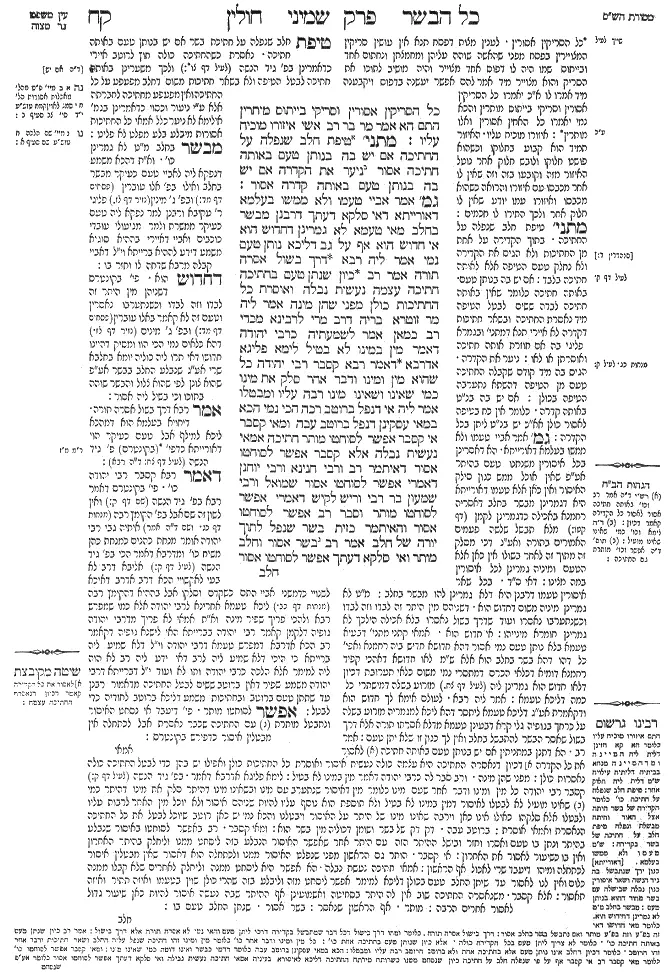
Hullin 108a - Guemara
כל הסריקין אסורין וסריקי בייתוס מותרין התם הא אמר מר בר רב אשי איזורו מוכיח עליו:
מתני׳ טיפת חלב שנפלה על החתיכה אם יש בה בנותן טעם באותה חתיכה אסור ניער את הקדרה אם יש בה בנותן טעם באותה קדרה אסור:
גמ׳ אמר אביי טעמו ולא ממשו בעלמא דאורייתא דאי סלקא דעתך דרבנן מבשר בחלב מאי טעמא לא גמרינן דחדוש הוא אי חדוש הוא אף על גב דליכא נותן טעם נמי אמר ליה רבא דרך בשול אסרה תורה אמר רב כיון שנתן טעם בחתיכה חתיכה עצמה נעשית נבלה ואוסרת כל החתיכות כולן מפני שהן מינה אמר ליה מר זוטרא בריה דרב מרי לרבינא מכדי רב כמאן אמר לשמעתיה כרבי יהודה דאמר מין במינו לא בטיל לימא פליגא אדרבא דאמר רבא קסבר רבי יהודה כל שהוא מין ומינו ודבר אחר סלק את מינו כמי שאינו ושאינו מינו רבה עליו ומבטלו אמר ליה אי דנפל ברוטב רכה הכי נמי הכא במאי עסקינן דנפל ברוטב עבה ומאי קסבר אי קסבר אפשר לסוחטו מותר חתיכה אמאי נעשית נבלה אלא קסבר אפשר לסוחטו אסור דאיתמר רב ורבי חנינא ורבי יוחנן דאמרי אפשר לסוחטו אסור שמואל ורבי שמעון בר רבי וריש לקיש דאמרי אפשר לסוחטו מותר וסבר רב אפשר לסוחטו אסור והאיתמר כזית בשר שנפל לתוך יורה של חלב אמר רב בשר אסור וחלב מותר ואי סלקא דעתך אפשר לסוחטו אסור
Comments from Rashi on Masechet Hullin Page 108a
כל הסריקין אסורין . לענין מצות דפסח תנא אין עושין סריקין המצויירין בפסח מפני שהאשה שוהה עליהן ומחמצתן ונחתום אחד ובייתוס שמו היה לו דפוס אחד מצוייר והיה מושיב לתוכו את הסריק והוא מצוייר מיד אמר להם אפשר יעשנה בדפוס ויקבענה מיד אמרו לו א"כ יאמרו כל הסריקין אסורין וסריקי בייתוס מותרין. והכא נמי יאמרו כל האחין אסורין ואלו מותרין: איזורו מוכיח עליו . האיזור תמיד הוא קבוע בחלוקו וכשהוא פושט חלוקו ולובש חלוק אחר נוטל האיזור מזה וקובעו בזה וזה שאין לו אחר מכבסו עם איזורו והרואה כשהוא מכבסו ואיזורו עמו יודע שאין לו חלוק אחר ולכך התירו לו חכמים: מתני' טיפת חלב שנפלה על החתיכה . בתוך הקדירה על אחת מן החתיכות ולא הגיס את הקדירה ולא נחלק טעם הטיפה אלא לאותה חתיכה בלבד: אם יש בה בנותן טעם באותה חתיכה . כלומר שאין באותה חתיכה לבדה ששים לבטל הטיפה מיד נאסרת החתיכה. ובשאר חתיכות דקדרה לא איירי תנא דמתני' ובגמרא פליגי בה אם חוזרת אותה חתיכה ואוסרתן או לאו: ניער את הקדרה . הגיס בה מיד קודם שקבלה החתיכה טעם מן הטיפה דהשתא נתערבה הטיפה בכולן: אם יש בה בנ"ט באותה קדרה . כלומר אין כח בטיפה לאסור כולן אא"כ יש בנ"ט ליתן בכל הקדרה: גמ' אמר אביי טעמו ולא ממשו בעלמא דאורייתא . הא דאסרינן בכל איסורין משנתנו טעם בהיתר אע"פ שאין אוכל ממש כגון סילק האיסור ואין כאן אלא טעמו דאורייתא היא דגמרינן מבשר בחלב דאסריה רחמנא באכילה כדגמרינן לקמן (חולין דף קטו:) מלא תבשל שלשה פעמים האמורים בתורה ואע"ג דכי מסלק זה מתוך זה לאחר בשולו אין כאן אלא הטעם ומיניה גמרינן לכל איסורין במה מצינו: דאי ס"ד . בכל שאר איסורין טעמו דרבנן היא דלא גמרינן להו מבשר בחלב: מ"ט לא גמרינן מיניה משום דחדוש הוא . דשניהם מין היתר זה לבדו וזה לבדו וכשנתערבו נאסרו ועוד שדרך בשול נאסרו בלא אכילה הילכך לא גמרינן חומרא מינייהו: אי חדוש הוא . אמאי קתני מתני' דבעיא טעמא בלא נותן טעם נמי אסור דהא חדושא חדיש ביה רחמנא ואפי' כל דהו דהא בשר בחלב הוא אלא ש"מ לאו חדושא דאהכי קפיד רחמנא דומיא דכלאי הכרם דמתסרי נמי משום כלאי תערובת דכיון דלאו חדוש הוא גמרינן ליה (לעיל חולין דף צח.) מזרוע בשלה דמישתרי כל כמה דליכא טעמא: אמר ליה רבא . לעולם אימא לך חדוש הוא ודקאמרת אע"ג דליכא טעמא ליתסר דהא ליכא למגמריה מזרוע בשלה על כרחך בגופיה גלי קרא דבעינן טעמא מדלא אסרתו תורה אלא דרך בשול שאסר הבשר להתבשל בחלב ואין לך כגון זו שלא יתן טעם: אמר רב . הא דתנן במתניתין אם יש בנותן טעם באותה חתיכה לאסור את כל הקדרה דכיון דנאסרה החתיכה היא עצמה כולה נעשית איסור ואוסרת כל החתיכות כולן ואפילו יש בהן כדי לבטל החתיכה כולה נאסרות כולן: מפני שהן מינה . ורב סבר לה כרבי יהודה דאמר מין במינו לא בטיל: לימא פליגא אדרבא דאמר . בפ' גיד הנשה (לעיל חולין דף ק:) קסבר רבי יהודה כל מין ומינו ודבר אחר שעם מינו כלומר מין דאיסור שנתערב עם מינו ובשאינו מינו דהיתר סלק את מינו דהיתר כמי שאינו מועיל לא לבטלו לאיסור דמין במינו לא בטיל ולא תוספת הוא נוסף עליו להיות שניהם איסור ולא יוכל מין האחר לרבות עליו ולבטלו אלא סלקהו כאילו אינו כאן וירבה שאינו מינו של היתר על האיסור ויבטלנו והכא נמי יש כאן רוטב שיוכל לבטל את כל החתיכה הנאסרת ואמאי אוסרת: ברוטב עבה . דק דק של בשר ושומן דכוליה מין בשר הוא: ומאי קסבר . רב באפשר לסוחטו באיסור שנבלע בהיתר ונתן בו טעם ואסרו וחזר ובישל ההיתר הזה עם היתר אחר שאפשר האיסור הנבלע בזה ליסחט ממנו וליחלק בהיתר האחרון ואין בו כשיעור לאסור את האחרון: אי קסבר . הותר גם הראשון מפני שנפלט האיסור ממנו ולכתחלה הוא דאסור שאין מבטלין איסור לכתחלה ומיהו דיעבד שרי לאכול אף הראשון: אמאי חתיכה נעשת נבלה . הא אפשר היא ליסחט ממנה וליחלק לאחרים שלא קבלו ממנה כלום ואין לנו לאסור עד שיתן החלב טעם בכולן דליכא למימר אפשר ליסחט מזה וליבלע בזה שהרי כולן שוין בטעמו ואיזה תתיר ואיזה תאסור: אלא קסבר . משנאסרה החתיכה שוב אין לה היתר בסחיטה ואשמועינן אף ההיתר שבה נעשה איסור להיות כאן שיעור גדול לאסור אחרים הרבה: מותר . אף הראשון שנאסר: בשר אסור . שנתן החלב טעם בו:
Comments from Tosafot - Hullin 108a
טיפת חלב שנפלה על חתיכת בשר אם יש בנותן טעם באותה חתיכה . נאסרת כשהחתיכה כולה חוץ לרוטב איירי כדאמרינן בפ' גיד הנשה (לעיל חולין דף צו:) ולכך משערינן באותה חתיכה לבטל הטיפה ולא בשאר חתיכות משום דחלב מפעפע על כל החתיכה ואין מפעפע מחתיכה לחברתה אלא ע"י ניעור וכסוי כדאמרינן בגמ' אילימא לא ניער כלל אמאי כל החתיכות אסורות מיבלע בלע מפלט לא פליט: מבשר בחלב מ"ט לא גמרינן כו' . וא"ת דהכא משמע דנפקא ליה לאביי טעם כעיקר מבשר בחלב ואילו בפ' אלו עוברין (פסחים דף מד:) ובפ' ג' מינין (נזיר דף לז.) פליגי ר' עקיבא ורבנן למר נפקא ליה טעם כעיקר ממשרת ולמר מגיעולי עובדי כוכבים ואביי דאיירי בההיא סוגיא משמע דידע לההיא ברייתא וי"ל דאביי קבלה מרבא שדחה לו וחזר בו: דחדוש הוא . פי' בקונטרס דשניהן מין היתר זה לבדו וזה לבדו וכשנתערבו נאסרין וטעם זה לא קאמר באלו עוברין (פסחים דף מד:) ובפ' ג' מינים (נזיר דף לז.) דהא כלאים נמי הכי הוו ומסיק דהיינו חדושו דאי תרו ליה כוליה יומא בחלבא שרי אע"ג שנבלע החלב בבשר אע"פ שהוא צונן לפי שהוא צלול והבשר שוהה בתוכו וכי בשיל ליה אסור: אמר רבא דרך בשול אסרה תורה . דיחויא בעלמא הוא דמהכא ליכא למילף אבל טעם כעיקר הוי דאורייתא כדפי' (בקונטרס) פ' גיד הנשה (לעיל חולין דף צח: ד"ה רבא): דאמר רבא קסבר רבי יהודה כו' . פי' בקונטרס דאמר רבא בפ' גיד הנשה (שם דף ק:) ואין לשון זה שם אבל בפ' הקומץ רבה (מנחות דף כג. ושם ד"ה אמר) איתיה גבי רבי יהודה אומר מנחת כהנים כמנחת כהן משיח כו' ומדרבא דאמר הכי בפ' גיד הנשה (לעיל חולין דף ק:) אליבא דרב לא בעי לאקשויי הכא דרב אדרב דאיכא לשנויי כדמשני אביי התם כשקדם וסלקו אבל בההיא דהקומץ רבה (מנחות דף כב.) ליכא טעמא אחרינא לרבי יהודה אלא כמו שמפרש רבא ולהכי פריך שפיר מינה וא"ת אמאי לא פריך מדרבי יהודה גופיה דלקמן קאמר רבי יהודה בברייתא האי לישנא גופיה דקאמר רב הכא אדרבא דמפרש טעמא דרבי יהודה וי"ל דלא שמיע ליה ברייתא כי היכי דלא שמיע ליה לרב דאי ידע ליה רב לא הוה ליה למימר אלא הלכה כרבי יהודה ותו לא ועוד י"ל דברייתא דרבי יהודה משמע שפיר דאין ברוטב ששים לבטל החתיכה מדאמור רבנן עד שתתן טעם ברוטב ובחתיכות משמע דליכא ברוטב לחודיה כדי לבטל: אפשר לסוחטו מותר . פי' דיעבד אי נסחט האיסור ונתבטל מותרת עם החתיכה שכבר נאסרת אבל לכתחלה אין מבטלין איסור כדפירש בקונטרס:
Hullin 108a - Mishnah translated into english
All the Syrian cakes are prohibited, but the Syrian cakes of Baitos are permitted? The Gemara responds: With regard to the case there, Mar, son of Rav Ashi, said: His belt is proof for him, as in those days people commonly had one belt, which was worn over the shirt. If a person had more than one shirt, then whenever he laundered one he would remove the belt and wear it over the second. If one saw a shirt being washed with its belt, he would know that the owner had only one shirt.
MISHNA: In the case of a drop of milk that fell on a piece of meat, if the drop contains enough milk to impart flavor to that piece of meat, i.e., the meat is less than sixty times the size of the drop, the meat is forbidden. If one stirred the contents of the pot and the piece was submerged in the gravy before it absorbed the milk, if the drop contains enough milk to impart flavor to the contents of that entire pot, the contents of the entire pot are forbidden.
GEMARA: Abaye said: The principle that the flavor of a forbidden food renders prohibited the substance in which it is absorbed, and it is not necessary for there to be actual forbidden substance, applies by Torah law in general, and not just to the prohibition of meat cooked in milk.
As, if it enters your mind that the principle applies to other prohibited foods by rabbinic law, one can claim: What is the reason that we do not learn that it applies by Torah law from the analogous case of meat cooked in milk? It must be because the prohibition of meat cooked in milk is a novelty that is not derived through logical reasoning, as each substance is separately permitted, and they are prohibited only when cooked together. No analogies can be drawn to a novelty. But if the prohibition is a novelty, then even if there is not enough milk to impart flavor, the meat and milk should also be prohibited. Since the measure of the prohibition follows the standard principles of mixtures, the prohibition itself is apparently not a novelty. One may therefore draw an analogy to other mixtures, inferring that this measure applies to them by Torah law as well.
Rava said to Abaye: This is not a valid proof. The prohibition of meat cooked in milk is in fact a novelty and differs from other prohibited mixtures. Nevertheless, its measure is the imparting of flavor only because the action the Torah prohibited is in the manner of cooking, and cooking involves the imparting of flavor.
§ The mishna teaches that if the piece of meat acquires the flavor of milk, it is forbidden. Rav says: Once the milk imparts flavor to the piece of meat, the piece itself becomes non-kosher meat in its own right. And therefore, if one did not immediately remove the piece from the pot, it renders all the pieces of meat in the pot forbidden, even if they are together more than sixty times the size of that forbidden piece. This is because they are the same type as the forbidden piece, and as a rule, a substance in contact with the same type of substance cannot be nullified.
Mar Zutra, son of Rav Mari, said to Ravina: Now consider, in accordance with whose opinion did Rav say his halakha? It is in accordance with the opinion of Rabbi Yehuda, who said that a type of food mixed with food of its own type is not nullified. If so, shall we say that Rav disagrees with Rava’s interpretation of Rabbi Yehuda’s opinion?
As Rava said: Rabbi Yehuda holds with regard to any tripartite mixture consisting of a forbidden type of food, a permitted food of the same type, and another food item that is permitted, one disregards the permitted food that is its own type as though it were not there, and if the permitted food that is not of its own type is more than the forbidden food, the permitted food nullifies the forbidden food. In the case Rav describes, although the other pieces of meat are of the same type as the piece that has become forbidden, the gravy in the pot is not of the same type, and it should nullify the forbidden piece. Since Rav does not mention this principle, he apparently disagrees with it.
Ravina said to him: If the forbidden substance fell into thin gravy, Rav would concede that the gravy would indeed nullify the piece of meat, since the two substances are of different types. But here we are dealing with a case where it fell into thick gravy, which is composed of meat residue. Since the gravy is of the same substance as the meat, the forbidden piece is not nullified.
The Gemara returns to Rav’s statement that the piece of meat upon which the milk fell is considered a non-kosher item in its own right. And what does Rav maintain in this regard? If he maintains that an item that can be wrung to remove the forbidden substance it contains becomes permitted again after wringing, then it follows that only the absorbed substance is truly forbidden. If so, why should this piece of meat itself become non-kosher? Once it has been mixed into the stew, the milk it has absorbed should be evenly distributed throughout the pot and be nullified. Rather, Rav must maintain that even an item that can be wrung to remove the forbidden substance is forbidden.
The Gemara elaborates: As it was stated: Rav and Rabbi Ḥanina and Rabbi Yoḥanan say that even an item that can be wrung to remove the forbidden substance is forbidden, whereas Shmuel, and Rabbi Shimon, son of Rabbi Yehuda HaNasi, and Reish Lakish say: An item that can be wrung to remove the forbidden substance is permitted.
The Gemara asks: And does Rav really maintain that an item that can be wrung to remove the forbidden substance is forbidden? But wasn’t it stated: If an olive-bulk of meat fell into a pot of milk so large that the meat did not impart flavor to it, Rav says: The meat is forbidden, as it absorbed the taste of the milk, but the milk is permitted, since it did not absorb the taste of the meat. But if it enters your mind that according to Rav an item that can be wrung is forbidden,
Traduction : The William Davidson digital edition of the Koren Noé Talmud, with commentary by Rabbi Adin Even-Israel Steinsaltz.