 Talmud Bavli
Hullin 10b : Youtube
Rabbi Dr. Moshe WeisblumYoutube
1 video class :
Hullin Page 10b
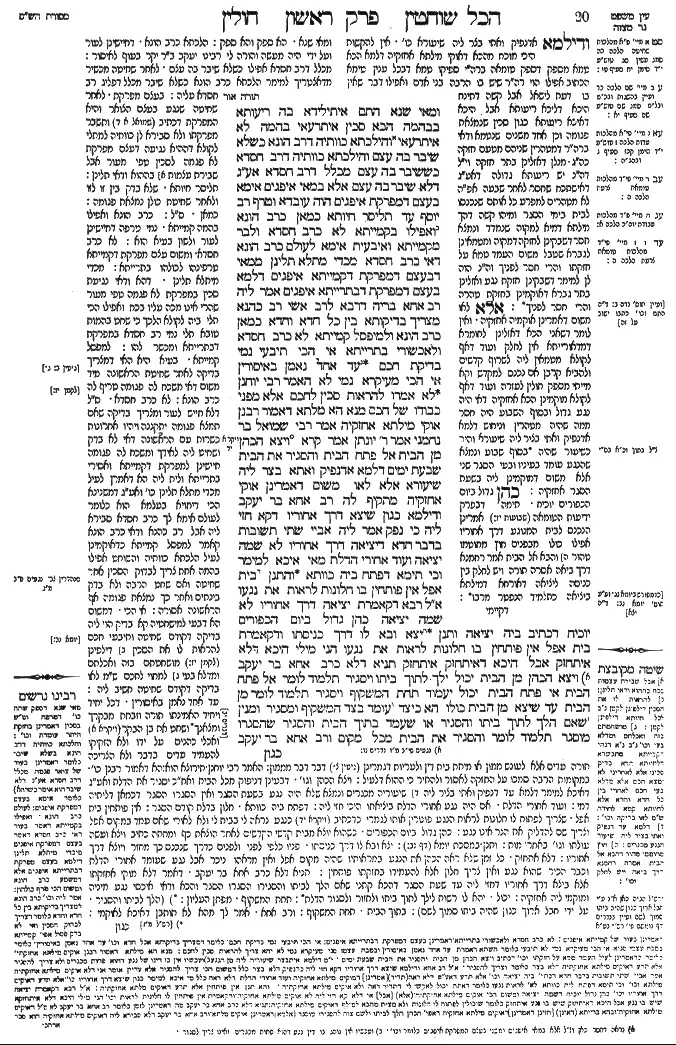
Hullin 10b - Guemara
ומאי שנא התם איתילידא בה ריעותא בבהמה הכא סכין איתרעאי בהמה לא איתרעאי והילכתא כוותיה דרב הונא כשלא שיבר בה עצם והילכתא כוותיה דרב חסדא כששיבר בה עצם מכלל דרב חסדא אע"ג דלא שיבר בה עצם אלא במאי איפגים אימא בעצם דמפרקת איפגים הוה עובדא וטרף רב יוסף עד תליסר חיותא כמאן כרב הונא ואפילו בקמייתא לא כרב חסדא ולבר מקמייתא ואיבעית אימא לעולם כרב הונא דאי כרב חסדא מכדי מתלא תלינן ממאי דבעצם דמפרקת דקמייתא איפגים דלמא בעצם דמפרקת דבתרייתא איפגים אמר ליה רב אחא בריה דרבא לרב אשי רב כהנא מצריך בדיקותא בין כל חדא וחדא כמאן כרב הונא ולמיפסל קמייתא לא כרב חסדא ולאכשורי בתרייתא אי הכי תיבעי נמי בדיקת חכם עד אחד נאמן באיסורין אי הכי מעיקרא נמי לא האמר רבי יוחנן לא אמרו להראות סכין לחכם אלא מפני כבודו של חכם מנא הא מלתא דאמור רבנן אוקי מילתא אחזקיה אמר רבי שמואל בר נחמני אמר ר' יונתן אמר קרא (ויקרא יד, לח) ויצא הכהן מן הבית אל פתח הבית והסגיר את הבית שבעת ימים דלמא אדנפיק ואתא בצר ליה שיעורא אלא לאו משום דאמרינן אוקי אחזקיה מתקיף לה רב אחא בר יעקב ודילמא כגון שיצא דרך אחוריו דקא חזי ליה כי נפק אמר ליה אביי שתי תשובות בדבר חדא דיציאה דרך אחוריו לא שמה יציאה ועוד אחורי הדלת מאי איכא למימר וכי תימא דפתח ביה כוותא והתנן בית אפל אין פותחין בו חלונות לראות את נגעו א"ל רבא דקאמרת יציאה דרך אחוריו לא שמה יציאה כהן גדול ביום הכפורים יוכיח דכתיב ביה יציאה ותנן יצא ובא לו דרך כניסתו ודקאמרת בית אפל אין פותחין בו חלונות לראות את נגעו הני מילי היכא דלא איתחזק אבל היכא דאיתחזק איתחזק תניא דלא כרב אחא בר יעקב ויצא הכהן מן הבית יכול ילך לתוך ביתו ויסגיר תלמוד לומר אל פתח הבית אי פתח הבית יכול יעמוד תחת המשקוף ויסגיר תלמוד לומר מן הבית עד שיצא מן הבית כולו הא כיצד עומד בצד המשקוף ומסגיר ומנין שאם הלך לתוך ביתו והסגיר או שעמד בתוך הבית והסגיר שהסגרו מוסגר תלמוד לומר והסגיר את הבית מכל מקום ורב אחא בר יעקב
Comments from Rashi on Masechet Hullin Page 10b
ומאי שנא . הא ספק והא ספק: הלכתא כרב הונא . דחיישינן לעור. ועל ידי היה מעשה והורה לי רבינו יעקב ב"ר יקר בעוף לאיסור: מכלל דרב חסדא אפילו כשלא שיבר בה עצם . לאחר שחיטה מכשיר מדאצטריך למימר הלכתא כרב הונא כשלא שיבר מכלל דפליג רב חסדא עליה: בעצם מפרקת . לאחר שחיטה שנגע בעצם הצואר והיא המפרקת דכתיב (שמואל א ד) ותשבר מפרקתו ולא סבירא לן כוותיה למתלי לקולא דההיא נגיעה דעצם מפרקת לא פגמה לסכין טפי מעור אבל שבירת עצמות בההוא ודאי תלינן: תליסר חיותא . שלא בדק בין זו לזו ולאחר שחיטת כולן נמצאת פגומה: כמאן . ס"ל: כרב הונא ואפילו בהמה קמייתא . נמי טרפה דחיישינן לעור ולשון בעיא הוא: לא כרב חסדא . ומשום עצם מפרקת דקמייתא טרפינהו לכולהו בתרייתא: מכדי מיתלא תלינן . דהא ודאי נגיעת סכין במפרקת לא פגמה טפי מעור שהרי אינו מכה עליו בכח ואפילו הכי תלי ביה לקולא הלכך כי שחט בהמות טובא תלי נמי רב חסדא במפרקת דבתרייתא ומכשר להו: למפסל קמייתא . בעיא היא. האי דמצריך בדיקה לאחר שחיטת הראשונה מיד משום דאי משכח לה פגומה טריף לה כרב הונא: לא כרב חסדא . ס"ל דלא חייש לעור ומצריך בדיקה שאם תמצא פגומה יתקננה ויהיו אחרונות כשרות עם הראשונה דאי לא בדק ושחיט ליה לאידך ומשכח לה פגומה חיישינן למפרקת דקמייתא ואסירי בתרייתא ולית ליה הא דאמרן לעיל מכדי מתלא תלינן כו' ואע"ג דמשנינא הכי דיחויא בעלמא הוא כלומר לעולם אימא לך כרב חסדא סבירא ליה אבל רב כהנא ודאי כרב הונא קאמר למפסל קמייתא כדאוקמינן לעיל הלכתא כוותיה והשוחט אפילו בהמה אחת צריך לבדוק הסכין אחר שחיטה ואם שחט הרבה ולא בדק בינתים ואחר כך נמצאת פגומה אף הראשונה אסורה: אי הכי . דמשום הא דבעי למישחטיה קא בדיק הוי ליה בדיקה דקודם שחיטה ותיבעי חכם להראות לו את הסכין דילפינן (לקמן חולין יז:) מושחטתם בזה ואכלתם ומדלא בעי למחוי לחכם ש"מ לאו בדיקה דקודם שחיטה חשיב ליה: עד אחד נאמן באיסורין . דכל יחיד ויחיד האמינתו תורה וזבחת מבקרך ומצאנך ושחט את בן הבקר (ויקרא א) ואכלי כהנים על ידו ולא הזקיקו להעמיד עדים בדבר ולא הצריכה תורה עדים אלא לעונש ממון או מיתת בית דין ולעריות דגמרינן (גיטין צ.) דבר דבר מממון: האמר רבי יוחנן . תירוצא הוא: הא דאמור רבנן כו' . במקומות הרבה סמכו על החזקה לאסור ולהתיר כי ההוא דלעיל: ויצא הכהן וגו' . דבעינן דניפוק מכל הבית ואח"כ יסגיר את הדלת ואע"ג דאיכא למימר דלמא עד דנפיק ואתי בציר ליה שיעוריה מכגריס ונמצא שלא היה נגע בשעת הסגר ואין הסגרו הסגר דכמאן דליתיה דמי: ועוד אחורי הדלת . אם היה נגע אחורי הדלת ביציאתו היכי חזי ליה: דפתח ביה כוותא . חלון בדלת קודם הסגר: אין פותחין . בית אפל שצריך לפתוח לו חלונות לראות הנגע פוטרין אותו לגמרי כדכתיב (ויקרא יד) כנגע נראה לי בבית לי ולא לאורי שאם עמד במקום אפל וצריך שם להדליק את הנר אינו נגע: כהן גדול ביום הכפורים . כשהוא יוצא מבית קדשי הקדשים לאחר הוצאת כף ומחתה כתיב ויצא ועשה עולתו וגו' באחרי מות: ותנן . במסכת יומא (דף נב:): יצא ובא לו דרך כניסתו . פניו כלפי לפני ולפנים כדרך שנכנס כך מחזר ויוצא דרך אחוריו: דלא אתחזק . כל זמן שלא ראה הכהן את הנגע במראותיו שהיה מקום אפל ואין מראהו ניכר אבל נגע שעומד אחורי הדלת וכבר הכיר שהוא נגע ואין צריך חלון אלא להעמידו בחזקתו פותחין: תניא דלא כרב אחא בר יעקב . דאמר דלא מוקי אחזקתו אלא ביצא דרך אחוריו דחזי ליה עד שעת הסגר דהכא קתני שאם הלך לביתו והסגירו הסגרו הסגר והכא ודאי איכסי נגע מיניה ומוקמי ליה אחזקיה: יכול . יהא לו רשות לילך לתוך ביתו ולחזור ולסגור הדלת: תחת המשקוף . מפתן העליון: (הלך לביתו והסגיר . על ידי חבל ארוך כגון שהיה ביתו סמוך לשם): בתוך הבית . תחת המשקוף: ורב אחא . אמר לך מהא לא תותבן דאיכא לאוקמי:
Comments from Tosafot - Hullin 10b
ודילמא אדנפיק ואתי בצר ליה שיעורא כו' . אין להקשות היכי מוכח מהכא דאוקי מילתא אחזקיה דלמא הכא טמא מספק דספק טומאה ברה"י ספיקו טמא דבכל ענין טימא הכתוב אפילו הוי רה"ר שיש בו הרבה בני אדם ואפילו דבר שאין בו דעת לישאל אבל קשה דתינח היכא דליכא ריעותא אבל היכא דאיכא ריעותא כגון סכין שנמצאת פגומה וכן אחד משנים שנטמא ודאי ברה"ר דמטהרין שניהם מטעם חזקה כה"ג מנלן דאזלינן בתר חזקה וי"ל דה"נ יש ריעותא גדולה דאע"ג דאישתכח שחסר לאחר שבעה אפ"ה לא מטהרים למפרע כל אותם שנכנסו לבית בימי הסגר ומיהו קשה דהך מילתא דמיא למקוה שנמדד ונמצא חסר דשבקינן לחזקה דמקוה ומטמאינן לגברא שטבל משום העמד טמא על חזקתו והרי חסר לפניך וה"נ הוה לן למימר דשבקינן חזקת נגע ואזלינן בתר גברא דאוקמינן בחזקת טהרה והרי חסר לפניך: אלא לאו משום דאמרינן אוקמיה אחזקיה . ואין לומר דשאני הכא דאזלינן לחומרא דמדאורייתא אין לחלק ועוד דאף לקולא מטמאין ליה לשרוף קדשים ולהביא קרבן אם נכנס למקדש וקא מייתי מספק חולין לעזרה ועוד דאף לקולא מוקמינן הכא אחזקיה דאי היה נגע גדול ובסוף השבוע היה חסר ממה שהיה מטהרין וניחוש דלמא אדנפיק ואתי בציר ליה שיעורא והיה כשיעור שהיה בסוף שבוע ונמצא שהנגע עומד בעיניו ובעי הסגר שני אלא משום דמוקמינן ליה בשעת הסגר אחזקיה: כהן גדול ביום הכפורים יוכיח . תימה דבפרק ידיעות הטומאה (שבועות יז:) אמרינן הנכנס לבית המנוגע דרך אחוריו אפילו כולו מבפנים חוץ מחוטמו טהור והבא אל הבית אמר רחמנא דרך ביאה אסרה תורה ויש לחלק בין כניסה ליציאה דאורחא דמילתא ביציאה כתלמיד הנפטר מרבו:
Hullin 10b - Mishnah translated into english
The Gemara asks: And in what way is uncertainty whether he interrupted the slaughter or pressed the knife different from uncertainty whether the knife became notched before or after the slaughter? The Gemara answers: There, in the case of uncertainty with regard to interruption or pressing, the flaw developed in the animal, and the slaughter is not valid. Here, in the case of uncertainty whether the knife became notched before or after the slaughter, a flaw developed in the knife but a flaw did not develop in the animal, and the slaughter is valid.
And the halakha is in accordance with the opinion of Rav Huna that the slaughter is not valid in a case where he did not break a bone with the knife. And the halakha is in accordance with the opinion of Rav Ḥisda that the slaughter is valid in a case where he broke a bone with the knife. Learn by inference that Rav Ḥisda rules that the slaughter is valid even if he did not break a bone with the knife. The Gemara asks: But if he did not break bones, on what was the knife notched? It must have been on the hide. Why, then, is the slaughter valid? The Gemara answers: Say that it was notched on the neck bone after he completed slaughtering the animal.
The Gemara relates: There was an incident, and Rav Yosef deemed as many as thirteen animals tereifot when he discovered the knife was notched after slaughtering the final animal. The Gemara asks: In accordance with whose opinion did Rav Yosef issue his ruling? Is it in accordance with the opinion of Rav Huna, who holds that the concern is that the knife was notched by the animal’s hide, and he ruled that even the first animal is forbidden? The Gemara answers: No, perhaps it is in accordance with the opinion of Rav Ḥisda, who holds that the notch is attributed to the neck bone, and they are all forbidden except for the first animal.
And if you wish, say instead: Actually, it is in accordance with the opinion of Rav Huna, as, if it were in accordance with the opinion of Rav Ḥisda, since we attribute the notch to the neck bone as a leniency, from where is it ascertained that it is on the neck bone of the first animal that it was notched? Perhaps it is on the neck bone of the last animal that it was notched, and all of the animals are permitted.
Rav Aḥa, son of Rava, said to Rav Ashi: Rav Kahana requires an examination of the knife between each and every act of slaughter. The Gemara asks: In accordance with whose opinion did Rav Kahana issue his ruling? Is it in accordance with the opinion of Rav Huna, and he stated the halakha to invalidate the slaughter of the first animal that he slaughtered if he discovers a notch in the knife? The Gemara answers: No, perhaps it is in accordance with the opinion of Rav Ḥisda, according to the first of the two explanations of the ruling of Rav Yosef, who holds that if a notch is found it is attributed to the neck bone, and examination of the knife is required to validate the slaughter of the next animal.
The Gemara raises an objection: If so, and the reference is to the examination before slaughter, the knife should require the examination of a Torah scholar that was required by the Sages. The Gemara explains: There is no need for a Sage to examine the knife, based on the principle: The testimony of one witness, in this case the slaughterer, is deemed credible with regard to ritual matters. The Gemara challenges: If so, even from the outset, examination of the knife by a Torah scholar should also not be required. The Gemara explains: Didn’t Rabbi Yoḥanan say that the Sages said to show the knife to a Torah scholar only due to the requirement to show deference to the Sage? Once deference was shown before the initial slaughter, it is no longer necessary to do so.
§ Apropos the statement of Rav Huna that an animal during its lifetime exists with the presumptive status of prohibition, and therefore in cases of uncertainty whether the animal was properly slaughtered, one rules stringently and it is prohibited to eat its flesh, the Gemara asks: From where is this matter that the Sages said: Establish the status of the matter on the basis of its presumptive status, derived?
Rabbi Shmuel bar Naḥmani said that Rabbi Yonatan said that the verse states with regard to leprosy of houses that after a priest views a leprous mark: “And the priest shall emerge from the house to the entrance of the house, and quarantine the house seven days” (Leviticus 14:38). The Gemara asks: How can the priest quarantine the house based on his viewing the leprous mark? Perhaps as he was emerging and coming out of the house, the size of the leprous mark diminished and it lacks the requisite measure for leprosy. Rather, is it not due to the fact that we say: Establish the status of the matter on the basis of its presumptive status?
Rav Aḥa bar Ya’akov objects to that proof: And perhaps the verse is referring to a case where the priest emerged backward, as in that case, the priest sees the leprous mark as he emerges.
Abaye said to him that there are two refutations of that statement. One is that emerging backward is not called emerging, and the priest would not fulfill the verse “And the priest shall emerge from the house” by doing so. And furthermore, in a case where the leprous mark is behind the door, what is there to say? Even walking backward would not enable the priest to see it. And if you would say that the priest can open a window in the wall to enable him to see the leprous mark, but didn’t we learn in a mishna (Nega’im 2:3): In a dark house one may not open windows to enable him to see his leprous mark?
Rava said to Abaye: With regard to that which you say: Emerging backward is not called emerging, the case of the High Priest on Yom Kippur will prove that this is not so, as emerging is written in his regard (see Leviticus 16:18), and we learned in a mishna (Yoma 52b): The High Priest emerged and came out backward in the manner of his entry, facing the Ark in the Holy of Holies. And with regard to that which you say: In a dark house, one may not open windows to enable him to see his leprous mark, this statement applies only in a case where the existence of a leprous mark in the house was not yet established; but in a case where the existence of a leprous mark in the house was already established, it was established, and the priest may open a window to view it.
It is taught in a baraita not in accordance with the opinion of Rav Aḥa bar Ya’akov, who suggested that the verse is referring to a case where the priest emerged from the house backward and therefore there is no proof that one lets the matter remain in its presumptive status. It is written: “And the priest shall emerge from the house to the entrance of the house and quarantine the house.” One might have thought that he may go into his own house and quarantine the house from there; therefore, the verse states: “To the entrance of the house,” referring to the house that is being quarantined.
If he must emerge to the entrance of the house, one might have thought that he may stand beneath the lintel and quarantine the house; therefore, the verse states: “From the house,” indicating that he does not quarantine the house until he emerges from the house in its entirety. How so? He stands alongside the lintel and quarantines the house.
The baraita concludes: And from where is it derived that if he went inside his own house and quarantined the leprous house, or that if he stood inside the leprous house and quarantined it, that his quarantine is a valid quarantine? It is derived from that which the verse states: “And quarantine the house,” meaning in any case. Apparently, the quarantine is valid even if he is unable to see the leprous mark, as the mark remains in its previous presumptive status.
And Rav Aḥa bar Ya’akov interprets the baraita in accordance with his opinion
Traduction : The William Davidson digital edition of the Koren Noé Talmud, with commentary by Rabbi Adin Even-Israel Steinsaltz.