 Talmud Bavli
The learning on the whole site is dedicated : L'ilui Nishmat אליעזר בן רחל
The learning on the whole site is dedicated : L'ilui Nishmat Jacques Isaac Ben Amram Loubaton
The learning on the whole site is dedicated : L'ilui Nishmat Margalit bat Ledicia
Hullin 14b : Youtube
Rabbi Dr. Moshe WeisblumYoutube
1 video class :
Hullin Page 14b
Hullin 14b - Guemara
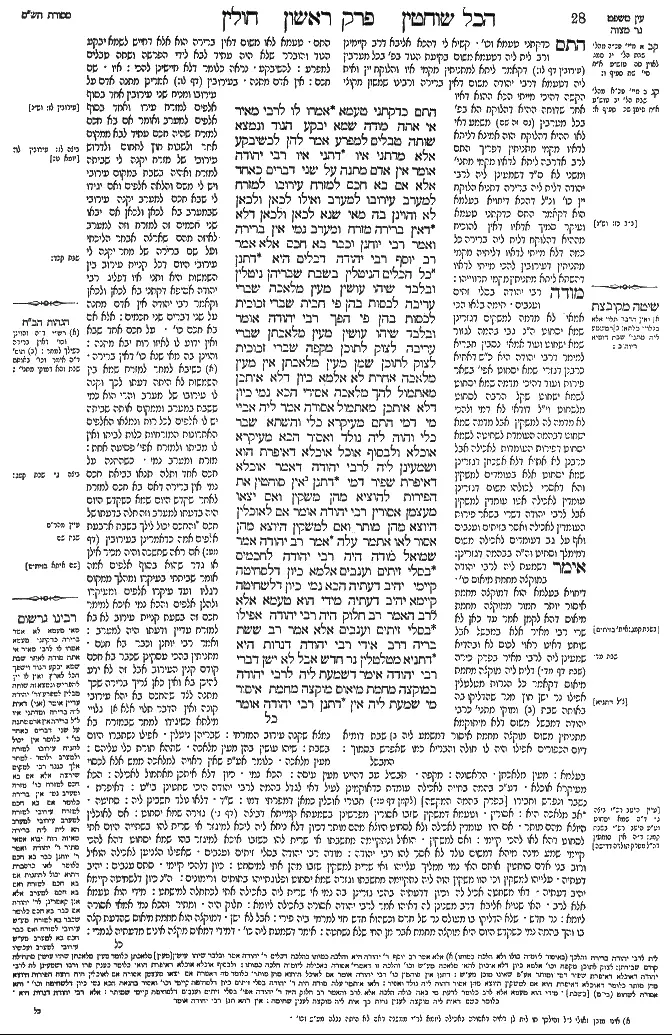
התם כדקתני טעמא אמרו לו לרבי מאיר אי אתה מודה שמא יבקע הנוד ונמצא שותה טבלים למפרע אמר להן לכשיבקע אלא מדתני איו דתני איו רבי יהודה אומר אין אדם מתנה על שני דברים כאחד אלא אם בא חכם למזרח עירובו למזרח למערב עירובו למערב ואילו לכאן ולכאן לא והוינן בה מאי שנא לכאן ולכאן דלא דאין ברירה מזרח ומערב נמי אין ברירה ואמר רבי יוחנן וכבר בא חכם אלא אמר רב יוסף רבי יהודה דכלים היא דתנן כל הכלים הניטלין בשבת שבריהן ניטלין ובלבד שיהו עושין מעין מלאכה שברי עריבה לכסות בהן פי חבית שברי זכוכית לכסות בהן פי הפך רבי יהודה אומר ובלבד שיהו עושין מעין מלאכתן שברי עריבה לצוק לתוכן מקפה שברי זכוכית לצוק לתוכן שמן מעין מלאכתן אין מעין מלאכה אחרת לא אלמא כיון דלא איתכן מאתמול להך מלאכה אסירי הכא נמי כיון דלא איתכן מאתמול אסורה אמר ליה אביי מי דמי התם מעיקרא כלי והשתא שבר כלי והוה ליה נולד ואסור הכא מעיקרא אוכלא ולבסוף אוכל אוכלא דאיפרת הוא ושמעינן ליה לרבי יהודה דאמר אוכלא דאיפרת שפיר דמי דתנן אין סוחטין את הפירות להוציא מהן משקין ואם יצאו מעצמן אסורין רבי יהודה אומר אם לאוכלין היוצא מהן מותר ואם למשקין היוצא מהן אסור לאו אתמר עלה אמר רב יהודה אמר שמואל מודה היה רבי יהודה לחכמים בסלי זיתים וענבים אלמא כיון דלסחיטה קיימי יהיב דעתיה הכא נמי כיון דלשחיטה קיימא יהיב דעתיה מידי הוא טעמא אלא לרב האמר רב חלוק היה רבי יהודה אפילו בסלי זיתים וענבים אלא אמר רב ששת בריה דרב אידי רבי יהודה דנרות היא דתניא מטלטלין נר חדש אבל לא ישן דברי רבי יהודה אימר דשמעת ליה לרבי יהודה במוקצה מחמת מיאוס מוקצה מחמת איסור מי שמעת ליה אין דתנן רבי יהודה אומר
Comments from Rashi on Masechet Hullin Page 14b
התם . טעמא לאו משום דאין ברירה הוא אלא דחייש לשמא יבקע הנוד והוברר שלא היה עתיד לבא לידי הפרשה ושתה טבלים למפרע: לכשיבקע . נראה כלומר דלא חיישינן להכי: איו . שם חכם: אין אדם מתנה . בעירובין (דף לו:) אמרינן מתנה אדם על עירובו ומניח שני עירובין אחד בסוף אלפים למזרח עירו ואחד בסוף אלפים למערב ואומר אם בא חכם למזרח שהיה חכם עתיד לבא ממקום אחר ולשבות חוץ לתחום ולדרוש עירובי של מזרח יקנה לי שביתה למזרח ואהיה בשבת במקום עירובי ויש לי משם והלאה אלפים ואם יגידו לי שבא חכם למערב יקנה עירובי שבמערב בא לכאן ולכאן אם יבאו שני חכמים זה למזרח וזה למערב לאיזה מהם שארצה אבחר הליכתי ועל שם ברירה של מחר יקנה לי עירובי היום דכל קניית עירוב בין השמשות היא ותני איו דפליג רבי יהודה אסיפא דקתני בא לכאן ולכאן וקאמר רבי יהודה אין אדם מתנה על שני דברים שני חכמים: אלא אם בא חכם כו' . על חכם אחד שבא ואין ידוע לו לאיזו רוח יבא מתנה: והוינן בה מאי שנא כו' דאין ברירה . כשיבא למחר למזרח שמא בין השמשות לא היתה דעתו לכך וקנה לו עירובו של מערב והרי הוא כמי ששבת במערב וממקום אותה שביתה יש לו אלפים לכל רוח ונמצאו האלפים האחרונות המזרחיות כלות לביתו ואין לו מביתו ולמזרח אפי' פסיעה אחת: מזרח ומערב נמי . כשהתנה על חכם אחד ותלה תנאו בביאת חכם נמי אין ברירה דאם בא חכם למזרח לאחר שקדש היום שמא כשקדש היום היה בדעתו למערב וזה תלה בדעתו של חכם והחכם יכול לילך בשבת ארבעת אלפים אמה כדאמרינן בעירובין (דף מט:) אם ראה שחשכה והיה מכיר אילן או גדר שהוא בסוף אלפים אמה אומר שביתתי בעיקרו ומהלך ממקום רגליו ועד עיקרו אלפים ומעיקרו ולהלן אלפים והכא נמי איכא למימר חכם זה בשעת קניית עירוב לא בא למזרח עדיין ודעתו היה למערב: ואמר רבי יוחנן וכבר בא חכם . מתניתין בהכי עסקינן שכבר בא חכם קודם קנין העירוב אבל זה לא ידע להיכן בא ואין כאן צריך ברירה שכך מתנה לצד שהחכם בא יהא עירובי קונה ואין הדבר תלוי אלא גלויי מילתא כשיגידו למחר שבמזרח בא נמצא שקנה עירוב המזרחי: שבריהן ניטלין . אפילו נשתברו היום בשבת: שיהו עושין בהן מעין מלאכה . שתהא תורת כלי עליהם: מעין מלאכה . כלומר אע"פ שאין ראויה למלאכה ממש אלא לכסוי בעלמא: מעין מלאכתן . הראשונה: מקפה . תבשיל עב דהיינו מעין עיסה: הכא נמי כיון דלא איתכן מאתמול . לאכילה: הכא מעיקרא אוכלא . דע"כ בהמה בחייה לאכילה עומדת כדאוקמינן לעיל דאי לגדל בהמה לרבי יהודה היכי שחטינן בי"ט: דאיפרת . נשבר ונפרש וחבירו [בפרק בהמה המקשה] (לקמן חולין דף עג.) חבורי אוכלין כמאן דמפרתי דמו: ש"ד . דלאו נולד חשבינן ליה: סחיטה אב מלאכה היא: אסורין . וטעמא דמשקין שזבו אסורין מפרשינן בשמעתא קמייתא דביצה (דף ג.) גזירה שמא יסחוט: אם לאוכלין היוצא מהם מותר . אם היו עומדין לאכילה ולא לסחוט היוצא מהם מותר דכיון דלא ניחא ליה ליכא למיגזר אי שרית להו בשתייה היום אתי לסחוט דהא לאו להכי קיימי: ואם למשקין . הואיל ונתקיימה מחשבתו אי שרית להו כשזבו איכא למיגזר בהו שמא יסחוט דהא להכי קיימי. שמע מינה מיהא דמשום נולד לא אסר להו רבי יהודה: מודה רבי יהודה בסלי זיתים וענבים . שאפילו הצניען לאכילה הואיל ורוב בני אדם סוחטין אותם האי נמי ממליך עלייהו ואי שרית למשקין שזבו מהן אתי למיסחט: כיון דלהכי קיימי . סתם ענבים: יהיב דעתיה . עלייהו למשקין וכי הוו משקין הוה ליה נתקיימה מחשבתו וגזרה שמא יסחוט ופלוגתייהו בתותים ורימונים: ה"נ כיון דלשחיטה קיימא יהיב דעתיה . דאי משחטה אכיל לה וכיון דדעתיה בהכי גזרינן בה נמי אי שרית ליה באכילה אתי לכתחלה למישחט: מידי הוא טעמא אלא לרב . האי שנויא אליבא דרב משנינן לה דאיהו אמר לרבי יהודה אסורה באכילה ליומא: חלוק היה . ומתיר והכא נמי אמאי אסורה ליומא: נר חדש . שלא הדליקו בו מעולם. נר של חרס וכשהוא חדש חזי למרמי ביה פירי: אבל לא ישן . דמוקצה הוא מחמת מיאוס שהדעת קצה בו. והך בהמה נמי כשקדש היום היא מוקצה מחמת אבר מן החי שלא נשחטה: אימר דשמעת ליה כו' . דמידי דמאיס מקצה איניש מדעתיה לגמרי:
Comments from Tosafot - Hullin 14b
התם כדקתני טעמא וכו' . קשיא לי דהכא אליבא דרב קיימינן ורב לית ליה דטעמא משום בקיעת הנוד בפ' בכל מערבין (עירובין דף לו:) דקאמר ליתא למתניתין מקמי איו והלוקח יין ואית ליה דטעמא דרבי יהודה משום דאין ברירה ורבינו שמשון מקוצי הקשה דהיכי מייתי הכא ההוא דאיו אחר שדוחה ההיא דהלוקח הא בפ' בכל מערבין (גם זה שם) משמע דאי לאו ההיא דהלוקח הוה אמינא דליתא לדאיו מקמי מתניתין דפריך התם לרב אדרבה ליתא לדאיו מקמי מתני' ומשני לא ס"ד דשמעינן ליה לרבי יהודה דלית ליה ברירה דתניא הלוקח יין כו' ונ"ל דהכא דיחויא בעלמא הוא דקאמר התם כדקתני טעמא ועיקר סמיך אדאיו דאין להוכיח מההיא דהלוקח דלית ליה ברירה כל כמה דלא מייתי לדאיו דליתיה מקמי מתניתין דעירובין להכי מייתי לדאיו דהשתא ליתא מתניתין מקמי תרווייהו: מודה רבי יהודה בסלי זתים וענבים . תימה בלאו הכי אמאי לא מדמה למשקים דגזרינן שמא יסחוט ה"נ גבי בהמה לגזור שמא ישחוט ועוד אמאי נסבין חבריא למימר דרבי יהודה היא כ"ש דאתיא כרבנן דגזרי שמא יסחוט אפי' בשאר פירות ועוד דהיכי מדמה שמא יסחוט לשמא ישחוט שקל הרבה לסחוט מלשחוט וי"ל דודאי לא דמי ולהכי לא מדמה לה למשקין אבל מדמה שמא ישחוט דבהמה העומדת לשחיטה לשמא יסחוט דפירות העומדות לאכילה אבל כרבנן לא אתיא דלא אשכחן דגזרינן שמא יסחוט אלא בעומדים למשקין והא דאסרי לכולהו משום דגזרינן עומדין לאכילה אטו עומדין למשקין אבל לרבי יהודה דשרי בשאר פירות העומדין לאכילה ואסר בזיתים וענבים ואף על גב דעומדים לאכילה משום דמימלך וסחיט וה"ה בבהמה דגזרינן: אימר דשמעת ליה לרבי יהודה במוקצה מחמת מיאוס כו' . דיחויא בעלמא הוא דמוקצה מחמת איסור יותר חמור ממוקצה מחמת מיאוס דהא לקמן אמר עד כאן לא שרי רבי מאיר אלא במבשל אבל שוחט דאינו ראוי לכוס לא ובהדיא שמעינן ליה לרבי מאיר בפרק כירה (שבת דף מד.) דלית ליה מוקצה מחמת מיאוס דקאמר כל הנרות מטלטלין אפילו נר ישן חוץ מנר שהדליקו בה באותה שבת ומוקי מתני' כרבי יהודה דמבשל משום דלא מיתוקמא מתניתין משום מוקצה מחמת איסור דמשמע ליה שבת דומיא דיום הכפורים אפילו היה לו חולה והבריא כמו שאפרש בסמוך:
Hullin 14b - Mishnah translated into english
The Gemara comments: That is no proof, as there, the reason for the opinion of Rabbi Yehuda is as is taught in the latter clause of the baraita: The Rabbis said to Rabbi Meir: Don’t you concede that perhaps the wineskin will burst before he manages to separate the teruma, and this person will have been found retroactively to be drinking untithed produce? Rabbi Meir said to the Rabbis: The mere possibility that this may occur is not a concern. When it actually bursts, I will be concerned. Evidently, Rabbi Yehuda’s opinion is not due to his rejection of the principle of retroactive designation, but due to his concern that the wineskin will burst before the tithes are actually separated.
Rather, the fact that Rabbi Yehuda does not accept the principle of retroactive designation is learned from that which Ayo teaches with regard to the joining of Shabbat boundaries in a case where one knows that two Torah scholars are planning to deliver lectures on Shabbat outside the city limits, one east of the city and one west of the city, and on Shabbat eve one has not yet decided which of the lectures he wishes to attend. In that case, he may place the food for the joining of boundaries on both sides of the city and stipulate that he will be able to go beyond the city limits in whichever direction he chooses.
As Ayo teaches that Rabbi Yehuda says: A person may not stipulate that his joining of the boundaries will take effect on two matters as one. Rather, he may stipulate that if one Sage comes to the east, his joining of the boundaries takes effect to the east, and if he comes to the west, his joining takes effect to the west, while if he stipulates that it should take effect to here or to there and he will go in whichever direction he chooses, in that case, the joining does not take effect.
And we discussed this baraita: What is different in a case where one stipulates that it should take effect to here or to there such that the joining does not take effect? It is because there is no retroactive designation. If so, stipulating that the joining will take effect to the east or west, depending upon where the Sage goes, should also not take effect because there is no retroactive designation.
And Rabbi Yoḥanan said: This is a case where when he makes the stipulation, the Sage has already come to either the east or the west, and the joining takes effect in that direction. He makes a stipulation because he does not know where the Sage came. The joining takes effect without the principle of retroactive designation. Nevertheless, since it is clear from the first case of Ayo that Rabbi Yehuda does not accept the principle of retroactive designation, the question remains: From where is it derived that an animal that is slaughtered on Shabbat or Yom Kippur is forbidden for the day that it was slaughtered?
Rather, Rav Yosef said: When Rav said that the halakha that consumption of the animal is prohibited for that day is the opinion of Rabbi Yehuda, the reference is to the opinion of Rabbi Yehuda with regard to vessels, as we learned in a mishna (Shabbat 124b): With regard to all vessels that may be moved on Shabbat, their shards may be moved as well, provided that they are suited for some type of labor. Shards of a large bowl may be used to cover the mouth of a barrel. Shards of a glass vessel may be used to cover the mouth of a cruse.
Rabbi Yehuda says: And it is permitted to use the shards provided that they are suited for a type of labor similar to their original use. In the case of shards of a large bowl, it must be possible to pour a thick broth into them, and in the case of shards of a glass vessel, it must be possible to pour oil into them.
The Gemara infers: If they are suited for a type of labor similar to their original use, yes, they may be moved; but if they are suitable for another type of labor, they may not be moved. Apparently, since the shard was not prepared from yesterday for this type of labor, it is prohibited to move it. Here too, since the animal that was slaughtered was not prepared from yesterday, it is prohibited to eat it.
Abaye said to Rav Yosef: Are the cases comparable? There, in the mishna with regard to vessels, initially it was a vessel and now it is the shard of a vessel, and it is a case of an item that came into being, and it is therefore prohibited to move it. Here, in the case of an animal slaughtered on Shabbat, initially, during its lifetime, it was designated as food, and ultimately, after slaughter, it is food, so it is merely food that was separated [de’ifrat].
And we heard that it is Rabbi Yehuda who says: Food that was separated is permitted, as we learned in a mishna (Shabbat 143b): One may not squeeze fruits on Shabbat in order to extract liquids from them. And if liquids seeped out on their own, it is prohibited to use them on Shabbat, lest one come to squeeze fruit on Shabbat.
Rabbi Yehuda says: If the fruits were designated for eating, the liquid that seeped from them on Shabbat is permitted. And if the fruits were designated for their liquids, the liquids that seeped from them on Shabbat are forbidden, lest he come to squeeze them on Shabbat. With regard to fruits that are designated for consumption, the liquid is considered food that was separated and is permitted. The same halakha applies with regard to an animal slaughtered on Shabbat: Since it was designated for consumption, its meat is food that was separated and should be permitted according to Rabbi Yehuda.
The Gemara rejects that interpretation and states that, on the contrary, there is proof that Rabbi Yehuda would prohibit eating an animal that was slaughtered on Shabbat. Wasn’t it stated with regard to that mishna that Rav Yehuda says that Shmuel says: Rabbi Yehuda conceded to the Rabbis in the case of baskets of olives and grapes that are typically designated for their liquids, even though one had planned to eat them, that liquid that seeps from them is forbidden?
Apparently, since olives and grapes are typically designated for squeezing, one sets his mind to use them for their liquids, and were it permitted for him to use their liquids that seep out on Shabbat, the concern is that he will come to squeeze them on Shabbat. Therefore, the Sages decreed that the liquids are forbidden. Here too, since the animal is designated for slaughter, a person sets his mind to eat it. Therefore, were it permitted for him to eat the meat on Shabbat, the concern is that he will come to slaughter it on Shabbat. Consequently, the Sages decreed that the meat is prohibited.
The Gemara justifies Abaye’s interpretation of the mishna: This explanation is valid only according to Rav, who said that the ruling that it is prohibited to eat an animal slaughtered on Shabbat until after Shabbat is according to the opinion of Rabbi Yehuda. Didn’t Rav say: Rabbi Yehuda was in disagreement with the Rabbis even in the case of baskets of olives and grapes? According to Rav himself, just as Rabbi Yehuda deems permitted liquids that seeped from olives and grapes on their own, Rabbi Yehuda should have also deemed an animal that was slaughtered on Shabbat permitted for that day.
Rather, Rav Sheshet, son of Rav Idi, said: When Rav said that the halakha that it is prohibited to consume the animal that day is the opinion of Rabbi Yehuda, the reference is to the opinion of Rabbi Yehuda with regard to lamps, as it is taught in a baraita: One may move, for purposes other than lighting it, a new earthenware lamp that was never used. But one may not move an old lamp covered with residue of oil and soot, because a person sets it aside from use due to repugnance. Since it was set aside at the beginning of Shabbat, it is set aside for the entire Shabbat and it may not be moved even if a need to move it arises; this is the statement of Rabbi Yehuda. The same halakha applies with regard to an animal slaughtered on Shabbat: Since it was prohibited when Shabbat began as the limb of a living being, it remains prohibited for the entire Shabbat.
The Gemara rejects that analogy. Say that you heard Rabbi Yehuda rule that it is prohibited for the entire Shabbat in a case where it is set aside due to repugnance, like the old lamp. Did you hear that he said that it is prohibited for the entire Shabbat in a case where it is set aside due to a prohibition, like the animal? The Gemara answers: Yes, as we learned in a baraita that Rabbi Yehuda says:
Traduction : The William Davidson digital edition of the Koren Noé Talmud, with commentary by Rabbi Adin Even-Israel Steinsaltz.