 Talmud Bavli
The learning on the whole site is dedicated : L'ilui Nishmat Rav Chlomo Ben Jamilla
The learning on the whole site is dedicated : L'ilui Nishmat Avraham Ben Simha
The learning on the whole site is dedicated : L'ilui Nishmat Jamila bat Chlomo Abensour
Sanhedrin 60b : Youtube
Daf TubeYoutube
2 video classes :
Sanhedrin Page 60b
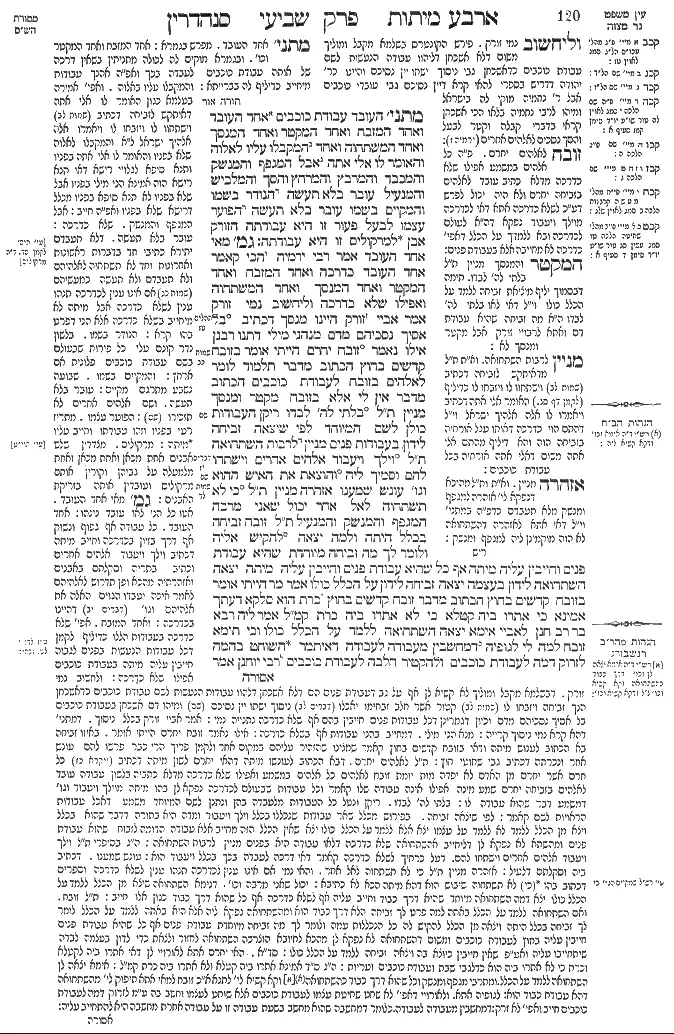
Sanhedrin 60b - Guemara
מתני׳ העובד עבודת כוכבים אחד העובד ואחד המזבח ואחד המקטר ואחד המנסך ואחד המשתחוה ואחד המקבלו עליו לאלוה והאומר לו אלי אתה אבל המגפף והמנשק והמכבד והמרבץ והמרחץ והסך והמלביש והמנעיל עובר בלא תעשה הנודר בשמו והמקיים בשמו עובר בלא תעשה הפוער עצמו לבעל פעור זו היא עבודתה הזורק אבן למרקוליס זו היא עבודתה:
גמ׳ מאי אחד העובד אמר רבי ירמיה הכי קאמר אחד העובד כדרכה ואחד המזבח ואחד המקטר ואחד המנסך ואחד המשתחוה ואפילו שלא כדרכה וליחשוב נמי זורק אמר אביי זורק היינו מנסך דכתיב (תהלים טז, ד) בל אסיך נסכיהם מדם מנהני מילי דתנו רבנן אילו נאמר (שמות כב, יט) זובח יחרם הייתי אומר בזובח קדשים בחוץ הכתוב מדבר תלמוד לומר לאלהים בזובח לעבודת כוכבים הכתוב מדבר אין לי אלא בזובח מקטר ומנסך מניין ת"ל (שמות כב, יט) בלתי לה' לבדו ריקן העבודות כולן לשם המיוחד לפי שיצאה זביחה לידון בעבודות פנים מניין לרבות השתחואה ת"ל (דברים יז, ג) וילך ויעבוד אלהים אחרים וישתחו להם וסמיך ליה (דברים יז, ה) והוצאת את האיש ההוא וגו' עונש שמענו אזהרה מניין ת"ל (שמות לד, יד) כי לא תשתחוה לאל אחר יכול שאני מרבה המגפף והמנשק והמנעיל ת"ל זובח זביחה בכלל היתה ולמה יצאה להקיש אליה ולומר לך מה זביחה מיוחדת שהיא עבודת פנים וחייבין עליה מיתה אף כל שהיא עבודת פנים וחייבין עליה מיתה יצאה השתחואה לידון בעצמה יצאה זביחה לידון על הכלל כולו אמר מר הייתי אומר בזובח קדשים בחוץ הכתוב מדבר זובח קדשים בחוץ כרת הוא סלקא דעתך אמינא כי אתרו ביה קטלא כי לא אתרו ביה כרת קמ"ל אמר ליה רבא בר רב חנן לאביי אימא יצאה השתחואה ללמד על הכלל כולו וכי תימא זובח למה לי לגופיה דמחשבין מעבודה לעבודה דאיתמר השוחט בהמה לזרוק דמה לעבודת כוכבים ולהקטיר חלבה לעבודת כוכבים רבי יוחנן אמר
Comments from Rashi on Masechet Sanhedrin Page 60b
מתני' אחד העובד . מפרש בגמרא: אחד המזבח ואחד המקטר וכו' . ובגמרא מוקים לה לכולה מתניתין בשאין דרכה של אותה עבודת כוכבים לעבדה בכך ואפ"ה אהנך עבודות מיחייב כדיליף לה בברייתא: והמקבלו עליו באלוה . ואפי' אמירה בעלמא כגון האומר לו אלי אתה דאיתקש לזביחה דכתיב (שמות לב) וישתחוו לו ויזבחו לו ויאמרו אלה אלהיך ישראל ל"א והמקבלו לאלוה שלא בפניו והאומר לו אלי אתה בפניו ותנא סיפא לגלויי רישא דאי תנא רישא הוה אמינא הני מילי בפניו אבל שלא בפניו לא תנא סיפא בפניו מכלל דרישא שלא בפניו ואפ"ה חייב: אבל המגפף והמנשק . שלא כדרכה: עובר בלא תעשה . דלא תעבדם יתירא כתיבי חד בדברות ראשונות ואחרונות וחד לא תשתחוה לאלהיהם ולא תעבדם ולא תעשה כמעשיהם (שמות כג) אם אינו ענין לכדרכה תנהו ענין לשלא כדרכה אבל מיתה לא מיחייב בשלא כדרכה אלא הני דפרט בהו קרא: הנודר בשמו . בלשון נדר קונם עלי כל פירות שבעולם בשם עבודת כוכבים פלונית אם ארחץ: והמקיים בשמו . שבועה נשבע מתרגם מקיים: עובר בלא תעשה . ושם אלהים אחרים לא תזכירו (שם): הפוער עצמו . מתריז רעי בפניו וזהו עבודתו וחייב עליו מיתה: מרקוליס . מצדדין שלש אבנים אחת מכאן ואחת מכאן ואחת מלמעלה על גביהן וקורין אותם מרקוליס ועובדין אותה בזריקת האבנים: גמ' מאי אחד העובד . אטו כל הני לאו עובד נינהו: אחד העובד . כל עבודה אף גפוף ונשוק אף דרך בזיון בכדרכה וחייב מיתה דכתיב וילך ויעבוד אלהים אחרים וכתיב בתריה וסקלתם באבנים ואזהרתיה מהכא ופן תדרוש לאלהיהם לאמר איכה יעבדו הגוים האלה את אלהיהם וגו' (דברים יב) דהיינו בכדרכה: ואחד המזבח . אפי' שלא כדרכה בעבודות הללו כדיליף לקמן דכל עבודות הנעשות בפנים לגבוה חייבין עליה מיתה בעבודת כוכבים אפילו שלא כדרכה: ולחשוב נמי זורק . דבשלמא מקבל ומוליך לא קשיא לן אף על גב דעבודת פנים הם דלא אשכחן דלהוו עבודות הנעשות לשם עבודת כוכבים כדאשכחן הנך זביחה ויזבחו לו (שמות לב) קטור אשר חלב זבחימו יאכלו (דברים לב) ניסוך ישתו יין נסיכם (שם) ומיהו דם אשכחן בעבודת כוכבים בל אסיך נסכיהם מדם וכיון דגמרינן דכל עבודות פנים חייבין בהם אף שלא כדרכה נתנייה נמי: אמר אביי זורק בכלל ניסוך . דמתני' דהא קרא נמי ניסוך קרייה: מנא הני מילי . דמחייב בהני עבודות אף בשלא כדרכה: אילו נאמר זובח יחרם הייתי אומר . באיזו זביחה בא הכתוב לענוש מיתה ודאי בזובח קדשים בחוץ קאמר שמצינו שהזהיר עליהם במקום אחר ולקמן פריך הרי כבר פרשו להם עונש אחר ונכרתה דכתיב גבי שחוטי חוץ: ת"ל לאלהים יחרם . דבא הכתוב לעונשו מיתה דהאי יחרם לשון מיתה דכתיב (ויקרא כז) כל חרם אשר יחרם מן האדם לא יפדה מות יומת זובח לאלהים כל אלהים במשמע ואפילו שלא כדרכה מדלא כתביה בלשון עבודה עובד לאלהים בזביחה יחרם שמע מינה אפילו אינה עבודה שלו קאמר וכל עבודות שבעולם לכדרכה נפקא לן בהו מיתה מוילך ויעבוד וגו' דמשמע דבר שהוא עבודה לו: בלתי לה' לבדו . ריקן ונטל כל העבודות מלעבדה בהן ונתנן לשם המיוחד משמע דאכל עבודות הראויות לשם קאמר: לפי שיצאה זביחה . בפירוש מכלל שאר עבודות שנכללו בכלל וילך ויעבוד ומדה היא בתורה דדבר שהוא בכלל ויצא מן הכלל ללמד לא ללמד על עצמו יצא אלא ללמד על הכלל כולו יצא שאין הכלל הזה מחייב אלא עבודה הדומה לזבוח שהוא עבודת פנים ומהשתא לא נפקא לן דליחייב אהשתחואה שלא כדרכה דלאו עבודה היא בפנים מניין לרבות השתחואה: ה"ג בסיפרי ת"ל וילך ויעבוד אלהים אחרים וישתחו להם . דעל כרחיך לשלא כדרכה קאמר דאי דרכה לעבדה בכך בכלל ויעבוד הוא: עונש שמענו . דכתיב ביה וסקלתם דלעיל: אזהרה מניין ת"ל כי לא תשתחוה לאל אחר . והאי נמי אם אינו ענין לכדרכה תנהו ענין לשלא כדרכה וספרים דכתוב בהו (כי) לא תשתחוה שיבוש הוא דהא מיתה הכא לא כתיבא: יכול שאני מרבה וכו' . דנימא השתחואה שיצא מן הכלל ללמד על הכלל כולו יצא דמה השתחואה מיוחד שהיא דרך כבוד וחייב עליה אף לשלא כדרכה אף כל שהוא דרך כבוד כגון אלו חייב: ת"ל זובח . ואם השתחואה ללמד על הכלל באתה למה פרט לך זביחה הלא דרך כבוד הוא ומהשתחואה נפקא ליה אלא היא באתה ללמד על הכלל לומר לך זביחה בכלל היתה ויצאה מן הכלל להקיש לה כל הנכללות עמה ולומר לך מה זביחה מיוחדת עבודת פנים אף כל שהיא עבודת פנים חייבין עליה בחוץ לעבודת כוכבים ומשום דהשתחואה לא נפקא לן מהכא לחיובא הוצרכה השתחואה לחזור ולצאת כדי לדון בעצמה לבדה שיתחייבו עליה ואע"פ שאין חייבין כיוצא בה ויצאה זביחה ללמד על הכלל כולו: סד"א . האי יחרם אתא לאורויי לן דאי אתרו ביה לקטלא וכרת כי לא אתרו ביה הוא כדלגבי שבת ועבודת כוכבים ועריות: ה"ג ס"ד אמינא אתרו ביה קטלא ולא אתרו ביה כרת קמ"ל: אימא יצאה לן השתחואה ללמד על הכלל . ומתרבי מגפף ומנשק וכל שהוא דרך כבוד כהשתחואה וקא קשיא לי' לתנא א"כ זובח למאי אתא תיפוק לי' מהשתחואה דהא עבודת כבוד הוא: לגופיה אתא . ולאורויי דאפי' לא שחט שחיטת עצמו לעבודת כוכבים אלא שוחט לעצמו וחשב בה ע"מ לזרוק דמה לעבודת כוכבים חייב ואפי' לא זרק: דמחשבין מעבודה לעבודה . כלומר דמחשבה שהוא מחשב בשעת עבודה זו על עבודה אחרת מחשבה היא להתחייב עליה:
Comments from Tosafot - Sanhedrin 60b
וליחשוב נמי זורק . פירש הקונטרס בשלמא מקבל ומוליך משום דלא אשכחן דליהוו עבודה הנעשות לשם עבודת כוכבים כדאשכחן גבי ניסוך ישתו יין נסיכם והיינו כר' יהודה דדריש בספרי להאי קרא דיין נסיכם גבי עובדי כוכבים אבל ר' נחמיה מוקי לה בישראל ומיהו לרבי נחמיה בלאו הכי אשכחן קראי בדברי קבלה וקטר לבעל והסך נסכים לאלהים אחרים (ירמיהו ז): זובח לאלהים יחרם . פ"ה כל אלהים במשמע אפילו שלא כדרכה מדלא כתיב עובד לאלהים בזביחה יחרם ולא היה יכול לפרש דע"כ לשלא כדרכה אתא דאי לכדרכה מוילך ויעבוד נפקא דה"א לעולם לכדרכה ובא ללמדך על הכלל דאפי' כדרכה לא מחייבה אלא בעבודת פנים: המקטר והמנסך מניין ת"ל בלתי לה' לבדו . תימה דבסמוך יליף מיציאת זביחה ללמד על הכלל כולו וי"ל דאי לאו בלתי לה' לבדו ה"א מה זביחה שהיא עבודת דם ואתא לרבויי זורק אבל מקטר ומנסך לא: מניין לרבות השתחואה . וא"ת ת"ל מדאיתקש לזביחה דכתיב (שמות לב) וישתחוו לו ויזבחו לו כדיליף (לקמן סנהדרין דף סג.) האומר אלי אתה דכתיב ויאמרו לו אלה אלהיך ישראל וי"ל דהתם הוי כדרכה דאותו עגל אורחיה בזביחה הוה והא דיליף מהתם אלי אתה משום דאלי אתה אורחיה בכל עבודת כוכבים: אזהרה מניין . וא"ת ות"ל מהיכא דנפקא לי' אזהרה למגפף ומנשק מלא תעבדם כדפ"ה במתני' וי"ל דאי אתא לאזהרה דהשתחואה לא הוה מוקמינן ליה למגפף ומנשק:
Sanhedrin 60b - Mishnah translated into english
MISHNA: One who worships idols is executed by stoning. This includes one who worships an idol, and one who slaughters an animal as an idolatrous offering, and one who burns incense as an idolatrous offering, and one who pours a libation in idol worship, and one who bows to an idol, and one who declares that he accepts an idol upon himself as a god, and one who says to an idol: You are my god.
But with regard to one who hugs an idol, or one who kisses it, or one who cleans it, or one who sprays water before it, or one who washes it, or one who rubs it with oil, or one who dresses it, or one who puts its shoes on it, he transgresses a prohibition but is not liable to receive capital punishment. With regard to one who vows in an idol’s name and one who affirms his statement by an oath in its name, he transgresses a prohibition.
One who defecates before the idol known as Ba’al-Peor is liable to receive capital punishment, even though defecating is a degrading act, as that is its form of worship. Likewise, one who throws a stone at Mercury is liable to receive capital punishment, as that is its form of worship.
GEMARA: What is added in the mishna by stating the phrase: One who worships? Since worship is the general description of all the actions detailed in the mishna, why is this phrase necessary?
Rabbi Yirmeya says that this is what the mishna is saying: One who worships an idol in its typical manner of worship is liable to be executed; and furthermore, one who slaughters an animal as an idolatrous offering, and one who burns incense, and one who pours a libation, and the one who bows to an idol are all liable to be executed, and this applies even if this manner of worship is not the idol’s typical manner of worship. Even if the idol in question is not typically worshipped in these ways, these specific acts are still considered idol worship because these are the ways in which God is worshipped in the Temple.
The Gemara suggests: And let the mishna also count sprinkling the blood of an offering, which is also one of the sacrificial rites in the Temple. Abaye says: Sprinkling the blood of an offering is the same as pouring a libation, since they are essentially one sacrificial rite, as it is written: “I will not pour their libations of blood” (Psalms 16:4), indicating that sprinkling the blood of an offering is also referred to as offering a libation.
§ The Gemara asks with regard to the halakha that one is liable for worshipping an idol in these manners even if they are not the way the idol is typically worshipped: From where are these matters derived?
The Gemara answers: As the Sages taught in a baraita with regard to the verse: “One who sacrifices to the gods shall be utterly destroyed, except to the Lord alone” (Exodus 22:19): If it were stated: One who sacrifices shall be utterly destroyed, I would have said that the verse speaks of one who slaughters a sacrificial animal outside the Temple courtyard, referring to a severe transgression that is stated elsewhere in the Torah. Therefore, the verse states: “To the gods,” indicating that the verse speaks of one who slaughters an offering to an idol.
The baraita asks: From here I know only the halakha of one who slaughters an offering to an idol. From where is it derived that one who burns incense or pours a libation is also liable to receive the death penalty? The baraita answers that the verse states: “Except to the Lord alone”; the verse emptied out, i.e., designated, all the sacrificial rites to the ineffable name of God, indicating that one who performs any of these rites in idol worship is liable.
The baraita asks: Since slaughter is singled out from all of the forms of worship to be mentioned in this verse in order to derive from it that with regard to all the sacrificial rites performed inside the Temple, one who performs them in idol worship is liable to receive capital punishment, from where is it derived that this halakha includes bowing down to an idol, which is not a sacrificial rite?
The baraita answers that the verse states: “And has gone and served other gods and bowed to them” (Deuteronomy 17:3), and a verse near it states: “Then you shall bring forth that man or that woman who has done this evil thing to your gates, the man or the woman, and you shall stone them with stones and they shall die” (Deuteronomy 17:5). It is derived from the juxtaposition of these two verses that one who bows down to an idol is liable to be executed.
The baraita asks: We have heard the punishment for bowing down to an idol, but from where is the prohibition against doing so derived? The baraita answers that the verse states: “For you shall bow to no other god” (Exodus 34:14).
One might have thought that I should include among those liable to receive capital punishment one who hugs an idol, or one who kisses it, or one who puts its shoes on it as well. Therefore, the verse states: “One who sacrifices shall be utterly destroyed,” referring to the act of slaughtering an offering in idol worship.
The baraita explains: The slaughter of an offering was included in the general category of the prohibited forms of idol worship, and why was it singled out to be mentioned in this verse? It was singled out to compare a matter to it and say to you: Just as slaughter is notable in that it is a sacrificial rite performed inside the Temple, and those who perform this rite for the purpose of idol worship are liable to receive the death penalty for it, so too, any form of worship that is a sacrificial rite performed inside the Temple is prohibited when performed for idol worship, and transgressors are liable to receive the death penalty for it.
Therefore, the act of bowing to an idol is singled out to be mentioned in a separate verse to derive the death penalty for that action itself, despite the fact that it is not a sacrificial rite performed in the Temple, whereas the slaughter of an offering is singled out to be mentioned in order to derive from it the principle with regard to the entire category, namely, that generally one is not liable to receive capital punishment for a form of worship that is not performed in the Temple.
The Gemara proceeds to clarify the baraita. The Master said in the baraita: I would have said that the verse speaks of one who slaughters a sacrificial animal outside the Temple courtyard. The Gemara asks: The punishment for one who slaughters a sacrificial animal outside the Temple courtyard is karet, not capital punishment, as it is stated: “Each and every man…who offers a burnt-offering or sacrifice, and does not bring it to the entrance of the Tent of Meeting to sacrifice it to the Lord, even that man shall be cut off from his people” (Leviticus 17:8–9). Therefore, how can the baraita suggest that a verse that mentions capital punishment could be referring to this transgression?
The Gemara answers: It might enter your mind to say that in a case when the witnesses warned the transgressor not to slaughter the offering outside the Temple he is liable to receive the death penalty, but in a case when they did not warn him he is liable to receive karet. Therefore, the baraita teaches us that one who slaughters an offering outside the Temple is not liable to receive the death penalty even if he was warned.
The baraita states that the principle concerning the forms of idol worship that are punishable by execution is derived from the verse that mentions slaughtering an animal as an idolatrous offering, whereas bowing to an idol is mentioned in the verse as an exception. Rava bar Rav Ḥanan said to Abaye: Say that bowing is singled out to be mentioned to teach, with regard to the entire category, that any honorable form of worship, when performed for the sake of idol worship, carries the death penalty, not only sacrificial rites performed in the Temple.
And if you would say that if so, why do I need slaughter to be mentioned in the verse specifically, one can say that mentioning slaughter is necessary for the matter of slaughter itself, i.e., to teach that one can have intention from one sacrificial rite to another sacrificial rite. In other words, slaughtering an animal with idolatrous intent is punishable by death even if the intention of the transgressor pertains not to the slaughter itself but to another part of the sacrificial process.
As it was stated that with regard to one who slaughters an animal in order to sprinkle its blood in idol worship or to burn its fat in idol worship, Rabbi Yoḥanan says:
Traduction : The William Davidson digital edition of the Koren Noé Talmud, with commentary by Rabbi Adin Even-Israel Steinsaltz.