 Talmud Bavli
The learning on the whole site is dedicated : L'ilui Nishmat Avraham Ben Simha
The learning on the whole site is dedicated : L'ilui Nishmat Reuven ben Rivka SEBBAG
The learning on the whole site is dedicated : L'ilui Nishmat Margalit bat Ledicia
Sanhedrin 15b : Youtube
Daf TubeYoutube
2 video classes :
Sanhedrin Page 15b
Sanhedrin 15b - Guemara
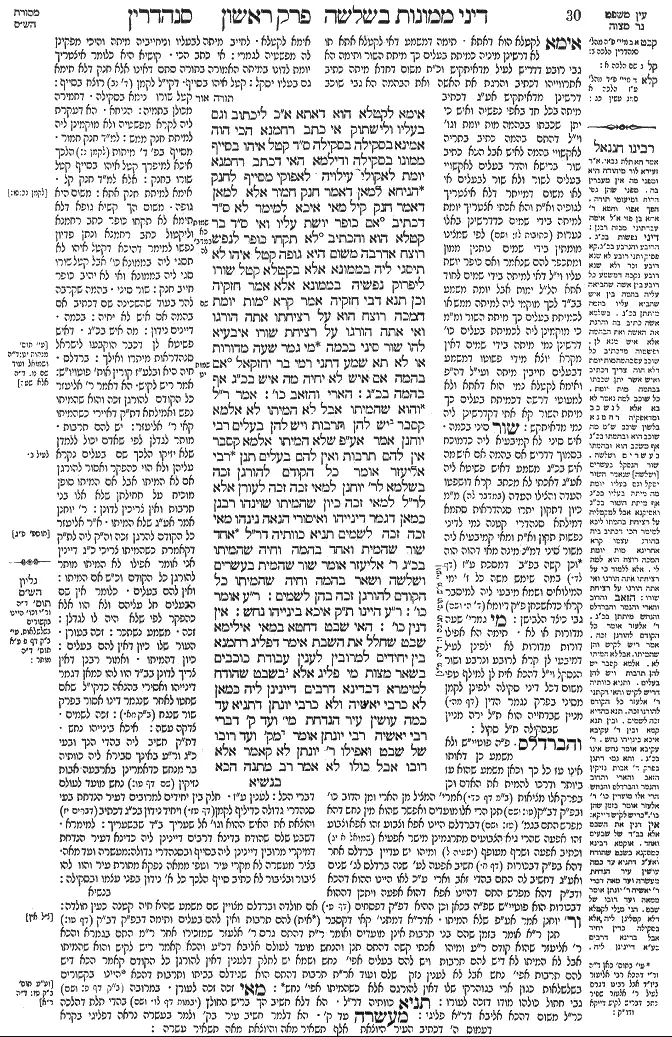
אימא לקטלא הוא דאתא א"כ ליכתוב וגם בעליו ולישתוק אי כתב רחמנא הכי הוה אמינא בסקילה בסקילה ס"ד קטל איהו בסייף ממונו בסקילה ודילמא האי דכתב רחמנא יומת לאקולי עילויה לאפוקי מסייף לחנק הניחא למאן דאמר חנק חמור אלא למאן דאמר חנק קיל מאי איכא למימר לא ס"ד דכתיב (שמות כא, ל) אם כופר יושת עליו ואי ס"ד בר קטלא הוא והכתיב (במדבר לה, לא) לא תקחו כופר לנפש רוצח אדרבה משום היא גופה קטל איהו לא תיסגי ליה בממונא אלא בקטלא קטל שורו ליפרוק נפשיה בממונא אלא אמר חזקיה וכן תנא דבי חזקיה אמר קרא (במדבר לה, כא) מות יומת המכה רוצח הוא על רציחתו אתה הורגו ואי אתה הורגו על רציחת שורו איבעיא להו שור סיני בכמה מי גמר שעה מדורות או לא תא שמע דתני רמי בר יחזקאל (שמות יט, יג) אם בהמה אם איש לא יחיה מה איש בכ"ג אף בהמה בכ"ג:
הארי והזאב כו':
אמר ר"ל והוא שהמיתו אבל לא המיתו לא אלמא קסבר יש להן תרבות ויש להן בעלים רבי יוחנן אמר אע"פ שלא המיתו אלמא קסבר אין להם תרבות ואין להם בעלים תנן רבי אליעזר אומר כל הקודם להורגן זכה בשלמא לר' יוחנן למאי זכה זכה לעורן אלא לר"ל למאי זכה כיון שהמיתו שוינהו רבנן כמאן דגמר דינייהו ואיסורי הנאה נינהו מאי זכה זכה לשמים תניא כוותיה דר"ל אחד שור שהמית ואחד בהמה וחיה שהמיתו בכ"ג ר' אליעזר אומר שור שהמית בעשרים ושלשה ושאר בהמה וחיה שהמיתו כל הקודם להורגן זכה בהן לשמים:
ר"ע אומר כו':
ר"ע היינו ת"ק איכא בינייהו נחש:
אין דנין כו':
האי שבט דחטא במאי אילימא שבט שחלל את השבת אימר דפליג רחמנא בין יחידים למרובין לענין עבודת כוכבים בשאר מצות מי פליג אלא בשבט שהודח למימרא דבדינא דרבים דיינינן ליה כמאן לא כרבי יאשיה ולא כרבי יונתן דתניא עד כמה עושין עיר הנדחת מי' ועד ק' דברי רבי יאשיה רבי יונתן אומר מק' ועד רובו של שבט ואפילו ר' יונתן לא קאמר אלא רובו אבל כולו לא אמר רב מתנה הכא
Comments from Rashi on Masechet Sanhedrin Page 15b
אימא לקטלא . לחייב מיתה לבעליו וניחייביה מיתה והיכי מפקינן לה מפשטיה לגמרי: אי כתב הכי . קושיא היא כלומר איצטריך יומת לדונו במיתה האמורה בתורה סתם דאינו אלא חנק דלא תימא גם בעליו יסקל: קטל איהו בסייף . דקי"ל לקמן (סנהדרין ד' נב) רוצח בסייף: קטל שורו נימא בסקילה . דחמירה מכולן בתמיה: הניחא . הא דעקרת ליה לקרא מפשטיה ולא מוקמינן ליה למיתת חנק ממש: למ"ד חנק חמור . מסייף בפ' ד' מיתות (לקמן סנהדרין נ:) הלכך איכא למיפרך קטל איהו בסייף קטל שורו בחנק: אלא למ"ד חנק קל . אימא למיתת חנק אתא: משום היא גופה . משום הך קשיא גופא דלא תימא לא תקחו כופר כתב רחמנא וליקטול כתב רחמנא ונתן פדיון נפשו למימר דהיכא דקטל איהו לא תסגי ליה בממונא כו' אבל קטל שורו סגי ליה בממונא ואי לא יהיב כופר חייב חנק: שור סיני . בהמה שקרבה להר בעוד שהשכינה שם דכתיב אם בהמה אם איש לא יחיה: בכמה . דיינים נידון: מה איש בכ"ג . דאיש פשיטא לן דכבר הוקבעו לישראל סנהדראות מיתרו ואילך: ברדלס . חיה היא ובלע"ז קורין אות' פוטויו"ש: אמר ריש לקיש . הא דאמר ר' אליעזר כל הקודם להורגן זכה והוא שהמיתו נפש ואמילתא דת"ק דאיירי כשהמיתו קאי ר' אליעזר: יש להם תרבות . מותר לגדלן לפי שאדם יכול ללמדן שלא יזיקו הלכך שם בעלים נקרא עליהן ולא הוי כהפקר ואסור להורגן אם לא המיתו אבל אם המיתו סופן מוכיח על תחילתן שלא אלו בני תרבות ואין צריכין לדונן: ר' יוחנן אמר אע"ג שלא המיתו . א"ר אליעזר כל הקודם להרגן זכה וה"ק ליה לת"ק דקאמרת כשהמיתו צריכי כ"ג דיינין אני אומר אפילו לא המיתו מותר להורגן כל הקודם וכ"ש אם המיתו: ואין להם בעלים . כלומר אין שם הבעלים חל עליהם ולא הוו אלא כהפקר לפי שלא היה לו לגדלן: זכה . משמע נשתכר: זכה בעורן . העור שלו כיון דאין להם בעלים: כיון דהמיתו . ואמור רבנן דאין צריך לדונן בב"ד הוו להו כמאן דגמר דינייהו ואסירי בהנאה כדקי"ל שאם שחטו לאחר שנגמר דינו אסור בפרק שור שנגח (ב"ק מא.): זכה לשמים . צדקה עשה: איכא בינייהו נחש . דת"ק חשיב ליה בהדי הנך ובעי כ"ג ור"ע באינך סבירא ליה כוותיה בר מנחש כדאמרינן בארבעה אבות נזיקין (שם דף טו:) נחש מועד לעולם דברי הכל: לענין ע"ז . חלק בין יחידים למרובים דעיר הנדחת בעי סנהדרי גדולה כדיליף לקמן (סנהדרין דף טז.) ויחיד נידון בכ"ג דכתיב (דברים יז) והוצאת את האיש ההוא וגו' אל שעריך ב"ד שבשעריך: למימרא . דשבט שלם שהודח בדינא דרבים דיינינן ליה כדינא דעיר הנדחת דמיקרי מרובין דיינינן ליה בסייף ובסנהדרי גדולה: מעשרה ועד מאה . בציר מעשרה לא מקרי עיר וטפי ממאה נפקא מתורת עיר והוו להו ציבור ובציבור לא כתיב סייף הלכך כל א' נידון בפני עצמו ובסקילה:
Comments from Tosafot - Sanhedrin 15b
אימא לקטלא הוא דאתא . תימה דמשמע דאי לקטלא אתא תו לא דרשינן מיניה כמיתת בעלים כך מיתת השור ותימה הא גבי רובע דדריש לעיל מדאיתקיש וכ"ת משום דחדא מיתה כתיב אתרווייהו דכתיב והרגת את האשה ואת הבהמה הא גבי שוכב דרשינן מדאיתקיש אע"ג דכתיב מיתה בכל חד באפי נפשיה ואיש כי יתן שכבתו בבהמה מות יומת וגו' וי"ל דהתם בהמה כתיב בתריה לאקשויי בהמה לאיש אבל הכא כתיב שור ברישא והדר בעלים לאקשויי בעלים לשור ולא שור לבעלים אי לאו משום דמייתר דלא איצטריך לגופיה וא"ת והא אכתי אצטריך יומת למיתה בידי שמים כדדרשינן באלו נערות (כתובות לז: ושם) לפי שמצינו מומתין בידי שמים נותנין ממון ומתכפר להם שנאמר ואם כופר יושת עליו וי"ל דאי למיתה בידי שמים לחוד אתא הל"ל ימות אבל יומת משמע בב"ד לכך מוקמי ליה למיתה ממש או לכמיתת בעלים כך מיתת השור ומ"מ כי מוקמינן ליה לכמיתת בעלים כו' דרשינן נמי מיתה בידי שמים דאין מקרא יוצא מידי פשוטו דמשמע דבעלים חייבין מיתה ועי"ל דה"פ ואימא לקטלא נמי הוא דאתא ולא למעוטי דרשה דכמיתת בעלים כך. מיתת השור קא אתי דקדרשינן ליה נמי מדאיתקש: שור סיני בכמה . איש סיני לא קמיבעיא ליה כדמוכח בסמוך דדריש אם בהמה אם איש מה איש בכ"ג משמע דאיש פשיטא ליה אע"ג דאכתי לא מכתב קרא דושפטו העדה והצילו העדה (במדבר לה) מ"מ כיון דתקון יתרו סנהדראות סתמא דמילתא סנהדרי קטנה נמי לדיני נפשות תקון וא"ת ומאי קמיבעיא ליה משור סיני דמ"נ מינה מאי דהוה הוה וכן קשה בפ"ב דמסכת ע"ז (דף לד.) במה שימש משה כל ז' ימי המילואים ושמא מיבעי ליה למיסבר קראי כדאשכחן פ"ק דיומא (ד' ה. ושם) גבי כיצד הלבישן: מי גמרי' שעה מדורות או לא . תימה הא אפילו דורות מדורות לא ילפינן לעיל דמיבעי לן קרא לרובע ונרבע ושור הנסקל וי"ל דהכא אית לן למילף טפי משום דכל דיני סקילה ילפינן לקמן מסיני בפרק נגמר הדין (דף מה.) מניין שבדחייה הוא ת"ל ירה מניין שבסקילה ת"ל סקול: והברדלס. פ"ה פוטיי"ש ולא משמע כן דאותו אינו עז כל כך וכאן משמע שהוא עז ביותר ודרכו להמית את האדם וכן בפרק אלו מציאות (ב"מ דף כד.) אמרי' המציל מן הארי ומן הדוב כו' ובפ"ק דב"ק (טו: ושם) תנן הרי אלו מועדים ואפשר שהוא מין נחש דהא מפרש התם בגמ' (טז: ושם) דברדלס היינו אפא וצבוע זהו אפא וצבוע זהו אפעה שהרי גיא הצבועים מתרגמינן מישר אפעיא (שמואל א יג) וכתיב אפעה ושרף מעופף (ישעיהו ל) ומיהו יש עדיין ברדלס אחר דהא בפ"ק דבכורות (דף ח.) חשיב אפעה לע' שנה ברדלס לג' שנים ואע"ג דחשיב לה התם בהדי זאב וארי ע"כ לאו היינו ההוא דהכא ודב"ק דהא מפרש התם דהיינו אפא דהוא אפעה ויתכן דההוא דבכורות הוא פוטיי"ש שפ"ה בכאן וכן ההיא דפ"ק דפסחים (דף ט.) אם חולדה וברדלס מצויין שם משמע שהיא חיה קטנה כעין חולדה: ור' יוחנן אמר אע"פ שלא המיתו . אדר"א דמתני' קאי דקסבר (אית) להם תרבות ואין להם בעלים ותימה דבפ"ק דב"ק (דף טו:) תנן ר"א אומר בזמן שהם בני תרבות אינן מועדים ואומר ר"ת דהתם גרס ר' אלעזר שמזכירו אחר ר"מ התם בגמרא והכא ר' אליעזר שהוא קודם ר"ע ומיהו אכתי קשה דהתם תנן והנחש מועד לעולם אליבא דכ"ע והכא קאמר ריש לקיש והוא שהמיתו אבל לא המיתו לא דיש להם תרבות ויש להם בעלים אפי' נחש ושמא יש לחלק דלענין דאין להורגן כל הקודם קאמר הכא דיש להם תרבות אפי' נחש אבל לא לענין נזק שלם ועוד אר"ת תרבות דהתם הוא שגידלם בביתו ותרבות דהכא היינו בקשורים בשלשלאות כגון ארי בגוהרקי שלו דאין להורגם אלא כשהמיתו אפי' נחש: מאי זכה זכה לעורן . במרובה (ב"ק דף פ: ושם) גבי חתול כולהו מודו דזכה לעורו: תניא כוותיה דר"ל . הא דלא חשיב הך בריש החולץ (יבמות דף לו. ושם) בהדי תלת דהלכה כר"ל משום דהכא אליבא דר"א פליגי: מעשרה עד ק' . הא דלמר חשיב עיר בק' ולמר בעשרה נראה דפליגי בקרא דעמוס ה' דכתיב העיר היוצאת אלף תשאיר. מאה והיוצאת מאה תשאיר עשרה:
Sanhedrin 15b - Mishnah translated into english
Why not say instead that it comes to teach that the owner of the ox is liable to receive the death penalty? Rava responded: If so, let it write in the same verse only: “The ox shall be stoned and also its owner,” and let it be silent and not add more. It would be clear that the owner is also to be put to death. Since the verse added the explicit term: “Shall be put to death,” it is clear that the intention is to teach that just as the manner of the death of the owner, so is the manner of the death of the ox.
Abaye said: Had the Merciful One written the verse in this manner, I would say that the owner is executed by stoning. The Gemara rejects this: Would it enter your mind to say he should be executed by stoning? If he killed the person himself he would be executed by the sword, which is deemed a lighter punishment; if his property killed the victim, could he be given the more severe execution by stoning?
The Gemara asks: But perhaps this term that the Merciful One wrote: “Shall be put to death,” is to be lenient with him, to remove his sentence from the category of execution by the sword and instead to sentence him to death by strangulation. This works out well according to the one who says that strangulation is more severe than the sword. According to that opinion there is no place for such a claim, as the punishment is certainly not more severe than that of an actual murderer. But according to the one who says that strangulation is a lighter punishment, what is there to say?
The Gemara responds: It would not enter your mind to think this, as it is written: “If a ransom be placed upon him, then he shall give for the redemption of his life whatever is placed upon him” (Exodus 21:30), and if it enters your mind to say that he is liable to receive the death penalty, that verse would not be understood, for the following reason: But isn’t it written: “You shall take no ransom for the life of a murderer who was convicted to die, for he shall be put to death” (Numbers 35:31)? Since in this case there is a ransom payment, it is clear that there is no actual death penalty involved.
This line of reasoning is rejected: On the contrary, the additional phrase in the verse is necessary due to this argument itself. If one killed a person himself, it would not be enough for him to make a payment of money; he must be punished only with actual execution. But if his ox killed someone, I would say he should redeem himself with money, but that if he does not pay money, he would receive the death penalty. Rather, the matter cannot be decided on the basis of these verses, and it must be proven by what Ḥizkiyya says, and so the school of Ḥizkiyya taught this baraita: The verse states: “He that struck him shall be put to death; he is a murderer” (Numbers 35:21), from which it is inferred: You execute him for his act of murder, but you do not execute him for his ox’s act of murder.
A dilemma was raised before the Sages: By how many judges would an ox at Mount Sinai have been judged? At the time of the giving of the Torah it was forbidden to ascend onto Mount Sinai, as it is written: “No hand shall touch him, but he shall be stoned or shot through; whether animal or man, it shall not live” (Exodus 19:13). If an ox did ascend the mountain, how many judges would be necessary to sentence it to execution by stoning? The Gemara explains the question: Do we derive a halakha that applies only to a specific time from a halakha that applies for all generations, and accordingly any animal that is to be stoned is judged by twenty-three judges; or not? The Gemara answers: Come and hear a solution from that which Rami bar Yeḥezkel taught: The verse states: “Whether animal or man it shall not live.” The comparison serves to teach that just as a person is judged by twenty-three judges, so too an animal is judged by twenty-three judges.
§ The mishna records a dispute with regard to the judgment of a lion or a wolf: Does this judgment require twenty-three judges? Reish Lakish says: And that dispute concerns a lion or wolf that has killed a person. But if they have not killed, then no, they may not be executed. Apparently, Reish Lakish holds that they have the capability of being tamed and domesticated, and consequently they might have owners, so it is not permitted to kill them without due cause. And Rabbi Yoḥanan says: The dispute applies even if they have not killed. Apparently, Rabbi Yoḥanan holds that they do not have the capability of being tamed, and therefore they do not have owners.
We learned in the mishna: Rabbi Eliezer says: Anyone who kills them first merits. Granted, according to the opinion of Rabbi Yoḥanan, what does he merit? It can be explained that he merits, i.e., acquires, their hides; since these animals are by definition ownerless, whoever kills them first may take the hide for himself. But according to the opinion of Reish Lakish, what does he merit? Since according to Reish Lakish the mishna is discussing a case where they have already killed, the Sages made their status equivalent to those whose verdicts have been issued in court, and oxen that are stoned are items from which deriving benefit is prohibited.
The Gemara answers: What is the meaning of: Merits, according to Reish Lakish? It means that he merits according to Heaven, meaning that he has performed a mitzva by destroying a harmful animal. The Gemara relates: It is taught in a baraita in accordance with the opinion of Reish Lakish (Tosefta 3:1): Both an ox that killed and a different domesticated animal or undomesticated animal that killed are sentenced by twenty-three judges. Rabbi Eliezer says: An ox that killed is sentenced by twenty-three judges, but with regard to other domesticated animals and undomesticated animals that killed, anyone who kills them first merits, with that act, according to Heaven. It is therefore apparent that the disagreement concerns only animals that have killed, and that, as Reish Lakish explained, the term: Merits, indicates only a moral achievement but not a financial acquisition.
§ The mishna states that with regard to these dangerous animals, Rabbi Akiva says: Their death is decreed by twenty-three judges. The Gemara asks: The opinion of Rabbi Akiva is identical to the opinion of the first tanna; what is the novelty of his statement? The Gemara answers: The difference between them relates to the halakha concerning a snake. According to the first tanna, a snake is also sentenced by twenty-three judges, whereas Rabbi Akiva holds that all domesticated and undomesticated animals other than snakes are included in this requirement.
§ The mishna teaches that the court judges cases involving an entire tribe that sinned only in the Great Sanhedrin, consisting of seventy-one judges. The Gemara asks: With regard to this tribe that sinned, in what way did it sin? If we say that it was a tribe that transgressed most prohibitions, e.g., they desecrated Shabbat, this is difficult. There is a source to say that the Merciful One distinguishes between individuals and multitudes with regard to idol worship, as there is a special halakha with regard to an idolatrous city. But with regard to other mitzvot, does He distinguish between individuals and multitudes? Rather, it must be that the mishna is discussing a tribe that was subverted and which engaged in idol worship.
The Gemara asks: Is this to say that we judge such a tribe with the halakha of a multitude, meaning that an entire idolatrous tribe is subject to the same treatment as an idolatrous city? If so, in accordance with whose opinion is the mishna? It is not in accordance with the opinion of Rabbi Yoshiya, and not in accordance with the opinion of Rabbi Yonatan. As it is taught in a baraita: How many people in a city must engage in idol worship for it to be designated as an idolatrous city? From ten until one hundred people; this is the statement of Rabbi Yoshiya. Rabbi Yonatan says: From one hundred people until a majority of a tribe.
And it is therefore apparent that even Rabbi Yonatan, who allows a larger community to be declared an idolatrous city, said this only with regard to a majority of the tribe at most, but if it was all of the tribe that was idolatrous, then the halakha of an idolatrous city does not apply. Rav Mattana said: Here, in the mishna,
Traduction : The William Davidson digital edition of the Koren Noé Talmud, with commentary by Rabbi Adin Even-Israel Steinsaltz.