 Talmud Bavli
The learning on the whole site is dedicated : L'ilui Nishmat Margalit bat Ledicia
The learning on the whole site is dedicated : L'ilui Nishmat רינה בת לדיסיה
The learning on the whole site is dedicated : L'ilui Nishmat Ledicia bat David Banoun
Bava Metzia 89b : Youtube
Daf TubeYoutube
1 video class :
Bava Metzia Page 89b
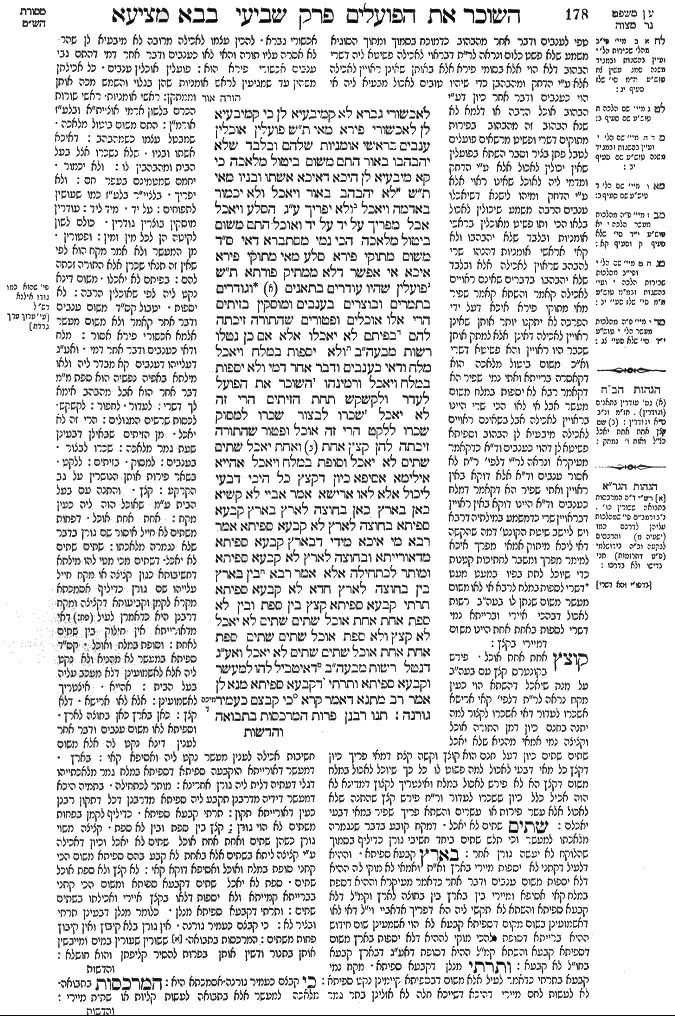
Bava Metzia 89b - Guemara
לאכשורי גברא לא קמיבעיא לן כי קמיבעיא לן לאכשורי פירא מאי ת"ש פועלין אוכלין ענבים בראשי אומניות שלהם ובלבד שלא יהבהבו באור התם משום ביטול מלאכה כי קא מיבעיא לן היכא דאיכא אשתו ובניו מאי ת"ש לא יהבהב באור ויאכל ולא יכמור באדמה ויאכל ולא יפריך ע"ג הסלע ויאכל אבל מפריך על יד על יד ואוכל התם משום ביטול מלאכה הכי נמי מסתברא דאי ס"ד משום מתוקי פירא סלע מאי מתוקי פירא איכא אי אפשר דלא ממתיק פורתא ת"ש פועלין שהיו עודרים בתאנים וגודרים בתמרים ובוצרים בענבים ומוסקין בזיתים הרי אלו אוכלים ופטורים שהתורה זיכתה להם בפיתם לא יאכלו אלא אם כן נטלו רשות מבעה"ב ולא יספות במלח ויאכל מלח ודאי כענבים ודבר אחר דמי ולא יספות במלח ויאכל ורמינהו השוכר את הפועל לעדר ולקשקש תחת הזיתים הרי זה לא יאכל שכרו לבצור שכרו למסוק שכרו ללקט הרי זה אוכל ופטור שהתורה זיכתה להן קצץ אחת ואחת יאכל שתים שתים לא יאכל וסופת במלח ויאכל אהייא אילימא אסיפא כיון דקצץ כל היכי דבעי ליכול אלא לאו ארישא אמר אביי לא קשיא כאן בארץ כאן בחוצה לארץ בארץ קבעא ספיתא בחוצה לארץ לא קבעא ספיתא אמר רבא מי איכא מידי דבארץ קבעא ספיתא מדאורייתא ובחוצה לארץ לא קבעא ספיתא ומותר לכתחילה אלא אמר רבא בין בארץ בין בחוצה לארץ חדא לא קבעא ספיתא תרתי קבעא ספיתא קצץ בין ספת ובין לא ספת אחת אחת אוכל שתים שתים לא יאכל לא קצץ ולא ספת אוכל שתים שתים ספת אחת אחת אוכל שתים שתים לא יאכל ואע"ג דנטל רשות מבעה"ב דאיטביל להו למעשר וקבעא ספיתא ותרתי דקבעא ספיתא מנא לן אמר רב מתנא דאמר קרא (מיכה ד, יב) כי קבצם כעמיר גורנה תנו רבנן פרות המרכסות בתבואה
Comments from Rashi on Masechet Bava Metzia Page 89b
אכשורי גברא . להכין עצמו לאכילה מרובה לא מיבעיא לן שהרי לא אסרה עליו תורה והאי לאו כענבים ודבר אחר דמי דהתם גבי ענבים אכשורי פירא הוא: פועלין אוכלין ענבים . כל אכילתן משהין עד שמגיעין לראש אומניות שהן בגלוי והשמש מכה אותן וממתקן: ראשי אומניות . ראשי שורות הכרם בלשון ארמי אוציית"א ובלע"ז אורמ"ן: התם משום ביטול מלאכה . שמבטל עצמו כשמהבהב: דאיכא אשתו ובניו . שלא נשכרו אצל בעל הבית ומהבהבין לו: ולא יכמור . יחמם שמטמינם בעפר חם: ולא יפריך . בלציי"ר בלע"ז כמו שעושין לתפוחים: על יד . מיד ליד: עודרין מוסקין בוצרין גודרין . כולם לשון לקיטה הן לכל מין ומין: ופטורין . מן המעשר ולא אמר מקח הוא לפי שאין זה תנאי שכרן אלא התורה זכתה להם: בפיתם לא יאכלו . משום דינא נקט ליה לפי שאוכלין הרבה: לא יספות . יטבול קס"ד משום ענבים ודבר אחר קאמר ולא משום מעשר אלמא אכשורי פירא אסור: מלח ודאי כענבים ודבר אחר דמי . ואע"ג דעלייהו דענבים קא מבדר ליה ולאו מילתא באפיה נפשיה הוא ספת מ"מ דבר אחר הוא אבל מהבהב אימא לך דשרי: לעדור . לחפור: לקשקש . לכסות שרשים המגולים: הרי זה לא יאכל . מן הזיתים שבאילן דבעינן שעת גמר מלאכה: שכרו לבצור . בענבים: למסוק . בזיתים: ללקט . בשאר פירות אותן הנושרין על גב הקרקע: קצץ . והתנה עם בעל הבית ע"מ שאוכל הוה ליה כעין מקח: אחת אחת אוכל . דפחות משתים לא חייל איסור שם גורן בדבר שלא נגמרה מלאכתו: שתים שתים לא יאכל . דשתים מכי מטי להו מילתא דחשיבותא כגון קציצה או מקח חייל עלייהו שם גורן כדיליף אסמכתא מקרא לקמן וקביעותא דקציצה ומקח דרבנן היא כדאמרן לעיל (בבא מציעא פח:) דאי מדאורייתא . אין חילוק בין שתים לאחת: וסופת במלח ואוכל . קס"ד ספיתא במעשר לא מהניא ולא נקט ליה אלא לאשמועינן דלא מעכב עליה בעל הבית: אהייא . איצטריך לאשמועינן: אלא לאו . ארישא דלא קצץ: כאן בארץ כאן בחוצה לארץ . וספיתא לאו משום ענבים ודבר אחר לענין דינא נקט לה אלא משום חשיבות אכילה לענין מעשר נקט ליה ואסיפא קאי: בארץ . דמעשר דאורייתא הוקבעה ספיתא דספיתא במלח גמר מלאכתייהו דגלי דעתיה דלית ליה גורן אחרינא: מותר לכתחילה . בתמיה היכא דמעשר דידיה מדרבנן תקבע ליה ספיתא מדרבנן דכל דתקון רבנן כעין דאורייתא תקון: תרתי קבעא ספיתא . כדיליף לקמן בפחות משתים לא הוי גורן: קצץ בין ספת ובין לא ספת . קציצה משוי גורן כשהן שתים ואחת אחת אוכל שתים לא יאכל וכיון דאכילה על ידי קציצה ליתא בשתים אלא באחת לא קבע בהם ספיתא משום הכי קתני סופת במלח ואוכל ואסיפא דוקא קאי: לא קצץ ולא ספת אוכל שתים . ספת לא יאכל שתים דקבעא ספיתא ומשום הכי קתני בברייתא קמייתא ולא יספות דלאו בקצץ איירי ואכילתו בשתים שתים: ותרתי דקבעא ספיתא מנלן . כלומר מנלן דבעינן תרתי ובציר לא: כי קבצם כעמיר גורנה . אין גורן בלא קיבוץ ואין קיבוץ פחות משתים: המרכסות בתבואה . ששורין שעורין במים ומייבשין אותן בתנור ודשין אותן בפרות להסיר קליפתן והוא חושלא:
Comments from Tosafot - Bava Metzia 89b
קוצץ אחת אחת אוכל . פירש בקונטרס קצץ עם בעה"ב על מנת שיאכל דהשתא הוי כעין מקח נראה לר"ת דלפי' קאי ארישא אשכרו לעדור דאי אשכרו לקצור למה יתנה בחנם כיון דמן התורה אוכל וקציצה נמי אמאי מהניא שלא יאכל שתים שתים כיון דעל חנם הוא קוצץ וקשה קצת דמאי פריך כיון דקצץ כל מאי דבעי לאכול למה פשוט לו כל כך שיוכל לאכול במלח משום דקצץ הא לא פירש לאכול במלח ואיצטריך לקצוץ דמדינא לא הוה אכיל כלל כיון ששכרו לעדור ור"ח פירש קצץ שהתנה שלא לאכול אלא עשר פירות או עשרים והשתא פריך שפיר במאי דבעי יאכלם: שתים שתים לא יאכל . דמקח קובע בדבר שנגמרה מלאכתו למעשר וכי תלש שתים ביחד חשיבי גורן כדיליף בסמוך שהלוקח לא יעשה גורן אחר: בארץ קבעא ספיתא . וההיא דלעיל דקתני לא יספות מיירי בארץ וא"ת ואמאי לא מוקי לה ההיא דלא יספות משום ענבים ודבר אחר כדאמר מעיקרא וההיא דספת במלח קאי אסיפא ומיירי בין בארץ בין בחוצה לארץ וקמ"ל דלא קבעא ספיתא והשתא לא תקשי ליה הא דפריך אדאביי וי"ל דאי לאו דאשמועינן בשום מקום דספיתא קבעא לא הוי אשמעינן שום חידוש ההיא ברייתא דסופת ולהכי מוקי לההיא דלא יספות בארץ משום דספיתא קבעא והשתא קמ"ל ההיא דסופת דאע"ג דבארץ קבעא בחו"ל לא קבעא: ותרתי מנלן דקבעא ספיתא . מקח נמי קבעא בתרתי כדאמר לעיל אלא משום דבספיתא קיימינן נקט ספיתא: כי קבצם כעמיר גורנה . אסמכתא היא: המרכסות בתבואה . לא לעשות לחם מיירי דהיכא דשייכא חלה לא אזלינן בתר גמר מלאכה למעשר אלא בתבואה לעשות קליות או שתית מיירי:
Bava Metzia 89b - Mishnah translated into english
The Gemara refutes this proof: We did not raise the difficulty with regard to the fitness of the man himself to eat, as it is obvious that one may act in advance so that he will be able to eat a great deal. When this dilemma was raised to us, it was with regard to the fitness of the produce for eating. May they be prepared by singeing? What, then, is the halakha? The Gemara offers another suggestion: Come and hear a proof from a baraita: Laborers may eat grapes at the end of their rows of vines, provided that they do not singe the grapes in fire.
The Gemara rejects this claim: This affords no proof, as the prohibition there is not because of his use of the fire but due to his neglect of his labor, as he has no right to busy himself with other matters during his work time. When the dilemma is raised to us, it is with regard to a case where he does not have to stop his work, e.g., when he has his wife and children with him, who can singe the fruit for him without him having to pause in his labor. What is the halakha in a case of this kind?
The Gemara again suggests: Come and hear a proof from a baraita: A laborer may not singe produce in fire and eat, and he may not heat produce in the ground and eat, and he may not break produce on rocks and eat, but he may break it little by little and eat. Once again, the Gemara refutes the proof: There too, the reason is due to his neglect of his labor. The Gemara comments: So too, it is reasonable that this is the case. As, if it enters your mind that it is prohibited due to his sweetening of the produce, what sweetening of the produce is there in his use of a rock? The Gemara responds: This is not a conclusive argument, as it is impossible that the produce would not be sweetened a little.
The Gemara further suggests: Come and hear a proof from a baraita: With regard to laborers who were plucking figs, or plucking dates, or harvesting grapes, or harvesting olives, they may eat and they are exempt from separating tithes, as the Torah entitled them to eat. Nevertheless, they may not eat these fruits together with their bread unless they received permission from the homeowner. Similarly, one may not dip [lo yispot] these fruits in salt and eat. This indicates that it is prohibited to sweeten the fruit.
The Gemara rejects this proof as well: Salt is certainly considered like grapes and something else, as one is adding an ingredient, which is undoubtedly prohibited. By contrast, one who singes produce in fire has not added anything, and therefore it is possible that this practice is permitted. Consequently, the Gemara’s question is left unresolved.
§ The baraita mentioned earlier taught: And he may not dip these fruits in salt and eat. And the Gemara raises a contradiction to this from a baraita: In the case of one who hires a laborer to till and dig a circle under olives, this one may not eat from the olives. But if he hired him to harvest grapes, or hired him to harvest olives, or hired him to gather any other fruit, this one may eat and he is exempt from separating tithes, as the Torah entitled these laborers to eat. In a case where he stipulated with the owner beforehand that he may eat even when he is not entitled to do so by Torah law, if he eats the fruit one by one, he may eat without separating tithes, but if he consumes two by two he may not eat without separating tithes. And he may dip these fruits in salt and eat.
The Gemara analyzes this last statement: To which section of the baraita is this referring? If we say that it is referring to the latter clause, in which the laborer had an agreement with the owner, it is superfluous: Since the laborer stipulated that he may eat in any manner he wishes, he may certainly eat with salt. Rather, is it not referring to the first clause of the baraita, concerning a laborer who eats by Torah law? This would prove that a laborer may dip fruit in salt without separating tithes.
Abaye said: This is not difficult, as here it is prohibited because he is in Eretz Yisrael, whereas there he is outside of Eretz Yisrael. The reason for the difference is as follows: In Eretz Yisrael, dipping fruit in salt establishes his consumption as a fixed meal, which renders the fruit subject to tithes. Outside of Eretz Yisrael, by contrast, dipping fruit in salt does not establish his consumption as a meal, as the mitzva of tithes does not apply outside of Eretz Yisrael by Torah law. Rava said: Is there any produce with regard to which the halakha is that in Eretz Yisrael dipping establishes it as a meal by Torah law, and yet outside Eretz Yisrael dipping does not establish it as a meal and it is even permitted ab initio? It cannot be that there is such a great difference between these places, as the enactments of the Sages are modeled on Torah law.
Rather, Rava rejected Abaye’s answer and stated a different resolution: Whether in Eretz Yisrael or outside of Eretz Yisrael, if he ate one fruit, its dipping in salt does not establish it as anything more than a casual meal, but if he ate two, dipping in salt does establish it as a meal. Therefore, in a case where he stipulated that he may eat, whether he dipped in salt or did not dip in salt, he may eat one by one, but he may not eat two by two. If he did not stipulate and did not dip in salt, he may eat two by two. If he dips in salt he may eat one by one, but he may not eat two by two, even though he received permission to eat two at a time from the homeowner. The reason is that they have already been rendered untithed produce with regard to tithes, because the dipping established them as ready for tithing. Consequently, the laborer may not partake of them until he has separated tithes.
The Gemara asks: And from where do we derive this halakha that with regard to eating fruit two at a time, dipping in salt establishes that they are subject to tithes? Rav Mattana said that it is as the verse states: “For He has gathered them as the sheaves to the threshing-floor” (Micah 4:12). This verse shows that one who gathers items together, an act that involves at least two items, is considered to have brought them into his granary. Consequently, if he also dips them in salt he has established his consumption as a fixed meal, which means that he must separate tithes.
The Sages taught: In the case of cows that tread on produce for which the work has been completed but which is threshed again in this manner as part of its preparation into food,
Traduction : The William Davidson digital edition of the Koren Noé Talmud, with commentary by Rabbi Adin Even-Israel Steinsaltz.