 Talmud Bavli
The learning on the whole site is dedicated : L'ilui Nishmat אסתר בת חיים
The learning on the whole site is dedicated : For the success of Elyahou ben H'anna & family
The learning on the whole site is dedicated : L'ilui Nishmat Ledicia bat David Banoun
Bava Metzia 119a : Youtube
Daf TubeYoutube
1 video class :
Bava Metzia Page 119a
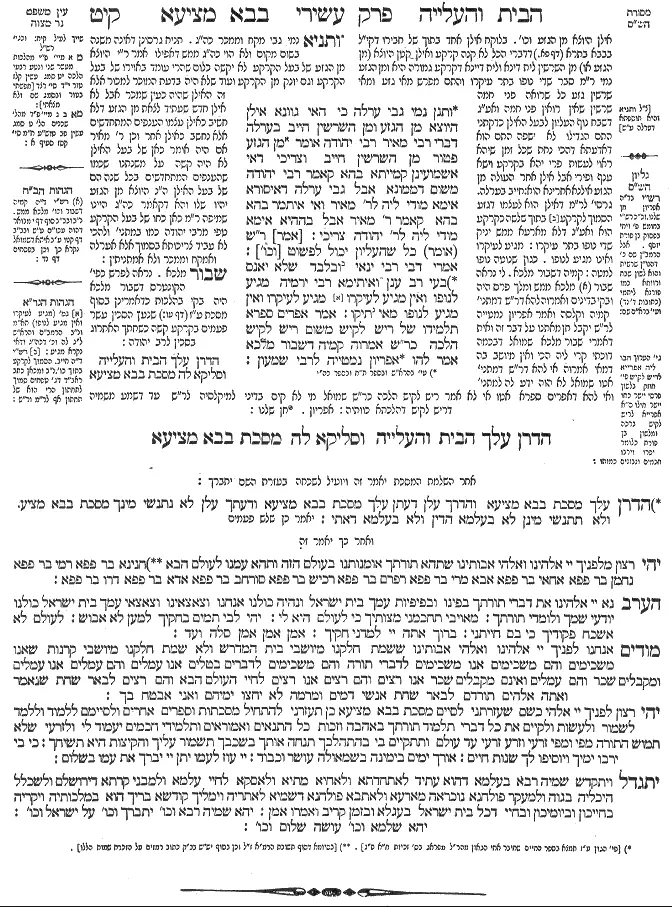
Bava Metzia 119a - Guemara
ותנן נמי גבי ערלה כי האי גוונא אילן היוצא מן הגזע ומן השרשין חייב בערלה דברי רבי מאיר רבי יהודה אומר מן הגזע פטור מן השרשין חייב וצריכי דאי אשמועינן קמייתא בהא קאמר רבי יהודה משום דממונא אבל גבי ערלה דאיסורא אימא מודי ליה לר' מאיר ואי איתמר בהא בהא קאמר ר' מאיר אבל בההיא אימא מודי ליה לר' יהודה צריכי:
אמר ר"ש אומר כל שהעליון יכול לפשוט [וכו']:
אמרי דבי רבי ינאי ובלבד שלא יאנס בעי רב ענן ואיתימא רבי ירמיה מגיע לנופו ואין מגיע לעיקרו מגיע לעיקרו ואין מגיע לנופו מאי תיקו:
אמר אפרים ספרא תלמידו של ריש לקיש משום ריש לקיש הלכה כר"ש אמרוה קמיה דשבור מלכא אמר להו אפריון נמטייה לרבי שמעון:
הדרן עלך הבית והעלייה וסליקא לה מסכת בבא מציעא
Comments from Rashi on Masechet Bava Metzia Page 119a
אילן היוצא מן הגזע וכו' . בלוקח אילן אחד בתוך של חבירו דקי"ל בבבא בתרא (דף פא.) דדברי הכל לא קנה קרקע ואילן קטן היוצא (מן הגזע או) מן השרשין לית דינא ולית דיינא דקרקע גמורה היא ומן הגזע נמי רבי מאיר סבר שדי נופו בתר עיקרו והתם מפרש מאי גזע ומאי שרשין גזע כל שרואה פני חמה שרשין שאין רואין פני חמה ואע"ג דשבח נוף העליון לבעל האילן כדקתני התם הגדילו לא ישפה התם הוא דאדעתא דהכי נחת שכל זמן שיהא ראויין לעשות פרי יהא בקרקע וישא ענף ופירי אבל אילן אחר העולה מן הגזע אילנא אחרינא הוא: חייב בערלה . גרסי' לר"מ דאילן הוא לעצמו דגזע הסמוך לקרקע בתוך שלשה כקרקע הוא ואף על גב דלא מארעא ממש יניק שדי נופו בתר עיקרו: מגיע לעיקרו ואינו מגיע לנופו . כגון שנוטה נופו למטה: קמיה דשבור מלכא . לי נראה שבור מלכא ממש ומלך פרס היה ובקי בדינים ואמרוה להא דר"ש דמתני' קמיה וקלסה ואמר אפריון נמטייה לר"ש יקבל חן מאתנו על דבר זה ואית דאמרי שבור מלכא שמואל דבכמה דוכתי קרי ליה הכי ואין מיושב בה דמאי אמרוה אי להא דר"ש דמתני' אטו שמואל לא הוה ידע לה למתני' ואי להא דאפרים ספרא אטו אי לא אמר ריש לקיש הלכה כר"ש שמואל מי לא קים בדיני למיקלסיה לר"ש עד דשמע משמיה דריש לקיש דהלכתא כוותיה: אפריון . חן שלנו:
Comments from Tosafot - Bava Metzia 119a
שבור מלכא . נראה לפרש כפי' הקונטרס דשבור מלכא היה בקי בהלכות כדאמרינן בסוף מסכת ע"ז (דף עו:) שנעץ הסכין עשר פעמים בקרקע קשה כשחתך האתרוג בסכין לרב יהודה:
Bava Metzia 119a - Mishnah translated into english
And we also learned a case like this in a baraita (Tosefta, Orla 1:4), with regard to the prohibition against eating the fruit of a tree during the first three years after its planting [orla]: In the case of a tree that sprouts from the trunk and from the roots of an old tree, its owner is obligated in orla, since it is considered like a new tree, and the orla years must be counted anew. This is the statement of Rabbi Meir. Rabbi Yehuda says: If it sprouts from the trunk, the owner is exempt, since it is considered like a branch of the old tree, but if it grows from the roots, the owner is obligated.
The Gemara comments: And both cases are necessary to be stated although they are both based on the same principle. As had it taught us only the first halakha, that of ownership, one could say that it is only with regard to this case that Rabbi Yehuda said his ruling, due to the fact that it pertains to monetary matters, but with regard to orla, which is a matter of a prohibition, one could say that he concedes to Rabbi Meir. And if it was stated only with regard to this case of orla, one could say that it is only with regard to this case that Rabbi Meir said his stringent ruling, but with regard to that case, one could say that he concedes to Rabbi Yehuda. It is therefore necessary to state both disputes.
§ The mishna teaches: Rabbi Shimon said: Any vegetables that the owner of the upper garden can stretch out his hand and take, those vegetables are his, and the rest belong to the owner of the lower garden. In the school of Rabbi Yannai they say: And this is only so provided that he does not force himself, but simply stretches out his hand in the usual manner.
Rav Anan, and some say it was Rabbi Yirmeya, raised a dilemma: If the owner of the upper garden can reach its leaves, but he cannot reach its roots, or if he can reach its roots but he cannot reach its leaves, what is the halakha? Is the plant considered to be within his reach or not? No answer was found for this question, and the Gemara concludes: The dilemma shall stand unresolved.
Efrayim the scribe, a student of Reish Lakish, says in the name of Reish Lakish: The halakha is in accordance with the opinion of Rabbi Shimon. They stated this case before the Persian King Shapur, who expressed an interest in this legal issue, and he said to them: Let us offer praise [apiryon] to Rabbi Shimon. He too felt that this was the best resolution.
Traduction : The William Davidson digital edition of the Koren Noé Talmud, with commentary by Rabbi Adin Even-Israel Steinsaltz.