 Talmud Bavli
The learning on the whole site is dedicated : L'ilui Nishmat Nissim ben Barukh Malka
The learning on the whole site is dedicated : L'ilui Nishmat אליעזר בן רחל
The learning on the whole site is dedicated : L'ilui Nishmat Jacques Isaac Ben Amram Loubaton
Bava Metzia 26a : Youtube
Daf TubeYoutube
1 video class :
Bava Metzia Page 26a
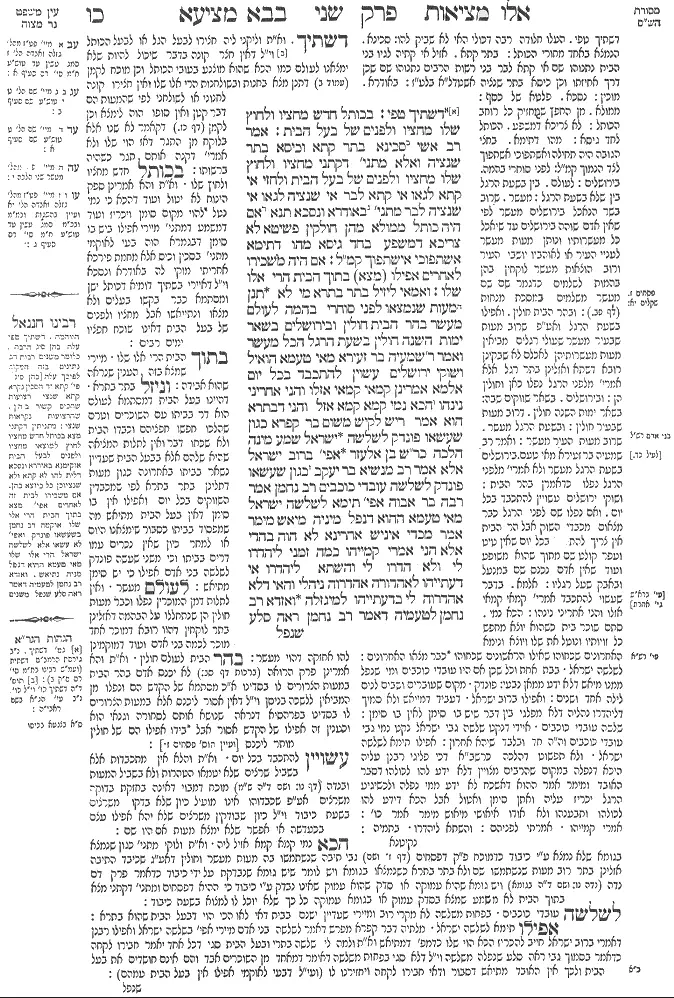
Bava Metzia 26a - Guemara
דשתיך טפי:
בכותל חדש מחציו ולחוץ שלו מחציו ולפנים של בעל הבית:
אמר רב אשי סכינא בתר קתא וכיסא בתר שנציה ואלא מתני' דקתני מחציו ולחוץ שלו מחציו ולפנים של בעל הבית ולחזי אי קתא לגאו אי קתא לבר אי שנציה לגאו אי שנציה לבר מתני' באודרא ונסכא תנא אם היה כותל ממולא מהן חולקין פשיטא לא צריכא דמשפע בחד גיסא מהו דתימא אשתפוכי אישתפוך קמ"ל:
אם היה משכירו לאחרים אפילו (מצא) בתוך הבית הרי אלו שלו:
ואמאי ליזיל בתר בתרא מי לא תנן מעות שנמצאו לפני סוחרי בהמה לעולם מעשר בהר הבית חולין ובירושלים בשאר ימות השנה חולין בשעת הרגל הכל מעשר ואמר ר' שמעיה בר זעירא מאי טעמא הואיל ושוקי ירושלים עשוין להתכבד בכל יום אלמא אמרינן קמאי קמאי אזלו והני אחריני נינהו הכא נמי קמא קמא אזל והני דבתרא הוא אמר ריש לקיש משום בר קפרא כגון שעשאו פונדק לשלשה ישראל שמע מינה הלכה כר"ש בן אלעזר אפי' ברוב ישראל אלא אמר רב מנשיא בר יעקב כגון שעשאו פונדק לשלשה עובדי כוכבים רב נחמן אמר רבה בר אבוה אפי' תימא לשלשה ישראל מאי טעמא ההוא דנפל מיניה מיאש מימר אמר מכדי איניש אחרינא לא הוה בהדי אלא הני אמרי קמייהו כמה זמני ליהדרו לי ולא הדרו לי והשתא ליהדרו אי דעתייהו לאהדורה אהדרוה ניהלי והאי דלא אהדרוה לי בדעתייהו למיגזלה ואזדא רב נחמן לטעמיה דאמר רב נחמן ראה סלע
Comments from Rashi on Masechet Bava Metzia Page 26a
דשתיך טפי . העלו חלודה רבה דכולי האי לא שביק להו: סכינא . הנמצא באחד מחורי הכותל: בתר קתא . אזיל אי קתיה לגיו בני הבית נתנוהו שם אי קתא לבר בני רשות הרבים נתנוהו שם שכן דרך אחיזתו וכן כיסא בתר שנציה אשטדל"א בלע"ז: באודרא . מוכין: נסכא . פלטא של כסף: ממולא . מן החפץ שמחזיק כל רוחב הכותל: לא צריכא דמשפע . הכותל לחד גיסא: מהו דתימא . בחצי הגובה היה תחילה ואשתפוכי אשתפוך לצד הנמוך קמ"ל: לפני סוחרי בהמה . בירושלים: לעולם . בין בשעת הרגל בין שלא בשעת הרגל: מעשר . שרוב בשר הנאכל בירושלים מעשר לפי שאין אדם שוהה בירושלים עד שיאכל כל מעשרותיו ונותן מעות מעשר לעניי העיר או לאוהביו יושבי העיר ורוב הוצאות מעשר לוקחין בהן בהמות לשלמים כדגמר שם שם מעשר משלמים במסכת מנחות (דף פב.): ובהר הבית חולין . ואפילו בשעת הרגל ואע"פ שרוב מעות שבעיר מעשר שעולי רגלים מביאין מעות מעשרותיהן לאכלם לא שבקינן רובא דשתא ואזלינן בתר רגל אלא אמרי' מלפני הרגל נפלו כאן וחולין הן: ובירושלים . בשאר שווקים שבה: בשאר ימות השנה חולין . דרוב מעות שבעיר חולין: ובשעת הרגל מעשר . שרוב מעות העיר מעשר: ואמר רב שמעיה בר זעירא מאי טעם . בירושלים בשעת הרגל מעשר ולא אמרי' מלפני הרגל נפלו כדאמרן בהר הבית: ושוקי ירושלים עשויין להתכבד בכל יום . ואם נפלו שם לפני הרגל כבר מצאום מכבדי השוק אבל הר הבית אין צריך להתכבד בכל יום שאין טיט ועפר קולט שם מתוך שהוא משופע ועוד שאין אדם נכנס שם במנעל ובאבק שעל רגליו: אלמא . בדבר שעשוי להתכבד אמרי' קמאי קמאי אזלו והני אחריני נינהו: הכא נמי . סתם שוכר בית כשהוא יוצא מחפש כל זויותיו ונוטל את שלו ויוצא ונימא האחרונים שכחוהו שאילו הראשונים שכחוהו כבר מצאו האחרונים: לשלשה ישראל . בבת אחת וכל שכן אם היו עובדי כוכבים ומי שנפל ממנו מיאש שלא ידע ממאן נבעי: פונדק . מקום שעוברים ושבים לנים לילה אחד ושנים: ואפילו ברוב ישראל . דעביד דמייאש ולא סמיך דליהדרו נהליה דלא מפלגי בין דבר שיש בו סימן לאין בו סימן: שלשה עובדי כוכבים . איידי דנקט שלשה גבי ישראל נקט נמי גבי עובדי כוכבים וה"ה חד ובלבד שיהא אחרון: אפילו תימא לשלשה ישראל . ולא תפשוט דהלכה כרשב"א דכי פליגי רבנן עליה היכא דנפלה במקום שהרבים מצויין דלא ידע להו לכולהו דסבר האובד ומימר אמר ההוא דאשכח לא ידע ממי נפלה ולכשיגיע הרגל יכריז עליה ואתן סימן ואטול אבל הכא דידע להו לכולהו ותבענהו ולא אודו איאושי מיאוש מימר אמר כו': אמרי קמייהו . אמרתי לפניהם: והשתא ליהדרו . בתמיה:
Comments from Tosafot - Bava Metzia 26a
דשתיך . וא"ת וליקני ליה חצירו לבעל הגל או לבעל הכותל וי"ל דאין חצר קונה בדבר שיכול להיות שלא ימצאנו לעולם כמו הכא שהוא מוצנע בעובי הכותל וכן מוכח לקמן (עמוד ב) דתנן מצא בחנות ובשולחנות הרי אלו שלו ואין חצירו קונה לחנוני או לשולחני לפי שהמעות הם דבר קטן ואין סופו הוה לימצא וכן לקמן (בבא מציעא דף כז.) דקאמר לא שנו אלא בלוקח מן התגר דאז הוי שלו ולא אמרי' דקנה אותם תגר כשהיה ברשותו: בכותל חדש מחציו ולחוץ שלו . וא"ת והא אמרינן ספק הינוח לא יטול ועוד דהכא כי נמי נטל להוי מקום סימן ויכריז ועוד דמשמע דמתני' מיירי אפילו ביש בו סימן דבגמרא הוה בעי לאוקמי מתני' בסכין וכיס אלא מחמת פירכא אחריתי מוקי לה באודרא ונסכא וי"ל דאיירי בשתיך דומיא דכותל ישן ומסתמא כבר בקשו בעלים ולא מצאו ונתייאשו אבל מחציו ולפנים של בעל הבית דאינו שוכח חפציו ימים רבים: בתוך הבית הרי אלו שלו . מיירי שמצא בזה הענין שנראה שהוא אבידה: וניזל בתר בתרא . דהיינו בעל הבית דמסתמא לעולם הוא דר בביתו עם השוכרים וטרם שהלכו חפשו חפציהם וכבדו הבית ולא שכחו דבר ואין לתלות המציאה שהיא שלהם אלא בבעל הבית שעדיין נשאר בביתו באחרונה כגון מעות דתלינן בתר בתרא לפי שמכבדין השווקים בכל יום ואפילו אין בו סימן דאין בעל הבית מתיאש מה שמפסיד בביתו כסבור שימצאנו היום או למחר כיון שאין נכרים עמו דרים בביתו וכי משני שעשה פונדק לשלשה בני אדם אפילו כי יש סימן מתיאש: לעולם מעשר . ואין לתלות דמן המוכרין נפלו וכבר מעות חולין הן שנתחללו על הבהמה דאזלינן בתר לוקחין דהוו רובא דמוכר אחד מוכר לכמה בני אדם ועוד דמוקמינן להו אחזקה דהוי מעשר: בהר הבית לעולם חולין . וא"ת והא אמרינן פרק הרואה (ברכות דף סב:) לא יכנס אדם בהר הבית במעות הצרורים לו בסדינו א"כ מסתמא של הקדש הם ונפלו מן המביאין ללשכה בניסן וי"ל דאין אסור ליכנס אלא במעות הצרורים לו בסדינו בפרהסיא דנראה שנושא אותם לסחורה וגנאי הוא וכענין זה אפילו של הקדש אסור אבל בידו אפילו הם של חולין מותר ליכנס [ועיין תוס' פסחים ז.]: עשויין להתכבד בכל יום . וא"ת והלא אין מתכבדות אלא בשביל שרצים שלא יטמאו הטהרות ולא בשביל המעות ובנדה (דף נו: ושם ד"ה ש"מ) מוכח דמבוי דאינה בחזקת בדוקה משרצים אע"פ שכבדוהו אינו מועיל כיון שלא בדקו משרצים בשעת כיבוד וי"ל כיון שבודקין משרצים שלא יהא אפילו עצם בכעדשה אי אפשר שלא ימצא מעות אם היו שם: הכא נמי קמא קמא אזיל ליה . וא"ת ולוקי מתני' כגון שנמצא בגומא שלא נמצא ע"י כיבוד כדמוכח פ"ק דפסחים (דף ז ושם) גבי תיבה שנשתמשו בה מעות מעשר וחולין דאע"ג שכיבד התיבה אזלינן בתר רוב מעות שנשתמשו שם ולא בתר בתרא כשנמצאו בגומא ויש לומר שיש גומא שנבדקת על ידי כיבוד כדאמר פרק דם נדה (נדה נו: ושם ד"ה בגומא) ויש גומא שהיא עמוקה או סדק שהוא עמוק שאינו נבדק ע"י כיבוד כי ההיא דפסחים ומתני' דקתני מצא בתוך הבית לא משמע שמצא בסדק עמוק או בגומא עמוקה כל כך שלא יוכל לו למצוא בשעת כיבוד: לשלשה עובדי כוכבים . בפחות משלשה לא מקרי רוב ומיירי שעדיין ישנם בבית דאי לאו הכי הוי דבעל הבית שהוא בתרא: אפילו תימא לשלשה ישראל . מלתיה דבר קפרא מפרש דאמר לשלשה בני אדם מיירי אפי' בשלשה ישראל ואפילו רבנן דאמרי ברוב ישראל חייב להכריז הכא הוי שלו כדמפ' דמתיאש וא"ת ולמה לי שלשה בתרי ובעל הבית סגי דכל אחד יאמר חבירו לקחה כדאמר בסמוך גבי ראה סלע שנפלה משלשה וי"ל דלא סגי בפחות משלשה דאימר דמאחד מן השוכרים אבד והם אינם חושדים את בעל הבית ולכך אין האובד מתיאש דסבור ודאי חבירו לקחה ויחזירנו לו (ועי"ל דבעי לאוקמי אפילו אין בעל הבית עמהם):
Bava Metzia 26a - Mishnah translated into english
where the item is extremely rusted, indicating that it had been left there for a long time.
§ The mishna teaches: If one found lost items in a new wall from its midpoint and outward, they belong to him. But if he found the items from its midpoint and inward, they belong to the homeowner.
Rav Ashi said: The determination of ownership with regard to a knife found in a wall follows the handle, and the determination of ownership with regard to a money pouch follows the laces at the opening of the pouch. If the handle or laces face inward, they belong to the homeowner. If the handle or laces face outward, they belong to the finder.
The Gemara asks: But if so, what is the applicability of the ruling of the mishna, which teaches: If one found lost items in a new wall from its midpoint and outward, they belong to him, and from its midpoint and inward, they belong to the homeowner? But instead, to determine ownership, let us see if its handle faces inward or if its handle faces outward, or if its straps face inward or if its straps face outward. The Gemara answers: The mishna is referring to a case where one found rags or metal strips.
It is taught: If the hollow in the wall was filled with lost items, e.g., coins, the homeowner and the finder divide them. The Gemara asks: Isn’t that obvious? The Gemara answers: No, it is necessary to teach this only in a case where the hollow in the wall is inclined toward one side of the wall. Lest you say that all the items were initially on the elevated side, and due to the incline they slipped and filled the entire space, the tanna teaches us that the homeowner and the finder divide them.
§ The mishna teaches: If the homeowner would rent the house to others on a regular basis and there was a steady turnover of residents, even if one found lost items inside the house, these belong to him. The Gemara asks: And why do they belong to the finder? Let us follow the last renter and determine that he is the owner of the items.
Didn’t we learn in a mishna (Shekalim 7:2): With regard to money that was found before animal merchants in Jerusalem, it is always assumed to be money of the second tithe, as most of the animals purchased in Jerusalem were bought with second-tithe money. This halakha applies both during a Festival and throughout the year, as people would typically purchase animals for meat with their second-tithe money. If the money was found on the Temple Mount it is considered non-sacred money. This halakha applies even during a Festival, when people would come to Jerusalem with second-tithe money in hand, as it can be assumed that one who entered the Temple Mount had already spent that money and only non-sacred money is left in his possession.
The mishna continues: And if the coins were found elsewhere in Jerusalem, the following distinction applies: If it was found during the rest of the days of the year, it is considered non-sacred money. But if the money was found during the Festival, when many people would come to Jerusalem with their second-tithe money, all money is presumed to be second-tithe money.
And Rav Shemaya bar Ze’eira says in explanation of the mishna: What is the reason that during the rest of the year the money is considered non-sacred, even on the day after the Festival? Since the markets of Jerusalem tend to be cleaned every day, any money left there would already have been found by the street cleaners. Consequently, any money found there must have been left there recently. Apparently, we say that each of the first coins is gone, and these coins are other ones, i.e., they were left there after the conclusion of the Festival. Here too, with regard to lost items found in a rented house, why not say that the items belonging to each of the first renters are gone and these items belong to the last renter?
Reish Lakish said in the name of bar Kappara: The mishna that states that the item belongs to the finder is referring to a case where the homeowner rendered his house an inn [pundak] for three Jews. Since it is unclear to which of them the item belonged, the owner despairs of its recovery.
The Gemara previously (see 24a) raised a dilemma with regard to the halakha stated by Rabbi Shimon ben Elazar that a lost item found in a location frequented by the multitudes belongs to the finder. Is the halakha in accordance with his ruling? Moreover, is his ruling specifically with regard to a location with a gentile majority, or is it even applicable in a location with a Jewish majority? Based on the opinion of bar Kappara, the Gemara suggests: Conclude from it that the halakha is in accordance with the opinion of Rabbi Shimon ben Elazar even in a location with a Jewish majority.
The Gemara rejects this conclusion, and presents an alternative explanation of the latter clause of the mishna. Rather, Rav Menashya bar Ya’akov said: The mishna is referring to a case where he rendered his house an inn for three gentiles. According to that explanation, perhaps Rabbi Shimon ben Elazar issued his ruling specifically in a location with a gentile majority.
Rav Naḥman said that Rabba bar Avuh said: Even if you say that the owner rendered his house an inn for three Jews, one cannot conclude that Rabbi Shimon ben Elazar issued his ruling even in an area with a Jewish majority. What is the reason that the item belongs to the finder? It is because the person from whom the item fell despairs of its recovery. The one who lost the item says: Now, no other person was with me here, only these residents of the inn. I said in their presence several times to return the item to me, and they did not return it to me; and is it likely that now they are going to return it? If their intention was to return the item, they would have already returned it to me, and the fact that they did not yet return it to me indicates that it is their intention to rob me of the item.
And Rav Naḥman follows his standard line of reasoning, as Rav Naḥman says: If one saw a sela coin
Traduction : The William Davidson digital edition of the Koren Noé Talmud, with commentary by Rabbi Adin Even-Israel Steinsaltz.