 Talmud Bavli
The learning on the whole site is dedicated : L'ilui Nishmat Chemouel Eliezer ben Batcheva
The learning on the whole site is dedicated : L'ilui Nishmat רינה בת לדיסיה
The learning on the whole site is dedicated : L'ilui Nishmat אליעזר בן רחל
Bava Metzia 94a : Youtube
Daf TubeYoutube
1 video class :
Bava Metzia Page 94a
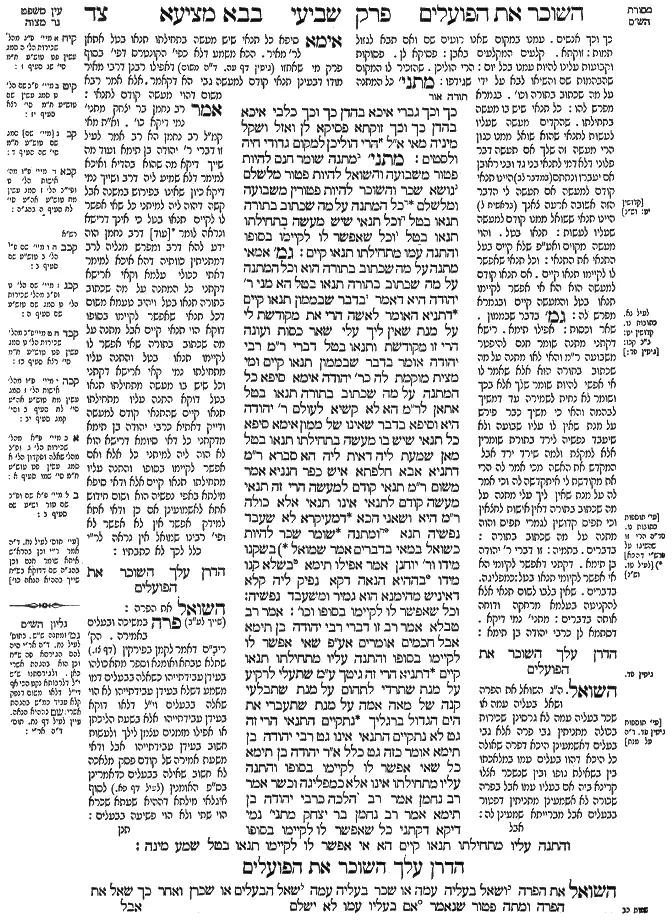
Bava Metzia 94a - Guemara
כך וכך גברי איכא בהדן כך וכך כלבי איכא בהדן כך וכך זוקתא פסיקא לן ואזל ושקל מיניה מאי א"ל הרי הוליכן למקום גדודי חיה ולסטים:
מתני׳ מתנה שומר חנם להיות פטור משבועה והשואל להיות פטור מלשלם נושא שכר והשוכר להיות פטורין משבועה ומלשלם כל המתנה על מה שכתוב בתורה תנאו בטל וכל תנאי שיש מעשה בתחילתו תנאו בטל וכל שאפשר לו לקיימו בסופו והתנה עמו מתחילתו תנאו קיים:
גמ׳ אמאי מתנה על מה שכתוב בתורה הוא וכל המתנה על מה שכתוב בתורה תנאו בטל הא מני ר' יהודה היא דאמר בדבר שבממון תנאו קיים דתניא האומר לאשה הרי את מקודשת לי על מנת שאין ליך עלי שאר כסות ועונה הרי זו מקודשת ותנאו בטל דברי ר"מ רבי יהודה אומר בדבר שבממון תנאו קיים ומי מצית מוקמת לה כר' יהודה אימא סיפא כל המתנה על מה שכתוב בתורה תנאו בטל אתאן לר"מ הא לא קשיא לעולם ר' יהודה היא וסיפא בדבר שאינו של ממון אימא סיפא כל תנאי שיש בו מעשה בתחילתו תנאו בטל מאן שמעת ליה דאית ליה הא סברא ר"מ דתניא אבא חלפתא איש כפר חנניא אמר משום ר"מ תנאי קודם למעשה הרי זה תנאי מעשה קודם לתנאי אינו תנאי אלא כולה ר"מ היא ושאני הכא דמעיקרא לא שעבד נפשיה תנא ומתנה שומר שכר להיות כשואל במאי בדברים אמר שמואל בשקנו מידו ור' יוחנן אמר אפילו תימא בשלא קנו מידו בההיא הנאה דקא נפיק ליה קלא דאיניש מהימנא הוא גמיר ומשעבד נפשיה:
וכל שאפשר לו לקיימו בסופו וכו':
אמר רב טבלא אמר רב זו דברי רבי יהודה בן תימא אבל חכמים אומרים אע"פ שאי אפשר לו לקיימו בסופו והתנה עליו מתחילתו תנאו קיים דתניא הרי זה גיטך ע"מ שתעלי לרקיע על מנת שתרדי לתהום על מנת שתבלעי קנה של מאה אמה על מנת שתעברי את הים הגדול ברגליך נתקיים התנאי הרי זה גט לא נתקיים התנאי אינו גט רבי יהודה בן תימא אומר כזה גט כלל א"ר יהודה בן תימא כל שאי אפשר לו לקיימו בסופו והתנה עליו מתחילתו אינו אלא כמפליגה וכשר אמר רב נחמן אמר רב הלכה כרבי יהודה בן תימא אמר רב נחמן בר יצחק מתני' נמי דיקא דקתני כל שאפשר לו לקיימו בסופו והתנה עליו מתחילתו תנאו קיים הא אי אפשר לו לקיימו תנאו בטל שמע מינה:
הדרן עלך השוכר את הפועלים
מתני׳ השואל את הפרה ושאל בעליה עמה או שכר בעליה עמה שאל הבעלים או שכרן ואחר כך שאל את הפרה ומתה פטור שנאמר (שמות כב, יד) אם בעליו עמו לא ישלם
Comments from Rashi on Masechet Bava Metzia Page 94a
כך וכך אנשים . עמנו במקום שאנו רועים שם ואם תבוא לגזול תמות: זוקתא . קלעים המקלעים באבן: פסיקא לן . פסוקות וקבועות עלינו להיות עמנו בכל יום: הרי הוליכן . שהזכיר לו המקום שהבהמות שם והשיאו לבא על ידי שגידפו: מתני' כל המתנה על מה שכתוב בתורה וכו' . בגמרא מפרש להו: כל תנאי שיש בו מעשה בתחילתו . שהקדים מעשה שעליו לעשות לתנאי שהוא שואל ממנו כגון הרי מעשה זה שלך אם תעשה דבר פלוני דלא דמי לתנאי בני גד ובני ראובן אם יעברו ונתתם (במדבר לב) היינו תנאי קודם למעשה אם תעשה לי הדבר הזה אשובה ארעה צאנך (בראשית ל) היינו תנאי ששואל ממנו קודם למעשה שעליו לעשות: תנאו בטל . והוי מעשה מקוים ואע"פ שלא קיים בעל התנאי את התנאי: וכל תנאי שאפשר לו לקיימו תנאו קיים . אם תנאו קודם למעשה הוא הא אי אפשר לקיימו תנאו בטל והמעשה קיים ובגמרא מפרש לה: גמ' בדבר שבממון . שאר וכסות: אפילו תימא . רישא דקתני מתנה שומר חנם להיפטר משבועה ר"מ והאי לאו מתנה על מה שכתוב בתורה הוא אלא שאמר לו אי אפשי להיות שומר שלך אלא בכך ושומר לא נחית לשמירה עד דמשיך לבהמה והאי כי משיך כבר פירש על מנת שאין לו עליו שבועה ולא שיעבד נפשיה לירד בתורת שומרין אלא למקצת ולמה שירד ירד אבל המקדש את האשה מכי אמר לה הרי את מקודשת לי איתקדשה לה וכי אמר לה על מנת שאין ליך עלי מתנה על מה שכתוב בתורה דאין אישות לחצאין וכי תפיס קדושין לגמרי תפיס והוה מתנה על מה שכתוב בתורה: בדברים . בתמיה: זו דברי רבי יהודה בן תימא . דקתני דאפשר לקיומי הא אי אפשר לקיומי תנאו בטל: כמפליגה בדברים . שאין בלבו לשום תנאי אלא להקניטה בעלמא מרחקה ודוחה אותה בדברים: מתני' נמי דיקא . דסתמא לן כרבי יהודה בן תימא: מתני' השואל ה"ג השואל את הפרה . ושאל בעליה עמה או שכר בעליה עמה. לא גרסינן שכירות בכולה מתניתין גבי פרה אלא גבי בעלים דאשמעינן היכא דפרה שאולה כל היכא דהוו בעלים עמו במלאכתו בין בשאילת גופו ובין שנשכר אצלו קרינא ביה אם בעליו עמו אבל בפרה שכורה לא אשמעינן מתניתין דפטור בבעלים אבל מברייתא שמעינן לה:
Comments from Tosafot - Bava Metzia 94a
אימא סיפא כל תנאי שיש מעשה בתחילתו תנאו בטל אתאן לר' מאיר . הכא משמע דלא כפי' הקונטרס דפי' בסוף פרק מי שאחזו (גיטין דף עה. ד"ה משום) דאפילו רבנן דרבי מאיר מודו דבעינן תנאי קודם למעשה גבי הא דקאמר אלא אמר רבא משום דהוי מעשה קודם לתנאי: אמר רב נחמן בר יצחק מתני' נמי דיקא כו' . וא"ת מאי קמ"ל רב נחמן הא רב אמר לעיל זו דברי ר' יהודה בן תימא ועוד מה שייך דיקא מה שהוא בהדיא ואיכא למימר דלא שמיע ליה דרב ושייך נמי דיקא כיון שאינו בפירוש במשנה אבל קשה דהוה ליה למיתני כל שאי אפשר לו לקיים תנאו בטל כי אינך דרישא ונראה לומר [עוד] דרב נחמן הוה ידע להא דרב ומפרש מנליה לרב דמתניתין כוותיה דהא איכא למימר דאתי ככולי עלמא וקאי ארישא דקתני כל המתנה על מה שכתוב בתורה תנאו בטל ויהיב טעמא משום דכל תנאי שאפשר לקיימו בסופו דוקא הוי תנאי קיים אבל מתנה על מה שכתוב בתורה שאי אפשר לו לקיימו תנאו בטל והתנה עליו מתחילתו נמי קאי ארישא דקתני וכל שיש בו מעשה מתחילתו תנאו בטל דוקא התנה עליו מתחילתו תנאו קיים שהתנאי קודם למעשה ודייק דאתיא כרבי יהודה בן תימא מדקתני כל דאי סיומא דרישא הוא לא הוה ליה למיתני כל אלא ואם אפשר לקיימו בסופו והתנה עליו מתחילתו תנאו קיים אלא ודאי סיפא מילתא באפי נפשיה הוא ושום חידוש אתא לאשמועינן אם כן ודאי אתא למידק אפשר אין לא אפשר לא ופי' רבינו שמואל אין נראה לר"י כלל לכך לא כתבתיו: השואל את הפרה:
Bava Metzia 94a - Mishnah translated into english
we have such and such men with us; such and such dogs with us, and such and such slings [zukata] with us. In other words, we are fully protected and you should not dare to take anything from us. If the thief subsequently went and took an animal from him, what is the halakha? Rava said to Abaye: It is as though he has taken them to a place of groups of beasts and bandits, as his taunting of the thief motivated the theft.
MISHNA: The halakhot of bailees stated in the previous mishna apply to standard cases. The halakha is that in any case involving monetary matters the parties may agree to special terms. Therefore, an unpaid bailee may stipulate with the owner that he will be exempt from taking an oath if the item is lost, and similarly, a borrower may stipulate that he will be exempt from having to pay, and a paid bailee or a renter can stipulate that he will be exempt from taking an oath and from having to pay, as one can relinquish his monetary rights. With regard to matters that do not involve monetary claims, anyone who stipulates counter to that which is written in the Torah, his stipulation is void.
And any condition that is preceded by an action, i.e., the agreement is formulated with the promise of an action followed by a statement that this action will be carried out only under certain terms, the condition is void and the promise remains intact. The condition must be stated before the action. And with regard to any condition that one can ultimately fulfill, but he stipulated with him initially, i.e., in practice the action is performed first, followed by the fulfillment of the condition, nevertheless, because it was formulated in the proper manner, with the condition first, his condition is valid. If the condition cannot be fulfilled at all, once the action has been carried out the condition is void.
GEMARA: The Gemara asks a question with regard to the mishna’s statement that bailees can issue conditions and change the liabilities imposed on them by Torah law: Why are they able to do so? This is a case of one who stipulates counter to that which is written in the Torah, as the Torah determines who takes an oath and who must pay, and with regard to anyone who stipulates counter to that which is written in the Torah, his condition is void.
The Gemara explains: In accordance with whose opinion is this mishna? It is that of Rabbi Yehuda, who says that if the condition that runs counter to that which is written in the Torah is referring to monetary matters, his condition is valid. As it is taught in a baraita: With regard to one who says to a woman: You are hereby betrothed to me on the condition that you have no claim against me to give you food, clothing, and conjugal rights, she is betrothed but his condition is void; this is the statement of Rabbi Meir. And Rabbi Yehuda said: With regard to monetary matters, i.e., her food and clothing, his condition is valid.
The Gemara raises a difficulty: But can you establish the mishna in accordance with the opinion of Rabbi Yehuda? Say the latter clause of the mishna: Anyone who stipulates counter to that which is written in the Torah, his condition is void. In this clause we arrive at the opinion of Rabbi Meir. The Gemara answers: This is not difficult, as actually you can explain that the mishna is in accordance with the opinion of Rabbi Yehuda, and the latter clause is referring to non-monetary matters.
The Gemara continues to question this explanation: But say the latter clause from near the end of the mishna: And any condition that is preceded by an action, the condition is void. Who have you heard who accepts this reasoning? It is Rabbi Meir, as it is taught in a baraita: Abba Ḥalafta, from the village of Ḥananya, said in the name of Rabbi Meir: If a condition was stated before the action, this is a valid condition, but if the action came before the condition, it is not a valid condition.
Rather, the Gemara retracts the previous explanation and states that the entire mishna is in accordance with the opinion of Rabbi Meir. Why, then, is the bailee exempt from payment or an oath? Because here it is different, as at the outset he did not obligate himself in the halakhot of a bailee as stated in the Torah. Before he entered into the agreement, he clearly stated that he is unwilling to accept upon himself the liabilities of a paid or an unpaid bailee by Torah law.
A Sage taught in a baraita: Just as a bailee can issue a condition that he should be exempt, the converse is also possible: A paid bailee can stipulate to be like a borrower, i.e., he can accept upon himself all the responsibilities of a borrower. The Gemara asks: By what means is this commitment binding? Is it merely by speech alone? Mere speech is not sufficient to demonstrate a commitment of this kind. Shmuel said: No; it is referring to a case where the owner performed an act of acquisition with the bailee affirming this arrangement. The obligation goes into effect only if there was an act of acquisition.
And Rabbi Yoḥanan said: You may even say that it is referring to a situation where the owner did not perform an act of acquisition with the bailee, and even so he is liable as a borrower. The reason is that by means of that benefit he receives from the fact that a rumor goes out about him that he is a trustworthy person, he commits wholeheartedly to obligate himself, even by means of a verbal promise alone. Therefore, there is no need for a formal act of acquisition.
§ The mishna teaches: With regard to any condition that ultimately can be fulfilled, if he stipulated it initially, his condition is valid. Rav Tavla says that Rav says: This is the statement of Rabbi Yehuda ben Teima, but the Rabbis say: Even though one cannot ultimately fulfill the condition, and he stipulated with regard to it initially, his condition is valid.
As it is taught in a baraita: If a man said to his wife: This is your bill of divorce on the condition that you ascend to the skies, or on the condition that you descend to the depths; or on the condition that you swallow a reed of one hundred cubits in size; or on the condition that you cross the Great Sea by foot, only if the condition was fulfilled and she did as he demanded is this a valid bill of divorce, but if the condition was not fulfilled it is not a valid bill of divorce. According to this tanna, the condition is binding despite the fact that it cannot be fulfilled in practice.
Rabbi Yehuda ben Teima says: A document such as this is a valid bill of divorce. The condition is negated, and therefore the bill of divorce is valid even though the condition was not fulfilled. As Rabbi Yehuda ben Teima stated a principle: With regard to any condition that one cannot ultimately fulfill, i.e., a condition that cannot be fulfilled at all, and yet he stipulated to this effect, even if he did so initially, he is considered as only exaggerating, and the document is valid. The supposed condition is not taken seriously and is not binding.
Rav Naḥman says that Rav says: The halakha is in accordance with the opinion of Rabbi Yehuda ben Teima. Rav Naḥman bar Yitzḥak said: The mishna is also precisely formulated in accordance with this opinion, as it teaches: With regard to any condition that ultimately he can fulfill, and he stipulated with regard to it initially, his condition is valid. This indicates that if he cannot fulfill it, his condition is void. The Gemara affirms: One can learn from this formulation that the unattributed mishna does in fact represent the opinion of Rabbi Yehuda ben Teima.
MISHNA: In the case of one who borrowed a cow and borrowed the services of its owner with it, or he borrowed a cow and hired its owner with it, or he borrowed the services of the owner or hired him and afterward borrowed the cow; in all such cases, if the cow died, the borrower is exempt from liability. Although a borrower is generally liable to pay if a cow he borrowed dies, here he is exempt, as it is stated: “If its owner is with him, he does not pay” (Exodus 22:14).
Traduction : The William Davidson digital edition of the Koren Noé Talmud, with commentary by Rabbi Adin Even-Israel Steinsaltz.