 Talmud Bavli
The learning on the whole site is dedicated : L'ilui Nishmat Rav Chlomo Ben Jamilla
The learning on the whole site is dedicated : For the success of Elyahou ben H'anna & family
The learning on the whole site is dedicated : L'ilui Nishmat Amram ben Itshak Loubaton
Bava Metzia 83a : Youtube
Daf TubeYoutube
1 video class :
Bava Metzia Page 83a
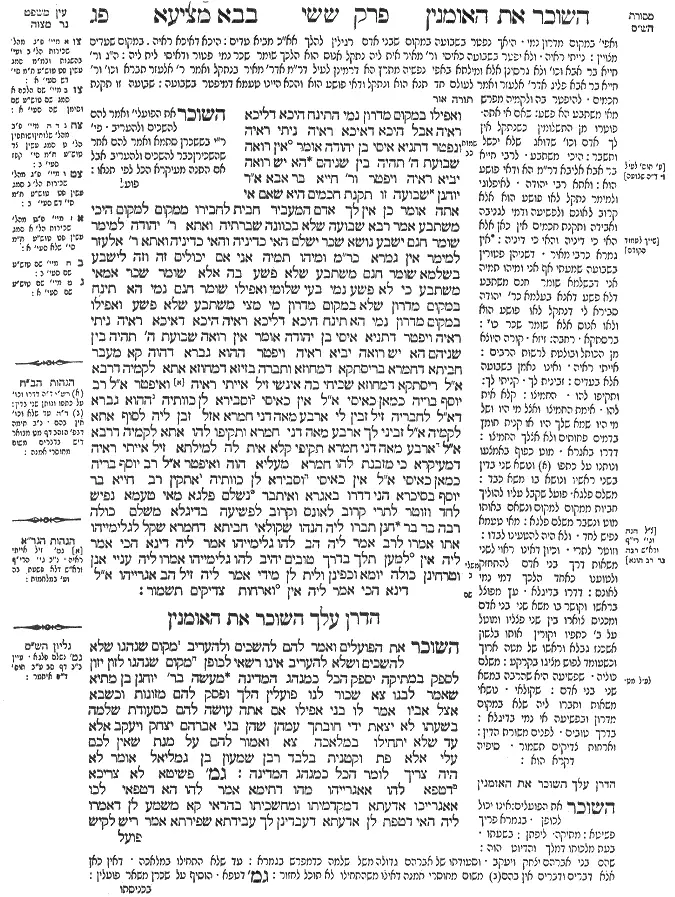
Bava Metzia 83a - Guemara
ואפילו במקום מדרון נמי התינח היכא דליכא ראיה אבל היכא דאיכא ראיה ניתי ראיה ונפטר דתניא איסי בן יהודה אומר (שמות כב, ט) אין רואה שבועת ה' תהיה בין שניהם הא יש רואה יביא ראיה ויפטר ור' חייא בר אבא א"ר יוחנן שבועה זו תקנת חכמים היא שאם אי אתה אומר כן אין לך אדם המעביר חבית לחבירו ממקום למקום היכי משתבע אמר רבא שבועה שלא בכוונה שברתיה ואתא ר' יהודה למימר שומר חנם ישבע נושא שכר ישלם האי כדיניה והאי כדיניה ואתא ר' אלעזר למימר אין גמרא כר"מ ומיהו תמיה אני אם יכולים זה וזה לישבע בשלמא שומר חנם משתבע שלא פשע בה אלא שומר שכר אמאי משתבע כי לא פשע נמי בעי שלומי ואפילו שומר חנם נמי הא תינח במקום מדרון שלא במקום מדרון מי מצי משתבע שלא פשע ואפילו במקום מדרון נמי הא תינח היכא דליכא ראיה היכא דאיכא ראיה ניתי ראיה ויפטר דתניא איסי בן יהודה אומר אין רואה שבועת ה' תהיה בין שניהם הא יש רואה יביא ראיה ויפטר ההוא גברא דהוה קא מעבר חביתא דחמרא בריסתקא דמחוזא ותברה בזיזא דמחוזא אתא לקמיה דרבא א"ל ריסתקא דמחוזא שכיחי בה אינשי זיל אייתי ראיה ואיפטר א"ל רב יוסף בריה כמאן כאיסי א"ל אין כאיסי וסבירא לן כוותיה ההוא גברא דא"ל לחבריה זיל זבין לי ארבע מאה דני חמרא אזל זבן ליה לסוף אתא לקמיה א"ל זביני לך ארבע מאה דני חמרא ותקיפו להו אתא לקמיה דרבא א"ל ארבע מאה דני חמרא תקיפי קלא אית לה למילתא זיל אייתי ראיה דמעיקרא כי מזבנת להו חמרא מעליא הוה ואיפטר א"ל רב יוסף בריה כמאן כאיסי א"ל אין כאיסי וסבירא לן כוותיה אתקין רב חייא בר יוסף בסיכרא הני דדרו באגרא ואיתבר נשלם פלגא מאי טעמא נפיש לחד וזוטר לתרי קרוב לאונס וקרוב לפשיעה בדיגלא משלם כולה רבה בר בר חנן תברו ליה הנהו שקולאי חביתא דחמרא שקל לגלימייהו אתו אמרו לרב אמר ליה הב להו גלימייהו אמר ליה דינא הכי אמר ליה אין (משלי ב, כ) למען תלך בדרך טובים יהיב להו גלימייהו אמרו ליה עניי אנן וטרחינן כולה יומא וכפינן ולית לן מידי אמר ליה זיל הב אגרייהו א"ל דינא הכי אמר ליה אין (משלי ב, כ) וארחות צדיקים תשמור
הדרן עלך השוכר את האומנין
מתני׳ השוכר את הפועלים ואמר להם להשכים ולהעריב מקום שנהגו שלא להשכים ושלא להעריב אינו רשאי לכופן מקום שנהגו לזון יזון לספק במתיקה יספק הכל כמנהג המדינה מעשה בר' יוחנן בן מתיא שאמר לבנו צא שכור לנו פועלין הלך ופסק להם מזונות וכשבא אצל אביו אמר לו בני אפילו אם אתה עושה להם כסעודת שלמה בשעתו לא יצאת ידי חובתך עמהן שהן בני אברהם יצחק ויעקב אלא עד שלא יתחילו במלאכה צא ואמור להם על מנת שאין לכם עלי אלא פת וקטנית בלבד רבן שמעון בן גמליאל אומר לא היה צריך לומר הכל כמנהג המדינה:
גמ׳ פשיטא לא צריכא דטפא להו אאגרייהו מהו דתימא אמר להו הא דטפאי לכו אאגרייכו אדעתא דמקדמיתו ומחשכיתו בהדאי קא משמע לן דאמרו ליה האי דטפת לן אדעתא דעבדינן לך עבידתא שפירתא אמר ריש לקיש
Comments from Rashi on Masechet Bava Metzia Page 83a
ואפי' במקום מדרון נמי . היאך נפטר בשבועה במקום שבני אדם רגילין להלך אא"כ מביא עדים היכא: דאיכא ראיה . במקום שעדים מצויין: נייתי ראיה . ולא יפטר בשבועה כאיסי ור' מאיר אית ליה נתקל אנוס הוא הלכך שומר שכר נמי פטור ודאיסי לית ליה: ה"ג ורבי חייא בר אבא וכו' ולא גרסינן אלא ומילתא באפי נפשיה מתרץ הא דרמינן לעיל דר"מ אדר' מאיר בנתקל ואמר ר' אלעזר תברא וכו' ור' חייא בר אבא פליג אדר' אלעזר ואמר לעולם חד תנא הוא ונתקל ודאי פושע הוא והכא היינו טעמא דמיפטר בשבועה: שבועה זו תקנת חכמים . להיפטר בה ולקמיה מפרש מאי משתבע הא פשע: שאם אי אתה . פוטרו מן התשלומין כשנתקל אין לך אדם וכו' שדואג שלא יכשל ותשבר: היכי משתבע . לרבי חייא בר אבא אליבא דר"מ הא ודאי פושע הוא: ואתא רבי יהודה . לאיפלוגי ולמימר נתקל לאו פושע הוא אלא קרוב לאונס ולפשיעה ודמי לגניבה ואבידה ותקנת חכמים אין כאן אלא האי כי דיניה והאי כי דיניה: אין גמרא כרבי מאיר . דשניהן פטורין בשבועה שמעתי אף אני ומיהו תמיה אני דבשלמא שומר חנם משתבע דלא פשע דאנא בעלמא כר' יהודה סבירא לי דנתקל לאו פושע הוא ולאו אנוס אלא שומר שכר כו': ברסתקא . רחבה: זיזא . קורה היוצא מן הכותל ובולטת לרשות הרבים: אייתי ראיה . ואינו נאמן בשבועה אלא בעדים: זבינית לך . קניתי לך: ותקיפו להו . החמיצו: קלא אית להו . אימת החמיצו ואצל מי היו ושל מי היו שמא שלך היו או קנית חומץ בדמים פחותים ולא אצלך החמיצו: דדרו באגרא . מוט כפוף באמצעו ונותנו על כתפו ונושא שני בדין בשני ראשיו ונושא בו משא כבד: משלם פלגא . פועל שקבל עליו להוליך חביות ממקום למקום ונשאם באותו מוט ונשבר משלם פלגא: מאי טעמא נפיש לחד . ולא היה להטעינו לבדו: וזוטר לתרי . וכיון דאינו ראוי לשני משאות דרך בני אדם להתחזק ולטוענו כאחד הלכך דמי נמי לאונס: דדרו בדיגלא . עץ מפוצל בראשו וקושר בו משא שני בני אדם ומכניס צוארו בין שני פצליו ומוטל על ב' כתפיו וקורין אותו בלשון אשכנז גבל"א וראשו של מטה ארוך וכשעומד לפוש מציגו בקרקע: משלם כוליה . שפשיעה היא שהרבה במשא שני בני אדם: שקולאי . נושאי משאות ותברו ליה שלא במקום מדרון ובפשיעה אי נמי בדיגלא: בדרך טובים . לפנים משורת הדין: וארחות צדיקים תשמור . סיפיה דקרא הוא: מתני' השוכר את הפועלים: אינו יכול לכופן . בגמרא פריך פשיטא: מתיקה . ליפתן: בשעתו . בעת מלכותו דמלך והדיוט הוה: שהם בני אברהם יצחק ויעקב . וסעודתו של אברהם גדולה משל שלמה כדמפרש בגמרא: עד שלא התחילו במלאכה . דאין כאן אלא דברים ודברים אין בהם משום מחוסרי אמנה דאילו משהתחילו לא תוכל לחזור: גמ' דטפא . הוסיף על שכרן משאר פועלין:
Comments from Tosafot - Bava Metzia 83a
מאי משתבע . מעיקרא הוה אתי ליה שפיר שנשבע שלא שינה מן המנהג אבל השתא דתרצת דכי נמי לא שינה דהוי פושע ואפילו הכי פטור משום תקנת חכמים אם כן אפילו שינה ממנהגו נמי פטור מכח אותה תקנה דמה לי פשיעה רבה ומה לי פשיעה זוטא ומשני שבועה שלא בכוונה שברתיה: מתני' השוכר את הפועלי' ואמר להם להשכים ולהעריב . פי' ר"י בששכרן סתמא ואמר להם אחר שהשכירן כבר להשכים ולהעריב אבל אם התנה מעיקרא הכל לפי תנאו:
Bava Metzia 83a - Mishnah translated into english
And even on an inclined plane, this works out well where there is no evidence, i.e., in a case without witnesses. But where there is evidence, let him bring evidence and be exempt. Why then is he forced to take an oath? As it is taught in a baraita: Isi ben Yehuda says, with regard to the verse: “And it died or was hurt or driven away without an eyewitness, an oath of the Lord shall be between them” (Exodus 22:9–10), that one can infer from here that if there is an eyewitness, let him bring evidence and be exempt.
The Gemara previously cited Rabbi Elazar’s answer to the apparent contradiction between the statements of Rabbi Meir, which was followed by an analysis of the various opinions of the tanna’im. The Gemara presents a different interpretation. And Rabbi Ḥiyya bar Abba says that Rabbi Yoḥanan says: There is no difficulty with the oath proposed by Rabbi Meir, as this oath is a decree of the Sages for the betterment of the world. The reason for this oath is that if you do not say so, that an unpaid bailee who broke the barrel in transport can exempt himself by means of an oath, you will have no person who will be willing to transport a barrel for another from one place to another, due to the fear that it might break and he will have to pay.
The Gemara asks: How exactly does he take an oath? Rava said that the phrasing is: I take an oath that I broke it unintentionally. And Rabbi Yehuda came to say: An unpaid bailee takes an oath, while a paid bailee pays, this one in accordance with his law and that one in accordance with his law. And Rabbi Elazar came to say: Yes, there is a tradition in accordance with the opinion of Rabbi Meir. But I wonder whether both this one and that one can take an oath.
Granted, an unpaid bailee takes an oath that he was not negligent with regard to the barrel, but why does a paid bailee take an oath? Even if he was not negligent, he is still required to pay. And even with regard to an unpaid bailee, this works out well if the barrel was broken on an inclined plane, but if it broke not on an inclined plane but under different circumstances, how can he take an oath that he was not negligent with it?
And even on an inclined plane, this works out well where there is no evidence. But where there is evidence, let him bring evidence and be exempt. As it is taught in a baraita: Isi ben Yehuda says, with regard to the verse: “And it died or was hurt or driven away without an eyewitness, an oath of the Lord shall be between them” (Exodus 22:9–10), that one can infer from here that if there is an eyewitness, let him bring evidence and be exempt.
The Gemara relates: There was a certain man who transported a barrel of wine in the market [beristeka] of Meḥoza and broke it on one of the protrusions of a wall in Meḥoza. The case came before Rava, who said to him: With regard to the market of Meḥoza, people are generally found there. Go and bring evidence in your favor and you will be exempt. Rav Yosef, Rava’s son, said to him: In accordance with whose opinion did you issue this ruling? In accordance with the opinion of Isi ben Yehuda? Rava said to him: Yes, I ruled in accordance with the ruling of Isi, and we hold in accordance with his opinion.
The Gemara relates a similar incident. There was a certain man who said to another: Go and buy for me four hundred pitchers of wine. The second man went and bought them for him. Ultimately, he came before the first man and said to him: I bought four hundred pitchers of wine for you, but they fermented.
The case came before Rava, who said to the second man: If four hundred pitchers of wine had fermented, this matter would generate publicity, i.e., people would have heard of this occurrence. Consequently, go and bring proof that initially, when you purchased the pitchers, the wine was good, and you will be exempt. Rav Yosef, Rava’s son, said to him: In accordance with whose opinion did you issue this ruling? According to that of Isi ben Yehuda? Rava said to him: Yes, I ruled in accordance with the ruling of Isi, and we hold in accordance with his opinion.
The Gemara relates: Rav Ḥiyya bar Yosef issued a decree in the city of Sikhra, where he was the presiding Sage: With regard to those who carry loads on a pole [be’agra] and the item breaks, they must pay half. What is the reason? Such a pole is used to carry loads that are too much for one individual to carry and too little for two. Consequently, this breakage is close to an accident and equally close to negligence, and therefore they compromise with a payment of half liability. If he carried it with a digla, a wooden tool designed for double loads, he pays in full, as the use of such a tool indicates that he was carrying a load beyond the capacity of a single individual to bear and therefore acted negligently.
The Gemara relates an incident involving Rabba bar bar Ḥanan: Certain porters broke his barrel of wine after he had hired them to transport the barrels. He took their cloaks as payment for the lost wine. They came and told Rav. Rav said to Rabba bar bar Ḥanan: Give them their cloaks. Rabba bar bar Ḥanan said to him: Is this the halakha? Rav said to him: Yes, as it is written: “That you may walk in the way of good men” (Proverbs 2:20). Rabba bar bar Ḥanan gave them their cloaks. The porters said to Rav: We are poor people and we toiled all day and we are hungry and we have nothing. Rav said to Rabba bar bar Ḥanan: Go and give them their wages. Rabba bar bar Ḥanan said to him: Is this the halakha? Rav said to him: Yes, as it is written: “And keep the paths of the righteous” (Proverbs 2:20).
MISHNA: With regard to one who hires laborers and tells them to rise exceptionally early and to continue working until exceptionally late, if this is in a locale where laborers are not accustomed to rising so early or to continuing to work until so late, the employer is not permitted to compel them to do so. In a locale where employers are accustomed to feeding their laborers, the employer must feed them. If they are in a locale where an employer is accustomed to providing their laborers with sweet foods, he must provide such food. Everything is in accordance with the regional custom in these matters.
There was an incident involving Rabbi Yoḥanan ben Matya, who said to his son: Go out and hire laborers for us. His son went, hired them, and pledged to provide sustenance for them as a term of their employment, without specifying the details.
And when he came back to his father and reported what he had done, Rabbi Yoḥanan ben Matya said to him: My son, even if you were to prepare a feast for them like that of King Solomon in his time, you would not have fulfilled your obligation to them, as they are the descendants of Abraham, Isaac, and Jacob. Rather, before they begin engaging in their labor, go out and say to them: The stipulation that food will be provided is on the condition that you have the right to claim from me only a meal of bread and legumes, which is the typical meal given to laborers. Rabban Shimon ben Gamliel says: Rabbi Yoḥanan ben Matya’s son did not need to state this condition, as the principle is that everything is in accordance with the regional custom.
GEMARA: With regard to the mishna’s statement that an employer may not compel his laborers to rise exceptionally early and continue working until exceptionally late, the Gemara asks: Isn’t this obvious? By what right can he force them to do so? The Gemara explains: No, the mishna’s ruling is necessary only in a case where the employer increased their wages beyond the standard in that place. Lest you say that the employer could say to the laborers: The fact that I increased your wages was with the understanding that you would rise early and continue working late for me, the mishna therefore teaches us that the laborers can say in response to the employer: The fact that you increased our wages was with the understanding that we would perform quality work for you, not that we would work longer hours.
§ Reish Lakish says:
Traduction : The William Davidson digital edition of the Koren Noé Talmud, with commentary by Rabbi Adin Even-Israel Steinsaltz.